mirror of
https://github.com/huggingface/lerobot.git
synced 2026-05-13 15:49:53 +00:00
Compare commits
29 Commits
| Author | SHA1 | Date | |
|---|---|---|---|
 Pepijn Pepijn
|
0664addec1 | ||
|
croissant
|
a7391e82c7 | ||
|
Pepijn
|
3521dd93c1 | ||
|
Pepijn
|
6288439d48 | ||
|
Pepijn
|
1cf768e17a | ||
|
Steven Palma
|
d11ec6b5ef | ||
|
Steven Palma
|
c75455a6de | ||
|
Steven Palma
|
f25ac02e6c | ||
|
Steven Palma
|
23cb668cac | ||
|
Steven Palma
|
2ea3043b1b | ||
|
Steven Palma
|
0f61e2415f | ||
|
Michel Aractingi
|
76a425c600 | ||
|
Lior Ben Horin
|
df71f3ce24 | ||
|
Francesco Capuano
|
326aca0a48 | ||
|
Steven Palma
|
be46bdea8f | ||
|
Steven Palma
|
306429a85b | ||
|
Michel Aractingi
|
12f2f35760 | ||
|
Jade Choghari
|
a024d33750 | ||
|
Hakjin Lee
|
63cd2111ad | ||
|
Steven Palma
|
abe9e79825 | ||
|
Steven Palma
|
503fc4e9f4 | ||
|
Xiaoxuan Liu
|
92b479f9ac | ||
|
Steven Palma
|
b954337ac7 | ||
|
Jade Choghari
|
5f6f476f32 | ||
|
Antoine
|
502fdc0630 | ||
|
Steven Palma
|
9db6213895 | ||
|
hls
|
aa1d906802 | ||
|
tetsugo02
|
eff8a6fd12 | ||
|
Jaisree25
|
c54cd529a2 |
@@ -78,7 +78,7 @@ jobs:
|
||||
python-version: ${{ env.PYTHON_VERSION }}
|
||||
|
||||
- name: Install lerobot with all extras
|
||||
run: uv sync --all-extras
|
||||
run: uv sync --all-extras --no-extra groot # TODO(Steven): Make flash-attn optional
|
||||
|
||||
- name: Run pytest (all extras)
|
||||
run: uv run pytest tests -vv --maxfail=10
|
||||
|
||||
@@ -189,5 +189,6 @@ jobs:
|
||||
python -c "import torch; print(f'PyTorch CUDA available: {torch.cuda.is_available()}'); print(f'Number of GPUs: {torch.cuda.device_count()}')"
|
||||
|
||||
- name: Run multi-GPU training tests
|
||||
run: pytest tests/training/test_multi_gpu.py -vv --maxfail=3
|
||||
# TODO(Steven): Investigate why motors tests are failing in multi-GPU setup
|
||||
run: pytest tests -vv --maxfail=10 --ignore=tests/motors/
|
||||
timeout-minutes: 10
|
||||
|
||||
@@ -82,6 +82,14 @@ jobs:
|
||||
exit 1
|
||||
fi
|
||||
|
||||
- name: Remove Tags with Git dependencies
|
||||
# TODO(Steven): Temporary patch to remove libero and pi from PyPi 0.4.0 release due to its reliance on git dependencies.
|
||||
run: |
|
||||
echo "::info:: Checking for Git dependencies to remove from pyproject.toml..."
|
||||
grep -E '@ git\+https|lerobot\[pi\]|lerobot\[libero\]' pyproject.toml | sed 's/^/::warning:: Removing line: /' || true
|
||||
sed -E -i '/@ git\+https|lerobot\[pi\]|lerobot\[libero\]/d' pyproject.toml
|
||||
echo "::info:: Git dependencies removed. Proceeding with build."
|
||||
|
||||
- name: Install build dependencies
|
||||
run: python -m pip install build
|
||||
|
||||
|
||||
@@ -185,6 +185,11 @@ _Replace `[...]` with your desired features._
|
||||
For a full list of optional dependencies, see:
|
||||
https://pypi.org/project/lerobot/
|
||||
|
||||
> [!NOTE]
|
||||
> For lerobot 0.4.0, if you want to install libero or pi tags, you will have to do: `pip install "lerobot[pi,libero]@git+https://github.com/huggingface/lerobot.git"`.
|
||||
>
|
||||
> This will be solved in the next patch release
|
||||
|
||||
### Weights & Biases
|
||||
|
||||
To use [Weights and Biases](https://docs.wandb.ai/quickstart) for experiment tracking, log in with
|
||||
@@ -337,7 +342,3 @@ If you want, you can cite this work with:
|
||||
## Star History
|
||||
|
||||
[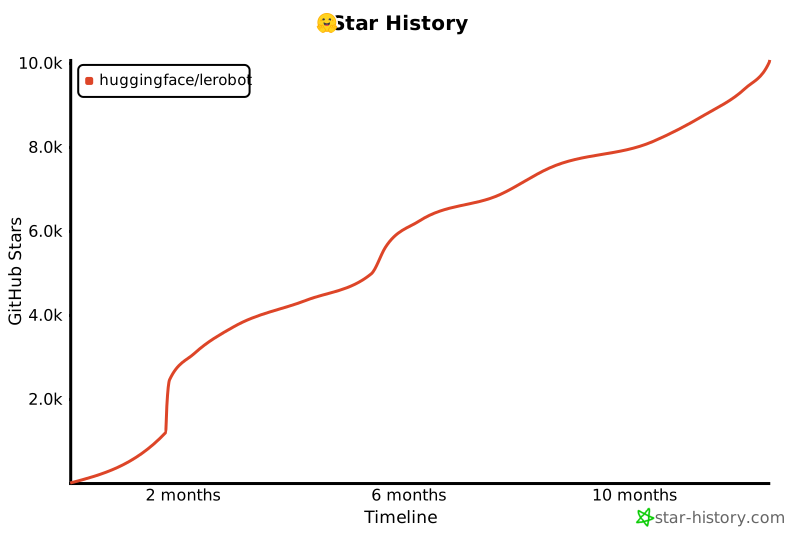](https://star-history.com/#huggingface/lerobot&Timeline)
|
||||
|
||||
```
|
||||
|
||||
```
|
||||
|
||||
@@ -37,6 +37,8 @@
|
||||
title: π₀ (Pi0)
|
||||
- local: pi05
|
||||
title: π₀.₅ (Pi05)
|
||||
- local: groot
|
||||
title: NVIDIA GR00T N1.5
|
||||
title: "Policies"
|
||||
- sections:
|
||||
- local: il_sim
|
||||
|
||||
@@ -0,0 +1,122 @@
|
||||
# GR00T N1.5 Policy
|
||||
|
||||
GR00T N1.5 is an open foundation model from NVIDIA designed for generalized humanoid robot reasoning and skills. It is a cross-embodiment model that accepts multimodal input, including language and images, to perform manipulation tasks in diverse environments.
|
||||
|
||||
This document outlines the specifics of its integration and usage within the LeRobot framework.
|
||||
|
||||
## Model Overview
|
||||
|
||||
NVIDIA Isaac GR00T N1.5 is an upgraded version of the GR00T N1 foundation model. It is built to improve generalization and language-following abilities for humanoid robots.
|
||||
|
||||
Developers and researchers can post-train GR00T N1.5 with their own real or synthetic data to adapt it for specific humanoid robots or tasks.
|
||||
|
||||
GR00T N1.5 (specifically the GR00T-N1.5-3B model) is built using pre-trained vision and language encoders. It utilizes a flow matching action transformer to model a chunk of actions, conditioned on vision, language, and proprioception.
|
||||
|
||||
Its strong performance comes from being trained on an expansive and diverse humanoid dataset, which includes:
|
||||
|
||||
- Real captured data from robots.
|
||||
- Synthetic data generated using NVIDIA Isaac GR00T Blueprint.
|
||||
- Internet-scale video data.
|
||||
|
||||
This approach allows the model to be highly adaptable through post-training for specific embodiments, tasks, and environments.
|
||||
|
||||
## Installation Requirements
|
||||
|
||||
As of today, GR00T N1.5 requires flash attention for it's internal working.
|
||||
|
||||
We are working on making this optional, but in the meantime that means that we require an extra installation step and it can only be used in CUDA enabled devices.
|
||||
|
||||
1. Following the Environment Setup of our [Installation Guide](./installation). **Attention** don't install `lerobot` in this step.
|
||||
2. Install [Flash Attention](https://github.com/Dao-AILab/flash-attention) by running:
|
||||
|
||||
```bash
|
||||
# Check https://pytorch.org/get-started/locally/ for your system
|
||||
pip install "torch>=2.2.1,<2.8.0" "torchvision>=0.21.0,<0.23.0" # --index-url https://download.pytorch.org/whl/cu1XX
|
||||
pip install ninja "packaging>=24.2,<26.0" # flash attention dependencies
|
||||
pip install "flash-attn>=2.5.9,<3.0.0" --no-build-isolation
|
||||
python -c "import flash_attn; print(f'Flash Attention {flash_attn.__version__} imported successfully')"
|
||||
```
|
||||
|
||||
3. Install LeRobot by running:
|
||||
|
||||
```bash
|
||||
pip install lerobot[groot] # consider also installing libero,dev and test tags
|
||||
```
|
||||
|
||||
## Usage
|
||||
|
||||
To use GR00T in your LeRobot configuration, specify the policy type as:
|
||||
|
||||
```python
|
||||
policy.type=groot
|
||||
```
|
||||
|
||||
## Training
|
||||
|
||||
### Training Command Example
|
||||
|
||||
Here's a complete training command for finetuning the base GR00T model on your own dataset:
|
||||
|
||||
```bash
|
||||
# Using a multi-GPU setup
|
||||
accelerate launch \
|
||||
--multi_gpu \
|
||||
--num_processes=$NUM_GPUS \
|
||||
$(which lerobot-train) \
|
||||
--output_dir=$OUTPUT_DIR \
|
||||
--save_checkpoint=true \
|
||||
--batch_size=$BATCH_SIZE \
|
||||
--steps=$NUM_STEPS \
|
||||
--save_freq=$SAVE_FREQ \
|
||||
--log_freq=$LOG_FREQ \
|
||||
--policy.push_to_hub=true \
|
||||
--policy.type=groot \
|
||||
--policy.repo_id=$REPO_ID \
|
||||
--policy.tune_diffusion_model=false \
|
||||
--dataset.repo_id=$DATASET_ID \
|
||||
--wandb.enable=true \
|
||||
--wandb.disable_artifact=true \
|
||||
--job_name=$JOB_NAME
|
||||
```
|
||||
|
||||
## Performance Results
|
||||
|
||||
### Libero Benchmark Results
|
||||
|
||||
GR00T has demonstrated strong performance on the Libero benchmark suite. To compare and test its LeRobot implementation, we finetuned the GR00T N1.5 model for 30k steps on the Libero dataset and compared the results to the GR00T reference results.
|
||||
|
||||
| Benchmark | LeRobot Implementation | GR00T Reference |
|
||||
| ------------------ | ---------------------- | --------------- |
|
||||
| **Libero Spatial** | 82.0% | 92.0% |
|
||||
| **Libero Object** | 99.0% | 92.0% |
|
||||
| **Libero Long** | 82.0% | 76.0% |
|
||||
| **Average** | 87.0% | 87.0% |
|
||||
|
||||
These results demonstrate GR00T's strong generalization capabilities across diverse robotic manipulation tasks. To reproduce these results, you can follow the instructions in the [Libero](https://huggingface.co/docs/lerobot/libero) section.
|
||||
|
||||
### Evaluate in your hardware setup
|
||||
|
||||
Once you have trained your model using your parameters you can run inference in your downstream task. Follow the instructions in [Imitation Learning for Robots](./il_robots). For example:
|
||||
|
||||
```bash
|
||||
lerobot-record \
|
||||
--robot.type=bi_so100_follower \
|
||||
--robot.left_arm_port=/dev/ttyACM1 \
|
||||
--robot.right_arm_port=/dev/ttyACM0 \
|
||||
--robot.id=bimanual_follower \
|
||||
--robot.cameras='{ right: {"type": "opencv", "index_or_path": 0, "width": 640, "height": 480, "fps": 30},
|
||||
left: {"type": "opencv", "index_or_path": 2, "width": 640, "height": 480, "fps": 30},
|
||||
top: {"type": "opencv", "index_or_path": 4, "width": 640, "height": 480, "fps": 30},
|
||||
}' \
|
||||
--display_data=true \
|
||||
--dataset.repo_id=<user>/eval_groot-bimanual \
|
||||
--dataset.num_episodes=10 \
|
||||
--dataset.single_task="Grab and handover the red cube to the other arm"
|
||||
--policy.path=<user>/groot-bimanual # your trained model
|
||||
--dataset.episode_time_s=30
|
||||
--dataset.reset_time_s=10
|
||||
```
|
||||
|
||||
## License
|
||||
|
||||
This model follows the **Apache 2.0 License**, consistent with the original [GR00T repository](https://github.com/NVIDIA/Isaac-GR00T).
|
||||
@@ -81,6 +81,9 @@ _Replace `[...]` with your desired features._
|
||||
For a full list of optional dependencies, see:
|
||||
https://pypi.org/project/lerobot/
|
||||
|
||||
> [!NOTE]
|
||||
> For lerobot 0.4.0, if you want to install libero or pi, you will have to do: `pip install "lerobot[pi,libero]@git+https://github.com/huggingface/lerobot.git"`
|
||||
|
||||
### Troubleshooting
|
||||
|
||||
If you encounter build errors, you may need to install additional dependencies: `cmake`, `build-essential`, and `ffmpeg libs`.
|
||||
|
||||
@@ -0,0 +1,328 @@
|
||||
# OpenArms Robot
|
||||
|
||||
OpenArms is a 7 DOF robotic arm with a gripper, designed by [Enactic, Inc.](https://www.enactic.com/) It uses Damiao motors controlled via CAN bus communication and MIT control mode for smooth, precise motion.
|
||||
|
||||
## Hardware Overview
|
||||
|
||||
- **7 DOF per arm** (14 DOF total for dual arm setup)
|
||||
- **1 gripper per arm** (2 grippers total)
|
||||
- **Damiao motors** with 4 different types:
|
||||
- **DM8009** (DM-J8009P-2EC) for shoulders (J1, J2) - high torque
|
||||
- **DM4340** for shoulder rotation and elbow (J3, J4)
|
||||
- **DM4310** (DM-J4310-2EC V1.1) for wrist (J5, J6, J7) and gripper (J8)
|
||||
- **24V power supply** required
|
||||
- **CAN interface device**:
|
||||
- **Linux**: Any SocketCAN-compatible adapter
|
||||
- **macOS**: CANable, PEAK PCAN-USB, or Kvaser USBcan
|
||||
- Proper CAN wiring (CANH, CANL, 120Ω termination)
|
||||
|
||||
|
||||
## Motor Configuration
|
||||
|
||||
Each arm has the following motor configuration based on the [OpenArm setup guide](https://docs.openarm.dev/software/setup/):
|
||||
|
||||
| Joint | Motor | Motor Type | Sender CAN ID | Receiver ID | Description |
|
||||
|-------|-------|------------|---------------|-------------|-------------|
|
||||
| J1 | joint_1 | DM8009 | 0x01 | 0x11 | Shoulder pan |
|
||||
| J2 | joint_2 | DM8009 | 0x02 | 0x12 | Shoulder lift |
|
||||
| J3 | joint_3 | DM4340 | 0x03 | 0x13 | Shoulder rotation |
|
||||
| J4 | joint_4 | DM4340 | 0x04 | 0x14 | Elbow flex |
|
||||
| J5 | joint_5 | DM4310 | 0x05 | 0x15 | Wrist roll |
|
||||
| J6 | joint_6 | DM4310 | 0x06 | 0x16 | Wrist pitch |
|
||||
| J7 | joint_7 | DM4310 | 0x07 | 0x17 | Wrist rotation |
|
||||
| J8 | gripper | DM4310 | 0x08 | 0x18 | Gripper |
|
||||
|
||||
For dual arm setups, the left arm uses IDs 0x09-0x10 for joints 1-8 with the same motor types.
|
||||
|
||||
## Quick Start
|
||||
|
||||
```bash
|
||||
# Install system dependencies
|
||||
sudo apt install can-utils iproute2
|
||||
|
||||
# Install LeRobot with OpenArms support
|
||||
pip install -e ".[openarms]"
|
||||
```
|
||||
|
||||
## Setup Guide
|
||||
|
||||
### Step 1: Motor ID Configuration
|
||||
|
||||
**IMPORTANT**: Before using the robot, motors must be configured with the correct CAN IDs.
|
||||
|
||||
Refer to the [OpenArm Motor ID Configuration Guide](https://docs.openarm.dev/software/setup/motor-id) for detailed instructions using the Damiao Debugging Tools on Windows.
|
||||
|
||||
Key points:
|
||||
- Each motor needs a unique **Sender CAN ID** (0x01-0x08)
|
||||
- Each motor needs a unique **Receiver/Master ID** (0x11-0x18)
|
||||
- Use the Damiao Debugging Tools to set these IDs
|
||||
|
||||
### Step 2: Setup CAN Interface
|
||||
|
||||
Configure your CAN interface as described in the [OpenArm CAN Setup Guide](https://docs.openarm.dev/software/setup/can-setup):
|
||||
|
||||
#### Linux (SocketCAN)
|
||||
|
||||
```bash
|
||||
# Find your CAN interface
|
||||
ip link show
|
||||
|
||||
# Configure can0, 1, 2, 3
|
||||
sudo ip link set can0 down
|
||||
sudo ip link set can0 type can bitrate 1000000
|
||||
sudo ip link set can0 up
|
||||
|
||||
sudo ip link set can1 down
|
||||
sudo ip link set can1 type can bitrate 1000000
|
||||
sudo ip link set can1 up
|
||||
|
||||
sudo ip link set can2 down
|
||||
sudo ip link set can2 type can bitrate 1000000
|
||||
sudo ip link set can2 up
|
||||
|
||||
sudo ip link set can3 down
|
||||
sudo ip link set can3 type can bitrate 1000000
|
||||
sudo ip link set can3 up
|
||||
|
||||
# Verify configuration
|
||||
ip link show can0
|
||||
```
|
||||
|
||||
or run:
|
||||
|
||||
`examples/openarms/setup_can.sh`
|
||||
|
||||
### Testing canbus and motor connection
|
||||
|
||||
Please run this script to check if all motors can be found and to find your can-fd speed: `python examples/openarms/debug_can_communication.py`
|
||||
|
||||
## Usage
|
||||
|
||||
### Basic Setup
|
||||
|
||||
|
||||
```python
|
||||
from lerobot.robots.openarms import OpenArmsFollower
|
||||
from lerobot.robots.openarms.config_openarms_follower import OpenArmsFollowerConfig
|
||||
|
||||
# Configure for dual arm setup
|
||||
config = OpenArmsFollowerConfig(
|
||||
port="can0",
|
||||
can_interface="socketcan", # Or "auto" for auto-detection
|
||||
id="openarms_dual",
|
||||
is_dual_arm=True,
|
||||
)
|
||||
|
||||
robot = OpenArmsFollower(config)
|
||||
robot.connect()
|
||||
```
|
||||
|
||||
### Calibration
|
||||
|
||||
On first use, you'll need to calibrate the robot:
|
||||
|
||||
```python
|
||||
robot.calibrate()
|
||||
```
|
||||
|
||||
The calibration process will:
|
||||
1. Disable torque on all motors
|
||||
2. Ask you to position arms in **hanging position with grippers closed**
|
||||
3. Set this as the zero position
|
||||
4. Ask you to move each joint through its full range
|
||||
5. Record min/max positions for each joint
|
||||
6. Save calibration to file
|
||||
|
||||
### Reading Observations
|
||||
|
||||
The robot provides comprehensive state information:
|
||||
|
||||
```python
|
||||
observation = robot.get_observation()
|
||||
|
||||
# Observation includes for each motor:
|
||||
# - {motor_name}.pos: Position in degrees
|
||||
# - {motor_name}.vel: Velocity in degrees/second
|
||||
# - {motor_name}.torque: Motor torque
|
||||
# - {camera_name}: Camera images (if configured)
|
||||
|
||||
print(f"Right arm joint 1 position: {observation['right_joint_1.pos']:.1f}°")
|
||||
print(f"Right arm joint 1 velocity: {observation['right_joint_1.vel']:.1f}°/s")
|
||||
print(f"Right arm joint 1 torque: {observation['right_joint_1.torque']:.3f} N·m")
|
||||
```
|
||||
|
||||
### Sending Actions
|
||||
|
||||
```python
|
||||
# Send target positions (in degrees)
|
||||
action = {
|
||||
"right_joint_1.pos": 45.0,
|
||||
"right_joint_2.pos": -30.0,
|
||||
# ... all joints
|
||||
"right_gripper.pos": 45.0, # Half-closed
|
||||
}
|
||||
|
||||
actual_action = robot.send_action(action)
|
||||
```
|
||||
|
||||
### Gripper Control
|
||||
|
||||
```python
|
||||
# Open gripper
|
||||
robot.open_gripper(arm="right")
|
||||
|
||||
# Close gripper
|
||||
robot.close_gripper(arm="right")
|
||||
```
|
||||
|
||||
## Safety Features
|
||||
|
||||
### 1. Maximum Relative Target
|
||||
|
||||
Limits how far a joint can move in a single command to prevent sudden movements:
|
||||
|
||||
```python
|
||||
config = OpenArmsFollowerConfig(
|
||||
port="can0",
|
||||
# Limit all joints to 10 degrees per command
|
||||
max_relative_target=10.0,
|
||||
|
||||
# Or set per-motor limits
|
||||
max_relative_target={
|
||||
"right_joint_1": 15.0, # Slower moving joint
|
||||
"right_joint_2": 10.0,
|
||||
"right_gripper": 5.0, # Very slow gripper
|
||||
}
|
||||
)
|
||||
```
|
||||
|
||||
**How it works**: If current position is 50° and you command 80°, with `max_relative_target=10.0`, the robot will only move to 60° in that step.
|
||||
|
||||
### 2. Torque Limits
|
||||
|
||||
Control maximum torque output, especially important for grippers and teleoperation:
|
||||
|
||||
```python
|
||||
config = OpenArmsFollowerConfig(
|
||||
port="can0",
|
||||
# Gripper torque limit (fraction of motor's max torque)
|
||||
gripper_torque_limit=0.5, # 50% of max torque
|
||||
)
|
||||
```
|
||||
|
||||
Lower torque limits prevent damage when gripping delicate objects.
|
||||
|
||||
### 3. MIT Control Gains
|
||||
|
||||
Control responsiveness and stability via PID-like gains:
|
||||
|
||||
```python
|
||||
config = OpenArmsFollowerConfig(
|
||||
port="can0",
|
||||
position_kp=10.0, # Position gain (higher = more responsive)
|
||||
position_kd=0.5, # Velocity damping (higher = more damped)
|
||||
)
|
||||
```
|
||||
|
||||
**Guidelines**:
|
||||
- **For following (robot)**: Higher gains for responsiveness
|
||||
- `position_kp=10.0`, `position_kd=0.5`
|
||||
- **For teleoperation (leader)**: Lower gains or disable torque for manual movement
|
||||
- `manual_control=True` (torque disabled)
|
||||
|
||||
### 4. Velocity Limits
|
||||
|
||||
Velocity limits are enforced by the Damiao motors based on motor type. For DM4310:
|
||||
- Max velocity: 30 rad/s ≈ 1718°/s
|
||||
|
||||
The motors will automatically limit velocity to safe values.
|
||||
|
||||
## Teleoperation
|
||||
|
||||
### Leader Arm Setup
|
||||
|
||||
The leader arm is moved manually (torque disabled) to generate commands:
|
||||
|
||||
```python
|
||||
from lerobot.teleoperators.openarms import OpenArmsLeader
|
||||
from lerobot.teleoperators.openarms.config_openarms_leader import OpenArmsLeaderConfig
|
||||
|
||||
config = OpenArmsLeaderConfig(
|
||||
port="can1", # Separate CAN interface for leader
|
||||
id="openarms_leader",
|
||||
manual_control=True, # Torque disabled for manual movement
|
||||
is_dual_arm=True,
|
||||
)
|
||||
|
||||
leader = OpenArmsLeader(config)
|
||||
leader.connect()
|
||||
|
||||
# Read current position as action
|
||||
action = leader.get_action()
|
||||
# action contains positions for all joints in degrees
|
||||
```
|
||||
|
||||
### Safety Considerations for Teleoperation
|
||||
|
||||
1. **Use separate CAN interfaces** for leader and follower to avoid conflicts
|
||||
2. **Enable max_relative_target** on follower to smooth abrupt movements
|
||||
3. **Lower torque limits** on follower to prevent damage from tracking errors
|
||||
4. **Test with one arm** before enabling dual arm teleoperation
|
||||
5. **Have emergency stop** ready (power switch or CAN disable)
|
||||
|
||||
```python
|
||||
# Recommended follower config for teleoperation
|
||||
follower_config = OpenArmsFollowerConfig(
|
||||
port="can0",
|
||||
max_relative_target=5.0, # Small steps for smooth following
|
||||
gripper_torque_limit=0.3, # Low torque for safety
|
||||
position_kp=5.0, # Lower gains for gentler following
|
||||
position_kd=0.3,
|
||||
)
|
||||
```
|
||||
|
||||
## Troubleshooting
|
||||
|
||||
### Motor Shaking/Unstable
|
||||
|
||||
- **Lower control gains**: Reduce `position_kp` and `position_kd`
|
||||
- **Check calibration**: Re-run calibration procedure
|
||||
- **Verify power**: Insufficient current can cause instability
|
||||
- **Check mechanical**: Loose connections, binding, or damaged components
|
||||
|
||||
### CAN Bus Errors
|
||||
|
||||
```bash
|
||||
# Check for errors
|
||||
ip -s link show can0
|
||||
|
||||
# Reset CAN interface
|
||||
sudo ip link set can0 down
|
||||
sudo ip link set can0 up
|
||||
```
|
||||
|
||||
### Control Mode
|
||||
|
||||
OpenArms uses **MIT control mode** which allows simultaneous control of:
|
||||
- Position (degrees)
|
||||
- Velocity (degrees/second)
|
||||
- Torque (N·m)
|
||||
- Position gain (Kp)
|
||||
- Velocity damping (Kd)
|
||||
|
||||
### Communication
|
||||
|
||||
- **Protocol**: CAN 2.0 at 1 Mbps (or CAN-FD at 5 Mbps)
|
||||
- **Frame format**: Standard 11-bit IDs
|
||||
- **Update rate**: Typically 50-100 Hz depending on motor count
|
||||
- **Latency**: ~10-20ms per motor command
|
||||
|
||||
## References
|
||||
|
||||
- [OpenArm Official Documentation](https://docs.openarm.dev/)
|
||||
- [OpenArm Setup Guide](https://docs.openarm.dev/software/setup/)
|
||||
- [Motor ID Configuration](https://docs.openarm.dev/software/setup/motor-id)
|
||||
- [CAN Interface Setup](https://docs.openarm.dev/software/setup/can-setup)
|
||||
- [Motor Communication Test](https://docs.openarm.dev/software/setup/configure-test)
|
||||
- [Damiao Motor Documentation](https://wiki.seeedstudio.com/damiao_series/)
|
||||
- [Enactic GitHub](https://github.com/enactic/openarm_can)
|
||||
@@ -0,0 +1,27 @@
|
||||
## Research Paper
|
||||
|
||||
Paper: https://research.nvidia.com/labs/gear/gr00t-n1_5/
|
||||
|
||||
## Repository
|
||||
|
||||
Code: https://github.com/NVIDIA/Isaac-GR00T
|
||||
|
||||
## Citation
|
||||
|
||||
```bibtex
|
||||
@inproceedings{gr00tn1_2025,
|
||||
archivePrefix = {arxiv},
|
||||
eprint = {2503.14734},
|
||||
title = {{GR00T} {N1}: An Open Foundation Model for Generalist Humanoid Robots},
|
||||
author = {NVIDIA and Johan Bjorck andFernando Castañeda, Nikita Cherniadev and Xingye Da and Runyu Ding and Linxi "Jim" Fan and Yu Fang and Dieter Fox and Fengyuan Hu and Spencer Huang and Joel Jang and Zhenyu Jiang and Jan Kautz and Kaushil Kundalia and Lawrence Lao and Zhiqi Li and Zongyu Lin and Kevin Lin and Guilin Liu and Edith Llontop and Loic Magne and Ajay Mandlekar and Avnish Narayan and Soroush Nasiriany and Scott Reed and You Liang Tan and Guanzhi Wang and Zu Wang and Jing Wang and Qi Wang and Jiannan Xiang and Yuqi Xie and Yinzhen Xu and Zhenjia Xu and Seonghyeon Ye and Zhiding Yu and Ao Zhang and Hao Zhang and Yizhou Zhao and Ruijie Zheng and Yuke Zhu},
|
||||
month = {March},
|
||||
year = {2025},
|
||||
booktitle = {ArXiv Preprint},
|
||||
}
|
||||
```
|
||||
|
||||
## Additional Resources
|
||||
|
||||
Blog: https://developer.nvidia.com/isaac/gr00t
|
||||
|
||||
Hugging Face Model: https://huggingface.co/nvidia/GR00T-N1.5-3B
|
||||
@@ -132,17 +132,15 @@ print(f"\n{dataset[0][camera_key].shape=}") # (4, c, h, w)
|
||||
print(f"{dataset[0]['observation.state'].shape=}") # (6, c)
|
||||
print(f"{dataset[0]['action'].shape=}\n") # (64, c)
|
||||
|
||||
# Finally, our datasets are fully compatible with PyTorch dataloaders and samplers because they are just
|
||||
# PyTorch datasets.
|
||||
dataloader = torch.utils.data.DataLoader(
|
||||
dataset,
|
||||
num_workers=4,
|
||||
batch_size=32,
|
||||
shuffle=True,
|
||||
)
|
||||
|
||||
for batch in dataloader:
|
||||
print(f"{batch[camera_key].shape=}") # (32, 4, c, h, w)
|
||||
print(f"{batch['observation.state'].shape=}") # (32, 6, c)
|
||||
print(f"{batch['action'].shape=}") # (32, 64, c)
|
||||
break
|
||||
if __name__ == "__main__":
|
||||
dataloader = torch.utils.data.DataLoader(
|
||||
dataset,
|
||||
num_workers=4,
|
||||
batch_size=32,
|
||||
shuffle=True,
|
||||
)
|
||||
for batch in dataloader:
|
||||
print(f"{batch[camera_key].shape=}") # (32, 4, c, h, w)
|
||||
print(f"{batch['observation.state'].shape=}") # (32, 6, c)
|
||||
print(f"{batch['action'].shape=}") # (32, 64, c)
|
||||
break
|
||||
|
||||
@@ -1,112 +0,0 @@
|
||||
# Copyright 2025 The HuggingFace Inc. team. All rights reserved.
|
||||
#
|
||||
# Licensed under the Apache License, Version 2.0 (the "License");
|
||||
# you may not use this file except in compliance with the License.
|
||||
# You may obtain a copy of the License at
|
||||
#
|
||||
# http://www.apache.org/licenses/LICENSE-2.0
|
||||
#
|
||||
# Unless required by applicable law or agreed to in writing, software
|
||||
# distributed under the License is distributed on an "AS IS" BASIS,
|
||||
# WITHOUT WARRANTIES OR CONDITIONS OF ANY KIND, either express or implied.
|
||||
# See the License for the specific language governing permissions and
|
||||
# limitations under the License.
|
||||
|
||||
"""
|
||||
This script demonstrates how to evaluate pretrained vision-language-action (VLA) policies
|
||||
such as SmolVLA on Libero benchmark tasks using the LeRobot framework.
|
||||
|
||||
It showcases the full evaluation pipeline — from environment creation to policy inference,
|
||||
visualization, and result logging — and is intended as a reference for benchmarking or
|
||||
integrating new robotic policies.
|
||||
|
||||
Features included in this script:
|
||||
- loading Libero environments (e.g., libero_spatial, libero_object) via `make_env`.
|
||||
- initializing pretrained policies (e.g., SmolVLA) from Hugging Face using `make_policy`.
|
||||
- applying preprocessing and postprocessing transformations for model compatibility.
|
||||
- running evaluation rollouts and recording rendered frames from the simulator.
|
||||
- computing success metrics and saving rollout videos as MP4 for qualitative analysis.
|
||||
|
||||
The script ends by saving a rollout video (`rollout.mp4`) and printing per-environment
|
||||
success indicators for quick visual and numerical evaluation.
|
||||
"""
|
||||
|
||||
import numpy as np
|
||||
import torch
|
||||
import imageio.v2 as imageio
|
||||
from lerobot.envs.factory import make_env, make_env_config
|
||||
from lerobot.policies.factory import make_policy, make_pre_post_processors
|
||||
from lerobot.policies.factory import make_policy_config
|
||||
from lerobot.envs.utils import (
|
||||
add_envs_task,
|
||||
preprocess_observation,
|
||||
)
|
||||
import os
|
||||
os.environ["MUJOCO_GL"] = "egl"
|
||||
|
||||
SMOLVLA_LIBERO_PATH = "HuggingFaceVLA/smolvla_libero"
|
||||
LIBERO_CONFIG = make_env_config("libero", task="libero_spatial")
|
||||
breakpoint()
|
||||
POLICY_CONFIG = make_policy_config("smolvla", pretrained_path=SMOLVLA_LIBERO_PATH)
|
||||
policy = make_policy(
|
||||
cfg=POLICY_CONFIG,
|
||||
env_cfg=LIBERO_CONFIG,
|
||||
)
|
||||
breakpoint()
|
||||
libero_env = make_env(LIBERO_CONFIG)
|
||||
breakpoint()
|
||||
print(type(libero_env)) # <class 'dict'>
|
||||
print(libero_env.keys()) # dict_keys(['libero_spatial', 'libero_object'])
|
||||
|
||||
# initilize your policy, here we use smolvla
|
||||
breakpoint()
|
||||
policy.eval()
|
||||
preprocessor, postprocessor = make_pre_post_processors(
|
||||
policy_cfg=POLICY_CONFIG,
|
||||
pretrained_path=SMOLVLA_LIBERO_PATH,
|
||||
# The inference device is automatically set to match the detected hardware, overriding any previous device settings from training to ensure compatibility.
|
||||
preprocessor_overrides={"device_processor": {"device": str(policy.config.device)}},
|
||||
)
|
||||
policy.reset()
|
||||
# for the sake of this exemple we only use one env from each task
|
||||
libero_spatial_env = libero_env['libero_spatial'][0]
|
||||
# libero_object_env = libero_env['libero_object'][0]
|
||||
|
||||
# let's first run an evaluation throgut the first task
|
||||
observation, info = libero_spatial_env.reset() # you can pass seeds
|
||||
max_steps = 220
|
||||
step = 0
|
||||
all_images = []
|
||||
done = np.array([False] * libero_spatial_env.num_envs)
|
||||
while not np.all(done) and step < max_steps:
|
||||
observation = preprocess_observation(observation)
|
||||
observation = add_envs_task(libero_spatial_env, observation)
|
||||
observation = preprocessor(observation)
|
||||
with torch.inference_mode():
|
||||
action = policy.select_action(observation)
|
||||
action = postprocessor(action)
|
||||
# Convert to CPU / numpy.
|
||||
action_numpy = action.to("cpu").numpy()
|
||||
# Apply the next action.
|
||||
# let's render the video
|
||||
image = libero_spatial_env.call("render")[0]
|
||||
all_images.append(image)
|
||||
observation, reward, terminated, truncated, info = libero_spatial_env.step(action_numpy)
|
||||
if "final_info" in info:
|
||||
final_info = info["final_info"]
|
||||
if not isinstance(final_info, dict):
|
||||
raise RuntimeError(
|
||||
"Unsupported `final_info` format: expected dict (Gymnasium >= 1.0). "
|
||||
"You're likely using an older version of gymnasium (< 1.0). Please upgrade."
|
||||
)
|
||||
successes = final_info["is_success"].tolist()
|
||||
else:
|
||||
successes = [False] * libero_spatial_env.num_envs
|
||||
|
||||
done = terminated | truncated | done
|
||||
if step + 1 == max_steps:
|
||||
done = np.ones_like(done, dtype=bool)
|
||||
step += 1
|
||||
|
||||
print("The success: ", successes)
|
||||
|
||||
@@ -0,0 +1,416 @@
|
||||
#!/usr/bin/env python3
|
||||
"""
|
||||
Comprehensive debug script for OpenArms CAN FD communication.
|
||||
Tests all 4 CAN interfaces with CAN FD support.
|
||||
"""
|
||||
|
||||
import can
|
||||
import time
|
||||
import sys
|
||||
import subprocess
|
||||
|
||||
def check_can_interface(port):
|
||||
"""Check if CAN interface is UP and configured."""
|
||||
try:
|
||||
result = subprocess.run(['ip', 'link', 'show', port],
|
||||
capture_output=True, text=True)
|
||||
if result.returncode != 0:
|
||||
return False, "Interface not found", None
|
||||
|
||||
output = result.stdout
|
||||
if 'UP' not in output:
|
||||
return False, "Interface is DOWN", None
|
||||
|
||||
# Check if CAN FD is enabled
|
||||
is_fd = 'fd on' in output.lower() or 'canfd' in output.lower()
|
||||
|
||||
return True, "Interface is UP", is_fd
|
||||
except FileNotFoundError:
|
||||
return None, "Cannot check (ip command not found)", None
|
||||
|
||||
|
||||
def test_motor_on_interface(bus, motor_id, timeout=2.0, use_fd=False):
|
||||
"""
|
||||
Test a single motor and return all responses.
|
||||
|
||||
Returns:
|
||||
list of (arbitration_id, data) tuples for all responses received
|
||||
"""
|
||||
# Send enable command
|
||||
enable_msg = can.Message(
|
||||
arbitration_id=motor_id,
|
||||
data=[0xFF, 0xFF, 0xFF, 0xFF, 0xFF, 0xFF, 0xFF, 0xFC],
|
||||
is_extended_id=False,
|
||||
is_fd=use_fd
|
||||
)
|
||||
|
||||
try:
|
||||
bus.send(enable_msg)
|
||||
except Exception as e:
|
||||
return None, f"Send error: {e}"
|
||||
|
||||
# Listen for responses
|
||||
responses = []
|
||||
start_time = time.time()
|
||||
|
||||
while time.time() - start_time < timeout:
|
||||
msg = bus.recv(timeout=0.1)
|
||||
if msg:
|
||||
responses.append((msg.arbitration_id, msg.data, msg.is_fd if hasattr(msg, 'is_fd') else False))
|
||||
|
||||
# Send disable command
|
||||
disable_msg = can.Message(
|
||||
arbitration_id=motor_id,
|
||||
data=[0xFF, 0xFF, 0xFF, 0xFF, 0xFF, 0xFF, 0xFF, 0xFD],
|
||||
is_extended_id=False,
|
||||
is_fd=use_fd
|
||||
)
|
||||
try:
|
||||
bus.send(disable_msg)
|
||||
except:
|
||||
pass
|
||||
|
||||
return responses, None
|
||||
|
||||
|
||||
def test_interface(port, interface_type="socketcan", use_can_fd=True):
|
||||
"""Test all 8 motors on a single CAN interface."""
|
||||
|
||||
results = {
|
||||
'interface': port,
|
||||
'status': None,
|
||||
'is_fd': use_can_fd,
|
||||
'motors': {}
|
||||
}
|
||||
|
||||
# Check interface status
|
||||
status_ok, status_msg, interface_has_fd = check_can_interface(port)
|
||||
|
||||
if interface_has_fd is not None:
|
||||
results['interface_fd_enabled'] = interface_has_fd
|
||||
if use_can_fd and not interface_has_fd:
|
||||
status_msg += " (CAN FD NOT enabled on interface!)"
|
||||
elif interface_has_fd:
|
||||
status_msg += " (CAN FD enabled)"
|
||||
|
||||
results['status'] = status_msg
|
||||
|
||||
if status_ok is False:
|
||||
return results
|
||||
|
||||
# Try to connect
|
||||
try:
|
||||
if use_can_fd:
|
||||
print(f" Connecting to {port} with CAN FD (1 Mbps / 5 Mbps)...")
|
||||
bus = can.interface.Bus(
|
||||
channel=port,
|
||||
interface=interface_type,
|
||||
bitrate=1000000,
|
||||
data_bitrate=5000000,
|
||||
fd=True
|
||||
)
|
||||
else:
|
||||
print(f" Connecting to {port} with CAN 2.0 (1 Mbps)...")
|
||||
bus = can.interface.Bus(
|
||||
channel=port,
|
||||
interface=interface_type,
|
||||
bitrate=1000000
|
||||
)
|
||||
except Exception as e:
|
||||
results['status'] = f"Connection failed: {e}"
|
||||
return results
|
||||
|
||||
try:
|
||||
# Clear any pending messages
|
||||
while bus.recv(timeout=0.01):
|
||||
pass
|
||||
|
||||
# Test each motor (0x01 to 0x08)
|
||||
for motor_id in range(0x01, 0x09):
|
||||
responses, error = test_motor_on_interface(bus, motor_id, timeout=1.0, use_fd=use_can_fd)
|
||||
|
||||
if error:
|
||||
results['motors'][motor_id] = {'error': error}
|
||||
elif responses:
|
||||
results['motors'][motor_id] = {
|
||||
'found': True,
|
||||
'responses': responses
|
||||
}
|
||||
else:
|
||||
results['motors'][motor_id] = {
|
||||
'found': False,
|
||||
'responses': []
|
||||
}
|
||||
|
||||
time.sleep(0.05) # Small delay between motors
|
||||
|
||||
finally:
|
||||
bus.shutdown()
|
||||
|
||||
return results
|
||||
|
||||
|
||||
def print_results(all_results):
|
||||
"""Print formatted results for all interfaces."""
|
||||
|
||||
print("SUMMARY - Motors Found on Each Interface")
|
||||
|
||||
motor_names = {
|
||||
0x01: "joint_1 (Shoulder pan)",
|
||||
0x02: "joint_2 (Shoulder lift)",
|
||||
0x03: "joint_3 (Shoulder rotation)",
|
||||
0x04: "joint_4 (Elbow flex)",
|
||||
0x05: "joint_5 (Wrist roll)",
|
||||
0x06: "joint_6 (Wrist pitch)",
|
||||
0x07: "joint_7 (Wrist rotation)",
|
||||
0x08: "gripper",
|
||||
}
|
||||
|
||||
total_found = 0
|
||||
|
||||
for result in all_results:
|
||||
interface = result['interface']
|
||||
status = result['status']
|
||||
|
||||
print(f"{interface}: {status}")
|
||||
if result.get('is_fd'):
|
||||
print(f" Mode: CAN FD")
|
||||
else:
|
||||
print(f" Mode: CAN 2.0")
|
||||
|
||||
if 'Connection failed' in status or 'DOWN' in status:
|
||||
print(f" ⚠ Cannot test {interface}")
|
||||
continue
|
||||
|
||||
motors_found = 0
|
||||
|
||||
for motor_id in range(0x01, 0x09):
|
||||
motor_data = result['motors'].get(motor_id, {})
|
||||
motor_name = motor_names.get(motor_id, "Unknown")
|
||||
|
||||
if motor_data.get('error'):
|
||||
print(f" Motor 0x{motor_id:02X} ({motor_name}): ✗ {motor_data['error']}")
|
||||
elif motor_data.get('found'):
|
||||
motors_found += 1
|
||||
total_found += 1
|
||||
responses = motor_data['responses']
|
||||
print(f" Motor 0x{motor_id:02X} ({motor_name}): ✓ FOUND")
|
||||
|
||||
for resp_id, data, is_fd in responses:
|
||||
data_hex = data.hex()
|
||||
fd_flag = " [FD]" if is_fd else " [2.0]"
|
||||
print(f" → Response from 0x{resp_id:02X}{fd_flag}: {data_hex}")
|
||||
else:
|
||||
print(f" Motor 0x{motor_id:02X} ({motor_name}): ✗ No response")
|
||||
|
||||
print(f"\n Summary: {motors_found}/8 motors found on {interface}")
|
||||
|
||||
# Overall summary
|
||||
print("OVERALL SUMMARY")
|
||||
print(f"Total motors found across all interfaces: {total_found}")
|
||||
|
||||
# Analyze configuration
|
||||
print("DIAGNOSIS")
|
||||
|
||||
for result in all_results:
|
||||
interface = result['interface']
|
||||
motors_found = sum(1 for m in result['motors'].values() if m.get('found'))
|
||||
|
||||
if motors_found == 0:
|
||||
print(f"\n⚠ {interface}: NO MOTORS FOUND")
|
||||
print(" Possible issues:")
|
||||
print(" 1. CAN FD mode mismatch (interface vs motor configuration)")
|
||||
print(" 2. Missing 120Ω termination resistors at BOTH cable ends")
|
||||
print(" 3. Motor timeout parameter set incorrectly (should NOT be 0)")
|
||||
print(" 4. CANH/CANL wiring issue")
|
||||
print(" 5. Cable too long (>40m for CAN FD at 5Mbps)")
|
||||
|
||||
# Check FD mismatch
|
||||
if result.get('is_fd') and not result.get('interface_fd_enabled'):
|
||||
print(" ⚠️ CRITICAL: Trying CAN FD but interface NOT configured for FD!")
|
||||
print(f" Fix: sudo ip link set {interface} type can bitrate 1000000 dbitrate 5000000 fd on")
|
||||
|
||||
elif motors_found < 8:
|
||||
print(f"\n⚠ {interface}: Only {motors_found}/8 motors responding")
|
||||
print(" Check power and connections for missing motors")
|
||||
else:
|
||||
print(f"\n✓ {interface}: All 8 motors responding correctly!")
|
||||
|
||||
# Check for unexpected response IDs
|
||||
print("RESPONSE ID ANALYSIS")
|
||||
|
||||
for result in all_results:
|
||||
interface = result['interface']
|
||||
unexpected = []
|
||||
|
||||
for motor_id, motor_data in result['motors'].items():
|
||||
if motor_data.get('found'):
|
||||
expected_id = motor_id + 0x10
|
||||
actual_ids = [resp[0] for resp in motor_data['responses']]
|
||||
|
||||
if expected_id not in actual_ids:
|
||||
unexpected.append((motor_id, actual_ids))
|
||||
|
||||
if unexpected:
|
||||
print(f"\n⚠ {interface}: Unexpected response IDs detected")
|
||||
for motor_id, actual_ids in unexpected:
|
||||
expected_id = motor_id + 0x10
|
||||
print(f" Motor 0x{motor_id:02X}: Expected 0x{expected_id:02X}, "
|
||||
f"got {[f'0x{id:02X}' for id in actual_ids]}")
|
||||
print(" → Motor Master IDs need reconfiguration")
|
||||
else:
|
||||
motors_found = sum(1 for m in result['motors'].values() if m.get('found'))
|
||||
if motors_found > 0:
|
||||
print(f"\n✓ {interface}: All responding motors use correct IDs")
|
||||
|
||||
|
||||
def test_communication_speed(interface, motor_id, num_iterations=100):
|
||||
"""
|
||||
Test communication speed with a motor.
|
||||
|
||||
Returns:
|
||||
tuple: (hz, avg_latency_ms) or (None, None) if test failed
|
||||
"""
|
||||
try:
|
||||
# Connect to interface
|
||||
bus = can.interface.Bus(
|
||||
channel=interface,
|
||||
interface="socketcan",
|
||||
bitrate=1000000,
|
||||
data_bitrate=5000000,
|
||||
fd=True
|
||||
)
|
||||
|
||||
# Send refresh commands and measure round-trip time
|
||||
latencies = []
|
||||
successful = 0
|
||||
|
||||
for _ in range(num_iterations):
|
||||
start = time.perf_counter()
|
||||
|
||||
# Send enable command (lightweight operation)
|
||||
enable_msg = can.Message(
|
||||
arbitration_id=motor_id,
|
||||
data=[0xFF, 0xFF, 0xFF, 0xFF, 0xFF, 0xFF, 0xFF, 0xFC],
|
||||
is_extended_id=False,
|
||||
is_fd=True
|
||||
)
|
||||
bus.send(enable_msg)
|
||||
|
||||
# Wait for response
|
||||
msg = bus.recv(timeout=0.1)
|
||||
|
||||
if msg:
|
||||
latency = (time.perf_counter() - start) * 1000 # Convert to ms
|
||||
latencies.append(latency)
|
||||
successful += 1
|
||||
|
||||
bus.shutdown()
|
||||
|
||||
if successful > 0:
|
||||
avg_latency = sum(latencies) / len(latencies)
|
||||
hz = 1000.0 / avg_latency if avg_latency > 0 else 0
|
||||
return hz, avg_latency
|
||||
|
||||
return None, None
|
||||
|
||||
except Exception as e:
|
||||
print(f" Speed test error: {e}")
|
||||
return None, None
|
||||
|
||||
|
||||
def main():
|
||||
"""Main function to test all CAN interfaces with CAN FD."""
|
||||
|
||||
print("\nThis will test all 4 CAN interfaces (can0-can3) with CAN FD")
|
||||
print("Testing motors 0x01-0x08 on each interface")
|
||||
print()
|
||||
print("Make sure:")
|
||||
print(" ✓ Motors are powered (24V)")
|
||||
print(" ✓ CAN interfaces configured with FD mode:")
|
||||
print(" ./examples/openarms/setup_can.sh")
|
||||
print(" ✓ Motor 'timeout' parameter NOT set to 0 (use Damiao tools)")
|
||||
print(" ✓ CAN wiring includes 120Ω termination at BOTH ends")
|
||||
print()
|
||||
|
||||
input("Press ENTER to start testing...")
|
||||
|
||||
# Test all 4 interfaces with CAN FD
|
||||
all_results = []
|
||||
|
||||
for i in range(4):
|
||||
interface = f"can{i}"
|
||||
print(f"Testing {interface}...")
|
||||
|
||||
result = test_interface(interface, use_can_fd=True)
|
||||
all_results.append(result)
|
||||
|
||||
# Quick status
|
||||
if 'Connection failed' in result['status'] or 'DOWN' in result['status']:
|
||||
print(f" ⚠ {interface}: {result['status']}")
|
||||
else:
|
||||
motors_found = sum(1 for m in result['motors'].values() if m.get('found'))
|
||||
print(f" {interface}: {motors_found}/8 motors found")
|
||||
|
||||
time.sleep(0.2)
|
||||
|
||||
# Print detailed results
|
||||
print_results(all_results)
|
||||
|
||||
print("Testing Complete!")
|
||||
|
||||
all_found = sum(sum(1 for m in r['motors'].values() if m.get('found')) for r in all_results)
|
||||
|
||||
if all_found == 0:
|
||||
print("\n⚠️ CRITICAL: No motors found on any interface!")
|
||||
print("\nTop issues to check:")
|
||||
print(" 1. Motor 'timeout' parameter (use Damiao tools to set > 0)")
|
||||
print(" 2. CAN FD not enabled (run ./examples/openarms/setup_can.sh)")
|
||||
print(" 3. Missing termination resistors")
|
||||
print("\nTry:")
|
||||
print(" a) Check motor parameters with Damiao Debugging Tools")
|
||||
print(" b) Verify CAN FD is enabled: ip -d link show can0 | grep fd")
|
||||
print(" c) Run setup script: ./examples/openarms/setup_can.sh")
|
||||
else:
|
||||
# Run speed test on interfaces with motors
|
||||
print("COMMUNICATION SPEED TEST")
|
||||
print("\nTesting maximum communication frequency...")
|
||||
|
||||
for result in all_results:
|
||||
interface = result['interface']
|
||||
|
||||
# Find first responding motor
|
||||
responding_motor = None
|
||||
for motor_id, motor_data in result['motors'].items():
|
||||
if motor_data.get('found'):
|
||||
responding_motor = motor_id
|
||||
break
|
||||
|
||||
if responding_motor:
|
||||
print(f"\n{interface}: Testing with motor 0x{responding_motor:02X}...")
|
||||
hz, latency = test_communication_speed(interface, responding_motor, num_iterations=100)
|
||||
|
||||
if hz:
|
||||
print(f" ✓ Max frequency: {hz:.1f} Hz")
|
||||
print(f" ✓ Avg latency: {latency:.2f} ms")
|
||||
print(f" ✓ Commands per second: ~{int(hz)}")
|
||||
else:
|
||||
print(f" ✗ Speed test failed")
|
||||
else:
|
||||
print(f"\n{interface}: No motors found, skipping speed test")
|
||||
|
||||
print()
|
||||
|
||||
|
||||
if __name__ == "__main__":
|
||||
try:
|
||||
main()
|
||||
except KeyboardInterrupt:
|
||||
print("\n\nTesting interrupted by user.")
|
||||
sys.exit(1)
|
||||
except Exception as e:
|
||||
print(f"\nUnexpected error: {e}")
|
||||
import traceback
|
||||
traceback.print_exc()
|
||||
sys.exit(1)
|
||||
|
||||
Executable
+73
@@ -0,0 +1,73 @@
|
||||
#!/bin/bash
|
||||
# Setup all OpenArms CAN interfaces with CAN FD
|
||||
|
||||
set -e
|
||||
|
||||
echo "=========================================="
|
||||
echo "OpenArms CAN FD Interface Setup"
|
||||
echo "=========================================="
|
||||
echo ""
|
||||
echo "Mode: CAN FD"
|
||||
echo " - Nominal bitrate: 1 Mbps"
|
||||
echo " - Data bitrate: 5 Mbps"
|
||||
echo ""
|
||||
echo "Configuring interfaces can0, can1, can2, can3..."
|
||||
echo ""
|
||||
|
||||
# Configure each CAN interface with CAN FD
|
||||
for i in 0 1 2 3; do
|
||||
interface="can$i"
|
||||
|
||||
# Check if interface exists
|
||||
if ! ip link show "$interface" &> /dev/null; then
|
||||
echo "⚠ $interface: Not found, skipping"
|
||||
continue
|
||||
fi
|
||||
|
||||
# Bring down interface
|
||||
sudo ip link set "$interface" down 2>/dev/null
|
||||
|
||||
# Configure CAN FD mode
|
||||
sudo ip link set "$interface" type can \
|
||||
bitrate 1000000 \
|
||||
dbitrate 5000000 \
|
||||
fd on
|
||||
|
||||
# Bring up interface
|
||||
sudo ip link set "$interface" up
|
||||
|
||||
# Verify configuration
|
||||
if ip link show "$interface" | grep -q "UP"; then
|
||||
echo "✓ $interface: Configured and UP"
|
||||
else
|
||||
echo "✗ $interface: Failed to bring UP"
|
||||
fi
|
||||
done
|
||||
|
||||
echo ""
|
||||
echo "=========================================="
|
||||
echo "Verification"
|
||||
echo "=========================================="
|
||||
echo ""
|
||||
|
||||
# Show detailed status for each interface
|
||||
for i in 0 1 2 3; do
|
||||
interface="can$i"
|
||||
if ip link show "$interface" &> /dev/null; then
|
||||
echo "$interface:"
|
||||
# Show key parameters
|
||||
ip -d link show "$interface" | grep -E "can|state|bitrate|dbitrate" | head -3
|
||||
echo ""
|
||||
fi
|
||||
done
|
||||
|
||||
echo "=========================================="
|
||||
echo "Setup Complete!"
|
||||
echo "=========================================="
|
||||
echo ""
|
||||
echo "All interfaces configured for CAN FD mode"
|
||||
echo ""
|
||||
echo "Next steps:"
|
||||
echo " 1. Test motors: python debug_can_communication.py"
|
||||
echo " 2. Run teleoperation: python examples/openarms/teleop.py"
|
||||
echo ""
|
||||
@@ -0,0 +1,148 @@
|
||||
"""
|
||||
OpenArms Teleoperation Example - Full Dual Arms
|
||||
|
||||
This script demonstrates teleoperation of OpenArms follower robot using an OpenArms leader arm.
|
||||
It first calibrates both devices, then enters a teleoperation loop for both arms.
|
||||
"""
|
||||
|
||||
import time
|
||||
|
||||
from lerobot.robots.openarms.openarms_follower import OpenArmsFollower
|
||||
from lerobot.robots.openarms.config_openarms_follower import OpenArmsFollowerConfig
|
||||
from lerobot.teleoperators.openarms.openarms_leader import OpenArmsLeader
|
||||
from lerobot.teleoperators.openarms.config_openarms_leader import OpenArmsLeaderConfig
|
||||
|
||||
|
||||
follower_config = OpenArmsFollowerConfig(
|
||||
port_left="can0", # CAN interface for follower left arm
|
||||
port_right="can1", # CAN interface for follower right arm
|
||||
can_interface="socketcan", # Linux SocketCAN
|
||||
id="openarms_follower",
|
||||
disable_torque_on_disconnect=True,
|
||||
max_relative_target=5.0, # Safety limit
|
||||
)
|
||||
|
||||
|
||||
leader_config = OpenArmsLeaderConfig(
|
||||
port_left="can2", # CAN interface for leader left arm
|
||||
port_right="can3", # CAN interface for leader right arm
|
||||
can_interface="socketcan", # Linux SocketCAN
|
||||
id="openarms_leader",
|
||||
manual_control=True, # Enable manual control (torque disabled)
|
||||
)
|
||||
|
||||
print("=" * 60)
|
||||
print("OpenArms Teleoperation - Full Dual Arms")
|
||||
print("=" * 60)
|
||||
|
||||
# Initialize devices
|
||||
print("\n[1/4] Initializing devices...")
|
||||
follower = OpenArmsFollower(follower_config)
|
||||
leader = OpenArmsLeader(leader_config)
|
||||
|
||||
# Connect and calibrate follower
|
||||
print("\n[2/4] Connecting and calibrating follower robot...")
|
||||
print("Note: If you have existing calibration, just press ENTER to use it.")
|
||||
follower.connect(calibrate=True)
|
||||
|
||||
# Connect and calibrate leader
|
||||
print("\n[3/4] Connecting and calibrating leader arm...")
|
||||
print("Note: The leader arm will have torque disabled for manual control.")
|
||||
leader.connect(calibrate=True)
|
||||
|
||||
# Wait for user to be ready
|
||||
print("\n[4/4] Ready for teleoperation!")
|
||||
print("\nBoth arms will be controlled (16 motors total):")
|
||||
print(" RIGHT ARM: joints 1-7 + gripper")
|
||||
print(" LEFT ARM: joints 1-7 + gripper")
|
||||
|
||||
print("\nPress ENTER to start teleoperation...")
|
||||
input()
|
||||
|
||||
print("\nTeleoperation started! Move both leader arms.")
|
||||
print("Press Ctrl+C to stop.\n")
|
||||
|
||||
# All joints for both arms (16 motors total)
|
||||
all_joints = [
|
||||
# Right arm
|
||||
"right_joint_1",
|
||||
"right_joint_2",
|
||||
"right_joint_3",
|
||||
"right_joint_4",
|
||||
"right_joint_5",
|
||||
"right_joint_6",
|
||||
"right_joint_7",
|
||||
"right_gripper",
|
||||
# Left arm
|
||||
"left_joint_1",
|
||||
"left_joint_2",
|
||||
"left_joint_3",
|
||||
"left_joint_4",
|
||||
"left_joint_5",
|
||||
"left_joint_6",
|
||||
"left_joint_7",
|
||||
"left_gripper",
|
||||
]
|
||||
|
||||
# Performance monitoring
|
||||
loop_times = []
|
||||
start_time = time.perf_counter()
|
||||
last_print_time = start_time
|
||||
|
||||
try:
|
||||
while True:
|
||||
loop_start = time.perf_counter()
|
||||
|
||||
# Get action from leader
|
||||
leader_action = leader.get_action()
|
||||
|
||||
# Filter to only position data for all joints (both arms)
|
||||
joint_action = {}
|
||||
for joint in all_joints:
|
||||
pos_key = f"{joint}.pos"
|
||||
if pos_key in leader_action:
|
||||
joint_action[pos_key] = leader_action[pos_key]
|
||||
|
||||
# Send action to follower (both arms)
|
||||
if joint_action:
|
||||
follower.send_action(joint_action)
|
||||
|
||||
# Measure loop time
|
||||
loop_end = time.perf_counter()
|
||||
loop_time = loop_end - loop_start
|
||||
loop_times.append(loop_time)
|
||||
|
||||
# Print stats every 2 seconds
|
||||
if loop_end - last_print_time >= 2.0:
|
||||
if loop_times:
|
||||
avg_time = sum(loop_times) / len(loop_times)
|
||||
current_hz = 1.0 / avg_time if avg_time > 0 else 0
|
||||
min_time = min(loop_times)
|
||||
max_time = max(loop_times)
|
||||
max_hz = 1.0 / min_time if min_time > 0 else 0
|
||||
min_hz = 1.0 / max_time if max_time > 0 else 0
|
||||
|
||||
print(f"[Hz Stats] Avg: {current_hz:.1f} Hz | "
|
||||
f"Range: {min_hz:.1f}-{max_hz:.1f} Hz | "
|
||||
f"Avg loop time: {avg_time*1000:.1f} ms")
|
||||
|
||||
# Reset for next measurement window
|
||||
loop_times = []
|
||||
last_print_time = loop_end
|
||||
|
||||
except KeyboardInterrupt:
|
||||
print("\n\nStopping teleoperation...")
|
||||
finally:
|
||||
# Disconnect devices
|
||||
print("Disconnecting devices...")
|
||||
try:
|
||||
follower.disconnect()
|
||||
except Exception as e:
|
||||
print(f"Error disconnecting follower: {e}")
|
||||
|
||||
try:
|
||||
leader.disconnect()
|
||||
except Exception as e:
|
||||
print(f"Error disconnecting leader: {e}")
|
||||
|
||||
print("Done!")
|
||||
@@ -0,0 +1,98 @@
|
||||
"""This script demonstrates how to train ACT Policy on a real-world dataset."""
|
||||
|
||||
from pathlib import Path
|
||||
|
||||
import torch
|
||||
|
||||
from lerobot.configs.types import FeatureType
|
||||
from lerobot.datasets.lerobot_dataset import LeRobotDataset, LeRobotDatasetMetadata
|
||||
from lerobot.datasets.utils import dataset_to_policy_features
|
||||
from lerobot.policies.act.configuration_act import ACTConfig
|
||||
from lerobot.policies.act.modeling_act import ACTPolicy
|
||||
from lerobot.policies.factory import make_pre_post_processors
|
||||
|
||||
|
||||
def make_delta_timestamps(delta_indices: list[int] | None, fps: int) -> list[float]:
|
||||
if delta_indices is None:
|
||||
return [0]
|
||||
|
||||
return [i / fps for i in delta_indices]
|
||||
|
||||
|
||||
output_directory = Path("outputs/robot_learning_tutorial/act")
|
||||
output_directory.mkdir(parents=True, exist_ok=True)
|
||||
|
||||
# Select your device
|
||||
device = torch.device("mps") # or "cuda" or "cpu"
|
||||
|
||||
dataset_id = "lerobot/svla_so101_pickplace"
|
||||
|
||||
# This specifies the inputs the model will be expecting and the outputs it will produce
|
||||
dataset_metadata = LeRobotDatasetMetadata(dataset_id)
|
||||
features = dataset_to_policy_features(dataset_metadata.features)
|
||||
|
||||
output_features = {key: ft for key, ft in features.items() if ft.type is FeatureType.ACTION}
|
||||
input_features = {key: ft for key, ft in features.items() if key not in output_features}
|
||||
|
||||
cfg = ACTConfig(input_features=input_features, output_features=output_features)
|
||||
policy = ACTPolicy(cfg)
|
||||
preprocessor, postprocessor = make_pre_post_processors(cfg, dataset_stats=dataset_metadata.stats)
|
||||
|
||||
policy.train()
|
||||
policy.to(device)
|
||||
|
||||
# To perform action chunking, ACT expects a given number of actions as targets
|
||||
delta_timestamps = {
|
||||
"action": make_delta_timestamps(cfg.action_delta_indices, dataset_metadata.fps),
|
||||
}
|
||||
|
||||
# add image features if they are present
|
||||
delta_timestamps |= {
|
||||
k: make_delta_timestamps(cfg.observation_delta_indices, dataset_metadata.fps) for k in cfg.image_features
|
||||
}
|
||||
|
||||
# Instantiate the dataset
|
||||
dataset = LeRobotDataset(dataset_id, delta_timestamps=delta_timestamps)
|
||||
|
||||
# Create the optimizer and dataloader for offline training
|
||||
optimizer = cfg.get_optimizer_preset().build(policy.parameters())
|
||||
batch_size = 32
|
||||
dataloader = torch.utils.data.DataLoader(
|
||||
dataset,
|
||||
batch_size=batch_size,
|
||||
shuffle=True,
|
||||
pin_memory=device.type != "cpu",
|
||||
drop_last=True,
|
||||
)
|
||||
|
||||
# Number of training steps and logging frequency
|
||||
training_steps = 1
|
||||
log_freq = 1
|
||||
|
||||
# Run training loop
|
||||
step = 0
|
||||
done = False
|
||||
while not done:
|
||||
for batch in dataloader:
|
||||
batch = preprocessor(batch)
|
||||
loss, _ = policy.forward(batch)
|
||||
loss.backward()
|
||||
optimizer.step()
|
||||
optimizer.zero_grad()
|
||||
|
||||
if step % log_freq == 0:
|
||||
print(f"step: {step} loss: {loss.item():.3f}")
|
||||
step += 1
|
||||
if step >= training_steps:
|
||||
done = True
|
||||
break
|
||||
|
||||
# Save the policy checkpoint, alongside the pre/post processors
|
||||
policy.save_pretrained(output_directory)
|
||||
preprocessor.save_pretrained(output_directory)
|
||||
postprocessor.save_pretrained(output_directory)
|
||||
|
||||
# Save all assets to the Hub
|
||||
policy.push_to_hub("fracapuano/robot_learning_tutorial_act")
|
||||
preprocessor.push_to_hub("fracapuano/robot_learning_tutorial_act")
|
||||
postprocessor.push_to_hub("fracapuano/robot_learning_tutorial_act")
|
||||
@@ -0,0 +1,57 @@
|
||||
import torch
|
||||
|
||||
from lerobot.cameras.opencv.configuration_opencv import OpenCVCameraConfig
|
||||
from lerobot.datasets.lerobot_dataset import LeRobotDatasetMetadata
|
||||
from lerobot.policies.act.modeling_act import ACTPolicy
|
||||
from lerobot.policies.factory import make_pre_post_processors
|
||||
from lerobot.policies.utils import build_inference_frame, make_robot_action
|
||||
from lerobot.robots.so100_follower.config_so100_follower import SO100FollowerConfig
|
||||
from lerobot.robots.so100_follower.so100_follower import SO100Follower
|
||||
|
||||
device = torch.device("mps") # or "cuda" or "cpu"
|
||||
model_id = "fracapuano/robot_learning_tutorial_act"
|
||||
model = ACTPolicy.from_pretrained(model_id)
|
||||
|
||||
dataset_id = "lerobot/svla_so101_pickplace"
|
||||
# This only downloads the metadata for the dataset, ~10s of MB even for large-scale datasets
|
||||
dataset_metadata = LeRobotDatasetMetadata(dataset_id)
|
||||
preprocess, postprocess = make_pre_post_processors(model.config, dataset_stats=dataset_metadata.stats)
|
||||
|
||||
# # find ports using lerobot-find-port
|
||||
follower_port = ... # something like "/dev/tty.usbmodem58760431631"
|
||||
|
||||
# # the robot ids are used the load the right calibration files
|
||||
follower_id = ... # something like "follower_so100"
|
||||
|
||||
MAX_EPISODES = 5
|
||||
MAX_STEPS_PER_EPISODE = 20
|
||||
|
||||
# Robot and environment configuration
|
||||
# Camera keys must match the name and resolutions of the ones used for training!
|
||||
# You can check the camera keys expected by a model in the info.json card on the model card on the Hub
|
||||
camera_config = {
|
||||
"side": OpenCVCameraConfig(index_or_path=0, width=640, height=480, fps=30),
|
||||
"up": OpenCVCameraConfig(index_or_path=1, width=640, height=480, fps=30),
|
||||
}
|
||||
|
||||
robot_cfg = SO100FollowerConfig(port=follower_port, id=follower_id, cameras=camera_config)
|
||||
robot = SO100Follower(robot_cfg)
|
||||
robot.connect()
|
||||
|
||||
for _ in range(MAX_EPISODES):
|
||||
for _ in range(MAX_STEPS_PER_EPISODE):
|
||||
obs = robot.get_observation()
|
||||
obs_frame = build_inference_frame(
|
||||
observation=obs, ds_features=dataset_metadata.features, device=device
|
||||
)
|
||||
|
||||
obs = preprocess(obs_frame)
|
||||
|
||||
action = model.select_action(obs)
|
||||
action = postprocess(action)
|
||||
|
||||
action = make_robot_action(action, dataset_metadata.features)
|
||||
|
||||
robot.send_action(action)
|
||||
|
||||
print("Episode finished! Starting new episode...")
|
||||
@@ -0,0 +1,11 @@
|
||||
from lerobot.async_inference.configs import PolicyServerConfig
|
||||
from lerobot.async_inference.policy_server import serve
|
||||
|
||||
host = ... # something like "127.0.0.1" if you're exposing to localhost
|
||||
port = ... # something like 8080
|
||||
|
||||
config = PolicyServerConfig(
|
||||
host=host,
|
||||
port=port,
|
||||
)
|
||||
serve(config)
|
||||
@@ -0,0 +1,55 @@
|
||||
import threading
|
||||
|
||||
from lerobot.async_inference.configs import RobotClientConfig
|
||||
from lerobot.async_inference.helpers import visualize_action_queue_size
|
||||
from lerobot.async_inference.robot_client import RobotClient
|
||||
from lerobot.cameras.opencv.configuration_opencv import OpenCVCameraConfig
|
||||
from lerobot.robots.so100_follower import SO100FollowerConfig
|
||||
|
||||
# these cameras must match the ones expected by the policy - find your cameras with lerobot-find-cameras
|
||||
# check the config.json on the Hub for the policy you are using to see the expected camera specs
|
||||
camera_cfg = {
|
||||
"up": OpenCVCameraConfig(index_or_path=0, width=640, height=480, fps=30),
|
||||
"side": OpenCVCameraConfig(index_or_path=1, width=640, height=480, fps=30),
|
||||
}
|
||||
|
||||
# # find ports using lerobot-find-port
|
||||
follower_port = ... # something like "/dev/tty.usbmodem58760431631"
|
||||
|
||||
# # the robot ids are used the load the right calibration files
|
||||
follower_id = ... # something like "follower_so100"
|
||||
|
||||
robot_cfg = SO100FollowerConfig(port=follower_port, id=follower_id, cameras=camera_cfg)
|
||||
|
||||
server_address = ... # something like "127.0.0.1:8080" if using localhost
|
||||
|
||||
# 3. Create client configuration
|
||||
client_cfg = RobotClientConfig(
|
||||
robot=robot_cfg,
|
||||
server_address=server_address,
|
||||
policy_device="mps",
|
||||
policy_type="act",
|
||||
pretrained_name_or_path="fracapuano/robot_learning_tutorial_act",
|
||||
chunk_size_threshold=0.5, # g
|
||||
actions_per_chunk=50, # make sure this is less than the max actions of the policy
|
||||
)
|
||||
|
||||
# 4. Create and start client
|
||||
client = RobotClient(client_cfg)
|
||||
|
||||
# 5. Provide a textual description of the task
|
||||
task = ...
|
||||
|
||||
if client.start():
|
||||
# Start action receiver thread
|
||||
action_receiver_thread = threading.Thread(target=client.receive_actions, daemon=True)
|
||||
action_receiver_thread.start()
|
||||
|
||||
try:
|
||||
# Run the control loop
|
||||
client.control_loop(task)
|
||||
except KeyboardInterrupt:
|
||||
client.stop()
|
||||
action_receiver_thread.join()
|
||||
# (Optionally) plot the action queue size
|
||||
visualize_action_queue_size(client.action_queue_size)
|
||||
@@ -0,0 +1,99 @@
|
||||
"""This script demonstrates how to train Diffusion Policy on a real-world dataset."""
|
||||
|
||||
from pathlib import Path
|
||||
|
||||
import torch
|
||||
|
||||
from lerobot.configs.types import FeatureType
|
||||
from lerobot.datasets.lerobot_dataset import LeRobotDataset, LeRobotDatasetMetadata
|
||||
from lerobot.datasets.utils import dataset_to_policy_features
|
||||
from lerobot.policies.diffusion.configuration_diffusion import DiffusionConfig
|
||||
from lerobot.policies.diffusion.modeling_diffusion import DiffusionPolicy
|
||||
from lerobot.policies.factory import make_pre_post_processors
|
||||
|
||||
|
||||
def make_delta_timestamps(delta_indices: list[int] | None, fps: int) -> list[float]:
|
||||
if delta_indices is None:
|
||||
return [0]
|
||||
|
||||
return [i / fps for i in delta_indices]
|
||||
|
||||
|
||||
output_directory = Path("outputs/robot_learning_tutorial/diffusion")
|
||||
output_directory.mkdir(parents=True, exist_ok=True)
|
||||
|
||||
# Select your device
|
||||
device = torch.device("mps") # or "cuda" or "cpu"
|
||||
|
||||
dataset_id = "lerobot/svla_so101_pickplace"
|
||||
|
||||
# This specifies the inputs the model will be expecting and the outputs it will produce
|
||||
dataset_metadata = LeRobotDatasetMetadata(dataset_id)
|
||||
features = dataset_to_policy_features(dataset_metadata.features)
|
||||
|
||||
output_features = {key: ft for key, ft in features.items() if ft.type is FeatureType.ACTION}
|
||||
input_features = {key: ft for key, ft in features.items() if key not in output_features}
|
||||
|
||||
cfg = DiffusionConfig(input_features=input_features, output_features=output_features)
|
||||
policy = DiffusionPolicy(cfg)
|
||||
preprocessor, postprocessor = make_pre_post_processors(cfg, dataset_stats=dataset_metadata.stats)
|
||||
|
||||
policy.train()
|
||||
policy.to(device)
|
||||
|
||||
# To perform action chunking, ACT expects a given number of actions as targets
|
||||
delta_timestamps = {
|
||||
"observation.state": make_delta_timestamps(cfg.observation_delta_indices, dataset_metadata.fps),
|
||||
"action": make_delta_timestamps(cfg.action_delta_indices, dataset_metadata.fps),
|
||||
}
|
||||
|
||||
# add image features if they are present
|
||||
delta_timestamps |= {
|
||||
k: make_delta_timestamps(cfg.observation_delta_indices, dataset_metadata.fps) for k in cfg.image_features
|
||||
}
|
||||
|
||||
# Instantiate the dataset
|
||||
dataset = LeRobotDataset(dataset_id, delta_timestamps=delta_timestamps)
|
||||
|
||||
# Create the optimizer and dataloader for offline training
|
||||
optimizer = cfg.get_optimizer_preset().build(policy.parameters())
|
||||
batch_size = 32
|
||||
dataloader = torch.utils.data.DataLoader(
|
||||
dataset,
|
||||
batch_size=batch_size,
|
||||
shuffle=True,
|
||||
pin_memory=device.type != "cpu",
|
||||
drop_last=True,
|
||||
)
|
||||
|
||||
# Number of training steps and logging frequency
|
||||
training_steps = 1
|
||||
log_freq = 1
|
||||
|
||||
# Run training loop
|
||||
step = 0
|
||||
done = False
|
||||
while not done:
|
||||
for batch in dataloader:
|
||||
batch = preprocessor(batch)
|
||||
loss, _ = policy.forward(batch)
|
||||
loss.backward()
|
||||
optimizer.step()
|
||||
optimizer.zero_grad()
|
||||
|
||||
if step % log_freq == 0:
|
||||
print(f"step: {step} loss: {loss.item():.3f}")
|
||||
step += 1
|
||||
if step >= training_steps:
|
||||
done = True
|
||||
break
|
||||
|
||||
# Save the policy checkpoint, alongside the pre/post processors
|
||||
policy.save_pretrained(output_directory)
|
||||
preprocessor.save_pretrained(output_directory)
|
||||
postprocessor.save_pretrained(output_directory)
|
||||
|
||||
# Save all assets to the Hub
|
||||
policy.push_to_hub("fracapuano/robot_learning_tutorial_diffusion")
|
||||
preprocessor.push_to_hub("fracapuano/robot_learning_tutorial_diffusion")
|
||||
postprocessor.push_to_hub("fracapuano/robot_learning_tutorial_diffusion")
|
||||
@@ -0,0 +1,60 @@
|
||||
import torch
|
||||
|
||||
from lerobot.cameras.opencv.configuration_opencv import OpenCVCameraConfig
|
||||
from lerobot.datasets.lerobot_dataset import LeRobotDatasetMetadata
|
||||
from lerobot.policies.diffusion.modeling_diffusion import DiffusionPolicy
|
||||
from lerobot.policies.factory import make_pre_post_processors
|
||||
from lerobot.policies.utils import build_inference_frame, make_robot_action
|
||||
from lerobot.robots.so100_follower.config_so100_follower import SO100FollowerConfig
|
||||
from lerobot.robots.so100_follower.so100_follower import SO100Follower
|
||||
|
||||
device = torch.device("mps") # or "cuda" or "cpu"
|
||||
model_id = "fracapuano/robot_learning_tutorial_diffusion"
|
||||
|
||||
model = DiffusionPolicy.from_pretrained(model_id)
|
||||
|
||||
dataset_id = "lerobot/svla_so101_pickplace"
|
||||
# This only downloads the metadata for the dataset, ~10s of MB even for large-scale datasets
|
||||
dataset_metadata = LeRobotDatasetMetadata(dataset_id)
|
||||
preprocess, postprocess = make_pre_post_processors(
|
||||
model.config, model_id, dataset_stats=dataset_metadata.stats
|
||||
)
|
||||
|
||||
MAX_EPISODES = 5
|
||||
MAX_STEPS_PER_EPISODE = 20
|
||||
|
||||
|
||||
# # find ports using lerobot-find-port
|
||||
follower_port = ... # something like "/dev/tty.usbmodem58760431631"
|
||||
|
||||
# # the robot ids are used the load the right calibration files
|
||||
follower_id = ... # something like "follower_so100"
|
||||
|
||||
# Robot and environment configuration
|
||||
# Camera keys must match the name and resolutions of the ones used for training!
|
||||
# You can check the camera keys expected by a model in the info.json card on the model card on the Hub
|
||||
camera_config = {
|
||||
"side": OpenCVCameraConfig(index_or_path=0, width=640, height=480, fps=30),
|
||||
"up": OpenCVCameraConfig(index_or_path=1, width=640, height=480, fps=30),
|
||||
}
|
||||
|
||||
robot_cfg = SO100FollowerConfig(port=follower_port, id=follower_id, cameras=camera_config)
|
||||
robot = SO100Follower(robot_cfg)
|
||||
robot.connect()
|
||||
|
||||
|
||||
for _ in range(MAX_EPISODES):
|
||||
for _ in range(MAX_STEPS_PER_EPISODE):
|
||||
obs = robot.get_observation()
|
||||
obs_frame = build_inference_frame(
|
||||
observation=obs, ds_features=dataset_metadata.features, device=device
|
||||
)
|
||||
|
||||
obs = preprocess(obs_frame)
|
||||
|
||||
action = model.select_action(obs)
|
||||
action = postprocess(action)
|
||||
action = make_robot_action(action, dataset_metadata.features)
|
||||
robot.send_action(action)
|
||||
|
||||
print("Episode finished! Starting new episode...")
|
||||
@@ -0,0 +1,67 @@
|
||||
import torch
|
||||
|
||||
from lerobot.cameras.opencv.configuration_opencv import OpenCVCameraConfig
|
||||
from lerobot.datasets.utils import hw_to_dataset_features
|
||||
from lerobot.policies.factory import make_pre_post_processors
|
||||
from lerobot.policies.pi0.modeling_pi0 import PI0Policy
|
||||
from lerobot.policies.utils import build_inference_frame, make_robot_action
|
||||
from lerobot.robots.so100_follower.config_so100_follower import SO100FollowerConfig
|
||||
from lerobot.robots.so100_follower.so100_follower import SO100Follower
|
||||
|
||||
MAX_EPISODES = 5
|
||||
MAX_STEPS_PER_EPISODE = 20
|
||||
|
||||
device = torch.device("mps") # or "cuda" or "cpu"
|
||||
model_id = "lerobot/pi0_base"
|
||||
|
||||
model = PI0Policy.from_pretrained(model_id)
|
||||
|
||||
preprocess, postprocess = make_pre_post_processors(
|
||||
model.config,
|
||||
model_id,
|
||||
# This overrides allows to run on MPS, otherwise defaults to CUDA (if available)
|
||||
preprocessor_overrides={"device_processor": {"device": str(device)}},
|
||||
)
|
||||
|
||||
# find ports using lerobot-find-port
|
||||
follower_port = ... # something like "/dev/tty.usbmodem58760431631"
|
||||
|
||||
# the robot ids are used the load the right calibration files
|
||||
follower_id = ... # something like "follower_so100"
|
||||
|
||||
# Robot and environment configuration
|
||||
# Camera keys must match the name and resolutions of the ones used for training!
|
||||
# You can check the camera keys expected by a model in the info.json card on the model card on the Hub
|
||||
camera_config = {
|
||||
"base_0_rgb": OpenCVCameraConfig(index_or_path=0, width=640, height=480, fps=30),
|
||||
"left_wrist_0_rgb": OpenCVCameraConfig(index_or_path=1, width=640, height=480, fps=30),
|
||||
"right_wrist_0_rgb": OpenCVCameraConfig(index_or_path=2, width=640, height=480, fps=30),
|
||||
}
|
||||
|
||||
robot_cfg = SO100FollowerConfig(port=follower_port, id=follower_id, cameras=camera_config)
|
||||
robot = SO100Follower(robot_cfg)
|
||||
robot.connect()
|
||||
|
||||
task = "" # something like "pick the red block"
|
||||
robot_type = "" # something like "so100_follower" for multi-embodiment datasets
|
||||
|
||||
# This is used to match the raw observation keys to the keys expected by the policy
|
||||
action_features = hw_to_dataset_features(robot.action_features, "action")
|
||||
obs_features = hw_to_dataset_features(robot.observation_features, "observation")
|
||||
dataset_features = {**action_features, **obs_features}
|
||||
|
||||
for _ in range(MAX_EPISODES):
|
||||
for _ in range(MAX_STEPS_PER_EPISODE):
|
||||
obs = robot.get_observation()
|
||||
obs_frame = build_inference_frame(
|
||||
observation=obs, ds_features=dataset_features, device=device, task=task, robot_type=robot_type
|
||||
)
|
||||
|
||||
obs = preprocess(obs_frame)
|
||||
|
||||
action = model.select_action(obs)
|
||||
action = postprocess(action)
|
||||
action = make_robot_action(action, dataset_features)
|
||||
robot.send_action(action)
|
||||
|
||||
print("Episode finished! Starting new episode...")
|
||||
@@ -0,0 +1,345 @@
|
||||
import multiprocessing as mp
|
||||
import signal
|
||||
from pathlib import Path
|
||||
from queue import Empty, Full
|
||||
|
||||
import torch
|
||||
import torch.optim as optim
|
||||
|
||||
from lerobot.datasets.lerobot_dataset import LeRobotDataset
|
||||
from lerobot.datasets.utils import hw_to_dataset_features
|
||||
from lerobot.envs.configs import HILSerlProcessorConfig, HILSerlRobotEnvConfig
|
||||
from lerobot.policies.sac.configuration_sac import SACConfig
|
||||
from lerobot.policies.sac.modeling_sac import SACPolicy
|
||||
from lerobot.policies.sac.reward_model.modeling_classifier import Classifier
|
||||
from lerobot.rl.buffer import ReplayBuffer
|
||||
from lerobot.rl.gym_manipulator import make_robot_env
|
||||
from lerobot.robots.so100_follower import SO100FollowerConfig
|
||||
from lerobot.teleoperators.so100_leader import SO100LeaderConfig
|
||||
from lerobot.teleoperators.utils import TeleopEvents
|
||||
|
||||
LOG_EVERY = 10
|
||||
SEND_EVERY = 10
|
||||
|
||||
|
||||
def run_learner(
|
||||
transitions_queue: mp.Queue,
|
||||
parameters_queue: mp.Queue,
|
||||
shutdown_event: mp.Event,
|
||||
policy_learner: SACPolicy,
|
||||
online_buffer: ReplayBuffer,
|
||||
offline_buffer: ReplayBuffer,
|
||||
lr: float = 3e-4,
|
||||
batch_size: int = 32,
|
||||
device: torch.device = "mps",
|
||||
):
|
||||
"""The learner process - trains SAC policy on transitions streamed from the actor, updating parameters
|
||||
for the actor to adopt."""
|
||||
policy_learner.train()
|
||||
policy_learner.to(device)
|
||||
|
||||
# Create Adam optimizer from scratch - simple and clean
|
||||
optimizer = optim.Adam(policy_learner.parameters(), lr=lr)
|
||||
|
||||
print(f"[LEARNER] Online buffer capacity: {online_buffer.capacity}")
|
||||
print(f"[LEARNER] Offline buffer capacity: {offline_buffer.capacity}")
|
||||
|
||||
training_step = 0
|
||||
|
||||
while not shutdown_event.is_set():
|
||||
# retrieve incoming transitions from the actor process
|
||||
try:
|
||||
transitions = transitions_queue.get(timeout=0.1)
|
||||
for transition in transitions:
|
||||
# HIL-SERL: Add ALL transitions to online buffer
|
||||
online_buffer.add(**transition)
|
||||
|
||||
# HIL-SERL: Add ONLY human intervention transitions to offline buffer
|
||||
is_intervention = transition.get("complementary_info", {}).get("is_intervention", False)
|
||||
if is_intervention:
|
||||
offline_buffer.add(**transition)
|
||||
print(
|
||||
f"[LEARNER] Human intervention detected! Added to offline buffer (now {len(offline_buffer)} transitions)"
|
||||
)
|
||||
|
||||
except Empty:
|
||||
pass # No transitions available, continue
|
||||
|
||||
# Train if we have enough data
|
||||
if len(online_buffer) >= policy_learner.config.online_step_before_learning:
|
||||
# Sample from online buffer (autonomous + human data)
|
||||
online_batch = online_buffer.sample(batch_size // 2)
|
||||
|
||||
# Sample from offline buffer (human demonstrations only, either precollected or at runtime)
|
||||
offline_batch = offline_buffer.sample(batch_size // 2)
|
||||
|
||||
# Combine batches - this is the key HIL-SERL mechanism!
|
||||
batch = {}
|
||||
for key in online_batch:
|
||||
if key in offline_batch:
|
||||
batch[key] = torch.cat([online_batch[key], offline_batch[key]], dim=0)
|
||||
else:
|
||||
batch[key] = online_batch[key]
|
||||
|
||||
loss, _ = policy_learner.forward(batch)
|
||||
|
||||
optimizer.zero_grad()
|
||||
loss.backward()
|
||||
optimizer.step()
|
||||
training_step += 1
|
||||
|
||||
if training_step % LOG_EVERY == 0:
|
||||
print(
|
||||
f"[LEARNER] Training step {training_step}, Loss: {loss.item():.4f}, "
|
||||
f"Buffers: Online={len(online_buffer)}, Offline={len(offline_buffer)}"
|
||||
)
|
||||
|
||||
# Send updated parameters to actor every 10 training steps
|
||||
if training_step % SEND_EVERY == 0:
|
||||
try:
|
||||
state_dict = {k: v.cpu() for k, v in policy_learner.state_dict().items()}
|
||||
parameters_queue.put_nowait(state_dict)
|
||||
print("[LEARNER] Sent updated parameters to actor")
|
||||
except Full:
|
||||
# Missing write due to queue not being consumed (should happen rarely)
|
||||
pass
|
||||
|
||||
print("[LEARNER] Learner process finished")
|
||||
|
||||
|
||||
def run_actor(
|
||||
transitions_queue: mp.Queue,
|
||||
parameters_queue: mp.Queue,
|
||||
shutdown_event: mp.Event,
|
||||
policy_actor: SACPolicy,
|
||||
reward_classifier: Classifier,
|
||||
env_cfg: HILSerlRobotEnvConfig,
|
||||
device: torch.device = "mps",
|
||||
output_directory: Path | None = None,
|
||||
):
|
||||
"""The actor process - interacts with environment and collects data.
|
||||
The policy is frozen and only the parameters are updated, popping the most recent ones from a queue."""
|
||||
policy_actor.eval()
|
||||
policy_actor.to(device)
|
||||
|
||||
reward_classifier.eval()
|
||||
reward_classifier.to(device)
|
||||
|
||||
# Create robot environment inside the actor process
|
||||
env, teleop_device = make_robot_env(env_cfg)
|
||||
|
||||
try:
|
||||
for episode in range(MAX_EPISODES):
|
||||
if shutdown_event.is_set():
|
||||
break
|
||||
|
||||
obs, _info = env.reset()
|
||||
episode_reward = 0.0
|
||||
step = 0
|
||||
episode_transitions = []
|
||||
|
||||
print(f"[ACTOR] Starting episode {episode + 1}")
|
||||
|
||||
while step < MAX_STEPS_PER_EPISODE and not shutdown_event.is_set():
|
||||
try:
|
||||
new_params = parameters_queue.get_nowait()
|
||||
policy_actor.load_state_dict(new_params)
|
||||
print("[ACTOR] Updated policy parameters from learner")
|
||||
except Empty: # No new updated parameters available from learner, waiting
|
||||
pass
|
||||
|
||||
# Get action from policy
|
||||
policy_obs = make_policy_obs(obs, device=device)
|
||||
action_tensor = policy_actor.select_action(policy_obs) # predicts a single action
|
||||
action = action_tensor.squeeze(0).cpu().numpy()
|
||||
|
||||
# Step environment
|
||||
next_obs, _env_reward, terminated, truncated, _info = env.step(action)
|
||||
done = terminated or truncated
|
||||
|
||||
# Predict reward
|
||||
policy_next_obs = make_policy_obs(next_obs, device=device)
|
||||
reward = reward_classifier.predict_reward(policy_next_obs)
|
||||
|
||||
if reward >= 1.0 and not done: # success detected! halt episode
|
||||
terminated = True
|
||||
done = True
|
||||
|
||||
# In HIL-SERL, human interventions come from the teleop device
|
||||
is_intervention = False
|
||||
if hasattr(teleop_device, "get_teleop_events"):
|
||||
# Real intervention detection from teleop device
|
||||
teleop_events = teleop_device.get_teleop_events()
|
||||
is_intervention = teleop_events.get(TeleopEvents.IS_INTERVENTION, False)
|
||||
|
||||
# Store transition with intervention metadata
|
||||
transition = {
|
||||
"state": policy_obs,
|
||||
"action": action,
|
||||
"reward": float(reward) if hasattr(reward, "item") else reward,
|
||||
"next_state": policy_next_obs,
|
||||
"done": done,
|
||||
"truncated": truncated,
|
||||
"complementary_info": {
|
||||
"is_intervention": is_intervention,
|
||||
},
|
||||
}
|
||||
|
||||
episode_transitions.append(transition)
|
||||
|
||||
episode_reward += reward
|
||||
step += 1
|
||||
|
||||
obs = next_obs
|
||||
|
||||
if done:
|
||||
break
|
||||
|
||||
# Send episode transitions to learner
|
||||
transitions_queue.put_nowait(episode_transitions)
|
||||
|
||||
except KeyboardInterrupt:
|
||||
print("[ACTOR] Interrupted by user")
|
||||
finally:
|
||||
# Clean up
|
||||
if hasattr(env, "robot") and env.robot.is_connected:
|
||||
env.robot.disconnect()
|
||||
if teleop_device and hasattr(teleop_device, "disconnect"):
|
||||
teleop_device.disconnect()
|
||||
if output_directory is not None:
|
||||
policy_actor.save_pretrained(output_directory)
|
||||
print(f"[ACTOR] Latest actor policy saved at: {output_directory}")
|
||||
|
||||
print("[ACTOR] Actor process finished")
|
||||
|
||||
|
||||
def make_policy_obs(obs, device: torch.device = "cpu"):
|
||||
return {
|
||||
"observation.state": torch.from_numpy(obs["agent_pos"]).float().unsqueeze(0).to(device),
|
||||
**{
|
||||
f"observation.image.{k}": torch.from_numpy(obs["pixels"][k]).float().unsqueeze(0).to(device)
|
||||
for k in obs["pixels"]
|
||||
},
|
||||
}
|
||||
|
||||
|
||||
"""Main function - coordinates actor and learner processes."""
|
||||
|
||||
device = "mps" # or "cuda" or "cpu"
|
||||
output_directory = Path("outputs/robot_learning_tutorial/hil_serl")
|
||||
output_directory.mkdir(parents=True, exist_ok=True)
|
||||
|
||||
# find ports using lerobot-find-port
|
||||
follower_port = ...
|
||||
leader_port = ...
|
||||
|
||||
# the robot ids are used the load the right calibration files
|
||||
follower_id = ...
|
||||
leader_id = ...
|
||||
|
||||
# A pretrained model (to be used in-distribution!)
|
||||
reward_classifier_id = "fracapuano/reward_classifier_hil_serl_example"
|
||||
reward_classifier = Classifier.from_pretrained(reward_classifier_id)
|
||||
|
||||
reward_classifier.to(device)
|
||||
reward_classifier.eval()
|
||||
|
||||
MAX_EPISODES = 5
|
||||
MAX_STEPS_PER_EPISODE = 20
|
||||
|
||||
# Robot and environment configuration
|
||||
robot_cfg = SO100FollowerConfig(port=follower_port, id=follower_id)
|
||||
teleop_cfg = SO100LeaderConfig(port=leader_port, id=leader_id)
|
||||
processor_cfg = HILSerlProcessorConfig(control_mode="leader")
|
||||
|
||||
env_cfg = HILSerlRobotEnvConfig(robot=robot_cfg, teleop=teleop_cfg, processor=processor_cfg)
|
||||
|
||||
# Create robot environment
|
||||
env, teleop_device = make_robot_env(env_cfg)
|
||||
|
||||
obs_features = hw_to_dataset_features(env.robot.observation_features, "observation")
|
||||
action_features = hw_to_dataset_features(env.robot.action_features, "action")
|
||||
|
||||
# Create SAC policy for action selection
|
||||
policy_cfg = SACConfig(
|
||||
device=device,
|
||||
input_features=obs_features,
|
||||
output_features=action_features,
|
||||
)
|
||||
|
||||
policy_actor = SACPolicy(policy_cfg)
|
||||
policy_learner = SACPolicy(policy_cfg)
|
||||
|
||||
demonstrations_repo_id = "lerobot/example_hil_serl_dataset"
|
||||
offline_dataset = LeRobotDataset(repo_id=demonstrations_repo_id)
|
||||
|
||||
# Online buffer: initialized from scratch
|
||||
online_replay_buffer = ReplayBuffer(device=device, state_keys=list(obs_features.keys()))
|
||||
# Offline buffer: Created from dataset (pre-populated it with demonstrations)
|
||||
offline_replay_buffer = ReplayBuffer.from_lerobot_dataset(
|
||||
lerobot_dataset=offline_dataset, device=device, state_keys=list(obs_features.keys())
|
||||
)
|
||||
|
||||
# Create communication channels between learner and actor processes
|
||||
transitions_queue = mp.Queue(maxsize=10)
|
||||
parameters_queue = mp.Queue(maxsize=2)
|
||||
shutdown_event = mp.Event()
|
||||
|
||||
|
||||
# Signal handler for graceful shutdown
|
||||
def signal_handler(sig):
|
||||
print(f"\nSignal {sig} received, shutting down...")
|
||||
shutdown_event.set()
|
||||
|
||||
|
||||
signal.signal(signal.SIGINT, signal_handler)
|
||||
signal.signal(signal.SIGTERM, signal_handler)
|
||||
|
||||
# Create processes
|
||||
learner_process = mp.Process(
|
||||
target=run_learner,
|
||||
args=(
|
||||
transitions_queue,
|
||||
parameters_queue,
|
||||
shutdown_event,
|
||||
policy_learner,
|
||||
online_replay_buffer,
|
||||
offline_replay_buffer,
|
||||
),
|
||||
kwargs={"device": device}, # can run on accelerated hardware for training
|
||||
)
|
||||
|
||||
actor_process = mp.Process(
|
||||
target=run_actor,
|
||||
args=(
|
||||
transitions_queue,
|
||||
parameters_queue,
|
||||
shutdown_event,
|
||||
policy_actor,
|
||||
reward_classifier,
|
||||
env_cfg,
|
||||
output_directory,
|
||||
),
|
||||
kwargs={"device": "cpu"}, # actor is frozen, can run on CPU or accelerate for inference
|
||||
)
|
||||
|
||||
learner_process.start()
|
||||
actor_process.start()
|
||||
|
||||
try:
|
||||
# Wait for actor to finish (it controls the episode loop)
|
||||
actor_process.join()
|
||||
shutdown_event.set()
|
||||
learner_process.join(timeout=10)
|
||||
|
||||
except KeyboardInterrupt:
|
||||
print("Main process interrupted")
|
||||
shutdown_event.set()
|
||||
actor_process.join(timeout=5)
|
||||
learner_process.join(timeout=10)
|
||||
|
||||
finally:
|
||||
if learner_process.is_alive():
|
||||
learner_process.terminate()
|
||||
if actor_process.is_alive():
|
||||
actor_process.terminate()
|
||||
@@ -0,0 +1,62 @@
|
||||
import torch
|
||||
|
||||
from lerobot.datasets.lerobot_dataset import LeRobotDataset
|
||||
from lerobot.policies.factory import make_policy, make_pre_post_processors
|
||||
from lerobot.policies.sac.reward_model.configuration_classifier import RewardClassifierConfig
|
||||
|
||||
# Device to use for training
|
||||
device = "mps" # or "cuda", or "cpu"
|
||||
|
||||
# Load the dataset used for training
|
||||
repo_id = "lerobot/example_hil_serl_dataset"
|
||||
dataset = LeRobotDataset(repo_id)
|
||||
|
||||
# Configure the policy to extract features from the image frames
|
||||
camera_keys = dataset.meta.camera_keys
|
||||
|
||||
config = RewardClassifierConfig(
|
||||
num_cameras=len(camera_keys),
|
||||
device=device,
|
||||
# backbone model to extract features from the image frames
|
||||
model_name="microsoft/resnet-18",
|
||||
)
|
||||
|
||||
# Make policy, preprocessor, and optimizer
|
||||
policy = make_policy(config, ds_meta=dataset.meta)
|
||||
optimizer = config.get_optimizer_preset().build(policy.parameters())
|
||||
preprocessor, _ = make_pre_post_processors(policy_cfg=config, dataset_stats=dataset.meta.stats)
|
||||
|
||||
|
||||
classifier_id = "fracapuano/reward_classifier_hil_serl_example"
|
||||
|
||||
# Instantiate a dataloader
|
||||
dataloader = torch.utils.data.DataLoader(dataset, batch_size=16, shuffle=True)
|
||||
|
||||
# Training loop
|
||||
num_epochs = 5
|
||||
for epoch in range(num_epochs):
|
||||
total_loss = 0
|
||||
total_accuracy = 0
|
||||
for batch in dataloader:
|
||||
# Preprocess the batch and move it to the correct device.
|
||||
batch = preprocessor(batch)
|
||||
|
||||
# Forward pass
|
||||
loss, output_dict = policy.forward(batch)
|
||||
|
||||
# Backward pass and optimization
|
||||
optimizer.zero_grad()
|
||||
loss.backward()
|
||||
optimizer.step()
|
||||
|
||||
total_loss += loss.item()
|
||||
total_accuracy += output_dict["accuracy"]
|
||||
|
||||
avg_loss = total_loss / len(dataloader)
|
||||
avg_accuracy = total_accuracy / len(dataloader)
|
||||
print(f"Epoch {epoch + 1}/{num_epochs}, Loss: {avg_loss:.4f}, Accuracy: {avg_accuracy:.2f}%")
|
||||
|
||||
print("Training finished!")
|
||||
|
||||
# You can now save the trained policy.
|
||||
policy.push_to_hub(classifier_id)
|
||||
@@ -0,0 +1,66 @@
|
||||
import torch
|
||||
|
||||
from lerobot.cameras.opencv.configuration_opencv import OpenCVCameraConfig
|
||||
from lerobot.datasets.utils import hw_to_dataset_features
|
||||
from lerobot.policies.factory import make_pre_post_processors
|
||||
from lerobot.policies.smolvla.modeling_smolvla import SmolVLAPolicy
|
||||
from lerobot.policies.utils import build_inference_frame, make_robot_action
|
||||
from lerobot.robots.so100_follower.config_so100_follower import SO100FollowerConfig
|
||||
from lerobot.robots.so100_follower.so100_follower import SO100Follower
|
||||
|
||||
MAX_EPISODES = 5
|
||||
MAX_STEPS_PER_EPISODE = 20
|
||||
|
||||
device = torch.device("mps") # or "cuda" or "cpu"
|
||||
model_id = "lerobot/smolvla_base"
|
||||
|
||||
model = SmolVLAPolicy.from_pretrained(model_id)
|
||||
|
||||
preprocess, postprocess = make_pre_post_processors(
|
||||
model.config,
|
||||
model_id,
|
||||
# This overrides allows to run on MPS, otherwise defaults to CUDA (if available)
|
||||
preprocessor_overrides={"device_processor": {"device": str(device)}},
|
||||
)
|
||||
|
||||
# find ports using lerobot-find-port
|
||||
follower_port = ... # something like "/dev/tty.usbmodem58760431631"
|
||||
|
||||
# the robot ids are used the load the right calibration files
|
||||
follower_id = ... # something like "follower_so100"
|
||||
|
||||
# Robot and environment configuration
|
||||
# Camera keys must match the name and resolutions of the ones used for training!
|
||||
# You can check the camera keys expected by a model in the info.json card on the model card on the Hub
|
||||
camera_config = {
|
||||
"camera1": OpenCVCameraConfig(index_or_path=0, width=640, height=480, fps=30),
|
||||
"camera2": OpenCVCameraConfig(index_or_path=1, width=640, height=480, fps=30),
|
||||
}
|
||||
|
||||
robot_cfg = SO100FollowerConfig(port=follower_port, id=follower_id, cameras=camera_config)
|
||||
robot = SO100Follower(robot_cfg)
|
||||
robot.connect()
|
||||
|
||||
task = "" # something like "pick the red block"
|
||||
robot_type = "" # something like "so100_follower" for multi-embodiment datasets
|
||||
|
||||
# This is used to match the raw observation keys to the keys expected by the policy
|
||||
action_features = hw_to_dataset_features(robot.action_features, "action")
|
||||
obs_features = hw_to_dataset_features(robot.observation_features, "observation")
|
||||
dataset_features = {**action_features, **obs_features}
|
||||
|
||||
for _ in range(MAX_EPISODES):
|
||||
for _ in range(MAX_STEPS_PER_EPISODE):
|
||||
obs = robot.get_observation()
|
||||
obs_frame = build_inference_frame(
|
||||
observation=obs, ds_features=dataset_features, device=device, task=task, robot_type=robot_type
|
||||
)
|
||||
|
||||
obs = preprocess(obs_frame)
|
||||
|
||||
action = model.select_action(obs)
|
||||
action = postprocess(action)
|
||||
action = make_robot_action(action, dataset_features)
|
||||
robot.send_action(action)
|
||||
|
||||
print("Episode finished! Starting new episode...")
|
||||
+32
-11
@@ -25,7 +25,7 @@ discord = "https://discord.gg/s3KuuzsPFb"
|
||||
|
||||
[project]
|
||||
name = "lerobot"
|
||||
version = "0.3.4"
|
||||
version = "0.4.1"
|
||||
description = "🤗 LeRobot: State-of-the-art Machine Learning for Real-World Robotics in Pytorch"
|
||||
readme = "README.md"
|
||||
license = { text = "Apache-2.0" }
|
||||
@@ -81,7 +81,7 @@ dependencies = [
|
||||
"torchvision>=0.21.0,<0.23.0", # TODO: Bumb dependency
|
||||
|
||||
"draccus==0.10.0", # TODO: Remove ==
|
||||
"gymnasium>=1.0.0",
|
||||
"gymnasium>=1.1.1,<2.0.0",
|
||||
"rerun-sdk>=0.24.0,<0.27.0",
|
||||
|
||||
# Support dependencies
|
||||
@@ -102,8 +102,10 @@ grpcio-dep = ["grpcio==1.73.1", "protobuf==6.31.0"] # TODO: Bumb dependency (com
|
||||
# Motors
|
||||
feetech = ["feetech-servo-sdk>=1.0.0,<2.0.0"]
|
||||
dynamixel = ["dynamixel-sdk>=3.7.31,<3.9.0"]
|
||||
damiao = ["python-can>=4.2.0,<5.0.0"]
|
||||
|
||||
# Robots
|
||||
openarms = ["lerobot[damiao]"]
|
||||
gamepad = ["lerobot[pygame-dep]", "hidapi>=0.14.0,<0.15.0"]
|
||||
hopejr = ["lerobot[feetech]", "lerobot[pygame-dep]"]
|
||||
lekiwi = ["lerobot[feetech]", "pyzmq>=26.2.1,<28.0.0"]
|
||||
@@ -113,12 +115,23 @@ intelrealsense = [
|
||||
"pyrealsense2>=2.55.1.6486,<2.57.0 ; sys_platform != 'darwin'",
|
||||
"pyrealsense2-macosx>=2.54,<2.55.0 ; sys_platform == 'darwin'",
|
||||
]
|
||||
phone = ["hebi-py>=2.8.0,<2.12.0", "teleop>=0.1.0,<0.2.0"]
|
||||
phone = ["hebi-py>=2.8.0,<2.12.0", "teleop>=0.1.0,<0.2.0", "fastapi<1.0"]
|
||||
|
||||
# Policies
|
||||
pi = ["transformers @ git+https://github.com/huggingface/transformers.git@fix/lerobot_openpi"]
|
||||
smolvla = ["lerobot[transformers-dep]", "num2words>=0.5.14,<0.6.0", "accelerate>=1.7.0,<2.0.0", "safetensors>=0.4.3,<1.0.0"]
|
||||
hilserl = ["lerobot[transformers-dep]", "gym-hil>=0.1.11,<0.2.0", "lerobot[grpcio-dep]", "lerobot[placo-dep]"]
|
||||
groot = [
|
||||
"lerobot[transformers-dep]",
|
||||
"peft>=0.13.0,<1.0.0",
|
||||
"dm-tree>=0.1.8,<1.0.0",
|
||||
"timm>=1.0.0,<1.1.0",
|
||||
"safetensors>=0.4.3,<1.0.0",
|
||||
"Pillow>=10.0.0,<13.0.0",
|
||||
"decord>=0.6.0,<1.0.0; (platform_machine == 'AMD64' or platform_machine == 'x86_64')",
|
||||
"ninja>=1.11.1,<2.0.0",
|
||||
"flash-attn>=2.5.9,<3.0.0 ; sys_platform != 'darwin'"
|
||||
]
|
||||
hilserl = ["lerobot[transformers-dep]", "gym-hil>=0.1.13,<0.2.0", "lerobot[grpcio-dep]", "lerobot[placo-dep]"]
|
||||
|
||||
# Features
|
||||
async = ["lerobot[grpcio-dep]", "matplotlib>=3.10.3,<4.0.0"]
|
||||
@@ -132,11 +145,12 @@ video_benchmark = ["scikit-image>=0.23.2,<0.26.0", "pandas>=2.2.2,<2.4.0"]
|
||||
aloha = ["gym-aloha>=0.1.2,<0.2.0"]
|
||||
pusht = ["gym-pusht>=0.1.5,<0.2.0", "pymunk>=6.6.0,<7.0.0"] # TODO: Fix pymunk version in gym-pusht instead
|
||||
libero = ["lerobot[transformers-dep]", "libero @ git+https://github.com/huggingface/lerobot-libero.git@main#egg=libero"]
|
||||
metaworld = ["metaworld>=3.0.0"]
|
||||
metaworld = ["metaworld==3.0.0"]
|
||||
|
||||
# All
|
||||
all = [
|
||||
"lerobot[dynamixel]",
|
||||
"lerobot[openarms]",
|
||||
"lerobot[gamepad]",
|
||||
"lerobot[hopejr]",
|
||||
"lerobot[lekiwi]",
|
||||
@@ -145,6 +159,7 @@ all = [
|
||||
"lerobot[intelrealsense]",
|
||||
"lerobot[pi]",
|
||||
"lerobot[smolvla]",
|
||||
# "lerobot[groot]", TODO(Steven): Gr00t requires specific installation instructions for flash-attn
|
||||
"lerobot[hilserl]",
|
||||
"lerobot[async]",
|
||||
"lerobot[dev]",
|
||||
@@ -243,6 +258,7 @@ default.extend-ignore-identifiers-re = [
|
||||
"pn",
|
||||
"ser",
|
||||
"ein",
|
||||
"thw",
|
||||
"inpt",
|
||||
]
|
||||
|
||||
@@ -289,9 +305,14 @@ ignore_errors = false
|
||||
# module = "lerobot.utils.*"
|
||||
# ignore_errors = false
|
||||
|
||||
# [[tool.mypy.overrides]]
|
||||
# module = "lerobot.configs.*"
|
||||
# ignore_errors = false
|
||||
[[tool.mypy.overrides]]
|
||||
module = "lerobot.configs.*"
|
||||
ignore_errors = false
|
||||
|
||||
# extra strictness for configs
|
||||
disallow_untyped_defs = true
|
||||
disallow_incomplete_defs = true
|
||||
check_untyped_defs = true
|
||||
|
||||
# [[tool.mypy.overrides]]
|
||||
# module = "lerobot.optim.*"
|
||||
@@ -309,9 +330,9 @@ ignore_errors = false
|
||||
# module = "lerobot.datasets.*"
|
||||
# ignore_errors = false
|
||||
|
||||
# [[tool.mypy.overrides]]
|
||||
# module = "lerobot.cameras.*"
|
||||
# ignore_errors = false
|
||||
[[tool.mypy.overrides]]
|
||||
module = "lerobot.cameras.*"
|
||||
ignore_errors = false
|
||||
|
||||
# [[tool.mypy.overrides]]
|
||||
# module = "lerobot.motors.*"
|
||||
|
||||
+325
-120
@@ -1,3 +1,4 @@
|
||||
#
|
||||
# This file is autogenerated by pip-compile with Python 3.10
|
||||
# by the following command:
|
||||
#
|
||||
@@ -12,47 +13,62 @@ absl-py==2.3.1
|
||||
# dm-tree
|
||||
# labmaze
|
||||
# mujoco
|
||||
accelerate==1.9.0
|
||||
# via lerobot
|
||||
# tensorboard
|
||||
accelerate==1.11.0
|
||||
# via
|
||||
# lerobot
|
||||
# peft
|
||||
aiohappyeyeballs==2.6.1
|
||||
# via aiohttp
|
||||
aiohttp==3.12.15
|
||||
aiohttp==3.13.1
|
||||
# via fsspec
|
||||
aiosignal==1.4.0
|
||||
# via aiohttp
|
||||
annotated-types==0.7.0
|
||||
# via pydantic
|
||||
antlr4-python3-runtime==4.9.3
|
||||
# via
|
||||
# hydra-core
|
||||
# omegaconf
|
||||
anyio==4.11.0
|
||||
# via
|
||||
# starlette
|
||||
# watchfiles
|
||||
asttokens==3.0.0
|
||||
# via stack-data
|
||||
async-timeout==5.0.1
|
||||
# via aiohttp
|
||||
attrs==25.3.0
|
||||
attrs==25.4.0
|
||||
# via
|
||||
# aiohttp
|
||||
# dm-tree
|
||||
# jsonlines
|
||||
# jsonschema
|
||||
# referencing
|
||||
# rerun-sdk
|
||||
av==15.0.0
|
||||
av==15.1.0
|
||||
# via lerobot
|
||||
blinker==1.9.0
|
||||
# via flask
|
||||
certifi==2025.7.14
|
||||
bddl==1.0.1
|
||||
# via libero
|
||||
certifi==2025.10.5
|
||||
# via
|
||||
# requests
|
||||
# sentry-sdk
|
||||
cffi==1.17.1
|
||||
cffi==2.0.0
|
||||
# via pymunk
|
||||
cfgv==3.4.0
|
||||
# via pre-commit
|
||||
charset-normalizer==3.4.2
|
||||
charset-normalizer==3.4.4
|
||||
# via requests
|
||||
click==8.2.1
|
||||
click==8.3.0
|
||||
# via
|
||||
# flask
|
||||
# uvicorn
|
||||
# wandb
|
||||
cloudpickle==3.1.1
|
||||
# via gymnasium
|
||||
cmake==4.0.3
|
||||
# via
|
||||
# gymnasium
|
||||
# libero
|
||||
cmake==4.1.0
|
||||
# via lerobot
|
||||
cmeel==0.57.3
|
||||
# via
|
||||
@@ -94,27 +110,27 @@ coal-library==3.0.1
|
||||
# via pin
|
||||
contourpy==1.3.2
|
||||
# via matplotlib
|
||||
coverage[toml]==7.10.1
|
||||
coverage[toml]==7.11.0
|
||||
# via pytest-cov
|
||||
cycler==0.12.1
|
||||
# via matplotlib
|
||||
datasets==3.6.0
|
||||
datasets==4.1.1
|
||||
# via lerobot
|
||||
debugpy==1.8.15
|
||||
debugpy==1.8.17
|
||||
# via lerobot
|
||||
decorator==5.2.1
|
||||
# via ipython
|
||||
deepdiff==8.5.0
|
||||
deepdiff==8.6.1
|
||||
# via lerobot
|
||||
diffusers==0.34.0
|
||||
diffusers==0.35.2
|
||||
# via lerobot
|
||||
dill==0.3.8
|
||||
dill==0.4.0
|
||||
# via
|
||||
# datasets
|
||||
# multiprocess
|
||||
distlib==0.4.0
|
||||
# via virtualenv
|
||||
dm-control==1.0.14
|
||||
dm-control==1.0.34
|
||||
# via gym-aloha
|
||||
dm-env==1.6
|
||||
# via dm-control
|
||||
@@ -122,29 +138,45 @@ dm-tree==0.1.9
|
||||
# via
|
||||
# dm-control
|
||||
# dm-env
|
||||
# lerobot
|
||||
docopt==0.6.2
|
||||
# via num2words
|
||||
draccus==0.10.0
|
||||
# via lerobot
|
||||
dynamixel-sdk==3.7.31
|
||||
dynamixel-sdk==3.8.4
|
||||
# via lerobot
|
||||
easydict==1.13
|
||||
# via libero
|
||||
egl-probe @ git+https://github.com/huggingface/egl_probe.git
|
||||
# via
|
||||
# libero
|
||||
# robomimic
|
||||
eigenpy==3.10.3
|
||||
# via coal-library
|
||||
einops==0.8.1
|
||||
# via lerobot
|
||||
# via
|
||||
# lerobot
|
||||
# libero
|
||||
eiquadprog==1.2.9
|
||||
# via placo
|
||||
etils[epath,epy]==1.13.0
|
||||
# via mujoco
|
||||
exceptiongroup==1.3.0
|
||||
# via
|
||||
# anyio
|
||||
# ipython
|
||||
# pytest
|
||||
executing==2.2.0
|
||||
executing==2.2.1
|
||||
# via stack-data
|
||||
farama-notifications==0.0.4
|
||||
# via gymnasium
|
||||
fastapi==0.119.1
|
||||
# via teleop
|
||||
fastjsonschema==2.21.2
|
||||
# via nbformat
|
||||
feetech-servo-sdk==1.0.0
|
||||
# via lerobot
|
||||
filelock==3.18.0
|
||||
filelock==3.20.0
|
||||
# via
|
||||
# datasets
|
||||
# diffusers
|
||||
@@ -152,24 +184,25 @@ filelock==3.18.0
|
||||
# torch
|
||||
# transformers
|
||||
# virtualenv
|
||||
flask==3.1.1
|
||||
# via lerobot
|
||||
fonttools==4.59.0
|
||||
fonttools==4.60.1
|
||||
# via matplotlib
|
||||
frozenlist==1.7.0
|
||||
frozenlist==1.8.0
|
||||
# via
|
||||
# aiohttp
|
||||
# aiosignal
|
||||
fsspec[http]==2025.3.0
|
||||
fsspec[http]==2025.9.0
|
||||
# via
|
||||
# datasets
|
||||
# etils
|
||||
# huggingface-hub
|
||||
# torch
|
||||
future==1.0.0
|
||||
# via libero
|
||||
gitdb==4.0.12
|
||||
# via gitpython
|
||||
gitpython==3.1.45
|
||||
# via wandb
|
||||
glfw==2.9.0
|
||||
glfw==2.10.0
|
||||
# via
|
||||
# dm-control
|
||||
# mujoco
|
||||
@@ -177,61 +210,79 @@ grpcio==1.73.1
|
||||
# via
|
||||
# grpcio-tools
|
||||
# lerobot
|
||||
# reachy2-sdk
|
||||
# reachy2-sdk-api
|
||||
# tensorboard
|
||||
grpcio-tools==1.73.1
|
||||
# via
|
||||
# lerobot
|
||||
# reachy2-sdk-api
|
||||
gym-aloha==0.1.3
|
||||
# via lerobot
|
||||
gym-aloha==0.1.1
|
||||
gym-hil==0.1.13
|
||||
# via lerobot
|
||||
gym-hil==0.1.10
|
||||
gym-pusht==0.1.6
|
||||
# via lerobot
|
||||
gym-pusht==0.1.5
|
||||
# via lerobot
|
||||
gym-xarm==0.1.1
|
||||
# via lerobot
|
||||
gymnasium==0.29.1
|
||||
gymnasium==1.2.1
|
||||
# via
|
||||
# gym-aloha
|
||||
# gym-hil
|
||||
# gym-pusht
|
||||
# gym-xarm
|
||||
# gymnasium-robotics
|
||||
# lerobot
|
||||
# pettingzoo
|
||||
gymnasium-robotics==1.2.4
|
||||
# via gym-xarm
|
||||
# libero
|
||||
# metaworld
|
||||
h11==0.16.0
|
||||
# via uvicorn
|
||||
h5py==3.15.1
|
||||
# via robomimic
|
||||
hebi-py==2.11.0
|
||||
# via lerobot
|
||||
hf-transfer==0.1.9
|
||||
# via huggingface-hub
|
||||
hf-xet==1.1.5
|
||||
hf-xet==1.1.10
|
||||
# via huggingface-hub
|
||||
hidapi==0.14.0.post4
|
||||
# via
|
||||
# gym-hil
|
||||
# lerobot
|
||||
huggingface-hub[cli,hf-transfer]==0.34.3
|
||||
httptools==0.7.1
|
||||
# via uvicorn
|
||||
huggingface-hub[cli,hf-transfer]==0.35.3
|
||||
# via
|
||||
# accelerate
|
||||
# datasets
|
||||
# diffusers
|
||||
# lerobot
|
||||
# peft
|
||||
# timm
|
||||
# tokenizers
|
||||
# transformers
|
||||
identify==2.6.12
|
||||
hydra-core==1.3.2
|
||||
# via libero
|
||||
identify==2.6.15
|
||||
# via pre-commit
|
||||
idna==3.10
|
||||
idna==3.11
|
||||
# via
|
||||
# anyio
|
||||
# requests
|
||||
# yarl
|
||||
imageio[ffmpeg]==2.37.0
|
||||
# via
|
||||
# gym-aloha
|
||||
# gym-hil
|
||||
# gymnasium-robotics
|
||||
# lerobot
|
||||
# metaworld
|
||||
# robomimic
|
||||
# scikit-image
|
||||
imageio-ffmpeg==0.6.0
|
||||
# via imageio
|
||||
# via
|
||||
# imageio
|
||||
# robomimic
|
||||
importlib-metadata==8.7.0
|
||||
# via diffusers
|
||||
iniconfig==2.1.0
|
||||
importlib-resources==6.5.2
|
||||
# via etils
|
||||
iniconfig==2.3.0
|
||||
# via pytest
|
||||
inquirerpy==0.3.4
|
||||
# via huggingface-hub
|
||||
@@ -239,50 +290,71 @@ ipython==8.37.0
|
||||
# via meshcat
|
||||
ischedule==1.2.7
|
||||
# via placo
|
||||
itsdangerous==2.2.0
|
||||
# via flask
|
||||
jedi==0.19.2
|
||||
# via ipython
|
||||
jinja2==3.1.6
|
||||
# via
|
||||
# flask
|
||||
# gymnasium-robotics
|
||||
# torch
|
||||
# via torch
|
||||
jsonlines==4.0.0
|
||||
# via lerobot
|
||||
kiwisolver==1.4.8
|
||||
jsonschema==4.25.1
|
||||
# via nbformat
|
||||
jsonschema-specifications==2025.9.1
|
||||
# via jsonschema
|
||||
jupyter-core==5.9.1
|
||||
# via nbformat
|
||||
jupytext==1.18.1
|
||||
# via bddl
|
||||
kiwisolver==1.4.9
|
||||
# via matplotlib
|
||||
labmaze==1.0.6
|
||||
# via dm-control
|
||||
lazy-loader==0.4
|
||||
# via scikit-image
|
||||
lxml==6.0.0
|
||||
libero @ git+https://github.com/huggingface/lerobot-libero.git@main
|
||||
# via lerobot
|
||||
llvmlite==0.45.1
|
||||
# via numba
|
||||
lxml==6.0.2
|
||||
# via dm-control
|
||||
markupsafe==3.0.2
|
||||
markdown==3.9
|
||||
# via tensorboard
|
||||
markdown-it-py==4.0.0
|
||||
# via
|
||||
# jupytext
|
||||
# mdit-py-plugins
|
||||
markupsafe==3.0.3
|
||||
# via
|
||||
# flask
|
||||
# jinja2
|
||||
# werkzeug
|
||||
matplotlib==3.10.5
|
||||
# via lerobot
|
||||
matplotlib-inline==0.1.7
|
||||
matplotlib==3.10.7
|
||||
# via
|
||||
# lerobot
|
||||
# libero
|
||||
matplotlib-inline==0.2.1
|
||||
# via ipython
|
||||
mdit-py-plugins==0.5.0
|
||||
# via jupytext
|
||||
mdurl==0.1.2
|
||||
# via markdown-it-py
|
||||
mergedeep==1.3.4
|
||||
# via draccus
|
||||
meshcat==0.3.2
|
||||
# via placo
|
||||
metaworld==3.0.0
|
||||
# via lerobot
|
||||
mock-serial==0.0.1
|
||||
# via lerobot
|
||||
mpmath==1.3.0
|
||||
# via sympy
|
||||
mujoco==2.3.7
|
||||
mujoco==3.3.7
|
||||
# via
|
||||
# dm-control
|
||||
# gym-aloha
|
||||
# gym-hil
|
||||
# gym-xarm
|
||||
# gymnasium-robotics
|
||||
multidict==6.6.3
|
||||
# libero
|
||||
# metaworld
|
||||
# robosuite
|
||||
multidict==6.7.0
|
||||
# via
|
||||
# aiohttp
|
||||
# yarl
|
||||
@@ -290,17 +362,25 @@ multiprocess==0.70.16
|
||||
# via datasets
|
||||
mypy-extensions==1.1.0
|
||||
# via typing-inspect
|
||||
nbformat==5.10.4
|
||||
# via jupytext
|
||||
networkx==3.4.2
|
||||
# via
|
||||
# bddl
|
||||
# scikit-image
|
||||
# torch
|
||||
ninja==1.13.0
|
||||
# via lerobot
|
||||
nodeenv==1.9.1
|
||||
# via pre-commit
|
||||
num2words==0.5.14
|
||||
# via lerobot
|
||||
numba==0.62.1
|
||||
# via robosuite
|
||||
numpy==2.2.6
|
||||
# via
|
||||
# accelerate
|
||||
# bddl
|
||||
# cmeel-boost
|
||||
# contourpy
|
||||
# datasets
|
||||
@@ -309,25 +389,43 @@ numpy==2.2.6
|
||||
# dm-env
|
||||
# dm-tree
|
||||
# gymnasium
|
||||
# gymnasium-robotics
|
||||
# h5py
|
||||
# hebi-py
|
||||
# imageio
|
||||
# labmaze
|
||||
# libero
|
||||
# matplotlib
|
||||
# meshcat
|
||||
# metaworld
|
||||
# mujoco
|
||||
# numba
|
||||
# opencv-python
|
||||
# opencv-python-headless
|
||||
# pandas
|
||||
# pettingzoo
|
||||
# peft
|
||||
# pyquaternion
|
||||
# reachy2-sdk
|
||||
# rerun-sdk
|
||||
# robomimic
|
||||
# robosuite
|
||||
# scikit-image
|
||||
# scipy
|
||||
# shapely
|
||||
# teleop
|
||||
# tensorboard
|
||||
# tensorboardx
|
||||
# tifffile
|
||||
# torchvision
|
||||
# transformers
|
||||
# transforms3d
|
||||
omegaconf==2.3.0
|
||||
# via hydra-core
|
||||
opencv-python==4.12.0.88
|
||||
# via gym-pusht
|
||||
# via
|
||||
# gym-pusht
|
||||
# libero
|
||||
# reachy2-sdk
|
||||
# robosuite
|
||||
opencv-python-headless==4.12.0.88
|
||||
# via lerobot
|
||||
orderly-set==5.5.0
|
||||
@@ -337,53 +435,63 @@ packaging==25.0
|
||||
# accelerate
|
||||
# datasets
|
||||
# huggingface-hub
|
||||
# hydra-core
|
||||
# jupytext
|
||||
# lazy-loader
|
||||
# lerobot
|
||||
# matplotlib
|
||||
# peft
|
||||
# pytest
|
||||
# reachy2-sdk
|
||||
# scikit-image
|
||||
# tensorboard
|
||||
# tensorboardx
|
||||
# transformers
|
||||
# wandb
|
||||
pandas==2.3.1
|
||||
pandas==2.3.3
|
||||
# via
|
||||
# datasets
|
||||
# lerobot
|
||||
parso==0.8.4
|
||||
parso==0.8.5
|
||||
# via jedi
|
||||
pettingzoo==1.24.3
|
||||
# via gymnasium-robotics
|
||||
peft==0.17.1
|
||||
# via lerobot
|
||||
pexpect==4.9.0
|
||||
# via ipython
|
||||
pfzy==0.3.4
|
||||
# via inquirerpy
|
||||
pillow==11.3.0
|
||||
pillow==12.0.0
|
||||
# via
|
||||
# diffusers
|
||||
# imageio
|
||||
# lerobot
|
||||
# matplotlib
|
||||
# meshcat
|
||||
# rerun-sdk
|
||||
# robosuite
|
||||
# scikit-image
|
||||
# tensorboard
|
||||
# torchvision
|
||||
pin==3.4.0
|
||||
# via placo
|
||||
placo==0.9.14
|
||||
# via lerobot
|
||||
platformdirs==4.3.8
|
||||
platformdirs==4.5.0
|
||||
# via
|
||||
# jupyter-core
|
||||
# virtualenv
|
||||
# wandb
|
||||
pluggy==1.6.0
|
||||
# via
|
||||
# pytest
|
||||
# pytest-cov
|
||||
pre-commit==4.2.0
|
||||
pre-commit==4.3.0
|
||||
# via lerobot
|
||||
prompt-toolkit==3.0.51
|
||||
prompt-toolkit==3.0.52
|
||||
# via
|
||||
# inquirerpy
|
||||
# ipython
|
||||
propcache==0.3.2
|
||||
propcache==0.4.1
|
||||
# via
|
||||
# aiohttp
|
||||
# yarl
|
||||
@@ -392,11 +500,17 @@ protobuf==6.31.0
|
||||
# dm-control
|
||||
# grpcio-tools
|
||||
# lerobot
|
||||
# reachy2-sdk
|
||||
# reachy2-sdk-api
|
||||
# tensorboard
|
||||
# tensorboardx
|
||||
# wandb
|
||||
psutil==7.0.0
|
||||
psutil==7.1.1
|
||||
# via
|
||||
# accelerate
|
||||
# imageio
|
||||
# peft
|
||||
# robomimic
|
||||
ptyprocess==0.7.0
|
||||
# via pexpect
|
||||
pure-eval==0.2.3
|
||||
@@ -405,11 +519,13 @@ pyarrow==21.0.0
|
||||
# via
|
||||
# datasets
|
||||
# rerun-sdk
|
||||
pycparser==2.22
|
||||
pycparser==2.23
|
||||
# via cffi
|
||||
pydantic==2.11.7
|
||||
# via wandb
|
||||
pydantic-core==2.33.2
|
||||
pydantic==2.12.3
|
||||
# via
|
||||
# fastapi
|
||||
# wandb
|
||||
pydantic-core==2.41.4
|
||||
# via pydantic
|
||||
pygame==2.6.1
|
||||
# via
|
||||
@@ -424,40 +540,42 @@ pymunk==6.11.1
|
||||
# via
|
||||
# gym-pusht
|
||||
# lerobot
|
||||
pyngrok==7.2.12
|
||||
pyngrok==7.4.1
|
||||
# via meshcat
|
||||
pynput==1.8.1
|
||||
# via
|
||||
# gym-hil
|
||||
# lerobot
|
||||
pyobjc-core==11.1
|
||||
pyobjc-core==12.0
|
||||
# via
|
||||
# pyobjc-framework-applicationservices
|
||||
# pyobjc-framework-cocoa
|
||||
# pyobjc-framework-coretext
|
||||
# pyobjc-framework-quartz
|
||||
pyobjc-framework-applicationservices==11.1
|
||||
pyobjc-framework-applicationservices==12.0
|
||||
# via pynput
|
||||
pyobjc-framework-cocoa==11.1
|
||||
pyobjc-framework-cocoa==12.0
|
||||
# via
|
||||
# pyobjc-framework-applicationservices
|
||||
# pyobjc-framework-coretext
|
||||
# pyobjc-framework-quartz
|
||||
pyobjc-framework-coretext==11.1
|
||||
pyobjc-framework-coretext==12.0
|
||||
# via pyobjc-framework-applicationservices
|
||||
pyobjc-framework-quartz==11.1
|
||||
pyobjc-framework-quartz==12.0
|
||||
# via
|
||||
# pynput
|
||||
# pyobjc-framework-applicationservices
|
||||
# pyobjc-framework-coretext
|
||||
pyopengl==3.1.9
|
||||
pyopengl==3.1.10
|
||||
# via
|
||||
# dm-control
|
||||
# mujoco
|
||||
pyparsing==3.2.3
|
||||
pyparsing==3.2.5
|
||||
# via
|
||||
# dm-control
|
||||
# matplotlib
|
||||
pyquaternion==0.9.9
|
||||
# via reachy2-sdk
|
||||
pyrealsense2-macosx==2.54.2
|
||||
# via lerobot
|
||||
pyserial==3.5
|
||||
@@ -465,12 +583,14 @@ pyserial==3.5
|
||||
# dynamixel-sdk
|
||||
# feetech-servo-sdk
|
||||
# lerobot
|
||||
pytest==8.4.1
|
||||
pytest==8.4.2
|
||||
# via
|
||||
# bddl
|
||||
# lerobot
|
||||
# pytest-cov
|
||||
# pytest-timeout
|
||||
pytest-cov==6.2.1
|
||||
# teleop
|
||||
pytest-cov==7.0.0
|
||||
# via lerobot
|
||||
pytest-timeout==2.4.0
|
||||
# via lerobot
|
||||
@@ -478,46 +598,73 @@ python-dateutil==2.9.0.post0
|
||||
# via
|
||||
# matplotlib
|
||||
# pandas
|
||||
python-dotenv==1.1.1
|
||||
# via uvicorn
|
||||
pytz==2025.2
|
||||
# via pandas
|
||||
pyyaml==6.0.2
|
||||
pyyaml==6.0.3
|
||||
# via
|
||||
# accelerate
|
||||
# datasets
|
||||
# draccus
|
||||
# hebi-py
|
||||
# huggingface-hub
|
||||
# jupytext
|
||||
# omegaconf
|
||||
# peft
|
||||
# pre-commit
|
||||
# pyngrok
|
||||
# pyyaml-include
|
||||
# timm
|
||||
# transformers
|
||||
# uvicorn
|
||||
# wandb
|
||||
pyyaml-include==1.4.1
|
||||
# via draccus
|
||||
pyzmq==27.0.0
|
||||
pyzmq==27.1.0
|
||||
# via
|
||||
# lerobot
|
||||
# meshcat
|
||||
regex==2025.7.34
|
||||
reachy2-sdk==1.0.14
|
||||
# via lerobot
|
||||
reachy2-sdk-api==1.0.21
|
||||
# via reachy2-sdk
|
||||
referencing==0.37.0
|
||||
# via
|
||||
# jsonschema
|
||||
# jsonschema-specifications
|
||||
regex==2025.10.23
|
||||
# via
|
||||
# diffusers
|
||||
# transformers
|
||||
requests==2.32.4
|
||||
requests==2.32.5
|
||||
# via
|
||||
# datasets
|
||||
# diffusers
|
||||
# dm-control
|
||||
# huggingface-hub
|
||||
# teleop
|
||||
# transformers
|
||||
# wandb
|
||||
rerun-sdk==0.22.1
|
||||
rerun-sdk==0.26.1
|
||||
# via lerobot
|
||||
rhoban-cmeel-jsoncpp==1.9.4.9
|
||||
# via placo
|
||||
safetensors==0.5.3
|
||||
robomimic==0.2.0
|
||||
# via libero
|
||||
robosuite==1.4.0
|
||||
# via libero
|
||||
rpds-py==0.28.0
|
||||
# via
|
||||
# jsonschema
|
||||
# referencing
|
||||
safetensors==0.6.2
|
||||
# via
|
||||
# accelerate
|
||||
# diffusers
|
||||
# lerobot
|
||||
# peft
|
||||
# timm
|
||||
# transformers
|
||||
scikit-image==0.25.2
|
||||
# via
|
||||
@@ -526,10 +673,12 @@ scikit-image==0.25.2
|
||||
scipy==1.15.3
|
||||
# via
|
||||
# dm-control
|
||||
# metaworld
|
||||
# robosuite
|
||||
# scikit-image
|
||||
sentry-sdk==2.34.1
|
||||
sentry-sdk==2.42.1
|
||||
# via wandb
|
||||
shapely==2.1.1
|
||||
shapely==2.1.2
|
||||
# via gym-pusht
|
||||
six==1.17.0
|
||||
# via
|
||||
@@ -537,64 +686,106 @@ six==1.17.0
|
||||
# python-dateutil
|
||||
smmap==5.0.2
|
||||
# via gitdb
|
||||
sniffio==1.3.1
|
||||
# via anyio
|
||||
stack-data==0.6.3
|
||||
# via ipython
|
||||
starlette==0.48.0
|
||||
# via fastapi
|
||||
sympy==1.14.0
|
||||
# via torch
|
||||
termcolor==3.1.0
|
||||
teleop==0.1.2
|
||||
# via lerobot
|
||||
tensorboard==2.20.0
|
||||
# via robomimic
|
||||
tensorboard-data-server==0.7.2
|
||||
# via tensorboard
|
||||
tensorboardx==2.6.4
|
||||
# via robomimic
|
||||
termcolor==3.1.0
|
||||
# via
|
||||
# lerobot
|
||||
# robomimic
|
||||
thop==0.1.1.post2209072238
|
||||
# via libero
|
||||
tifffile==2025.5.10
|
||||
# via scikit-image
|
||||
tokenizers==0.21.4
|
||||
timm==1.0.20
|
||||
# via lerobot
|
||||
tokenizers==0.22.1
|
||||
# via transformers
|
||||
toml==0.10.2
|
||||
# via draccus
|
||||
tomli==2.2.1
|
||||
tomli==2.3.0
|
||||
# via
|
||||
# cmeel
|
||||
# coverage
|
||||
# jupytext
|
||||
# pytest
|
||||
torch==2.7.1
|
||||
# via
|
||||
# accelerate
|
||||
# lerobot
|
||||
# peft
|
||||
# robomimic
|
||||
# thop
|
||||
# timm
|
||||
# torchvision
|
||||
torchcodec==0.5
|
||||
# via lerobot
|
||||
torchvision==0.22.1
|
||||
# via lerobot
|
||||
tornado==6.5.1
|
||||
# via
|
||||
# lerobot
|
||||
# robomimic
|
||||
# timm
|
||||
tornado==6.5.2
|
||||
# via meshcat
|
||||
tqdm==4.67.1
|
||||
# via
|
||||
# datasets
|
||||
# dm-control
|
||||
# huggingface-hub
|
||||
# peft
|
||||
# robomimic
|
||||
# transformers
|
||||
traitlets==5.14.3
|
||||
# via
|
||||
# ipython
|
||||
# jupyter-core
|
||||
# matplotlib-inline
|
||||
transformers==4.51.3
|
||||
# via lerobot
|
||||
typing-extensions==4.14.1
|
||||
# nbformat
|
||||
transformers==4.57.1
|
||||
# via
|
||||
# lerobot
|
||||
# libero
|
||||
# peft
|
||||
transforms3d==0.4.2
|
||||
# via teleop
|
||||
typing-extensions==4.15.0
|
||||
# via
|
||||
# aiosignal
|
||||
# anyio
|
||||
# etils
|
||||
# exceptiongroup
|
||||
# fastapi
|
||||
# gymnasium
|
||||
# huggingface-hub
|
||||
# ipython
|
||||
# multidict
|
||||
# pydantic
|
||||
# pydantic-core
|
||||
# referencing
|
||||
# rerun-sdk
|
||||
# starlette
|
||||
# torch
|
||||
# typing-inspect
|
||||
# typing-inspection
|
||||
# uvicorn
|
||||
# virtualenv
|
||||
# wandb
|
||||
typing-inspect==0.9.0
|
||||
# via draccus
|
||||
typing-inspection==0.4.1
|
||||
typing-inspection==0.4.2
|
||||
# via pydantic
|
||||
tzdata==2025.2
|
||||
# via pandas
|
||||
@@ -604,22 +795,36 @@ urllib3==2.5.0
|
||||
# via
|
||||
# requests
|
||||
# sentry-sdk
|
||||
virtualenv==20.32.0
|
||||
uvicorn[standard]==0.38.0
|
||||
# via teleop
|
||||
uvloop==0.22.1
|
||||
# via uvicorn
|
||||
virtualenv==20.35.3
|
||||
# via pre-commit
|
||||
wandb==0.21.0
|
||||
# via lerobot
|
||||
wcwidth==0.2.13
|
||||
wandb==0.21.4
|
||||
# via
|
||||
# lerobot
|
||||
# libero
|
||||
watchfiles==1.1.1
|
||||
# via uvicorn
|
||||
wcwidth==0.2.14
|
||||
# via prompt-toolkit
|
||||
websocket-client==1.9.0
|
||||
# via teleop
|
||||
websockets==15.0.1
|
||||
# via uvicorn
|
||||
werkzeug==3.1.3
|
||||
# via flask
|
||||
wrapt==1.17.2
|
||||
# via tensorboard
|
||||
wrapt==2.0.0
|
||||
# via dm-tree
|
||||
xxhash==3.5.0
|
||||
xxhash==3.6.0
|
||||
# via datasets
|
||||
yarl==1.20.1
|
||||
yarl==1.22.0
|
||||
# via aiohttp
|
||||
zipp==3.23.0
|
||||
# via importlib-metadata
|
||||
# via
|
||||
# etils
|
||||
# importlib-metadata
|
||||
|
||||
# The following packages are considered to be unsafe in a requirements file:
|
||||
# setuptools
|
||||
|
||||
+325
-114
@@ -13,47 +13,62 @@ absl-py==2.3.1
|
||||
# dm-tree
|
||||
# labmaze
|
||||
# mujoco
|
||||
accelerate==1.9.0
|
||||
# via lerobot
|
||||
# tensorboard
|
||||
accelerate==1.11.0
|
||||
# via
|
||||
# lerobot
|
||||
# peft
|
||||
aiohappyeyeballs==2.6.1
|
||||
# via aiohttp
|
||||
aiohttp==3.12.15
|
||||
aiohttp==3.13.1
|
||||
# via fsspec
|
||||
aiosignal==1.4.0
|
||||
# via aiohttp
|
||||
annotated-types==0.7.0
|
||||
# via pydantic
|
||||
antlr4-python3-runtime==4.9.3
|
||||
# via
|
||||
# hydra-core
|
||||
# omegaconf
|
||||
anyio==4.11.0
|
||||
# via
|
||||
# starlette
|
||||
# watchfiles
|
||||
asttokens==3.0.0
|
||||
# via stack-data
|
||||
async-timeout==5.0.1
|
||||
# via aiohttp
|
||||
attrs==25.3.0
|
||||
attrs==25.4.0
|
||||
# via
|
||||
# aiohttp
|
||||
# dm-tree
|
||||
# jsonlines
|
||||
# jsonschema
|
||||
# referencing
|
||||
# rerun-sdk
|
||||
av==15.0.0
|
||||
av==15.1.0
|
||||
# via lerobot
|
||||
blinker==1.9.0
|
||||
# via flask
|
||||
certifi==2025.7.14
|
||||
bddl==1.0.1
|
||||
# via libero
|
||||
certifi==2025.10.5
|
||||
# via
|
||||
# requests
|
||||
# sentry-sdk
|
||||
cffi==1.17.1
|
||||
cffi==2.0.0
|
||||
# via pymunk
|
||||
cfgv==3.4.0
|
||||
# via pre-commit
|
||||
charset-normalizer==3.4.2
|
||||
charset-normalizer==3.4.4
|
||||
# via requests
|
||||
click==8.2.1
|
||||
click==8.3.0
|
||||
# via
|
||||
# flask
|
||||
# uvicorn
|
||||
# wandb
|
||||
cloudpickle==3.1.1
|
||||
# via gymnasium
|
||||
cmake==4.0.3
|
||||
# via
|
||||
# gymnasium
|
||||
# libero
|
||||
cmake==4.1.0
|
||||
# via lerobot
|
||||
cmeel==0.57.3
|
||||
# via
|
||||
@@ -95,27 +110,29 @@ coal-library==3.0.1
|
||||
# via pin
|
||||
contourpy==1.3.2
|
||||
# via matplotlib
|
||||
coverage[toml]==7.10.1
|
||||
coverage[toml]==7.11.0
|
||||
# via pytest-cov
|
||||
cycler==0.12.1
|
||||
# via matplotlib
|
||||
datasets==3.6.0
|
||||
datasets==4.1.1
|
||||
# via lerobot
|
||||
debugpy==1.8.15
|
||||
debugpy==1.8.17
|
||||
# via lerobot
|
||||
decorator==5.2.1
|
||||
# via ipython
|
||||
deepdiff==8.5.0
|
||||
decord==0.6.0
|
||||
# via lerobot
|
||||
diffusers==0.34.0
|
||||
deepdiff==8.6.1
|
||||
# via lerobot
|
||||
dill==0.3.8
|
||||
diffusers==0.35.2
|
||||
# via lerobot
|
||||
dill==0.4.0
|
||||
# via
|
||||
# datasets
|
||||
# multiprocess
|
||||
distlib==0.4.0
|
||||
# via virtualenv
|
||||
dm-control==1.0.14
|
||||
dm-control==1.0.34
|
||||
# via gym-aloha
|
||||
dm-env==1.6
|
||||
# via dm-control
|
||||
@@ -123,31 +140,48 @@ dm-tree==0.1.9
|
||||
# via
|
||||
# dm-control
|
||||
# dm-env
|
||||
# lerobot
|
||||
docopt==0.6.2
|
||||
# via num2words
|
||||
draccus==0.10.0
|
||||
# via lerobot
|
||||
dynamixel-sdk==3.7.31
|
||||
dynamixel-sdk==3.8.4
|
||||
# via lerobot
|
||||
easydict==1.13
|
||||
# via libero
|
||||
egl-probe @ git+https://github.com/huggingface/egl_probe.git
|
||||
# via
|
||||
# libero
|
||||
# robomimic
|
||||
eigenpy==3.10.3
|
||||
# via coal-library
|
||||
einops==0.8.1
|
||||
# via lerobot
|
||||
# via
|
||||
# flash-attn
|
||||
# lerobot
|
||||
# libero
|
||||
eiquadprog==1.2.9
|
||||
# via placo
|
||||
etils[epath,epy]==1.13.0
|
||||
# via mujoco
|
||||
evdev==1.9.2
|
||||
# via pynput
|
||||
exceptiongroup==1.3.0
|
||||
# via
|
||||
# anyio
|
||||
# ipython
|
||||
# pytest
|
||||
executing==2.2.0
|
||||
executing==2.2.1
|
||||
# via stack-data
|
||||
farama-notifications==0.0.4
|
||||
# via gymnasium
|
||||
fastapi==0.119.1
|
||||
# via teleop
|
||||
fastjsonschema==2.21.2
|
||||
# via nbformat
|
||||
feetech-servo-sdk==1.0.0
|
||||
# via lerobot
|
||||
filelock==3.18.0
|
||||
filelock==3.20.0
|
||||
# via
|
||||
# datasets
|
||||
# diffusers
|
||||
@@ -155,24 +189,27 @@ filelock==3.18.0
|
||||
# torch
|
||||
# transformers
|
||||
# virtualenv
|
||||
flask==3.1.1
|
||||
flash-attn==2.8.3
|
||||
# via lerobot
|
||||
fonttools==4.59.0
|
||||
fonttools==4.60.1
|
||||
# via matplotlib
|
||||
frozenlist==1.7.0
|
||||
frozenlist==1.8.0
|
||||
# via
|
||||
# aiohttp
|
||||
# aiosignal
|
||||
fsspec[http]==2025.3.0
|
||||
fsspec[http]==2025.9.0
|
||||
# via
|
||||
# datasets
|
||||
# etils
|
||||
# huggingface-hub
|
||||
# torch
|
||||
future==1.0.0
|
||||
# via libero
|
||||
gitdb==4.0.12
|
||||
# via gitpython
|
||||
gitpython==3.1.45
|
||||
# via wandb
|
||||
glfw==2.9.0
|
||||
glfw==2.10.0
|
||||
# via
|
||||
# dm-control
|
||||
# mujoco
|
||||
@@ -180,61 +217,79 @@ grpcio==1.73.1
|
||||
# via
|
||||
# grpcio-tools
|
||||
# lerobot
|
||||
# reachy2-sdk
|
||||
# reachy2-sdk-api
|
||||
# tensorboard
|
||||
grpcio-tools==1.73.1
|
||||
# via
|
||||
# lerobot
|
||||
# reachy2-sdk-api
|
||||
gym-aloha==0.1.3
|
||||
# via lerobot
|
||||
gym-aloha==0.1.1
|
||||
gym-hil==0.1.13
|
||||
# via lerobot
|
||||
gym-hil==0.1.10
|
||||
gym-pusht==0.1.6
|
||||
# via lerobot
|
||||
gym-pusht==0.1.5
|
||||
# via lerobot
|
||||
gym-xarm==0.1.1
|
||||
# via lerobot
|
||||
gymnasium==0.29.1
|
||||
gymnasium==1.2.1
|
||||
# via
|
||||
# gym-aloha
|
||||
# gym-hil
|
||||
# gym-pusht
|
||||
# gym-xarm
|
||||
# gymnasium-robotics
|
||||
# lerobot
|
||||
# pettingzoo
|
||||
gymnasium-robotics==1.2.4
|
||||
# via gym-xarm
|
||||
# libero
|
||||
# metaworld
|
||||
h11==0.16.0
|
||||
# via uvicorn
|
||||
h5py==3.15.1
|
||||
# via robomimic
|
||||
hebi-py==2.11.0
|
||||
# via lerobot
|
||||
hf-transfer==0.1.9
|
||||
# via huggingface-hub
|
||||
hf-xet==1.1.5
|
||||
hf-xet==1.1.10
|
||||
# via huggingface-hub
|
||||
hidapi==0.14.0.post4
|
||||
# via
|
||||
# gym-hil
|
||||
# lerobot
|
||||
huggingface-hub[cli,hf-transfer]==0.34.3
|
||||
httptools==0.7.1
|
||||
# via uvicorn
|
||||
huggingface-hub[cli,hf-transfer]==0.35.3
|
||||
# via
|
||||
# accelerate
|
||||
# datasets
|
||||
# diffusers
|
||||
# lerobot
|
||||
# peft
|
||||
# timm
|
||||
# tokenizers
|
||||
# transformers
|
||||
identify==2.6.12
|
||||
hydra-core==1.3.2
|
||||
# via libero
|
||||
identify==2.6.15
|
||||
# via pre-commit
|
||||
idna==3.10
|
||||
idna==3.11
|
||||
# via
|
||||
# anyio
|
||||
# requests
|
||||
# yarl
|
||||
imageio[ffmpeg]==2.37.0
|
||||
# via
|
||||
# gym-aloha
|
||||
# gym-hil
|
||||
# gymnasium-robotics
|
||||
# lerobot
|
||||
# metaworld
|
||||
# robomimic
|
||||
# scikit-image
|
||||
imageio-ffmpeg==0.6.0
|
||||
# via imageio
|
||||
# via
|
||||
# imageio
|
||||
# robomimic
|
||||
importlib-metadata==8.7.0
|
||||
# via diffusers
|
||||
iniconfig==2.1.0
|
||||
importlib-resources==6.5.2
|
||||
# via etils
|
||||
iniconfig==2.3.0
|
||||
# via pytest
|
||||
inquirerpy==0.3.4
|
||||
# via huggingface-hub
|
||||
@@ -242,50 +297,71 @@ ipython==8.37.0
|
||||
# via meshcat
|
||||
ischedule==1.2.7
|
||||
# via placo
|
||||
itsdangerous==2.2.0
|
||||
# via flask
|
||||
jedi==0.19.2
|
||||
# via ipython
|
||||
jinja2==3.1.6
|
||||
# via
|
||||
# flask
|
||||
# gymnasium-robotics
|
||||
# torch
|
||||
# via torch
|
||||
jsonlines==4.0.0
|
||||
# via lerobot
|
||||
kiwisolver==1.4.8
|
||||
jsonschema==4.25.1
|
||||
# via nbformat
|
||||
jsonschema-specifications==2025.9.1
|
||||
# via jsonschema
|
||||
jupyter-core==5.9.1
|
||||
# via nbformat
|
||||
jupytext==1.18.1
|
||||
# via bddl
|
||||
kiwisolver==1.4.9
|
||||
# via matplotlib
|
||||
labmaze==1.0.6
|
||||
# via dm-control
|
||||
lazy-loader==0.4
|
||||
# via scikit-image
|
||||
lxml==6.0.0
|
||||
libero @ git+https://github.com/huggingface/lerobot-libero.git@main
|
||||
# via lerobot
|
||||
llvmlite==0.45.1
|
||||
# via numba
|
||||
lxml==6.0.2
|
||||
# via dm-control
|
||||
markupsafe==3.0.2
|
||||
markdown==3.9
|
||||
# via tensorboard
|
||||
markdown-it-py==4.0.0
|
||||
# via
|
||||
# jupytext
|
||||
# mdit-py-plugins
|
||||
markupsafe==3.0.3
|
||||
# via
|
||||
# flask
|
||||
# jinja2
|
||||
# werkzeug
|
||||
matplotlib==3.10.5
|
||||
# via lerobot
|
||||
matplotlib-inline==0.1.7
|
||||
matplotlib==3.10.7
|
||||
# via
|
||||
# lerobot
|
||||
# libero
|
||||
matplotlib-inline==0.2.1
|
||||
# via ipython
|
||||
mdit-py-plugins==0.5.0
|
||||
# via jupytext
|
||||
mdurl==0.1.2
|
||||
# via markdown-it-py
|
||||
mergedeep==1.3.4
|
||||
# via draccus
|
||||
meshcat==0.3.2
|
||||
# via placo
|
||||
metaworld==3.0.0
|
||||
# via lerobot
|
||||
mock-serial==0.0.1
|
||||
# via lerobot
|
||||
mpmath==1.3.0
|
||||
# via sympy
|
||||
mujoco==2.3.7
|
||||
mujoco==3.3.7
|
||||
# via
|
||||
# dm-control
|
||||
# gym-aloha
|
||||
# gym-hil
|
||||
# gym-xarm
|
||||
# gymnasium-robotics
|
||||
multidict==6.6.3
|
||||
# libero
|
||||
# metaworld
|
||||
# robosuite
|
||||
multidict==6.7.0
|
||||
# via
|
||||
# aiohttp
|
||||
# yarl
|
||||
@@ -293,42 +369,63 @@ multiprocess==0.70.16
|
||||
# via datasets
|
||||
mypy-extensions==1.1.0
|
||||
# via typing-inspect
|
||||
nbformat==5.10.4
|
||||
# via jupytext
|
||||
networkx==3.4.2
|
||||
# via
|
||||
# bddl
|
||||
# scikit-image
|
||||
# torch
|
||||
ninja==1.13.0
|
||||
# via lerobot
|
||||
nodeenv==1.9.1
|
||||
# via pre-commit
|
||||
num2words==0.5.14
|
||||
# via lerobot
|
||||
numba==0.62.1
|
||||
# via robosuite
|
||||
numpy==2.2.6
|
||||
# via
|
||||
# accelerate
|
||||
# bddl
|
||||
# cmeel-boost
|
||||
# contourpy
|
||||
# datasets
|
||||
# decord
|
||||
# diffusers
|
||||
# dm-control
|
||||
# dm-env
|
||||
# dm-tree
|
||||
# gymnasium
|
||||
# gymnasium-robotics
|
||||
# h5py
|
||||
# hebi-py
|
||||
# imageio
|
||||
# labmaze
|
||||
# libero
|
||||
# matplotlib
|
||||
# meshcat
|
||||
# metaworld
|
||||
# mujoco
|
||||
# numba
|
||||
# opencv-python
|
||||
# opencv-python-headless
|
||||
# pandas
|
||||
# pettingzoo
|
||||
# peft
|
||||
# pyquaternion
|
||||
# reachy2-sdk
|
||||
# rerun-sdk
|
||||
# robomimic
|
||||
# robosuite
|
||||
# scikit-image
|
||||
# scipy
|
||||
# shapely
|
||||
# teleop
|
||||
# tensorboard
|
||||
# tensorboardx
|
||||
# tifffile
|
||||
# torchvision
|
||||
# transformers
|
||||
# transforms3d
|
||||
nvidia-cublas-cu12==12.6.4.1
|
||||
# via
|
||||
# nvidia-cudnn-cu12
|
||||
@@ -366,8 +463,14 @@ nvidia-nvjitlink-cu12==12.6.85
|
||||
# torch
|
||||
nvidia-nvtx-cu12==12.6.77
|
||||
# via torch
|
||||
omegaconf==2.3.0
|
||||
# via hydra-core
|
||||
opencv-python==4.12.0.88
|
||||
# via gym-pusht
|
||||
# via
|
||||
# gym-pusht
|
||||
# libero
|
||||
# reachy2-sdk
|
||||
# robosuite
|
||||
opencv-python-headless==4.12.0.88
|
||||
# via lerobot
|
||||
orderly-set==5.5.0
|
||||
@@ -377,53 +480,63 @@ packaging==25.0
|
||||
# accelerate
|
||||
# datasets
|
||||
# huggingface-hub
|
||||
# hydra-core
|
||||
# jupytext
|
||||
# lazy-loader
|
||||
# lerobot
|
||||
# matplotlib
|
||||
# peft
|
||||
# pytest
|
||||
# reachy2-sdk
|
||||
# scikit-image
|
||||
# tensorboard
|
||||
# tensorboardx
|
||||
# transformers
|
||||
# wandb
|
||||
pandas==2.3.1
|
||||
pandas==2.3.3
|
||||
# via
|
||||
# datasets
|
||||
# lerobot
|
||||
parso==0.8.4
|
||||
parso==0.8.5
|
||||
# via jedi
|
||||
pettingzoo==1.24.3
|
||||
# via gymnasium-robotics
|
||||
peft==0.17.1
|
||||
# via lerobot
|
||||
pexpect==4.9.0
|
||||
# via ipython
|
||||
pfzy==0.3.4
|
||||
# via inquirerpy
|
||||
pillow==11.3.0
|
||||
pillow==12.0.0
|
||||
# via
|
||||
# diffusers
|
||||
# imageio
|
||||
# lerobot
|
||||
# matplotlib
|
||||
# meshcat
|
||||
# rerun-sdk
|
||||
# robosuite
|
||||
# scikit-image
|
||||
# tensorboard
|
||||
# torchvision
|
||||
pin==3.4.0
|
||||
# via placo
|
||||
placo==0.9.14
|
||||
# via lerobot
|
||||
platformdirs==4.3.8
|
||||
platformdirs==4.5.0
|
||||
# via
|
||||
# jupyter-core
|
||||
# virtualenv
|
||||
# wandb
|
||||
pluggy==1.6.0
|
||||
# via
|
||||
# pytest
|
||||
# pytest-cov
|
||||
pre-commit==4.2.0
|
||||
pre-commit==4.3.0
|
||||
# via lerobot
|
||||
prompt-toolkit==3.0.51
|
||||
prompt-toolkit==3.0.52
|
||||
# via
|
||||
# inquirerpy
|
||||
# ipython
|
||||
propcache==0.3.2
|
||||
propcache==0.4.1
|
||||
# via
|
||||
# aiohttp
|
||||
# yarl
|
||||
@@ -432,11 +545,17 @@ protobuf==6.31.0
|
||||
# dm-control
|
||||
# grpcio-tools
|
||||
# lerobot
|
||||
# reachy2-sdk
|
||||
# reachy2-sdk-api
|
||||
# tensorboard
|
||||
# tensorboardx
|
||||
# wandb
|
||||
psutil==7.0.0
|
||||
psutil==7.1.1
|
||||
# via
|
||||
# accelerate
|
||||
# imageio
|
||||
# peft
|
||||
# robomimic
|
||||
ptyprocess==0.7.0
|
||||
# via pexpect
|
||||
pure-eval==0.2.3
|
||||
@@ -445,11 +564,13 @@ pyarrow==21.0.0
|
||||
# via
|
||||
# datasets
|
||||
# rerun-sdk
|
||||
pycparser==2.22
|
||||
pycparser==2.23
|
||||
# via cffi
|
||||
pydantic==2.11.7
|
||||
# via wandb
|
||||
pydantic-core==2.33.2
|
||||
pydantic==2.12.3
|
||||
# via
|
||||
# fastapi
|
||||
# wandb
|
||||
pydantic-core==2.41.4
|
||||
# via pydantic
|
||||
pygame==2.6.1
|
||||
# via
|
||||
@@ -464,20 +585,22 @@ pymunk==6.11.1
|
||||
# via
|
||||
# gym-pusht
|
||||
# lerobot
|
||||
pyngrok==7.2.12
|
||||
pyngrok==7.4.1
|
||||
# via meshcat
|
||||
pynput==1.8.1
|
||||
# via
|
||||
# gym-hil
|
||||
# lerobot
|
||||
pyopengl==3.1.9
|
||||
pyopengl==3.1.10
|
||||
# via
|
||||
# dm-control
|
||||
# mujoco
|
||||
pyparsing==3.2.3
|
||||
pyparsing==3.2.5
|
||||
# via
|
||||
# dm-control
|
||||
# matplotlib
|
||||
pyquaternion==0.9.9
|
||||
# via reachy2-sdk
|
||||
pyrealsense2==2.56.5.9235
|
||||
# via lerobot
|
||||
pyserial==3.5
|
||||
@@ -485,12 +608,14 @@ pyserial==3.5
|
||||
# dynamixel-sdk
|
||||
# feetech-servo-sdk
|
||||
# lerobot
|
||||
pytest==8.4.1
|
||||
pytest==8.4.2
|
||||
# via
|
||||
# bddl
|
||||
# lerobot
|
||||
# pytest-cov
|
||||
# pytest-timeout
|
||||
pytest-cov==6.2.1
|
||||
# teleop
|
||||
pytest-cov==7.0.0
|
||||
# via lerobot
|
||||
pytest-timeout==2.4.0
|
||||
# via lerobot
|
||||
@@ -498,48 +623,75 @@ python-dateutil==2.9.0.post0
|
||||
# via
|
||||
# matplotlib
|
||||
# pandas
|
||||
python-dotenv==1.1.1
|
||||
# via uvicorn
|
||||
python-xlib==0.33
|
||||
# via pynput
|
||||
pytz==2025.2
|
||||
# via pandas
|
||||
pyyaml==6.0.2
|
||||
pyyaml==6.0.3
|
||||
# via
|
||||
# accelerate
|
||||
# datasets
|
||||
# draccus
|
||||
# hebi-py
|
||||
# huggingface-hub
|
||||
# jupytext
|
||||
# omegaconf
|
||||
# peft
|
||||
# pre-commit
|
||||
# pyngrok
|
||||
# pyyaml-include
|
||||
# timm
|
||||
# transformers
|
||||
# uvicorn
|
||||
# wandb
|
||||
pyyaml-include==1.4.1
|
||||
# via draccus
|
||||
pyzmq==27.0.0
|
||||
pyzmq==27.1.0
|
||||
# via
|
||||
# lerobot
|
||||
# meshcat
|
||||
regex==2025.7.34
|
||||
reachy2-sdk==1.0.14
|
||||
# via lerobot
|
||||
reachy2-sdk-api==1.0.21
|
||||
# via reachy2-sdk
|
||||
referencing==0.37.0
|
||||
# via
|
||||
# jsonschema
|
||||
# jsonschema-specifications
|
||||
regex==2025.10.23
|
||||
# via
|
||||
# diffusers
|
||||
# transformers
|
||||
requests==2.32.4
|
||||
requests==2.32.5
|
||||
# via
|
||||
# datasets
|
||||
# diffusers
|
||||
# dm-control
|
||||
# huggingface-hub
|
||||
# teleop
|
||||
# transformers
|
||||
# wandb
|
||||
rerun-sdk==0.22.1
|
||||
rerun-sdk==0.26.1
|
||||
# via lerobot
|
||||
rhoban-cmeel-jsoncpp==1.9.4.9
|
||||
# via placo
|
||||
safetensors==0.5.3
|
||||
robomimic==0.2.0
|
||||
# via libero
|
||||
robosuite==1.4.0
|
||||
# via libero
|
||||
rpds-py==0.28.0
|
||||
# via
|
||||
# jsonschema
|
||||
# referencing
|
||||
safetensors==0.6.2
|
||||
# via
|
||||
# accelerate
|
||||
# diffusers
|
||||
# lerobot
|
||||
# peft
|
||||
# timm
|
||||
# transformers
|
||||
scikit-image==0.25.2
|
||||
# via
|
||||
@@ -548,10 +700,12 @@ scikit-image==0.25.2
|
||||
scipy==1.15.3
|
||||
# via
|
||||
# dm-control
|
||||
# metaworld
|
||||
# robosuite
|
||||
# scikit-image
|
||||
sentry-sdk==2.34.1
|
||||
sentry-sdk==2.42.1
|
||||
# via wandb
|
||||
shapely==2.1.1
|
||||
shapely==2.1.2
|
||||
# via gym-pusht
|
||||
six==1.17.0
|
||||
# via
|
||||
@@ -560,66 +714,109 @@ six==1.17.0
|
||||
# python-xlib
|
||||
smmap==5.0.2
|
||||
# via gitdb
|
||||
sniffio==1.3.1
|
||||
# via anyio
|
||||
stack-data==0.6.3
|
||||
# via ipython
|
||||
starlette==0.48.0
|
||||
# via fastapi
|
||||
sympy==1.14.0
|
||||
# via torch
|
||||
termcolor==3.1.0
|
||||
teleop==0.1.2
|
||||
# via lerobot
|
||||
tensorboard==2.20.0
|
||||
# via robomimic
|
||||
tensorboard-data-server==0.7.2
|
||||
# via tensorboard
|
||||
tensorboardx==2.6.4
|
||||
# via robomimic
|
||||
termcolor==3.1.0
|
||||
# via
|
||||
# lerobot
|
||||
# robomimic
|
||||
thop==0.1.1.post2209072238
|
||||
# via libero
|
||||
tifffile==2025.5.10
|
||||
# via scikit-image
|
||||
tokenizers==0.21.4
|
||||
timm==1.0.20
|
||||
# via lerobot
|
||||
tokenizers==0.22.1
|
||||
# via transformers
|
||||
toml==0.10.2
|
||||
# via draccus
|
||||
tomli==2.2.1
|
||||
tomli==2.3.0
|
||||
# via
|
||||
# cmeel
|
||||
# coverage
|
||||
# jupytext
|
||||
# pytest
|
||||
torch==2.7.1
|
||||
# via
|
||||
# accelerate
|
||||
# flash-attn
|
||||
# lerobot
|
||||
# peft
|
||||
# robomimic
|
||||
# thop
|
||||
# timm
|
||||
# torchvision
|
||||
torchcodec==0.5
|
||||
# via lerobot
|
||||
torchvision==0.22.1
|
||||
# via lerobot
|
||||
tornado==6.5.1
|
||||
# via
|
||||
# lerobot
|
||||
# robomimic
|
||||
# timm
|
||||
tornado==6.5.2
|
||||
# via meshcat
|
||||
tqdm==4.67.1
|
||||
# via
|
||||
# datasets
|
||||
# dm-control
|
||||
# huggingface-hub
|
||||
# peft
|
||||
# robomimic
|
||||
# transformers
|
||||
traitlets==5.14.3
|
||||
# via
|
||||
# ipython
|
||||
# jupyter-core
|
||||
# matplotlib-inline
|
||||
transformers==4.51.3
|
||||
# via lerobot
|
||||
# nbformat
|
||||
transformers==4.57.1
|
||||
# via
|
||||
# lerobot
|
||||
# libero
|
||||
# peft
|
||||
transforms3d==0.4.2
|
||||
# via teleop
|
||||
triton==3.3.1
|
||||
# via torch
|
||||
typing-extensions==4.14.1
|
||||
typing-extensions==4.15.0
|
||||
# via
|
||||
# aiosignal
|
||||
# anyio
|
||||
# etils
|
||||
# exceptiongroup
|
||||
# fastapi
|
||||
# gymnasium
|
||||
# huggingface-hub
|
||||
# ipython
|
||||
# multidict
|
||||
# pydantic
|
||||
# pydantic-core
|
||||
# referencing
|
||||
# rerun-sdk
|
||||
# starlette
|
||||
# torch
|
||||
# typing-inspect
|
||||
# typing-inspection
|
||||
# uvicorn
|
||||
# virtualenv
|
||||
# wandb
|
||||
typing-inspect==0.9.0
|
||||
# via draccus
|
||||
typing-inspection==0.4.1
|
||||
typing-inspection==0.4.2
|
||||
# via pydantic
|
||||
tzdata==2025.2
|
||||
# via pandas
|
||||
@@ -629,22 +826,36 @@ urllib3==2.5.0
|
||||
# via
|
||||
# requests
|
||||
# sentry-sdk
|
||||
virtualenv==20.32.0
|
||||
uvicorn[standard]==0.38.0
|
||||
# via teleop
|
||||
uvloop==0.22.1
|
||||
# via uvicorn
|
||||
virtualenv==20.35.3
|
||||
# via pre-commit
|
||||
wandb==0.21.0
|
||||
# via lerobot
|
||||
wcwidth==0.2.13
|
||||
wandb==0.21.4
|
||||
# via
|
||||
# lerobot
|
||||
# libero
|
||||
watchfiles==1.1.1
|
||||
# via uvicorn
|
||||
wcwidth==0.2.14
|
||||
# via prompt-toolkit
|
||||
websocket-client==1.9.0
|
||||
# via teleop
|
||||
websockets==15.0.1
|
||||
# via uvicorn
|
||||
werkzeug==3.1.3
|
||||
# via flask
|
||||
wrapt==1.17.2
|
||||
# via tensorboard
|
||||
wrapt==2.0.0
|
||||
# via dm-tree
|
||||
xxhash==3.5.0
|
||||
xxhash==3.6.0
|
||||
# via datasets
|
||||
yarl==1.20.1
|
||||
yarl==1.22.0
|
||||
# via aiohttp
|
||||
zipp==3.23.0
|
||||
# via importlib-metadata
|
||||
# via
|
||||
# etils
|
||||
# importlib-metadata
|
||||
|
||||
# The following packages are considered to be unsafe in a requirements file:
|
||||
# setuptools
|
||||
|
||||
+4
-4
@@ -1,9 +1,9 @@
|
||||
# requirements.in
|
||||
|
||||
# requirements-macos.txt was generated on macOS and is platform-specific (macOS 15.5 24F74 arm64).
|
||||
# Darwin MacBook-Pro.local 24.5.0 Darwin Kernel Version 24.5.0: Tue Apr 22 19:54:43 PDT 2025; root:xnu-11417.121.6~2/RELEASE_ARM64_T8132 arm64
|
||||
# requirements-macos.txt was generated on macOS and is platform-specific (macOS 26.0.1 25A362 arm64).
|
||||
# Darwin MacBook-Pro.local 25.0.0 Darwin Kernel Version 25.0.0: Wed Sep 17 21:42:08 PDT 2025; root:xnu-12377.1.9~141/RELEASE_ARM64_T8132 arm64
|
||||
|
||||
# requirements-ubuntu.txt was generated on Linux and is platform-specific (Ubuntu 24.04.2 LTS x86_64).
|
||||
# Linux mlerobot-linux 6.14.0-27-generic #27~24.04.1-Ubuntu SMP PREEMPT_DYNAMIC Tue Jul 22 17:38:49 UTC 2 x86_64 x86_64 x86_64 GNU/Linux
|
||||
# requirements-ubuntu.txt was generated on Linux and is platform-specific (Ubuntu 24.04.3 LTS x86_64).
|
||||
# Linux mlerobot-linux 6.14.0-33-generic #33~24.04.1-Ubuntu SMP PREEMPT_DYNAMIC Fri Sep 19 17:02:30 UTC 2 x86_64 x86_64 x86_64 GNU/Linux
|
||||
|
||||
-e .[all]
|
||||
|
||||
@@ -16,7 +16,7 @@ import logging
|
||||
import logging.handlers
|
||||
import os
|
||||
import time
|
||||
from dataclasses import dataclass
|
||||
from dataclasses import dataclass, field
|
||||
from pathlib import Path
|
||||
|
||||
import torch
|
||||
@@ -268,6 +268,7 @@ class RemotePolicyConfig:
|
||||
lerobot_features: dict[str, PolicyFeature]
|
||||
actions_per_chunk: int
|
||||
device: str = "cpu"
|
||||
rename_map: dict[str, str] = field(default_factory=dict)
|
||||
|
||||
|
||||
def _compare_observation_states(obs1_state: torch.Tensor, obs2_state: torch.Tensor, atol: float) -> bool:
|
||||
|
||||
@@ -159,7 +159,10 @@ class PolicyServer(services_pb2_grpc.AsyncInferenceServicer):
|
||||
self.preprocessor, self.postprocessor = make_pre_post_processors(
|
||||
self.policy.config,
|
||||
pretrained_path=policy_specs.pretrained_name_or_path,
|
||||
preprocessor_overrides={"device_processor": device_override},
|
||||
preprocessor_overrides={
|
||||
"device_processor": device_override,
|
||||
"rename_observations_processor": {"rename_map": policy_specs.rename_map},
|
||||
},
|
||||
postprocessor_overrides={"device_processor": device_override},
|
||||
)
|
||||
|
||||
|
||||
@@ -17,7 +17,7 @@
|
||||
import abc
|
||||
from typing import Any
|
||||
|
||||
import numpy as np
|
||||
from numpy.typing import NDArray # type: ignore # TODO: add type stubs for numpy.typing
|
||||
|
||||
from .configs import CameraConfig, ColorMode
|
||||
|
||||
@@ -89,7 +89,7 @@ class Camera(abc.ABC):
|
||||
pass
|
||||
|
||||
@abc.abstractmethod
|
||||
def read(self, color_mode: ColorMode | None = None) -> np.ndarray:
|
||||
def read(self, color_mode: ColorMode | None = None) -> NDArray[Any]:
|
||||
"""Capture and return a single frame from the camera.
|
||||
|
||||
Args:
|
||||
@@ -102,7 +102,7 @@ class Camera(abc.ABC):
|
||||
pass
|
||||
|
||||
@abc.abstractmethod
|
||||
def async_read(self, timeout_ms: float = ...) -> np.ndarray:
|
||||
def async_read(self, timeout_ms: float = ...) -> NDArray[Any]:
|
||||
"""Asynchronously capture and return a single frame from the camera.
|
||||
|
||||
Args:
|
||||
|
||||
@@ -18,7 +18,7 @@ import abc
|
||||
from dataclasses import dataclass
|
||||
from enum import Enum
|
||||
|
||||
import draccus
|
||||
import draccus # type: ignore # TODO: add type stubs for draccus
|
||||
|
||||
|
||||
class ColorMode(str, Enum):
|
||||
@@ -34,11 +34,11 @@ class Cv2Rotation(int, Enum):
|
||||
|
||||
|
||||
@dataclass(kw_only=True)
|
||||
class CameraConfig(draccus.ChoiceRegistry, abc.ABC):
|
||||
class CameraConfig(draccus.ChoiceRegistry, abc.ABC): # type: ignore # TODO: add type stubs for draccus
|
||||
fps: int | None = None
|
||||
width: int | None = None
|
||||
height: int | None = None
|
||||
|
||||
@property
|
||||
def type(self) -> str:
|
||||
return self.get_choice_name(self.__class__)
|
||||
return str(self.get_choice_name(self.__class__))
|
||||
|
||||
@@ -14,3 +14,5 @@
|
||||
|
||||
from .camera_opencv import OpenCVCamera
|
||||
from .configuration_opencv import OpenCVCameraConfig
|
||||
|
||||
__all__ = ["OpenCVCamera", "OpenCVCameraConfig"]
|
||||
|
||||
@@ -25,11 +25,12 @@ from pathlib import Path
|
||||
from threading import Event, Lock, Thread
|
||||
from typing import Any
|
||||
|
||||
from numpy.typing import NDArray # type: ignore # TODO: add type stubs for numpy.typing
|
||||
|
||||
# Fix MSMF hardware transform compatibility for Windows before importing cv2
|
||||
if platform.system() == "Windows" and "OPENCV_VIDEOIO_MSMF_ENABLE_HW_TRANSFORMS" not in os.environ:
|
||||
os.environ["OPENCV_VIDEOIO_MSMF_ENABLE_HW_TRANSFORMS"] = "0"
|
||||
import cv2
|
||||
import numpy as np
|
||||
import cv2 # type: ignore # TODO: add type stubs for OpenCV
|
||||
|
||||
from lerobot.utils.errors import DeviceAlreadyConnectedError, DeviceNotConnectedError
|
||||
|
||||
@@ -121,7 +122,7 @@ class OpenCVCamera(Camera):
|
||||
self.thread: Thread | None = None
|
||||
self.stop_event: Event | None = None
|
||||
self.frame_lock: Lock = Lock()
|
||||
self.latest_frame: np.ndarray | None = None
|
||||
self.latest_frame: NDArray[Any] | None = None
|
||||
self.new_frame_event: Event = Event()
|
||||
|
||||
self.rotation: int | None = get_cv2_rotation(config.rotation)
|
||||
@@ -140,7 +141,7 @@ class OpenCVCamera(Camera):
|
||||
"""Checks if the camera is currently connected and opened."""
|
||||
return isinstance(self.videocapture, cv2.VideoCapture) and self.videocapture.isOpened()
|
||||
|
||||
def connect(self, warmup: bool = True):
|
||||
def connect(self, warmup: bool = True) -> None:
|
||||
"""
|
||||
Connects to the OpenCV camera specified in the configuration.
|
||||
|
||||
@@ -180,12 +181,14 @@ class OpenCVCamera(Camera):
|
||||
|
||||
def _configure_capture_settings(self) -> None:
|
||||
"""
|
||||
Applies the specified FPS, width, and height settings to the connected camera.
|
||||
Applies the specified FOURCC, FPS, width, and height settings to the connected camera.
|
||||
|
||||
This method attempts to set the camera properties via OpenCV. It checks if
|
||||
the camera successfully applied the settings and raises an error if not.
|
||||
FOURCC is set first (if specified) as it can affect the available FPS and resolution options.
|
||||
|
||||
Args:
|
||||
fourcc: The desired FOURCC code (e.g., "MJPG", "YUYV"). If None, auto-detect.
|
||||
fps: The desired frames per second. If None, the setting is skipped.
|
||||
width: The desired capture width. If None, the setting is skipped.
|
||||
height: The desired capture height. If None, the setting is skipped.
|
||||
@@ -199,10 +202,11 @@ class OpenCVCamera(Camera):
|
||||
if not self.is_connected:
|
||||
raise DeviceNotConnectedError(f"Cannot configure settings for {self} as it is not connected.")
|
||||
|
||||
if self.fps is None:
|
||||
self.fps = self.videocapture.get(cv2.CAP_PROP_FPS)
|
||||
else:
|
||||
self._validate_fps()
|
||||
# Set FOURCC first (if specified) as it can affect available FPS/resolution options
|
||||
if self.config.fourcc is not None:
|
||||
self._validate_fourcc()
|
||||
if self.videocapture is None:
|
||||
raise DeviceNotConnectedError(f"{self} videocapture is not initialized")
|
||||
|
||||
default_width = int(round(self.videocapture.get(cv2.CAP_PROP_FRAME_WIDTH)))
|
||||
default_height = int(round(self.videocapture.get(cv2.CAP_PROP_FRAME_HEIGHT)))
|
||||
@@ -216,18 +220,56 @@ class OpenCVCamera(Camera):
|
||||
else:
|
||||
self._validate_width_and_height()
|
||||
|
||||
if self.fps is None:
|
||||
self.fps = self.videocapture.get(cv2.CAP_PROP_FPS)
|
||||
else:
|
||||
self._validate_fps()
|
||||
|
||||
def _validate_fps(self) -> None:
|
||||
"""Validates and sets the camera's frames per second (FPS)."""
|
||||
|
||||
if self.videocapture is None:
|
||||
raise DeviceNotConnectedError(f"{self} videocapture is not initialized")
|
||||
|
||||
if self.fps is None:
|
||||
raise ValueError(f"{self} FPS is not set")
|
||||
|
||||
success = self.videocapture.set(cv2.CAP_PROP_FPS, float(self.fps))
|
||||
actual_fps = self.videocapture.get(cv2.CAP_PROP_FPS)
|
||||
# Use math.isclose for robust float comparison
|
||||
if not success or not math.isclose(self.fps, actual_fps, rel_tol=1e-3):
|
||||
raise RuntimeError(f"{self} failed to set fps={self.fps} ({actual_fps=}).")
|
||||
|
||||
def _validate_fourcc(self) -> None:
|
||||
"""Validates and sets the camera's FOURCC code."""
|
||||
|
||||
fourcc_code = cv2.VideoWriter_fourcc(*self.config.fourcc)
|
||||
|
||||
if self.videocapture is None:
|
||||
raise DeviceNotConnectedError(f"{self} videocapture is not initialized")
|
||||
|
||||
success = self.videocapture.set(cv2.CAP_PROP_FOURCC, fourcc_code)
|
||||
actual_fourcc_code = self.videocapture.get(cv2.CAP_PROP_FOURCC)
|
||||
|
||||
# Convert actual FOURCC code back to string for comparison
|
||||
actual_fourcc_code_int = int(actual_fourcc_code)
|
||||
actual_fourcc = "".join([chr((actual_fourcc_code_int >> 8 * i) & 0xFF) for i in range(4)])
|
||||
|
||||
if not success or actual_fourcc != self.config.fourcc:
|
||||
logger.warning(
|
||||
f"{self} failed to set fourcc={self.config.fourcc} (actual={actual_fourcc}, success={success}). "
|
||||
f"Continuing with default format."
|
||||
)
|
||||
|
||||
def _validate_width_and_height(self) -> None:
|
||||
"""Validates and sets the camera's frame capture width and height."""
|
||||
|
||||
if self.videocapture is None:
|
||||
raise DeviceNotConnectedError(f"{self} videocapture is not initialized")
|
||||
|
||||
if self.capture_width is None or self.capture_height is None:
|
||||
raise ValueError(f"{self} capture_width or capture_height is not set")
|
||||
|
||||
width_success = self.videocapture.set(cv2.CAP_PROP_FRAME_WIDTH, float(self.capture_width))
|
||||
height_success = self.videocapture.set(cv2.CAP_PROP_FRAME_HEIGHT, float(self.capture_height))
|
||||
|
||||
@@ -258,11 +300,12 @@ class OpenCVCamera(Camera):
|
||||
"""
|
||||
found_cameras_info = []
|
||||
|
||||
targets_to_scan: list[str | int]
|
||||
if platform.system() == "Linux":
|
||||
possible_paths = sorted(Path("/dev").glob("video*"), key=lambda p: p.name)
|
||||
targets_to_scan = [str(p) for p in possible_paths]
|
||||
else:
|
||||
targets_to_scan = list(range(MAX_OPENCV_INDEX))
|
||||
targets_to_scan = [int(i) for i in range(MAX_OPENCV_INDEX)]
|
||||
|
||||
for target in targets_to_scan:
|
||||
camera = cv2.VideoCapture(target)
|
||||
@@ -271,6 +314,12 @@ class OpenCVCamera(Camera):
|
||||
default_height = int(camera.get(cv2.CAP_PROP_FRAME_HEIGHT))
|
||||
default_fps = camera.get(cv2.CAP_PROP_FPS)
|
||||
default_format = camera.get(cv2.CAP_PROP_FORMAT)
|
||||
|
||||
# Get FOURCC code and convert to string
|
||||
default_fourcc_code = camera.get(cv2.CAP_PROP_FOURCC)
|
||||
default_fourcc_code_int = int(default_fourcc_code)
|
||||
default_fourcc = "".join([chr((default_fourcc_code_int >> 8 * i) & 0xFF) for i in range(4)])
|
||||
|
||||
camera_info = {
|
||||
"name": f"OpenCV Camera @ {target}",
|
||||
"type": "OpenCV",
|
||||
@@ -278,6 +327,7 @@ class OpenCVCamera(Camera):
|
||||
"backend_api": camera.getBackendName(),
|
||||
"default_stream_profile": {
|
||||
"format": default_format,
|
||||
"fourcc": default_fourcc,
|
||||
"width": default_width,
|
||||
"height": default_height,
|
||||
"fps": default_fps,
|
||||
@@ -289,7 +339,7 @@ class OpenCVCamera(Camera):
|
||||
|
||||
return found_cameras_info
|
||||
|
||||
def read(self, color_mode: ColorMode | None = None) -> np.ndarray:
|
||||
def read(self, color_mode: ColorMode | None = None) -> NDArray[Any]:
|
||||
"""
|
||||
Reads a single frame synchronously from the camera.
|
||||
|
||||
@@ -317,6 +367,9 @@ class OpenCVCamera(Camera):
|
||||
|
||||
start_time = time.perf_counter()
|
||||
|
||||
if self.videocapture is None:
|
||||
raise DeviceNotConnectedError(f"{self} videocapture is not initialized")
|
||||
|
||||
ret, frame = self.videocapture.read()
|
||||
|
||||
if not ret or frame is None:
|
||||
@@ -329,7 +382,7 @@ class OpenCVCamera(Camera):
|
||||
|
||||
return processed_frame
|
||||
|
||||
def _postprocess_image(self, image: np.ndarray, color_mode: ColorMode | None = None) -> np.ndarray:
|
||||
def _postprocess_image(self, image: NDArray[Any], color_mode: ColorMode | None = None) -> NDArray[Any]:
|
||||
"""
|
||||
Applies color conversion, dimension validation, and rotation to a raw frame.
|
||||
|
||||
@@ -372,7 +425,7 @@ class OpenCVCamera(Camera):
|
||||
|
||||
return processed_image
|
||||
|
||||
def _read_loop(self):
|
||||
def _read_loop(self) -> None:
|
||||
"""
|
||||
Internal loop run by the background thread for asynchronous reading.
|
||||
|
||||
@@ -383,6 +436,9 @@ class OpenCVCamera(Camera):
|
||||
|
||||
Stops on DeviceNotConnectedError, logs other errors and continues.
|
||||
"""
|
||||
if self.stop_event is None:
|
||||
raise RuntimeError(f"{self}: stop_event is not initialized before starting read loop.")
|
||||
|
||||
while not self.stop_event.is_set():
|
||||
try:
|
||||
color_image = self.read()
|
||||
@@ -419,7 +475,7 @@ class OpenCVCamera(Camera):
|
||||
self.thread = None
|
||||
self.stop_event = None
|
||||
|
||||
def async_read(self, timeout_ms: float = 200) -> np.ndarray:
|
||||
def async_read(self, timeout_ms: float = 200) -> NDArray[Any]:
|
||||
"""
|
||||
Reads the latest available frame asynchronously.
|
||||
|
||||
@@ -462,7 +518,7 @@ class OpenCVCamera(Camera):
|
||||
|
||||
return frame
|
||||
|
||||
def disconnect(self):
|
||||
def disconnect(self) -> None:
|
||||
"""
|
||||
Disconnects from the camera and cleans up resources.
|
||||
|
||||
|
||||
@@ -17,6 +17,8 @@ from pathlib import Path
|
||||
|
||||
from ..configs import CameraConfig, ColorMode, Cv2Rotation
|
||||
|
||||
__all__ = ["OpenCVCameraConfig", "ColorMode", "Cv2Rotation"]
|
||||
|
||||
|
||||
@CameraConfig.register_subclass("opencv")
|
||||
@dataclass
|
||||
@@ -33,8 +35,9 @@ class OpenCVCameraConfig(CameraConfig):
|
||||
OpenCVCameraConfig(0, 30, 1280, 720) # 1280x720 @ 30FPS
|
||||
OpenCVCameraConfig(/dev/video4, 60, 640, 480) # 640x480 @ 60FPS
|
||||
|
||||
# Advanced configurations
|
||||
OpenCVCameraConfig(128422271347, 30, 640, 480, rotation=Cv2Rotation.ROTATE_90) # With 90° rotation
|
||||
# Advanced configurations with FOURCC format
|
||||
OpenCVCameraConfig(128422271347, 30, 640, 480, rotation=Cv2Rotation.ROTATE_90, fourcc="MJPG") # With 90° rotation and MJPG format
|
||||
OpenCVCameraConfig(0, 30, 1280, 720, fourcc="YUYV") # With YUYV format
|
||||
```
|
||||
|
||||
Attributes:
|
||||
@@ -46,17 +49,21 @@ class OpenCVCameraConfig(CameraConfig):
|
||||
color_mode: Color mode for image output (RGB or BGR). Defaults to RGB.
|
||||
rotation: Image rotation setting (0°, 90°, 180°, or 270°). Defaults to no rotation.
|
||||
warmup_s: Time reading frames before returning from connect (in seconds)
|
||||
fourcc: FOURCC code for video format (e.g., "MJPG", "YUYV", "I420"). Defaults to None (auto-detect).
|
||||
|
||||
Note:
|
||||
- Only 3-channel color output (RGB/BGR) is currently supported.
|
||||
- FOURCC codes must be 4-character strings (e.g., "MJPG", "YUYV"). Some common FOUCC codes: https://learn.microsoft.com/en-us/windows/win32/medfound/video-fourccs#fourcc-constants
|
||||
- Setting FOURCC can help achieve higher frame rates on some cameras.
|
||||
"""
|
||||
|
||||
index_or_path: int | Path
|
||||
color_mode: ColorMode = ColorMode.RGB
|
||||
rotation: Cv2Rotation = Cv2Rotation.NO_ROTATION
|
||||
warmup_s: int = 1
|
||||
fourcc: str | None = None
|
||||
|
||||
def __post_init__(self):
|
||||
def __post_init__(self) -> None:
|
||||
if self.color_mode not in (ColorMode.RGB, ColorMode.BGR):
|
||||
raise ValueError(
|
||||
f"`color_mode` is expected to be {ColorMode.RGB.value} or {ColorMode.BGR.value}, but {self.color_mode} is provided."
|
||||
@@ -71,3 +78,8 @@ class OpenCVCameraConfig(CameraConfig):
|
||||
raise ValueError(
|
||||
f"`rotation` is expected to be in {(Cv2Rotation.NO_ROTATION, Cv2Rotation.ROTATE_90, Cv2Rotation.ROTATE_180, Cv2Rotation.ROTATE_270)}, but {self.rotation} is provided."
|
||||
)
|
||||
|
||||
if self.fourcc is not None and (not isinstance(self.fourcc, str) or len(self.fourcc) != 4):
|
||||
raise ValueError(
|
||||
f"`fourcc` must be a 4-character string (e.g., 'MJPG', 'YUYV'), but '{self.fourcc}' is provided."
|
||||
)
|
||||
|
||||
@@ -16,6 +16,8 @@ from dataclasses import dataclass
|
||||
|
||||
from ..configs import CameraConfig, ColorMode
|
||||
|
||||
__all__ = ["CameraConfig", "ColorMode", "Reachy2CameraConfig"]
|
||||
|
||||
|
||||
@CameraConfig.register_subclass("reachy2_camera")
|
||||
@dataclass
|
||||
@@ -62,7 +64,7 @@ class Reachy2CameraConfig(CameraConfig):
|
||||
port: int = 50065
|
||||
# use_depth: bool = False
|
||||
|
||||
def __post_init__(self):
|
||||
def __post_init__(self) -> None:
|
||||
if self.name not in ["teleop", "depth"]:
|
||||
raise ValueError(f"`name` is expected to be 'teleop' or 'depth', but {self.name} is provided.")
|
||||
if (self.name == "teleop" and self.image_type not in ["left", "right"]) or (
|
||||
|
||||
@@ -23,13 +23,17 @@ import time
|
||||
from threading import Event, Lock, Thread
|
||||
from typing import Any
|
||||
|
||||
from numpy.typing import NDArray # type: ignore # TODO: add type stubs for numpy.typing
|
||||
|
||||
# Fix MSMF hardware transform compatibility for Windows before importing cv2
|
||||
if platform.system() == "Windows" and "OPENCV_VIDEOIO_MSMF_ENABLE_HW_TRANSFORMS" not in os.environ:
|
||||
os.environ["OPENCV_VIDEOIO_MSMF_ENABLE_HW_TRANSFORMS"] = "0"
|
||||
import cv2
|
||||
import numpy as np
|
||||
from reachy2_sdk.media.camera import CameraView
|
||||
from reachy2_sdk.media.camera_manager import CameraManager
|
||||
import cv2 # type: ignore # TODO: add type stubs for OpenCV
|
||||
import numpy as np # type: ignore # TODO: add type stubs for numpy
|
||||
from reachy2_sdk.media.camera import CameraView # type: ignore # TODO: add type stubs for reachy2_sdk
|
||||
from reachy2_sdk.media.camera_manager import ( # type: ignore # TODO: add type stubs for reachy2_sdk
|
||||
CameraManager,
|
||||
)
|
||||
|
||||
from lerobot.utils.errors import DeviceNotConnectedError
|
||||
|
||||
@@ -73,7 +77,7 @@ class Reachy2Camera(Camera):
|
||||
self.thread: Thread | None = None
|
||||
self.stop_event: Event | None = None
|
||||
self.frame_lock: Lock = Lock()
|
||||
self.latest_frame: np.ndarray | None = None
|
||||
self.latest_frame: NDArray[Any] | None = None
|
||||
self.new_frame_event: Event = Event()
|
||||
|
||||
def __str__(self) -> str:
|
||||
@@ -83,13 +87,17 @@ class Reachy2Camera(Camera):
|
||||
def is_connected(self) -> bool:
|
||||
"""Checks if the camera is currently connected and opened."""
|
||||
if self.config.name == "teleop":
|
||||
return self.cam_manager._grpc_connected and self.cam_manager.teleop if self.cam_manager else False
|
||||
return bool(
|
||||
self.cam_manager._grpc_connected and self.cam_manager.teleop if self.cam_manager else False
|
||||
)
|
||||
elif self.config.name == "depth":
|
||||
return self.cam_manager._grpc_connected and self.cam_manager.depth if self.cam_manager else False
|
||||
return bool(
|
||||
self.cam_manager._grpc_connected and self.cam_manager.depth if self.cam_manager else False
|
||||
)
|
||||
else:
|
||||
raise ValueError(f"Invalid camera name '{self.config.name}'. Expected 'teleop' or 'depth'.")
|
||||
|
||||
def connect(self, warmup: bool = True):
|
||||
def connect(self, warmup: bool = True) -> None:
|
||||
"""
|
||||
Connects to the Reachy2 CameraManager as specified in the configuration.
|
||||
"""
|
||||
@@ -131,7 +139,7 @@ class Reachy2Camera(Camera):
|
||||
camera_manager.disconnect()
|
||||
return initialized_cameras
|
||||
|
||||
def read(self, color_mode: ColorMode | None = None) -> np.ndarray:
|
||||
def read(self, color_mode: ColorMode | None = None) -> NDArray[Any]:
|
||||
"""
|
||||
Reads a single frame synchronously from the camera.
|
||||
|
||||
@@ -152,7 +160,7 @@ class Reachy2Camera(Camera):
|
||||
|
||||
start_time = time.perf_counter()
|
||||
|
||||
frame = None
|
||||
frame: NDArray[Any] = np.empty((0, 0, 3), dtype=np.uint8)
|
||||
|
||||
if self.cam_manager is None:
|
||||
raise DeviceNotConnectedError(f"{self} is not connected.")
|
||||
@@ -179,7 +187,7 @@ class Reachy2Camera(Camera):
|
||||
|
||||
return frame
|
||||
|
||||
def _read_loop(self):
|
||||
def _read_loop(self) -> None:
|
||||
"""
|
||||
Internal loop run by the background thread for asynchronous reading.
|
||||
|
||||
@@ -190,6 +198,9 @@ class Reachy2Camera(Camera):
|
||||
|
||||
Stops on DeviceNotConnectedError, logs other errors and continues.
|
||||
"""
|
||||
if self.stop_event is None:
|
||||
raise RuntimeError(f"{self}: stop_event is not initialized before starting read loop.")
|
||||
|
||||
while not self.stop_event.is_set():
|
||||
try:
|
||||
color_image = self.read()
|
||||
@@ -226,7 +237,7 @@ class Reachy2Camera(Camera):
|
||||
self.thread = None
|
||||
self.stop_event = None
|
||||
|
||||
def async_read(self, timeout_ms: float = 200) -> np.ndarray:
|
||||
def async_read(self, timeout_ms: float = 200) -> NDArray[Any]:
|
||||
"""
|
||||
Reads the latest available frame asynchronously.
|
||||
|
||||
@@ -269,7 +280,7 @@ class Reachy2Camera(Camera):
|
||||
|
||||
return frame
|
||||
|
||||
def disconnect(self):
|
||||
def disconnect(self) -> None:
|
||||
"""
|
||||
Stops the background read thread (if running).
|
||||
|
||||
|
||||
@@ -21,11 +21,12 @@ import time
|
||||
from threading import Event, Lock, Thread
|
||||
from typing import Any
|
||||
|
||||
import cv2
|
||||
import numpy as np
|
||||
import cv2 # type: ignore # TODO: add type stubs for OpenCV
|
||||
import numpy as np # type: ignore # TODO: add type stubs for numpy
|
||||
from numpy.typing import NDArray # type: ignore # TODO: add type stubs for numpy.typing
|
||||
|
||||
try:
|
||||
import pyrealsense2 as rs
|
||||
import pyrealsense2 as rs # type: ignore # TODO: add type stubs for pyrealsense2
|
||||
except Exception as e:
|
||||
logging.info(f"Could not import realsense: {e}")
|
||||
|
||||
@@ -132,7 +133,7 @@ class RealSenseCamera(Camera):
|
||||
self.thread: Thread | None = None
|
||||
self.stop_event: Event | None = None
|
||||
self.frame_lock: Lock = Lock()
|
||||
self.latest_frame: np.ndarray | None = None
|
||||
self.latest_frame: NDArray[Any] | None = None
|
||||
self.new_frame_event: Event = Event()
|
||||
|
||||
self.rotation: int | None = get_cv2_rotation(config.rotation)
|
||||
@@ -150,7 +151,7 @@ class RealSenseCamera(Camera):
|
||||
"""Checks if the camera pipeline is started and streams are active."""
|
||||
return self.rs_pipeline is not None and self.rs_profile is not None
|
||||
|
||||
def connect(self, warmup: bool = True):
|
||||
def connect(self, warmup: bool = True) -> None:
|
||||
"""
|
||||
Connects to the RealSense camera specified in the configuration.
|
||||
|
||||
@@ -264,7 +265,7 @@ class RealSenseCamera(Camera):
|
||||
serial_number = str(found_devices[0]["serial_number"])
|
||||
return serial_number
|
||||
|
||||
def _configure_rs_pipeline_config(self, rs_config):
|
||||
def _configure_rs_pipeline_config(self, rs_config: Any) -> None:
|
||||
"""Creates and configures the RealSense pipeline configuration object."""
|
||||
rs.config.enable_device(rs_config, self.serial_number)
|
||||
|
||||
@@ -293,6 +294,9 @@ class RealSenseCamera(Camera):
|
||||
if not self.is_connected:
|
||||
raise DeviceNotConnectedError(f"Cannot validate settings for {self} as it is not connected.")
|
||||
|
||||
if self.rs_profile is None:
|
||||
raise RuntimeError(f"{self}: rs_profile must be initialized before use.")
|
||||
|
||||
stream = self.rs_profile.get_stream(rs.stream.color).as_video_stream_profile()
|
||||
|
||||
if self.fps is None:
|
||||
@@ -308,7 +312,7 @@ class RealSenseCamera(Camera):
|
||||
self.width, self.height = actual_width, actual_height
|
||||
self.capture_width, self.capture_height = actual_width, actual_height
|
||||
|
||||
def read_depth(self, timeout_ms: int = 200) -> np.ndarray:
|
||||
def read_depth(self, timeout_ms: int = 200) -> NDArray[Any]:
|
||||
"""
|
||||
Reads a single frame (depth) synchronously from the camera.
|
||||
|
||||
@@ -336,6 +340,9 @@ class RealSenseCamera(Camera):
|
||||
|
||||
start_time = time.perf_counter()
|
||||
|
||||
if self.rs_pipeline is None:
|
||||
raise RuntimeError(f"{self}: rs_pipeline must be initialized before use.")
|
||||
|
||||
ret, frame = self.rs_pipeline.try_wait_for_frames(timeout_ms=timeout_ms)
|
||||
|
||||
if not ret or frame is None:
|
||||
@@ -351,7 +358,7 @@ class RealSenseCamera(Camera):
|
||||
|
||||
return depth_map_processed
|
||||
|
||||
def read(self, color_mode: ColorMode | None = None, timeout_ms: int = 200) -> np.ndarray:
|
||||
def read(self, color_mode: ColorMode | None = None, timeout_ms: int = 200) -> NDArray[Any]:
|
||||
"""
|
||||
Reads a single frame (color) synchronously from the camera.
|
||||
|
||||
@@ -376,6 +383,9 @@ class RealSenseCamera(Camera):
|
||||
|
||||
start_time = time.perf_counter()
|
||||
|
||||
if self.rs_pipeline is None:
|
||||
raise RuntimeError(f"{self}: rs_pipeline must be initialized before use.")
|
||||
|
||||
ret, frame = self.rs_pipeline.try_wait_for_frames(timeout_ms=timeout_ms)
|
||||
|
||||
if not ret or frame is None:
|
||||
@@ -392,8 +402,8 @@ class RealSenseCamera(Camera):
|
||||
return color_image_processed
|
||||
|
||||
def _postprocess_image(
|
||||
self, image: np.ndarray, color_mode: ColorMode | None = None, depth_frame: bool = False
|
||||
) -> np.ndarray:
|
||||
self, image: NDArray[Any], color_mode: ColorMode | None = None, depth_frame: bool = False
|
||||
) -> NDArray[Any]:
|
||||
"""
|
||||
Applies color conversion, dimension validation, and rotation to a raw color frame.
|
||||
|
||||
@@ -438,7 +448,7 @@ class RealSenseCamera(Camera):
|
||||
|
||||
return processed_image
|
||||
|
||||
def _read_loop(self):
|
||||
def _read_loop(self) -> None:
|
||||
"""
|
||||
Internal loop run by the background thread for asynchronous reading.
|
||||
|
||||
@@ -449,6 +459,9 @@ class RealSenseCamera(Camera):
|
||||
|
||||
Stops on DeviceNotConnectedError, logs other errors and continues.
|
||||
"""
|
||||
if self.stop_event is None:
|
||||
raise RuntimeError(f"{self}: stop_event is not initialized before starting read loop.")
|
||||
|
||||
while not self.stop_event.is_set():
|
||||
try:
|
||||
color_image = self.read(timeout_ms=500)
|
||||
@@ -474,7 +487,7 @@ class RealSenseCamera(Camera):
|
||||
self.thread.daemon = True
|
||||
self.thread.start()
|
||||
|
||||
def _stop_read_thread(self):
|
||||
def _stop_read_thread(self) -> None:
|
||||
"""Signals the background read thread to stop and waits for it to join."""
|
||||
if self.stop_event is not None:
|
||||
self.stop_event.set()
|
||||
@@ -486,7 +499,7 @@ class RealSenseCamera(Camera):
|
||||
self.stop_event = None
|
||||
|
||||
# NOTE(Steven): Missing implementation for depth for now
|
||||
def async_read(self, timeout_ms: float = 200) -> np.ndarray:
|
||||
def async_read(self, timeout_ms: float = 200) -> NDArray[Any]:
|
||||
"""
|
||||
Reads the latest available frame data (color) asynchronously.
|
||||
|
||||
@@ -529,7 +542,7 @@ class RealSenseCamera(Camera):
|
||||
|
||||
return frame
|
||||
|
||||
def disconnect(self):
|
||||
def disconnect(self) -> None:
|
||||
"""
|
||||
Disconnects from the camera, stops the pipeline, and cleans up resources.
|
||||
|
||||
|
||||
@@ -59,7 +59,7 @@ class RealSenseCameraConfig(CameraConfig):
|
||||
rotation: Cv2Rotation = Cv2Rotation.NO_ROTATION
|
||||
warmup_s: int = 1
|
||||
|
||||
def __post_init__(self):
|
||||
def __post_init__(self) -> None:
|
||||
if self.color_mode not in (ColorMode.RGB, ColorMode.BGR):
|
||||
raise ValueError(
|
||||
f"`color_mode` is expected to be {ColorMode.RGB.value} or {ColorMode.BGR.value}, but {self.color_mode} is provided."
|
||||
|
||||
@@ -53,14 +53,14 @@ def make_cameras_from_configs(camera_configs: dict[str, CameraConfig]) -> dict[s
|
||||
|
||||
|
||||
def get_cv2_rotation(rotation: Cv2Rotation) -> int | None:
|
||||
import cv2
|
||||
import cv2 # type: ignore # TODO: add type stubs for OpenCV
|
||||
|
||||
if rotation == Cv2Rotation.ROTATE_90:
|
||||
return cv2.ROTATE_90_CLOCKWISE
|
||||
return int(cv2.ROTATE_90_CLOCKWISE)
|
||||
elif rotation == Cv2Rotation.ROTATE_180:
|
||||
return cv2.ROTATE_180
|
||||
return int(cv2.ROTATE_180)
|
||||
elif rotation == Cv2Rotation.ROTATE_270:
|
||||
return cv2.ROTATE_90_COUNTERCLOCKWISE
|
||||
return int(cv2.ROTATE_90_COUNTERCLOCKWISE)
|
||||
else:
|
||||
return None
|
||||
|
||||
@@ -69,8 +69,8 @@ def get_cv2_backend() -> int:
|
||||
import cv2
|
||||
|
||||
if platform.system() == "Windows":
|
||||
return cv2.CAP_MSMF # Use MSMF for Windows instead of AVFOUNDATION
|
||||
return int(cv2.CAP_MSMF) # Use MSMF for Windows instead of AVFOUNDATION
|
||||
# elif platform.system() == "Darwin": # macOS
|
||||
# return cv2.CAP_AVFOUNDATION
|
||||
else: # Linux and others
|
||||
return cv2.CAP_ANY
|
||||
return int(cv2.CAP_ANY)
|
||||
|
||||
@@ -57,7 +57,7 @@ class EvalConfig:
|
||||
# `use_async_envs` specifies whether to use asynchronous environments (multiprocessing).
|
||||
use_async_envs: bool = False
|
||||
|
||||
def __post_init__(self):
|
||||
def __post_init__(self) -> None:
|
||||
if self.batch_size > self.n_episodes:
|
||||
raise ValueError(
|
||||
"The eval batch size is greater than the number of eval episodes "
|
||||
|
||||
@@ -13,8 +13,8 @@
|
||||
# limitations under the License.
|
||||
|
||||
import datetime as dt
|
||||
import logging
|
||||
from dataclasses import dataclass, field
|
||||
from logging import getLogger
|
||||
from pathlib import Path
|
||||
|
||||
from lerobot import envs, policies # noqa: F401
|
||||
@@ -22,6 +22,8 @@ from lerobot.configs import parser
|
||||
from lerobot.configs.default import EvalConfig
|
||||
from lerobot.configs.policies import PreTrainedConfig
|
||||
|
||||
logger = getLogger(__name__)
|
||||
|
||||
|
||||
@dataclass
|
||||
class EvalPipelineConfig:
|
||||
@@ -34,25 +36,31 @@ class EvalPipelineConfig:
|
||||
output_dir: Path | None = None
|
||||
job_name: str | None = None
|
||||
seed: int | None = 1000
|
||||
# Rename map for the observation to override the image and state keys
|
||||
rename_map: dict[str, str] = field(default_factory=dict)
|
||||
|
||||
def __post_init__(self):
|
||||
def __post_init__(self) -> None:
|
||||
# HACK: We parse again the cli args here to get the pretrained path if there was one.
|
||||
policy_path = parser.get_path_arg("policy")
|
||||
if policy_path:
|
||||
cli_overrides = parser.get_cli_overrides("policy")
|
||||
self.policy = PreTrainedConfig.from_pretrained(policy_path, cli_overrides=cli_overrides)
|
||||
self.policy.pretrained_path = policy_path
|
||||
self.policy.pretrained_path = Path(policy_path)
|
||||
|
||||
else:
|
||||
logging.warning(
|
||||
logger.warning(
|
||||
"No pretrained path was provided, evaluated policy will be built from scratch (random weights)."
|
||||
)
|
||||
|
||||
if not self.job_name:
|
||||
if self.env is None:
|
||||
self.job_name = f"{self.policy.type}"
|
||||
self.job_name = f"{self.policy.type if self.policy is not None else 'scratch'}"
|
||||
else:
|
||||
self.job_name = f"{self.env.type}_{self.policy.type}"
|
||||
self.job_name = (
|
||||
f"{self.env.type}_{self.policy.type if self.policy is not None else 'scratch'}"
|
||||
)
|
||||
|
||||
logger.warning(f"No job name provided, using '{self.job_name}' as job name.")
|
||||
|
||||
if not self.output_dir:
|
||||
now = dt.datetime.now()
|
||||
|
||||
@@ -16,14 +16,19 @@ import inspect
|
||||
import pkgutil
|
||||
import sys
|
||||
from argparse import ArgumentError
|
||||
from collections.abc import Sequence
|
||||
from collections.abc import Callable, Iterable, Sequence
|
||||
from functools import wraps
|
||||
from pathlib import Path
|
||||
from pkgutil import ModuleInfo
|
||||
from types import ModuleType
|
||||
from typing import Any, TypeVar, cast
|
||||
|
||||
import draccus
|
||||
|
||||
from lerobot.utils.utils import has_method
|
||||
|
||||
F = TypeVar("F", bound=Callable[..., object])
|
||||
|
||||
PATH_KEY = "path"
|
||||
PLUGIN_DISCOVERY_SUFFIX = "discover_packages_path"
|
||||
|
||||
@@ -60,7 +65,7 @@ def parse_arg(arg_name: str, args: Sequence[str] | None = None) -> str | None:
|
||||
return None
|
||||
|
||||
|
||||
def parse_plugin_args(plugin_arg_suffix: str, args: Sequence[str]) -> dict:
|
||||
def parse_plugin_args(plugin_arg_suffix: str, args: Sequence[str]) -> dict[str, str]:
|
||||
"""Parse plugin-related arguments from command-line arguments.
|
||||
|
||||
This function extracts arguments from command-line arguments that match a specified suffix pattern.
|
||||
@@ -127,7 +132,7 @@ def load_plugin(plugin_path: str) -> None:
|
||||
f"Failed to load plugin '{plugin_path}'. Verify the path and installation: {str(e)}"
|
||||
) from e
|
||||
|
||||
def iter_namespace(ns_pkg):
|
||||
def iter_namespace(ns_pkg: ModuleType) -> Iterable[ModuleInfo]:
|
||||
return pkgutil.iter_modules(ns_pkg.__path__, ns_pkg.__name__ + ".")
|
||||
|
||||
try:
|
||||
@@ -148,6 +153,8 @@ def get_type_arg(field_name: str, args: Sequence[str] | None = None) -> str | No
|
||||
|
||||
|
||||
def filter_arg(field_to_filter: str, args: Sequence[str] | None = None) -> list[str]:
|
||||
if args is None:
|
||||
return []
|
||||
return [arg for arg in args if not arg.startswith(f"--{field_to_filter}=")]
|
||||
|
||||
|
||||
@@ -171,7 +178,8 @@ def filter_path_args(fields_to_filter: str | list[str], args: Sequence[str] | No
|
||||
if isinstance(fields_to_filter, str):
|
||||
fields_to_filter = [fields_to_filter]
|
||||
|
||||
filtered_args = args
|
||||
filtered_args = [] if args is None else list(args)
|
||||
|
||||
for field in fields_to_filter:
|
||||
if get_path_arg(field, args):
|
||||
if get_type_arg(field, args):
|
||||
@@ -184,7 +192,7 @@ def filter_path_args(fields_to_filter: str | list[str], args: Sequence[str] | No
|
||||
return filtered_args
|
||||
|
||||
|
||||
def wrap(config_path: Path | None = None):
|
||||
def wrap(config_path: Path | None = None) -> Callable[[F], F]:
|
||||
"""
|
||||
HACK: Similar to draccus.wrap but does three additional things:
|
||||
- Will remove '.path' arguments from CLI in order to process them later on.
|
||||
@@ -195,9 +203,9 @@ def wrap(config_path: Path | None = None):
|
||||
from the CLI '.type' arguments
|
||||
"""
|
||||
|
||||
def wrapper_outer(fn):
|
||||
def wrapper_outer(fn: F) -> F:
|
||||
@wraps(fn)
|
||||
def wrapper_inner(*args, **kwargs):
|
||||
def wrapper_inner(*args: Any, **kwargs: Any) -> Any:
|
||||
argspec = inspect.getfullargspec(fn)
|
||||
argtype = argspec.annotations[argspec.args[0]]
|
||||
if len(args) > 0 and type(args[0]) is argtype:
|
||||
@@ -225,6 +233,6 @@ def wrap(config_path: Path | None = None):
|
||||
response = fn(cfg, *args, **kwargs)
|
||||
return response
|
||||
|
||||
return wrapper_inner
|
||||
return cast(F, wrapper_inner)
|
||||
|
||||
return wrapper_outer
|
||||
return cast(Callable[[F], F], wrapper_outer)
|
||||
|
||||
@@ -14,12 +14,12 @@
|
||||
import abc
|
||||
import builtins
|
||||
import json
|
||||
import logging
|
||||
import os
|
||||
import tempfile
|
||||
from dataclasses import dataclass, field
|
||||
from logging import getLogger
|
||||
from pathlib import Path
|
||||
from typing import TypeVar
|
||||
from typing import Any, TypeVar
|
||||
|
||||
import draccus
|
||||
from huggingface_hub import hf_hub_download
|
||||
@@ -34,10 +34,11 @@ from lerobot.utils.hub import HubMixin
|
||||
from lerobot.utils.utils import auto_select_torch_device, is_amp_available, is_torch_device_available
|
||||
|
||||
T = TypeVar("T", bound="PreTrainedConfig")
|
||||
logger = getLogger(__name__)
|
||||
|
||||
|
||||
@dataclass
|
||||
class PreTrainedConfig(draccus.ChoiceRegistry, HubMixin, abc.ABC):
|
||||
class PreTrainedConfig(draccus.ChoiceRegistry, HubMixin, abc.ABC): # type: ignore[misc,name-defined] #TODO: draccus issue
|
||||
"""
|
||||
Base configuration class for policy models.
|
||||
|
||||
@@ -57,12 +58,12 @@ class PreTrainedConfig(draccus.ChoiceRegistry, HubMixin, abc.ABC):
|
||||
input_features: dict[str, PolicyFeature] = field(default_factory=dict)
|
||||
output_features: dict[str, PolicyFeature] = field(default_factory=dict)
|
||||
|
||||
device: str | None = None # cuda | cpu | mp
|
||||
device: str | None = None # e.g. "cuda", "cuda:0", "cpu", or "mps"
|
||||
# `use_amp` determines whether to use Automatic Mixed Precision (AMP) for training and evaluation. With AMP,
|
||||
# automatic gradient scaling is used.
|
||||
use_amp: bool = False
|
||||
|
||||
push_to_hub: bool = True
|
||||
push_to_hub: bool = True # type: ignore[assignment] # TODO: use a different name to avoid override
|
||||
repo_id: str | None = None
|
||||
|
||||
# Upload on private repository on the Hugging Face hub.
|
||||
@@ -73,38 +74,41 @@ class PreTrainedConfig(draccus.ChoiceRegistry, HubMixin, abc.ABC):
|
||||
license: str | None = None
|
||||
# Either the repo ID of a model hosted on the Hub or a path to a directory containing weights
|
||||
# saved using `Policy.save_pretrained`. If not provided, the policy is initialized from scratch.
|
||||
pretrained_path: str | None = None
|
||||
pretrained_path: Path | None = None
|
||||
|
||||
def __post_init__(self):
|
||||
def __post_init__(self) -> None:
|
||||
if not self.device or not is_torch_device_available(self.device):
|
||||
auto_device = auto_select_torch_device()
|
||||
logging.warning(f"Device '{self.device}' is not available. Switching to '{auto_device}'.")
|
||||
logger.warning(f"Device '{self.device}' is not available. Switching to '{auto_device}'.")
|
||||
self.device = auto_device.type
|
||||
|
||||
# Automatically deactivate AMP if necessary
|
||||
if self.use_amp and not is_amp_available(self.device):
|
||||
logging.warning(
|
||||
logger.warning(
|
||||
f"Automatic Mixed Precision (amp) is not available on device '{self.device}'. Deactivating AMP."
|
||||
)
|
||||
self.use_amp = False
|
||||
|
||||
@property
|
||||
def type(self) -> str:
|
||||
return self.get_choice_name(self.__class__)
|
||||
choice_name = self.get_choice_name(self.__class__)
|
||||
if not isinstance(choice_name, str):
|
||||
raise TypeError(f"Expected string from get_choice_name, got {type(choice_name)}")
|
||||
return choice_name
|
||||
|
||||
@property
|
||||
@abc.abstractmethod
|
||||
def observation_delta_indices(self) -> list | None:
|
||||
def observation_delta_indices(self) -> list | None: # type: ignore[type-arg] #TODO: No implementation
|
||||
raise NotImplementedError
|
||||
|
||||
@property
|
||||
@abc.abstractmethod
|
||||
def action_delta_indices(self) -> list | None:
|
||||
def action_delta_indices(self) -> list | None: # type: ignore[type-arg] #TODO: No implementation
|
||||
raise NotImplementedError
|
||||
|
||||
@property
|
||||
@abc.abstractmethod
|
||||
def reward_delta_indices(self) -> list | None:
|
||||
def reward_delta_indices(self) -> list | None: # type: ignore[type-arg] #TODO: No implementation
|
||||
raise NotImplementedError
|
||||
|
||||
@abc.abstractmethod
|
||||
@@ -154,13 +158,13 @@ class PreTrainedConfig(draccus.ChoiceRegistry, HubMixin, abc.ABC):
|
||||
pretrained_name_or_path: str | Path,
|
||||
*,
|
||||
force_download: bool = False,
|
||||
resume_download: bool = None,
|
||||
proxies: dict | None = None,
|
||||
resume_download: bool | None = None,
|
||||
proxies: dict[Any, Any] | None = None,
|
||||
token: str | bool | None = None,
|
||||
cache_dir: str | Path | None = None,
|
||||
local_files_only: bool = False,
|
||||
revision: str | None = None,
|
||||
**policy_kwargs,
|
||||
**policy_kwargs: Any,
|
||||
) -> T:
|
||||
model_id = str(pretrained_name_or_path)
|
||||
config_file: str | None = None
|
||||
@@ -168,7 +172,7 @@ class PreTrainedConfig(draccus.ChoiceRegistry, HubMixin, abc.ABC):
|
||||
if CONFIG_NAME in os.listdir(model_id):
|
||||
config_file = os.path.join(model_id, CONFIG_NAME)
|
||||
else:
|
||||
print(f"{CONFIG_NAME} not found in {Path(model_id).resolve()}")
|
||||
logger.error(f"{CONFIG_NAME} not found in {Path(model_id).resolve()}")
|
||||
else:
|
||||
try:
|
||||
config_file = hf_hub_download(
|
||||
@@ -194,6 +198,9 @@ class PreTrainedConfig(draccus.ChoiceRegistry, HubMixin, abc.ABC):
|
||||
with draccus.config_type("json"):
|
||||
orig_config = draccus.parse(cls, config_file, args=[])
|
||||
|
||||
if config_file is None:
|
||||
raise FileNotFoundError(f"{CONFIG_NAME} not found in {model_id}")
|
||||
|
||||
with open(config_file) as f:
|
||||
config = json.load(f)
|
||||
|
||||
|
||||
@@ -16,6 +16,7 @@ import datetime as dt
|
||||
import os
|
||||
from dataclasses import dataclass, field
|
||||
from pathlib import Path
|
||||
from typing import Any
|
||||
|
||||
import draccus
|
||||
from huggingface_hub import hf_hub_download
|
||||
@@ -63,18 +64,18 @@ class TrainPipelineConfig(HubMixin):
|
||||
scheduler: LRSchedulerConfig | None = None
|
||||
eval: EvalConfig = field(default_factory=EvalConfig)
|
||||
wandb: WandBConfig = field(default_factory=WandBConfig)
|
||||
checkpoint_path: Path | None = field(init=False, default=None)
|
||||
# Rename map for the observation to override the image and state keys
|
||||
rename_map: dict[str, str] = field(default_factory=dict)
|
||||
|
||||
def __post_init__(self):
|
||||
self.checkpoint_path = None
|
||||
|
||||
def validate(self):
|
||||
def validate(self) -> None:
|
||||
# HACK: We parse again the cli args here to get the pretrained paths if there was some.
|
||||
policy_path = parser.get_path_arg("policy")
|
||||
if policy_path:
|
||||
# Only load the policy config
|
||||
cli_overrides = parser.get_cli_overrides("policy")
|
||||
self.policy = PreTrainedConfig.from_pretrained(policy_path, cli_overrides=cli_overrides)
|
||||
self.policy.pretrained_path = policy_path
|
||||
self.policy.pretrained_path = Path(policy_path)
|
||||
elif self.resume:
|
||||
# The entire train config is already loaded, we just need to get the checkpoint dir
|
||||
config_path = parser.parse_arg("config_path")
|
||||
@@ -82,14 +83,22 @@ class TrainPipelineConfig(HubMixin):
|
||||
raise ValueError(
|
||||
f"A config_path is expected when resuming a run. Please specify path to {TRAIN_CONFIG_NAME}"
|
||||
)
|
||||
|
||||
if not Path(config_path).resolve().exists():
|
||||
raise NotADirectoryError(
|
||||
f"{config_path=} is expected to be a local path. "
|
||||
"Resuming from the hub is not supported for now."
|
||||
)
|
||||
policy_path = Path(config_path).parent
|
||||
self.policy.pretrained_path = policy_path
|
||||
self.checkpoint_path = policy_path.parent
|
||||
|
||||
policy_dir = Path(config_path).parent
|
||||
if self.policy is not None:
|
||||
self.policy.pretrained_path = policy_dir
|
||||
self.checkpoint_path = policy_dir.parent
|
||||
|
||||
if self.policy is None:
|
||||
raise ValueError(
|
||||
"Policy is not configured. Please specify a pretrained policy with `--policy.path`."
|
||||
)
|
||||
|
||||
if not self.job_name:
|
||||
if self.env is None:
|
||||
@@ -126,8 +135,8 @@ class TrainPipelineConfig(HubMixin):
|
||||
"""This enables the parser to load config from the policy using `--policy.path=local/dir`"""
|
||||
return ["policy"]
|
||||
|
||||
def to_dict(self) -> dict:
|
||||
return draccus.encode(self)
|
||||
def to_dict(self) -> dict[str, Any]:
|
||||
return draccus.encode(self) # type: ignore[no-any-return] # because of the third-party library draccus uses Any as the return type
|
||||
|
||||
def _save_pretrained(self, save_directory: Path) -> None:
|
||||
with open(save_directory / TRAIN_CONFIG_NAME, "w") as f, draccus.config_type("json"):
|
||||
@@ -139,13 +148,13 @@ class TrainPipelineConfig(HubMixin):
|
||||
pretrained_name_or_path: str | Path,
|
||||
*,
|
||||
force_download: bool = False,
|
||||
resume_download: bool = None,
|
||||
proxies: dict | None = None,
|
||||
resume_download: bool | None = None,
|
||||
proxies: dict[Any, Any] | None = None,
|
||||
token: str | bool | None = None,
|
||||
cache_dir: str | Path | None = None,
|
||||
local_files_only: bool = False,
|
||||
revision: str | None = None,
|
||||
**kwargs,
|
||||
**kwargs: Any,
|
||||
) -> "TrainPipelineConfig":
|
||||
model_id = str(pretrained_name_or_path)
|
||||
config_file: str | None = None
|
||||
@@ -181,4 +190,6 @@ class TrainPipelineConfig(HubMixin):
|
||||
|
||||
@dataclass(kw_only=True)
|
||||
class TrainRLServerPipelineConfig(TrainPipelineConfig):
|
||||
dataset: DatasetConfig | None = None # NOTE: In RL, we don't need an offline dataset
|
||||
# NOTE: In RL, we don't need an offline dataset
|
||||
# TODO: Make `TrainPipelineConfig.dataset` optional
|
||||
dataset: DatasetConfig | None = None # type: ignore[assignment] # because the parent class has made it's type non-optional
|
||||
|
||||
@@ -42,4 +42,4 @@ class NormalizationMode(str, Enum):
|
||||
@dataclass
|
||||
class PolicyFeature:
|
||||
type: FeatureType
|
||||
shape: tuple
|
||||
shape: tuple[int, ...]
|
||||
|
||||
@@ -686,6 +686,7 @@ class LeRobotDataset(torch.utils.data.Dataset):
|
||||
self.episode_buffer = None
|
||||
self.writer = None
|
||||
self.latest_episode = None
|
||||
self._current_file_start_frame = None # Track the starting frame index of the current parquet file
|
||||
|
||||
self.root.mkdir(exist_ok=True, parents=True)
|
||||
|
||||
@@ -708,7 +709,8 @@ class LeRobotDataset(torch.utils.data.Dataset):
|
||||
if not self._check_cached_episodes_sufficient():
|
||||
raise FileNotFoundError("Cached dataset doesn't contain all requested episodes")
|
||||
except (AssertionError, FileNotFoundError, NotADirectoryError):
|
||||
self.revision = get_safe_version(self.repo_id, self.revision)
|
||||
if is_valid_version(self.revision):
|
||||
self.revision = get_safe_version(self.repo_id, self.revision)
|
||||
self.download(download_videos)
|
||||
self.hf_dataset = self.load_hf_dataset()
|
||||
|
||||
@@ -835,7 +837,7 @@ class LeRobotDataset(torch.utils.data.Dataset):
|
||||
return hf_dataset
|
||||
|
||||
def _check_cached_episodes_sufficient(self) -> bool:
|
||||
"""Check if the cached dataset contains all requested episodes."""
|
||||
"""Check if the cached dataset contains all requested episodes and their video files."""
|
||||
if self.hf_dataset is None or len(self.hf_dataset) == 0:
|
||||
return False
|
||||
|
||||
@@ -854,7 +856,18 @@ class LeRobotDataset(torch.utils.data.Dataset):
|
||||
requested_episodes = set(self.episodes)
|
||||
|
||||
# Check if all requested episodes are available in cached data
|
||||
return requested_episodes.issubset(available_episodes)
|
||||
if not requested_episodes.issubset(available_episodes):
|
||||
return False
|
||||
|
||||
# Check if all required video files exist
|
||||
if len(self.meta.video_keys) > 0:
|
||||
for ep_idx in requested_episodes:
|
||||
for vid_key in self.meta.video_keys:
|
||||
video_path = self.root / self.meta.get_video_file_path(ep_idx, vid_key)
|
||||
if not video_path.exists():
|
||||
return False
|
||||
|
||||
return True
|
||||
|
||||
def create_hf_dataset(self) -> datasets.Dataset:
|
||||
features = get_hf_features_from_features(self.features)
|
||||
@@ -1231,6 +1244,7 @@ class LeRobotDataset(torch.utils.data.Dataset):
|
||||
# Initialize indices and frame count for a new dataset made of the first episode data
|
||||
chunk_idx, file_idx = 0, 0
|
||||
global_frame_index = 0
|
||||
self._current_file_start_frame = 0
|
||||
# However, if the episodes already exists
|
||||
# It means we are resuming recording, so we need to load the latest episode
|
||||
# Update the indices to avoid overwriting the latest episode
|
||||
@@ -1242,6 +1256,7 @@ class LeRobotDataset(torch.utils.data.Dataset):
|
||||
|
||||
# When resuming, move to the next file
|
||||
chunk_idx, file_idx = update_chunk_file_indices(chunk_idx, file_idx, self.meta.chunks_size)
|
||||
self._current_file_start_frame = global_frame_index
|
||||
else:
|
||||
# Retrieve information from the latest parquet file
|
||||
latest_ep = self.latest_episode
|
||||
@@ -1252,7 +1267,7 @@ class LeRobotDataset(torch.utils.data.Dataset):
|
||||
latest_path = self.root / self.meta.data_path.format(chunk_index=chunk_idx, file_index=file_idx)
|
||||
latest_size_in_mb = get_file_size_in_mb(latest_path)
|
||||
|
||||
frames_in_current_file = global_frame_index - latest_ep["dataset_from_index"]
|
||||
frames_in_current_file = global_frame_index - self._current_file_start_frame
|
||||
av_size_per_frame = (
|
||||
latest_size_in_mb / frames_in_current_file if frames_in_current_file > 0 else 0
|
||||
)
|
||||
@@ -1266,6 +1281,7 @@ class LeRobotDataset(torch.utils.data.Dataset):
|
||||
chunk_idx, file_idx = update_chunk_file_indices(chunk_idx, file_idx, self.meta.chunks_size)
|
||||
self._close_writer()
|
||||
self._writer_closed_for_reading = False
|
||||
self._current_file_start_frame = global_frame_index
|
||||
|
||||
ep_dict["data/chunk_index"] = chunk_idx
|
||||
ep_dict["data/file_index"] = file_idx
|
||||
@@ -1472,6 +1488,7 @@ class LeRobotDataset(torch.utils.data.Dataset):
|
||||
obj.video_backend = video_backend if video_backend is not None else get_safe_default_codec()
|
||||
obj.writer = None
|
||||
obj.latest_episode = None
|
||||
obj._current_file_start_frame = None
|
||||
# Initialize tracking for incremental recording
|
||||
obj._lazy_loading = False
|
||||
obj._recorded_frames = 0
|
||||
|
||||
@@ -14,4 +14,11 @@
|
||||
# See the License for the specific language governing permissions and
|
||||
# limitations under the License.
|
||||
|
||||
from .motors_bus import Motor, MotorCalibration, MotorNormMode, MotorsBus
|
||||
from .motors_bus import (
|
||||
Motor,
|
||||
MotorCalibration,
|
||||
MotorNormMode,
|
||||
MotorsBus, # Backward compatibility (alias for SerialMotorsBus)
|
||||
MotorsBusBase,
|
||||
SerialMotorsBus,
|
||||
)
|
||||
|
||||
@@ -0,0 +1,18 @@
|
||||
#!/usr/bin/env python
|
||||
|
||||
# Copyright 2025 The HuggingFace Inc. team. All rights reserved.
|
||||
#
|
||||
# Licensed under the Apache License, Version 2.0 (the "License");
|
||||
# you may not use this file except in compliance with the License.
|
||||
# You may obtain a copy of the License at
|
||||
#
|
||||
# http://www.apache.org/licenses/LICENSE-2.0
|
||||
#
|
||||
# Unless required by applicable law or agreed to in writing, software
|
||||
# distributed under the License is distributed on an "AS IS" BASIS,
|
||||
# WITHOUT WARRANTIES OR CONDITIONS OF ANY KIND, either express or implied.
|
||||
# See the License for the specific language governing permissions and
|
||||
# limitations under the License.
|
||||
|
||||
from .damiao import DamiaoMotorsBus
|
||||
from .tables import *
|
||||
@@ -0,0 +1,787 @@
|
||||
# Copyright 2025 The HuggingFace Inc. team. All rights reserved.
|
||||
#
|
||||
# Licensed under the Apache License, Version 2.0 (the "License");
|
||||
# you may not use this file except in compliance with the License.
|
||||
# You may obtain a copy of the License at
|
||||
#
|
||||
# http://www.apache.org/licenses/LICENSE-2.0
|
||||
#
|
||||
# Unless required by applicable law or agreed to in writing, software
|
||||
# distributed under the License is distributed on an "AS IS" BASIS,
|
||||
# WITHOUT WARRANTIES OR CONDITIONS OF ANY KIND, either express or implied.
|
||||
# See the License for the specific language governing permissions and
|
||||
# limitations under the License.
|
||||
|
||||
# TODO(pepijn): add license of: https://github.com/cmjang/DM_Control_Python?tab=MIT-1-ov-file#readme
|
||||
|
||||
import logging
|
||||
import time
|
||||
from contextlib import contextmanager
|
||||
from copy import deepcopy
|
||||
from functools import cached_property
|
||||
from typing import Dict, List, Optional, Tuple, Union
|
||||
|
||||
import can
|
||||
import numpy as np
|
||||
|
||||
from lerobot.motors import Motor, MotorCalibration, MotorNormMode, MotorsBusBase
|
||||
from lerobot.utils.errors import DeviceAlreadyConnectedError, DeviceNotConnectedError
|
||||
from lerobot.utils.utils import enter_pressed, move_cursor_up
|
||||
|
||||
from .tables import (
|
||||
AVAILABLE_BAUDRATES,
|
||||
CAN_CMD_DISABLE,
|
||||
CAN_CMD_ENABLE,
|
||||
CAN_CMD_REFRESH,
|
||||
CAN_CMD_SET_ZERO,
|
||||
CAN_PARAM_ID,
|
||||
DEFAULT_BAUDRATE,
|
||||
DEFAULT_TIMEOUT_MS,
|
||||
MODEL_RESOLUTION,
|
||||
MOTOR_LIMIT_PARAMS,
|
||||
NORMALIZED_DATA,
|
||||
MotorType,
|
||||
)
|
||||
|
||||
logger = logging.getLogger(__name__)
|
||||
|
||||
NameOrID = Union[str, int]
|
||||
Value = Union[int, float]
|
||||
|
||||
|
||||
class DamiaoMotorsBus(MotorsBusBase):
|
||||
"""
|
||||
The Damiao implementation for a MotorsBus using CAN bus communication.
|
||||
|
||||
This class uses python-can for CAN bus communication with Damiao motors.
|
||||
For more info, see:
|
||||
- python-can documentation: https://python-can.readthedocs.io/en/stable/
|
||||
- Seedstudio documentation: https://wiki.seeedstudio.com/damiao_series/
|
||||
- DM_Control_Python repo: https://github.com/cmjang/DM_Control_Python
|
||||
"""
|
||||
|
||||
# CAN-specific settings
|
||||
available_baudrates = deepcopy(AVAILABLE_BAUDRATES)
|
||||
default_baudrate = DEFAULT_BAUDRATE
|
||||
default_timeout = DEFAULT_TIMEOUT_MS
|
||||
|
||||
# Motor configuration
|
||||
model_resolution_table = deepcopy(MODEL_RESOLUTION)
|
||||
normalized_data = deepcopy(NORMALIZED_DATA)
|
||||
|
||||
def __init__(
|
||||
self,
|
||||
port: str,
|
||||
motors: dict[str, Motor],
|
||||
calibration: dict[str, MotorCalibration] | None = None,
|
||||
can_interface: str = "auto",
|
||||
use_can_fd: bool = True,
|
||||
bitrate: int = 1000000,
|
||||
data_bitrate: int | None = 5000000,
|
||||
):
|
||||
"""
|
||||
Initialize the Damiao motors bus.
|
||||
|
||||
Args:
|
||||
port: CAN interface name (e.g., "can0" for Linux, "/dev/cu.usbmodem*" for macOS)
|
||||
motors: Dictionary mapping motor names to Motor objects
|
||||
calibration: Optional calibration data
|
||||
can_interface: CAN interface type - "auto" (default), "socketcan" (Linux), or "slcan" (macOS/serial)
|
||||
use_can_fd: Whether to use CAN FD mode (default: True for OpenArms)
|
||||
bitrate: Nominal bitrate in bps (default: 1000000 = 1 Mbps)
|
||||
data_bitrate: Data bitrate for CAN FD in bps (default: 5000000 = 5 Mbps), ignored if use_can_fd is False
|
||||
"""
|
||||
super().__init__(port, motors, calibration)
|
||||
self.port = port
|
||||
self.can_interface = can_interface
|
||||
self.use_can_fd = use_can_fd
|
||||
self.bitrate = bitrate
|
||||
self.data_bitrate = data_bitrate
|
||||
self.canbus = None
|
||||
self._is_connected = False
|
||||
|
||||
# Map motor names to CAN IDs
|
||||
self._motor_can_ids = {}
|
||||
self._recv_id_to_motor = {}
|
||||
|
||||
# Store motor types and recv IDs
|
||||
self._motor_types = {}
|
||||
for name, motor in self.motors.items():
|
||||
if hasattr(motor, "motor_type"):
|
||||
self._motor_types[name] = motor.motor_type
|
||||
else:
|
||||
# Default to DM4310 if not specified
|
||||
self._motor_types[name] = MotorType.DM4310
|
||||
|
||||
# Map recv_id to motor name for filtering responses
|
||||
if hasattr(motor, "recv_id"):
|
||||
self._recv_id_to_motor[motor.recv_id] = name
|
||||
|
||||
@property
|
||||
def is_connected(self) -> bool:
|
||||
"""Check if the CAN bus is connected."""
|
||||
return self._is_connected and self.canbus is not None
|
||||
|
||||
def connect(self, handshake: bool = True) -> None:
|
||||
"""
|
||||
Open the CAN bus and initialize communication.
|
||||
|
||||
Args:
|
||||
handshake: If True, ping all motors to verify they're present
|
||||
"""
|
||||
if self.is_connected:
|
||||
raise DeviceAlreadyConnectedError(
|
||||
f"{self.__class__.__name__}('{self.port}') is already connected."
|
||||
)
|
||||
|
||||
try:
|
||||
# Auto-detect interface type based on port name
|
||||
if self.can_interface == "auto":
|
||||
if self.port.startswith("/dev/"):
|
||||
# Serial device (macOS/Windows)
|
||||
self.can_interface = "slcan"
|
||||
logger.info(f"Auto-detected slcan interface for port {self.port}")
|
||||
else:
|
||||
# Network interface (Linux)
|
||||
self.can_interface = "socketcan"
|
||||
logger.info(f"Auto-detected socketcan interface for port {self.port}")
|
||||
|
||||
# Connect to CAN bus
|
||||
if self.can_interface == "socketcan":
|
||||
# Linux SocketCAN with CAN FD support
|
||||
if self.use_can_fd and self.data_bitrate is not None:
|
||||
self.canbus = can.interface.Bus(
|
||||
channel=self.port,
|
||||
interface="socketcan",
|
||||
bitrate=self.bitrate,
|
||||
data_bitrate=self.data_bitrate,
|
||||
fd=True
|
||||
)
|
||||
logger.info(f"Connected to {self.port} with CAN FD (bitrate={self.bitrate}, data_bitrate={self.data_bitrate})")
|
||||
else:
|
||||
self.canbus = can.interface.Bus(
|
||||
channel=self.port,
|
||||
interface="socketcan",
|
||||
bitrate=self.bitrate
|
||||
)
|
||||
logger.info(f"Connected to {self.port} with CAN 2.0 (bitrate={self.bitrate})")
|
||||
elif self.can_interface == "slcan":
|
||||
# Serial Line CAN (macOS, Windows, or USB adapters)
|
||||
# Note: SLCAN typically doesn't support CAN FD
|
||||
self.canbus = can.interface.Bus(
|
||||
channel=self.port,
|
||||
interface="slcan",
|
||||
bitrate=self.bitrate
|
||||
)
|
||||
logger.info(f"Connected to {self.port} with SLCAN (bitrate={self.bitrate})")
|
||||
else:
|
||||
# Generic interface (vector, pcan, etc.)
|
||||
if self.use_can_fd and self.data_bitrate is not None:
|
||||
self.canbus = can.interface.Bus(
|
||||
channel=self.port,
|
||||
interface=self.can_interface,
|
||||
bitrate=self.bitrate,
|
||||
data_bitrate=self.data_bitrate,
|
||||
fd=True
|
||||
)
|
||||
else:
|
||||
self.canbus = can.interface.Bus(
|
||||
channel=self.port,
|
||||
interface=self.can_interface,
|
||||
bitrate=self.bitrate
|
||||
)
|
||||
|
||||
self._is_connected = True
|
||||
|
||||
if handshake:
|
||||
self._handshake()
|
||||
|
||||
logger.debug(f"{self.__class__.__name__} connected via {self.can_interface}.")
|
||||
except Exception as e:
|
||||
self._is_connected = False
|
||||
raise ConnectionError(f"Failed to connect to CAN bus: {e}")
|
||||
|
||||
def _handshake(self) -> None:
|
||||
"""Verify all motors are present by refreshing their status."""
|
||||
for motor_name in self.motors:
|
||||
self._refresh_motor(motor_name)
|
||||
time.sleep(0.01) # Small delay between motors
|
||||
|
||||
def disconnect(self, disable_torque: bool = True) -> None:
|
||||
"""
|
||||
Close the CAN bus connection.
|
||||
|
||||
Args:
|
||||
disable_torque: If True, disable torque on all motors before disconnecting
|
||||
"""
|
||||
if not self.is_connected:
|
||||
raise DeviceNotConnectedError(
|
||||
f"{self.__class__.__name__}('{self.port}') is not connected."
|
||||
)
|
||||
|
||||
if disable_torque:
|
||||
try:
|
||||
self.disable_torque()
|
||||
except Exception as e:
|
||||
logger.warning(f"Failed to disable torque during disconnect: {e}")
|
||||
|
||||
if self.canbus:
|
||||
self.canbus.shutdown()
|
||||
self.canbus = None
|
||||
self._is_connected = False
|
||||
logger.debug(f"{self.__class__.__name__} disconnected.")
|
||||
|
||||
def configure_motors(self) -> None:
|
||||
"""Configure all motors with default settings."""
|
||||
# Damiao motors don't require much configuration in MIT mode
|
||||
# Just ensure they're enabled
|
||||
for motor in self.motors:
|
||||
self._enable_motor(motor)
|
||||
time.sleep(0.01)
|
||||
|
||||
def _enable_motor(self, motor: NameOrID) -> None:
|
||||
"""Enable a single motor."""
|
||||
motor_id = self._get_motor_id(motor)
|
||||
recv_id = self._get_motor_recv_id(motor)
|
||||
data = [0xFF] * 7 + [CAN_CMD_ENABLE]
|
||||
msg = can.Message(arbitration_id=motor_id, data=data, is_extended_id=False)
|
||||
self.canbus.send(msg)
|
||||
self._recv_motor_response(expected_recv_id=recv_id)
|
||||
|
||||
def _disable_motor(self, motor: NameOrID) -> None:
|
||||
"""Disable a single motor."""
|
||||
motor_id = self._get_motor_id(motor)
|
||||
recv_id = self._get_motor_recv_id(motor)
|
||||
data = [0xFF] * 7 + [CAN_CMD_DISABLE]
|
||||
msg = can.Message(arbitration_id=motor_id, data=data, is_extended_id=False)
|
||||
self.canbus.send(msg)
|
||||
self._recv_motor_response(expected_recv_id=recv_id)
|
||||
|
||||
def enable_torque(self, motors: str | list[str] | None = None, num_retry: int = 0) -> None:
|
||||
"""Enable torque on selected motors."""
|
||||
motors = self._get_motors_list(motors)
|
||||
for motor in motors:
|
||||
for _ in range(num_retry + 1):
|
||||
try:
|
||||
self._enable_motor(motor)
|
||||
break
|
||||
except Exception as e:
|
||||
if _ == num_retry:
|
||||
raise e
|
||||
time.sleep(0.01)
|
||||
|
||||
def disable_torque(self, motors: str | list[str] | None = None, num_retry: int = 0) -> None:
|
||||
"""Disable torque on selected motors."""
|
||||
motors = self._get_motors_list(motors)
|
||||
for motor in motors:
|
||||
for _ in range(num_retry + 1):
|
||||
try:
|
||||
self._disable_motor(motor)
|
||||
break
|
||||
except Exception as e:
|
||||
if _ == num_retry:
|
||||
raise e
|
||||
time.sleep(0.01)
|
||||
|
||||
@contextmanager
|
||||
def torque_disabled(self, motors: str | list[str] | None = None):
|
||||
"""
|
||||
Context manager that guarantees torque is re-enabled.
|
||||
|
||||
This helper is useful to temporarily disable torque when configuring motors.
|
||||
|
||||
Examples:
|
||||
>>> with bus.torque_disabled():
|
||||
... # Safe operations here with torque disabled
|
||||
... pass
|
||||
"""
|
||||
self.disable_torque(motors)
|
||||
try:
|
||||
yield
|
||||
finally:
|
||||
self.enable_torque(motors)
|
||||
|
||||
def set_zero_position(self, motors: str | list[str] | None = None) -> None:
|
||||
"""Set current position as zero for selected motors."""
|
||||
motors = self._get_motors_list(motors)
|
||||
for motor in motors:
|
||||
motor_id = self._get_motor_id(motor)
|
||||
recv_id = self._get_motor_recv_id(motor)
|
||||
data = [0xFF] * 7 + [CAN_CMD_SET_ZERO]
|
||||
msg = can.Message(arbitration_id=motor_id, data=data, is_extended_id=False)
|
||||
self.canbus.send(msg)
|
||||
self._recv_motor_response(expected_recv_id=recv_id)
|
||||
time.sleep(0.01)
|
||||
|
||||
def _refresh_motor(self, motor: NameOrID) -> Optional[can.Message]:
|
||||
"""Refresh motor status and return the response."""
|
||||
motor_id = self._get_motor_id(motor)
|
||||
recv_id = self._get_motor_recv_id(motor)
|
||||
data = [motor_id & 0xFF, (motor_id >> 8) & 0xFF, CAN_CMD_REFRESH, 0, 0, 0, 0, 0]
|
||||
msg = can.Message(arbitration_id=CAN_PARAM_ID, data=data, is_extended_id=False)
|
||||
self.canbus.send(msg)
|
||||
return self._recv_motor_response(expected_recv_id=recv_id)
|
||||
|
||||
def _recv_motor_response(self, expected_recv_id: Optional[int] = None, timeout: float = 0.001) -> Optional[can.Message]:
|
||||
"""
|
||||
Receive a response from a motor.
|
||||
|
||||
Args:
|
||||
expected_recv_id: If provided, only return messages from this CAN ID
|
||||
timeout: Timeout in seconds (default: 1ms for high-speed operation)
|
||||
|
||||
Returns:
|
||||
CAN message if received, None otherwise
|
||||
"""
|
||||
try:
|
||||
start_time = time.time()
|
||||
messages_seen = []
|
||||
while time.time() - start_time < timeout:
|
||||
msg = self.canbus.recv(timeout=0.0001) # 100us timeout for fast polling
|
||||
if msg:
|
||||
messages_seen.append(f"0x{msg.arbitration_id:02X}")
|
||||
# If no filter specified, return any message
|
||||
if expected_recv_id is None:
|
||||
return msg
|
||||
# Otherwise, only return if it matches the expected recv_id
|
||||
if msg.arbitration_id == expected_recv_id:
|
||||
return msg
|
||||
else:
|
||||
logger.debug(f"Ignoring message from CAN ID 0x{msg.arbitration_id:02X}, expected 0x{expected_recv_id:02X}")
|
||||
|
||||
# Only log warnings if we're in debug mode to reduce overhead
|
||||
if logger.isEnabledFor(logging.DEBUG):
|
||||
if messages_seen:
|
||||
logger.debug(f"Received {len(messages_seen)} message(s) from IDs {set(messages_seen)}, but expected 0x{expected_recv_id:02X}")
|
||||
else:
|
||||
logger.debug(f"No CAN messages received (expected from 0x{expected_recv_id:02X})")
|
||||
except Exception as e:
|
||||
logger.debug(f"Failed to receive CAN message: {e}")
|
||||
return None
|
||||
|
||||
def _recv_all_responses(self, expected_recv_ids: list[int], timeout: float = 0.002) -> dict[int, can.Message]:
|
||||
"""
|
||||
Efficiently receive responses from multiple motors at once.
|
||||
Uses the OpenArms pattern: collect all available messages within timeout.
|
||||
|
||||
Args:
|
||||
expected_recv_ids: List of CAN IDs we expect responses from
|
||||
timeout: Total timeout in seconds (default: 2ms)
|
||||
|
||||
Returns:
|
||||
Dictionary mapping recv_id to CAN message
|
||||
"""
|
||||
responses = {}
|
||||
expected_set = set(expected_recv_ids)
|
||||
start_time = time.time()
|
||||
|
||||
try:
|
||||
while len(responses) < len(expected_recv_ids) and (time.time() - start_time) < timeout:
|
||||
msg = self.canbus.recv(timeout=0.0001) # 100us poll timeout
|
||||
if msg and msg.arbitration_id in expected_set:
|
||||
responses[msg.arbitration_id] = msg
|
||||
if len(responses) == len(expected_recv_ids):
|
||||
break # Got all responses, exit early
|
||||
except Exception as e:
|
||||
logger.debug(f"Error receiving responses: {e}")
|
||||
|
||||
return responses
|
||||
|
||||
def _mit_control(
|
||||
self,
|
||||
motor: NameOrID,
|
||||
kp: float,
|
||||
kd: float,
|
||||
position_degrees: float,
|
||||
velocity_deg_per_sec: float,
|
||||
torque: float,
|
||||
) -> None:
|
||||
"""
|
||||
Send MIT control command to a motor.
|
||||
|
||||
Args:
|
||||
motor: Motor name or ID
|
||||
kp: Position gain
|
||||
kd: Velocity gain
|
||||
position_degrees: Target position (degrees)
|
||||
velocity_deg_per_sec: Target velocity (degrees/s)
|
||||
torque: Target torque (N·m)
|
||||
"""
|
||||
motor_id = self._get_motor_id(motor)
|
||||
motor_name = self._get_motor_name(motor)
|
||||
motor_type = self._motor_types.get(motor_name, MotorType.DM4310)
|
||||
|
||||
# Convert degrees to radians for motor control
|
||||
position_rad = np.radians(position_degrees)
|
||||
velocity_rad_per_sec = np.radians(velocity_deg_per_sec)
|
||||
|
||||
# Get motor limits
|
||||
pmax, vmax, tmax = MOTOR_LIMIT_PARAMS[motor_type]
|
||||
|
||||
# Encode parameters
|
||||
kp_uint = self._float_to_uint(kp, 0, 500, 12)
|
||||
kd_uint = self._float_to_uint(kd, 0, 5, 12)
|
||||
q_uint = self._float_to_uint(position_rad, -pmax, pmax, 16)
|
||||
dq_uint = self._float_to_uint(velocity_rad_per_sec, -vmax, vmax, 12)
|
||||
tau_uint = self._float_to_uint(torque, -tmax, tmax, 12)
|
||||
|
||||
# Pack data
|
||||
data = [0] * 8
|
||||
data[0] = (q_uint >> 8) & 0xFF
|
||||
data[1] = q_uint & 0xFF
|
||||
data[2] = dq_uint >> 4
|
||||
data[3] = ((dq_uint & 0xF) << 4) | ((kp_uint >> 8) & 0xF)
|
||||
data[4] = kp_uint & 0xFF
|
||||
data[5] = kd_uint >> 4
|
||||
data[6] = ((kd_uint & 0xF) << 4) | ((tau_uint >> 8) & 0xF)
|
||||
data[7] = tau_uint & 0xFF
|
||||
|
||||
msg = can.Message(arbitration_id=motor_id, data=data, is_extended_id=False)
|
||||
self.canbus.send(msg)
|
||||
recv_id = self._get_motor_recv_id(motor)
|
||||
self._recv_motor_response(expected_recv_id=recv_id)
|
||||
|
||||
def _float_to_uint(self, x: float, x_min: float, x_max: float, bits: int) -> int:
|
||||
"""Convert float to unsigned integer for CAN transmission."""
|
||||
x = max(x_min, min(x_max, x)) # Clamp to range
|
||||
span = x_max - x_min
|
||||
data_norm = (x - x_min) / span
|
||||
return int(data_norm * ((1 << bits) - 1))
|
||||
|
||||
def _uint_to_float(self, x: int, x_min: float, x_max: float, bits: int) -> float:
|
||||
"""Convert unsigned integer from CAN to float."""
|
||||
span = x_max - x_min
|
||||
data_norm = float(x) / ((1 << bits) - 1)
|
||||
return data_norm * span + x_min
|
||||
|
||||
def _decode_motor_state(self, data: bytes, motor_type: MotorType) -> Tuple[float, float, float, int, int]:
|
||||
"""
|
||||
Decode motor state from CAN data.
|
||||
|
||||
Returns:
|
||||
Tuple of (position_degrees, velocity_deg_per_sec, torque, temp_mos, temp_rotor)
|
||||
"""
|
||||
if len(data) < 8:
|
||||
raise ValueError("Invalid motor state data")
|
||||
|
||||
# Extract encoded values
|
||||
q_uint = (data[1] << 8) | data[2]
|
||||
dq_uint = (data[3] << 4) | (data[4] >> 4)
|
||||
tau_uint = ((data[4] & 0x0F) << 8) | data[5]
|
||||
t_mos = data[6]
|
||||
t_rotor = data[7]
|
||||
|
||||
# Get motor limits
|
||||
pmax, vmax, tmax = MOTOR_LIMIT_PARAMS[motor_type]
|
||||
|
||||
# Decode to physical values (radians)
|
||||
position_rad = self._uint_to_float(q_uint, -pmax, pmax, 16)
|
||||
velocity_rad_per_sec = self._uint_to_float(dq_uint, -vmax, vmax, 12)
|
||||
torque = self._uint_to_float(tau_uint, -tmax, tmax, 12)
|
||||
|
||||
# Convert to degrees
|
||||
position_degrees = np.degrees(position_rad)
|
||||
velocity_deg_per_sec = np.degrees(velocity_rad_per_sec)
|
||||
|
||||
return position_degrees, velocity_deg_per_sec, torque, t_mos, t_rotor
|
||||
|
||||
def read(
|
||||
self,
|
||||
data_name: str,
|
||||
motor: str,
|
||||
*,
|
||||
normalize: bool = True,
|
||||
num_retry: int = 0,
|
||||
) -> Value:
|
||||
"""Read a value from a single motor. Positions are always in degrees."""
|
||||
if not self.is_connected:
|
||||
raise DeviceNotConnectedError(f"{self} is not connected.")
|
||||
|
||||
# Refresh motor to get latest state
|
||||
msg = self._refresh_motor(motor)
|
||||
if msg is None:
|
||||
motor_id = self._get_motor_id(motor)
|
||||
recv_id = self._get_motor_recv_id(motor)
|
||||
raise ConnectionError(
|
||||
f"No response from motor '{motor}' (send ID: 0x{motor_id:02X}, recv ID: 0x{recv_id:02X}). "
|
||||
f"Check that: 1) Motor is powered (24V), 2) CAN wiring is correct, "
|
||||
f"3) Motor IDs are configured correctly using Damiao Debugging Tools"
|
||||
)
|
||||
|
||||
motor_type = self._motor_types.get(motor, MotorType.DM4310)
|
||||
position_degrees, velocity_deg_per_sec, torque, t_mos, t_rotor = self._decode_motor_state(msg.data, motor_type)
|
||||
|
||||
# Return requested data (already in degrees for position/velocity)
|
||||
if data_name == "Present_Position":
|
||||
value = position_degrees
|
||||
elif data_name == "Present_Velocity":
|
||||
value = velocity_deg_per_sec
|
||||
elif data_name == "Present_Torque":
|
||||
value = torque
|
||||
elif data_name == "Temperature_MOS":
|
||||
value = t_mos
|
||||
elif data_name == "Temperature_Rotor":
|
||||
value = t_rotor
|
||||
else:
|
||||
raise ValueError(f"Unknown data_name: {data_name}")
|
||||
|
||||
# For Damiao, positions are always in degrees, no normalization needed
|
||||
# We keep the normalize parameter for compatibility but don't use it
|
||||
return value
|
||||
|
||||
def write(
|
||||
self,
|
||||
data_name: str,
|
||||
motor: str,
|
||||
value: Value,
|
||||
*,
|
||||
normalize: bool = True,
|
||||
num_retry: int = 0,
|
||||
) -> None:
|
||||
"""Write a value to a single motor. Positions are always in degrees."""
|
||||
if not self.is_connected:
|
||||
raise DeviceNotConnectedError(f"{self} is not connected.")
|
||||
|
||||
# Value is expected to be in degrees for positions
|
||||
if data_name == "Goal_Position":
|
||||
# Use MIT control with position in degrees
|
||||
self._mit_control(motor, 10.0, 0.5, value, 0, 0)
|
||||
else:
|
||||
raise ValueError(f"Writing {data_name} not supported in MIT mode")
|
||||
|
||||
def sync_read(
|
||||
self,
|
||||
data_name: str,
|
||||
motors: str | list[str] | None = None,
|
||||
*,
|
||||
normalize: bool = True,
|
||||
num_retry: int = 0,
|
||||
) -> Dict[str, Value]:
|
||||
"""
|
||||
Read the same value from multiple motors simultaneously.
|
||||
Uses batched operations: sends all refresh commands, then collects all responses.
|
||||
This is MUCH faster than sequential reads (OpenArms pattern).
|
||||
"""
|
||||
motors = self._get_motors_list(motors)
|
||||
result = {}
|
||||
|
||||
# Step 1: Send refresh commands to ALL motors first (no waiting)
|
||||
for motor in motors:
|
||||
motor_id = self._get_motor_id(motor)
|
||||
data = [motor_id & 0xFF, (motor_id >> 8) & 0xFF, CAN_CMD_REFRESH, 0, 0, 0, 0, 0]
|
||||
msg = can.Message(arbitration_id=CAN_PARAM_ID, data=data, is_extended_id=False)
|
||||
self.canbus.send(msg)
|
||||
|
||||
# Step 2: Collect all responses at once (batch receive)
|
||||
expected_recv_ids = [self._get_motor_recv_id(motor) for motor in motors]
|
||||
responses = self._recv_all_responses(expected_recv_ids, timeout=0.003) # 3ms total timeout
|
||||
|
||||
# Step 3: Parse responses
|
||||
for motor in motors:
|
||||
try:
|
||||
recv_id = self._get_motor_recv_id(motor)
|
||||
msg = responses.get(recv_id)
|
||||
|
||||
if msg is None:
|
||||
logger.warning(f"No response from motor '{motor}' (recv ID: 0x{recv_id:02X})")
|
||||
result[motor] = 0.0
|
||||
continue
|
||||
|
||||
motor_type = self._motor_types.get(motor, MotorType.DM4310)
|
||||
position_degrees, velocity_deg_per_sec, torque, t_mos, t_rotor = self._decode_motor_state(msg.data, motor_type)
|
||||
|
||||
# Return requested data
|
||||
if data_name == "Present_Position":
|
||||
value = position_degrees
|
||||
elif data_name == "Present_Velocity":
|
||||
value = velocity_deg_per_sec
|
||||
elif data_name == "Present_Torque":
|
||||
value = torque
|
||||
elif data_name == "Temperature_MOS":
|
||||
value = t_mos
|
||||
elif data_name == "Temperature_Rotor":
|
||||
value = t_rotor
|
||||
else:
|
||||
raise ValueError(f"Unknown data_name: {data_name}")
|
||||
|
||||
result[motor] = value
|
||||
|
||||
except Exception as e:
|
||||
logger.warning(f"Failed to read {data_name} from {motor}: {e}")
|
||||
result[motor] = 0.0
|
||||
|
||||
return result
|
||||
|
||||
def sync_write(
|
||||
self,
|
||||
data_name: str,
|
||||
values: Dict[str, Value],
|
||||
*,
|
||||
normalize: bool = True,
|
||||
num_retry: int = 0,
|
||||
) -> None:
|
||||
"""
|
||||
Write different values to multiple motors simultaneously. Positions are always in degrees.
|
||||
Uses batched operations: sends all commands first, then collects responses (OpenArms pattern).
|
||||
"""
|
||||
if data_name == "Goal_Position":
|
||||
# Step 1: Send all MIT control commands first (no waiting)
|
||||
for motor, value_degrees in values.items():
|
||||
motor_id = self._get_motor_id(motor)
|
||||
motor_name = self._get_motor_name(motor)
|
||||
motor_type = self._motor_types.get(motor_name, MotorType.DM4310)
|
||||
|
||||
# Convert degrees to radians
|
||||
position_rad = np.radians(value_degrees)
|
||||
|
||||
# Default gains for position control
|
||||
kp, kd = 10.0, 0.5
|
||||
|
||||
# Get motor limits and encode parameters
|
||||
pmax, vmax, tmax = MOTOR_LIMIT_PARAMS[motor_type]
|
||||
kp_uint = self._float_to_uint(kp, 0, 500, 12)
|
||||
kd_uint = self._float_to_uint(kd, 0, 5, 12)
|
||||
q_uint = self._float_to_uint(position_rad, -pmax, pmax, 16)
|
||||
dq_uint = self._float_to_uint(0, -vmax, vmax, 12)
|
||||
tau_uint = self._float_to_uint(0, -tmax, tmax, 12)
|
||||
|
||||
# Pack data
|
||||
data = [0] * 8
|
||||
data[0] = (q_uint >> 8) & 0xFF
|
||||
data[1] = q_uint & 0xFF
|
||||
data[2] = dq_uint >> 4
|
||||
data[3] = ((dq_uint & 0xF) << 4) | ((kp_uint >> 8) & 0xF)
|
||||
data[4] = kp_uint & 0xFF
|
||||
data[5] = kd_uint >> 4
|
||||
data[6] = ((kd_uint & 0xF) << 4) | ((tau_uint >> 8) & 0xF)
|
||||
data[7] = tau_uint & 0xFF
|
||||
|
||||
msg = can.Message(arbitration_id=motor_id, data=data, is_extended_id=False)
|
||||
self.canbus.send(msg)
|
||||
|
||||
# Step 2: Collect all responses at once
|
||||
expected_recv_ids = [self._get_motor_recv_id(motor) for motor in values.keys()]
|
||||
self._recv_all_responses(expected_recv_ids, timeout=0.002) # 2ms timeout
|
||||
else:
|
||||
# Fall back to individual writes for other data types
|
||||
for motor, value in values.items():
|
||||
self.write(data_name, motor, value, normalize=normalize, num_retry=num_retry)
|
||||
|
||||
def read_calibration(self) -> dict[str, MotorCalibration]:
|
||||
"""Read calibration data from motors."""
|
||||
# Damiao motors don't store calibration internally
|
||||
# Return existing calibration or empty dict
|
||||
return self.calibration if self.calibration else {}
|
||||
|
||||
def write_calibration(self, calibration_dict: dict[str, MotorCalibration], cache: bool = True) -> None:
|
||||
"""Write calibration data to motors."""
|
||||
# Damiao motors don't store calibration internally
|
||||
# Just cache it in memory
|
||||
if cache:
|
||||
self.calibration = calibration_dict
|
||||
|
||||
def record_ranges_of_motion(
|
||||
self, motors: NameOrID | list[NameOrID] | None = None, display_values: bool = True
|
||||
) -> tuple[dict[NameOrID, Value], dict[NameOrID, Value]]:
|
||||
"""
|
||||
Interactively record the min/max values of each motor in degrees.
|
||||
|
||||
Move the joints by hand (with torque disabled) while the method streams live positions.
|
||||
Press Enter to finish.
|
||||
"""
|
||||
if motors is None:
|
||||
motors = list(self.motors.keys())
|
||||
elif isinstance(motors, (str, int)):
|
||||
motors = [motors]
|
||||
|
||||
# Disable torque for manual movement
|
||||
self.disable_torque(motors)
|
||||
time.sleep(0.1)
|
||||
|
||||
# Get initial positions (already in degrees)
|
||||
start_positions = self.sync_read("Present_Position", motors, normalize=False)
|
||||
mins = start_positions.copy()
|
||||
maxes = start_positions.copy()
|
||||
|
||||
print("\nMove joints through their full range of motion. Press ENTER when done.")
|
||||
user_pressed_enter = False
|
||||
|
||||
while not user_pressed_enter:
|
||||
positions = self.sync_read("Present_Position", motors, normalize=False)
|
||||
|
||||
for motor in motors:
|
||||
if motor in positions:
|
||||
mins[motor] = min(positions[motor], mins.get(motor, positions[motor]))
|
||||
maxes[motor] = max(positions[motor], maxes.get(motor, positions[motor]))
|
||||
|
||||
if display_values:
|
||||
print("\n" + "=" * 50)
|
||||
print(f"{'MOTOR':<20} | {'MIN (deg)':>12} | {'POS (deg)':>12} | {'MAX (deg)':>12}")
|
||||
print("-" * 50)
|
||||
for motor in motors:
|
||||
if motor in positions:
|
||||
print(f"{motor:<20} | {mins[motor]:>12.1f} | {positions[motor]:>12.1f} | {maxes[motor]:>12.1f}")
|
||||
|
||||
if enter_pressed():
|
||||
user_pressed_enter = True
|
||||
|
||||
if display_values and not user_pressed_enter:
|
||||
# Move cursor up to overwrite the previous output
|
||||
move_cursor_up(len(motors) + 4)
|
||||
|
||||
time.sleep(0.05)
|
||||
|
||||
# Re-enable torque
|
||||
self.enable_torque(motors)
|
||||
|
||||
# Validate ranges
|
||||
for motor in motors:
|
||||
if motor in mins and motor in maxes:
|
||||
if abs(maxes[motor] - mins[motor]) < 5.0: # At least 5 degrees of range
|
||||
raise ValueError(f"Motor {motor} has insufficient range of motion (< 5 degrees)")
|
||||
|
||||
return mins, maxes
|
||||
|
||||
def _get_motors_list(self, motors: str | list[str] | None) -> list[str]:
|
||||
"""Convert motor specification to list of motor names."""
|
||||
if motors is None:
|
||||
return list(self.motors.keys())
|
||||
elif isinstance(motors, str):
|
||||
return [motors]
|
||||
elif isinstance(motors, list):
|
||||
return motors
|
||||
else:
|
||||
raise TypeError(f"Invalid motors type: {type(motors)}")
|
||||
|
||||
def _get_motor_id(self, motor: NameOrID) -> int:
|
||||
"""Get CAN ID for a motor."""
|
||||
if isinstance(motor, str):
|
||||
if motor in self.motors:
|
||||
return self.motors[motor].id
|
||||
else:
|
||||
raise ValueError(f"Unknown motor: {motor}")
|
||||
else:
|
||||
return motor
|
||||
|
||||
def _get_motor_name(self, motor: NameOrID) -> str:
|
||||
"""Get motor name from name or ID."""
|
||||
if isinstance(motor, str):
|
||||
return motor
|
||||
else:
|
||||
for name, m in self.motors.items():
|
||||
if m.id == motor:
|
||||
return name
|
||||
raise ValueError(f"Unknown motor ID: {motor}")
|
||||
|
||||
def _get_motor_recv_id(self, motor: NameOrID) -> Optional[int]:
|
||||
"""Get motor recv_id from name or ID."""
|
||||
motor_name = self._get_motor_name(motor)
|
||||
motor_obj = self.motors.get(motor_name)
|
||||
if motor_obj and hasattr(motor_obj, "recv_id"):
|
||||
return motor_obj.recv_id
|
||||
return None
|
||||
|
||||
@cached_property
|
||||
def is_calibrated(self) -> bool:
|
||||
"""Check if motors are calibrated."""
|
||||
return bool(self.calibration)
|
||||
@@ -0,0 +1,833 @@
|
||||
## This is a derivative of the following software.
|
||||
## https://github.com/cmjang/DM_Control_Python/blob/main/DM_CAN.py
|
||||
|
||||
import can
|
||||
from time import sleep, time
|
||||
import numpy as np
|
||||
from enum import IntEnum
|
||||
from struct import unpack
|
||||
from struct import pack
|
||||
|
||||
class Motor:
|
||||
def __init__(self, MotorType, SlaveID, MasterID):
|
||||
"""
|
||||
define Motor object 定义电机对象
|
||||
:param MotorType: Motor type 电机类型
|
||||
:param SlaveID: CANID 电机ID
|
||||
:param MasterID: MasterID 主机ID 建议不要设为0
|
||||
"""
|
||||
self.Pd = float(0)
|
||||
self.Vd = float(0)
|
||||
self.goal_position = float(0)
|
||||
self.goal_tau = float(0)
|
||||
self.state_q = float(0)
|
||||
self.state_dq = float(0)
|
||||
self.state_tau = float(0)
|
||||
self.state_tmos = int(0)
|
||||
self.state_trotor = int(0)
|
||||
self.SlaveID = SlaveID
|
||||
self.MasterID = MasterID
|
||||
self.MotorType = MotorType
|
||||
self.isEnable = False
|
||||
self.NowControlMode = Control_Type.MIT
|
||||
self.temp_param_dict = {}
|
||||
|
||||
def recv_data(self, q: float, dq: float, tau: float, tmos: int, trotor: int):
|
||||
self.state_q = q
|
||||
self.state_dq = dq
|
||||
self.state_tau = tau
|
||||
self.state_tmos = tmos
|
||||
self.state_trotor = trotor
|
||||
|
||||
def getPosition(self):
|
||||
"""
|
||||
get the position of the motor 获取电机位置
|
||||
:return: the position of the motor 电机位置
|
||||
"""
|
||||
return self.state_q
|
||||
|
||||
def getVelocity(self):
|
||||
"""
|
||||
get the velocity of the motor 获取电机速度
|
||||
:return: the velocity of the motor 电机速度
|
||||
"""
|
||||
return self.state_dq
|
||||
|
||||
def getTorque(self):
|
||||
"""
|
||||
get the torque of the motor 获取电机力矩
|
||||
:return: the torque of the motor 电机力矩
|
||||
"""
|
||||
return self.state_tau
|
||||
|
||||
def getParam(self, RID):
|
||||
"""
|
||||
get the parameter of the motor 获取电机内部的参数,需要提前读取
|
||||
:param RID: DM_variable 电机参数
|
||||
:return: the parameter of the motor 电机参数
|
||||
"""
|
||||
if RID in self.temp_param_dict:
|
||||
return self.temp_param_dict[RID]
|
||||
else:
|
||||
return None
|
||||
|
||||
|
||||
class MotorControl:
|
||||
#send_data_frame = np.array(
|
||||
# [0x55, 0xAA, 0x1e, 0x03, 0x01, 0x00, 0x00, 0x00, 0x0a, 0x00, 0x00, 0x00, 0x00, 0, 0, 0, 0, 0x00, 0x08, 0x00,
|
||||
# 0x00, 0, 0, 0, 0, 0, 0, 0, 0, 0x00], np.uint8)
|
||||
# 4310 4310_48 4340 4340_48
|
||||
Limit_Param = [[12.5, 30, 10], [12.5, 50, 10], [12.5, 8, 28], [12.5, 10, 28],
|
||||
# 6006 8006 8009 10010L 10010
|
||||
[12.5, 45, 20], [12.5, 45, 40], [12.5, 45, 54], [12.5, 25, 200], [12.5, 20, 200],
|
||||
# H3510 DMG62150 DMH6220
|
||||
[12.5 , 280 , 1],[12.5 , 45 , 10],[12.5 , 45 , 10]]
|
||||
|
||||
def __init__(self, channel: str, bitrate: int = 1000000):
|
||||
"""
|
||||
define MotorControl object 定义电机控制对象
|
||||
:param serial_device: serial object 串口对象
|
||||
"""
|
||||
#self.serial_ = serial_device
|
||||
self.motors_map = dict()
|
||||
self.data_save = bytes() # save data
|
||||
#if self.serial_.is_open: # open the serial port
|
||||
# print("Serial port is open")
|
||||
# serial_device.close()
|
||||
#self.serial_.open()
|
||||
self.canbus = can.interface.Bus(channel=channel, interface='socketcan', bitrate=bitrate)
|
||||
|
||||
#print("can is open")
|
||||
|
||||
|
||||
def controlMIT(self, DM_Motor, kp: float, kd: float, q: float, dq: float, tau: float):
|
||||
"""
|
||||
MIT Control Mode Function 达妙电机MIT控制模式函数
|
||||
:param DM_Motor: Motor object 电机对象
|
||||
:param kp: kp
|
||||
:param kd: kd
|
||||
:param q: position 期望位置
|
||||
:param dq: velocity 期望速度
|
||||
:param tau: torque 期望力矩
|
||||
:return: None
|
||||
"""
|
||||
if DM_Motor.SlaveID not in self.motors_map:
|
||||
print("controlMIT ERROR : Motor ID not found")
|
||||
return
|
||||
kp_uint = float_to_uint(kp, 0, 500, 12)
|
||||
kd_uint = float_to_uint(kd, 0, 5, 12)
|
||||
MotorType = DM_Motor.MotorType
|
||||
Q_MAX = self.Limit_Param[MotorType][0]
|
||||
DQ_MAX = self.Limit_Param[MotorType][1]
|
||||
TAU_MAX = self.Limit_Param[MotorType][2]
|
||||
q_uint = float_to_uint(q, -Q_MAX, Q_MAX, 16)
|
||||
dq_uint = float_to_uint(dq, -DQ_MAX, DQ_MAX, 12)
|
||||
tau_uint = float_to_uint(tau, -TAU_MAX, TAU_MAX, 12)
|
||||
data_buf = np.array([0x00, 0x00, 0x00, 0x00, 0x00, 0x00, 0x00, 0x00], np.uint8)
|
||||
data_buf[0] = (q_uint >> 8) & 0xff
|
||||
data_buf[1] = q_uint & 0xff
|
||||
data_buf[2] = dq_uint >> 4
|
||||
data_buf[3] = ((dq_uint & 0xf) << 4) | ((kp_uint >> 8) & 0xf)
|
||||
data_buf[4] = kp_uint & 0xff
|
||||
data_buf[5] = kd_uint >> 4
|
||||
data_buf[6] = ((kd_uint & 0xf) << 4) | ((tau_uint >> 8) & 0xf)
|
||||
data_buf[7] = tau_uint & 0xff
|
||||
self.__send_data(DM_Motor.SlaveID, data_buf)
|
||||
self.recv() # receive the data from serial port
|
||||
|
||||
def control_delay(self, DM_Motor, kp: float, kd: float, q: float, dq: float, tau: float, delay: float):
|
||||
"""
|
||||
MIT Control Mode Function with delay 达妙电机MIT控制模式函数带延迟
|
||||
:param DM_Motor: Motor object 电机对象
|
||||
:param kp: kp
|
||||
:param kd: kd
|
||||
:param q: position 期望位置
|
||||
:param dq: velocity 期望速度
|
||||
:param tau: torque 期望力矩
|
||||
:param delay: delay time 延迟时间 单位秒
|
||||
"""
|
||||
self.controlMIT(DM_Motor, kp, kd, q, dq, tau)
|
||||
sleep(delay)
|
||||
|
||||
def control_Pos_Vel(self, Motor, P_desired: float, V_desired: float):
|
||||
"""
|
||||
control the motor in position and velocity control mode 电机位置速度控制模式
|
||||
:param Motor: Motor object 电机对象
|
||||
:param P_desired: desired position 期望位置
|
||||
:param V_desired: desired velocity 期望速度
|
||||
:return: None
|
||||
"""
|
||||
if Motor.SlaveID not in self.motors_map:
|
||||
print("Control Pos_Vel Error : Motor ID not found")
|
||||
return
|
||||
motorid = 0x100 + Motor.SlaveID
|
||||
data_buf = np.array([0x00, 0x00, 0x00, 0x00, 0x00, 0x00, 0x00, 0x00], np.uint8)
|
||||
P_desired_uint8s = float_to_uint8s(P_desired)
|
||||
V_desired_uint8s = float_to_uint8s(V_desired)
|
||||
data_buf[0:4] = P_desired_uint8s
|
||||
data_buf[4:8] = V_desired_uint8s
|
||||
self.__send_data(motorid, data_buf)
|
||||
self.recv() # receive the data from serial port
|
||||
|
||||
def control_Vel(self, Motor, Vel_desired):
|
||||
"""
|
||||
control the motor in velocity control mode 电机速度控制模式
|
||||
:param Motor: Motor object 电机对象
|
||||
:param Vel_desired: desired velocity 期望速度
|
||||
"""
|
||||
if Motor.SlaveID not in self.motors_map:
|
||||
print("control_VEL ERROR : Motor ID not found")
|
||||
return
|
||||
motorid = 0x200 + Motor.SlaveID
|
||||
data_buf = np.array([0x00, 0x00, 0x00, 0x00, 0x00, 0x00, 0x00, 0x00], np.uint8)
|
||||
Vel_desired_uint8s = float_to_uint8s(Vel_desired)
|
||||
data_buf[0:4] = Vel_desired_uint8s
|
||||
self.__send_data(motorid, data_buf)
|
||||
self.recv() # receive the data from serial port
|
||||
|
||||
def control_pos_force(self, Motor, Pos_des: float, Vel_des, i_des):
|
||||
"""
|
||||
control the motor in EMIT control mode 电机力位混合模式
|
||||
:param Pos_des: desired position rad 期望位置 单位为rad
|
||||
:param Vel_des: desired velocity rad/s 期望速度 为放大100倍
|
||||
:param i_des: desired current rang 0-10000 期望电流标幺值放大10000倍
|
||||
电流标幺值:实际电流值除以最大电流值,最大电流见上电打印
|
||||
"""
|
||||
if Motor.SlaveID not in self.motors_map:
|
||||
print("control_pos_vel ERROR : Motor ID not found")
|
||||
return
|
||||
motorid = 0x300 + Motor.SlaveID
|
||||
data_buf = np.array([0x00, 0x00, 0x00, 0x00, 0x00, 0x00, 0x00, 0x00], np.uint8)
|
||||
Pos_desired_uint8s = float_to_uint8s(Pos_des)
|
||||
data_buf[0:4] = Pos_desired_uint8s
|
||||
Vel_uint = np.uint16(Vel_des)
|
||||
ides_uint = np.uint16(i_des)
|
||||
data_buf[4] = Vel_uint & 0xff
|
||||
data_buf[5] = Vel_uint >> 8
|
||||
data_buf[6] = ides_uint & 0xff
|
||||
data_buf[7] = ides_uint >> 8
|
||||
self.__send_data(motorid, data_buf)
|
||||
self.recv() # receive the data from serial port
|
||||
|
||||
def enable(self, Motor):
|
||||
"""
|
||||
enable motor 使能电机
|
||||
最好在上电后几秒后再使能电机
|
||||
:param Motor: Motor object 电机对象
|
||||
"""
|
||||
self.__control_cmd(Motor, np.uint8(0xFC))
|
||||
sleep(0.1)
|
||||
self.recv() # receive the data from serial port
|
||||
|
||||
def enable_old(self, Motor ,ControlMode):
|
||||
"""
|
||||
enable motor old firmware 使能电机旧版本固件,这个是为了旧版本电机固件的兼容性
|
||||
可恶的旧版本固件使能需要加上偏移量
|
||||
最好在上电后几秒后再使能电机
|
||||
:param Motor: Motor object 电机对象
|
||||
"""
|
||||
data_buf = np.array([0xff, 0xff, 0xff, 0xff, 0xff, 0xff, 0xff, 0xfc], np.uint8)
|
||||
enable_id = ((int(ControlMode)-1) << 2) + Motor.SlaveID
|
||||
self.__send_data(enable_id, data_buf)
|
||||
sleep(0.1)
|
||||
self.recv() # receive the data from serial port
|
||||
|
||||
def disable(self, Motor):
|
||||
"""
|
||||
disable motor 失能电机
|
||||
:param Motor: Motor object 电机对象
|
||||
"""
|
||||
self.__control_cmd(Motor, np.uint8(0xFD))
|
||||
sleep(0.1)
|
||||
self.recv() # receive the data from serial port
|
||||
|
||||
def set_zero_position(self, Motor):
|
||||
"""
|
||||
set the zero position of the motor 设置电机0位
|
||||
:param Motor: Motor object 电机对象
|
||||
"""
|
||||
self.__control_cmd(Motor, np.uint8(0xFE))
|
||||
sleep(0.1)
|
||||
self.recv() # receive the data from serial port
|
||||
|
||||
def recv(self):
|
||||
# 把上次没有解析完的剩下的也放进来
|
||||
# data_recv = b''.join([self.data_save, self.serial_.read_all()])
|
||||
#data_recv = b''.join([self.data_save, self.canbus.recv()])
|
||||
|
||||
|
||||
# packets = self.__extract_packets(data_recv)
|
||||
# for packet in packets:
|
||||
# data = packet[7:15]
|
||||
# CANID = (packet[6] << 24) | (packet[5] << 16) | (packet[4] << 8) | packet[3]
|
||||
# CMD = packet[1]
|
||||
# self.__process_packet(data, CANID, CMD)
|
||||
|
||||
data_recv = self.canbus.recv(0.1)
|
||||
|
||||
if data_recv is not None:
|
||||
# data = data_recv.data
|
||||
# err = data[0] >> 12
|
||||
# id = data[0] & 0x7f
|
||||
# pos = (data[1] << 8) + data[2]
|
||||
# vel = (data[3] << 4) + (data[4] >> 4)
|
||||
# tau = ((data[4] & 0x0f) << 8) + data[5]
|
||||
# t_mos = data[6]
|
||||
# t_rotor = data[7]
|
||||
# print(hex(id), err, id, pos, vel, tau, goal_tau, t_mos, t_rotor)
|
||||
# CANID = data_recv.arbitration_id
|
||||
CANID = data_recv.data[0]
|
||||
# CMD = data_recv.data[3]
|
||||
CMD = 0x11 # 飯田:修正の必要あり
|
||||
self.__process_packet(data_recv.data, CANID, CMD)
|
||||
|
||||
# 飯田:Debug print
|
||||
# print(hex(CANID),hex(CMD))
|
||||
# print(hex(data_recv.data[0]),hex(data_recv.data[1]),hex(data_recv.data[2]),hex(data_recv.data[3]),hex(data_recv.data[4]),hex(data_recv.data[5]),hex(data_recv.data[6]),hex(data_recv.data[7]))
|
||||
#return data
|
||||
|
||||
def recv_set_param_data(self):
|
||||
#data_recv = self.serial_.read_all()
|
||||
|
||||
# packets = self.__extract_packets(data_recv)
|
||||
# for packet in packets:
|
||||
# data = packet[7:15]
|
||||
# CANID = (packet[6] << 24) | (packet[5] << 16) | (packet[4] << 8) | packet[3]
|
||||
# CMD = packet[1]
|
||||
# self.__process_set_param_packet(data, CANID, CMD)
|
||||
|
||||
data_recv = self.canbus.recv(0.1)
|
||||
|
||||
|
||||
if data_recv is not None:
|
||||
data = data_recv.data
|
||||
CANID = data_recv.arbitration_id
|
||||
# CANID = data_recv.data[0]
|
||||
# CMD = data_recv.data[3]
|
||||
CMD = 0x11 # 飯田:修正の必要あり
|
||||
self.__process_packet(data, CANID, CMD)
|
||||
|
||||
|
||||
# 飯田:Debug print
|
||||
print(hex(CANID),hex(CMD))
|
||||
print(hex(data_recv.data[0]),hex(data_recv.data[1]),hex(data_recv.data[2]),hex(data_recv.data[3]),hex(data_recv.data[4]),hex(data_recv.data[5]),hex(data_recv.data[6]),hex(data_recv.data[7]))
|
||||
|
||||
def __process_packet(self, data, CANID, CMD):
|
||||
if CMD == 0x11:
|
||||
if CANID != 0x00:
|
||||
if CANID in self.motors_map:
|
||||
q_uint = np.uint16((np.uint16(data[1]) << 8) | data[2])
|
||||
dq_uint = np.uint16((np.uint16(data[3]) << 4) | (data[4] >> 4))
|
||||
tau_uint = np.uint16(((data[4] & 0xf) << 8) | data[5])
|
||||
t_mos = data[6]
|
||||
t_rotor = data[7]
|
||||
MotorType_recv = self.motors_map[CANID].MotorType
|
||||
Q_MAX = self.Limit_Param[MotorType_recv][0]
|
||||
DQ_MAX = self.Limit_Param[MotorType_recv][1]
|
||||
TAU_MAX = self.Limit_Param[MotorType_recv][2]
|
||||
recv_q = uint_to_float(q_uint, -Q_MAX, Q_MAX, 16)
|
||||
recv_dq = uint_to_float(dq_uint, -DQ_MAX, DQ_MAX, 12)
|
||||
recv_tau = uint_to_float(tau_uint, -TAU_MAX, TAU_MAX, 12)
|
||||
self.motors_map[CANID].recv_data(recv_q, recv_dq, recv_tau, t_mos, t_rotor)
|
||||
else:
|
||||
MasterID=data[0] & 0x0f
|
||||
if MasterID in self.motors_map:
|
||||
q_uint = np.uint16((np.uint16(data[1]) << 8) | data[2])
|
||||
dq_uint = np.uint16((np.uint16(data[3]) << 4) | (data[4] >> 4))
|
||||
tau_uint = np.uint16(((data[4] & 0xf) << 8) | data[5])
|
||||
t_mos = data[6]
|
||||
t_rotor = data[7]
|
||||
MotorType_recv = self.motors_map[MasterID].MotorType
|
||||
Q_MAX = self.Limit_Param[MotorType_recv][0]
|
||||
DQ_MAX = self.Limit_Param[MotorType_recv][1]
|
||||
TAU_MAX = self.Limit_Param[MotorType_recv][2]
|
||||
recv_q = uint_to_float(q_uint, -Q_MAX, Q_MAX, 16)
|
||||
recv_dq = uint_to_float(dq_uint, -DQ_MAX, DQ_MAX, 12)
|
||||
recv_tau = uint_to_float(tau_uint, -TAU_MAX, TAU_MAX, 12)
|
||||
self.motors_map[MasterID].recv_data(recv_q, recv_dq, recv_tau, t_mos, t_rotor)
|
||||
|
||||
|
||||
def __process_set_param_packet(self, data, CANID, CMD):
|
||||
if CMD == 0x11 and (data[2] == 0x33 or data[2] == 0x55):
|
||||
masterid=CANID
|
||||
slaveId = ((data[1] << 8) | data[0])
|
||||
if CANID==0x00: #防止有人把MasterID设为0稳一手
|
||||
masterid=slaveId
|
||||
|
||||
if masterid not in self.motors_map:
|
||||
if slaveId not in self.motors_map:
|
||||
return
|
||||
else:
|
||||
masterid=slaveId
|
||||
|
||||
RID = data[3]
|
||||
# 读取参数得到的数据
|
||||
if is_in_ranges(RID):
|
||||
#uint32类型
|
||||
num = uint8s_to_uint32(data[4], data[5], data[6], data[7])
|
||||
self.motors_map[masterid].temp_param_dict[RID] = num
|
||||
|
||||
else:
|
||||
#float类型
|
||||
num = uint8s_to_float(data[4], data[5], data[6], data[7])
|
||||
self.motors_map[masterid].temp_param_dict[RID] = num
|
||||
|
||||
|
||||
def addMotor(self, Motor):
|
||||
"""
|
||||
add motor to the motor control object 添加电机到电机控制对象
|
||||
:param Motor: Motor object 电机对象
|
||||
"""
|
||||
self.motors_map[Motor.SlaveID] = Motor
|
||||
if Motor.MasterID != 0:
|
||||
self.motors_map[Motor.MasterID] = Motor
|
||||
return True
|
||||
|
||||
def __control_cmd(self, Motor, cmd: np.uint8): # 飯田:コマンドは通ります
|
||||
data_buf = np.array([0xff, 0xff, 0xff, 0xff, 0xff, 0xff, 0xff, cmd], np.uint8)
|
||||
self.__send_data(Motor.SlaveID, data_buf)
|
||||
|
||||
def __send_data(self, motor_id, data):
|
||||
"""
|
||||
send data to the motor 发送数据到电机
|
||||
:param motor_id:
|
||||
:param data:
|
||||
:return:
|
||||
"""
|
||||
#self.send_data_frame[13] = motor_id & 0xff
|
||||
#self.send_data_frame[14] = (motor_id >> 8)& 0xff #id high 8 bits
|
||||
#self.send_data_frame[21:29] = data
|
||||
#self.serial_.write(bytes(self.send_data_frame.T))
|
||||
|
||||
msg =can.Message(is_extended_id=False,arbitration_id=motor_id,data=data,is_remote_frame = False)
|
||||
self.canbus.send(msg)
|
||||
|
||||
def __read_RID_param(self, Motor, RID): # 飯田:修正の必要あり?
|
||||
can_id_l = Motor.SlaveID & 0xff #id low 8 bits
|
||||
can_id_h = (Motor.SlaveID >> 8)& 0xff #id high 8 bits
|
||||
data_buf = np.array([np.uint8(can_id_l), np.uint8(can_id_h), 0x33, np.uint8(RID), 0x00, 0x00, 0x00, 0x00], np.uint8)
|
||||
self.__send_data(0x7FF, data_buf)
|
||||
|
||||
|
||||
|
||||
def __write_motor_param(self, Motor, RID, data): # 飯田:修正の必要あり?
|
||||
can_id_l = Motor.SlaveID & 0xff #id low 8 bits
|
||||
can_id_h = (Motor.SlaveID >> 8)& 0xff #id high 8 bits
|
||||
data_buf = np.array([np.uint8(can_id_l), np.uint8(can_id_h), 0x55, np.uint8(RID), 0x00, 0x00, 0x00, 0x00], np.uint8)
|
||||
if not is_in_ranges(RID):
|
||||
# data is float
|
||||
data_buf[4:8] = float_to_uint8s(data)
|
||||
else:
|
||||
# data is int
|
||||
data_buf[4:8] = data_to_uint8s(int(data))
|
||||
self.__send_data(0x7FF, data_buf)
|
||||
|
||||
def switchControlMode(self, Motor, ControlMode):
|
||||
"""
|
||||
switch the control mode of the motor 切换电机控制模式
|
||||
:param Motor: Motor object 电机对象
|
||||
:param ControlMode: Control_Type 电机控制模式 example:MIT:Control_Type.MIT MIT模式
|
||||
"""
|
||||
max_retries = 20
|
||||
retry_interval = 0.1 #retry times
|
||||
RID = 10
|
||||
self.__write_motor_param(Motor, RID, np.uint8(ControlMode))
|
||||
for _ in range(max_retries):
|
||||
sleep(retry_interval)
|
||||
self.recv_set_param_data()
|
||||
if Motor.SlaveID in self.motors_map:
|
||||
if RID in self.motors_map[Motor.SlaveID].temp_param_dict:
|
||||
if abs(self.motors_map[Motor.SlaveID].temp_param_dict[RID] - ControlMode) < 0.1:
|
||||
return True
|
||||
else:
|
||||
return False
|
||||
return False
|
||||
|
||||
def save_motor_param(self, Motor):
|
||||
"""
|
||||
save the all parameter to flash 保存所有电机参数
|
||||
:param Motor: Motor object 电机对象
|
||||
:return:
|
||||
"""
|
||||
can_id_l = Motor.SlaveID & 0xff #id low 8 bits
|
||||
can_id_h = (Motor.SlaveID >> 8)& 0xff #id high 8 bits
|
||||
data_buf = np.array([np.uint8(can_id_l), np.uint8(can_id_h), 0xAA, 0x00, 0x00, 0x00, 0x00, 0x00], np.uint8)
|
||||
self.disable(Motor) # before save disable the motor
|
||||
self.__send_data(0x7FF, data_buf)
|
||||
sleep(0.001)
|
||||
|
||||
def change_limit_param(self, Motor_Type, PMAX, VMAX, TMAX):
|
||||
"""
|
||||
change the PMAX VMAX TMAX of the motor 改变电机的PMAX VMAX TMAX
|
||||
:param Motor_Type:
|
||||
:param PMAX: 电机的PMAX
|
||||
:param VMAX: 电机的VMAX
|
||||
:param TMAX: 电机的TMAX
|
||||
:return:
|
||||
"""
|
||||
self.Limit_Param[Motor_Type][0] = PMAX
|
||||
self.Limit_Param[Motor_Type][1] = VMAX
|
||||
self.Limit_Param[Motor_Type][2] = TMAX
|
||||
|
||||
def refresh_motor_status(self,Motor):
|
||||
"""
|
||||
get the motor status 获得电机状态
|
||||
"""
|
||||
can_id_l = Motor.SlaveID & 0xff #id low 8 bits
|
||||
can_id_h = (Motor.SlaveID >> 8) & 0xff #id high 8 bits
|
||||
data_buf = np.array([np.uint8(can_id_l), np.uint8(can_id_h), 0xCC, 0x00, 0x00, 0x00, 0x00, 0x00], np.uint8)
|
||||
self.__send_data(0x7FF, data_buf)
|
||||
self.recv() # receive the data from serial port
|
||||
|
||||
def change_motor_param(self, Motor, RID, data):
|
||||
"""
|
||||
change the RID of the motor 改变电机的参数
|
||||
:param Motor: Motor object 电机对象
|
||||
:param RID: DM_variable 电机参数
|
||||
:param data: 电机参数的值
|
||||
:return: True or False ,True means success, False means fail
|
||||
"""
|
||||
max_retries = 20
|
||||
retry_interval = 0.05 #retry times
|
||||
|
||||
self.__write_motor_param(Motor, RID, data)
|
||||
for _ in range(max_retries):
|
||||
self.recv_set_param_data()
|
||||
if Motor.SlaveID in self.motors_map and RID in self.motors_map[Motor.SlaveID].temp_param_dict:
|
||||
if abs(self.motors_map[Motor.SlaveID].temp_param_dict[RID] - data) < 0.1:
|
||||
return True
|
||||
else:
|
||||
return False
|
||||
sleep(retry_interval)
|
||||
return False
|
||||
|
||||
def read_motor_param(self, Motor, RID):
|
||||
"""
|
||||
read only the RID of the motor 读取电机的内部信息例如 版本号等
|
||||
:param Motor: Motor object 电机对象
|
||||
:param RID: DM_variable 电机参数
|
||||
:return: 电机参数的值
|
||||
"""
|
||||
max_retries = 5
|
||||
retry_interval = 0.05 #retry times
|
||||
self.__read_RID_param(Motor, RID)
|
||||
for _ in range(max_retries):
|
||||
sleep(retry_interval)
|
||||
self.recv_set_param_data()
|
||||
if Motor.SlaveID in self.motors_map:
|
||||
if RID in self.motors_map[Motor.SlaveID].temp_param_dict:
|
||||
return self.motors_map[Motor.SlaveID].temp_param_dict[RID]
|
||||
return None
|
||||
|
||||
# -------------------------------------------------
|
||||
# Extract packets from the serial data
|
||||
def __extract_packets(self, data):
|
||||
frames = []
|
||||
header = 0xAA
|
||||
tail = 0x55
|
||||
frame_length = 16
|
||||
i = 0
|
||||
remainder_pos = 0
|
||||
|
||||
while i <= len(data) - frame_length:
|
||||
if data[i] == header and data[i + frame_length - 1] == tail:
|
||||
frame = data[i:i + frame_length]
|
||||
frames.append(frame)
|
||||
i += frame_length
|
||||
remainder_pos = i
|
||||
else:
|
||||
i += 1
|
||||
self.data_save = data[remainder_pos:]
|
||||
return frames
|
||||
|
||||
|
||||
def LIMIT_MIN_MAX(x, min, max):
|
||||
if x <= min:
|
||||
x = min
|
||||
elif x > max:
|
||||
x = max
|
||||
|
||||
|
||||
def float_to_uint(x: float, x_min: float, x_max: float, bits):
|
||||
LIMIT_MIN_MAX(x, x_min, x_max)
|
||||
span = x_max - x_min
|
||||
data_norm = (x - x_min) / span
|
||||
return np.uint16(data_norm * ((1 << bits) - 1))
|
||||
|
||||
|
||||
def uint_to_float(x: np.uint16, min: float, max: float, bits):
|
||||
span = max - min
|
||||
data_norm = float(x) / ((1 << bits) - 1)
|
||||
temp = data_norm * span + min
|
||||
return np.float32(temp)
|
||||
|
||||
|
||||
def float_to_uint8s(value):
|
||||
# Pack the float into 4 bytes
|
||||
packed = pack('f', value)
|
||||
# Unpack the bytes into four uint8 values
|
||||
return unpack('4B', packed)
|
||||
|
||||
|
||||
def data_to_uint8s(value):
|
||||
# Check if the value is within the range of uint32
|
||||
if isinstance(value, int) and (0 <= value <= 0xFFFFFFFF):
|
||||
# Pack the uint32 into 4 bytes
|
||||
packed = pack('I', value)
|
||||
else:
|
||||
raise ValueError("Value must be an integer within the range of uint32")
|
||||
|
||||
# Unpack the bytes into four uint8 values
|
||||
return unpack('4B', packed)
|
||||
|
||||
|
||||
def is_in_ranges(number):
|
||||
"""
|
||||
check if the number is in the range of uint32
|
||||
:param number:
|
||||
:return:
|
||||
"""
|
||||
if (7 <= number <= 10) or (13 <= number <= 16) or (35 <= number <= 36):
|
||||
return True
|
||||
return False
|
||||
|
||||
|
||||
def uint8s_to_uint32(byte1, byte2, byte3, byte4):
|
||||
# Pack the four uint8 values into a single uint32 value in little-endian order
|
||||
packed = pack('<4B', byte1, byte2, byte3, byte4)
|
||||
# Unpack the packed bytes into a uint32 value
|
||||
return unpack('<I', packed)[0]
|
||||
|
||||
|
||||
def uint8s_to_float(byte1, byte2, byte3, byte4):
|
||||
# Pack the four uint8 values into a single float value in little-endian order
|
||||
packed = pack('<4B', byte1, byte2, byte3, byte4)
|
||||
# Unpack the packed bytes into a float value
|
||||
return unpack('<f', packed)[0]
|
||||
|
||||
|
||||
def print_hex(data):
|
||||
hex_values = [f'{byte:02X}' for byte in data]
|
||||
print(' '.join(hex_values))
|
||||
|
||||
|
||||
def get_enum_by_index(index, enum_class):
|
||||
try:
|
||||
return enum_class(index)
|
||||
except ValueError:
|
||||
return None
|
||||
|
||||
|
||||
class DM_Motor_Type(IntEnum):
|
||||
DM4310 = 0
|
||||
DM4310_48V = 1
|
||||
DM4340 = 2
|
||||
DM4340_48V = 3
|
||||
DM6006 = 4
|
||||
DM8006 = 5
|
||||
DM8009 = 6
|
||||
DM10010L = 7
|
||||
DM10010 = 8
|
||||
DMH3510 = 9
|
||||
DMH6215 = 10
|
||||
DMG6220 = 11
|
||||
|
||||
|
||||
class DM_variable(IntEnum):
|
||||
UV_Value = 0
|
||||
KT_Value = 1
|
||||
OT_Value = 2
|
||||
OC_Value = 3
|
||||
ACC = 4
|
||||
DEC = 5
|
||||
MAX_SPD = 6
|
||||
MST_ID = 7
|
||||
ESC_ID = 8
|
||||
TIMEOUT = 9
|
||||
CTRL_MODE = 10
|
||||
Damp = 11
|
||||
Inertia = 12
|
||||
hw_ver = 13
|
||||
sw_ver = 14
|
||||
SN = 15
|
||||
NPP = 16
|
||||
Rs = 17
|
||||
LS = 18
|
||||
Flux = 19
|
||||
Gr = 20
|
||||
PMAX = 21
|
||||
VMAX = 22
|
||||
TMAX = 23
|
||||
I_BW = 24
|
||||
KP_ASR = 25
|
||||
KI_ASR = 26
|
||||
KP_APR = 27
|
||||
KI_APR = 28
|
||||
OV_Value = 29
|
||||
GREF = 30
|
||||
Deta = 31
|
||||
V_BW = 32
|
||||
IQ_c1 = 33
|
||||
VL_c1 = 34
|
||||
can_br = 35
|
||||
sub_ver = 36
|
||||
u_off = 50
|
||||
v_off = 51
|
||||
k1 = 52
|
||||
k2 = 53
|
||||
m_off = 54
|
||||
dir = 55
|
||||
p_m = 80
|
||||
xout = 81
|
||||
|
||||
|
||||
class Control_Type(IntEnum):
|
||||
MIT = 1
|
||||
POS_VEL = 2
|
||||
VEL = 3
|
||||
Torque_Pos = 4
|
||||
|
||||
class DamiaoPort:
|
||||
def __init__(self, device, types, can_ids, master_ids, motor_with_torque, control_mode=Control_Type.MIT):
|
||||
self.device = device
|
||||
self.types = types
|
||||
self.can_ids = can_ids
|
||||
self.master_ids = master_ids
|
||||
self.control = MotorControl(self.device, bitrate=4000000)
|
||||
self.motors = [Motor(type, can_id, master_id) for type, can_id, master_id in zip(types, can_ids, master_ids)]
|
||||
self.stat_data = []
|
||||
self.stat_time = []
|
||||
for motor in self.motors:
|
||||
self.control.addMotor(motor)
|
||||
self.control.enable(motor)
|
||||
|
||||
def get_present_status(self):
|
||||
self.stat_time.append(time())
|
||||
stat = [[
|
||||
motor.goal_position,
|
||||
motor.goal_tau,
|
||||
motor.getPosition(),
|
||||
motor.getVelocity(),
|
||||
motor.getTorque(),
|
||||
motor.state_tmos,
|
||||
motor.state_trotor,
|
||||
] for motor in self.motors]
|
||||
self.stat_data.append(stat)
|
||||
|
||||
return stat
|
||||
|
||||
def save_status(self, filename):
|
||||
np.savez(filename, np.array(self.stat_time), np.array(self.stat_data))
|
||||
|
||||
def disable(self):
|
||||
for motor in self.motors:
|
||||
self.control.disable(motor)
|
||||
|
||||
def shutdown(self):
|
||||
for motor in self.motors:
|
||||
self.control.controlMIT(motor, 0, 0, 0, 0, 0)
|
||||
self.control.canbus.shutdown()
|
||||
|
||||
def set_zero_position(self):
|
||||
for motor in self.motors:
|
||||
self.control.disable(motor)
|
||||
sleep(1)
|
||||
for motor in self.motors:
|
||||
self.control.set_zero_position(motor)
|
||||
sleep(1)
|
||||
for motor in self.motors:
|
||||
self.control.enable(motor)
|
||||
return 0
|
||||
|
||||
async def move_towards(self, goal_positions, kps, kds):
|
||||
for motor, goal_position, kp, kd in zip(self.motors, goal_positions, kps, kds):
|
||||
delta = goal_position - motor.getPosition()
|
||||
v = motor.getVelocity()
|
||||
tau = kp * delta - kd * v
|
||||
motor.goal_position = goal_position
|
||||
motor.goal_tau = tau
|
||||
self.control.controlMIT(motor, 0, 0, 0, 0, tau)
|
||||
await asyncio.sleep(0.00003)
|
||||
|
||||
def move_regressor_sync(self, regs, search_range, search_step, goal_positions, kps, kds):
|
||||
TORQUE_SCALER=30
|
||||
if len(self.stat_data) == 0:
|
||||
return self.move_towards_sync(goal_positions, kps, kds)
|
||||
for motor, reg, goal_position, kp, kd, stat in zip(
|
||||
self.motors, regs, goal_positions, kps, kds, self.stat_data[-1]):
|
||||
pos = motor.getPosition()
|
||||
vel = motor.getVelocity()
|
||||
delta = goal_position - pos
|
||||
goal_tau = kp * delta - kd * vel
|
||||
_goal_pos, _goal_tau, _pos, _vel, _tau = stat
|
||||
x = np.array([[_pos, _vel, _tau, _goal_pos, _goal_tau],
|
||||
[pos, vel, motor.getTorque(), goal_position, goal_tau]])
|
||||
x /= np.array([[np.pi, 10, TORQUE_SCALER, np.pi, TORQUE_SCALER]])
|
||||
xs = []
|
||||
for tau in np.linspace(goal_tau/TORQUE_SCALER - search_range,
|
||||
goal_tau/TORQUE_SCALER + search_range,
|
||||
num=search_step):
|
||||
x_ = x.copy()
|
||||
x_[0,4] = tau
|
||||
xs.append(x_.flatten())
|
||||
h = reg.predict(xs)
|
||||
diff = h - goal_position
|
||||
tau = TORQUE_SCALER * xs[np.argmin(diff ** 2)][4]
|
||||
goal_tau = tau
|
||||
motor.goal_position = goal_position
|
||||
motor.goal_tau = goal_tau
|
||||
self.control.controlMIT(motor, 0, 0, 0, 0, goal_tau)
|
||||
sleep(0.00003)
|
||||
|
||||
def move_towards_sync(self, goal_positions, kps, kds):
|
||||
for motor, goal_position, kp, kd in zip(self.motors, goal_positions, kps, kds):
|
||||
delta = goal_position - motor.getPosition()
|
||||
v = motor.getVelocity()
|
||||
tau = kp * delta - kd * v
|
||||
motor.goal_position = goal_position
|
||||
motor.goal_tau = tau
|
||||
self.control.controlMIT(motor, 0, 0, 0, 0, tau)
|
||||
# sleep(0.00003)
|
||||
|
||||
def set_goal_torque_sync(self, goal_taus):
|
||||
for motor, goal_tau in zip(self.motors, goal_taus):
|
||||
motor.goal_position = 0
|
||||
motor.goal_tau = goal_tau
|
||||
self.control.controlMIT(motor, 0, 0, 0, 0, motor.goal_tau)
|
||||
sleep(0.00003)
|
||||
|
||||
def move_torque_sync(self, taus):
|
||||
for motor,tau in zip(self.motors, taus):
|
||||
motor.goal_position = 0
|
||||
motor.goal_tau = tau
|
||||
self.control.controlMIT(motor, 0, 0, 0, 0, motor.goal_tau)
|
||||
sleep(0.00003)
|
||||
|
||||
def keep_torque_sync(self):
|
||||
for motor in self.motors:
|
||||
self.control.controlMIT(motor, 0, 0, 0, 0, motor.goal_tau)
|
||||
sleep(0.00003)
|
||||
|
||||
async def set_goal_positions(self, goal_positions, kps):
|
||||
for motor, goal_position, kp in zip(self.motors, goal_positions, kps):
|
||||
motor.goal_position = goal_position
|
||||
motor.goal_tau = 0
|
||||
self.control.controlMIT(motor, kp, 1.2, goal_position, 0, 0)
|
||||
await asyncio.sleep(0.00003)
|
||||
|
||||
def set_goal_positions_sync(self, goal_positions, kps, kds):
|
||||
for motor, goal_position, kp, kd in zip(self.motors, goal_positions, kps, kds):
|
||||
motor.goal_position = goal_position
|
||||
motor.goal_tau = 0
|
||||
self.control.controlMIT(motor, kp, kd, goal_position, 0, 0)
|
||||
sleep(0.00003)
|
||||
|
||||
def set_goal_posvel(self, goal_positions):
|
||||
for motor, goal_position in zip(self.motors, goal_positions):
|
||||
motor.goal_position = goal_position
|
||||
motor.goal_tau = 0
|
||||
self.control.control_pos_force(motor, goal_position, 1, 1)
|
||||
|
||||
def controlMIT(self, motor, kp, kd, q, dq, tau):
|
||||
self.control.controlMIT(self.motors[motor], kp, kd, q, dq, tau)
|
||||
|
||||
@@ -0,0 +1,209 @@
|
||||
# Copyright 2025 The HuggingFace Inc. team. All rights reserved.
|
||||
#
|
||||
# Licensed under the Apache License, Version 2.0 (the "License");
|
||||
# you may not use this file except in compliance with the License.
|
||||
# You may obtain a copy of the License at
|
||||
#
|
||||
# http://www.apache.org/licenses/LICENSE-2.0
|
||||
#
|
||||
# Unless required by applicable law or agreed to in writing, software
|
||||
# distributed under the License is distributed on an "AS IS" BASIS,
|
||||
# WITHOUT WARRANTIES OR CONDITIONS OF ANY KIND, either express or implied.
|
||||
# See the License for the specific language governing permissions and
|
||||
# limitations under the License.
|
||||
|
||||
"""Configuration tables for Damiao motors."""
|
||||
|
||||
from enum import IntEnum
|
||||
from typing import Dict, List, Tuple
|
||||
|
||||
# Motor type definitions
|
||||
class MotorType(IntEnum):
|
||||
DM3507 = 0
|
||||
DM4310 = 1
|
||||
DM4310_48V = 2
|
||||
DM4340 = 3
|
||||
DM4340_48V = 4
|
||||
DM6006 = 5
|
||||
DM8006 = 6
|
||||
DM8009 = 7
|
||||
DM10010L = 8
|
||||
DM10010 = 9
|
||||
DMH3510 = 10
|
||||
DMH6215 = 11
|
||||
DMG6220 = 12
|
||||
|
||||
# Control modes
|
||||
class ControlMode(IntEnum):
|
||||
MIT = 1
|
||||
POS_VEL = 2
|
||||
VEL = 3
|
||||
TORQUE_POS = 4
|
||||
|
||||
# Motor variable IDs (RID)
|
||||
class MotorVariable(IntEnum):
|
||||
UV_VALUE = 0
|
||||
KT_VALUE = 1
|
||||
OT_VALUE = 2
|
||||
OC_VALUE = 3
|
||||
ACC = 4
|
||||
DEC = 5
|
||||
MAX_SPD = 6
|
||||
MST_ID = 7
|
||||
ESC_ID = 8
|
||||
TIMEOUT = 9
|
||||
CTRL_MODE = 10
|
||||
DAMP = 11
|
||||
INERTIA = 12
|
||||
HW_VER = 13
|
||||
SW_VER = 14
|
||||
SN = 15
|
||||
NPP = 16
|
||||
RS = 17
|
||||
LS = 18
|
||||
FLUX = 19
|
||||
GR = 20
|
||||
PMAX = 21
|
||||
VMAX = 22
|
||||
TMAX = 23
|
||||
I_BW = 24
|
||||
KP_ASR = 25
|
||||
KI_ASR = 26
|
||||
KP_APR = 27
|
||||
KI_APR = 28
|
||||
OV_VALUE = 29
|
||||
GREF = 30
|
||||
DETA = 31
|
||||
V_BW = 32
|
||||
IQ_C1 = 33
|
||||
VL_C1 = 34
|
||||
CAN_BR = 35
|
||||
SUB_VER = 36
|
||||
U_OFF = 50
|
||||
V_OFF = 51
|
||||
K1 = 52
|
||||
K2 = 53
|
||||
M_OFF = 54
|
||||
DIR = 55
|
||||
P_M = 80
|
||||
XOUT = 81
|
||||
|
||||
# Motor limit parameters [PMAX, VMAX, TMAX]
|
||||
# PMAX: Maximum position (rad)
|
||||
# VMAX: Maximum velocity (rad/s)
|
||||
# TMAX: Maximum torque (N·m)
|
||||
MOTOR_LIMIT_PARAMS = {
|
||||
MotorType.DM3507: (12.5, 30, 10),
|
||||
MotorType.DM4310: (12.5, 30, 10),
|
||||
MotorType.DM4310_48V: (12.5, 50, 10),
|
||||
MotorType.DM4340: (12.5, 8, 28),
|
||||
MotorType.DM4340_48V: (12.5, 10, 28),
|
||||
MotorType.DM6006: (12.5, 45, 20),
|
||||
MotorType.DM8006: (12.5, 45, 40),
|
||||
MotorType.DM8009: (12.5, 45, 54),
|
||||
MotorType.DM10010L: (12.5, 25, 200),
|
||||
MotorType.DM10010: (12.5, 20, 200),
|
||||
MotorType.DMH3510: (12.5, 280, 1),
|
||||
MotorType.DMH6215: (12.5, 45, 10),
|
||||
MotorType.DMG6220: (12.5, 45, 10),
|
||||
}
|
||||
|
||||
# Motor model names
|
||||
MODEL_NAMES = {
|
||||
MotorType.DM3507: "dm3507",
|
||||
MotorType.DM4310: "dm4310",
|
||||
MotorType.DM4310_48V: "dm4310_48v",
|
||||
MotorType.DM4340: "dm4340",
|
||||
MotorType.DM4340_48V: "dm4340_48v",
|
||||
MotorType.DM6006: "dm6006",
|
||||
MotorType.DM8006: "dm8006",
|
||||
MotorType.DM8009: "dm8009",
|
||||
MotorType.DM10010L: "dm10010l",
|
||||
MotorType.DM10010: "dm10010",
|
||||
MotorType.DMH3510: "dmh3510",
|
||||
MotorType.DMH6215: "dmh6215",
|
||||
MotorType.DMG6220: "dmg6220",
|
||||
}
|
||||
|
||||
# Motor resolution table (encoder counts per revolution)
|
||||
MODEL_RESOLUTION = {
|
||||
"dm3507": 65536,
|
||||
"dm4310": 65536,
|
||||
"dm4310_48v": 65536,
|
||||
"dm4340": 65536,
|
||||
"dm4340_48v": 65536,
|
||||
"dm6006": 65536,
|
||||
"dm8006": 65536,
|
||||
"dm8009": 65536,
|
||||
"dm10010l": 65536,
|
||||
"dm10010": 65536,
|
||||
"dmh3510": 65536,
|
||||
"dmh6215": 65536,
|
||||
"dmg6220": 65536,
|
||||
}
|
||||
|
||||
# CAN baudrates supported by Damiao motors
|
||||
AVAILABLE_BAUDRATES = [
|
||||
125000, # 0: 125 kbps
|
||||
200000, # 1: 200 kbps
|
||||
250000, # 2: 250 kbps
|
||||
500000, # 3: 500 kbps
|
||||
1000000, # 4: 1 mbps (default for OpenArms)
|
||||
2000000, # 5: 2 mbps
|
||||
2500000, # 6: 2.5 mbps
|
||||
3200000, # 7: 3.2 mbps
|
||||
4000000, # 8: 4 mbps
|
||||
5000000, # 9: 5 mbps
|
||||
]
|
||||
DEFAULT_BAUDRATE = 1000000 # 1 Mbps is standard for OpenArms
|
||||
|
||||
# Default timeout in milliseconds
|
||||
DEFAULT_TIMEOUT_MS = 1000
|
||||
|
||||
# Data that should be normalized
|
||||
NORMALIZED_DATA = ["Present_Position", "Goal_Position"]
|
||||
|
||||
# OpenArms specific configurations
|
||||
# Based on: https://docs.openarm.dev/software/setup/configure-test
|
||||
# OpenArms has 7 DOF per arm (14 total for dual arm)
|
||||
OPENARMS_ARM_MOTOR_IDS = {
|
||||
"joint_1": {"send": 0x01, "recv": 0x11}, # J1 - Shoulder pan
|
||||
"joint_2": {"send": 0x02, "recv": 0x12}, # J2 - Shoulder lift
|
||||
"joint_3": {"send": 0x03, "recv": 0x13}, # J3 - Elbow flex
|
||||
"joint_4": {"send": 0x04, "recv": 0x14}, # J4 - Wrist flex
|
||||
"joint_5": {"send": 0x05, "recv": 0x15}, # J5 - Wrist roll
|
||||
"joint_6": {"send": 0x06, "recv": 0x16}, # J6 - Wrist pitch
|
||||
"joint_7": {"send": 0x07, "recv": 0x17}, # J7 - Wrist rotation
|
||||
}
|
||||
|
||||
OPENARMS_GRIPPER_MOTOR_IDS = {
|
||||
"gripper": {"send": 0x08, "recv": 0x18}, # J8 - Gripper
|
||||
}
|
||||
|
||||
# Default motor types for OpenArms
|
||||
OPENARMS_DEFAULT_MOTOR_TYPES = {
|
||||
"joint_1": MotorType.DM8009, # Shoulder pan - high torque
|
||||
"joint_2": MotorType.DM8009, # Shoulder lift - high torque
|
||||
"joint_3": MotorType.DM4340, # Shoulder rotation
|
||||
"joint_4": MotorType.DM4340, # Elbow flex
|
||||
"joint_5": MotorType.DM4310, # Wrist roll
|
||||
"joint_6": MotorType.DM4310, # Wrist pitch
|
||||
"joint_7": MotorType.DM4310, # Wrist rotation
|
||||
"gripper": MotorType.DM4310, # Gripper
|
||||
}
|
||||
|
||||
# MIT control parameter ranges
|
||||
MIT_KP_RANGE = (0.0, 500.0)
|
||||
MIT_KD_RANGE = (0.0, 5.0)
|
||||
|
||||
# CAN frame command IDs
|
||||
CAN_CMD_ENABLE = 0xFC
|
||||
CAN_CMD_DISABLE = 0xFD
|
||||
CAN_CMD_SET_ZERO = 0xFE
|
||||
CAN_CMD_REFRESH = 0xCC
|
||||
CAN_CMD_QUERY_PARAM = 0x33
|
||||
CAN_CMD_WRITE_PARAM = 0x55
|
||||
CAN_CMD_SAVE_PARAM = 0xAA
|
||||
|
||||
# CAN ID for parameter operations
|
||||
CAN_PARAM_ID = 0x7FF
|
||||
@@ -24,7 +24,7 @@ from enum import Enum
|
||||
|
||||
from lerobot.motors.encoding_utils import decode_twos_complement, encode_twos_complement
|
||||
|
||||
from ..motors_bus import Motor, MotorCalibration, MotorsBus, NameOrID, Value, get_address
|
||||
from ..motors_bus import Motor, MotorCalibration, NameOrID, SerialMotorsBus, Value, get_address
|
||||
from .tables import (
|
||||
AVAILABLE_BAUDRATES,
|
||||
MODEL_BAUDRATE_TABLE,
|
||||
@@ -100,7 +100,7 @@ def _split_into_byte_chunks(value: int, length: int) -> list[int]:
|
||||
return data
|
||||
|
||||
|
||||
class DynamixelMotorsBus(MotorsBus):
|
||||
class DynamixelMotorsBus(SerialMotorsBus):
|
||||
"""
|
||||
The Dynamixel implementation for a MotorsBus. It relies on the python dynamixel sdk to communicate with
|
||||
the motors. For more info, see the Dynamixel SDK Documentation:
|
||||
|
||||
@@ -19,7 +19,7 @@ from pprint import pformat
|
||||
|
||||
from lerobot.motors.encoding_utils import decode_sign_magnitude, encode_sign_magnitude
|
||||
|
||||
from ..motors_bus import Motor, MotorCalibration, MotorsBus, NameOrID, Value, get_address
|
||||
from ..motors_bus import Motor, MotorCalibration, NameOrID, SerialMotorsBus, Value, get_address
|
||||
from .tables import (
|
||||
FIRMWARE_MAJOR_VERSION,
|
||||
FIRMWARE_MINOR_VERSION,
|
||||
@@ -96,7 +96,7 @@ def patch_setPacketTimeout(self, packet_length): # noqa: N802
|
||||
self.packet_timeout = (self.tx_time_per_byte * packet_length) + (self.tx_time_per_byte * 3.0) + 50
|
||||
|
||||
|
||||
class FeetechMotorsBus(MotorsBus):
|
||||
class FeetechMotorsBus(SerialMotorsBus):
|
||||
"""
|
||||
The FeetechMotorsBus class allows to efficiently read and write to the attached motors. It relies on the
|
||||
python feetech sdk to communicate with the motors, which is itself based on the dynamixel sdk.
|
||||
|
||||
@@ -19,6 +19,8 @@
|
||||
# TODO(aliberts): Add block noqa when feature below is available
|
||||
# https://github.com/astral-sh/ruff/issues/3711
|
||||
|
||||
from __future__ import annotations
|
||||
|
||||
import abc
|
||||
import logging
|
||||
from contextlib import contextmanager
|
||||
@@ -41,6 +43,92 @@ Value: TypeAlias = int | float
|
||||
logger = logging.getLogger(__name__)
|
||||
|
||||
|
||||
class MotorsBusBase(abc.ABC):
|
||||
"""
|
||||
Base class for all motor bus implementations.
|
||||
|
||||
This is a minimal interface that all motor buses must implement, regardless of their
|
||||
communication protocol (serial, CAN, etc.).
|
||||
"""
|
||||
|
||||
def __init__(
|
||||
self,
|
||||
port: str,
|
||||
motors: dict[str, Motor],
|
||||
calibration: dict[str, MotorCalibration] | None = None,
|
||||
):
|
||||
self.port = port
|
||||
self.motors = motors
|
||||
self.calibration = calibration if calibration else {}
|
||||
|
||||
@abc.abstractmethod
|
||||
def connect(self, handshake: bool = True) -> None:
|
||||
"""Establish connection to the motors."""
|
||||
pass
|
||||
|
||||
@abc.abstractmethod
|
||||
def disconnect(self, disable_torque: bool = True) -> None:
|
||||
"""Disconnect from the motors."""
|
||||
pass
|
||||
|
||||
@property
|
||||
@abc.abstractmethod
|
||||
def is_connected(self) -> bool:
|
||||
"""Check if connected to the motors."""
|
||||
pass
|
||||
|
||||
@abc.abstractmethod
|
||||
def read(self, data_name: str, motor: str, *, normalize: bool = True, num_retry: int = 0) -> Value:
|
||||
"""Read a value from a single motor."""
|
||||
pass
|
||||
|
||||
@abc.abstractmethod
|
||||
def write(
|
||||
self, data_name: str, motor: str, value: Value, *, normalize: bool = True, num_retry: int = 0
|
||||
) -> None:
|
||||
"""Write a value to a single motor."""
|
||||
pass
|
||||
|
||||
@abc.abstractmethod
|
||||
def sync_read(
|
||||
self, data_name: str, motors: str | list[str] | None = None, *, normalize: bool = True
|
||||
) -> dict[str, Value]:
|
||||
"""Read a value from multiple motors."""
|
||||
pass
|
||||
|
||||
@abc.abstractmethod
|
||||
def sync_write(
|
||||
self,
|
||||
data_name: str,
|
||||
values: Value | dict[str, Value],
|
||||
motors: str | list[str] | None = None,
|
||||
*,
|
||||
normalize: bool = True,
|
||||
) -> None:
|
||||
"""Write values to multiple motors."""
|
||||
pass
|
||||
|
||||
@abc.abstractmethod
|
||||
def enable_torque(self, motors: str | list[str] | None = None, num_retry: int = 0) -> None:
|
||||
"""Enable torque on selected motors."""
|
||||
pass
|
||||
|
||||
@abc.abstractmethod
|
||||
def disable_torque(self, motors: int | str | list[str] | None = None, num_retry: int = 0) -> None:
|
||||
"""Disable torque on selected motors."""
|
||||
pass
|
||||
|
||||
@abc.abstractmethod
|
||||
def read_calibration(self) -> dict[str, MotorCalibration]:
|
||||
"""Read calibration parameters from the motors."""
|
||||
pass
|
||||
|
||||
@abc.abstractmethod
|
||||
def write_calibration(self, calibration_dict: dict[str, MotorCalibration], cache: bool = True) -> None:
|
||||
"""Write calibration parameters to the motors."""
|
||||
pass
|
||||
|
||||
|
||||
def get_ctrl_table(model_ctrl_table: dict[str, dict], model: str) -> dict[str, tuple[int, int]]:
|
||||
ctrl_table = model_ctrl_table.get(model)
|
||||
if ctrl_table is None:
|
||||
@@ -203,15 +291,15 @@ class GroupSyncWrite(Protocol):
|
||||
def txPacket(self): ...
|
||||
|
||||
|
||||
class MotorsBus(abc.ABC):
|
||||
class SerialMotorsBus(MotorsBusBase):
|
||||
"""
|
||||
A MotorsBus allows to efficiently read and write to the attached motors.
|
||||
A SerialMotorsBus allows to efficiently read and write to motors connected via serial communication.
|
||||
It represents several motors daisy-chained together and connected through a serial port.
|
||||
There are currently two implementations of this abstract class:
|
||||
There are currently two implementations of this class:
|
||||
- DynamixelMotorsBus
|
||||
- FeetechMotorsBus
|
||||
|
||||
Note: This class may evolve in the future should we add support for other types of bus.
|
||||
This class is specifically for serial-based motor protocols (Dynamixel, Feetech, etc.).
|
||||
|
||||
A MotorsBus subclass instance requires a port (e.g. `FeetechMotorsBus(port="/dev/tty.usbmodem575E0031751"`)).
|
||||
To find the port, you can run our utility script:
|
||||
@@ -1212,3 +1300,7 @@ class MotorsBus(abc.ABC):
|
||||
for id_, value in ids_values.items():
|
||||
data = self._serialize_data(value, length)
|
||||
self.sync_writer.addParam(id_, data)
|
||||
|
||||
|
||||
# Backward compatibility alias
|
||||
MotorsBus = SerialMotorsBus
|
||||
|
||||
@@ -14,6 +14,7 @@
|
||||
|
||||
from .act.configuration_act import ACTConfig as ACTConfig
|
||||
from .diffusion.configuration_diffusion import DiffusionConfig as DiffusionConfig
|
||||
from .groot.configuration_groot import GrootConfig as GrootConfig
|
||||
from .pi0.configuration_pi0 import PI0Config as PI0Config
|
||||
from .pi05.configuration_pi05 import PI05Config as PI05Config
|
||||
from .smolvla.configuration_smolvla import SmolVLAConfig as SmolVLAConfig
|
||||
@@ -29,4 +30,5 @@ __all__ = [
|
||||
"SmolVLAConfig",
|
||||
"TDMPCConfig",
|
||||
"VQBeTConfig",
|
||||
"GrootConfig",
|
||||
]
|
||||
|
||||
@@ -30,6 +30,7 @@ from lerobot.envs.configs import EnvConfig
|
||||
from lerobot.envs.utils import env_to_policy_features
|
||||
from lerobot.policies.act.configuration_act import ACTConfig
|
||||
from lerobot.policies.diffusion.configuration_diffusion import DiffusionConfig
|
||||
from lerobot.policies.groot.configuration_groot import GrootConfig
|
||||
from lerobot.policies.pi0.configuration_pi0 import PI0Config
|
||||
from lerobot.policies.pi05.configuration_pi05 import PI05Config
|
||||
from lerobot.policies.pretrained import PreTrainedPolicy
|
||||
@@ -101,6 +102,10 @@ def get_policy_class(name: str) -> type[PreTrainedPolicy]:
|
||||
from lerobot.policies.smolvla.modeling_smolvla import SmolVLAPolicy
|
||||
|
||||
return SmolVLAPolicy
|
||||
elif name == "groot":
|
||||
from lerobot.policies.groot.modeling_groot import GrootPolicy
|
||||
|
||||
return GrootPolicy
|
||||
else:
|
||||
raise NotImplementedError(f"Policy with name {name} is not implemented.")
|
||||
|
||||
@@ -142,6 +147,8 @@ def make_policy_config(policy_type: str, **kwargs) -> PreTrainedConfig:
|
||||
return SmolVLAConfig(**kwargs)
|
||||
elif policy_type == "reward_classifier":
|
||||
return RewardClassifierConfig(**kwargs)
|
||||
elif policy_type == "groot":
|
||||
return GrootConfig(**kwargs)
|
||||
else:
|
||||
raise ValueError(f"Policy type '{policy_type}' is not available.")
|
||||
|
||||
@@ -199,6 +206,27 @@ def make_pre_post_processors(
|
||||
policy configuration type.
|
||||
"""
|
||||
if pretrained_path:
|
||||
# TODO(Steven): Temporary patch, implement correctly the processors for Gr00t
|
||||
if isinstance(policy_cfg, GrootConfig):
|
||||
# GROOT handles normalization in groot_pack_inputs_v3 step
|
||||
# Need to override both stats AND normalize_min_max since saved config might be empty
|
||||
preprocessor_overrides = {}
|
||||
postprocessor_overrides = {}
|
||||
preprocessor_overrides["groot_pack_inputs_v3"] = {
|
||||
"stats": kwargs.get("dataset_stats"),
|
||||
"normalize_min_max": True,
|
||||
}
|
||||
|
||||
# Also ensure postprocessing slices to env action dim and unnormalizes with dataset stats
|
||||
env_action_dim = policy_cfg.output_features["action"].shape[0]
|
||||
postprocessor_overrides["groot_action_unpack_unnormalize_v1"] = {
|
||||
"stats": kwargs.get("dataset_stats"),
|
||||
"normalize_min_max": True,
|
||||
"env_action_dim": env_action_dim,
|
||||
}
|
||||
kwargs["preprocessor_overrides"] = preprocessor_overrides
|
||||
kwargs["postprocessor_overrides"] = postprocessor_overrides
|
||||
|
||||
return (
|
||||
PolicyProcessorPipeline.from_pretrained(
|
||||
pretrained_model_name_or_path=pretrained_path,
|
||||
@@ -293,6 +321,14 @@ def make_pre_post_processors(
|
||||
dataset_stats=kwargs.get("dataset_stats"),
|
||||
)
|
||||
|
||||
elif isinstance(policy_cfg, GrootConfig):
|
||||
from lerobot.policies.groot.processor_groot import make_groot_pre_post_processors
|
||||
|
||||
processors = make_groot_pre_post_processors(
|
||||
config=policy_cfg,
|
||||
dataset_stats=kwargs.get("dataset_stats"),
|
||||
)
|
||||
|
||||
else:
|
||||
raise NotImplementedError(f"Processor for policy type '{policy_cfg.type}' is not implemented.")
|
||||
|
||||
@@ -303,6 +339,7 @@ def make_policy(
|
||||
cfg: PreTrainedConfig,
|
||||
ds_meta: LeRobotDatasetMetadata | None = None,
|
||||
env_cfg: EnvConfig | None = None,
|
||||
rename_map: dict[str, str] | None = None,
|
||||
) -> PreTrainedPolicy:
|
||||
"""
|
||||
Instantiate a policy model.
|
||||
@@ -319,6 +356,8 @@ def make_policy(
|
||||
statistics for normalization layers.
|
||||
env_cfg: Environment configuration used to infer feature shapes and types.
|
||||
One of `ds_meta` or `env_cfg` must be provided.
|
||||
rename_map: Optional mapping of dataset or environment feature keys to match
|
||||
expected policy feature names (e.g., `"left"` → `"camera1"`).
|
||||
|
||||
Returns:
|
||||
An instantiated and device-placed policy model.
|
||||
@@ -365,7 +404,7 @@ def make_policy(
|
||||
if not cfg.input_features:
|
||||
cfg.input_features = {key: ft for key, ft in features.items() if key not in cfg.output_features}
|
||||
kwargs["config"] = cfg
|
||||
breakpoint()
|
||||
|
||||
if cfg.pretrained_path:
|
||||
# Load a pretrained policy and override the config if needed (for example, if there are inference-time
|
||||
# hyperparameters that we want to vary).
|
||||
@@ -380,4 +419,21 @@ def make_policy(
|
||||
|
||||
# policy = torch.compile(policy, mode="reduce-overhead")
|
||||
|
||||
if not rename_map:
|
||||
expected_features = set(cfg.input_features.keys()) | set(cfg.output_features.keys())
|
||||
provided_features = set(features.keys())
|
||||
if expected_features and provided_features != expected_features:
|
||||
missing = expected_features - provided_features
|
||||
extra = provided_features - expected_features
|
||||
# TODO (jadechoghari): provide a dynamic rename map suggestion to the user.
|
||||
raise ValueError(
|
||||
f"Feature mismatch between dataset/environment and policy config.\n"
|
||||
f"- Missing features: {sorted(missing) if missing else 'None'}\n"
|
||||
f"- Extra features: {sorted(extra) if extra else 'None'}\n\n"
|
||||
f"Please ensure your dataset and policy use consistent feature names.\n"
|
||||
f"If your dataset uses different observation keys (e.g., cameras named differently), "
|
||||
f"use the `--rename_map` argument, for example:\n"
|
||||
f' --rename_map=\'{{"observation.images.left": "observation.images.camera1", '
|
||||
f'"observation.images.top": "observation.images.camera2"}}\''
|
||||
)
|
||||
return policy
|
||||
|
||||
+1
@@ -0,0 +1 @@
|
||||
../../../../docs/source/policy_groot_README.md
|
||||
@@ -0,0 +1,21 @@
|
||||
#!/usr/bin/env python
|
||||
|
||||
# Copyright 2025 Nvidia and The HuggingFace Inc. team. All rights reserved.
|
||||
#
|
||||
# Licensed under the Apache License, Version 2.0 (the "License");
|
||||
# you may not use this file except in compliance with the License.
|
||||
# You may obtain a copy of the License at
|
||||
#
|
||||
# http://www.apache.org/licenses/LICENSE-2.0
|
||||
#
|
||||
# Unless required by applicable law or agreed to in writing, software
|
||||
# distributed under the License is distributed on an "AS IS" BASIS,
|
||||
# WITHOUT WARRANTIES OR CONDITIONS OF ANY KIND, either express or implied.
|
||||
# See the License for the specific language governing permissions and
|
||||
# limitations under the License.
|
||||
|
||||
from .configuration_groot import GrootConfig
|
||||
from .modeling_groot import GrootPolicy
|
||||
from .processor_groot import make_groot_pre_post_processors
|
||||
|
||||
__all__ = ["GrootConfig", "GrootPolicy", "make_groot_pre_post_processors"]
|
||||
@@ -0,0 +1,14 @@
|
||||
# SPDX-FileCopyrightText: Copyright (c) 2025 NVIDIA CORPORATION & AFFILIATES. All rights reserved.
|
||||
# SPDX-License-Identifier: Apache-2.0
|
||||
#
|
||||
# Licensed under the Apache License, Version 2.0 (the "License");
|
||||
# you may not use this file except in compliance with the License.
|
||||
# You may obtain a copy of the License at
|
||||
#
|
||||
# http://www.apache.org/licenses/LICENSE-2.0
|
||||
#
|
||||
# Unless required by applicable law or agreed to in writing, software
|
||||
# distributed under the License is distributed on an "AS IS" BASIS,
|
||||
# WITHOUT WARRANTIES OR CONDITIONS OF ANY KIND, either express or implied.
|
||||
# See the License for the specific language governing permissions and
|
||||
# limitations under the License.
|
||||
@@ -0,0 +1,54 @@
|
||||
# SPDX-FileCopyrightText: Copyright (c) 2025 NVIDIA CORPORATION & AFFILIATES. All rights reserved.
|
||||
# SPDX-License-Identifier: Apache-2.0
|
||||
#
|
||||
# Licensed under the Apache License, Version 2.0 (the "License");
|
||||
# you may not use this file except in compliance with the License.
|
||||
# You may obtain a copy of the License at
|
||||
#
|
||||
# http://www.apache.org/licenses/LICENSE-2.0
|
||||
#
|
||||
# Unless required by applicable law or agreed to in writing, software
|
||||
# distributed under the License is distributed on an "AS IS" BASIS,
|
||||
# WITHOUT WARRANTIES OR CONDITIONS OF ANY KIND, either express or implied.
|
||||
# See the License for the specific language governing permissions and
|
||||
# limitations under the License.
|
||||
|
||||
import torch
|
||||
import torch.nn as nn
|
||||
|
||||
|
||||
def swish(x):
|
||||
return x * torch.sigmoid(x)
|
||||
|
||||
|
||||
class SinusoidalPositionalEncoding(nn.Module):
|
||||
"""
|
||||
Produces a sinusoidal encoding of shape (B, T, w)
|
||||
given timesteps of shape (B, T).
|
||||
"""
|
||||
|
||||
def __init__(self, embedding_dim):
|
||||
super().__init__()
|
||||
self.embedding_dim = embedding_dim
|
||||
|
||||
def forward(self, timesteps):
|
||||
# timesteps: shape (B, T)
|
||||
# We'll compute sin/cos frequencies across dim T
|
||||
timesteps = timesteps.float() # ensure float
|
||||
|
||||
b, t = timesteps.shape
|
||||
device = timesteps.device
|
||||
|
||||
half_dim = self.embedding_dim // 2
|
||||
# typical log space frequencies for sinusoidal encoding
|
||||
exponent = -torch.arange(half_dim, dtype=torch.float, device=device) * (
|
||||
torch.log(torch.tensor(10000.0)) / half_dim
|
||||
)
|
||||
# Expand timesteps to (B, T, 1) then multiply
|
||||
freqs = timesteps.unsqueeze(-1) * exponent.exp() # (B, T, half_dim)
|
||||
|
||||
sin = torch.sin(freqs)
|
||||
cos = torch.cos(freqs)
|
||||
enc = torch.cat([sin, cos], dim=-1) # (B, T, w)
|
||||
|
||||
return enc
|
||||
@@ -0,0 +1,370 @@
|
||||
# SPDX-FileCopyrightText: Copyright (c) 2025 NVIDIA CORPORATION & AFFILIATES. All rights reserved.
|
||||
# SPDX-License-Identifier: Apache-2.0
|
||||
#
|
||||
# Licensed under the Apache License, Version 2.0 (the "License");
|
||||
# you may not use this file except in compliance with the License.
|
||||
# You may obtain a copy of the License at
|
||||
#
|
||||
# http://www.apache.org/licenses/LICENSE-2.0
|
||||
#
|
||||
# Unless required by applicable law or agreed to in writing, software
|
||||
# distributed under the License is distributed on an "AS IS" BASIS,
|
||||
# WITHOUT WARRANTIES OR CONDITIONS OF ANY KIND, either express or implied.
|
||||
# See the License for the specific language governing permissions and
|
||||
# limitations under the License.
|
||||
|
||||
|
||||
import torch
|
||||
import torch.nn.functional as F # noqa: N812
|
||||
from diffusers import ConfigMixin, ModelMixin
|
||||
from diffusers.configuration_utils import register_to_config
|
||||
from diffusers.models.attention import Attention, FeedForward
|
||||
from diffusers.models.embeddings import (
|
||||
SinusoidalPositionalEmbedding,
|
||||
TimestepEmbedding,
|
||||
Timesteps,
|
||||
)
|
||||
from torch import nn
|
||||
|
||||
|
||||
class TimestepEncoder(nn.Module):
|
||||
def __init__(self, embedding_dim, compute_dtype=torch.float32):
|
||||
super().__init__()
|
||||
self.time_proj = Timesteps(num_channels=256, flip_sin_to_cos=True, downscale_freq_shift=1)
|
||||
self.timestep_embedder = TimestepEmbedding(in_channels=256, time_embed_dim=embedding_dim)
|
||||
|
||||
def forward(self, timesteps):
|
||||
dtype = next(self.parameters()).dtype
|
||||
timesteps_proj = self.time_proj(timesteps).to(dtype)
|
||||
timesteps_emb = self.timestep_embedder(timesteps_proj) # (N, D)
|
||||
return timesteps_emb
|
||||
|
||||
|
||||
class AdaLayerNorm(nn.Module):
|
||||
def __init__(
|
||||
self,
|
||||
embedding_dim: int,
|
||||
norm_elementwise_affine: bool = False,
|
||||
norm_eps: float = 1e-5,
|
||||
chunk_dim: int = 0,
|
||||
):
|
||||
super().__init__()
|
||||
self.chunk_dim = chunk_dim
|
||||
output_dim = embedding_dim * 2
|
||||
self.silu = nn.SiLU()
|
||||
self.linear = nn.Linear(embedding_dim, output_dim)
|
||||
self.norm = nn.LayerNorm(output_dim // 2, norm_eps, norm_elementwise_affine)
|
||||
|
||||
def forward(
|
||||
self,
|
||||
x: torch.Tensor,
|
||||
temb: torch.Tensor | None = None,
|
||||
) -> torch.Tensor:
|
||||
temb = self.linear(self.silu(temb))
|
||||
scale, shift = temb.chunk(2, dim=1)
|
||||
x = self.norm(x) * (1 + scale[:, None]) + shift[:, None]
|
||||
return x
|
||||
|
||||
|
||||
class BasicTransformerBlock(nn.Module):
|
||||
def __init__(
|
||||
self,
|
||||
dim: int,
|
||||
num_attention_heads: int,
|
||||
attention_head_dim: int,
|
||||
dropout=0.0,
|
||||
cross_attention_dim: int | None = None,
|
||||
activation_fn: str = "geglu",
|
||||
attention_bias: bool = False,
|
||||
upcast_attention: bool = False,
|
||||
norm_elementwise_affine: bool = True,
|
||||
norm_type: str = "layer_norm", # 'layer_norm', 'ada_norm', 'ada_norm_zero', 'ada_norm_single', 'ada_norm_continuous', 'layer_norm_i2vgen'
|
||||
norm_eps: float = 1e-5,
|
||||
final_dropout: bool = False,
|
||||
attention_type: str = "default",
|
||||
positional_embeddings: str | None = None,
|
||||
num_positional_embeddings: int | None = None,
|
||||
ff_inner_dim: int | None = None,
|
||||
ff_bias: bool = True,
|
||||
attention_out_bias: bool = True,
|
||||
):
|
||||
super().__init__()
|
||||
self.dim = dim
|
||||
self.num_attention_heads = num_attention_heads
|
||||
self.attention_head_dim = attention_head_dim
|
||||
self.dropout = dropout
|
||||
self.cross_attention_dim = cross_attention_dim
|
||||
self.activation_fn = activation_fn
|
||||
self.attention_bias = attention_bias
|
||||
self.norm_elementwise_affine = norm_elementwise_affine
|
||||
self.positional_embeddings = positional_embeddings
|
||||
self.num_positional_embeddings = num_positional_embeddings
|
||||
self.norm_type = norm_type
|
||||
|
||||
if positional_embeddings and (num_positional_embeddings is None):
|
||||
raise ValueError(
|
||||
"If `positional_embeddings` type is defined, `num_positional_embeddings` must also be defined."
|
||||
)
|
||||
|
||||
if positional_embeddings == "sinusoidal":
|
||||
self.pos_embed = SinusoidalPositionalEmbedding(dim, max_seq_length=num_positional_embeddings)
|
||||
else:
|
||||
self.pos_embed = None
|
||||
|
||||
# Define 3 blocks. Each block has its own normalization layer.
|
||||
# 1. Self-Attn
|
||||
if norm_type == "ada_norm":
|
||||
self.norm1 = AdaLayerNorm(dim)
|
||||
else:
|
||||
self.norm1 = nn.LayerNorm(dim, elementwise_affine=norm_elementwise_affine, eps=norm_eps)
|
||||
|
||||
self.attn1 = Attention(
|
||||
query_dim=dim,
|
||||
heads=num_attention_heads,
|
||||
dim_head=attention_head_dim,
|
||||
dropout=dropout,
|
||||
bias=attention_bias,
|
||||
cross_attention_dim=cross_attention_dim,
|
||||
upcast_attention=upcast_attention,
|
||||
out_bias=attention_out_bias,
|
||||
)
|
||||
|
||||
# 3. Feed-forward
|
||||
self.norm3 = nn.LayerNorm(dim, norm_eps, norm_elementwise_affine)
|
||||
self.ff = FeedForward(
|
||||
dim,
|
||||
dropout=dropout,
|
||||
activation_fn=activation_fn,
|
||||
final_dropout=final_dropout,
|
||||
inner_dim=ff_inner_dim,
|
||||
bias=ff_bias,
|
||||
)
|
||||
if final_dropout:
|
||||
self.final_dropout = nn.Dropout(dropout)
|
||||
else:
|
||||
self.final_dropout = None
|
||||
|
||||
def forward(
|
||||
self,
|
||||
hidden_states: torch.Tensor,
|
||||
attention_mask: torch.Tensor | None = None,
|
||||
encoder_hidden_states: torch.Tensor | None = None,
|
||||
encoder_attention_mask: torch.Tensor | None = None,
|
||||
temb: torch.LongTensor | None = None,
|
||||
) -> torch.Tensor:
|
||||
# 0. Self-Attention
|
||||
if self.norm_type == "ada_norm":
|
||||
norm_hidden_states = self.norm1(hidden_states, temb)
|
||||
else:
|
||||
norm_hidden_states = self.norm1(hidden_states)
|
||||
|
||||
if self.pos_embed is not None:
|
||||
norm_hidden_states = self.pos_embed(norm_hidden_states)
|
||||
|
||||
attn_output = self.attn1(
|
||||
norm_hidden_states,
|
||||
encoder_hidden_states=encoder_hidden_states,
|
||||
attention_mask=attention_mask,
|
||||
# encoder_attention_mask=encoder_attention_mask,
|
||||
)
|
||||
if self.final_dropout:
|
||||
attn_output = self.final_dropout(attn_output)
|
||||
|
||||
hidden_states = attn_output + hidden_states
|
||||
if hidden_states.ndim == 4:
|
||||
hidden_states = hidden_states.squeeze(1)
|
||||
|
||||
# 4. Feed-forward
|
||||
norm_hidden_states = self.norm3(hidden_states)
|
||||
ff_output = self.ff(norm_hidden_states)
|
||||
|
||||
hidden_states = ff_output + hidden_states
|
||||
if hidden_states.ndim == 4:
|
||||
hidden_states = hidden_states.squeeze(1)
|
||||
return hidden_states
|
||||
|
||||
|
||||
class DiT(ModelMixin, ConfigMixin):
|
||||
_supports_gradient_checkpointing = True
|
||||
|
||||
@register_to_config
|
||||
def __init__(
|
||||
self,
|
||||
num_attention_heads: int = 8,
|
||||
attention_head_dim: int = 64,
|
||||
output_dim: int = 26,
|
||||
num_layers: int = 12,
|
||||
dropout: float = 0.1,
|
||||
attention_bias: bool = True,
|
||||
activation_fn: str = "gelu-approximate",
|
||||
num_embeds_ada_norm: int | None = 1000,
|
||||
upcast_attention: bool = False,
|
||||
norm_type: str = "ada_norm",
|
||||
norm_elementwise_affine: bool = False,
|
||||
norm_eps: float = 1e-5,
|
||||
max_num_positional_embeddings: int = 512,
|
||||
compute_dtype=torch.float32,
|
||||
final_dropout: bool = True,
|
||||
positional_embeddings: str | None = "sinusoidal",
|
||||
interleave_self_attention=False,
|
||||
cross_attention_dim: int | None = None,
|
||||
):
|
||||
super().__init__()
|
||||
|
||||
self.attention_head_dim = attention_head_dim
|
||||
self.inner_dim = self.config.num_attention_heads * self.config.attention_head_dim
|
||||
self.gradient_checkpointing = False
|
||||
|
||||
# Timestep encoder
|
||||
self.timestep_encoder = TimestepEncoder(
|
||||
embedding_dim=self.inner_dim, compute_dtype=self.config.compute_dtype
|
||||
)
|
||||
|
||||
all_blocks = []
|
||||
for idx in range(self.config.num_layers):
|
||||
use_self_attn = idx % 2 == 1 and interleave_self_attention
|
||||
curr_cross_attention_dim = cross_attention_dim if not use_self_attn else None
|
||||
|
||||
all_blocks += [
|
||||
BasicTransformerBlock(
|
||||
self.inner_dim,
|
||||
self.config.num_attention_heads,
|
||||
self.config.attention_head_dim,
|
||||
dropout=self.config.dropout,
|
||||
activation_fn=self.config.activation_fn,
|
||||
attention_bias=self.config.attention_bias,
|
||||
upcast_attention=self.config.upcast_attention,
|
||||
norm_type=norm_type,
|
||||
norm_elementwise_affine=self.config.norm_elementwise_affine,
|
||||
norm_eps=self.config.norm_eps,
|
||||
positional_embeddings=positional_embeddings,
|
||||
num_positional_embeddings=self.config.max_num_positional_embeddings,
|
||||
final_dropout=final_dropout,
|
||||
cross_attention_dim=curr_cross_attention_dim,
|
||||
)
|
||||
]
|
||||
self.transformer_blocks = nn.ModuleList(all_blocks)
|
||||
|
||||
# Output blocks
|
||||
self.norm_out = nn.LayerNorm(self.inner_dim, elementwise_affine=False, eps=1e-6)
|
||||
self.proj_out_1 = nn.Linear(self.inner_dim, 2 * self.inner_dim)
|
||||
self.proj_out_2 = nn.Linear(self.inner_dim, self.config.output_dim)
|
||||
print(
|
||||
"Total number of DiT parameters: ",
|
||||
sum(p.numel() for p in self.parameters() if p.requires_grad),
|
||||
)
|
||||
|
||||
def forward(
|
||||
self,
|
||||
hidden_states: torch.Tensor, # Shape: (B, T, D)
|
||||
encoder_hidden_states: torch.Tensor, # Shape: (B, S, D)
|
||||
timestep: torch.LongTensor | None = None,
|
||||
encoder_attention_mask: torch.Tensor | None = None,
|
||||
return_all_hidden_states: bool = False,
|
||||
):
|
||||
# Encode timesteps
|
||||
temb = self.timestep_encoder(timestep)
|
||||
|
||||
# Process through transformer blocks - single pass through the blocks
|
||||
hidden_states = hidden_states.contiguous()
|
||||
encoder_hidden_states = encoder_hidden_states.contiguous()
|
||||
|
||||
all_hidden_states = [hidden_states]
|
||||
|
||||
# Process through transformer blocks
|
||||
for idx, block in enumerate(self.transformer_blocks):
|
||||
if idx % 2 == 1 and self.config.interleave_self_attention:
|
||||
hidden_states = block(
|
||||
hidden_states,
|
||||
attention_mask=None,
|
||||
encoder_hidden_states=None,
|
||||
encoder_attention_mask=None,
|
||||
temb=temb,
|
||||
)
|
||||
else:
|
||||
hidden_states = block(
|
||||
hidden_states,
|
||||
attention_mask=None,
|
||||
encoder_hidden_states=encoder_hidden_states,
|
||||
encoder_attention_mask=None,
|
||||
temb=temb,
|
||||
)
|
||||
all_hidden_states.append(hidden_states)
|
||||
|
||||
# Output processing
|
||||
conditioning = temb
|
||||
shift, scale = self.proj_out_1(F.silu(conditioning)).chunk(2, dim=1)
|
||||
hidden_states = self.norm_out(hidden_states) * (1 + scale[:, None]) + shift[:, None]
|
||||
if return_all_hidden_states:
|
||||
return self.proj_out_2(hidden_states), all_hidden_states
|
||||
else:
|
||||
return self.proj_out_2(hidden_states)
|
||||
|
||||
|
||||
class SelfAttentionTransformer(ModelMixin, ConfigMixin):
|
||||
_supports_gradient_checkpointing = True
|
||||
|
||||
@register_to_config
|
||||
def __init__(
|
||||
self,
|
||||
num_attention_heads: int = 8,
|
||||
attention_head_dim: int = 64,
|
||||
output_dim: int = 26,
|
||||
num_layers: int = 12,
|
||||
dropout: float = 0.1,
|
||||
attention_bias: bool = True,
|
||||
activation_fn: str = "gelu-approximate",
|
||||
num_embeds_ada_norm: int | None = 1000,
|
||||
upcast_attention: bool = False,
|
||||
max_num_positional_embeddings: int = 512,
|
||||
compute_dtype=torch.float32,
|
||||
final_dropout: bool = True,
|
||||
positional_embeddings: str | None = "sinusoidal",
|
||||
interleave_self_attention=False,
|
||||
):
|
||||
super().__init__()
|
||||
|
||||
self.attention_head_dim = attention_head_dim
|
||||
self.inner_dim = self.config.num_attention_heads * self.config.attention_head_dim
|
||||
self.gradient_checkpointing = False
|
||||
|
||||
self.transformer_blocks = nn.ModuleList(
|
||||
[
|
||||
BasicTransformerBlock(
|
||||
self.inner_dim,
|
||||
self.config.num_attention_heads,
|
||||
self.config.attention_head_dim,
|
||||
dropout=self.config.dropout,
|
||||
activation_fn=self.config.activation_fn,
|
||||
attention_bias=self.config.attention_bias,
|
||||
upcast_attention=self.config.upcast_attention,
|
||||
positional_embeddings=positional_embeddings,
|
||||
num_positional_embeddings=self.config.max_num_positional_embeddings,
|
||||
final_dropout=final_dropout,
|
||||
)
|
||||
for _ in range(self.config.num_layers)
|
||||
]
|
||||
)
|
||||
print(
|
||||
"Total number of SelfAttentionTransformer parameters: ",
|
||||
sum(p.numel() for p in self.parameters() if p.requires_grad),
|
||||
)
|
||||
|
||||
def forward(
|
||||
self,
|
||||
hidden_states: torch.Tensor, # Shape: (B, T, D)
|
||||
return_all_hidden_states: bool = False,
|
||||
):
|
||||
# Process through transformer blocks - single pass through the blocks
|
||||
hidden_states = hidden_states.contiguous()
|
||||
all_hidden_states = [hidden_states]
|
||||
|
||||
# Process through transformer blocks
|
||||
for _idx, block in enumerate(self.transformer_blocks):
|
||||
hidden_states = block(hidden_states)
|
||||
all_hidden_states.append(hidden_states)
|
||||
|
||||
if return_all_hidden_states:
|
||||
return hidden_states, all_hidden_states
|
||||
else:
|
||||
return hidden_states
|
||||
@@ -0,0 +1,406 @@
|
||||
# SPDX-FileCopyrightText: Copyright (c) 2025 NVIDIA CORPORATION & AFFILIATES. All rights reserved.
|
||||
# SPDX-License-Identifier: Apache-2.0
|
||||
#
|
||||
# Licensed under the Apache License, Version 2.0 (the "License");
|
||||
# you may not use this file except in compliance with the License.
|
||||
# You may obtain a copy of the License at
|
||||
#
|
||||
# http://www.apache.org/licenses/LICENSE-2.0
|
||||
#
|
||||
# Unless required by applicable law or agreed to in writing, software
|
||||
# distributed under the License is distributed on an "AS IS" BASIS,
|
||||
# WITHOUT WARRANTIES OR CONDITIONS OF ANY KIND, either express or implied.
|
||||
# See the License for the specific language governing permissions and
|
||||
# limitations under the License.
|
||||
|
||||
from dataclasses import dataclass, field
|
||||
from typing import TYPE_CHECKING
|
||||
|
||||
import torch
|
||||
import torch.nn.functional as F # noqa: N812
|
||||
from torch import nn
|
||||
from torch.distributions import Beta
|
||||
|
||||
from lerobot.utils.import_utils import _transformers_available
|
||||
|
||||
# Conditional import for type checking and lazy loading
|
||||
if TYPE_CHECKING or _transformers_available:
|
||||
from transformers import PretrainedConfig
|
||||
from transformers.feature_extraction_utils import BatchFeature
|
||||
else:
|
||||
PretrainedConfig = object
|
||||
BatchFeature = None
|
||||
|
||||
from lerobot.policies.groot.action_head.action_encoder import (
|
||||
SinusoidalPositionalEncoding,
|
||||
swish,
|
||||
)
|
||||
|
||||
from .cross_attention_dit import DiT, SelfAttentionTransformer
|
||||
|
||||
|
||||
class CategorySpecificLinear(nn.Module):
|
||||
def __init__(self, num_categories, input_dim, hidden_dim):
|
||||
super().__init__()
|
||||
self.num_categories = num_categories
|
||||
# For each category, we have separate weights and biases.
|
||||
self.W = nn.Parameter(0.02 * torch.randn(num_categories, input_dim, hidden_dim))
|
||||
self.b = nn.Parameter(torch.zeros(num_categories, hidden_dim))
|
||||
|
||||
def forward(self, x, cat_ids):
|
||||
selected_w = self.W[cat_ids]
|
||||
selected_b = self.b[cat_ids]
|
||||
return torch.bmm(x, selected_w) + selected_b.unsqueeze(1)
|
||||
|
||||
|
||||
class CategorySpecificMLP(nn.Module):
|
||||
def __init__(self, num_categories, input_dim, hidden_dim, output_dim):
|
||||
super().__init__()
|
||||
self.num_categories = num_categories
|
||||
self.layer1 = CategorySpecificLinear(num_categories, input_dim, hidden_dim)
|
||||
self.layer2 = CategorySpecificLinear(num_categories, hidden_dim, output_dim)
|
||||
|
||||
def forward(self, x, cat_ids):
|
||||
hidden = F.relu(self.layer1(x, cat_ids))
|
||||
return self.layer2(hidden, cat_ids)
|
||||
|
||||
|
||||
class MultiEmbodimentActionEncoder(nn.Module):
|
||||
def __init__(self, action_dim, hidden_size, num_embodiments):
|
||||
super().__init__()
|
||||
self.hidden_size = hidden_size
|
||||
self.num_embodiments = num_embodiments
|
||||
|
||||
# W1: R^{w x d}, W2: R^{w x 2w}, W3: R^{w x w}
|
||||
self.W1 = CategorySpecificLinear(num_embodiments, action_dim, hidden_size) # (d -> w)
|
||||
self.W2 = CategorySpecificLinear(num_embodiments, 2 * hidden_size, hidden_size) # (2w -> w)
|
||||
self.W3 = CategorySpecificLinear(num_embodiments, hidden_size, hidden_size) # (w -> w)
|
||||
self.pos_encoding = SinusoidalPositionalEncoding(hidden_size)
|
||||
|
||||
def forward(self, actions, timesteps, cat_ids):
|
||||
"""
|
||||
actions: shape (B, T, action_dim)
|
||||
timesteps: shape (B,) -- a single scalar per batch item
|
||||
cat_ids: shape (B,)
|
||||
returns: shape (B, T, hidden_size)
|
||||
"""
|
||||
b, t, _ = actions.shape
|
||||
|
||||
# 1) Expand each batch's single scalar time 'tau' across all T steps
|
||||
# so that shape => (B, T)
|
||||
# e.g. if timesteps is (B,), replicate across T
|
||||
if timesteps.dim() == 1 and timesteps.shape[0] == b:
|
||||
# shape (B,) => (B,T)
|
||||
timesteps = timesteps.unsqueeze(1).expand(-1, t)
|
||||
else:
|
||||
raise ValueError("Expected `timesteps` to have shape (B,) so we can replicate across T.")
|
||||
|
||||
# 2) Standard action MLP step for shape => (B, T, w)
|
||||
a_emb = self.W1(actions, cat_ids)
|
||||
|
||||
# 3) Get the sinusoidal encoding (B, T, w)
|
||||
tau_emb = self.pos_encoding(timesteps).to(dtype=a_emb.dtype)
|
||||
|
||||
# 4) Concat along last dim => (B, T, 2w), then W2 => (B, T, w), swish
|
||||
x = torch.cat([a_emb, tau_emb], dim=-1)
|
||||
x = swish(self.W2(x, cat_ids))
|
||||
|
||||
# 5) Finally W3 => (B, T, w)
|
||||
x = self.W3(x, cat_ids)
|
||||
return x
|
||||
|
||||
|
||||
@dataclass
|
||||
class FlowmatchingActionHeadConfig(PretrainedConfig):
|
||||
"""NOTE: N1.5 uses XEmbFlowmatchingPolicyHeadConfig as action head"""
|
||||
|
||||
add_pos_embed: bool = field(default=True, metadata={"help": "Whether to add positional embedding"})
|
||||
model_dtype: str = field(default="float32", metadata={"help": "Model data type."})
|
||||
diffusion_model_cfg: dict = field(default=None, metadata={"help": "Diffusion model configuration."})
|
||||
input_embedding_dim: int = field(default=1536, metadata={"help": "Input embedding channel dimension."})
|
||||
backbone_embedding_dim: int = field(
|
||||
default=1536, metadata={"help": "Backbone embedding channel dimension."}
|
||||
)
|
||||
|
||||
hidden_size: int = field(default=1024, metadata={"help": "Input embedding dimension."})
|
||||
max_seq_len: int = field(default=1024, metadata={"help": "Maximum Sequence Length"})
|
||||
action_dim: int = field(default=None, metadata={"help": "Action dimension."})
|
||||
action_horizon: int = field(default=None, metadata={"help": "Action horizon."})
|
||||
noise_beta_alpha: float = field(default=1.5, metadata={"help": ""})
|
||||
noise_beta_beta: float = field(default=1.0, metadata={"help": ""})
|
||||
noise_s: float = field(default=0.999, metadata={"help": "Flow matching noise Beta distribution s."})
|
||||
num_timestep_buckets: int = field(
|
||||
default=1000, metadata={"help": "Number of timestep discretization buckets."}
|
||||
)
|
||||
num_inference_timesteps: int = field(
|
||||
default=None,
|
||||
metadata={"help": "Number of inference steps for noise diffusion."},
|
||||
)
|
||||
max_num_embodiments: int = field(default=32, metadata={"help": "Number of embodiments."})
|
||||
tune_projector: bool = field(default=True, metadata={"help": "Whether to tune the projector."})
|
||||
tune_diffusion_model: bool = field(
|
||||
default=True, metadata={"help": "Whether to tune the diffusion model."}
|
||||
)
|
||||
load_pretrained_det_decode_layer_path: str = field(
|
||||
default=None, metadata={"help": "Path to pretrained detection model."}
|
||||
)
|
||||
detection_coeff: float = field(default=1.0, metadata={"help": "Detection coefficient."})
|
||||
|
||||
freeze_decode_layer: bool = field(default=False)
|
||||
expand_batch: int = field(default=None)
|
||||
use_vlln: bool = field(default=True)
|
||||
|
||||
vl_self_attention_cfg: dict = field(default=None)
|
||||
num_target_vision_tokens: int = field(default=32, metadata={"help": "Number of target vision tokens."})
|
||||
|
||||
def __init__(self, **kwargs):
|
||||
super().__init__(**kwargs)
|
||||
for key, value in kwargs.items():
|
||||
setattr(self, key, value)
|
||||
|
||||
|
||||
class FlowmatchingActionHead(nn.Module):
|
||||
config_class = FlowmatchingActionHeadConfig
|
||||
supports_gradient_checkpointing = True
|
||||
|
||||
def __init__(
|
||||
self,
|
||||
config: FlowmatchingActionHeadConfig,
|
||||
):
|
||||
super().__init__()
|
||||
self.hidden_size = config.hidden_size
|
||||
self.input_embedding_dim = config.input_embedding_dim
|
||||
|
||||
self.model = DiT(**config.diffusion_model_cfg)
|
||||
self.action_dim = config.action_dim
|
||||
self.action_horizon = config.action_horizon
|
||||
self.num_inference_timesteps = config.num_inference_timesteps
|
||||
|
||||
self.state_encoder = CategorySpecificMLP(
|
||||
num_categories=config.max_num_embodiments,
|
||||
input_dim=config.max_state_dim,
|
||||
hidden_dim=self.hidden_size,
|
||||
output_dim=self.input_embedding_dim,
|
||||
)
|
||||
self.action_encoder = MultiEmbodimentActionEncoder(
|
||||
action_dim=config.action_dim,
|
||||
hidden_size=self.input_embedding_dim,
|
||||
num_embodiments=config.max_num_embodiments,
|
||||
)
|
||||
self.action_decoder = CategorySpecificMLP(
|
||||
num_categories=config.max_num_embodiments,
|
||||
input_dim=self.hidden_size,
|
||||
hidden_dim=self.hidden_size,
|
||||
output_dim=self.action_dim,
|
||||
)
|
||||
self.future_tokens = nn.Embedding(config.num_target_vision_tokens, self.input_embedding_dim)
|
||||
nn.init.normal_(self.future_tokens.weight, mean=0.0, std=0.02)
|
||||
|
||||
self.vlln = nn.LayerNorm(config.backbone_embedding_dim) if config.use_vlln else nn.Identity()
|
||||
self.vl_self_attention = (
|
||||
SelfAttentionTransformer(**config.vl_self_attention_cfg) if config.use_vlln else nn.Identity()
|
||||
)
|
||||
|
||||
if config.add_pos_embed:
|
||||
self.position_embedding = nn.Embedding(config.max_seq_len, self.input_embedding_dim)
|
||||
nn.init.normal_(self.position_embedding.weight, mean=0.0, std=0.02)
|
||||
|
||||
self.beta_dist = Beta(config.noise_beta_alpha, config.noise_beta_beta)
|
||||
self.num_timestep_buckets = config.num_timestep_buckets
|
||||
self.config = config
|
||||
self.set_trainable_parameters(config.tune_projector, config.tune_diffusion_model)
|
||||
|
||||
def set_trainable_parameters(self, tune_projector: bool, tune_diffusion_model: bool):
|
||||
self.tune_projector = tune_projector
|
||||
self.tune_diffusion_model = tune_diffusion_model
|
||||
for p in self.parameters():
|
||||
p.requires_grad = True
|
||||
if not tune_projector:
|
||||
self.state_encoder.requires_grad_(False)
|
||||
self.action_encoder.requires_grad_(False)
|
||||
self.action_decoder.requires_grad_(False)
|
||||
if self.config.add_pos_embed:
|
||||
self.position_embedding.requires_grad_(False)
|
||||
if not tune_diffusion_model:
|
||||
self.model.requires_grad_(False)
|
||||
print(f"Tune action head projector: {self.tune_projector}")
|
||||
print(f"Tune action head diffusion model: {self.tune_diffusion_model}")
|
||||
# Check if any parameters are still trainable. If not, print a warning.
|
||||
if not tune_projector and not tune_diffusion_model:
|
||||
for name, p in self.named_parameters():
|
||||
if p.requires_grad:
|
||||
print(f"Action head trainable parameter: {name}")
|
||||
if not any(p.requires_grad for p in self.parameters()):
|
||||
print("Warning: No action head trainable parameters found.")
|
||||
|
||||
def set_frozen_modules_to_eval_mode(self):
|
||||
"""
|
||||
Huggingface will call model.train() at each training_step. To ensure
|
||||
the expected behaviors for modules like dropout, batchnorm, etc., we
|
||||
need to call model.eval() for the frozen modules.
|
||||
"""
|
||||
if self.training:
|
||||
if not self.tune_projector:
|
||||
self.state_encoder.eval()
|
||||
self.action_encoder.eval()
|
||||
self.action_decoder.eval()
|
||||
if self.config.add_pos_embed:
|
||||
self.position_embedding.eval()
|
||||
if not self.tune_diffusion_model:
|
||||
self.model.eval()
|
||||
|
||||
def sample_time(self, batch_size, device, dtype):
|
||||
sample = self.beta_dist.sample([batch_size]).to(device, dtype=dtype)
|
||||
return (self.config.noise_s - sample) / self.config.noise_s
|
||||
|
||||
def prepare_input(self, batch: dict) -> BatchFeature:
|
||||
return BatchFeature(data=batch)
|
||||
|
||||
def process_backbone_output(self, backbone_output: BatchFeature) -> BatchFeature:
|
||||
backbone_features = backbone_output["backbone_features"]
|
||||
backbone_features = self.vlln(backbone_features)
|
||||
backbone_features = self.vl_self_attention(backbone_features)
|
||||
backbone_output["backbone_features"] = backbone_features
|
||||
return backbone_output
|
||||
|
||||
def forward(self, backbone_output: BatchFeature, action_input: BatchFeature) -> BatchFeature:
|
||||
# Set frozen modules to eval
|
||||
self.set_frozen_modules_to_eval_mode()
|
||||
|
||||
backbone_output = self.process_backbone_output(backbone_output)
|
||||
|
||||
if self.config.expand_batch is not None:
|
||||
for k, v in backbone_output.items():
|
||||
ndim = len(v.shape)
|
||||
factors = [self.config.expand_batch]
|
||||
while len(factors) < ndim:
|
||||
factors.append(1)
|
||||
factors = tuple(factors)
|
||||
expanded = v.repeat(*factors)
|
||||
backbone_output[k] = expanded
|
||||
|
||||
for k, v in action_input.items():
|
||||
ndim = len(v.shape)
|
||||
factors = [self.config.expand_batch]
|
||||
while len(factors) < ndim:
|
||||
factors.append(1)
|
||||
factors = tuple(factors)
|
||||
expanded = v.repeat(*factors)
|
||||
action_input[k] = expanded
|
||||
|
||||
# Get vision and language embeddings.
|
||||
vl_embs = backbone_output.backbone_features
|
||||
device = vl_embs.device
|
||||
|
||||
# Get embodiment ID.
|
||||
embodiment_id = action_input.embodiment_id
|
||||
|
||||
# Embed state.
|
||||
state_features = self.state_encoder(action_input.state, embodiment_id)
|
||||
|
||||
# Embed noised action trajectory.
|
||||
actions = action_input.action
|
||||
noise = torch.randn(actions.shape, device=actions.device, dtype=actions.dtype)
|
||||
t = self.sample_time(actions.shape[0], device=actions.device, dtype=actions.dtype)
|
||||
t = t[:, None, None] # shape (B,1,1) for broadcast
|
||||
|
||||
noisy_trajectory = (1 - t) * noise + t * actions
|
||||
velocity = actions - noise
|
||||
|
||||
# Convert (continuous) t -> discrete if needed
|
||||
t_discretized = (t[:, 0, 0] * self.num_timestep_buckets).long()
|
||||
action_features = self.action_encoder(noisy_trajectory, t_discretized, embodiment_id)
|
||||
|
||||
# Maybe add position embedding.
|
||||
if self.config.add_pos_embed:
|
||||
pos_ids = torch.arange(action_features.shape[1], dtype=torch.long, device=device)
|
||||
pos_embs = self.position_embedding(pos_ids).unsqueeze(0)
|
||||
action_features = action_features + pos_embs
|
||||
|
||||
# Join vision, language, state and action embedding along sequence dimension.
|
||||
future_tokens = self.future_tokens.weight.unsqueeze(0).expand(vl_embs.shape[0], -1, -1)
|
||||
sa_embs = torch.cat((state_features, future_tokens, action_features), dim=1)
|
||||
|
||||
vl_attn_mask = backbone_output.backbone_attention_mask
|
||||
|
||||
model_output = self.model(
|
||||
hidden_states=sa_embs,
|
||||
encoder_hidden_states=vl_embs,
|
||||
encoder_attention_mask=vl_attn_mask,
|
||||
timestep=t_discretized,
|
||||
return_all_hidden_states=False, # NOTE (YL): not using flare now
|
||||
)
|
||||
pred = self.action_decoder(model_output, embodiment_id)
|
||||
pred_actions = pred[:, -actions.shape[1] :]
|
||||
|
||||
# Slice out only the action portion of pred and target.
|
||||
action_mask = action_input.action_mask
|
||||
loss = F.mse_loss(pred_actions, velocity, reduction="none") * action_mask
|
||||
loss = loss.sum() / action_mask.sum()
|
||||
output_dict = {
|
||||
"loss": loss,
|
||||
}
|
||||
return BatchFeature(data=output_dict)
|
||||
|
||||
@torch.no_grad()
|
||||
def get_action(self, backbone_output: BatchFeature, action_input: BatchFeature) -> BatchFeature:
|
||||
backbone_output = self.process_backbone_output(backbone_output)
|
||||
|
||||
# Get vision and language embeddings.
|
||||
vl_embs = backbone_output.backbone_features
|
||||
embodiment_id = action_input.embodiment_id
|
||||
|
||||
# Embed state.
|
||||
state_features = self.state_encoder(action_input.state, embodiment_id)
|
||||
|
||||
# Set initial actions as the sampled noise.
|
||||
batch_size = vl_embs.shape[0]
|
||||
device = vl_embs.device
|
||||
actions = torch.randn(
|
||||
size=(batch_size, self.config.action_horizon, self.config.action_dim),
|
||||
dtype=vl_embs.dtype,
|
||||
device=device,
|
||||
)
|
||||
|
||||
num_steps = self.num_inference_timesteps
|
||||
dt = 1.0 / num_steps
|
||||
|
||||
# Run denoising steps.
|
||||
for t in range(num_steps):
|
||||
t_cont = t / float(num_steps) # e.g. goes 0, 1/N, 2/N, ...
|
||||
t_discretized = int(t_cont * self.num_timestep_buckets)
|
||||
|
||||
# Embed noised action trajectory.
|
||||
timesteps_tensor = torch.full(size=(batch_size,), fill_value=t_discretized, device=device)
|
||||
action_features = self.action_encoder(actions, timesteps_tensor, embodiment_id)
|
||||
# Maybe add position embedding.
|
||||
if self.config.add_pos_embed:
|
||||
pos_ids = torch.arange(action_features.shape[1], dtype=torch.long, device=device)
|
||||
pos_embs = self.position_embedding(pos_ids).unsqueeze(0)
|
||||
action_features = action_features + pos_embs
|
||||
|
||||
# Join vision, language, state and action embedding along sequence dimension.
|
||||
future_tokens = self.future_tokens.weight.unsqueeze(0).expand(vl_embs.shape[0], -1, -1)
|
||||
sa_embs = torch.cat((state_features, future_tokens, action_features), dim=1)
|
||||
|
||||
# Run model forward.
|
||||
model_output = self.model(
|
||||
hidden_states=sa_embs,
|
||||
encoder_hidden_states=vl_embs,
|
||||
timestep=timesteps_tensor,
|
||||
)
|
||||
pred = self.action_decoder(model_output, embodiment_id)
|
||||
|
||||
pred_velocity = pred[:, -self.action_horizon :]
|
||||
|
||||
# Update actions using euler integration.
|
||||
actions = actions + dt * pred_velocity
|
||||
return BatchFeature(data={"action_pred": actions})
|
||||
|
||||
@property
|
||||
def device(self):
|
||||
return next(iter(self.parameters())).device
|
||||
|
||||
@property
|
||||
def dtype(self):
|
||||
return next(iter(self.parameters())).dtype
|
||||
@@ -0,0 +1,201 @@
|
||||
#!/usr/bin/env python
|
||||
|
||||
# Copyright 2024 NVIDIA Corporation and The HuggingFace Inc. team. All rights reserved.
|
||||
#
|
||||
# Licensed under the Apache License, Version 2.0 (the "License");
|
||||
# you may not use this file except in compliance with the License.
|
||||
# You may obtain a copy of the License at
|
||||
#
|
||||
# http://www.apache.org/licenses/LICENSE-2.0
|
||||
#
|
||||
# Unless required by applicable law or agreed to in writing, software
|
||||
# distributed under the License is distributed on an "AS IS" BASIS,
|
||||
# WITHOUT WARRANTIES OR CONDITIONS OF ANY KIND, either express or implied.
|
||||
# See the License for the specific language governing permissions and
|
||||
# limitations under the License.
|
||||
|
||||
from dataclasses import dataclass, field
|
||||
|
||||
from lerobot.configs.policies import PreTrainedConfig
|
||||
from lerobot.configs.types import FeatureType, NormalizationMode, PolicyFeature
|
||||
from lerobot.optim.optimizers import AdamWConfig
|
||||
from lerobot.optim.schedulers import CosineDecayWithWarmupSchedulerConfig
|
||||
|
||||
|
||||
@PreTrainedConfig.register_subclass("groot")
|
||||
@dataclass
|
||||
class GrootConfig(PreTrainedConfig):
|
||||
"""Configuration for Groot policy wrapper."""
|
||||
|
||||
# Basic policy settings
|
||||
n_obs_steps: int = 1
|
||||
chunk_size: int = 50
|
||||
n_action_steps: int = 50
|
||||
|
||||
# Dimension settings (must match pretrained GR00T model expectations)
|
||||
# Maximum state dimension. Shorter states will be zero-padded.
|
||||
max_state_dim: int = 64
|
||||
|
||||
# Maximum action dimension. Shorter actions will be zero-padded.
|
||||
max_action_dim: int = 32
|
||||
|
||||
# Normalization (start with identity, adjust as needed)
|
||||
normalization_mapping: dict[str, NormalizationMode] = field(
|
||||
default_factory=lambda: {
|
||||
"VISUAL": NormalizationMode.IDENTITY,
|
||||
"STATE": NormalizationMode.MEAN_STD,
|
||||
"ACTION": NormalizationMode.MEAN_STD,
|
||||
}
|
||||
)
|
||||
|
||||
# Image preprocessing (adjust to match Groot's expected input)
|
||||
image_size: tuple[int, int] = (224, 224)
|
||||
|
||||
# Groot-specific model parameters (from groot_finetune_script.py)
|
||||
|
||||
# Path or HuggingFace model ID for the base Groot model
|
||||
base_model_path: str = "nvidia/GR00T-N1.5-3B"
|
||||
|
||||
# HF repo ID (or local path) that hosts vocab.json and merges.txt for Eagle tokenizer.
|
||||
tokenizer_assets_repo: str = "lerobot/eagle2hg-processor-groot-n1p5"
|
||||
|
||||
# Embodiment tag to use for training (e.g. 'new_embodiment', 'gr1')
|
||||
embodiment_tag: str = "new_embodiment"
|
||||
|
||||
# Fine-tuning control arguments
|
||||
|
||||
# Whether to fine-tune the llm backbone
|
||||
tune_llm: bool = False
|
||||
|
||||
# Whether to fine-tune the vision tower
|
||||
tune_visual: bool = False
|
||||
|
||||
# Whether to fine-tune the projector
|
||||
tune_projector: bool = True
|
||||
|
||||
# Whether to fine-tune the diffusion model
|
||||
tune_diffusion_model: bool = True
|
||||
|
||||
# LoRA parameters (from groot_finetune_script.py)
|
||||
# Rank for the LORA model. If 0, no LORA will be used.
|
||||
lora_rank: int = 0
|
||||
|
||||
# Alpha value for the LORA model
|
||||
lora_alpha: int = 16
|
||||
|
||||
# Dropout rate for the LORA model
|
||||
lora_dropout: float = 0.1
|
||||
|
||||
# Whether to use the full model for LORA
|
||||
lora_full_model: bool = False
|
||||
|
||||
# Training parameters (matching groot_finetune_script.py)
|
||||
optimizer_lr: float = 1e-4
|
||||
optimizer_betas: tuple[float, float] = (0.95, 0.999)
|
||||
optimizer_eps: float = 1e-8
|
||||
optimizer_weight_decay: float = 1e-5
|
||||
warmup_ratio: float = 0.05
|
||||
use_bf16: bool = True
|
||||
|
||||
# Dataset parameters
|
||||
# Video backend to use for training ('decord' or 'torchvision_av')
|
||||
video_backend: str = "decord"
|
||||
|
||||
# Whether to balance dataset weights in mixture datasets
|
||||
balance_dataset_weights: bool = True
|
||||
|
||||
# Whether to sample trajectories weighted by their length
|
||||
balance_trajectory_weights: bool = True
|
||||
|
||||
# Optional dataset paths for delegating training to Isaac-GR00T runner
|
||||
dataset_paths: list[str] | None = None
|
||||
output_dir: str = "./tmp/gr00t"
|
||||
save_steps: int = 1000
|
||||
max_steps: int = 10000
|
||||
batch_size: int = 32
|
||||
dataloader_num_workers: int = 8
|
||||
report_to: str = "wandb"
|
||||
resume: bool = False
|
||||
|
||||
def __post_init__(self):
|
||||
super().__post_init__()
|
||||
|
||||
if self.n_action_steps > self.chunk_size:
|
||||
raise ValueError(
|
||||
f"n_action_steps ({self.n_action_steps}) cannot exceed chunk_size ({self.chunk_size})"
|
||||
)
|
||||
|
||||
# groot_repo_path is now optional since we ported the components
|
||||
# No validation needed
|
||||
|
||||
def validate_features(self) -> None:
|
||||
"""Validate and set up input/output features for Groot."""
|
||||
image_features = [key for key, feat in self.input_features.items() if feat.type == FeatureType.VISUAL]
|
||||
if not image_features:
|
||||
raise ValueError(
|
||||
"Groot policy requires at least one visual input feature. "
|
||||
"No features of type FeatureType.VISUAL found in input_features."
|
||||
)
|
||||
|
||||
if "observation.state" not in self.input_features:
|
||||
state_feature = PolicyFeature(
|
||||
type=FeatureType.STATE,
|
||||
shape=(self.max_state_dim,),
|
||||
)
|
||||
self.input_features["observation.state"] = state_feature
|
||||
else:
|
||||
state_shape = self.input_features["observation.state"].shape
|
||||
state_dim = state_shape[0] if state_shape else 0
|
||||
if state_dim > self.max_state_dim:
|
||||
raise ValueError(
|
||||
f"State dimension {state_dim} exceeds max_state_dim {self.max_state_dim}. "
|
||||
f"Either reduce state dimension or increase max_state_dim in config."
|
||||
)
|
||||
|
||||
if "action" not in self.output_features:
|
||||
action_feature = PolicyFeature(
|
||||
type=FeatureType.ACTION,
|
||||
shape=(self.max_action_dim,),
|
||||
)
|
||||
self.output_features["action"] = action_feature
|
||||
else:
|
||||
action_shape = self.output_features["action"].shape
|
||||
action_dim = action_shape[0] if action_shape else 0
|
||||
if action_dim > self.max_action_dim:
|
||||
raise ValueError(
|
||||
f"Action dimension {action_dim} exceeds max_action_dim {self.max_action_dim}. "
|
||||
f"Either reduce action dimension or increase max_action_dim in config."
|
||||
)
|
||||
|
||||
def get_optimizer_preset(self) -> AdamWConfig:
|
||||
"""Return optimizer configuration."""
|
||||
return AdamWConfig(
|
||||
lr=self.optimizer_lr,
|
||||
betas=self.optimizer_betas,
|
||||
eps=self.optimizer_eps,
|
||||
weight_decay=self.optimizer_weight_decay,
|
||||
)
|
||||
|
||||
def get_scheduler_preset(self) -> CosineDecayWithWarmupSchedulerConfig:
|
||||
"""Return scheduler configuration."""
|
||||
return CosineDecayWithWarmupSchedulerConfig(
|
||||
num_warmup_steps=int(10000 * self.warmup_ratio), # 5% warmup by default
|
||||
num_decay_steps=10000, # Adjust based on training steps
|
||||
peak_lr=self.optimizer_lr,
|
||||
decay_lr=self.optimizer_lr * 0.1,
|
||||
)
|
||||
|
||||
@property
|
||||
def observation_delta_indices(self) -> None:
|
||||
"""Return indices for delta observations (None for Groot)."""
|
||||
return None
|
||||
|
||||
@property
|
||||
def action_delta_indices(self) -> list[int]:
|
||||
"""Return indices for delta actions."""
|
||||
return list(range(min(self.chunk_size, 16)))
|
||||
|
||||
@property
|
||||
def reward_delta_indices(self) -> None:
|
||||
"""Return indices for delta rewards (None for Groot)."""
|
||||
return None
|
||||
@@ -0,0 +1,135 @@
|
||||
# SPDX-FileCopyrightText: Copyright (c) 2025 NVIDIA CORPORATION & AFFILIATES. All rights reserved.
|
||||
# SPDX-License-Identifier: Apache-2.0
|
||||
#
|
||||
# Licensed under the Apache License, Version 2.0 (the "License");
|
||||
# you may not use this file except in compliance with the License.
|
||||
# You may obtain a copy of the License at
|
||||
#
|
||||
# http://www.apache.org/licenses/LICENSE-2.0
|
||||
#
|
||||
# Unless required by applicable law or agreed to in writing, software
|
||||
# distributed under the License is distributed on an "AS IS" BASIS,
|
||||
# WITHOUT WARRANTIES OR CONDITIONS OF ANY KIND, either express or implied.
|
||||
# See the License for the specific language governing permissions and
|
||||
# limitations under the License.
|
||||
|
||||
|
||||
import copy
|
||||
|
||||
from transformers.configuration_utils import PretrainedConfig
|
||||
from transformers.models.llama.configuration_llama import LlamaConfig
|
||||
from transformers.models.qwen2.configuration_qwen2 import Qwen2Config
|
||||
from transformers.models.qwen3.configuration_qwen3 import Qwen3Config
|
||||
from transformers.models.siglip.configuration_siglip import SiglipVisionConfig
|
||||
from transformers.utils import logging
|
||||
|
||||
logger = logging.get_logger(__name__)
|
||||
|
||||
|
||||
class Eagle25VLConfig(PretrainedConfig):
|
||||
model_type = "eagle_2_5_vl"
|
||||
is_composition = True
|
||||
sub_configs = {"vision_config": SiglipVisionConfig, "text_config": Qwen2Config}
|
||||
|
||||
def __init__(
|
||||
self,
|
||||
vision_config=None,
|
||||
text_config=None,
|
||||
use_backbone_lora=0,
|
||||
use_llm_lora=0,
|
||||
pad2square=False,
|
||||
select_layer=-4,
|
||||
force_image_size=None,
|
||||
downsample_ratio=0.5,
|
||||
template=None,
|
||||
dynamic_image_size=False,
|
||||
use_thumbnail=False,
|
||||
loss_version="v1",
|
||||
min_dynamic_tiles=1,
|
||||
max_dynamic_tiles=6,
|
||||
mlp_checkpoint=False,
|
||||
initializer_range=0.02,
|
||||
_attn_implementation="flash_attention_2",
|
||||
_attn_implementation_autoset=False,
|
||||
llm_config=None,
|
||||
image_token_index=None,
|
||||
use_pixel_shuffle=True,
|
||||
mlp_connector_layers=2,
|
||||
**kwargs,
|
||||
):
|
||||
super().__init__(**kwargs)
|
||||
|
||||
if vision_config is None:
|
||||
vision_config = {"model_type": "siglip_vision_model"}
|
||||
logger.info("vision_config is None. Initializing the InternVisionConfig with default values.")
|
||||
|
||||
if text_config is None:
|
||||
text_config = {"architectures": ["Qwen2ForCausalLM"]}
|
||||
logger.info(
|
||||
"text_config is None. Initializing the LlamaConfig config with default values (`LlamaConfig`)."
|
||||
)
|
||||
|
||||
if vision_config["model_type"] == "siglip_vision_model":
|
||||
self.vision_config = SiglipVisionConfig(**vision_config)
|
||||
else:
|
||||
raise ValueError("Unsupported model_type: {}".format(vision_config["model_type"]))
|
||||
|
||||
if text_config["architectures"][0] == "LlamaForCausalLM":
|
||||
self.text_config = LlamaConfig(**text_config)
|
||||
elif text_config["architectures"][0] == "Qwen2ForCausalLM":
|
||||
self.text_config = Qwen2Config(**text_config)
|
||||
elif text_config["architectures"][0] == "Qwen3ForCausalLM":
|
||||
self.text_config = Qwen3Config(**text_config)
|
||||
else:
|
||||
raise ValueError("Unsupported architecture: {}".format(text_config["architectures"][0]))
|
||||
self.use_backbone_lora = use_backbone_lora
|
||||
self.use_llm_lora = use_llm_lora
|
||||
self.mlp_checkpoint = mlp_checkpoint
|
||||
self.pad2square = pad2square
|
||||
self.select_layer = select_layer
|
||||
self.force_image_size = force_image_size
|
||||
self.downsample_ratio = downsample_ratio
|
||||
self.template = template
|
||||
self.dynamic_image_size = dynamic_image_size
|
||||
self.use_thumbnail = use_thumbnail
|
||||
self.loss_version = loss_version
|
||||
self.initializer_range = initializer_range
|
||||
self.min_dynamic_tiles = min_dynamic_tiles
|
||||
self.max_dynamic_tiles = max_dynamic_tiles
|
||||
self.tie_word_embeddings = self.text_config.tie_word_embeddings
|
||||
self._attn_implementation = _attn_implementation
|
||||
self._attn_implementation_autoset = _attn_implementation_autoset
|
||||
self.image_token_index = image_token_index
|
||||
self.use_pixel_shuffle = use_pixel_shuffle
|
||||
self.mlp_connector_layers = mlp_connector_layers
|
||||
logger.info(f"min_dynamic_tiles: {self.min_dynamic_tiles}")
|
||||
logger.info(f"max_dynamic_tiles: {self.max_dynamic_tiles}")
|
||||
|
||||
def to_dict(self):
|
||||
"""
|
||||
Serializes this instance to a Python dictionary. Override the default [`~PretrainedConfig.to_dict`].
|
||||
|
||||
Returns:
|
||||
`Dict[str, any]`: Dictionary of all the attributes that make up this configuration instance,
|
||||
"""
|
||||
output = copy.deepcopy(self.__dict__)
|
||||
output["vision_config"] = self.vision_config.to_dict()
|
||||
output["text_config"] = self.text_config.to_dict()
|
||||
output["model_type"] = self.__class__.model_type
|
||||
output["use_backbone_lora"] = self.use_backbone_lora
|
||||
output["use_llm_lora"] = self.use_llm_lora
|
||||
output["pad2square"] = self.pad2square
|
||||
output["select_layer"] = self.select_layer
|
||||
output["force_image_size"] = self.force_image_size
|
||||
output["downsample_ratio"] = self.downsample_ratio
|
||||
output["template"] = self.template
|
||||
output["dynamic_image_size"] = self.dynamic_image_size
|
||||
output["use_thumbnail"] = self.use_thumbnail
|
||||
output["min_dynamic_tiles"] = self.min_dynamic_tiles
|
||||
output["max_dynamic_tiles"] = self.max_dynamic_tiles
|
||||
output["tie_word_embeddings"] = self.tie_word_embeddings
|
||||
output["_attn_implementation"] = self._attn_implementation
|
||||
output["_attn_implementation_autoset"] = self._attn_implementation_autoset
|
||||
output["use_pixel_shuffle"] = self.use_pixel_shuffle
|
||||
output["mlp_connector_layers"] = self.mlp_connector_layers
|
||||
return output
|
||||
@@ -0,0 +1,504 @@
|
||||
# --------------------------------------------------------
|
||||
# NVIDIA
|
||||
# Copyright (c) 2025 NVIDIA
|
||||
# Licensed under The MIT License [see LICENSE for details]
|
||||
# --------------------------------------------------------
|
||||
|
||||
|
||||
# copy from https://github.com/huggingface/transformers/blob/main/src/transformers/models/llava_onevision/image_processing_llava_onevision_fast.py
|
||||
from typing import Optional
|
||||
|
||||
from transformers.image_processing_utils import (
|
||||
BatchFeature,
|
||||
get_patch_output_size,
|
||||
)
|
||||
from transformers.image_processing_utils_fast import (
|
||||
BaseImageProcessorFast,
|
||||
DefaultFastImageProcessorKwargs,
|
||||
group_images_by_shape,
|
||||
reorder_images,
|
||||
)
|
||||
from transformers.image_utils import (
|
||||
IMAGENET_STANDARD_MEAN, # 0.5, 0.5, 0.5
|
||||
IMAGENET_STANDARD_STD, # 0.5, 0.5, 0.5
|
||||
ChannelDimension,
|
||||
ImageInput,
|
||||
PILImageResampling,
|
||||
SizeDict,
|
||||
get_image_size,
|
||||
make_flat_list_of_images,
|
||||
validate_kwargs,
|
||||
)
|
||||
from transformers.processing_utils import Unpack
|
||||
from transformers.utils import (
|
||||
TensorType,
|
||||
add_start_docstrings,
|
||||
is_torch_available,
|
||||
is_torchvision_v2_available,
|
||||
)
|
||||
from transformers.video_utils import VideoInput
|
||||
|
||||
if is_torch_available():
|
||||
import torch
|
||||
if is_torchvision_v2_available():
|
||||
from torchvision.transforms.v2 import functional as F # noqa: N812
|
||||
from transformers.image_utils import pil_torch_interpolation_mapping
|
||||
else:
|
||||
from torchvision.transforms import functional as F # noqa: N812
|
||||
|
||||
|
||||
def crop(img: torch.Tensor, left: int, top: int, right: int, bottom: int) -> torch.Tensor:
|
||||
"""Crop the given numpy array.
|
||||
|
||||
Args:
|
||||
img (torch.Tensor): Image to be cropped. Format should be (C, H, W).
|
||||
left (int): The left coordinate of the crop box.
|
||||
top (int): The top coordinate of the crop box.
|
||||
right (int): The right coordinate of the crop box.
|
||||
bottom (int): The bottom coordinate of the crop box.
|
||||
|
||||
Returns:
|
||||
torch.Tensor: Cropped image.
|
||||
"""
|
||||
if not isinstance(img, torch.Tensor):
|
||||
raise TypeError(f"img should be torch.Tensor. Got {type(img)}")
|
||||
|
||||
if img.ndim not in [2, 3]:
|
||||
raise ValueError(f"Image should have 2 or 3 dimensions. Got {img.ndim}")
|
||||
|
||||
img_height = img.shape[1]
|
||||
img_width = img.shape[2]
|
||||
if top < 0 or left < 0 or bottom > img_height or right > img_width:
|
||||
raise ValueError("Crop coordinates out of bounds")
|
||||
|
||||
if top >= bottom or left >= right:
|
||||
raise ValueError("Invalid crop coordinates")
|
||||
|
||||
return img[:, top:bottom, left:right]
|
||||
|
||||
|
||||
class Eagle25VLFastImageProcessorKwargs(DefaultFastImageProcessorKwargs):
|
||||
max_dynamic_tiles: int | None
|
||||
min_dynamic_tiles: int | None
|
||||
use_thumbnail: bool | None
|
||||
pad_during_tiling: bool | None
|
||||
do_pad: bool | None
|
||||
|
||||
|
||||
@add_start_docstrings(
|
||||
"Constructs a fast ConvNeXT image processor. Based on [`SiglipImageProcessor`] with incorporation of processing each video frame.",
|
||||
# BASE_IMAGE_PROCESSOR_FAST_DOCSTRING, TODO: this was depreciated from transformers remove!
|
||||
"""
|
||||
image_grid_pinpoints (`List[List[int]]`, *optional*):
|
||||
A list of possible resolutions to use for processing high resolution images. The best resolution is selected
|
||||
based on the original size of the image. Can be overridden by `image_grid_pinpoints` in the `preprocess`
|
||||
method. Not used for processing videos.
|
||||
do_pad (`bool`, *optional*):
|
||||
Whether to pad the image. If `True`, will pad the patch dimension of the images in the batch to the largest
|
||||
number of patches in the batch. Padding will be applied to the bottom and right with zeros.
|
||||
""",
|
||||
)
|
||||
class Eagle25VLImageProcessorFast(BaseImageProcessorFast):
|
||||
resample = PILImageResampling.BICUBIC
|
||||
image_mean = IMAGENET_STANDARD_MEAN
|
||||
image_std = IMAGENET_STANDARD_STD
|
||||
size = {"height": 448, "width": 448}
|
||||
default_to_square = False
|
||||
crop_size = None
|
||||
do_resize = True
|
||||
do_center_crop = None
|
||||
do_rescale = True
|
||||
do_normalize = True
|
||||
do_convert_rgb = True
|
||||
do_pad = True
|
||||
max_dynamic_tiles = 12
|
||||
min_dynamic_tiles = 1
|
||||
use_thumbnail = True
|
||||
pad_during_tiling = False
|
||||
valid_kwargs = Eagle25VLFastImageProcessorKwargs
|
||||
model_input_names = ["pixel_values_videos"]
|
||||
|
||||
def __init__(self, **kwargs: Unpack[Eagle25VLFastImageProcessorKwargs]):
|
||||
super().__init__(**kwargs)
|
||||
|
||||
@add_start_docstrings(
|
||||
# BASE_IMAGE_PROCESSOR_FAST_DOCSTRING_PREPROCESS, TODO: this was depreciated from transformers remove!
|
||||
"""
|
||||
max_dynamic_tiles (`int`, *optional*):
|
||||
The maximum number of dynamic tiles to use for processing high resolution images.
|
||||
min_dynamic_tiles (`int`, *optional*):
|
||||
The minimum number of dynamic tiles to use for processing high resolution images.
|
||||
use_thumbnail (`bool`, *optional*):
|
||||
Whether to use a thumbnail for processing high resolution images.
|
||||
pad_during_tiling (`bool`, *optional*):
|
||||
Whether to pad the image during tiling.
|
||||
do_pad (`bool`, *optional*):
|
||||
Whether to pad the image. If `True`, will pad the patch dimension of the images in the batch to the largest
|
||||
number of patches in the batch. Padding will be applied to the bottom and right with zeros.
|
||||
""",
|
||||
)
|
||||
|
||||
# NOTE(YL): we will overload the preprocess method to add the image_flags
|
||||
# def preprocess(
|
||||
# self, images: ImageInput, **kwargs: Unpack[Eagle25VLFastImageProcessorKwargs]
|
||||
# ) -> BatchFeature:
|
||||
# return super().preprocess(images, **kwargs)
|
||||
|
||||
def _prepare_images_structure(
|
||||
self,
|
||||
images: ImageInput,
|
||||
expected_ndims: int = 3,
|
||||
) -> ImageInput:
|
||||
"""
|
||||
Prepare the images structure for processing.
|
||||
|
||||
Args:
|
||||
images (`ImageInput`):
|
||||
The input images to process.
|
||||
expected_ndims (`int`, *optional*, defaults to 3):
|
||||
Expected number of dimensions for the images (added for transformers >=4.53.0 compatibility).
|
||||
|
||||
Returns:
|
||||
`ImageInput`: The images with a valid nesting.
|
||||
"""
|
||||
return make_flat_list_of_images(images)
|
||||
|
||||
def _resize_for_patching(
|
||||
self,
|
||||
image: "torch.Tensor",
|
||||
target_resolution: tuple,
|
||||
interpolation: "F.InterpolationMode",
|
||||
input_data_format: ChannelDimension,
|
||||
) -> "torch.Tensor":
|
||||
"""
|
||||
Resizes an image to a target resolution while maintaining aspect ratio.
|
||||
|
||||
Args:
|
||||
image ("torch.Tensor"):
|
||||
The input image.
|
||||
target_resolution (tuple):
|
||||
The target resolution (height, width) of the image.
|
||||
interpolation (`InterpolationMode`):
|
||||
Resampling filter to use if resizing the image.
|
||||
input_data_format (`ChannelDimension` or `str`):
|
||||
The channel dimension format of the input image.
|
||||
|
||||
Returns:
|
||||
"torch.Tensor": The resized and padded image.
|
||||
"""
|
||||
new_height, new_width = get_patch_output_size(image, target_resolution, input_data_format)
|
||||
|
||||
# Resize the image
|
||||
resized_image = F.resize(image, (new_height, new_width), interpolation=interpolation)
|
||||
|
||||
return resized_image
|
||||
|
||||
def find_closest_aspect_ratio(self, aspect_ratio, target_ratios, width, height, image_size):
|
||||
"""
|
||||
previous version mainly focus on ratio.
|
||||
We also consider area ratio here.
|
||||
"""
|
||||
best_factor = float("-inf")
|
||||
best_ratio = (1, 1)
|
||||
area = width * height
|
||||
for ratio in target_ratios:
|
||||
target_aspect_ratio = ratio[0] / ratio[1]
|
||||
# ratio_diff = abs(aspect_ratio - target_aspect_ratio)
|
||||
# area_ratio = (ratio[0] * ratio[1] * image_size * image_size) / area
|
||||
"""
|
||||
new area > 60% of original image area is enough.
|
||||
"""
|
||||
factor_based_on_area_n_ratio = min(
|
||||
(ratio[0] * ratio[1] * image_size * image_size) / area, 0.6
|
||||
) * min(target_aspect_ratio / aspect_ratio, aspect_ratio / target_aspect_ratio)
|
||||
|
||||
if factor_based_on_area_n_ratio > best_factor:
|
||||
best_factor = factor_based_on_area_n_ratio
|
||||
best_ratio = ratio
|
||||
|
||||
return best_ratio
|
||||
|
||||
def _pad_for_patching(
|
||||
self, image: "torch.Tensor", target_resolution: tuple, input_data_format: ChannelDimension
|
||||
) -> "torch.Tensor":
|
||||
"""
|
||||
Pad an image to a target resolution while maintaining aspect ratio.
|
||||
"""
|
||||
target_height, target_width = target_resolution
|
||||
new_height, new_width = get_patch_output_size(image, target_resolution, input_data_format)
|
||||
|
||||
paste_x = (target_width - new_width) // 2
|
||||
paste_y = (target_height - new_height) // 2
|
||||
|
||||
padded_image = F.pad(image, padding=[paste_x, paste_y, paste_x, paste_y])
|
||||
|
||||
return padded_image
|
||||
|
||||
def _get_image_patches(
|
||||
self,
|
||||
image: "torch.Tensor",
|
||||
min_num: int,
|
||||
max_num: int,
|
||||
size: tuple,
|
||||
tile_size: int,
|
||||
use_thumbnail: bool,
|
||||
interpolation: "F.InterpolationMode",
|
||||
pad_during_tiling: bool,
|
||||
) -> list["torch.Tensor"]:
|
||||
image_size = get_image_size(image, channel_dim=ChannelDimension.FIRST)
|
||||
orig_height, orig_width = image_size
|
||||
aspect_ratio = orig_width / orig_height
|
||||
|
||||
# calculate the existing image aspect ratio
|
||||
target_ratios = {
|
||||
(i, j)
|
||||
for n in range(min_num, max_num + 1)
|
||||
for i in range(1, n + 1)
|
||||
for j in range(1, n + 1)
|
||||
if i * j <= max_num and i * j >= min_num
|
||||
}
|
||||
target_ratios = sorted(target_ratios, key=lambda x: x[0] * x[1])
|
||||
|
||||
# find the closest aspect ratio to the target
|
||||
target_aspect_ratio = self.find_closest_aspect_ratio(
|
||||
aspect_ratio, target_ratios, orig_width, orig_height, tile_size
|
||||
)
|
||||
|
||||
# calculate the target width and height
|
||||
target_width = tile_size * target_aspect_ratio[0]
|
||||
target_height = tile_size * target_aspect_ratio[1]
|
||||
blocks = target_aspect_ratio[0] * target_aspect_ratio[1]
|
||||
if pad_during_tiling:
|
||||
resized_image = self._resize_for_patching(
|
||||
image,
|
||||
(target_height, target_width),
|
||||
interpolation=interpolation,
|
||||
input_data_format=ChannelDimension.FIRST,
|
||||
)
|
||||
padded_image = self._pad_for_patching(
|
||||
resized_image,
|
||||
(target_height, target_width),
|
||||
input_data_format=ChannelDimension.FIRST,
|
||||
)
|
||||
image_used_to_split = padded_image
|
||||
else:
|
||||
image_used_to_split = F.resize(image, (target_height, target_width), interpolation=interpolation)
|
||||
|
||||
processed_tiles = []
|
||||
for i in range(blocks):
|
||||
box = (
|
||||
(i % (target_width // tile_size)) * tile_size,
|
||||
(i // (target_width // tile_size)) * tile_size,
|
||||
((i % (target_width // tile_size)) + 1) * tile_size,
|
||||
((i // (target_width // tile_size)) + 1) * tile_size,
|
||||
)
|
||||
# split the image
|
||||
split_img = crop(image_used_to_split, box[0], box[1], box[2], box[3])
|
||||
processed_tiles.append(split_img)
|
||||
assert len(processed_tiles) == blocks
|
||||
|
||||
if use_thumbnail and len(processed_tiles) != 1:
|
||||
thumbnail_img = F.resize(image, (tile_size, tile_size), interpolation=interpolation)
|
||||
processed_tiles.append(thumbnail_img)
|
||||
|
||||
return processed_tiles
|
||||
|
||||
def _pad_for_batching(
|
||||
self,
|
||||
pixel_values: list["torch.Tensor"],
|
||||
) -> list["torch.Tensor"]:
|
||||
"""
|
||||
Pads images on the `num_of_patches` dimension with zeros to form a batch of same number of patches.
|
||||
|
||||
Args:
|
||||
pixel_values (`List[torch.Tensor]`):
|
||||
An array of pixel values of each images of shape (`batch_size`, `num_patches`, `image_in_3D`)
|
||||
|
||||
Returns:
|
||||
List[`torch.Tensor`]: The padded images.
|
||||
"""
|
||||
max_patch = max(len(x) for x in pixel_values)
|
||||
pixel_values = [
|
||||
torch.nn.functional.pad(image, pad=[0, 0, 0, 0, 0, 0, 0, max_patch - image.shape[0]])
|
||||
for image in pixel_values
|
||||
]
|
||||
|
||||
return pixel_values
|
||||
|
||||
def _preprocess(
|
||||
self,
|
||||
images: list["torch.Tensor"],
|
||||
do_resize: bool,
|
||||
size: SizeDict,
|
||||
max_dynamic_tiles: int,
|
||||
min_dynamic_tiles: int,
|
||||
use_thumbnail: bool,
|
||||
pad_during_tiling: bool,
|
||||
interpolation: Optional["F.InterpolationMode"],
|
||||
do_center_crop: bool,
|
||||
crop_size: SizeDict,
|
||||
do_rescale: bool,
|
||||
rescale_factor: float,
|
||||
do_normalize: bool,
|
||||
image_mean: float | list[float] | None,
|
||||
image_std: float | list[float] | None,
|
||||
do_pad: bool,
|
||||
return_tensors: str | TensorType | None,
|
||||
pad_size: SizeDict | None = None, # Added for transformers >=4.53.0 compatibility
|
||||
disable_grouping: bool | None = None, # Added for transformers >=4.53.0 compatibility
|
||||
) -> BatchFeature:
|
||||
processed_images = []
|
||||
image_sizes = []
|
||||
# Determine the size tuple
|
||||
if size and size.height and size.width:
|
||||
size_tuple = (size.height, size.width)
|
||||
else:
|
||||
size_tuple = (size.shortest_edge, size.shortest_edge)
|
||||
|
||||
# Determine the patch size
|
||||
if crop_size and crop_size.height:
|
||||
tile_size = crop_size.height
|
||||
elif size and size.height:
|
||||
tile_size = size.height
|
||||
else:
|
||||
tile_size = size.shortest_edge
|
||||
|
||||
for image in images:
|
||||
image_patches = self._get_image_patches(
|
||||
image,
|
||||
min_num=min_dynamic_tiles,
|
||||
max_num=max_dynamic_tiles,
|
||||
size=size_tuple,
|
||||
tile_size=tile_size,
|
||||
use_thumbnail=use_thumbnail,
|
||||
interpolation=interpolation,
|
||||
pad_during_tiling=pad_during_tiling,
|
||||
)
|
||||
|
||||
# Group images by size for batched processing
|
||||
processed_image_patches_grouped = {}
|
||||
# Added for transformers >=4.53.0 compatibility
|
||||
grouped_image_patches, grouped_image_patches_index = group_images_by_shape(
|
||||
image_patches,
|
||||
disable_grouping=disable_grouping,
|
||||
)
|
||||
|
||||
for shape, stacked_image_patches in grouped_image_patches.items():
|
||||
if do_resize:
|
||||
stacked_image_patches = self.resize(
|
||||
image=stacked_image_patches,
|
||||
size=size,
|
||||
interpolation=interpolation,
|
||||
)
|
||||
if do_center_crop:
|
||||
stacked_image_patches = self.center_crop(stacked_image_patches, crop_size)
|
||||
# Fused rescale and normalize
|
||||
stacked_image_patches = self.rescale_and_normalize(
|
||||
stacked_image_patches,
|
||||
do_rescale,
|
||||
rescale_factor,
|
||||
do_normalize,
|
||||
image_mean,
|
||||
image_std,
|
||||
)
|
||||
processed_image_patches_grouped[shape] = stacked_image_patches
|
||||
processed_image_patches = reorder_images(
|
||||
processed_image_patches_grouped, grouped_image_patches_index
|
||||
)
|
||||
processed_image_patches = (
|
||||
torch.stack(processed_image_patches, dim=0) if return_tensors else processed_image_patches
|
||||
)
|
||||
processed_images.append(processed_image_patches)
|
||||
image_sizes.append(get_image_size(image, ChannelDimension.FIRST))
|
||||
|
||||
if do_pad:
|
||||
processed_images = self._pad_for_batching(processed_images)
|
||||
|
||||
# processed_images = torch.stack(processed_images, dim=0) if return_tensors else processed_images
|
||||
processed_images = torch.cat(processed_images, dim=0) if return_tensors else processed_images
|
||||
return BatchFeature(
|
||||
data={"pixel_values": processed_images, "image_sizes": image_sizes},
|
||||
tensor_type=return_tensors,
|
||||
)
|
||||
|
||||
def preprocess(
|
||||
self,
|
||||
images: ImageInput,
|
||||
videos: VideoInput = None,
|
||||
**kwargs: Unpack[Eagle25VLFastImageProcessorKwargs],
|
||||
) -> BatchFeature:
|
||||
validate_kwargs(
|
||||
captured_kwargs=kwargs.keys(),
|
||||
valid_processor_keys=self.valid_kwargs.__annotations__.keys(),
|
||||
)
|
||||
# Set default kwargs from self. This ensures that if a kwarg is not provided
|
||||
# by the user, it gets its default value from the instance, or is set to None.
|
||||
for kwarg_name in self.valid_kwargs.__annotations__:
|
||||
kwargs.setdefault(kwarg_name, getattr(self, kwarg_name, None))
|
||||
|
||||
# Extract parameters that are only used for preparing the input images
|
||||
do_convert_rgb = kwargs.pop("do_convert_rgb")
|
||||
input_data_format = kwargs.pop("input_data_format")
|
||||
device = kwargs.pop("device")
|
||||
# Prepare input images
|
||||
# transformers >= 4.53.0: uses _prepare_image_like_inputs instead of _prepare_input_images
|
||||
if images is not None:
|
||||
images = self._prepare_image_like_inputs(
|
||||
images=images,
|
||||
do_convert_rgb=do_convert_rgb,
|
||||
input_data_format=input_data_format,
|
||||
device=device,
|
||||
)
|
||||
|
||||
if videos is not None:
|
||||
videos = self._prepare_image_like_inputs(
|
||||
images=videos,
|
||||
do_convert_rgb=do_convert_rgb,
|
||||
input_data_format=input_data_format,
|
||||
device=device,
|
||||
)
|
||||
|
||||
# Update kwargs that need further processing before being validated
|
||||
kwargs = self._further_process_kwargs(**kwargs)
|
||||
|
||||
# Validate kwargs
|
||||
self._validate_preprocess_kwargs(**kwargs)
|
||||
|
||||
# torch resize uses interpolation instead of resample
|
||||
# Added for transformers >=4.53.0 compatibility
|
||||
resample = kwargs.pop("resample", self.resample)
|
||||
kwargs["interpolation"] = (
|
||||
pil_torch_interpolation_mapping[resample]
|
||||
if isinstance(resample, PILImageResampling | int)
|
||||
else resample
|
||||
)
|
||||
|
||||
# Filter kwargs to only include those accepted by _preprocess
|
||||
valid_preprocess_kwargs = {
|
||||
"do_resize",
|
||||
"size",
|
||||
"max_dynamic_tiles",
|
||||
"min_dynamic_tiles",
|
||||
"use_thumbnail",
|
||||
"pad_during_tiling",
|
||||
"interpolation",
|
||||
"do_center_crop",
|
||||
"crop_size",
|
||||
"do_rescale",
|
||||
"rescale_factor",
|
||||
"do_normalize",
|
||||
"image_mean",
|
||||
"image_std",
|
||||
"do_pad",
|
||||
"return_tensors",
|
||||
"pad_size",
|
||||
"disable_grouping",
|
||||
}
|
||||
filtered_kwargs = {k: v for k, v in kwargs.items() if k in valid_preprocess_kwargs}
|
||||
if images is not None:
|
||||
return self._preprocess(images, **filtered_kwargs)
|
||||
elif videos is not None:
|
||||
return self._preprocess(videos, **filtered_kwargs)
|
||||
|
||||
|
||||
__all__ = ["Eagle25VLImageProcessorFast"]
|
||||
@@ -0,0 +1,395 @@
|
||||
# --------------------------------------------------------
|
||||
# NVIDIA
|
||||
# Copyright (c) 2025 NVIDIA
|
||||
# Licensed under The MIT License [see LICENSE for details]
|
||||
# --------------------------------------------------------
|
||||
|
||||
import inspect
|
||||
|
||||
import torch
|
||||
import torch.utils.checkpoint as cp
|
||||
from peft import LoraConfig, get_peft_model
|
||||
from torch import nn
|
||||
from torch.nn import CrossEntropyLoss
|
||||
from transformers import GenerationConfig
|
||||
from transformers.generation import GenerationMixin
|
||||
from transformers.modeling_outputs import CausalLMOutputWithPast
|
||||
from transformers.modeling_utils import PreTrainedModel
|
||||
from transformers.models.llama.modeling_llama import LlamaForCausalLM
|
||||
from transformers.models.qwen2.modeling_qwen2 import Qwen2ForCausalLM
|
||||
from transformers.models.qwen3.modeling_qwen3 import Qwen3ForCausalLM
|
||||
from transformers.models.siglip.modeling_siglip import SiglipVisionModel
|
||||
from transformers.utils import add_start_docstrings, logging
|
||||
|
||||
from .configuration_eagle2_5_vl import Eagle25VLConfig
|
||||
|
||||
logger = logging.get_logger(__name__)
|
||||
|
||||
|
||||
# copy from https://github.com/huggingface/transformers/blob/main/src/transformers/models/llava_onevision/modeling_llava_onevision.py#L241C1-L280C1
|
||||
EAGLE2_5_VL_START_DOCSTRING = r"""
|
||||
This model inherits from [`PreTrainedModel`]. Check the superclass documentation for the generic methods the
|
||||
library implements for all its model (such as downloading or saving, resizing the input embeddings, pruning heads
|
||||
etc.)
|
||||
|
||||
This model is also a PyTorch [torch.nn.Module](https://pytorch.org/docs/stable/nn.html#torch.nn.Module) subclass.
|
||||
Use it as a regular PyTorch Module and refer to the PyTorch documentation for all matter related to general usage
|
||||
and behavior.
|
||||
|
||||
Parameters:
|
||||
config ([`Eagle25VLConfig`]):
|
||||
Model configuration class with all the parameters of the model. Initializing with a config file does not
|
||||
load the weights associated with the model, only the configuration. Check out the
|
||||
[`~PreTrainedModel.from_pretrained`] method to load the model weights.
|
||||
"""
|
||||
|
||||
|
||||
@add_start_docstrings(
|
||||
"The bare Eagle2_5_VL Model outputting raw hidden-states without any specific head on top.",
|
||||
EAGLE2_5_VL_START_DOCSTRING,
|
||||
)
|
||||
class Eagle25VLPreTrainedModel(PreTrainedModel):
|
||||
config_class = Eagle25VLConfig
|
||||
base_model_prefix = "model"
|
||||
main_input_name = "input_ids"
|
||||
supports_gradient_checkpointing = True
|
||||
_no_split_modules = [
|
||||
"Qwen2DecoderLayer",
|
||||
"LlamaDecoderLayer",
|
||||
"Siglip2EncoderLayer",
|
||||
"SiglipEncoderLayer",
|
||||
]
|
||||
_skip_keys_device_placement = "past_key_values"
|
||||
_supports_flash_attn_2 = True
|
||||
_supports_cache_class = True
|
||||
_supports_static_cache = True
|
||||
_supports_quantized_cache = True
|
||||
_supports_sdpa = True
|
||||
|
||||
def _init_weights(self, module):
|
||||
std = self.config.initializer_range
|
||||
if isinstance(module, nn.Linear | nn.Conv2d):
|
||||
module.weight.data.normal_(mean=0.0, std=std)
|
||||
if module.bias is not None:
|
||||
module.bias.data.zero_()
|
||||
elif isinstance(module, nn.Embedding):
|
||||
module.weight.data.normal_(mean=0.0, std=std)
|
||||
if module.padding_idx is not None:
|
||||
module.weight.data[module.padding_idx].zero_()
|
||||
|
||||
|
||||
class Eagle25VLForConditionalGeneration(Eagle25VLPreTrainedModel, GenerationMixin):
|
||||
config_class = Eagle25VLConfig
|
||||
|
||||
def __init__(self, config: Eagle25VLConfig, vision_model=None, language_model=None):
|
||||
super().__init__(config)
|
||||
|
||||
image_size = config.force_image_size or config.vision_config.image_size
|
||||
patch_size = config.vision_config.patch_size
|
||||
self.patch_size = patch_size
|
||||
if config.use_pixel_shuffle:
|
||||
self.num_image_token = int((image_size // patch_size) ** 2 * (config.downsample_ratio**2))
|
||||
else:
|
||||
self.num_image_token = int((image_size // patch_size) ** 2)
|
||||
|
||||
self.select_layer = config.select_layer
|
||||
self.downsample_ratio = config.downsample_ratio
|
||||
self.loss_version = config.loss_version
|
||||
self.mlp_checkpoint = config.mlp_checkpoint
|
||||
self.use_pixel_shuffle = config.use_pixel_shuffle
|
||||
self.mlp_connector_layers = config.mlp_connector_layers
|
||||
logger.info(f"num_image_token: {self.num_image_token}")
|
||||
logger.info(f"mlp_checkpoint: {self.mlp_checkpoint}")
|
||||
if vision_model is not None:
|
||||
self.vision_model = vision_model
|
||||
else:
|
||||
if config.vision_config.model_type == "siglip_vision_model":
|
||||
config.vision_config._attn_implementation = "flash_attention_2"
|
||||
self.vision_model = SiglipVisionModel(config.vision_config)
|
||||
else:
|
||||
raise NotImplementedError(f"{config.vision_config.model_type} is not implemented.")
|
||||
|
||||
if language_model is not None:
|
||||
self.language_model = language_model
|
||||
else:
|
||||
if config.text_config.architectures[0] == "LlamaForCausalLM":
|
||||
self.language_model = LlamaForCausalLM(config.text_config)
|
||||
elif config.text_config.architectures[0] == "Phi3ForCausalLM":
|
||||
raise NotImplementedError("Phi3 is not implemented.")
|
||||
# self.language_model = Phi3ForCausalLM(config.text_config)
|
||||
elif config.text_config.architectures[0] == "Qwen2ForCausalLM":
|
||||
assert config.text_config._attn_implementation == "flash_attention_2", (
|
||||
f"Qwen2 must use flash_attention_2 but got {config.text_config._attn_implementation}"
|
||||
)
|
||||
self.language_model = Qwen2ForCausalLM(config.text_config)
|
||||
elif config.text_config.architectures[0] == "Qwen3ForCausalLM":
|
||||
self.language_model = Qwen3ForCausalLM(config.text_config)
|
||||
else:
|
||||
raise NotImplementedError(f"{config.text_config.architectures[0]} is not implemented.")
|
||||
|
||||
vit_hidden_size = config.vision_config.hidden_size
|
||||
llm_hidden_size = config.text_config.hidden_size
|
||||
|
||||
if config.mlp_connector_layers == 2:
|
||||
self.mlp1 = nn.Sequential(
|
||||
nn.LayerNorm(vit_hidden_size * int(1 / self.downsample_ratio) ** 2),
|
||||
nn.Linear(vit_hidden_size * int(1 / self.downsample_ratio) ** 2, llm_hidden_size),
|
||||
nn.GELU(),
|
||||
nn.Linear(llm_hidden_size, llm_hidden_size),
|
||||
)
|
||||
elif config.mlp_connector_layers == 1 and config.use_pixel_shuffle:
|
||||
self.mlp1 = nn.Sequential(
|
||||
nn.Linear(vit_hidden_size * int(1 / self.downsample_ratio) ** 2, llm_hidden_size),
|
||||
)
|
||||
elif config.mlp_connector_layers == 1 and not config.use_pixel_shuffle:
|
||||
self.mlp1 = nn.Sequential(
|
||||
nn.Linear(vit_hidden_size, llm_hidden_size),
|
||||
)
|
||||
else:
|
||||
raise NotImplementedError(f"{config.mlp_connector_layers} is not implemented.")
|
||||
|
||||
self.image_token_index = config.image_token_index
|
||||
self.neftune_alpha = None
|
||||
|
||||
if config.use_backbone_lora:
|
||||
self.wrap_backbone_lora(r=config.use_backbone_lora, lora_alpha=2 * config.use_backbone_lora)
|
||||
|
||||
self.use_llm_lora = config.use_llm_lora
|
||||
if config.use_llm_lora:
|
||||
self.wrap_llm_lora(r=config.use_llm_lora, lora_alpha=2 * config.use_llm_lora)
|
||||
|
||||
self.check_forward_kwargs()
|
||||
|
||||
def check_forward_kwargs(self):
|
||||
# We intentionally avoid using **kwargs in forward because Hugging Face Transformers
|
||||
# has special handling for functions with **kwargs parameters that would affect
|
||||
# how our model is processed during training and inference.
|
||||
forward_params = inspect.signature(self.forward).parameters
|
||||
assert not any(k.kind == inspect.Parameter.VAR_KEYWORD for k in forward_params.values())
|
||||
|
||||
def wrap_backbone_lora(self, r=128, lora_alpha=256, lora_dropout=0.05):
|
||||
lora_config = LoraConfig(
|
||||
r=r,
|
||||
target_modules=[
|
||||
"self_attn.q_proj",
|
||||
"self_attn.k_proj",
|
||||
"self_attn.v_proj",
|
||||
"self_attn.out_proj",
|
||||
"mlp.fc1",
|
||||
"mlp.fc2",
|
||||
],
|
||||
lora_alpha=lora_alpha,
|
||||
lora_dropout=lora_dropout,
|
||||
)
|
||||
self.vision_model = get_peft_model(self.vision_model, lora_config)
|
||||
self.vision_model.print_trainable_parameters()
|
||||
|
||||
def wrap_llm_lora(self, r=128, lora_alpha=256, lora_dropout=0.05):
|
||||
lora_config = LoraConfig(
|
||||
r=r,
|
||||
target_modules=[
|
||||
"self_attn.q_proj",
|
||||
"self_attn.k_proj",
|
||||
"self_attn.v_proj",
|
||||
"self_attn.o_proj",
|
||||
"mlp.gate_proj",
|
||||
"mlp.down_proj",
|
||||
"mlp.up_proj",
|
||||
],
|
||||
lora_alpha=lora_alpha,
|
||||
lora_dropout=lora_dropout,
|
||||
task_type="CAUSAL_LM",
|
||||
)
|
||||
self.language_model = get_peft_model(self.language_model, lora_config)
|
||||
self.language_model.enable_input_require_grads()
|
||||
self.language_model.print_trainable_parameters()
|
||||
self.use_llm_lora = True
|
||||
|
||||
def forward(
|
||||
self,
|
||||
pixel_values: torch.FloatTensor,
|
||||
input_ids: torch.LongTensor = None,
|
||||
attention_mask: torch.Tensor | None = None,
|
||||
position_ids: torch.LongTensor | None = None,
|
||||
image_flags: torch.LongTensor | None = None,
|
||||
past_key_values: list[torch.FloatTensor] | None = None,
|
||||
labels: torch.LongTensor | None = None,
|
||||
use_cache: bool | None = None,
|
||||
output_attentions: bool | None = None,
|
||||
output_hidden_states: bool | None = None,
|
||||
return_dict: bool | None = None,
|
||||
num_tiles_list: list[torch.Tensor] | None = None,
|
||||
) -> tuple | CausalLMOutputWithPast:
|
||||
return_dict = return_dict if return_dict is not None else self.config.use_return_dict
|
||||
|
||||
input_embeds = self.language_model.get_input_embeddings()(input_ids)
|
||||
|
||||
vit_embeds = self.extract_feature(pixel_values)
|
||||
|
||||
if image_flags is not None:
|
||||
image_flags = image_flags.view(-1)
|
||||
vit_embeds = vit_embeds[image_flags == 1]
|
||||
|
||||
b, n, c = input_embeds.shape
|
||||
input_embeds = input_embeds.reshape(b * n, c)
|
||||
|
||||
input_ids = input_ids.reshape(b * n)
|
||||
selected = input_ids == self.image_token_index
|
||||
try:
|
||||
input_embeds[selected] = input_embeds[selected] * 0.0 + vit_embeds.reshape(-1, c)
|
||||
except Exception as e:
|
||||
vit_embeds = vit_embeds.reshape(-1, c)
|
||||
print(
|
||||
f"warning: {e}, input_embeds[selected].shape={input_embeds[selected].shape}, "
|
||||
f"vit_embeds.shape={vit_embeds.shape}"
|
||||
)
|
||||
n_token = selected.sum()
|
||||
input_embeds[selected] = input_embeds[selected] * 0.0 + vit_embeds[:n_token]
|
||||
|
||||
input_embeds = input_embeds.reshape(b, n, c)
|
||||
|
||||
outputs = self.language_model(
|
||||
inputs_embeds=input_embeds,
|
||||
attention_mask=attention_mask,
|
||||
position_ids=position_ids,
|
||||
past_key_values=past_key_values,
|
||||
use_cache=use_cache,
|
||||
output_attentions=output_attentions,
|
||||
output_hidden_states=output_hidden_states,
|
||||
)
|
||||
logits = outputs.logits
|
||||
|
||||
loss = None
|
||||
if labels is not None:
|
||||
# Shift so that tokens < n predict n
|
||||
shift_logits = logits[..., :-1, :].contiguous()
|
||||
shift_labels = labels[..., 1:].contiguous()
|
||||
# Flatten the tokens
|
||||
loss_fct = CrossEntropyLoss()
|
||||
shift_logits = shift_logits.view(-1, self.language_model.config.vocab_size)
|
||||
shift_labels = shift_labels.view(-1)
|
||||
# Enable model parallelism
|
||||
shift_labels = shift_labels.to(shift_logits.device)
|
||||
loss = loss_fct(shift_logits, shift_labels)
|
||||
|
||||
if not return_dict:
|
||||
output = (logits,) + outputs[1:]
|
||||
return (loss,) + output if loss is not None else output
|
||||
|
||||
return CausalLMOutputWithPast(
|
||||
loss=loss,
|
||||
logits=logits,
|
||||
past_key_values=outputs.past_key_values,
|
||||
hidden_states=outputs.hidden_states,
|
||||
attentions=outputs.attentions,
|
||||
)
|
||||
|
||||
def pixel_shuffle(self, x, scale_factor=0.5):
|
||||
n, w, h, c = x.size()
|
||||
# N, W, H, C --> N, W, H * scale, C // scale
|
||||
x = x.view(n, w, int(h * scale_factor), int(c / scale_factor))
|
||||
# N, W, H * scale, C // scale --> N, H * scale, W, C // scale
|
||||
x = x.permute(0, 2, 1, 3).contiguous()
|
||||
# N, H * scale, W, C // scale --> N, H * scale, W * scale, C // (scale ** 2)
|
||||
x = x.view(n, int(h * scale_factor), int(w * scale_factor), int(c / (scale_factor * scale_factor)))
|
||||
|
||||
x = x.permute(0, 2, 1, 3).contiguous()
|
||||
return x
|
||||
|
||||
def extract_feature(self, pixel_values):
|
||||
if self.select_layer == -1:
|
||||
vit_embeds = self.vision_model(
|
||||
pixel_values=pixel_values, output_hidden_states=False, return_dict=True
|
||||
)
|
||||
if hasattr(vit_embeds, "last_hidden_state"):
|
||||
vit_embeds = vit_embeds.last_hidden_state
|
||||
|
||||
else:
|
||||
vit_embeds = self.vision_model(
|
||||
pixel_values=pixel_values, output_hidden_states=True, return_dict=True
|
||||
).hidden_states[self.select_layer]
|
||||
|
||||
if self.use_pixel_shuffle:
|
||||
h = w = int(vit_embeds.shape[1] ** 0.5)
|
||||
vit_embeds = vit_embeds.reshape(vit_embeds.shape[0], h, w, -1)
|
||||
vit_embeds = self.pixel_shuffle(
|
||||
vit_embeds, scale_factor=self.downsample_ratio
|
||||
) # torch.Size([B, 1024, 1024]) -> torch.Size([B, 16, 16, 4096])
|
||||
vit_embeds = vit_embeds.reshape(
|
||||
vit_embeds.shape[0], -1, vit_embeds.shape[-1]
|
||||
) # torch.Size([B, 16, 16, 4096]) -> torch.Size([B, 256, 4096])
|
||||
|
||||
if self.mlp_checkpoint and vit_embeds.requires_grad:
|
||||
vit_embeds = cp.checkpoint(self.mlp1, vit_embeds)
|
||||
else:
|
||||
vit_embeds = self.mlp1(vit_embeds)
|
||||
|
||||
return vit_embeds
|
||||
|
||||
@torch.no_grad()
|
||||
def generate(
|
||||
self,
|
||||
pixel_values: torch.FloatTensor | None = None,
|
||||
input_ids: torch.FloatTensor | None = None,
|
||||
attention_mask: torch.LongTensor | None = None,
|
||||
visual_features: torch.FloatTensor | None = None,
|
||||
generation_config: GenerationConfig | None = None,
|
||||
output_hidden_states: bool | None = None,
|
||||
image_sizes: list[tuple[int, int]] | None = None,
|
||||
**generate_kwargs,
|
||||
) -> torch.LongTensor:
|
||||
if pixel_values is not None:
|
||||
if visual_features is not None:
|
||||
vit_embeds = visual_features
|
||||
else:
|
||||
vit_embeds = self.extract_feature(pixel_values)
|
||||
|
||||
input_embeds = self.language_model.get_input_embeddings()(input_ids)
|
||||
b, n, c = input_embeds.shape
|
||||
input_embeds = input_embeds.reshape(b * n, c)
|
||||
|
||||
input_ids = input_ids.reshape(b * n)
|
||||
selected = input_ids == self.config.image_token_index
|
||||
assert selected.sum() != 0
|
||||
input_embeds[selected] = vit_embeds.reshape(-1, c).to(input_embeds.device)
|
||||
|
||||
input_embeds = input_embeds.reshape(b, n, c)
|
||||
else:
|
||||
input_embeds = self.language_model.get_input_embeddings()(input_ids)
|
||||
|
||||
if "use_cache" not in generate_kwargs:
|
||||
generate_kwargs["use_cache"] = True
|
||||
|
||||
outputs = self.language_model.generate(
|
||||
inputs_embeds=input_embeds,
|
||||
attention_mask=attention_mask,
|
||||
generation_config=generation_config,
|
||||
output_hidden_states=output_hidden_states,
|
||||
**generate_kwargs,
|
||||
)
|
||||
|
||||
return outputs
|
||||
|
||||
# Copied from transformers.models.llava_next.modeling_llava_next.LlavaNextForConditionalGeneration.get_input_embeddings
|
||||
def get_input_embeddings(self):
|
||||
return self.language_model.get_input_embeddings()
|
||||
|
||||
# Copied from transformers.models.llava_next.modeling_llava_next.LlavaNextForConditionalGeneration.set_input_embeddings
|
||||
def set_input_embeddings(self, value):
|
||||
self.language_model.set_input_embeddings(value)
|
||||
|
||||
# Copied from transformers.models.llava_next.modeling_llava_next.LlavaNextForConditionalGeneration.get_output_embeddings
|
||||
def get_output_embeddings(self):
|
||||
return self.language_model.get_output_embeddings()
|
||||
|
||||
# Copied from transformers.models.llava_next.modeling_llava_next.LlavaNextForConditionalGeneration.set_output_embeddings
|
||||
def set_output_embeddings(self, new_embeddings):
|
||||
self.language_model.set_output_embeddings(new_embeddings)
|
||||
|
||||
# Copied from transformers.models.llava_next.modeling_llava_next.LlavaNextForConditionalGeneration.set_decoder
|
||||
def set_decoder(self, decoder):
|
||||
self.language_model.set_decoder(decoder)
|
||||
|
||||
# Copied from transformers.models.llava_next.modeling_llava_next.LlavaNextForConditionalGeneration.get_decoder
|
||||
def get_decoder(self):
|
||||
return self.language_model.get_decoder()
|
||||
@@ -0,0 +1,518 @@
|
||||
# Copyright 2024 The HuggingFace Inc. team.
|
||||
#
|
||||
# Licensed under the Apache License, Version 2.0 (the "License");
|
||||
# you may not use this file except in compliance with the License.
|
||||
# You may obtain a copy of the License at
|
||||
#
|
||||
# http://www.apache.org/licenses/LICENSE-2.0
|
||||
#
|
||||
# Unless required by applicable law or agreed to in writing, software
|
||||
# distributed under the License is distributed on an "AS IS" BASIS,
|
||||
# WITHOUT WARRANTIES OR CONDITIONS OF ANY KIND, either express or implied.
|
||||
# See the License for the specific language governing permissions and
|
||||
# limitations under the License.
|
||||
"""
|
||||
Processor class for Eagle25VL.
|
||||
copy from https://github.com/huggingface/transformers/blob/main/src/transformers/models/llava_onevision/processing_llava_onevision.py
|
||||
"""
|
||||
|
||||
import base64
|
||||
import os
|
||||
import re
|
||||
from io import BytesIO
|
||||
|
||||
import requests
|
||||
import torch
|
||||
from PIL import Image
|
||||
from transformers.feature_extraction_utils import BatchFeature
|
||||
from transformers.image_utils import ImageInput
|
||||
from transformers.processing_utils import ProcessingKwargs, ProcessorMixin, Unpack
|
||||
from transformers.tokenization_utils_base import PreTokenizedInput, TextInput
|
||||
from transformers.utils import logging
|
||||
from transformers.video_utils import VideoInput
|
||||
|
||||
logger = logging.get_logger(__name__)
|
||||
|
||||
|
||||
FRAME_FACTOR = 2
|
||||
FPS = 2.0
|
||||
FPS_MIN_FRAMES = 4
|
||||
FPS_MAX_FRAMES = 256
|
||||
|
||||
|
||||
def to_rgb(pil_image: Image.Image) -> Image.Image:
|
||||
if pil_image.mode == "RGBA":
|
||||
white_background = Image.new("RGB", pil_image.size, (255, 255, 255))
|
||||
white_background.paste(pil_image, mask=pil_image.split()[3]) # Use alpha channel as mask
|
||||
return white_background
|
||||
else:
|
||||
return pil_image.convert("RGB")
|
||||
|
||||
|
||||
def fetch_image(ele: dict[str, str | Image.Image]) -> Image.Image:
|
||||
image = ele["image"] if "image" in ele else ele["image_url"]
|
||||
image_obj = None
|
||||
if isinstance(image, Image.Image):
|
||||
image_obj = image
|
||||
elif image.startswith("http://") or image.startswith("https://"):
|
||||
response = requests.get(image, stream=True, timeout=10)
|
||||
image_obj = Image.open(BytesIO(response.content))
|
||||
elif image.startswith("file://"):
|
||||
image_obj = Image.open(image[7:])
|
||||
elif image.startswith("data:image"):
|
||||
if "base64," in image:
|
||||
_, base64_data = image.split("base64,", 1)
|
||||
data = base64.b64decode(base64_data)
|
||||
image_obj = Image.open(BytesIO(data))
|
||||
else:
|
||||
image_obj = Image.open(image)
|
||||
if image_obj is None:
|
||||
raise ValueError(
|
||||
f"Unrecognized image input, support local path, http url, base64 and PIL.Image, got {image}"
|
||||
)
|
||||
image = to_rgb(image_obj)
|
||||
if "scale_factor" in ele:
|
||||
scale_factor = ele["scale_factor"]
|
||||
image = image.resize((image.width * scale_factor, image.height * scale_factor), Image.BILINEAR)
|
||||
return image
|
||||
|
||||
|
||||
class Eagle25VLProcessorKwargs(ProcessingKwargs, total=False):
|
||||
# see processing_utils.ProcessingKwargs documentation for usage.
|
||||
_defaults = {
|
||||
"text_kwargs": {
|
||||
"padding": False,
|
||||
},
|
||||
"images_kwargs": {},
|
||||
"videos_kwargs": {"max_dynamic_tiles": 1},
|
||||
}
|
||||
|
||||
|
||||
class Eagle25VLProcessor(ProcessorMixin):
|
||||
r"""
|
||||
Constructs a Eagle25VL processor which wraps a Eagle25VL video processor, Eagle25VL image processor and a Eagle25VL tokenizer into a single processor.
|
||||
|
||||
[`Eagle25VLProcessor`] offers all the functionalities of [`Eagle25VLVideoProcessor`], [`Eagle25VLImageProcessor`] and [`Eagle25VLTokenizer`]. See the
|
||||
[`~Eagle25VLVideoProcessor.__call__`], [`~Eagle25VLProcessor.__call__`] and [`~Eagle25VLProcessor.decode`] for more information.
|
||||
|
||||
Args:
|
||||
image_processor ([`LlavaOnevisionImageProcessor`], *optional*):
|
||||
The image processor is a required input.
|
||||
tokenizer ([`LlamaTokenizerFast`], *optional*):
|
||||
The tokenizer is a required input.
|
||||
num_image_tokens (`int`, *optional*):
|
||||
Number of image tokens for one imagethat will be returned by vision tower.
|
||||
vision_feature_select_strategy (`str`, *optional*):
|
||||
The feature selection strategy used to select the vision feature from the vision backbone.
|
||||
Should be same as in model's config
|
||||
chat_template (`str`, *optional*): A Jinja template which will be used to convert lists of messages
|
||||
in a chat into a tokenizable string.
|
||||
image_token (`str`, *optional*, defaults to `"<image>"`):
|
||||
Special token used to denote image location.
|
||||
video_token (`str`, *optional*, defaults to `"<video>"`):
|
||||
Special token used to denote video location.
|
||||
"""
|
||||
|
||||
attributes = ["image_processor", "tokenizer"]
|
||||
valid_kwargs = [
|
||||
"chat_template",
|
||||
"num_image_tokens",
|
||||
"vision_feature_select_strategy",
|
||||
"image_token",
|
||||
"video_token",
|
||||
"images_kwargs",
|
||||
"videos_kwargs",
|
||||
"text_kwargs",
|
||||
]
|
||||
image_processor_class = "AutoImageProcessor"
|
||||
tokenizer_class = "AutoTokenizer"
|
||||
|
||||
def __init__(
|
||||
self,
|
||||
image_processor=None,
|
||||
tokenizer=None,
|
||||
vision_feature_select_strategy=None,
|
||||
chat_template=None,
|
||||
image_token="<IMG_CONTEXT>", # nosec: B107
|
||||
video_token="<IMG_CONTEXT>", # nosec: B107
|
||||
tokens_per_tile=256,
|
||||
image_placeholder="image",
|
||||
video_placeholder="video",
|
||||
image_start_token="<img>",
|
||||
image_end_token="</img>",
|
||||
**kwargs,
|
||||
):
|
||||
self.vision_feature_select_strategy = vision_feature_select_strategy
|
||||
self.image_token = tokenizer.image_token if hasattr(tokenizer, "image_token") else image_token
|
||||
self.video_token = tokenizer.video_token if hasattr(tokenizer, "video_token") else video_token
|
||||
self.image_token_id = (
|
||||
tokenizer.image_token_id
|
||||
if getattr(tokenizer, "image_token_id", None)
|
||||
else tokenizer.convert_tokens_to_ids(self.image_token)
|
||||
)
|
||||
self.video_token_id = (
|
||||
tokenizer.video_token_id
|
||||
if getattr(tokenizer, "video_token_id", None)
|
||||
else tokenizer.convert_tokens_to_ids(self.video_token)
|
||||
)
|
||||
self.image_placeholder = image_placeholder
|
||||
self.video_placeholder = video_placeholder
|
||||
self.tokens_per_tile = tokens_per_tile
|
||||
self.image_start_token = image_start_token
|
||||
self.image_end_token = image_end_token
|
||||
if "auto_map" in kwargs:
|
||||
self.auto_map = kwargs["auto_map"]
|
||||
super().__init__(image_processor, tokenizer, chat_template=chat_template)
|
||||
|
||||
def replace_media_placeholder(
|
||||
self, text, image_list, video_list, timestamps_list, fps_list, **output_kwargs
|
||||
):
|
||||
num_of_images_in_this_sample = 0
|
||||
num_of_videos_in_this_sample = 0
|
||||
# Regular expression pattern to match formats like <image-1> or <video-2>
|
||||
pattern = re.compile(rf"<({self.image_placeholder}|{self.video_placeholder})-(\d+)>")
|
||||
unified_frame_list = []
|
||||
|
||||
# image_min_dynamic_tiles = output_kwargs["images_kwargs"].get(
|
||||
# "min_dynamic_tiles", self.image_processor.min_dynamic_tiles
|
||||
# )
|
||||
# image_max_dynamic_tiles = output_kwargs["images_kwargs"].get(
|
||||
# "max_dynamic_tiles", self.image_processor.max_dynamic_tiles
|
||||
# )
|
||||
# image_use_thumbnail = output_kwargs["images_kwargs"].get(
|
||||
# "use_thumbnail", self.image_processor.use_thumbnail
|
||||
# )
|
||||
video_min_dynamic_tiles = output_kwargs["videos_kwargs"].get(
|
||||
"min_dynamic_tiles", self.image_processor.min_dynamic_tiles
|
||||
)
|
||||
video_max_dynamic_tiles = output_kwargs["videos_kwargs"].get(
|
||||
"max_dynamic_tiles", self.image_processor.max_dynamic_tiles
|
||||
)
|
||||
video_use_thumbnail = output_kwargs["videos_kwargs"].get(
|
||||
"use_thumbnail", self.image_processor.use_thumbnail
|
||||
)
|
||||
|
||||
tile_size = self.image_processor.size.get("height", 448)
|
||||
|
||||
# Function to replace tags in a single text
|
||||
def replace_in_text(text):
|
||||
# repl callback function for each match replacement operation
|
||||
def repl(match):
|
||||
nonlocal unified_frame_list
|
||||
nonlocal num_of_images_in_this_sample
|
||||
nonlocal num_of_videos_in_this_sample
|
||||
media_type = match.group(1) # 'image' or 'video'
|
||||
idx_in_list = int(match.group(2)) - 1 # Convert to list index (0-based)
|
||||
# Select the corresponding path based on media type
|
||||
idx_mapper = {
|
||||
0: "first",
|
||||
1: "second",
|
||||
2: "third",
|
||||
3: "fourth",
|
||||
4: "fifth",
|
||||
5: "sixth",
|
||||
6: "seventh",
|
||||
7: "eighth",
|
||||
8: "ninth",
|
||||
9: "tenth",
|
||||
}
|
||||
if media_type == "image":
|
||||
image_inputs = self.image_processor(
|
||||
images=[image_list[idx_in_list]],
|
||||
videos=None,
|
||||
**output_kwargs["images_kwargs"],
|
||||
)
|
||||
num_all_tiles = image_inputs["pixel_values"].shape[0]
|
||||
special_placeholder = f"<image {idx_in_list + 1}>{self.image_start_token}{self.image_token * num_all_tiles * self.tokens_per_tile}{self.image_end_token}"
|
||||
unified_frame_list.append(image_inputs)
|
||||
num_of_images_in_this_sample += 1
|
||||
|
||||
elif media_type == "video":
|
||||
video_inputs = self.image_processor(
|
||||
images=None,
|
||||
videos=[video_list[idx_in_list]],
|
||||
**output_kwargs["videos_kwargs"],
|
||||
)
|
||||
num_all_tiles = video_inputs["pixel_values"].shape[0]
|
||||
image_sizes = video_inputs["image_sizes"]
|
||||
if timestamps_list is not None and -1 not in timestamps_list:
|
||||
frame_timestamps = timestamps_list[idx_in_list]
|
||||
else:
|
||||
frame_timestamps = None
|
||||
sampled_fps = fps_list[idx_in_list] if fps_list is not None else None
|
||||
|
||||
num_of_tiles_each_frame = [
|
||||
self.get_number_tiles_based_on_image_size(
|
||||
image_size,
|
||||
video_min_dynamic_tiles,
|
||||
video_max_dynamic_tiles,
|
||||
video_use_thumbnail,
|
||||
tile_size,
|
||||
)
|
||||
for image_size in image_sizes
|
||||
]
|
||||
assert sum(num_of_tiles_each_frame) == num_all_tiles, (
|
||||
f"The number of tiles in each frame is not equal to the total number of tiles: {sum(num_of_tiles_each_frame)} != {num_all_tiles}"
|
||||
)
|
||||
|
||||
if frame_timestamps is not None:
|
||||
assert len(frame_timestamps) == len(num_of_tiles_each_frame), (
|
||||
f"The number of timestamps is not equal to the number of frames: {len(frame_timestamps)} != {len(num_of_tiles_each_frame)}"
|
||||
)
|
||||
special_placeholder = [
|
||||
f"Frame {i + 1} sample at {frame_timestamps[i]:.2f}s: {self.image_start_token}{self.image_token * num_of_tiles * self.tokens_per_tile}{self.image_end_token}"
|
||||
for i, num_of_tiles in enumerate(num_of_tiles_each_frame)
|
||||
]
|
||||
else:
|
||||
special_placeholder = [
|
||||
f"Frame {i + 1}: {self.image_start_token}{self.image_token * num_of_tiles * self.tokens_per_tile}{self.image_end_token}"
|
||||
for i, num_of_tiles in enumerate(num_of_tiles_each_frame)
|
||||
]
|
||||
|
||||
if sampled_fps is not None:
|
||||
special_placeholder = (
|
||||
f"The {idx_mapper[idx_in_list]} video sampled with {sampled_fps:.2f} fps: "
|
||||
+ "".join(special_placeholder)
|
||||
)
|
||||
else:
|
||||
special_placeholder = f"The {idx_mapper[idx_in_list]} video: " + "".join(
|
||||
special_placeholder
|
||||
)
|
||||
unified_frame_list.append(video_inputs)
|
||||
num_of_videos_in_this_sample += 1
|
||||
else:
|
||||
raise ValueError(f"Unknown media type: {media_type}")
|
||||
return special_placeholder
|
||||
|
||||
return pattern.sub(repl, text)
|
||||
|
||||
text = replace_in_text(text)
|
||||
if len(unified_frame_list) > 0:
|
||||
pixel_values = torch.cat([frame["pixel_values"] for frame in unified_frame_list])
|
||||
image_sizes = torch.cat([frame["image_sizes"] for frame in unified_frame_list])
|
||||
else:
|
||||
pixel_values = None
|
||||
image_sizes = None
|
||||
return (
|
||||
text,
|
||||
pixel_values,
|
||||
image_sizes,
|
||||
num_of_images_in_this_sample,
|
||||
num_of_videos_in_this_sample,
|
||||
)
|
||||
|
||||
def __call__(
|
||||
self,
|
||||
images: ImageInput = None,
|
||||
text: TextInput | PreTokenizedInput | list[TextInput] | list[PreTokenizedInput] = None,
|
||||
audio=None,
|
||||
videos: VideoInput = None,
|
||||
**kwargs: Unpack[Eagle25VLProcessorKwargs],
|
||||
) -> BatchFeature:
|
||||
"""
|
||||
Main method to prepare for the model one or several sequences(s) and image(s). This method forwards the `text`
|
||||
and `kwargs` arguments to LlamaTokenizerFast's [`~LlamaTokenizerFast.__call__`] if `text` is not `None` to encode
|
||||
the text. To prepare the image(s), this method forwards the `images` and `kwrags` arguments to
|
||||
LlavaNextImageProcessor's [`~LlavaNextImageProcessor.__call__`] if `images` is not `None`. Please refer to the docstring
|
||||
of the above two methods for more information.
|
||||
|
||||
Args:
|
||||
images (`PIL.Image.Image`, `np.ndarray`, `torch.Tensor`, `List[PIL.Image.Image]`, `List[np.ndarray]`, `List[torch.Tensor]`):
|
||||
The image or batch of images to be prepared. Each image can be a PIL image, NumPy array or PyTorch
|
||||
tensor. Both channels-first and channels-last formats are supported.
|
||||
text (`str`, `List[str]`, `List[List[str]]`):
|
||||
The sequence or batch of sequences to be encoded. Each sequence can be a string or a list of strings
|
||||
(pretokenized string). If the sequences are provided as list of strings (pretokenized), you must set
|
||||
`is_split_into_words=True` (to lift the ambiguity with a batch of sequences).
|
||||
videos (`np.ndarray`, `torch.Tensor`, `List[np.ndarray]`, `List[torch.Tensor]`):
|
||||
The image or batch of videos to be prepared. Each video can be a 4D NumPy array or PyTorch
|
||||
|
||||
Returns:
|
||||
[`BatchFeature`]: A [`BatchFeature`] with the following fields:
|
||||
|
||||
- **input_ids** -- List of token ids to be fed to a model. Returned when `text` is not `None`.
|
||||
- **attention_mask** -- List of indices specifying which tokens should be attended to by the model (when
|
||||
`return_attention_mask=True` or if *"attention_mask"* is in `self.model_input_names` and if `text` is not
|
||||
`None`).
|
||||
- **pixel_values** -- Pixel values to be fed to a model. Returned when `images` is not `None`.
|
||||
- **pixel_values_videos** -- Pixel values of a video input to be fed to a model. Returned when `videos` is not `None`.
|
||||
- **image_sizes** -- Size of each image that will be used to unpad an image. Returned when `images` is not `None`.
|
||||
"""
|
||||
|
||||
output_kwargs = self._merge_kwargs(
|
||||
Eagle25VLProcessorKwargs,
|
||||
tokenizer_init_kwargs=self.tokenizer.init_kwargs,
|
||||
**kwargs,
|
||||
)
|
||||
|
||||
if isinstance(text, str):
|
||||
text_list = [text]
|
||||
elif not isinstance(text, list) and not isinstance(text[0], str):
|
||||
raise ValueError("Invalid input text. Please provide a string, or a list of strings")
|
||||
elif isinstance(text, list) and isinstance(text[0], str):
|
||||
text_list = text
|
||||
|
||||
if images is None:
|
||||
images = []
|
||||
if videos is None:
|
||||
videos = []
|
||||
|
||||
pixel_values_list = []
|
||||
image_sizes_list = []
|
||||
new_sample_list = []
|
||||
image_start_idx = 0
|
||||
video_start_idx = 0
|
||||
timestamps_batch = output_kwargs["videos_kwargs"].pop("timestamps", None)
|
||||
fps_batch = output_kwargs["videos_kwargs"].pop("fps", None)
|
||||
for sample in text_list:
|
||||
timestamps_list = timestamps_batch[video_start_idx:] if timestamps_batch is not None else None
|
||||
fps_list = fps_batch[video_start_idx:] if fps_batch is not None else None
|
||||
(
|
||||
sample,
|
||||
pixel_values,
|
||||
image_sizes,
|
||||
num_of_images_in_this_sample,
|
||||
num_of_videos_in_this_sample,
|
||||
) = self.replace_media_placeholder(
|
||||
sample,
|
||||
images[image_start_idx:],
|
||||
videos[video_start_idx:],
|
||||
timestamps_list,
|
||||
fps_list,
|
||||
**output_kwargs,
|
||||
)
|
||||
new_sample_list.append(sample)
|
||||
if pixel_values is not None:
|
||||
pixel_values_list.append(pixel_values)
|
||||
image_sizes_list.append(image_sizes)
|
||||
image_start_idx += num_of_images_in_this_sample
|
||||
video_start_idx += num_of_videos_in_this_sample
|
||||
|
||||
if len(pixel_values_list) > 0:
|
||||
image_inputs = {
|
||||
"pixel_values": torch.cat(pixel_values_list),
|
||||
"image_sizes": torch.cat(image_sizes_list),
|
||||
}
|
||||
else:
|
||||
image_inputs = {}
|
||||
video_inputs = {}
|
||||
text_inputs = self.tokenizer(new_sample_list, **output_kwargs["text_kwargs"])
|
||||
return BatchFeature(data={**text_inputs, **image_inputs, **video_inputs})
|
||||
|
||||
def get_number_tiles_based_on_image_size(
|
||||
self, image_size: tuple, min_num: int, max_num: int, use_thumbnail: bool, tile_size: int
|
||||
) -> int:
|
||||
"""
|
||||
Get the number of tiles based on the image size.
|
||||
"""
|
||||
orig_height, orig_width = image_size
|
||||
aspect_ratio = orig_width / orig_height
|
||||
# calculate the existing image aspect ratio
|
||||
target_ratios = {
|
||||
(i, j)
|
||||
for n in range(min_num, max_num + 1)
|
||||
for i in range(1, n + 1)
|
||||
for j in range(1, n + 1)
|
||||
if i * j <= max_num and i * j >= min_num
|
||||
}
|
||||
target_ratios = sorted(target_ratios, key=lambda x: x[0] * x[1])
|
||||
|
||||
# find the closest aspect ratio to the target
|
||||
target_aspect_ratio = self.image_processor.find_closest_aspect_ratio(
|
||||
aspect_ratio, target_ratios, orig_width, orig_height, tile_size
|
||||
)
|
||||
tiles_num = target_aspect_ratio[0] * target_aspect_ratio[1]
|
||||
if use_thumbnail and tiles_num > 1:
|
||||
tiles_num += 1
|
||||
return tiles_num
|
||||
|
||||
# Copied from transformers.models.clip.processing_clip.CLIPProcessor.batch_decode with CLIP->Llama
|
||||
def batch_decode(self, *args, **kwargs):
|
||||
"""
|
||||
This method forwards all its arguments to LlamaTokenizerFast's [`~PreTrainedTokenizer.batch_decode`]. Please
|
||||
refer to the docstring of this method for more information.
|
||||
"""
|
||||
return self.tokenizer.batch_decode(*args, **kwargs)
|
||||
|
||||
# Copied from transformers.models.clip.processing_clip.CLIPProcessor.decode with CLIP->Llama
|
||||
def decode(self, *args, **kwargs):
|
||||
"""
|
||||
This method forwards all its arguments to LlamaTokenizerFast's [`~PreTrainedTokenizer.decode`]. Please refer to
|
||||
the docstring of this method for more information.
|
||||
"""
|
||||
return self.tokenizer.decode(*args, **kwargs)
|
||||
|
||||
@property
|
||||
# Copied from transformers.models.clip.processing_clip.CLIPProcessor.model_input_names
|
||||
def model_input_names(self):
|
||||
tokenizer_input_names = self.tokenizer.model_input_names
|
||||
image_processor_input_names = self.image_processor.model_input_names
|
||||
return list(dict.fromkeys(tokenizer_input_names + image_processor_input_names))
|
||||
|
||||
# override to save video-config in a separate config file
|
||||
def save_pretrained(self, save_directory, **kwargs):
|
||||
if os.path.isfile(save_directory):
|
||||
raise ValueError(f"Provided path ({save_directory}) should be a directory, not a file")
|
||||
os.makedirs(save_directory, exist_ok=True)
|
||||
|
||||
outputs = super().save_pretrained(save_directory, **kwargs)
|
||||
return outputs
|
||||
|
||||
# override to load video-config from a separate config file
|
||||
@classmethod
|
||||
def from_pretrained(cls, pretrained_model_name_or_path, **kwargs):
|
||||
processor = super().from_pretrained(pretrained_model_name_or_path, **kwargs)
|
||||
|
||||
# if return_unused_kwargs a tuple is returned where the second element is 'unused_kwargs'
|
||||
if isinstance(processor, tuple):
|
||||
processor = processor[0]
|
||||
return processor
|
||||
|
||||
# Copy from https://github.com/QwenLM/Qwen2.5-VL/blob/main/qwen-vl-utils/src/qwen_vl_utils/vision_process.py
|
||||
def process_vision_info(
|
||||
self,
|
||||
conversations: list[dict] | list[list[dict]],
|
||||
return_video_kwargs: bool = False,
|
||||
) -> tuple[list[Image.Image] | None, list[torch.Tensor | list[Image.Image]] | None, dict | None]:
|
||||
vision_infos = self.extract_vision_info(conversations)
|
||||
## Read images or videos
|
||||
image_inputs = []
|
||||
video_inputs = []
|
||||
video_sample_fps_list = []
|
||||
video_timestamps_list = []
|
||||
for vision_info in vision_infos:
|
||||
if "image" in vision_info or "image_url" in vision_info:
|
||||
image_inputs.append(fetch_image(vision_info))
|
||||
else:
|
||||
raise ValueError("image, image_url or video should in content.")
|
||||
if len(image_inputs) == 0:
|
||||
image_inputs = None
|
||||
if len(video_inputs) == 0:
|
||||
video_inputs = None
|
||||
if return_video_kwargs:
|
||||
return (
|
||||
image_inputs,
|
||||
video_inputs,
|
||||
{"fps": video_sample_fps_list, "timestamps": video_timestamps_list},
|
||||
)
|
||||
return image_inputs, video_inputs
|
||||
|
||||
def extract_vision_info(self, conversations: list[dict] | list[list[dict]]) -> list[dict]:
|
||||
vision_infos = []
|
||||
if isinstance(conversations[0], dict):
|
||||
conversations = [conversations]
|
||||
for conversation in conversations:
|
||||
for message in conversation:
|
||||
if isinstance(message["content"], list):
|
||||
for ele in message["content"]:
|
||||
if (
|
||||
"image" in ele
|
||||
or "image_url" in ele
|
||||
or "video" in ele
|
||||
or ele["type"] in ("image", "image_url", "video")
|
||||
):
|
||||
vision_infos.append(ele)
|
||||
return vision_infos
|
||||
|
||||
|
||||
__all__ = ["Eagle25VLProcessor"]
|
||||
@@ -0,0 +1,376 @@
|
||||
# SPDX-FileCopyrightText: Copyright (c) 2025 NVIDIA CORPORATION & AFFILIATES. All rights reserved.
|
||||
# SPDX-License-Identifier: Apache-2.0
|
||||
#
|
||||
# Licensed under the Apache License, Version 2.0 (the "License");
|
||||
# you may not use this file except in compliance with the License.
|
||||
# You may obtain a copy of the License at
|
||||
#
|
||||
# http://www.apache.org/licenses/LICENSE-2.0
|
||||
#
|
||||
# Unless required by applicable law or agreed to in writing, software
|
||||
# distributed under the License is distributed on an "AS IS" BASIS,
|
||||
# WITHOUT WARRANTIES OR CONDITIONS OF ANY KIND, either express or implied.
|
||||
# See the License for the specific language governing permissions and
|
||||
# limitations under the License.
|
||||
|
||||
from dataclasses import dataclass, field
|
||||
from pathlib import Path
|
||||
from typing import TYPE_CHECKING
|
||||
|
||||
import numpy as np
|
||||
import torch
|
||||
import torch.nn as nn
|
||||
from huggingface_hub import snapshot_download
|
||||
from huggingface_hub.errors import HFValidationError, RepositoryNotFoundError
|
||||
|
||||
from lerobot.utils.import_utils import _transformers_available
|
||||
|
||||
# Conditional import for type checking and lazy loading
|
||||
if TYPE_CHECKING or _transformers_available:
|
||||
from transformers import AutoConfig, AutoModel, PretrainedConfig, PreTrainedModel
|
||||
from transformers.feature_extraction_utils import BatchFeature
|
||||
else:
|
||||
AutoConfig = None
|
||||
AutoModel = None
|
||||
PretrainedConfig = object
|
||||
PreTrainedModel = object
|
||||
BatchFeature = None
|
||||
|
||||
try:
|
||||
import tree
|
||||
except ImportError:
|
||||
tree = None
|
||||
|
||||
from lerobot.policies.groot.action_head.flow_matching_action_head import (
|
||||
FlowmatchingActionHead,
|
||||
FlowmatchingActionHeadConfig,
|
||||
)
|
||||
from lerobot.policies.groot.utils import ensure_eagle_cache_ready
|
||||
from lerobot.utils.constants import HF_LEROBOT_HOME
|
||||
|
||||
DEFAULT_VENDOR_EAGLE_PATH = str((Path(__file__).resolve().parent / "eagle2_hg_model").resolve())
|
||||
DEFAULT_TOKENIZER_ASSETS_REPO = "lerobot/eagle2hg-processor-groot-n1p5"
|
||||
|
||||
|
||||
class EagleBackbone(nn.Module):
|
||||
def __init__(
|
||||
self,
|
||||
tune_llm: bool = False,
|
||||
tune_visual: bool = False,
|
||||
select_layer: int = -1,
|
||||
reproject_vision: bool = False,
|
||||
use_flash_attention: bool = False,
|
||||
load_bf16: bool = False,
|
||||
eagle_path: str = DEFAULT_VENDOR_EAGLE_PATH,
|
||||
tokenizer_assets_repo: str = DEFAULT_TOKENIZER_ASSETS_REPO,
|
||||
project_to_dim: int = 1536,
|
||||
):
|
||||
"""
|
||||
Args:
|
||||
tune_llm: whether to tune the LLM model (default: True)
|
||||
tune_visual: whether to tune the visual model (default: False)
|
||||
"""
|
||||
super().__init__()
|
||||
assert not reproject_vision, "Reproject vision is not implemented here, set to False"
|
||||
|
||||
# Prefer loading Eagle model config from the cache directory where vendor files were copied.
|
||||
vendor_dir = DEFAULT_VENDOR_EAGLE_PATH
|
||||
cache_dir = HF_LEROBOT_HOME / tokenizer_assets_repo
|
||||
try:
|
||||
ensure_eagle_cache_ready(vendor_dir, cache_dir, tokenizer_assets_repo)
|
||||
except Exception as exc: # nosec: B110
|
||||
print(f"[GROOT] Warning: failed to prepare Eagle cache for backbone: {exc}")
|
||||
|
||||
config = AutoConfig.from_pretrained(str(cache_dir), trust_remote_code=True)
|
||||
self.eagle_model = AutoModel.from_config(config, trust_remote_code=True)
|
||||
|
||||
if project_to_dim is not None:
|
||||
self.eagle_linear = torch.nn.Linear(2048, project_to_dim)
|
||||
else:
|
||||
self.eagle_linear = torch.nn.Identity()
|
||||
|
||||
# needed since we don't use these layers. Also saves compute
|
||||
while len(self.eagle_model.language_model.model.layers) > select_layer:
|
||||
self.eagle_model.language_model.model.layers.pop(-1)
|
||||
|
||||
self.select_layer = select_layer
|
||||
self.set_trainable_parameters(tune_llm, tune_visual)
|
||||
|
||||
def set_trainable_parameters(self, tune_llm: bool, tune_visual: bool):
|
||||
self.tune_llm = tune_llm
|
||||
self.tune_visual = tune_visual
|
||||
for p in self.parameters():
|
||||
p.requires_grad = True
|
||||
if not tune_llm:
|
||||
self.eagle_model.language_model.requires_grad_(False)
|
||||
if not tune_visual:
|
||||
self.eagle_model.vision_model.requires_grad_(False)
|
||||
self.eagle_model.mlp1.requires_grad_(False)
|
||||
print(f"Tune backbone llm: {self.tune_llm}")
|
||||
print(f"Tune backbone visual: {self.tune_visual}")
|
||||
# Check if any parameters are still trainable. If not, print a warning.
|
||||
if not tune_llm and not tune_visual:
|
||||
for name, p in self.named_parameters():
|
||||
if p.requires_grad:
|
||||
print(f"Backbone trainable parameter: {name}")
|
||||
if not any(p.requires_grad for p in self.parameters()):
|
||||
print("Warning: No backbone trainable parameters found.")
|
||||
|
||||
def set_frozen_modules_to_eval_mode(self):
|
||||
"""
|
||||
Huggingface will call model.train() at each training_step. To ensure
|
||||
the expected behaviors for modules like dropout, batchnorm, etc., we
|
||||
need to call model.eval() for the frozen modules.
|
||||
"""
|
||||
if self.training:
|
||||
if self.eagle_model.language_model and not self.tune_llm:
|
||||
self.eagle_model.language_model.eval()
|
||||
if self.eagle_model.vision_model and not self.tune_visual:
|
||||
self.eagle_model.vision_model.eval()
|
||||
|
||||
def prepare_input(self, batch: dict) -> BatchFeature:
|
||||
return BatchFeature(data=batch)
|
||||
|
||||
def forward_eagle(self, vl_input: BatchFeature) -> BatchFeature:
|
||||
eagle_prefix = "eagle_"
|
||||
eagle_input = {
|
||||
k.removeprefix(eagle_prefix): v for k, v in vl_input.items() if k.startswith(eagle_prefix)
|
||||
}
|
||||
del eagle_input["image_sizes"]
|
||||
|
||||
eagle_output = self.eagle_model(**eagle_input, output_hidden_states=True, return_dict=True)
|
||||
eagle_features = eagle_output.hidden_states[self.select_layer]
|
||||
|
||||
eagle_features = self.eagle_linear(eagle_features)
|
||||
return eagle_features, eagle_input["attention_mask"]
|
||||
|
||||
def forward(self, vl_input: BatchFeature) -> BatchFeature:
|
||||
self.set_frozen_modules_to_eval_mode()
|
||||
|
||||
eagle_embeds, eagle_mask = self.forward_eagle(vl_input)
|
||||
|
||||
# YL (TODO HACK): to resolve DDP issue when tune_visual=True
|
||||
# Ensure all trainable parameters in vision_model are used in the forward pass for DDP compatibility
|
||||
if self.training and self.tune_visual:
|
||||
dummy_term = torch.tensor(
|
||||
0.0, device=eagle_embeds.device, dtype=eagle_embeds.dtype, requires_grad=True
|
||||
)
|
||||
for param in self.eagle_model.vision_model.parameters():
|
||||
if param.requires_grad:
|
||||
dummy_term = dummy_term + 0.0 * param.sum()
|
||||
eagle_embeds = eagle_embeds + dummy_term
|
||||
|
||||
return BatchFeature(
|
||||
data={"backbone_features": eagle_embeds, "backbone_attention_mask": eagle_mask}
|
||||
) # [B, T2, hidden_size]
|
||||
|
||||
|
||||
BACKBONE_FEATURE_KEY = "backbone_features"
|
||||
ACTION_KEY = "action_pred"
|
||||
LOSS_KEY = "loss"
|
||||
ERROR_MSG = "Error: unexpected input/output"
|
||||
N_COLOR_CHANNELS = 3
|
||||
|
||||
|
||||
# config
|
||||
@dataclass
|
||||
class GR00TN15Config(PretrainedConfig):
|
||||
model_type = "gr00t_n1_5"
|
||||
backbone_cfg: dict = field(init=False, metadata={"help": "Backbone configuration."})
|
||||
|
||||
action_head_cfg: dict = field(init=False, metadata={"help": "Action head configuration."})
|
||||
|
||||
action_horizon: int = field(init=False, metadata={"help": "Action horizon."})
|
||||
|
||||
action_dim: int = field(init=False, metadata={"help": "Action dimension."})
|
||||
compute_dtype: str = field(default="float32", metadata={"help": "Compute dtype."})
|
||||
|
||||
def __init__(self, **kwargs):
|
||||
super().__init__(**kwargs)
|
||||
for key, value in kwargs.items():
|
||||
setattr(self, key, value)
|
||||
|
||||
|
||||
# real model
|
||||
class GR00TN15(PreTrainedModel):
|
||||
supports_gradient_checkpointing = True
|
||||
config_class = GR00TN15Config
|
||||
"""
|
||||
we expect the backbone output to have a key 'backbone_features' with shape (batch_size, n, hidden_size)
|
||||
here n is variable and can be e.g. time, 1 or user specified
|
||||
we expect the action head output to have a key 'action_pred' with shape (batch_size, time, action_dim) during inference time
|
||||
we expect these to have type BatchFeature, and they can of course have many other user specified keys too
|
||||
"""
|
||||
|
||||
def __init__(
|
||||
self,
|
||||
config: GR00TN15Config,
|
||||
local_model_path: str,
|
||||
):
|
||||
assert isinstance(config.backbone_cfg, dict)
|
||||
assert isinstance(config.action_head_cfg, dict)
|
||||
|
||||
super().__init__(config)
|
||||
self.local_model_path = local_model_path
|
||||
|
||||
self.backbone = EagleBackbone(**config.backbone_cfg)
|
||||
action_head_cfg = FlowmatchingActionHeadConfig(**config.action_head_cfg)
|
||||
self.action_head = FlowmatchingActionHead(action_head_cfg)
|
||||
|
||||
self.action_horizon = config.action_horizon
|
||||
self.action_dim = config.action_dim
|
||||
self.compute_dtype = config.compute_dtype
|
||||
|
||||
def validate_inputs(self, inputs):
|
||||
# NOTE -- this should be handled internally by the model
|
||||
# however, doing that will likely be breaking changes -- so we'll need to do it after the deadline
|
||||
|
||||
detected_error = False
|
||||
error_msg = ERROR_MSG
|
||||
if "action" in inputs:
|
||||
action = inputs["action"]
|
||||
# In inference, action may be omitted or None; validate only when it's a tensor.
|
||||
if action is None:
|
||||
pass # allow None during inference
|
||||
elif isinstance(action, torch.Tensor):
|
||||
shape_ok = (
|
||||
len(action.shape) == 3
|
||||
and action.shape[1] == self.action_horizon
|
||||
and action.shape[2] == self.action_dim
|
||||
)
|
||||
if not shape_ok:
|
||||
error_msg += f"\n{action.shape=}"
|
||||
detected_error = True
|
||||
else:
|
||||
# Unexpected non-tensor type provided for action
|
||||
error_msg += f"\nInvalid type for action: {type(action)}"
|
||||
detected_error = True
|
||||
|
||||
if "video" in inputs:
|
||||
video = inputs["video"]
|
||||
type_ok = isinstance(video, np.ndarray)
|
||||
dtype_ok = video.dtype == np.uint8
|
||||
shape_ok = len(video.shape) == 6 and video.shape[3] == N_COLOR_CHANNELS
|
||||
if not type_ok:
|
||||
error_msg += f"\n{type(video)=}"
|
||||
detected_error = True
|
||||
if not dtype_ok:
|
||||
error_msg += f"\n{video.dtype=}"
|
||||
detected_error = True
|
||||
if not shape_ok:
|
||||
error_msg += f"\n{video.shape=}"
|
||||
detected_error = True
|
||||
|
||||
if detected_error:
|
||||
raise ValueError(error_msg)
|
||||
|
||||
def validate_data(self, action_head_outputs, backbone_outputs, is_training):
|
||||
fail_backbone = (
|
||||
not isinstance(backbone_outputs, BatchFeature) or BACKBONE_FEATURE_KEY not in backbone_outputs
|
||||
)
|
||||
|
||||
if fail_backbone:
|
||||
error_msg = ERROR_MSG
|
||||
error_msg += f"\n{isinstance(backbone_outputs, BatchFeature)=}"
|
||||
error_msg += f"\n{BACKBONE_FEATURE_KEY in backbone_outputs=}"
|
||||
error_msg += f"\n{backbone_outputs[BACKBONE_FEATURE_KEY].shape=}"
|
||||
raise ValueError(error_msg)
|
||||
|
||||
fail_action_head = (not isinstance(action_head_outputs, BatchFeature)) or not (
|
||||
(
|
||||
LOSS_KEY in action_head_outputs and is_training
|
||||
) # there might not be an action prediction during training
|
||||
or (
|
||||
ACTION_KEY in action_head_outputs
|
||||
and action_head_outputs[ACTION_KEY].shape[1] == self.action_horizon
|
||||
and action_head_outputs[ACTION_KEY].shape[2] == self.action_dim
|
||||
)
|
||||
)
|
||||
|
||||
if fail_action_head:
|
||||
error_msg = ERROR_MSG
|
||||
error_msg += f"\n{isinstance(action_head_outputs, BatchFeature)=}"
|
||||
error_msg += f"\n{LOSS_KEY in action_head_outputs=}"
|
||||
error_msg += f"\n{action_head_outputs[ACTION_KEY].shape=}"
|
||||
error_msg += f"\n{self.action_horizon=}"
|
||||
error_msg += f"\n{self.action_dim=}"
|
||||
raise ValueError(error_msg)
|
||||
|
||||
def forward(
|
||||
self,
|
||||
inputs: dict,
|
||||
) -> BatchFeature:
|
||||
backbone_inputs, action_inputs = self.prepare_input(inputs)
|
||||
backbone_outputs = self.backbone(backbone_inputs)
|
||||
action_head_outputs = self.action_head(backbone_outputs, action_inputs)
|
||||
self.validate_data(action_head_outputs, backbone_outputs, is_training=True)
|
||||
return action_head_outputs
|
||||
|
||||
def get_action(
|
||||
self,
|
||||
inputs: dict,
|
||||
) -> BatchFeature:
|
||||
backbone_inputs, action_inputs = self.prepare_input(inputs)
|
||||
# Because the behavior of backbones remains the same for training and inference, we can use `forward` for backbones.
|
||||
backbone_outputs = self.backbone(backbone_inputs)
|
||||
action_head_outputs = self.action_head.get_action(backbone_outputs, action_inputs)
|
||||
self.validate_data(action_head_outputs, backbone_outputs, is_training=False)
|
||||
return action_head_outputs
|
||||
|
||||
def prepare_input(self, inputs) -> tuple[BatchFeature, BatchFeature]:
|
||||
self.validate_inputs(inputs)
|
||||
backbone_inputs = self.backbone.prepare_input(inputs)
|
||||
action_inputs = self.action_head.prepare_input(inputs)
|
||||
|
||||
def to_device_with_maybe_dtype(x):
|
||||
# Cast floating tensors to a memory-efficient compute dtype when requested.
|
||||
# Rationale: Upcasting backbone activations to fp32 significantly increases VRAM.
|
||||
# When compute_dtype is bfloat16, prefer bf16 for activations to match AMP behavior.
|
||||
if not isinstance(x, torch.Tensor):
|
||||
return x
|
||||
if torch.is_floating_point(x):
|
||||
if getattr(self, "compute_dtype", None) == "bfloat16":
|
||||
return x.to(self.device, dtype=torch.bfloat16)
|
||||
# Fallback: preserve previous behavior if not using bf16 compute
|
||||
return x.to(self.device, dtype=self.action_head.dtype)
|
||||
# Non-floating tensors: move device only
|
||||
return x.to(self.device)
|
||||
|
||||
backbone_inputs = tree.map_structure(to_device_with_maybe_dtype, backbone_inputs)
|
||||
action_inputs = tree.map_structure(to_device_with_maybe_dtype, action_inputs)
|
||||
return backbone_inputs, action_inputs
|
||||
|
||||
@classmethod
|
||||
def from_pretrained(cls, pretrained_model_name_or_path: str, **kwargs):
|
||||
tune_visual = kwargs.pop("tune_visual", True)
|
||||
tune_llm = kwargs.pop("tune_llm", False)
|
||||
tune_projector = kwargs.pop("tune_projector", True)
|
||||
tune_diffusion_model = kwargs.pop("tune_diffusion_model", True)
|
||||
|
||||
print(f"Loading pretrained dual brain from {pretrained_model_name_or_path}")
|
||||
print(f"Tune backbone vision tower: {tune_visual}")
|
||||
print(f"Tune backbone LLM: {tune_llm}")
|
||||
print(f"Tune action head projector: {tune_projector}")
|
||||
print(f"Tune action head DiT: {tune_diffusion_model}")
|
||||
|
||||
# get the current model path being downloaded
|
||||
try:
|
||||
# NOTE(YL) This downloads the model to the local cache and returns the local path to the model
|
||||
# saved in ~/.cache/huggingface/hub/
|
||||
local_model_path = snapshot_download(pretrained_model_name_or_path, repo_type="model")
|
||||
# HFValidationError, RepositoryNotFoundError
|
||||
except (HFValidationError, RepositoryNotFoundError):
|
||||
print(
|
||||
f"Model not found or avail in the huggingface hub. Loading from local path: {pretrained_model_name_or_path}"
|
||||
)
|
||||
local_model_path = pretrained_model_name_or_path
|
||||
|
||||
pretrained_model = super().from_pretrained(
|
||||
local_model_path, local_model_path=local_model_path, **kwargs
|
||||
)
|
||||
|
||||
pretrained_model.backbone.set_trainable_parameters(tune_visual=tune_visual, tune_llm=tune_llm)
|
||||
pretrained_model.action_head.set_trainable_parameters(
|
||||
tune_projector=tune_projector, tune_diffusion_model=tune_diffusion_model
|
||||
)
|
||||
return pretrained_model
|
||||
@@ -0,0 +1,198 @@
|
||||
#!/usr/bin/env python
|
||||
|
||||
# Copyright 2024 NVIDIA Corporation and The HuggingFace Inc. team. All rights reserved.
|
||||
#
|
||||
# Licensed under the Apache License, Version 2.0 (the "License");
|
||||
# you may not use this file except in compliance with the License.
|
||||
# You may obtain a copy of the License at
|
||||
#
|
||||
# http://www.apache.org/licenses/LICENSE-2.0
|
||||
#
|
||||
# Unless required by applicable law or agreed to in writing, software
|
||||
# distributed under the License is distributed on an "AS IS" BASIS,
|
||||
# WITHOUT WARRANTIES OR CONDITIONS OF ANY KIND, either express or implied.
|
||||
# See the License for the specific language governing permissions and
|
||||
# limitations under the License.
|
||||
|
||||
"""
|
||||
Groot Policy Wrapper for LeRobot Integration
|
||||
|
||||
Minimal integration that delegates to Isaac-GR00T components where possible
|
||||
without porting their code. The intent is to:
|
||||
|
||||
- Download and load the pretrained GR00T model via GR00TN15.from_pretrained
|
||||
- Optionally align action horizon similar to gr00t_finetune.py
|
||||
- Expose predict_action via GR00T model.get_action
|
||||
- Provide a training forward that can call the GR00T model forward if batch
|
||||
structure matches.
|
||||
|
||||
Notes:
|
||||
- Dataset loading and full training orchestration is handled by Isaac-GR00T
|
||||
TrainRunner in their codebase. If you want to invoke that flow end-to-end
|
||||
from LeRobot, see `GrootPolicy.finetune_with_groot_runner` below.
|
||||
"""
|
||||
|
||||
import os
|
||||
from collections import deque
|
||||
|
||||
import torch
|
||||
from torch import Tensor
|
||||
|
||||
from lerobot.policies.groot.configuration_groot import GrootConfig
|
||||
from lerobot.policies.groot.groot_n1 import GR00TN15
|
||||
from lerobot.policies.pretrained import PreTrainedPolicy
|
||||
|
||||
|
||||
class GrootPolicy(PreTrainedPolicy):
|
||||
"""Wrapper around external Groot model for LeRobot integration."""
|
||||
|
||||
name = "groot"
|
||||
config_class = GrootConfig
|
||||
|
||||
def __init__(self, config: GrootConfig):
|
||||
"""Initialize Groot policy wrapper."""
|
||||
super().__init__(config)
|
||||
config.validate_features()
|
||||
self.config = config
|
||||
|
||||
# Initialize GR00T model using ported components
|
||||
self._groot_model = self._create_groot_model()
|
||||
|
||||
self.reset()
|
||||
|
||||
def _create_groot_model(self):
|
||||
"""Create and initialize the GR00T model using Isaac-GR00T API.
|
||||
|
||||
This is only called when creating a NEW policy (not when loading from checkpoint).
|
||||
|
||||
Steps (delegating to Isaac-GR00T):
|
||||
1) Download and load pretrained model via GR00TN15.from_pretrained
|
||||
2) Align action horizon with data_config if provided
|
||||
"""
|
||||
# Handle Flash Attention compatibility issues
|
||||
self._handle_flash_attention_compatibility()
|
||||
|
||||
model = GR00TN15.from_pretrained(
|
||||
pretrained_model_name_or_path=self.config.base_model_path,
|
||||
tune_llm=self.config.tune_llm,
|
||||
tune_visual=self.config.tune_visual,
|
||||
tune_projector=self.config.tune_projector,
|
||||
tune_diffusion_model=self.config.tune_diffusion_model,
|
||||
)
|
||||
|
||||
model.compute_dtype = "bfloat16" if self.config.use_bf16 else model.compute_dtype
|
||||
model.config.compute_dtype = model.compute_dtype
|
||||
|
||||
return model
|
||||
|
||||
def reset(self):
|
||||
"""Reset policy state when environment resets."""
|
||||
self._action_queue = deque([], maxlen=self.config.n_action_steps)
|
||||
|
||||
def get_optim_params(self) -> dict:
|
||||
return self.parameters()
|
||||
|
||||
def forward(self, batch: dict[str, Tensor]) -> tuple[Tensor, dict]:
|
||||
"""Training forward pass.
|
||||
|
||||
Delegates to Isaac-GR00T model.forward when inputs are compatible.
|
||||
"""
|
||||
# Build a clean input dict for GR00T: keep only tensors GR00T consumes
|
||||
allowed_base = {"state", "state_mask", "action", "action_mask", "embodiment_id"}
|
||||
groot_inputs = {
|
||||
k: v
|
||||
for k, v in batch.items()
|
||||
if (k in allowed_base or k.startswith("eagle_")) and not (k.startswith("next.") or k == "info")
|
||||
}
|
||||
|
||||
# Get device from model parameters
|
||||
device = next(self.parameters()).device
|
||||
|
||||
# Run GR00T forward under bf16 autocast when enabled to reduce activation memory
|
||||
# Rationale: Matches original GR00T finetuning (bf16 compute, fp32 params) and avoids fp32 upcasts.
|
||||
with torch.autocast(device_type=device.type, dtype=torch.bfloat16, enabled=self.config.use_bf16):
|
||||
outputs = self._groot_model.forward(groot_inputs)
|
||||
|
||||
# Isaac-GR00T returns a BatchFeature; loss key is typically 'loss'
|
||||
loss = outputs.get("loss")
|
||||
|
||||
loss_dict = {"loss": loss.item()}
|
||||
|
||||
return loss, loss_dict
|
||||
|
||||
@torch.no_grad()
|
||||
def predict_action_chunk(self, batch: dict[str, Tensor]) -> Tensor:
|
||||
"""Predict a chunk of actions for inference by delegating to Isaac-GR00T.
|
||||
|
||||
Returns a tensor of shape (B, n_action_steps, action_dim).
|
||||
"""
|
||||
self.eval()
|
||||
|
||||
# Build a clean input dict for GR00T: keep only tensors GR00T consumes
|
||||
# Preprocessing is handled by the processor pipeline, so we just filter the batch
|
||||
# NOTE: During inference, we should NOT pass action/action_mask (that's what we're predicting)
|
||||
allowed_base = {"state", "state_mask", "embodiment_id"}
|
||||
groot_inputs = {
|
||||
k: v
|
||||
for k, v in batch.items()
|
||||
if (k in allowed_base or k.startswith("eagle_")) and not (k.startswith("next.") or k == "info")
|
||||
}
|
||||
|
||||
# Get device from model parameters
|
||||
device = next(self.parameters()).device
|
||||
|
||||
# Use bf16 autocast for inference to keep memory low and match backbone dtype
|
||||
with torch.autocast(device_type=device.type, dtype=torch.bfloat16, enabled=self.config.use_bf16):
|
||||
outputs = self._groot_model.get_action(groot_inputs)
|
||||
|
||||
actions = outputs.get("action_pred")
|
||||
|
||||
original_action_dim = self.config.output_features["action"].shape[0]
|
||||
actions = actions[:, :, :original_action_dim]
|
||||
|
||||
return actions
|
||||
|
||||
@torch.no_grad()
|
||||
def select_action(self, batch: dict[str, Tensor]) -> Tensor:
|
||||
"""Select single action from action queue."""
|
||||
self.eval()
|
||||
|
||||
if len(self._action_queue) == 0:
|
||||
actions = self.predict_action_chunk(batch)
|
||||
self._action_queue.extend(actions.transpose(0, 1))
|
||||
return self._action_queue.popleft()
|
||||
|
||||
# -------------------------
|
||||
# Internal helpers
|
||||
# -------------------------
|
||||
def _handle_flash_attention_compatibility(self) -> None:
|
||||
"""Handle Flash Attention compatibility issues by setting environment variables.
|
||||
|
||||
This addresses the common 'undefined symbol' error that occurs when Flash Attention
|
||||
is compiled against a different PyTorch version than what's currently installed.
|
||||
"""
|
||||
|
||||
# Set environment variables to handle Flash Attention compatibility
|
||||
# These help with symbol resolution issues
|
||||
os.environ.setdefault("FLASH_ATTENTION_FORCE_BUILD", "0")
|
||||
os.environ.setdefault("FLASH_ATTENTION_SKIP_CUDA_BUILD", "0")
|
||||
|
||||
# Try to import flash_attn and handle failures gracefully
|
||||
try:
|
||||
import flash_attn
|
||||
|
||||
print(f"[GROOT] Flash Attention version: {flash_attn.__version__}")
|
||||
except ImportError as e:
|
||||
print(f"[GROOT] Flash Attention not available: {e}")
|
||||
print("[GROOT] Will use fallback attention mechanism")
|
||||
except Exception as e:
|
||||
if "undefined symbol" in str(e):
|
||||
print(f"[GROOT] Flash Attention compatibility issue detected: {e}")
|
||||
print("[GROOT] This is likely due to PyTorch/Flash Attention version mismatch")
|
||||
print("[GROOT] Consider reinstalling Flash Attention with compatible version:")
|
||||
print(" pip uninstall flash-attn")
|
||||
print(" pip install --no-build-isolation flash-attn==2.6.3")
|
||||
print("[GROOT] Continuing with fallback attention mechanism")
|
||||
else:
|
||||
print(f"[GROOT] Flash Attention error: {e}")
|
||||
print("[GROOT] Continuing with fallback attention mechanism")
|
||||
@@ -0,0 +1,664 @@
|
||||
#!/usr/bin/env python
|
||||
|
||||
# Copyright 2024 NVIDIA Corporation and The HuggingFace Inc. team. All rights reserved.
|
||||
#
|
||||
# Licensed under the Apache License, Version 2.0 (the "License");
|
||||
# you may not use this file except in compliance with the License.
|
||||
# You may obtain a copy of the License at
|
||||
#
|
||||
# http://www.apache.org/licenses/LICENSE-2.0
|
||||
#
|
||||
# Unless required by applicable law or agreed to in writing, software
|
||||
# distributed under the License is distributed on an "AS IS" BASIS,
|
||||
# WITHOUT WARRANTIES OR CONDITIONS OF ANY KIND, either express or implied.
|
||||
# See the License for the specific language governing permissions and
|
||||
# limitations under the License.
|
||||
|
||||
from dataclasses import dataclass, field
|
||||
from typing import TYPE_CHECKING, Any
|
||||
|
||||
import numpy as np
|
||||
import torch
|
||||
from einops import rearrange
|
||||
from PIL import Image
|
||||
|
||||
from lerobot.utils.import_utils import _transformers_available
|
||||
|
||||
if TYPE_CHECKING or _transformers_available:
|
||||
from transformers import AutoProcessor, ProcessorMixin
|
||||
else:
|
||||
AutoProcessor = None
|
||||
ProcessorMixin = object
|
||||
|
||||
from lerobot.configs.types import (
|
||||
FeatureType,
|
||||
NormalizationMode,
|
||||
PolicyFeature,
|
||||
)
|
||||
from lerobot.policies.groot.configuration_groot import GrootConfig
|
||||
from lerobot.processor import (
|
||||
AddBatchDimensionProcessorStep,
|
||||
DeviceProcessorStep,
|
||||
PolicyAction,
|
||||
PolicyProcessorPipeline,
|
||||
ProcessorStep,
|
||||
ProcessorStepRegistry,
|
||||
RenameObservationsProcessorStep,
|
||||
)
|
||||
from lerobot.processor.converters import (
|
||||
policy_action_to_transition,
|
||||
transition_to_policy_action,
|
||||
)
|
||||
from lerobot.processor.core import EnvTransition, TransitionKey
|
||||
from lerobot.utils.constants import (
|
||||
HF_LEROBOT_HOME,
|
||||
POLICY_POSTPROCESSOR_DEFAULT_NAME,
|
||||
POLICY_PREPROCESSOR_DEFAULT_NAME,
|
||||
)
|
||||
|
||||
# Defaults for Eagle processor locations
|
||||
DEFAULT_TOKENIZER_ASSETS_REPO = "lerobot/eagle2hg-processor-groot-n1p5"
|
||||
|
||||
|
||||
def make_groot_pre_post_processors(
|
||||
config: GrootConfig, dataset_stats: dict[str, dict[str, torch.Tensor]] | None = None
|
||||
) -> tuple[
|
||||
PolicyProcessorPipeline[dict[str, Any], dict[str, Any]],
|
||||
PolicyProcessorPipeline[PolicyAction, PolicyAction],
|
||||
]:
|
||||
"""Create preprocessor and postprocessor for Groot policy.
|
||||
|
||||
This creates a processing pipeline that transforms LeRobot data format into
|
||||
the format expected by Isaac-GR00T models:
|
||||
|
||||
Preprocessing steps:
|
||||
1. Optional key renaming (dataset-specific key mapping)
|
||||
2. Add batch dimension to unbatched data
|
||||
3. Pack video/state/action/language/embodiment and apply optional min-max normalization before padding
|
||||
4. Encode video+language with Eagle VLM into intermediate eagle_content
|
||||
5. Collate eagle_content into batched eagle_* tensors
|
||||
6. Move tensors to device (GPU)
|
||||
|
||||
NOTE: We optionally apply min-max normalization to STATE and ACTION using
|
||||
dataset-provided statistics prior to padding, mapping values to [-1, 1].
|
||||
This mirrors SO100-style preprocessing and keeps scales consistent with GR00T.
|
||||
|
||||
Args:
|
||||
config: Groot configuration containing data_config, embodiment_tag, etc.
|
||||
dataset_stats: Optional per-key min/max statistics for normalization before padding.
|
||||
|
||||
Returns:
|
||||
Tuple of (preprocessor, postprocessor) pipelines
|
||||
"""
|
||||
|
||||
# Get horizon/dimension parameters from config
|
||||
# These should match the config used for the pretrained model
|
||||
# Default values match most GR00T configs (state_horizon=1, action_horizon=16)
|
||||
state_horizon = 1
|
||||
# CRITICAL: Pretrained GR00T models use action_horizon=16 max!
|
||||
# The model architecture hardcodes this limit
|
||||
action_horizon = min(config.chunk_size, 16)
|
||||
max_state_dim = config.max_state_dim
|
||||
max_action_dim = config.max_action_dim
|
||||
|
||||
# Pass raw dataset_stats; normalization will occur inside pack step before padding
|
||||
padded_stats = dataset_stats or {}
|
||||
|
||||
# Define feature specs for optional normalization steps
|
||||
_features: dict[str, PolicyFeature] = {
|
||||
# Observation features (only add those we may normalize)
|
||||
"observation.state": PolicyFeature(type=FeatureType.STATE, shape=(state_horizon, max_state_dim)),
|
||||
# Action feature
|
||||
"action": PolicyFeature(type=FeatureType.ACTION, shape=(action_horizon, max_action_dim)),
|
||||
}
|
||||
|
||||
# Normalize STATE and ACTION with min_max (SO100-like default)
|
||||
_norm_map = {
|
||||
FeatureType.ACTION: NormalizationMode.MIN_MAX,
|
||||
FeatureType.STATE: NormalizationMode.MIN_MAX,
|
||||
}
|
||||
|
||||
# Determine env action dimension from config (simple, object-like PolicyFeature)
|
||||
try:
|
||||
env_action_dim = int(config.output_features["action"].shape[0])
|
||||
except Exception:
|
||||
env_action_dim = 0
|
||||
|
||||
input_steps: list[ProcessorStep] = [
|
||||
# 1. Rename keys if needed (e.g., dataset-specific camera names)
|
||||
# Leave empty for now - add mappings if your dataset uses different key names
|
||||
RenameObservationsProcessorStep(rename_map={}),
|
||||
# 2. Add batch dimension for single samples
|
||||
AddBatchDimensionProcessorStep(),
|
||||
# 3. Pack video/state/action/language/embodiment; apply optional min-max normalization before padding
|
||||
GrootPackInputsStep(
|
||||
state_horizon=state_horizon,
|
||||
action_horizon=action_horizon,
|
||||
max_state_dim=max_state_dim,
|
||||
max_action_dim=max_action_dim,
|
||||
language_key="task",
|
||||
formalize_language=False,
|
||||
embodiment_tag=config.embodiment_tag,
|
||||
normalize_min_max=True,
|
||||
stats=padded_stats,
|
||||
),
|
||||
# 4. Eagle encode (creates eagle_content)
|
||||
GrootEagleEncodeStep(
|
||||
tokenizer_assets_repo=config.tokenizer_assets_repo,
|
||||
),
|
||||
# 5. Collate eagle_content -> eagle_* tensors
|
||||
GrootEagleCollateStep(
|
||||
tokenizer_assets_repo=config.tokenizer_assets_repo,
|
||||
),
|
||||
# 6. Move to device
|
||||
DeviceProcessorStep(device=config.device),
|
||||
]
|
||||
|
||||
# Postprocessing: slice to env action dim and unnormalize to env scale, then move to CPU
|
||||
output_steps: list[ProcessorStep] = [
|
||||
GrootActionUnpackUnnormalizeStep(
|
||||
env_action_dim=env_action_dim,
|
||||
stats=padded_stats,
|
||||
normalize_min_max=True,
|
||||
),
|
||||
# Finally, move to CPU for env interaction
|
||||
DeviceProcessorStep(device="cpu"),
|
||||
]
|
||||
|
||||
return (
|
||||
PolicyProcessorPipeline[dict[str, Any], dict[str, Any]](
|
||||
steps=input_steps,
|
||||
name=POLICY_PREPROCESSOR_DEFAULT_NAME,
|
||||
),
|
||||
PolicyProcessorPipeline[PolicyAction, PolicyAction](
|
||||
steps=output_steps,
|
||||
name=POLICY_POSTPROCESSOR_DEFAULT_NAME,
|
||||
to_transition=policy_action_to_transition,
|
||||
to_output=transition_to_policy_action,
|
||||
),
|
||||
)
|
||||
|
||||
|
||||
# GR00T specific processor steps
|
||||
|
||||
|
||||
def _to_uint8_np_bhwc(img_t: torch.Tensor) -> np.ndarray:
|
||||
# img_t: (B, C, H, W) float in [0,1] or uint8
|
||||
if img_t.dtype.is_floating_point:
|
||||
img_t = (img_t.clamp(0, 1) * 255.0).to(torch.uint8)
|
||||
return rearrange(img_t.cpu().numpy(), "b c h w -> b h w c")
|
||||
|
||||
|
||||
def _build_eagle_processor(tokenizer_assets_repo: str = DEFAULT_TOKENIZER_ASSETS_REPO) -> ProcessorMixin:
|
||||
# Validate that the cache directory is ready. If not, instruct the user.
|
||||
cache_dir = HF_LEROBOT_HOME / tokenizer_assets_repo
|
||||
required = [
|
||||
cache_dir / "processor_config.json",
|
||||
cache_dir / "preprocessor_config.json",
|
||||
cache_dir / "image_processing_eagle2_5_vl_fast.py",
|
||||
]
|
||||
if not all(p.exists() for p in required):
|
||||
raise FileNotFoundError(
|
||||
f"[GROOT] Eagle processor cache at '{cache_dir}' is not populated. "
|
||||
"Vendor files are copied during model creation. Create the policy/model first, "
|
||||
"or call ensure_eagle_cache_ready() before building processors."
|
||||
)
|
||||
proc = AutoProcessor.from_pretrained(str(cache_dir), trust_remote_code=True, use_fast=True)
|
||||
proc.tokenizer.padding_side = "left"
|
||||
return proc
|
||||
|
||||
|
||||
@dataclass
|
||||
@ProcessorStepRegistry.register(name="groot_pack_inputs_v3")
|
||||
class GrootPackInputsStep(ProcessorStep):
|
||||
state_horizon: int = 1
|
||||
action_horizon: int = 16
|
||||
max_state_dim: int = 64
|
||||
max_action_dim: int = 32
|
||||
language_key: str = "task"
|
||||
formalize_language: bool = False
|
||||
embodiment_tag: str = "new_embodiment"
|
||||
embodiment_mapping: dict[str, int] = field(
|
||||
default_factory=lambda: {
|
||||
"new_embodiment": 31, # Match original GR00T EMBODIMENT_TAG_MAPPING
|
||||
"oxe_droid": 17,
|
||||
"agibot_genie1": 26,
|
||||
"gr1": 24,
|
||||
"so100": 2,
|
||||
"unitree_g1": 3,
|
||||
}
|
||||
)
|
||||
# Min-max normalization (SO100-like) applied BEFORE padding
|
||||
normalize_min_max: bool = True
|
||||
stats: dict[str, dict[str, Any]] | None = None
|
||||
|
||||
def __call__(self, transition: EnvTransition) -> EnvTransition:
|
||||
obs = transition.get(TransitionKey.OBSERVATION, {}) or {}
|
||||
comp = transition.get(TransitionKey.COMPLEMENTARY_DATA, {}) or {}
|
||||
|
||||
def _align_vec(vec: Any, target_dim: int, *, default: float) -> torch.Tensor:
|
||||
t = torch.as_tensor(vec)
|
||||
t = t.flatten().to(
|
||||
dtype=torch.float32,
|
||||
device=next(
|
||||
(v.device for v in obs.values() if isinstance(v, torch.Tensor)), torch.device("cpu")
|
||||
),
|
||||
)
|
||||
d = int(t.shape[-1]) if t.numel() > 0 else 0
|
||||
if d == target_dim:
|
||||
return t
|
||||
if d < target_dim:
|
||||
pad = torch.full((target_dim - d,), default, dtype=t.dtype, device=t.device)
|
||||
return torch.cat([t, pad], dim=0)
|
||||
return t[:target_dim]
|
||||
|
||||
def _min_max_norm(x: torch.Tensor, key: str) -> torch.Tensor:
|
||||
if not self.normalize_min_max:
|
||||
return x
|
||||
if self.stats is None or key not in self.stats:
|
||||
return x
|
||||
stats_k = self.stats[key]
|
||||
last_dim = x.shape[-1]
|
||||
min_v = _align_vec(stats_k.get("min", torch.zeros(last_dim)), last_dim, default=0.0)
|
||||
max_v = _align_vec(stats_k.get("max", torch.ones(last_dim)), last_dim, default=1.0)
|
||||
denom = max_v - min_v
|
||||
mask = denom != 0
|
||||
safe_denom = torch.where(mask, denom, torch.ones_like(denom))
|
||||
mapped = 2 * (x - min_v) / safe_denom - 1
|
||||
return torch.where(mask, mapped, torch.zeros_like(mapped))
|
||||
|
||||
# 1) Video (B, T=1, V, H, W, C) uint8
|
||||
img_keys = sorted([k for k in obs if k.startswith("observation.images.")])
|
||||
if not img_keys and "observation.image" in obs:
|
||||
img_keys = ["observation.image"]
|
||||
if img_keys:
|
||||
cams = [_to_uint8_np_bhwc(obs[k]) for k in img_keys]
|
||||
video = np.stack(cams, axis=1) # (B, V, H, W, C)
|
||||
video = np.expand_dims(video, axis=1) # (B, 1, V, H, W, C)
|
||||
# GR00T validates that video.shape[3] == 3 (channels), so reorder to (B, T, V, C, H, W)
|
||||
video = np.transpose(video, (0, 1, 2, 5, 3, 4)) # (B, 1, V, C, H, W)
|
||||
obs["video"] = video
|
||||
# Drop raw images to avoid confusion downstream
|
||||
for k in img_keys:
|
||||
obs.pop(k, None)
|
||||
|
||||
# 2) Language (string)
|
||||
lang = comp.get(self.language_key)
|
||||
if isinstance(lang, list):
|
||||
lang = lang[0] if len(lang) > 0 else None
|
||||
if not lang:
|
||||
lang = "Perform the task."
|
||||
if self.formalize_language:
|
||||
lang = (lang or "").lower()
|
||||
lang = "".join(ch for ch in lang if ch.isalnum() or ch.isspace())
|
||||
comp["language"] = lang
|
||||
|
||||
# 3) State/state_mask -> (B, 1, max_state_dim)
|
||||
if "observation.state" in obs:
|
||||
state = obs["observation.state"] # (B, D)
|
||||
if state.dim() != 2:
|
||||
raise ValueError(f"state must be (B, D), got {tuple(state.shape)}")
|
||||
bsz, d = state.shape
|
||||
# Normalize BEFORE padding
|
||||
if self.normalize_min_max:
|
||||
state = _min_max_norm(state, "observation.state")
|
||||
state = state.unsqueeze(1) # (B, 1, D)
|
||||
if d > self.max_state_dim:
|
||||
state = state[:, :, : self.max_state_dim]
|
||||
d = self.max_state_dim
|
||||
elif d < self.max_state_dim:
|
||||
pad = torch.zeros(bsz, 1, self.max_state_dim - d, dtype=state.dtype, device=state.device)
|
||||
state = torch.cat([state, pad], dim=2)
|
||||
state_mask = torch.zeros(bsz, 1, self.max_state_dim, dtype=torch.bool, device=state.device)
|
||||
state_mask[:, :, :d] = True
|
||||
obs["state"] = state
|
||||
obs["state_mask"] = state_mask
|
||||
|
||||
# 4) Action/action_mask -> (B, action_horizon, max_action_dim)
|
||||
action = transition.get(TransitionKey.ACTION)
|
||||
if isinstance(action, torch.Tensor):
|
||||
# Normalize BEFORE temporal expansion/padding
|
||||
if self.normalize_min_max:
|
||||
if action.dim() == 2:
|
||||
action = _min_max_norm(action, "action")
|
||||
elif action.dim() == 3:
|
||||
b, t, d = action.shape
|
||||
flat = action.reshape(b * t, d)
|
||||
flat = _min_max_norm(flat, "action")
|
||||
action = flat.view(b, t, d)
|
||||
if action.dim() == 2:
|
||||
action = action.unsqueeze(1).repeat(1, self.action_horizon, 1)
|
||||
elif action.dim() == 3:
|
||||
b, t, d = action.shape
|
||||
if t < self.action_horizon:
|
||||
last = action[:, -1:, :]
|
||||
pad = last.repeat(1, self.action_horizon - t, 1)
|
||||
action = torch.cat([action, pad], dim=1)
|
||||
elif t > self.action_horizon:
|
||||
action = action[:, : self.action_horizon, :]
|
||||
else:
|
||||
raise ValueError(f"action must be (B, D) or (B, T, D), got {tuple(action.shape)}")
|
||||
|
||||
b, t, d = action.shape
|
||||
if d > self.max_action_dim:
|
||||
action = action[:, :, : self.max_action_dim]
|
||||
d = self.max_action_dim
|
||||
elif d < self.max_action_dim:
|
||||
pad = torch.zeros(b, t, self.max_action_dim - d, dtype=action.dtype, device=action.device)
|
||||
action = torch.cat([action, pad], dim=2)
|
||||
action_mask = torch.zeros(b, t, self.max_action_dim, dtype=torch.bool, device=action.device)
|
||||
action_mask[:, :, :d] = True
|
||||
transition[TransitionKey.ACTION] = action
|
||||
comp["action_mask"] = action_mask
|
||||
|
||||
# 5) Embodiment id as LongTensor (B,)
|
||||
emb_id = self.embodiment_mapping.get(self.embodiment_tag, 0)
|
||||
# Infer batch size/device from any tensor in obs or action
|
||||
bsz = None
|
||||
device = torch.device("cpu")
|
||||
for v in list(obs.values()) + [transition.get(TransitionKey.ACTION)]:
|
||||
if isinstance(v, torch.Tensor):
|
||||
bsz = v.shape[0]
|
||||
device = v.device
|
||||
break
|
||||
if bsz is None and "video" in obs and isinstance(obs["video"], np.ndarray):
|
||||
bsz = obs["video"].shape[0]
|
||||
if bsz is None:
|
||||
bsz = 1
|
||||
comp["embodiment_id"] = torch.full((bsz,), emb_id, dtype=torch.long, device=device)
|
||||
|
||||
transition[TransitionKey.OBSERVATION] = obs
|
||||
transition[TransitionKey.COMPLEMENTARY_DATA] = comp
|
||||
return transition
|
||||
|
||||
# Pipeline API requirement: declare how features change (we keep it simple)
|
||||
def transform_features(self, features):
|
||||
return features
|
||||
|
||||
def get_config(self) -> dict[str, Any]:
|
||||
"""
|
||||
Returns a serializable dictionary of the processor's configuration.
|
||||
|
||||
Excludes 'stats' since they are saved separately via state_dict().
|
||||
"""
|
||||
return {
|
||||
"state_horizon": self.state_horizon,
|
||||
"action_horizon": self.action_horizon,
|
||||
"max_state_dim": self.max_state_dim,
|
||||
"max_action_dim": self.max_action_dim,
|
||||
"language_key": self.language_key,
|
||||
"formalize_language": self.formalize_language,
|
||||
"embodiment_tag": self.embodiment_tag,
|
||||
"embodiment_mapping": self.embodiment_mapping,
|
||||
"normalize_min_max": self.normalize_min_max,
|
||||
}
|
||||
|
||||
def state_dict(self) -> dict[str, torch.Tensor]:
|
||||
"""
|
||||
Returns normalization statistics as a flat state dictionary.
|
||||
|
||||
This enables saving stats to safetensors files, similar to normalizer_processor.
|
||||
"""
|
||||
if not self.stats:
|
||||
return {}
|
||||
|
||||
flat: dict[str, torch.Tensor] = {}
|
||||
for key, sub in self.stats.items():
|
||||
for stat_name, value in sub.items():
|
||||
tensor = torch.as_tensor(value).cpu()
|
||||
flat[f"{key}.{stat_name}"] = tensor
|
||||
return flat
|
||||
|
||||
def load_state_dict(self, state: dict[str, torch.Tensor]) -> None:
|
||||
"""
|
||||
Loads normalization statistics from a flat state dictionary.
|
||||
|
||||
This enables loading stats from safetensors files during from_pretrained.
|
||||
"""
|
||||
if not state:
|
||||
return
|
||||
|
||||
reconstructed: dict[str, dict[str, Any]] = {}
|
||||
for flat_key, tensor in state.items():
|
||||
if "." in flat_key:
|
||||
key, stat_name = flat_key.rsplit(".", 1)
|
||||
if key not in reconstructed:
|
||||
reconstructed[key] = {}
|
||||
reconstructed[key][stat_name] = tensor
|
||||
|
||||
if reconstructed:
|
||||
self.stats = reconstructed
|
||||
|
||||
|
||||
@dataclass
|
||||
@ProcessorStepRegistry.register(name="groot_eagle_encode_v3")
|
||||
class GrootEagleEncodeStep(ProcessorStep):
|
||||
tokenizer_assets_repo: str = DEFAULT_TOKENIZER_ASSETS_REPO
|
||||
_proc: ProcessorMixin | None = field(default=None, init=False, repr=False)
|
||||
|
||||
@property
|
||||
def proc(self) -> ProcessorMixin:
|
||||
if self._proc is None:
|
||||
self._proc = _build_eagle_processor(self.tokenizer_assets_repo)
|
||||
return self._proc
|
||||
|
||||
def __call__(self, transition: EnvTransition) -> EnvTransition:
|
||||
obs = transition.get(TransitionKey.OBSERVATION, {}) or {}
|
||||
comp = transition.get(TransitionKey.COMPLEMENTARY_DATA, {}) or {}
|
||||
|
||||
if "video" not in obs:
|
||||
return transition
|
||||
|
||||
video = obs["video"] # (B, T, V, H, W, C) uint8
|
||||
lang = comp.get("language", "Perform the task.")
|
||||
if isinstance(lang, list):
|
||||
lang = lang[0] if len(lang) > 0 else "Perform the task."
|
||||
|
||||
bsz = video.shape[0]
|
||||
eagle_contents: list[dict[str, Any]] = []
|
||||
for b in range(bsz):
|
||||
vt = video[b] # (T, V, C, H, W) after reorder
|
||||
if vt.ndim != 5:
|
||||
# Fallback: assume (T, V, H, W, C)
|
||||
t, v, h, w, c = vt.shape
|
||||
flat = rearrange(vt, "t v h w c -> (t v) h w c")
|
||||
else:
|
||||
t, v, c, h, w = vt.shape
|
||||
flat = rearrange(vt, "t v c h w -> (t v) h w c")
|
||||
images = [Image.fromarray(flat[i]) for i in range(t * v)]
|
||||
# Format language as string list representation to match Original GROOT
|
||||
lang_formatted = str([lang])
|
||||
text_content = [{"type": "text", "text": lang_formatted}]
|
||||
image_content = [{"type": "image", "image": img} for img in images]
|
||||
conv = [{"role": "user", "content": image_content + text_content}]
|
||||
text_list = [self.proc.apply_chat_template(conv, tokenize=False, add_generation_prompt=True)]
|
||||
img_inputs, vid_inputs = self.proc.process_vision_info(conv)
|
||||
eagle_contents.append(
|
||||
{
|
||||
"text_list": text_list,
|
||||
"image_inputs": img_inputs,
|
||||
"video_inputs": vid_inputs,
|
||||
}
|
||||
)
|
||||
|
||||
comp["eagle_content"] = eagle_contents
|
||||
transition[TransitionKey.OBSERVATION] = obs
|
||||
transition[TransitionKey.COMPLEMENTARY_DATA] = comp
|
||||
return transition
|
||||
|
||||
# Pipeline API requirement: declare how features change (no schema change here)
|
||||
def transform_features(self, features):
|
||||
return features
|
||||
|
||||
|
||||
# Original GR00T-style collate: converts eagle_content -> eagle_* tensors
|
||||
def collate(features: list[dict[str, Any]], eagle_processor: ProcessorMixin) -> dict[str, Any]:
|
||||
batch: dict[str, Any] = {}
|
||||
keys = features[0].keys()
|
||||
|
||||
for key in keys:
|
||||
values = [elem[key] for elem in features]
|
||||
|
||||
if key == "eagle_content":
|
||||
text_list: list[str] = []
|
||||
image_inputs: list[Any] = []
|
||||
for v in values:
|
||||
curr_text_list = v["text_list"]
|
||||
curr_image_inputs = v["image_inputs"]
|
||||
text_list += curr_text_list
|
||||
image_inputs += curr_image_inputs
|
||||
eagle_inputs = eagle_processor(
|
||||
text=text_list,
|
||||
images=image_inputs,
|
||||
images_kwargs={"min_dynamic_tiles": 1, "max_dynamic_tiles": 1, "use_thumbnail": False},
|
||||
return_tensors="pt",
|
||||
padding=True,
|
||||
)
|
||||
for k, v in eagle_inputs.items():
|
||||
k = "eagle_" + k
|
||||
batch[k] = v
|
||||
elif key in ("pixel_values", "image_grid_thw", "attention_mask", "input_ids"):
|
||||
# Concat in existing batch dimension.
|
||||
batch[key] = torch.cat(values)
|
||||
else:
|
||||
# state, state_mask, action and action_mask.
|
||||
# Stack to form the batch dimension.
|
||||
batch[key] = torch.from_numpy(np.stack(values))
|
||||
return batch
|
||||
|
||||
|
||||
@dataclass
|
||||
@ProcessorStepRegistry.register(name="groot_eagle_collate_v3")
|
||||
class GrootEagleCollateStep(ProcessorStep):
|
||||
tokenizer_assets_repo: str = DEFAULT_TOKENIZER_ASSETS_REPO
|
||||
_proc: ProcessorMixin | None = field(default=None, init=False, repr=False)
|
||||
|
||||
@property
|
||||
def proc(self) -> ProcessorMixin:
|
||||
if self._proc is None:
|
||||
self._proc = _build_eagle_processor(self.tokenizer_assets_repo)
|
||||
return self._proc
|
||||
|
||||
def __call__(self, transition: EnvTransition) -> EnvTransition:
|
||||
obs = transition.get(TransitionKey.OBSERVATION, {}) or {}
|
||||
comp = transition.get(TransitionKey.COMPLEMENTARY_DATA, {}) or {}
|
||||
contents = comp.get("eagle_content")
|
||||
if not contents:
|
||||
return transition
|
||||
|
||||
# Build features list as original API expects: one dict per batch item
|
||||
features = [{"eagle_content": content} for content in contents]
|
||||
batched = collate(features, self.proc)
|
||||
|
||||
# Inject eagle_* tensors and remove the temporary content and raw video to free memory
|
||||
for k, v in batched.items():
|
||||
comp[k] = v
|
||||
comp.pop("eagle_content", None)
|
||||
obs.pop(
|
||||
"video", None
|
||||
) # The video has been fully encoded into eagle_* tensors, so we don't need the raw video anymore
|
||||
transition[TransitionKey.OBSERVATION] = obs
|
||||
transition[TransitionKey.COMPLEMENTARY_DATA] = comp
|
||||
return transition
|
||||
|
||||
def transform_features(self, features):
|
||||
return features
|
||||
|
||||
|
||||
@dataclass
|
||||
@ProcessorStepRegistry.register(name="groot_action_unpack_unnormalize_v1")
|
||||
class GrootActionUnpackUnnormalizeStep(ProcessorStep):
|
||||
env_action_dim: int = 0
|
||||
# Apply inverse of min-max normalization if it was used in preprocessor
|
||||
normalize_min_max: bool = True
|
||||
stats: dict[str, dict[str, Any]] | None = None
|
||||
|
||||
def __call__(self, transition: EnvTransition) -> EnvTransition:
|
||||
# Expect model outputs to be in TransitionKey.ACTION as (B, T, D_model)
|
||||
action = transition.get(TransitionKey.ACTION)
|
||||
if not isinstance(action, torch.Tensor):
|
||||
return transition
|
||||
|
||||
# Select last timestep and slice to env dimension
|
||||
if action.dim() == 3:
|
||||
action = action[:, -1, :]
|
||||
# Now action is (B, D_model)
|
||||
if self.env_action_dim and action.shape[-1] >= self.env_action_dim:
|
||||
action = action[..., : self.env_action_dim]
|
||||
|
||||
# Inverse min-max normalization mirroring _min_max_norm:
|
||||
# forward: y = 2 * (x - min) / denom - 1, with y=0 when denom==0
|
||||
# inverse: x = (y+1)/2 * denom + min, and when denom==0 -> x = min
|
||||
if self.normalize_min_max and self.stats is not None:
|
||||
stats_k = self.stats.get("action", {})
|
||||
d = action.shape[-1]
|
||||
min_v = torch.as_tensor(
|
||||
stats_k.get("min", torch.zeros(d)), dtype=action.dtype, device=action.device
|
||||
)
|
||||
max_v = torch.as_tensor(
|
||||
stats_k.get("max", torch.ones(d)), dtype=action.dtype, device=action.device
|
||||
)
|
||||
if min_v.numel() != d:
|
||||
min_v = torch.nn.functional.pad(min_v.flatten()[:d], (0, max(0, d - min_v.numel())))
|
||||
min_v = min_v.to(action.device, dtype=action.dtype)
|
||||
if max_v.numel() != d:
|
||||
max_v = torch.nn.functional.pad(max_v.flatten()[:d], (0, max(0, d - max_v.numel())))
|
||||
max_v = max_v.to(action.device, dtype=action.dtype)
|
||||
denom = max_v - min_v
|
||||
mask = denom != 0
|
||||
safe_denom = torch.where(mask, denom, torch.ones_like(denom))
|
||||
inv = (action + 1.0) * 0.5 * safe_denom + min_v
|
||||
action = torch.where(mask, inv, min_v)
|
||||
|
||||
transition[TransitionKey.ACTION] = action
|
||||
return transition
|
||||
|
||||
def transform_features(self, features):
|
||||
return features
|
||||
|
||||
def get_config(self) -> dict[str, Any]:
|
||||
"""
|
||||
Returns a serializable dictionary of the processor's configuration.
|
||||
|
||||
Excludes 'stats' since they are saved separately via state_dict().
|
||||
"""
|
||||
return {
|
||||
"env_action_dim": self.env_action_dim,
|
||||
"normalize_min_max": self.normalize_min_max,
|
||||
}
|
||||
|
||||
def state_dict(self) -> dict[str, torch.Tensor]:
|
||||
"""
|
||||
Returns normalization statistics as a flat state dictionary.
|
||||
|
||||
This enables saving stats to safetensors files, similar to normalizer_processor.
|
||||
"""
|
||||
if not self.stats:
|
||||
return {}
|
||||
|
||||
flat: dict[str, torch.Tensor] = {}
|
||||
for key, sub in self.stats.items():
|
||||
for stat_name, value in sub.items():
|
||||
tensor = torch.as_tensor(value).cpu()
|
||||
flat[f"{key}.{stat_name}"] = tensor
|
||||
return flat
|
||||
|
||||
def load_state_dict(self, state: dict[str, torch.Tensor]) -> None:
|
||||
"""
|
||||
Loads normalization statistics from a flat state dictionary.
|
||||
|
||||
This enables loading stats from safetensors files during from_pretrained.
|
||||
"""
|
||||
if not state:
|
||||
return
|
||||
|
||||
reconstructed: dict[str, dict[str, Any]] = {}
|
||||
for flat_key, tensor in state.items():
|
||||
if "." in flat_key:
|
||||
key, stat_name = flat_key.rsplit(".", 1)
|
||||
if key not in reconstructed:
|
||||
reconstructed[key] = {}
|
||||
reconstructed[key][stat_name] = tensor
|
||||
|
||||
if reconstructed:
|
||||
self.stats = reconstructed
|
||||
@@ -0,0 +1,47 @@
|
||||
from pathlib import Path
|
||||
from shutil import copytree
|
||||
|
||||
from huggingface_hub import hf_hub_download
|
||||
|
||||
|
||||
def ensure_eagle_cache_ready(vendor_dir: Path, cache_dir: Path, assets_repo: str) -> None:
|
||||
"""Populate the Eagle processor directory in cache and ensure tokenizer assets exist.
|
||||
|
||||
- Copies the vendored Eagle files into cache_dir (overwriting when needed).
|
||||
- Downloads vocab.json and merges.txt into the same cache_dir if missing.
|
||||
"""
|
||||
cache_dir = Path(cache_dir)
|
||||
vendor_dir = Path(vendor_dir)
|
||||
|
||||
try:
|
||||
# Populate/refresh cache with vendor files to ensure a complete processor directory
|
||||
print(f"[GROOT] Copying vendor Eagle files to cache: {vendor_dir} -> {cache_dir}")
|
||||
copytree(vendor_dir, cache_dir, dirs_exist_ok=True)
|
||||
except Exception as exc: # nosec: B110
|
||||
print(f"[GROOT] Warning: Failed to copy vendor Eagle files to cache: {exc}")
|
||||
|
||||
required_assets = [
|
||||
"vocab.json",
|
||||
"merges.txt",
|
||||
"added_tokens.json",
|
||||
"chat_template.json",
|
||||
"special_tokens_map.json",
|
||||
"config.json",
|
||||
"generation_config.json",
|
||||
"preprocessor_config.json",
|
||||
"processor_config.json",
|
||||
"tokenizer_config.json",
|
||||
]
|
||||
|
||||
print(f"[GROOT] Assets repo: {assets_repo} \n Cache dir: {cache_dir}")
|
||||
|
||||
for fname in required_assets:
|
||||
dst = cache_dir / fname
|
||||
if not dst.exists():
|
||||
print(f"[GROOT] Fetching {fname}")
|
||||
hf_hub_download(
|
||||
repo_id=assets_repo,
|
||||
filename=fname,
|
||||
repo_type="model",
|
||||
local_dir=str(cache_dir),
|
||||
)
|
||||
@@ -485,6 +485,7 @@ class VLAFlowMatching(nn.Module):
|
||||
num_vlm_layers=self.config.num_vlm_layers,
|
||||
self_attn_every_n_layers=self.config.self_attn_every_n_layers,
|
||||
expert_width_multiplier=self.config.expert_width_multiplier,
|
||||
device=self.config.device,
|
||||
)
|
||||
self.state_proj = nn.Linear(
|
||||
self.config.max_state_dim, self.vlm_with_expert.config.text_config.hidden_size
|
||||
|
||||
@@ -70,13 +70,14 @@ class SmolVLMWithExpertModel(nn.Module):
|
||||
num_vlm_layers: int = -1,
|
||||
self_attn_every_n_layers: int = -1,
|
||||
expert_width_multiplier: float = 0.5,
|
||||
device: str = "auto",
|
||||
):
|
||||
super().__init__()
|
||||
if load_vlm_weights:
|
||||
print(f"Loading {model_id} weights ...")
|
||||
self.vlm = AutoModelForImageTextToText.from_pretrained(
|
||||
model_id,
|
||||
device_map="auto",
|
||||
device_map=device,
|
||||
torch_dtype="bfloat16",
|
||||
low_cpu_mem_usage=True,
|
||||
)
|
||||
|
||||
@@ -0,0 +1,20 @@
|
||||
#!/usr/bin/env python
|
||||
|
||||
# Copyright 2025 The HuggingFace Inc. team. All rights reserved.
|
||||
#
|
||||
# Licensed under the Apache License, Version 2.0 (the "License");
|
||||
# you may not use this file except in compliance with the License.
|
||||
# You may obtain a copy of the License at
|
||||
#
|
||||
# http://www.apache.org/licenses/LICENSE-2.0
|
||||
#
|
||||
# Unless required by applicable law or agreed to in writing, software
|
||||
# distributed under the License is distributed on an "AS IS" BASIS,
|
||||
# WITHOUT WARRANTIES OR CONDITIONS OF ANY KIND, either express or implied.
|
||||
# See the License for the specific language governing permissions and
|
||||
# limitations under the License.
|
||||
|
||||
from .config_openarms_follower import OpenArmsFollowerConfig
|
||||
from .openarms_follower import OpenArmsFollower
|
||||
|
||||
__all__ = ["OpenArmsFollower", "OpenArmsFollowerConfig"]
|
||||
@@ -0,0 +1,82 @@
|
||||
#!/usr/bin/env python
|
||||
|
||||
# Copyright 2025 The HuggingFace Inc. team. All rights reserved.
|
||||
#
|
||||
# Licensed under the Apache License, Version 2.0 (the "License");
|
||||
# you may not use this file except in compliance with the License.
|
||||
# You may obtain a copy of the License at
|
||||
#
|
||||
# http://www.apache.org/licenses/LICENSE-2.0
|
||||
#
|
||||
# Unless required by applicable law or agreed to in writing, software
|
||||
# distributed under the License is distributed on an "AS IS" BASIS,
|
||||
# WITHOUT WARRANTIES OR CONDITIONS OF ANY KIND, either express or implied.
|
||||
# See the License for the specific language governing permissions and
|
||||
# limitations under the License.
|
||||
|
||||
from dataclasses import dataclass, field
|
||||
from typing import Dict, Optional
|
||||
|
||||
from lerobot.cameras import CameraConfig
|
||||
from lerobot.motors.damiao.tables import MotorType
|
||||
|
||||
from ..config import RobotConfig
|
||||
|
||||
|
||||
@RobotConfig.register_subclass("openarms_follower")
|
||||
@dataclass
|
||||
class OpenArmsFollowerConfig(RobotConfig):
|
||||
"""Configuration for the OpenArms follower robot with Damiao motors."""
|
||||
|
||||
# CAN interfaces - one per arm
|
||||
# Right arm CAN interface (e.g., "can0")
|
||||
# Left arm CAN interface (e.g., "can1")
|
||||
# Linux: "can0", "can1", etc.
|
||||
# macOS: "/dev/cu.usbmodem*" (serial device)
|
||||
port_right: str = "can0" # CAN interface for right arm
|
||||
port_left: str = "can1" # CAN interface for left arm
|
||||
|
||||
# CAN interface type: "socketcan" (Linux), "slcan" (macOS/serial), or "auto" (auto-detect)
|
||||
can_interface: str = "socketcan"
|
||||
|
||||
# CAN FD settings (OpenArms uses CAN FD by default)
|
||||
use_can_fd: bool = True
|
||||
can_bitrate: int = 1000000 # Nominal bitrate (1 Mbps)
|
||||
can_data_bitrate: int = 5000000 # Data bitrate for CAN FD (5 Mbps)
|
||||
|
||||
# Whether to disable torque when disconnecting
|
||||
disable_torque_on_disconnect: bool = True
|
||||
|
||||
# Safety limit for relative target positions
|
||||
# Set to a positive scalar for all motors, or a dict mapping motor names to limits
|
||||
max_relative_target: Optional[float | Dict[str, float]] = None
|
||||
|
||||
# Camera configurations
|
||||
cameras: Dict[str, CameraConfig] = field(default_factory=dict)
|
||||
|
||||
# Motor configuration for OpenArms (7 DOF per arm)
|
||||
# Maps motor names to (send_can_id, recv_can_id, motor_type)
|
||||
# Based on: https://docs.openarm.dev/software/setup/configure-test
|
||||
# OpenArms uses 4 types of motors:
|
||||
# - DM8009 (DM-J8009P-2EC) for shoulders (high torque)
|
||||
# - DM4340P and DM4340 for shoulder rotation and elbow
|
||||
# - DM4310 (DM-J4310-2EC V1.1) for wrist and gripper
|
||||
motor_config: Dict[str, tuple[int, int, str]] = field(default_factory=lambda: {
|
||||
"joint_1": (0x01, 0x11, "dm8009"), # J1 - Shoulder pan (DM8009)
|
||||
"joint_2": (0x02, 0x12, "dm8009"), # J2 - Shoulder lift (DM8009)
|
||||
"joint_3": (0x03, 0x13, "dm4340"), # J3 - Shoulder rotation (DM4340)
|
||||
"joint_4": (0x04, 0x14, "dm4340"), # J4 - Elbow flex (DM4340)
|
||||
"joint_5": (0x05, 0x15, "dm4310"), # J5 - Wrist roll (DM4310)
|
||||
"joint_6": (0x06, 0x16, "dm4310"), # J6 - Wrist pitch (DM4310)
|
||||
"joint_7": (0x07, 0x17, "dm4310"), # J7 - Wrist rotation (DM4310)
|
||||
"gripper": (0x08, 0x18, "dm4310"), # J8 - Gripper (DM4310)
|
||||
})
|
||||
|
||||
# MIT control parameters for position control (per motor)
|
||||
# Values: [joint_1, joint_2, joint_3, joint_4, joint_5, joint_6, joint_7, gripper]
|
||||
position_kp: list[float] = field(default_factory=lambda: [240.0, 240.0, 240.0, 240.0, 24.0, 31.0, 25.0, 16.0])
|
||||
position_kd: list[float] = field(default_factory=lambda: [3.0, 3.0, 3.0, 3.0, 0.2, 0.2, 0.2, 0.2])
|
||||
|
||||
# Calibration parameters
|
||||
calibration_mode: str = "manual" # "manual" or "auto"
|
||||
zero_position_on_connect: bool = False # Set zero position on connect
|
||||
@@ -0,0 +1,509 @@
|
||||
#!/usr/bin/env python
|
||||
|
||||
# Copyright 2025 The HuggingFace Inc. team. All rights reserved.
|
||||
#
|
||||
# Licensed under the Apache License, Version 2.0 (the "License");
|
||||
# you may not use this file except in compliance with the License.
|
||||
# You may obtain a copy of the License at
|
||||
#
|
||||
# http://www.apache.org/licenses/LICENSE-2.0
|
||||
#
|
||||
# Unless required by applicable law or agreed to in writing, software
|
||||
# distributed under the License is distributed on an "AS IS" BASIS,
|
||||
# WITHOUT WARRANTIES OR CONDITIONS OF ANY KIND, either express or implied.
|
||||
# See the License for the specific language governing permissions and
|
||||
# limitations under the License.
|
||||
|
||||
import logging
|
||||
import time
|
||||
from functools import cached_property
|
||||
from typing import Any, Dict
|
||||
|
||||
import numpy as np
|
||||
import pinocchio as pin
|
||||
|
||||
from lerobot.cameras.utils import make_cameras_from_configs
|
||||
from lerobot.motors import Motor, MotorCalibration, MotorNormMode
|
||||
from lerobot.motors.damiao import DamiaoMotorsBus
|
||||
from lerobot.motors.damiao.tables import MotorType
|
||||
from lerobot.utils.errors import DeviceAlreadyConnectedError, DeviceNotConnectedError
|
||||
|
||||
from ..robot import Robot
|
||||
from ..utils import ensure_safe_goal_position
|
||||
from .config_openarms_follower import OpenArmsFollowerConfig
|
||||
|
||||
logger = logging.getLogger(__name__)
|
||||
|
||||
|
||||
class OpenArmsFollower(Robot):
|
||||
"""
|
||||
OpenArms Follower Robot which uses CAN bus communication to control 7 DOF arm with a gripper.
|
||||
The arm uses Damiao motors in MIT control mode.
|
||||
"""
|
||||
|
||||
config_class = OpenArmsFollowerConfig
|
||||
name = "openarms_follower"
|
||||
|
||||
def __init__(self, config: OpenArmsFollowerConfig):
|
||||
super().__init__(config)
|
||||
self.config = config
|
||||
|
||||
norm_mode_body = MotorNormMode.DEGREES # Always use degrees for Damiao motors
|
||||
|
||||
# Right arm motors (on port_right)
|
||||
# Each arm uses the same CAN IDs since they're on separate buses
|
||||
motors_right = {}
|
||||
for motor_name, (send_id, recv_id, motor_type_str) in config.motor_config.items():
|
||||
motor = Motor(send_id, motor_type_str, norm_mode_body)
|
||||
motor.recv_id = recv_id
|
||||
motor.motor_type = getattr(MotorType, motor_type_str.upper().replace("-", "_"))
|
||||
motors_right[motor_name] = motor
|
||||
|
||||
# Left arm motors (on port_left, same IDs as right since separate bus)
|
||||
motors_left = {}
|
||||
for motor_name, (send_id, recv_id, motor_type_str) in config.motor_config.items():
|
||||
motor = Motor(send_id, motor_type_str, norm_mode_body)
|
||||
motor.recv_id = recv_id
|
||||
motor.motor_type = getattr(MotorType, motor_type_str.upper().replace("-", "_"))
|
||||
motors_left[motor_name] = motor
|
||||
|
||||
# Initialize separate Damiao motors buses (one per arm) with CAN FD support
|
||||
self.bus_right = DamiaoMotorsBus(
|
||||
port=self.config.port_right,
|
||||
motors=motors_right,
|
||||
calibration={k.replace("right_", ""): v for k, v in (self.calibration or {}).items() if k.startswith("right_")},
|
||||
can_interface=self.config.can_interface,
|
||||
use_can_fd=self.config.use_can_fd,
|
||||
bitrate=self.config.can_bitrate,
|
||||
data_bitrate=self.config.can_data_bitrate if self.config.use_can_fd else None,
|
||||
)
|
||||
|
||||
self.bus_left = DamiaoMotorsBus(
|
||||
port=self.config.port_left,
|
||||
motors=motors_left,
|
||||
calibration={k.replace("left_", ""): v for k, v in (self.calibration or {}).items() if k.startswith("left_")},
|
||||
can_interface=self.config.can_interface,
|
||||
use_can_fd=self.config.use_can_fd,
|
||||
bitrate=self.config.can_bitrate,
|
||||
data_bitrate=self.config.can_data_bitrate if self.config.use_can_fd else None,
|
||||
)
|
||||
|
||||
# Initialize cameras
|
||||
self.cameras = make_cameras_from_configs(config.cameras)
|
||||
|
||||
# Initialize Pinocchio robot model for dynamics (optional)
|
||||
self.pin_robot = None
|
||||
try:
|
||||
# Try to load URDF if available
|
||||
# TODO: Add OpenArms URDF file to repository
|
||||
self.pin_robot = pin.RobotWrapper.BuildFromURDF("urdf/openarms.urdf", "urdf")
|
||||
logger.info("Loaded OpenArms URDF for dynamics computation")
|
||||
except Exception as e:
|
||||
logger.warning(f"Could not load URDF for dynamics: {e}. Gravity compensation will not be available.")
|
||||
|
||||
@property
|
||||
def _motors_ft(self) -> Dict[str, type]:
|
||||
"""Motor features for observation and action spaces."""
|
||||
features = {}
|
||||
# Right arm motors
|
||||
for motor in self.bus_right.motors:
|
||||
features[f"right_{motor}.pos"] = float
|
||||
features[f"right_{motor}.vel"] = float
|
||||
features[f"right_{motor}.torque"] = float
|
||||
# Left arm motors
|
||||
for motor in self.bus_left.motors:
|
||||
features[f"left_{motor}.pos"] = float
|
||||
features[f"left_{motor}.vel"] = float
|
||||
features[f"left_{motor}.torque"] = float
|
||||
return features
|
||||
|
||||
@property
|
||||
def _cameras_ft(self) -> Dict[str, tuple]:
|
||||
"""Camera features for observation space."""
|
||||
return {
|
||||
cam: (self.config.cameras[cam].height, self.config.cameras[cam].width, 3)
|
||||
for cam in self.cameras
|
||||
}
|
||||
|
||||
@cached_property
|
||||
def observation_features(self) -> Dict[str, type | tuple]:
|
||||
"""Combined observation features from motors and cameras."""
|
||||
return {**self._motors_ft, **self._cameras_ft}
|
||||
|
||||
@cached_property
|
||||
def action_features(self) -> Dict[str, type]:
|
||||
"""Action features (motor positions only)."""
|
||||
return self._motors_ft
|
||||
|
||||
@property
|
||||
def is_connected(self) -> bool:
|
||||
"""Check if robot is connected."""
|
||||
return (self.bus_right.is_connected and
|
||||
self.bus_left.is_connected and
|
||||
all(cam.is_connected for cam in self.cameras.values()))
|
||||
|
||||
def connect(self, calibrate: bool = True) -> None:
|
||||
"""
|
||||
Connect to the robot and optionally calibrate.
|
||||
|
||||
We assume that at connection time, the arms are in a safe rest position,
|
||||
and torque can be safely disabled to run calibration if needed.
|
||||
"""
|
||||
if self.is_connected:
|
||||
raise DeviceAlreadyConnectedError(f"{self} already connected")
|
||||
|
||||
# Connect to both CAN buses
|
||||
logger.info(f"Connecting right arm on {self.config.port_right}...")
|
||||
self.bus_right.connect()
|
||||
logger.info(f"Connecting left arm on {self.config.port_left}...")
|
||||
self.bus_left.connect()
|
||||
|
||||
# Run calibration if needed
|
||||
if not self.is_calibrated and calibrate:
|
||||
logger.info(
|
||||
"No calibration found or calibration mismatch. Running calibration..."
|
||||
)
|
||||
self.calibrate()
|
||||
|
||||
# Connect cameras
|
||||
for cam in self.cameras.values():
|
||||
cam.connect()
|
||||
|
||||
# Configure motors
|
||||
self.configure()
|
||||
|
||||
# Optionally set zero position
|
||||
if self.config.zero_position_on_connect:
|
||||
logger.info("Setting current position as zero...")
|
||||
self.bus_right.set_zero_position()
|
||||
self.bus_left.set_zero_position()
|
||||
|
||||
logger.info(f"{self} connected.")
|
||||
|
||||
@property
|
||||
def is_calibrated(self) -> bool:
|
||||
"""Check if robot is calibrated."""
|
||||
return self.bus_right.is_calibrated and self.bus_left.is_calibrated
|
||||
|
||||
def calibrate(self) -> None:
|
||||
"""
|
||||
Run calibration procedure for OpenArms robot.
|
||||
|
||||
The calibration procedure:
|
||||
1. Disable torque
|
||||
2. Ask user to position arms in hanging position with grippers closed
|
||||
3. Set this as zero position
|
||||
4. Record range of motion for each joint
|
||||
5. Save calibration
|
||||
"""
|
||||
if self.calibration:
|
||||
# Ask user whether to use existing calibration
|
||||
user_input = input(
|
||||
f"Press ENTER to use existing calibration for {self.id}, "
|
||||
f"or type 'c' and press ENTER to run new calibration: "
|
||||
)
|
||||
if user_input.strip().lower() != "c":
|
||||
logger.info(f"Using existing calibration for {self.id}")
|
||||
# Split calibration for each bus
|
||||
cal_right = {k.replace("right_", ""): v for k, v in self.calibration.items() if k.startswith("right_")}
|
||||
cal_left = {k.replace("left_", ""): v for k, v in self.calibration.items() if k.startswith("left_")}
|
||||
self.bus_right.write_calibration(cal_right)
|
||||
self.bus_left.write_calibration(cal_left)
|
||||
return
|
||||
|
||||
logger.info(f"\nRunning calibration for {self}")
|
||||
|
||||
# Calibrate each arm separately
|
||||
self._calibrate_arm("right", self.bus_right)
|
||||
self._calibrate_arm("left", self.bus_left)
|
||||
|
||||
print(f"\nCalibration complete and saved to {self.calibration_fpath}")
|
||||
|
||||
def _calibrate_arm(self, arm_name: str, bus: DamiaoMotorsBus) -> None:
|
||||
"""Calibrate a single arm."""
|
||||
logger.info(f"\n=== Calibrating {arm_name.upper()} arm ===")
|
||||
|
||||
# Disable torque for manual positioning
|
||||
bus.disable_torque()
|
||||
time.sleep(0.1)
|
||||
|
||||
# Step 1: Set zero position
|
||||
input(
|
||||
f"\nCalibration: Zero Position ({arm_name.upper()} arm)\n"
|
||||
"Position the arm in the following configuration:\n"
|
||||
" - Arm hanging straight down\n"
|
||||
" - Gripper closed\n"
|
||||
"Press ENTER when ready..."
|
||||
)
|
||||
|
||||
# Set current position as zero for all motors
|
||||
bus.set_zero_position()
|
||||
logger.info(f"{arm_name.capitalize()} arm zero position set.")
|
||||
|
||||
# Automatically set range to -90° to +90° for all joints
|
||||
print(
|
||||
f"\nAutomatically setting range: -90° to +90° for all joints"
|
||||
)
|
||||
|
||||
# Create calibration data with fixed ranges
|
||||
if self.calibration is None:
|
||||
self.calibration = {}
|
||||
|
||||
for motor_name, motor in bus.motors.items():
|
||||
# Prefix motor name with arm name for storage
|
||||
prefixed_name = f"{arm_name}_{motor_name}"
|
||||
|
||||
# Use -90 to +90 for all joints and gripper (integers required)
|
||||
self.calibration[prefixed_name] = MotorCalibration(
|
||||
id=motor.id,
|
||||
drive_mode=0, # Normal direction
|
||||
homing_offset=0, # Already set via set_zero_position
|
||||
range_min=-90, # -90 degrees (integer)
|
||||
range_max=90, # +90 degrees (integer)
|
||||
)
|
||||
logger.info(f" {prefixed_name}: range set to [-90°, +90°]")
|
||||
|
||||
# Write calibration to this arm's motors
|
||||
cal_for_bus = {k.replace(f"{arm_name}_", ""): v for k, v in self.calibration.items() if k.startswith(f"{arm_name}_")}
|
||||
bus.write_calibration(cal_for_bus)
|
||||
|
||||
# Re-enable torque
|
||||
bus.enable_torque()
|
||||
|
||||
# Save calibration after each arm
|
||||
self._save_calibration()
|
||||
|
||||
def configure(self) -> None:
|
||||
"""Configure motors with appropriate settings."""
|
||||
# Configure right arm
|
||||
with self.bus_right.torque_disabled():
|
||||
self.bus_right.configure_motors()
|
||||
|
||||
# Configure left arm
|
||||
with self.bus_left.torque_disabled():
|
||||
self.bus_left.configure_motors()
|
||||
|
||||
def setup_motors(self) -> None:
|
||||
raise NotImplementedError("Motor ID configuration is typically done via manufacturer tools for CAN motors.")
|
||||
|
||||
def get_observation(self) -> Dict[str, Any]:
|
||||
"""Get current observation from robot including position, velocity, and torque."""
|
||||
if not self.is_connected:
|
||||
raise DeviceNotConnectedError(f"{self} is not connected.")
|
||||
|
||||
obs_dict = {}
|
||||
|
||||
# Read motor positions, velocities, and torques from right arm
|
||||
start = time.perf_counter()
|
||||
positions_right = self.bus_right.sync_read("Present_Position")
|
||||
velocities_right = self.bus_right.sync_read("Present_Velocity")
|
||||
torques_right = self.bus_right.sync_read("Present_Torque")
|
||||
|
||||
for motor in self.bus_right.motors:
|
||||
obs_dict[f"right_{motor}.pos"] = positions_right.get(motor, 0.0)
|
||||
obs_dict[f"right_{motor}.vel"] = velocities_right.get(motor, 0.0)
|
||||
obs_dict[f"right_{motor}.torque"] = torques_right.get(motor, 0.0)
|
||||
|
||||
# Read motor positions, velocities, and torques from left arm
|
||||
positions_left = self.bus_left.sync_read("Present_Position")
|
||||
velocities_left = self.bus_left.sync_read("Present_Velocity")
|
||||
torques_left = self.bus_left.sync_read("Present_Torque")
|
||||
|
||||
for motor in self.bus_left.motors:
|
||||
obs_dict[f"left_{motor}.pos"] = positions_left.get(motor, 0.0)
|
||||
obs_dict[f"left_{motor}.vel"] = velocities_left.get(motor, 0.0)
|
||||
obs_dict[f"left_{motor}.torque"] = torques_left.get(motor, 0.0)
|
||||
|
||||
dt_ms = (time.perf_counter() - start) * 1e3
|
||||
logger.debug(f"{self} read state: {dt_ms:.1f}ms")
|
||||
|
||||
# Capture images from cameras
|
||||
for cam_key, cam in self.cameras.items():
|
||||
start = time.perf_counter()
|
||||
obs_dict[cam_key] = cam.async_read()
|
||||
dt_ms = (time.perf_counter() - start) * 1e3
|
||||
logger.debug(f"{self} read {cam_key}: {dt_ms:.1f}ms")
|
||||
|
||||
return obs_dict
|
||||
|
||||
def send_action(self, action: Dict[str, Any]) -> Dict[str, Any]:
|
||||
"""
|
||||
Send action command to robot.
|
||||
|
||||
The action magnitude may be clipped based on safety limits.
|
||||
|
||||
Args:
|
||||
action: Dictionary with motor positions (e.g., "right_joint_1.pos", "left_joint_2.pos")
|
||||
|
||||
Returns:
|
||||
The action actually sent (potentially clipped)
|
||||
"""
|
||||
if not self.is_connected:
|
||||
raise DeviceNotConnectedError(f"{self} is not connected.")
|
||||
|
||||
# Extract motor positions from action and split by arm
|
||||
goal_pos_right = {}
|
||||
goal_pos_left = {}
|
||||
|
||||
for key, val in action.items():
|
||||
if key.endswith(".pos"):
|
||||
motor_name = key.removesuffix(".pos")
|
||||
if motor_name.startswith("right_"):
|
||||
# Remove "right_" prefix for bus access
|
||||
goal_pos_right[motor_name.removeprefix("right_")] = val
|
||||
elif motor_name.startswith("left_"):
|
||||
# Remove "left_" prefix for bus access
|
||||
goal_pos_left[motor_name.removeprefix("left_")] = val
|
||||
|
||||
# Apply safety limits if configured
|
||||
if self.config.max_relative_target is not None:
|
||||
# Get current positions
|
||||
present_pos_right = self.bus_right.sync_read("Present_Position")
|
||||
present_pos_left = self.bus_left.sync_read("Present_Position")
|
||||
|
||||
# Apply safety limits to right arm
|
||||
if goal_pos_right:
|
||||
goal_present_pos_right = {
|
||||
key: (g_pos, present_pos_right.get(key, 0.0))
|
||||
for key, g_pos in goal_pos_right.items()
|
||||
}
|
||||
goal_pos_right = ensure_safe_goal_position(
|
||||
goal_present_pos_right,
|
||||
self.config.max_relative_target
|
||||
)
|
||||
|
||||
# Apply safety limits to left arm
|
||||
if goal_pos_left:
|
||||
goal_present_pos_left = {
|
||||
key: (g_pos, present_pos_left.get(key, 0.0))
|
||||
for key, g_pos in goal_pos_left.items()
|
||||
}
|
||||
goal_pos_left = ensure_safe_goal_position(
|
||||
goal_present_pos_left,
|
||||
self.config.max_relative_target
|
||||
)
|
||||
|
||||
# Motor name to index mapping for gains
|
||||
motor_index = {
|
||||
"joint_1": 0,
|
||||
"joint_2": 1,
|
||||
"joint_3": 2,
|
||||
"joint_4": 3,
|
||||
"joint_5": 4,
|
||||
"joint_6": 5,
|
||||
"joint_7": 6,
|
||||
"gripper": 7,
|
||||
}
|
||||
|
||||
# Send MIT control commands to right arm
|
||||
for motor_name, position_degrees in goal_pos_right.items():
|
||||
# Get per-motor gains from config
|
||||
idx = motor_index.get(motor_name, 0)
|
||||
kp = self.config.position_kp[idx]
|
||||
kd = self.config.position_kd[idx]
|
||||
|
||||
# Send MIT control command (position is in degrees)
|
||||
self.bus_right._mit_control(
|
||||
motor_name,
|
||||
kp=kp,
|
||||
kd=kd,
|
||||
position_degrees=position_degrees,
|
||||
velocity_deg_per_sec=0.0,
|
||||
torque=0.0
|
||||
)
|
||||
|
||||
# Send MIT control commands to left arm
|
||||
for motor_name, position_degrees in goal_pos_left.items():
|
||||
# Get per-motor gains from config
|
||||
idx = motor_index.get(motor_name, 0)
|
||||
kp = self.config.position_kp[idx]
|
||||
kd = self.config.position_kd[idx]
|
||||
|
||||
# Send MIT control command (position is in degrees)
|
||||
self.bus_left._mit_control(
|
||||
motor_name,
|
||||
kp=kp,
|
||||
kd=kd,
|
||||
position_degrees=position_degrees,
|
||||
velocity_deg_per_sec=0.0,
|
||||
torque=0.0
|
||||
)
|
||||
|
||||
# Return the actions that were actually sent
|
||||
result = {}
|
||||
for motor, val in goal_pos_right.items():
|
||||
result[f"right_{motor}.pos"] = val
|
||||
for motor, val in goal_pos_left.items():
|
||||
result[f"left_{motor}.pos"] = val
|
||||
return result
|
||||
|
||||
def disconnect(self):
|
||||
"""Disconnect from robot."""
|
||||
if not self.is_connected:
|
||||
raise DeviceNotConnectedError(f"{self} is not connected.")
|
||||
|
||||
# Disconnect from CAN buses
|
||||
self.bus_right.disconnect(self.config.disable_torque_on_disconnect)
|
||||
self.bus_left.disconnect(self.config.disable_torque_on_disconnect)
|
||||
|
||||
# Disconnect cameras
|
||||
for cam in self.cameras.values():
|
||||
cam.disconnect()
|
||||
|
||||
logger.info(f"{self} disconnected.")
|
||||
|
||||
def _deg_to_rad(self, deg: Dict[str, float | int]) -> Dict[str, float]:
|
||||
"""Convert degrees to radians for all motors."""
|
||||
return {m: np.deg2rad(float(v)) for m, v in deg.items()}
|
||||
|
||||
def _gravity_from_q(self, q_rad: Dict[str, float]) -> Dict[str, float]:
|
||||
"""
|
||||
Compute g(q) [N·m] for all joints in the robot.
|
||||
The order of joints in the URDF matches the concatenated motor lists (right then left).
|
||||
|
||||
Args:
|
||||
q_rad: Dictionary mapping motor names (with arm prefix) to positions in radians
|
||||
|
||||
Returns:
|
||||
Dictionary mapping motor names to gravity torques in N·m
|
||||
|
||||
Raises:
|
||||
RuntimeError: If URDF model is not loaded
|
||||
"""
|
||||
if self.pin_robot is None:
|
||||
raise RuntimeError(
|
||||
"Cannot compute gravity: URDF model not loaded. "
|
||||
"Ensure urdf/openarms.urdf exists and is valid."
|
||||
)
|
||||
|
||||
# Build position vector in the order of motors (right arm, then left arm)
|
||||
q = np.zeros(self.pin_robot.model.nq)
|
||||
idx = 0
|
||||
|
||||
# Right arm motors
|
||||
for motor_name in self.bus_right.motors:
|
||||
full_name = f"right_{motor_name}"
|
||||
q[idx] = q_rad.get(full_name, 0.0)
|
||||
idx += 1
|
||||
|
||||
# Left arm motors
|
||||
for motor_name in self.bus_left.motors:
|
||||
full_name = f"left_{motor_name}"
|
||||
q[idx] = q_rad.get(full_name, 0.0)
|
||||
idx += 1
|
||||
|
||||
# Compute generalized gravity vector
|
||||
g = pin.computeGeneralizedGravity(self.pin_robot.model, self.pin_robot.data, q)
|
||||
|
||||
# Map back to motor names
|
||||
result = {}
|
||||
idx = 0
|
||||
for motor_name in self.bus_right.motors:
|
||||
result[f"right_{motor_name}"] = float(g[idx])
|
||||
idx += 1
|
||||
for motor_name in self.bus_left.motors:
|
||||
result[f"left_{motor_name}"] = float(g[idx])
|
||||
idx += 1
|
||||
|
||||
return result
|
||||
|
||||
@@ -501,13 +501,21 @@ def eval_main(cfg: EvalPipelineConfig):
|
||||
policy = make_policy(
|
||||
cfg=cfg.policy,
|
||||
env_cfg=cfg.env,
|
||||
rename_map=cfg.rename_map,
|
||||
)
|
||||
|
||||
policy.eval()
|
||||
|
||||
# The inference device is automatically set to match the detected hardware, overriding any previous device settings from training to ensure compatibility.
|
||||
preprocessor_overrides = {
|
||||
"device_processor": {"device": str(policy.config.device)},
|
||||
"rename_observations_processor": {"rename_map": cfg.rename_map},
|
||||
}
|
||||
|
||||
preprocessor, postprocessor = make_pre_post_processors(
|
||||
policy_cfg=cfg.policy,
|
||||
pretrained_path=cfg.policy.pretrained_path,
|
||||
# The inference device is automatically set to match the detected hardware, overriding any previous device settings from training to ensure compatibility.
|
||||
preprocessor_overrides={"device_processor": {"device": str(policy.config.device)}},
|
||||
preprocessor_overrides=preprocessor_overrides,
|
||||
)
|
||||
with torch.no_grad(), torch.autocast(device_type=device.type) if cfg.policy.use_amp else nullcontext():
|
||||
info = eval_policy_all(
|
||||
|
||||
@@ -203,6 +203,7 @@ def train(cfg: TrainPipelineConfig, accelerator: Accelerator | None = None):
|
||||
policy = make_policy(
|
||||
cfg=cfg.policy,
|
||||
ds_meta=dataset.meta,
|
||||
rename_map=cfg.rename_map,
|
||||
)
|
||||
|
||||
# Wait for all processes to finish policy creation before continuing
|
||||
@@ -224,6 +225,9 @@ def train(cfg: TrainPipelineConfig, accelerator: Accelerator | None = None):
|
||||
"norm_map": policy.config.normalization_mapping,
|
||||
},
|
||||
}
|
||||
processor_kwargs["preprocessor_overrides"]["rename_observations_processor"] = {
|
||||
"rename_map": cfg.rename_map
|
||||
}
|
||||
postprocessor_kwargs["postprocessor_overrides"] = {
|
||||
"unnormalizer_processor": {
|
||||
"stats": dataset.meta.stats,
|
||||
|
||||
@@ -0,0 +1,20 @@
|
||||
#!/usr/bin/env python
|
||||
|
||||
# Copyright 2025 The HuggingFace Inc. team. All rights reserved.
|
||||
#
|
||||
# Licensed under the Apache License, Version 2.0 (the "License");
|
||||
# you may not use this file except in compliance with the License.
|
||||
# You may obtain a copy of the License at
|
||||
#
|
||||
# http://www.apache.org/licenses/LICENSE-2.0
|
||||
#
|
||||
# Unless required by applicable law or agreed to in writing, software
|
||||
# distributed under the License is distributed on an "AS IS" BASIS,
|
||||
# WITHOUT WARRANTIES OR CONDITIONS OF ANY KIND, either express or implied.
|
||||
# See the License for the specific language governing permissions and
|
||||
# limitations under the License.
|
||||
|
||||
from .config_openarms_leader import OpenArmsLeaderConfig
|
||||
from .openarms_leader import OpenArmsLeader
|
||||
|
||||
__all__ = ["OpenArmsLeader", "OpenArmsLeaderConfig"]
|
||||
@@ -0,0 +1,64 @@
|
||||
#!/usr/bin/env python
|
||||
|
||||
# Copyright 2025 The HuggingFace Inc. team. All rights reserved.
|
||||
#
|
||||
# Licensed under the Apache License, Version 2.0 (the "License");
|
||||
# you may not use this file except in compliance with the License.
|
||||
# You may obtain a copy of the License at
|
||||
#
|
||||
# http://www.apache.org/licenses/LICENSE-2.0
|
||||
#
|
||||
# Unless required by applicable law or agreed to in writing, software
|
||||
# distributed under the License is distributed on an "AS IS" BASIS,
|
||||
# WITHOUT WARRANTIES OR CONDITIONS OF ANY KIND, either express or implied.
|
||||
# See the License for the specific language governing permissions and
|
||||
# limitations under the License.
|
||||
|
||||
from dataclasses import dataclass, field
|
||||
from typing import Dict
|
||||
|
||||
from ..config import TeleoperatorConfig
|
||||
|
||||
|
||||
@TeleoperatorConfig.register_subclass("openarms_leader")
|
||||
@dataclass
|
||||
class OpenArmsLeaderConfig(TeleoperatorConfig):
|
||||
"""Configuration for the OpenArms leader/teleoperator with Damiao motors."""
|
||||
|
||||
# CAN interfaces - one per arm
|
||||
# Right arm CAN interface (e.g., "can2")
|
||||
# Left arm CAN interface (e.g., "can3")
|
||||
# Linux: "can0", "can1", etc.
|
||||
# macOS: "/dev/cu.usbmodem*" (serial device)
|
||||
port_right: str = "can2" # CAN interface for right arm
|
||||
port_left: str = "can3" # CAN interface for left arm
|
||||
|
||||
# CAN interface type: "socketcan" (Linux), "slcan" (macOS/serial), or "auto" (auto-detect)
|
||||
can_interface: str = "socketcan"
|
||||
|
||||
# CAN FD settings (OpenArms uses CAN FD by default)
|
||||
use_can_fd: bool = True
|
||||
can_bitrate: int = 1000000 # Nominal bitrate (1 Mbps)
|
||||
can_data_bitrate: int = 5000000 # Data bitrate for CAN FD (5 Mbps)
|
||||
|
||||
# Motor configuration for OpenArms (7 DOF per arm)
|
||||
# Maps motor names to (send_can_id, recv_can_id, motor_type)
|
||||
# Based on: https://docs.openarm.dev/software/setup/configure-test
|
||||
# OpenArms uses 4 types of motors:
|
||||
# - DM8009 (DM-J8009P-2EC) for shoulders (high torque)
|
||||
# - DM4340P and DM4340 for shoulder rotation and elbow
|
||||
# - DM4310 (DM-J4310-2EC V1.1) for wrist and gripper
|
||||
motor_config: Dict[str, tuple[int, int, str]] = field(default_factory=lambda: {
|
||||
"joint_1": (0x01, 0x11, "dm8009"), # J1 - Shoulder pan (DM8009)
|
||||
"joint_2": (0x02, 0x12, "dm8009"), # J2 - Shoulder lift (DM8009)
|
||||
"joint_3": (0x03, 0x13, "dm4340"), # J3 - Shoulder rotation (DM4340)
|
||||
"joint_4": (0x04, 0x14, "dm4340"), # J4 - Elbow flex (DM4340)
|
||||
"joint_5": (0x05, 0x15, "dm4310"), # J5 - Wrist roll (DM4310)
|
||||
"joint_6": (0x06, 0x16, "dm4310"), # J6 - Wrist pitch (DM4310)
|
||||
"joint_7": (0x07, 0x17, "dm4310"), # J7 - Wrist rotation (DM4310)
|
||||
"gripper": (0x08, 0x18, "dm4310"), # J8 - Gripper (DM4310)
|
||||
})
|
||||
|
||||
# Torque mode settings for manual control
|
||||
# When enabled, motors have torque disabled for manual movement
|
||||
manual_control: bool = True
|
||||
@@ -0,0 +1,310 @@
|
||||
#!/usr/bin/env python
|
||||
|
||||
# Copyright 2025 The HuggingFace Inc. team. All rights reserved.
|
||||
#
|
||||
# Licensed under the Apache License, Version 2.0 (the "License");
|
||||
# you may not use this file except in compliance with the License.
|
||||
# You may obtain a copy of the License at
|
||||
#
|
||||
# http://www.apache.org/licenses/LICENSE-2.0
|
||||
#
|
||||
# Unless required by applicable law or agreed to in writing, software
|
||||
# distributed under the License is distributed on an "AS IS" BASIS,
|
||||
# WITHOUT WARRANTIES OR CONDITIONS OF ANY KIND, either express or implied.
|
||||
# See the License for the specific language governing permissions and
|
||||
# limitations under the License.
|
||||
|
||||
import logging
|
||||
import time
|
||||
from typing import Any, Dict
|
||||
|
||||
from lerobot.motors import Motor, MotorCalibration, MotorNormMode
|
||||
from lerobot.motors.damiao import DamiaoMotorsBus
|
||||
from lerobot.motors.damiao.tables import MotorType
|
||||
from lerobot.utils.errors import DeviceAlreadyConnectedError, DeviceNotConnectedError
|
||||
|
||||
from ..teleoperator import Teleoperator
|
||||
from .config_openarms_leader import OpenArmsLeaderConfig
|
||||
|
||||
logger = logging.getLogger(__name__)
|
||||
|
||||
|
||||
class OpenArmsLeader(Teleoperator):
|
||||
"""
|
||||
OpenArms Leader/Teleoperator Arm with Damiao motors.
|
||||
|
||||
This teleoperator uses CAN bus communication to read positions from
|
||||
Damiao motors that are manually moved (torque disabled).
|
||||
"""
|
||||
|
||||
config_class = OpenArmsLeaderConfig
|
||||
name = "openarms_leader"
|
||||
|
||||
def __init__(self, config: OpenArmsLeaderConfig):
|
||||
super().__init__(config)
|
||||
self.config = config
|
||||
|
||||
norm_mode_body = MotorNormMode.DEGREES # Always use degrees for Damiao motors
|
||||
|
||||
# Right arm motors (on port_right)
|
||||
# Each arm uses the same CAN IDs since they're on separate buses
|
||||
motors_right = {}
|
||||
for motor_name, (send_id, recv_id, motor_type_str) in config.motor_config.items():
|
||||
motor = Motor(send_id, motor_type_str, norm_mode_body)
|
||||
motor.recv_id = recv_id
|
||||
motor.motor_type = getattr(MotorType, motor_type_str.upper().replace("-", "_"))
|
||||
motors_right[motor_name] = motor
|
||||
|
||||
# Left arm motors (on port_left, same IDs as right since separate bus)
|
||||
motors_left = {}
|
||||
for motor_name, (send_id, recv_id, motor_type_str) in config.motor_config.items():
|
||||
motor = Motor(send_id, motor_type_str, norm_mode_body)
|
||||
motor.recv_id = recv_id
|
||||
motor.motor_type = getattr(MotorType, motor_type_str.upper().replace("-", "_"))
|
||||
motors_left[motor_name] = motor
|
||||
|
||||
# Initialize separate Damiao motors buses (one per arm) with CAN FD support
|
||||
self.bus_right = DamiaoMotorsBus(
|
||||
port=self.config.port_right,
|
||||
motors=motors_right,
|
||||
calibration={k.replace("right_", ""): v for k, v in (self.calibration or {}).items() if k.startswith("right_")},
|
||||
can_interface=self.config.can_interface,
|
||||
use_can_fd=self.config.use_can_fd,
|
||||
bitrate=self.config.can_bitrate,
|
||||
data_bitrate=self.config.can_data_bitrate if self.config.use_can_fd else None,
|
||||
)
|
||||
|
||||
self.bus_left = DamiaoMotorsBus(
|
||||
port=self.config.port_left,
|
||||
motors=motors_left,
|
||||
calibration={k.replace("left_", ""): v for k, v in (self.calibration or {}).items() if k.startswith("left_")},
|
||||
can_interface=self.config.can_interface,
|
||||
use_can_fd=self.config.use_can_fd,
|
||||
bitrate=self.config.can_bitrate,
|
||||
data_bitrate=self.config.can_data_bitrate if self.config.use_can_fd else None,
|
||||
)
|
||||
|
||||
@property
|
||||
def action_features(self) -> Dict[str, type]:
|
||||
"""Features produced by this teleoperator."""
|
||||
features = {}
|
||||
# Right arm motors
|
||||
for motor in self.bus_right.motors:
|
||||
features[f"right_{motor}.pos"] = float
|
||||
features[f"right_{motor}.vel"] = float
|
||||
features[f"right_{motor}.torque"] = float
|
||||
# Left arm motors
|
||||
for motor in self.bus_left.motors:
|
||||
features[f"left_{motor}.pos"] = float
|
||||
features[f"left_{motor}.vel"] = float
|
||||
features[f"left_{motor}.torque"] = float
|
||||
return features
|
||||
|
||||
@property
|
||||
def feedback_features(self) -> Dict[str, type]:
|
||||
"""Feedback features (not implemented for OpenArms)."""
|
||||
return {}
|
||||
|
||||
@property
|
||||
def is_connected(self) -> bool:
|
||||
"""Check if teleoperator is connected."""
|
||||
return self.bus_right.is_connected and self.bus_left.is_connected
|
||||
|
||||
def connect(self, calibrate: bool = True) -> None:
|
||||
"""
|
||||
Connect to the teleoperator.
|
||||
|
||||
For manual control, we disable torque after connecting so the
|
||||
arm can be moved by hand.
|
||||
"""
|
||||
if self.is_connected:
|
||||
raise DeviceAlreadyConnectedError(f"{self} already connected")
|
||||
|
||||
# Connect to CAN buses
|
||||
logger.info(f"Connecting right arm on {self.config.port_right}...")
|
||||
self.bus_right.connect()
|
||||
logger.info(f"Connecting left arm on {self.config.port_left}...")
|
||||
self.bus_left.connect()
|
||||
|
||||
# Run calibration if needed
|
||||
if not self.is_calibrated and calibrate:
|
||||
logger.info(
|
||||
"No calibration found or calibration mismatch. Running calibration..."
|
||||
)
|
||||
self.calibrate()
|
||||
|
||||
# Configure for manual control
|
||||
self.configure()
|
||||
|
||||
logger.info(f"{self} connected.")
|
||||
|
||||
@property
|
||||
def is_calibrated(self) -> bool:
|
||||
"""Check if teleoperator is calibrated."""
|
||||
return self.bus_right.is_calibrated and self.bus_left.is_calibrated
|
||||
|
||||
def calibrate(self) -> None:
|
||||
"""
|
||||
Run calibration procedure for OpenArms leader.
|
||||
|
||||
The calibration procedure:
|
||||
1. Disable torque (if not already disabled)
|
||||
2. Ask user to position arm in zero position (hanging with gripper closed)
|
||||
3. Set this as zero position
|
||||
4. Record range of motion for each joint
|
||||
5. Save calibration
|
||||
"""
|
||||
if self.calibration:
|
||||
# Ask user whether to use existing calibration
|
||||
user_input = input(
|
||||
f"Press ENTER to use existing calibration for {self.id}, "
|
||||
f"or type 'c' and press ENTER to run new calibration: "
|
||||
)
|
||||
if user_input.strip().lower() != "c":
|
||||
logger.info(f"Using existing calibration for {self.id}")
|
||||
# Split calibration for each bus
|
||||
cal_right = {k.replace("right_", ""): v for k, v in self.calibration.items() if k.startswith("right_")}
|
||||
cal_left = {k.replace("left_", ""): v for k, v in self.calibration.items() if k.startswith("left_")}
|
||||
self.bus_right.write_calibration(cal_right)
|
||||
self.bus_left.write_calibration(cal_left)
|
||||
return
|
||||
|
||||
logger.info(f"\nRunning calibration for {self}")
|
||||
|
||||
# Calibrate each arm separately
|
||||
self._calibrate_arm("right", self.bus_right)
|
||||
self._calibrate_arm("left", self.bus_left)
|
||||
|
||||
print(f"\nCalibration complete and saved to {self.calibration_fpath}")
|
||||
|
||||
def _calibrate_arm(self, arm_name: str, bus: DamiaoMotorsBus) -> None:
|
||||
"""Calibrate a single arm."""
|
||||
logger.info(f"\n=== Calibrating {arm_name.upper()} arm ===")
|
||||
|
||||
# Ensure torque is disabled for manual positioning
|
||||
bus.disable_torque()
|
||||
time.sleep(0.1)
|
||||
|
||||
# Step 1: Set zero position
|
||||
input(
|
||||
f"\nCalibration: Zero Position ({arm_name.upper()} arm)\n"
|
||||
"Position the arm in the following configuration:\n"
|
||||
" - Arm hanging straight down\n"
|
||||
" - Gripper closed\n"
|
||||
"Press ENTER when ready..."
|
||||
)
|
||||
|
||||
# Set current position as zero for all motors
|
||||
bus.set_zero_position()
|
||||
logger.info(f"{arm_name.capitalize()} arm zero position set.")
|
||||
|
||||
# Automatically set range to -90° to +90° for all joints
|
||||
print(
|
||||
f"\nAutomatically setting range: -90° to +90° for all joints"
|
||||
)
|
||||
|
||||
# Create calibration data with fixed ranges
|
||||
if self.calibration is None:
|
||||
self.calibration = {}
|
||||
|
||||
for motor_name, motor in bus.motors.items():
|
||||
# Prefix motor name with arm name for storage
|
||||
prefixed_name = f"{arm_name}_{motor_name}"
|
||||
|
||||
# Use -90 to +90 for all joints and gripper (integers required)
|
||||
self.calibration[prefixed_name] = MotorCalibration(
|
||||
id=motor.id,
|
||||
drive_mode=0, # Normal direction
|
||||
homing_offset=0, # Already set via set_zero_position
|
||||
range_min=-90, # -90 degrees (integer)
|
||||
range_max=90, # +90 degrees (integer)
|
||||
)
|
||||
logger.info(f" {prefixed_name}: range set to [-90°, +90°]")
|
||||
|
||||
# Write calibration to this arm's motors
|
||||
cal_for_bus = {k.replace(f"{arm_name}_", ""): v for k, v in self.calibration.items() if k.startswith(f"{arm_name}_")}
|
||||
bus.write_calibration(cal_for_bus)
|
||||
|
||||
# Save calibration after each arm
|
||||
self._save_calibration()
|
||||
|
||||
def configure(self) -> None:
|
||||
"""
|
||||
Configure motors for manual teleoperation.
|
||||
|
||||
For manual control, we disable torque so the arm can be moved by hand.
|
||||
"""
|
||||
if self.config.manual_control:
|
||||
# Disable torque for manual control
|
||||
logger.info("Disabling torque for manual control...")
|
||||
self.bus_right.disable_torque()
|
||||
self.bus_left.disable_torque()
|
||||
else:
|
||||
# Configure motors normally
|
||||
self.bus_right.configure_motors()
|
||||
self.bus_left.configure_motors()
|
||||
|
||||
def setup_motors(self) -> None:
|
||||
raise NotImplementedError("Motor ID configuration is typically done via manufacturer tools for CAN motors.")
|
||||
|
||||
|
||||
def get_action(self) -> Dict[str, Any]:
|
||||
"""
|
||||
Get current action from the leader arm.
|
||||
|
||||
This is the main method for teleoperators - it reads the current state
|
||||
of the leader arm and returns it as an action that can be sent to a follower.
|
||||
"""
|
||||
if not self.is_connected:
|
||||
raise DeviceNotConnectedError(f"{self} is not connected.")
|
||||
|
||||
action_dict = {}
|
||||
|
||||
# Read motor positions, velocities, and torques from right arm
|
||||
start = time.perf_counter()
|
||||
positions_right = self.bus_right.sync_read("Present_Position")
|
||||
velocities_right = self.bus_right.sync_read("Present_Velocity")
|
||||
torques_right = self.bus_right.sync_read("Present_Torque")
|
||||
|
||||
for motor in self.bus_right.motors:
|
||||
action_dict[f"right_{motor}.pos"] = positions_right.get(motor, 0.0)
|
||||
action_dict[f"right_{motor}.vel"] = velocities_right.get(motor, 0.0)
|
||||
action_dict[f"right_{motor}.torque"] = torques_right.get(motor, 0.0)
|
||||
|
||||
# Read motor positions, velocities, and torques from left arm
|
||||
positions_left = self.bus_left.sync_read("Present_Position")
|
||||
velocities_left = self.bus_left.sync_read("Present_Velocity")
|
||||
torques_left = self.bus_left.sync_read("Present_Torque")
|
||||
|
||||
for motor in self.bus_left.motors:
|
||||
action_dict[f"left_{motor}.pos"] = positions_left.get(motor, 0.0)
|
||||
action_dict[f"left_{motor}.vel"] = velocities_left.get(motor, 0.0)
|
||||
action_dict[f"left_{motor}.torque"] = torques_left.get(motor, 0.0)
|
||||
|
||||
dt_ms = (time.perf_counter() - start) * 1e3
|
||||
logger.debug(f"{self} read state: {dt_ms:.1f}ms")
|
||||
|
||||
return action_dict
|
||||
|
||||
def send_feedback(self, feedback: Dict[str, float]) -> None:
|
||||
raise NotImplementedError("Feedback is not yet implemented for OpenArms leader.")
|
||||
|
||||
def disconnect(self) -> None:
|
||||
"""Disconnect from teleoperator."""
|
||||
if not self.is_connected:
|
||||
raise DeviceNotConnectedError(f"{self} is not connected.")
|
||||
|
||||
# For manual control, ensure torque is disabled before disconnecting
|
||||
if self.config.manual_control:
|
||||
try:
|
||||
self.bus_right.disable_torque()
|
||||
self.bus_left.disable_torque()
|
||||
except Exception as e:
|
||||
logger.warning(f"Failed to disable torque during disconnect: {e}")
|
||||
|
||||
# Disconnect from CAN buses
|
||||
self.bus_right.disconnect(disable_torque=False) # Already disabled above if needed
|
||||
self.bus_left.disconnect(disable_torque=False)
|
||||
|
||||
logger.info(f"{self} disconnected.")
|
||||
|
||||
@@ -62,6 +62,7 @@ def is_package_available(pkg_name: str, return_version: bool = False) -> tuple[b
|
||||
|
||||
|
||||
_transformers_available = is_package_available("transformers")
|
||||
_peft_available = is_package_available("peft")
|
||||
|
||||
|
||||
def make_device_from_device_class(config: ChoiceRegistry) -> Any:
|
||||
|
||||
+18
-20
@@ -57,25 +57,23 @@ def auto_select_torch_device() -> torch.device:
|
||||
def get_safe_torch_device(try_device: str, log: bool = False) -> torch.device:
|
||||
"""Given a string, return a torch.device with checks on whether the device is available."""
|
||||
try_device = str(try_device)
|
||||
match try_device:
|
||||
case "cuda":
|
||||
assert torch.cuda.is_available()
|
||||
device = torch.device("cuda")
|
||||
case "mps":
|
||||
assert torch.backends.mps.is_available()
|
||||
device = torch.device("mps")
|
||||
case "xpu":
|
||||
assert torch.xpu.is_available()
|
||||
device = torch.device("xpu")
|
||||
case "cpu":
|
||||
device = torch.device("cpu")
|
||||
if log:
|
||||
logging.warning("Using CPU, this will be slow.")
|
||||
case _:
|
||||
device = torch.device(try_device)
|
||||
if log:
|
||||
logging.warning(f"Using custom {try_device} device.")
|
||||
|
||||
if try_device.startswith("cuda"):
|
||||
assert torch.cuda.is_available()
|
||||
device = torch.device(try_device)
|
||||
elif try_device == "mps":
|
||||
assert torch.backends.mps.is_available()
|
||||
device = torch.device("mps")
|
||||
elif try_device == "xpu":
|
||||
assert torch.xpu.is_available()
|
||||
device = torch.device("xpu")
|
||||
elif try_device == "cpu":
|
||||
device = torch.device("cpu")
|
||||
if log:
|
||||
logging.warning("Using CPU, this will be slow.")
|
||||
else:
|
||||
device = torch.device(try_device)
|
||||
if log:
|
||||
logging.warning(f"Using custom {try_device} device.")
|
||||
return device
|
||||
|
||||
|
||||
@@ -108,7 +106,7 @@ def get_safe_dtype(dtype: torch.dtype, device: str | torch.device):
|
||||
|
||||
def is_torch_device_available(try_device: str) -> bool:
|
||||
try_device = str(try_device) # Ensure try_device is a string
|
||||
if try_device == "cuda":
|
||||
if try_device.startswith("cuda"):
|
||||
return torch.cuda.is_available()
|
||||
elif try_device == "mps":
|
||||
return torch.backends.mps.is_available()
|
||||
|
||||
@@ -155,6 +155,46 @@ def test_async_read_before_connect():
|
||||
_ = camera.async_read()
|
||||
|
||||
|
||||
def test_fourcc_configuration():
|
||||
"""Test FourCC configuration validation and application."""
|
||||
|
||||
# Test MJPG specifically (main use case)
|
||||
config = OpenCVCameraConfig(index_or_path=DEFAULT_PNG_FILE_PATH, fourcc="MJPG")
|
||||
camera = OpenCVCamera(config)
|
||||
assert camera.config.fourcc == "MJPG"
|
||||
|
||||
# Test a few other common formats
|
||||
valid_fourcc_codes = ["YUYV", "YUY2", "RGB3"]
|
||||
|
||||
for fourcc in valid_fourcc_codes:
|
||||
config = OpenCVCameraConfig(index_or_path=DEFAULT_PNG_FILE_PATH, fourcc=fourcc)
|
||||
camera = OpenCVCamera(config)
|
||||
assert camera.config.fourcc == fourcc
|
||||
|
||||
# Test invalid FOURCC codes
|
||||
invalid_fourcc_codes = ["ABC", "ABCDE", ""]
|
||||
|
||||
for fourcc in invalid_fourcc_codes:
|
||||
with pytest.raises(ValueError):
|
||||
OpenCVCameraConfig(index_or_path=DEFAULT_PNG_FILE_PATH, fourcc=fourcc)
|
||||
|
||||
|
||||
def test_fourcc_with_camera():
|
||||
"""Test FourCC functionality with actual camera connection."""
|
||||
config = OpenCVCameraConfig(index_or_path=DEFAULT_PNG_FILE_PATH, fourcc="MJPG")
|
||||
camera = OpenCVCamera(config)
|
||||
|
||||
# Connect should work with MJPG specified
|
||||
camera.connect(warmup=False)
|
||||
assert camera.is_connected
|
||||
|
||||
# Read should work normally
|
||||
img = camera.read()
|
||||
assert isinstance(img, np.ndarray)
|
||||
|
||||
camera.disconnect()
|
||||
|
||||
|
||||
@pytest.mark.parametrize("index_or_path", TEST_IMAGE_PATHS, ids=TEST_IMAGE_SIZES)
|
||||
@pytest.mark.parametrize(
|
||||
"rotation",
|
||||
|
||||
@@ -32,6 +32,39 @@ pytest_plugins = [
|
||||
]
|
||||
|
||||
|
||||
def pytest_addoption(parser):
|
||||
"""Add custom command line option for hardware tests."""
|
||||
parser.addoption(
|
||||
"--run-hardware",
|
||||
action="store_true",
|
||||
default=False,
|
||||
help="Run hardware tests that require actual motors connected",
|
||||
)
|
||||
parser.addoption(
|
||||
"--can-port",
|
||||
action="store",
|
||||
default=None,
|
||||
help="CAN interface port (e.g., 'can0' for Linux, '/dev/cu.usbmodem*' for macOS)",
|
||||
)
|
||||
|
||||
|
||||
def pytest_configure(config):
|
||||
"""Register custom marker for hardware tests."""
|
||||
config.addinivalue_line("markers", "hardware: mark test as requiring hardware")
|
||||
|
||||
|
||||
def pytest_collection_modifyitems(config, items):
|
||||
"""Skip hardware tests unless --run-hardware flag is provided."""
|
||||
if config.getoption("--run-hardware"):
|
||||
# --run-hardware given in cli: do not skip hardware tests
|
||||
return
|
||||
|
||||
skip_hardware = pytest.mark.skip(reason="need --run-hardware option to run")
|
||||
for item in items:
|
||||
if "hardware" in item.keywords:
|
||||
item.add_marker(skip_hardware)
|
||||
|
||||
|
||||
def pytest_collection_finish():
|
||||
print(f"\nTesting with {DEVICE=}")
|
||||
|
||||
|
||||
@@ -1199,3 +1199,96 @@ def test_dataset_resume_recording(tmp_path, empty_lerobot_dataset_factory):
|
||||
expected_to = (ep_idx + 1) * frames_per_episode
|
||||
assert ep_metadata["dataset_from_index"] == expected_from
|
||||
assert ep_metadata["dataset_to_index"] == expected_to
|
||||
|
||||
|
||||
def test_frames_in_current_file_calculation(tmp_path, empty_lerobot_dataset_factory):
|
||||
"""Regression test for bug where frames_in_current_file only counted frames from last episode instead of all frames in current file."""
|
||||
features = {
|
||||
"observation.state": {"dtype": "float32", "shape": (2,), "names": ["x", "y"]},
|
||||
"action": {"dtype": "float32", "shape": (2,), "names": ["vx", "vy"]},
|
||||
}
|
||||
|
||||
dataset = empty_lerobot_dataset_factory(root=tmp_path / "test", features=features, use_videos=False)
|
||||
dataset.meta.update_chunk_settings(data_files_size_in_mb=100)
|
||||
|
||||
assert dataset._current_file_start_frame is None
|
||||
|
||||
frames_per_episode = 10
|
||||
for _ in range(frames_per_episode):
|
||||
dataset.add_frame(
|
||||
{
|
||||
"observation.state": torch.randn(2),
|
||||
"action": torch.randn(2),
|
||||
"task": "task_0",
|
||||
}
|
||||
)
|
||||
dataset.save_episode()
|
||||
|
||||
assert dataset._current_file_start_frame == 0
|
||||
assert dataset.meta.total_episodes == 1
|
||||
assert dataset.meta.total_frames == frames_per_episode
|
||||
|
||||
for _ in range(frames_per_episode):
|
||||
dataset.add_frame(
|
||||
{
|
||||
"observation.state": torch.randn(2),
|
||||
"action": torch.randn(2),
|
||||
"task": "task_1",
|
||||
}
|
||||
)
|
||||
dataset.save_episode()
|
||||
|
||||
assert dataset._current_file_start_frame == 0
|
||||
assert dataset.meta.total_episodes == 2
|
||||
assert dataset.meta.total_frames == 2 * frames_per_episode
|
||||
|
||||
ep1_chunk = dataset.latest_episode["data/chunk_index"]
|
||||
ep1_file = dataset.latest_episode["data/file_index"]
|
||||
assert ep1_chunk == 0
|
||||
assert ep1_file == 0
|
||||
|
||||
for _ in range(frames_per_episode):
|
||||
dataset.add_frame(
|
||||
{
|
||||
"observation.state": torch.randn(2),
|
||||
"action": torch.randn(2),
|
||||
"task": "task_2",
|
||||
}
|
||||
)
|
||||
dataset.save_episode()
|
||||
|
||||
assert dataset._current_file_start_frame == 0
|
||||
assert dataset.meta.total_episodes == 3
|
||||
assert dataset.meta.total_frames == 3 * frames_per_episode
|
||||
|
||||
ep2_chunk = dataset.latest_episode["data/chunk_index"]
|
||||
ep2_file = dataset.latest_episode["data/file_index"]
|
||||
assert ep2_chunk == 0
|
||||
assert ep2_file == 0
|
||||
|
||||
dataset.finalize()
|
||||
|
||||
from lerobot.datasets.utils import load_episodes
|
||||
|
||||
dataset.meta.episodes = load_episodes(dataset.root)
|
||||
assert dataset.meta.episodes is not None
|
||||
|
||||
for ep_idx in range(3):
|
||||
ep_metadata = dataset.meta.episodes[ep_idx]
|
||||
assert ep_metadata["data/chunk_index"] == 0
|
||||
assert ep_metadata["data/file_index"] == 0
|
||||
|
||||
expected_from = ep_idx * frames_per_episode
|
||||
expected_to = (ep_idx + 1) * frames_per_episode
|
||||
assert ep_metadata["dataset_from_index"] == expected_from
|
||||
assert ep_metadata["dataset_to_index"] == expected_to
|
||||
|
||||
loaded_dataset = LeRobotDataset(dataset.repo_id, root=dataset.root)
|
||||
assert len(loaded_dataset) == 3 * frames_per_episode
|
||||
assert loaded_dataset.meta.total_episodes == 3
|
||||
assert loaded_dataset.meta.total_frames == 3 * frames_per_episode
|
||||
|
||||
for idx in range(len(loaded_dataset)):
|
||||
frame = loaded_dataset[idx]
|
||||
expected_ep = idx // frames_per_episode
|
||||
assert frame["episode_index"].item() == expected_ep
|
||||
|
||||
@@ -0,0 +1,338 @@
|
||||
#!/usr/bin/env python
|
||||
|
||||
# Copyright 2025 The HuggingFace Inc. team. All rights reserved.
|
||||
#
|
||||
# Licensed under the Apache License, Version 2.0 (the "License");
|
||||
# you may not use this file except in compliance with the License.
|
||||
# You may obtain a copy of the License at
|
||||
#
|
||||
# http://www.apache.org/licenses/LICENSE-2.0
|
||||
#
|
||||
# Unless required by applicable law or agreed to in writing, software
|
||||
# distributed under the License is distributed on an "AS IS" BASIS,
|
||||
# WITHOUT WARRANTIES OR CONDITIONS OF ANY KIND, either express or implied.
|
||||
# See the License for the specific language governing permissions and
|
||||
# limitations under the License.
|
||||
|
||||
"""
|
||||
Test script for Damiao motor communication and control.
|
||||
|
||||
This script tests basic functionality of a single Damiao motor via CAN bus:
|
||||
1. Connects to CAN interface
|
||||
2. Discovers and enables the motor
|
||||
3. Reads current position
|
||||
4. Sets zero position
|
||||
5. Writes target positions
|
||||
6. Disables torque
|
||||
|
||||
Requirements:
|
||||
- Motor must be connected and powered (24V)
|
||||
- CAN interface must be configured (e.g., can0)
|
||||
- Motor ID must be set to 0x01 (send) and 0x11 (receive)
|
||||
|
||||
Setup CAN interface:
|
||||
sudo ip link set can0 type can bitrate 1000000
|
||||
sudo ip link set can0 up
|
||||
|
||||
Verify connection:
|
||||
candump can0 # In another terminal
|
||||
cansend can0 001#FFFFFFFFFFFFFFFC # Should enable motor and LED turns green
|
||||
"""
|
||||
|
||||
import time
|
||||
|
||||
import pytest
|
||||
|
||||
from lerobot.motors import Motor, MotorNormMode
|
||||
from lerobot.motors.damiao import DamiaoMotorsBus
|
||||
from lerobot.motors.damiao.tables import MotorType
|
||||
|
||||
@pytest.fixture
|
||||
def can_port(request):
|
||||
"""Get CAN port from command line or raise error if not provided."""
|
||||
port = request.config.getoption("--can-port")
|
||||
if port is None:
|
||||
pytest.skip("CAN port not specified. Use --can-port to specify the CAN interface.")
|
||||
return port
|
||||
|
||||
|
||||
@pytest.mark.hardware
|
||||
def test_single_motor_basic_operations(can_port):
|
||||
"""
|
||||
Test basic operations with a single Damiao motor.
|
||||
|
||||
This test requires actual hardware and is skipped by default.
|
||||
To run with hardware, use: pytest tests/motors/test_damiao.py --run-hardware --can-port PORT
|
||||
"""
|
||||
|
||||
# Configuration
|
||||
MOTOR_ID = 0x01 # Sender CAN ID
|
||||
MOTOR_RECV_ID = 0x11 # Receiver/Master ID
|
||||
MOTOR_TYPE = "dm4310"
|
||||
MOTOR_NAME = "test_motor"
|
||||
|
||||
print(f"\n{'='*60}")
|
||||
print("Damiao Motor Test - Single Motor Basic Operations")
|
||||
print(f"{'='*60}\n")
|
||||
|
||||
# Step 1: Create motor configuration
|
||||
print(f"Step 1: Creating motor configuration...")
|
||||
print(f" - Motor ID: 0x{MOTOR_ID:02X} (send) / 0x{MOTOR_RECV_ID:02X} (recv)")
|
||||
print(f" - Motor Type: {MOTOR_TYPE}")
|
||||
print(f" - CAN Port: {can_port}")
|
||||
|
||||
motor = Motor(MOTOR_ID, MOTOR_TYPE, MotorNormMode.DEGREES)
|
||||
motor.recv_id = MOTOR_RECV_ID
|
||||
motor.motor_type = MotorType.DM4310
|
||||
|
||||
motors = {MOTOR_NAME: motor}
|
||||
|
||||
# Step 2: Connect to CAN bus
|
||||
print(f"\nStep 2: Connecting to CAN bus...")
|
||||
bus = DamiaoMotorsBus(port=can_port, motors=motors)
|
||||
|
||||
try:
|
||||
bus.connect(handshake=True)
|
||||
print(f" ✓ Connected to {can_port}")
|
||||
except Exception as e:
|
||||
print(f" ✗ Failed to connect: {e}")
|
||||
print("\nTroubleshooting:")
|
||||
print(f" 1. Check CAN interface is up: ip link show {can_port}")
|
||||
print(f" 2. Setup if needed: sudo ip link set {can_port} type can bitrate 1000000")
|
||||
print(f" 3. Bring up: sudo ip link set {can_port} up")
|
||||
print(f" 4. Test with: cansend {can_port} 001#FFFFFFFFFFFFFFFC")
|
||||
return
|
||||
|
||||
try:
|
||||
# Step 3: Enable motor (torque on)
|
||||
print(f"\nStep 3: Enabling motor...")
|
||||
bus.enable_torque(MOTOR_NAME)
|
||||
time.sleep(0.1)
|
||||
print(f" ✓ Motor enabled (LED should be green)")
|
||||
|
||||
# Step 4: Read current position
|
||||
print(f"\nStep 4: Reading current position...")
|
||||
current_pos = bus.read("Present_Position", MOTOR_NAME, normalize=False)
|
||||
current_vel = bus.read("Present_Velocity", MOTOR_NAME, normalize=False)
|
||||
current_torque = bus.read("Present_Torque", MOTOR_NAME, normalize=False)
|
||||
|
||||
print(f" Current State:")
|
||||
print(f" Position: {current_pos:8.2f}°")
|
||||
print(f" Velocity: {current_vel:8.2f}°/s")
|
||||
print(f" Torque: {current_torque:8.3f} N·m")
|
||||
|
||||
# Step 5: Set zero position
|
||||
print(f"\nStep 5: Setting current position as zero...")
|
||||
bus.set_zero_position([MOTOR_NAME])
|
||||
time.sleep(0.2)
|
||||
|
||||
new_pos = bus.read("Present_Position", MOTOR_NAME, normalize=False)
|
||||
print(f" Position after zero: {new_pos:8.2f}°")
|
||||
print(f" ✓ Zero position set")
|
||||
|
||||
# Step 6: Test position commands
|
||||
print(f"\nStep 6: Testing position control...")
|
||||
|
||||
test_positions = [0.0, 45.0, -45.0, 0.0]
|
||||
|
||||
for target_pos in test_positions:
|
||||
print(f"\n Moving to {target_pos:6.1f}°...")
|
||||
bus.write("Goal_Position", MOTOR_NAME, target_pos, normalize=False)
|
||||
time.sleep(1.0) # Allow motor to move
|
||||
|
||||
actual_pos = bus.read("Present_Position", MOTOR_NAME, normalize=False)
|
||||
error = abs(actual_pos - target_pos)
|
||||
|
||||
print(f" Target: {target_pos:8.2f}°")
|
||||
print(f" Actual: {actual_pos:8.2f}°")
|
||||
print(f" Error: {error:8.2f}°")
|
||||
|
||||
if error > 10.0:
|
||||
print(f" ⚠ Large position error!")
|
||||
else:
|
||||
print(f" ✓ Position reached")
|
||||
|
||||
# Step 7: Test MIT control with custom gains
|
||||
print(f"\nStep 7: Testing MIT control with custom gains...")
|
||||
print(f" Using lower gains for gentler movement...")
|
||||
|
||||
# Lower gains for smoother motion
|
||||
bus._mit_control(
|
||||
MOTOR_NAME,
|
||||
kp=5.0, # Lower position gain
|
||||
kd=0.3, # Lower damping
|
||||
position_degrees=30.0,
|
||||
velocity_deg_per_sec=0.0,
|
||||
torque=0.0
|
||||
)
|
||||
time.sleep(1.5)
|
||||
|
||||
final_pos = bus.read("Present_Position", MOTOR_NAME, normalize=False)
|
||||
print(f" Final position: {final_pos:8.2f}°")
|
||||
print(f" ✓ MIT control test complete")
|
||||
|
||||
# Step 8: Return to zero
|
||||
print(f"\nStep 8: Returning to zero position...")
|
||||
bus.write("Goal_Position", MOTOR_NAME, 0.0, normalize=False)
|
||||
time.sleep(1.0)
|
||||
|
||||
final_pos = bus.read("Present_Position", MOTOR_NAME, normalize=False)
|
||||
print(f" Final position: {final_pos:8.2f}°")
|
||||
|
||||
finally:
|
||||
# Step 9: Disable motor
|
||||
print(f"\nStep 9: Disabling motor...")
|
||||
if bus.is_connected:
|
||||
bus.disable_torque(MOTOR_NAME)
|
||||
time.sleep(0.1)
|
||||
print(f" ✓ Motor disabled (torque off)")
|
||||
|
||||
# Step 10: Disconnect
|
||||
print(f"\nStep 10: Disconnecting...")
|
||||
if bus.is_connected:
|
||||
bus.disconnect(disable_torque=False) # Already disabled
|
||||
print(f" ✓ Disconnected from {can_port}")
|
||||
|
||||
print(f"\n{'='*60}")
|
||||
print("Test completed successfully!")
|
||||
print(f"{'='*60}\n")
|
||||
|
||||
|
||||
@pytest.mark.hardware
|
||||
def test_motor_discovery_and_setup(can_port):
|
||||
"""
|
||||
Test motor discovery and ID configuration.
|
||||
|
||||
Note: This test requires the Damiao Debugging Tools for actual ID changes.
|
||||
This test only demonstrates the bus scan functionality.
|
||||
"""
|
||||
|
||||
print(f"\n{'='*60}")
|
||||
print("Damiao Motor Discovery Test")
|
||||
print(f"{'='*60}\n")
|
||||
|
||||
print("Note: Motor ID configuration must be done via Damiao Debugging Tools")
|
||||
print("See: https://docs.openarm.dev/software/setup/motor-id")
|
||||
print()
|
||||
|
||||
# Test if CAN interface is accessible
|
||||
print(f"Testing CAN interface: {can_port}")
|
||||
|
||||
# Create a minimal motor bus for testing
|
||||
test_motor = Motor(0x01, "dm4310", MotorNormMode.DEGREES)
|
||||
test_motor.recv_id = 0x11
|
||||
test_motor.motor_type = MotorType.DM4310
|
||||
|
||||
bus = DamiaoMotorsBus(port=can_port, motors={"test": test_motor})
|
||||
|
||||
try:
|
||||
bus.connect(handshake=False)
|
||||
print(f"✓ CAN interface {can_port} is accessible")
|
||||
|
||||
# Try to communicate with motor at 0x01
|
||||
print(f"\nLooking for motor at ID 0x01...")
|
||||
try:
|
||||
bus._refresh_motor("test")
|
||||
msg = bus._recv_motor_response(timeout=0.5)
|
||||
if msg:
|
||||
print(f"✓ Motor found at ID 0x01, response ID: 0x{msg.arbitration_id:02X}")
|
||||
else:
|
||||
print(f"✗ No response from motor")
|
||||
print("\nTroubleshooting:")
|
||||
print(" 1. Verify motor is powered (24V)")
|
||||
print(" 2. Check CAN wiring (CANH, CANL)")
|
||||
print(" 3. Verify motor ID is set to 0x01")
|
||||
print(" 4. Enable with: cansend can0 001#FFFFFFFFFFFFFFFC")
|
||||
except Exception as e:
|
||||
print(f"✗ Error communicating with motor: {e}")
|
||||
|
||||
except Exception as e:
|
||||
print(f"✗ Failed to access CAN interface: {e}")
|
||||
print("\nSetup CAN interface:")
|
||||
print(f" sudo ip link set {can_port} type can bitrate 1000000")
|
||||
print(f" sudo ip link set {can_port} up")
|
||||
|
||||
finally:
|
||||
if bus.is_connected:
|
||||
bus.disconnect(disable_torque=True)
|
||||
|
||||
print(f"\n{'='*60}\n")
|
||||
|
||||
|
||||
@pytest.mark.hardware
|
||||
def test_multi_motor_sync_operations(can_port):
|
||||
"""
|
||||
Test synchronized read/write with multiple motors.
|
||||
|
||||
This demonstrates how to control multiple motors simultaneously.
|
||||
"""
|
||||
|
||||
print(f"\n{'='*60}")
|
||||
print("Damiao Multi-Motor Sync Test")
|
||||
print(f"{'='*60}\n")
|
||||
|
||||
# Setup motors (adjust IDs as needed)
|
||||
motors = {
|
||||
"joint_1": Motor(0x01, "dm4310", MotorNormMode.DEGREES),
|
||||
"joint_2": Motor(0x02, "dm4310", MotorNormMode.DEGREES),
|
||||
}
|
||||
|
||||
motors["joint_1"].recv_id = 0x11
|
||||
motors["joint_1"].motor_type = MotorType.DM4310
|
||||
motors["joint_2"].recv_id = 0x12
|
||||
motors["joint_2"].motor_type = MotorType.DM4310
|
||||
|
||||
bus = DamiaoMotorsBus(port=can_port, motors=motors)
|
||||
|
||||
try:
|
||||
bus.connect()
|
||||
bus.enable_torque()
|
||||
|
||||
print("Reading all motor positions...")
|
||||
positions = bus.sync_read("Present_Position")
|
||||
for motor, pos in positions.items():
|
||||
print(f" {motor}: {pos:.2f}°")
|
||||
|
||||
print("\nMoving all motors to 45°...")
|
||||
target_positions = {motor: 45.0 for motor in motors}
|
||||
bus.sync_write("Goal_Position", target_positions)
|
||||
time.sleep(2.0)
|
||||
|
||||
positions = bus.sync_read("Present_Position")
|
||||
print("Final positions:")
|
||||
for motor, pos in positions.items():
|
||||
print(f" {motor}: {pos:.2f}°")
|
||||
|
||||
except Exception as e:
|
||||
print(f"✗ Test failed: {e}")
|
||||
print("\nThis is expected on macOS without proper CAN hardware.")
|
||||
print("macOS does not support SocketCAN natively (Linux-only feature).")
|
||||
print("For macOS, you need a USB-CAN adapter with SLCAN support.")
|
||||
finally:
|
||||
if bus.is_connected:
|
||||
bus.disable_torque()
|
||||
bus.disconnect()
|
||||
|
||||
print(f"\n{'='*60}\n")
|
||||
|
||||
|
||||
if __name__ == "__main__":
|
||||
print("Damiao Motor Test Suite")
|
||||
print("=" * 60)
|
||||
print("\nThese tests require actual hardware to run.")
|
||||
print("Please ensure:")
|
||||
print(" 1. Motor is connected and powered (24V)")
|
||||
print(" 2. CAN interface is configured")
|
||||
print(" 3. Motor ID is set to 0x01/0x11")
|
||||
print("\nTo run tests with hardware:")
|
||||
print("\n Linux (SocketCAN):")
|
||||
print(" sudo ip link set can0 type can bitrate 1000000")
|
||||
print(" sudo ip link set can0 up")
|
||||
print(" pytest tests/motors/test_damiao.py --run-hardware --can-port can0")
|
||||
print("\n macOS (USB-CAN adapter with SLCAN):")
|
||||
print(" pytest tests/motors/test_damiao.py --run-hardware --can-port /dev/cu.usbmodem00000000050C1")
|
||||
print("\nTo run without hardware (tests will be skipped):")
|
||||
print(" pytest tests/motors/test_damiao.py")
|
||||
print("\nNote: The --run-hardware and --can-port flags are configured in tests/conftest.py")
|
||||
print("=" * 60)
|
||||
|
||||
@@ -0,0 +1,207 @@
|
||||
#!/usr/bin/env python
|
||||
|
||||
# Copyright 2025 The HuggingFace Inc. team. All rights reserved.
|
||||
#
|
||||
# Licensed under the Apache License, Version 2.0 (the "License");
|
||||
# you may not use this file except in compliance with the License.
|
||||
# You may obtain a copy of the License at
|
||||
#
|
||||
# http://www.apache.org/licenses/LICENSE-2.0
|
||||
#
|
||||
# Unless required by applicable law or agreed to in writing, software
|
||||
# distributed under the License is distributed on an "AS IS" BASIS,
|
||||
# WITHOUT WARRANTIES OR CONDITIONS OF ANY KIND, either express or implied.
|
||||
# See the License for the specific language governing permissions and
|
||||
# limitations under the License.
|
||||
|
||||
"""Test script for LeRobot's Groot policy forward and inference passes."""
|
||||
|
||||
import gc
|
||||
import os
|
||||
from copy import deepcopy
|
||||
from typing import Any
|
||||
|
||||
import numpy as np
|
||||
import pytest
|
||||
import torch
|
||||
|
||||
from lerobot.policies.groot.configuration_groot import GrootConfig
|
||||
from lerobot.policies.groot.modeling_groot import GrootPolicy
|
||||
from lerobot.policies.groot.processor_groot import make_groot_pre_post_processors
|
||||
from lerobot.processor import PolicyAction, PolicyProcessorPipeline
|
||||
from lerobot.utils.utils import auto_select_torch_device
|
||||
from tests.utils import require_cuda # noqa: E402
|
||||
|
||||
pytest.importorskip("transformers")
|
||||
|
||||
pytestmark = pytest.mark.skipif(
|
||||
os.environ.get("CI") == "true" or os.environ.get("GITHUB_ACTIONS") == "true",
|
||||
reason="This test requires local Groot installation and is not meant for CI",
|
||||
)
|
||||
|
||||
|
||||
# Define constants for dummy data
|
||||
DUMMY_STATE_DIM = 44
|
||||
DUMMY_ACTION_DIM = 44
|
||||
DUMMY_ACTION_HORIZON = 16
|
||||
IMAGE_SIZE = 256
|
||||
DEVICE = auto_select_torch_device()
|
||||
MODEL_PATH = "aractingi/bimanual-handover-groot-10k"
|
||||
|
||||
|
||||
def cleanup_memory():
|
||||
"""Clean up GPU/MPS memory to prevent OOM errors between tests."""
|
||||
print("\nCleaning up memory...")
|
||||
gc.collect()
|
||||
if torch.cuda.is_available():
|
||||
torch.cuda.empty_cache()
|
||||
torch.cuda.synchronize()
|
||||
if torch.backends.mps.is_available():
|
||||
torch.mps.empty_cache()
|
||||
print("Memory cleanup complete.")
|
||||
|
||||
|
||||
def set_seed_all(seed: int):
|
||||
"""Set random seed for all RNG sources to ensure reproducibility."""
|
||||
import random
|
||||
|
||||
random.seed(seed)
|
||||
np.random.seed(seed)
|
||||
torch.manual_seed(seed)
|
||||
|
||||
if torch.cuda.is_available():
|
||||
torch.cuda.manual_seed(seed)
|
||||
torch.cuda.manual_seed_all(seed)
|
||||
|
||||
# Set deterministic behavior
|
||||
torch.backends.cudnn.deterministic = True
|
||||
torch.backends.cudnn.benchmark = False
|
||||
torch.use_deterministic_algorithms(True, warn_only=True)
|
||||
|
||||
|
||||
def instantiate_lerobot_groot(
|
||||
from_pretrained: bool = False,
|
||||
model_path: str = MODEL_PATH,
|
||||
) -> tuple[
|
||||
GrootPolicy,
|
||||
PolicyProcessorPipeline[dict[str, Any], dict[str, Any]],
|
||||
PolicyProcessorPipeline[PolicyAction, PolicyAction],
|
||||
]:
|
||||
"""Instantiate LeRobot Groot policy with preprocessor and postprocessor."""
|
||||
if from_pretrained:
|
||||
policy = GrootPolicy.from_pretrained(
|
||||
pretrained_name_or_path=model_path,
|
||||
strict=False,
|
||||
)
|
||||
policy.config.embodiment_tag = "gr1"
|
||||
else:
|
||||
config = GrootConfig(
|
||||
base_model_path=model_path,
|
||||
n_action_steps=DUMMY_ACTION_HORIZON,
|
||||
chunk_size=DUMMY_ACTION_HORIZON,
|
||||
image_size=[IMAGE_SIZE, IMAGE_SIZE],
|
||||
device=DEVICE,
|
||||
embodiment_tag="gr1",
|
||||
)
|
||||
policy = GrootPolicy(config)
|
||||
|
||||
policy.to(DEVICE)
|
||||
policy.config.device = DEVICE
|
||||
|
||||
preprocessor, postprocessor = make_groot_pre_post_processors(
|
||||
config=policy.config,
|
||||
dataset_stats=None, # Pass None for dataset_stats to disable normalization (original GR00T doesn't normalize)
|
||||
)
|
||||
|
||||
return (policy, preprocessor, postprocessor)
|
||||
|
||||
|
||||
def create_dummy_data(device=DEVICE):
|
||||
"""Create a dummy data batch for testing."""
|
||||
batch_size = 2
|
||||
prompt = "Pick up the red cube and place it in the bin"
|
||||
state = torch.randn(batch_size, DUMMY_STATE_DIM, dtype=torch.float32, device=device)
|
||||
|
||||
batch = {
|
||||
"observation.state": state,
|
||||
"action": torch.randn(
|
||||
batch_size,
|
||||
DUMMY_ACTION_HORIZON,
|
||||
DUMMY_ACTION_DIM,
|
||||
dtype=torch.float32,
|
||||
device=device, # Action ground truth (for training)
|
||||
),
|
||||
"observation.images.ego_view": torch.rand(
|
||||
batch_size,
|
||||
3,
|
||||
IMAGE_SIZE,
|
||||
IMAGE_SIZE,
|
||||
dtype=torch.float32,
|
||||
device=device, # Images in [0, 1] range as expected by LeRobot
|
||||
),
|
||||
"task": [prompt for _ in range(batch_size)],
|
||||
}
|
||||
|
||||
return batch
|
||||
|
||||
|
||||
@require_cuda
|
||||
def test_lerobot_groot_inference():
|
||||
"""Test the inference pass (select_action) of LeRobot's Groot policy."""
|
||||
print("Test: LeRobot Groot Inference Pass")
|
||||
|
||||
set_seed_all(42)
|
||||
|
||||
# Instantiate policy and processors
|
||||
lerobot_policy, lerobot_preprocessor, lerobot_postprocessor = instantiate_lerobot_groot(
|
||||
from_pretrained=True
|
||||
)
|
||||
batch = create_dummy_data()
|
||||
|
||||
print("\n[LeRobot] Running inference...")
|
||||
lerobot_policy.eval()
|
||||
batch_lerobot_processed = lerobot_preprocessor(deepcopy(batch))
|
||||
|
||||
# Ensure identical RNG state before inference
|
||||
torch.manual_seed(42)
|
||||
|
||||
with torch.no_grad():
|
||||
lerobot_action = lerobot_policy.select_action(batch_lerobot_processed)
|
||||
|
||||
print(f"\nInference successful. Output action shape: {lerobot_action.shape}")
|
||||
print("Output actions (first 5 dims):")
|
||||
print(lerobot_action[:, :5])
|
||||
|
||||
lerobot_action = lerobot_postprocessor(lerobot_action)
|
||||
|
||||
del lerobot_policy, lerobot_preprocessor, lerobot_postprocessor, batch
|
||||
cleanup_memory()
|
||||
|
||||
|
||||
@require_cuda
|
||||
def test_lerobot_groot_forward_pass():
|
||||
"""Test the forward pass of LeRobot's Groot policy."""
|
||||
print("\n" + "=" * 50)
|
||||
print("Test: LeRobot Groot Forward Pass (Training Mode)")
|
||||
|
||||
set_seed_all(42)
|
||||
|
||||
# Instantiate policy and processors
|
||||
lerobot_policy, lerobot_preprocessor, _ = instantiate_lerobot_groot(from_pretrained=True)
|
||||
batch = create_dummy_data()
|
||||
|
||||
lerobot_policy.eval()
|
||||
|
||||
print("\n[LeRobot] Running forward pass...")
|
||||
batch_lerobot_processed = lerobot_preprocessor(deepcopy(batch))
|
||||
|
||||
set_seed_all(42)
|
||||
with torch.no_grad():
|
||||
lerobot_loss, lerobot_metrics = lerobot_policy.forward(batch_lerobot_processed)
|
||||
|
||||
print("\nForward pass successful.")
|
||||
print(f" - Loss: {lerobot_loss.item():.6f}")
|
||||
print(f" - Metrics: {lerobot_metrics}")
|
||||
|
||||
del lerobot_policy, lerobot_preprocessor, batch
|
||||
cleanup_memory()
|
||||
@@ -0,0 +1,443 @@
|
||||
#!/usr/bin/env python
|
||||
|
||||
# Copyright 2025 The HuggingFace Inc. team. All rights reserved.
|
||||
#
|
||||
# Licensed under the Apache License, Version 2.0 (the "License");
|
||||
# you may not use this file except in compliance with the License.
|
||||
# You may obtain a copy of the License at
|
||||
#
|
||||
# http://www.apache.org/licenses/LICENSE-2.0
|
||||
#
|
||||
# Unless required by applicable law or agreed to in writing, software
|
||||
# distributed under the License is distributed on an "AS IS" BASIS,
|
||||
# WITHOUT WARRANTIES OR CONDITIONS OF ANY KIND, either express or implied.
|
||||
# See the License for the specific language governing permissions and
|
||||
# limitations under the License.
|
||||
|
||||
"""Test script to verify Groot policy integration with LeRobot vs the original implementation, only meant to be run locally!"""
|
||||
|
||||
import gc
|
||||
import os
|
||||
from copy import deepcopy
|
||||
from typing import Any
|
||||
|
||||
import numpy as np
|
||||
import pytest
|
||||
import torch
|
||||
|
||||
from lerobot.policies.groot.configuration_groot import GrootConfig
|
||||
from lerobot.policies.groot.modeling_groot import GrootPolicy
|
||||
from lerobot.policies.groot.processor_groot import make_groot_pre_post_processors
|
||||
from lerobot.processor import PolicyAction, PolicyProcessorPipeline
|
||||
|
||||
pytest.importorskip("gr00t")
|
||||
pytest.importorskip("transformers")
|
||||
|
||||
pytestmark = pytest.mark.skipif(
|
||||
os.environ.get("CI") == "true" or os.environ.get("GITHUB_ACTIONS") == "true",
|
||||
reason="This test requires local Groot installation and is not meant for CI",
|
||||
)
|
||||
|
||||
|
||||
from gr00t.data.dataset import ModalityConfig # noqa: E402
|
||||
from gr00t.data.embodiment_tags import EmbodimentTag # noqa: E402
|
||||
from gr00t.data.transform.base import ComposedModalityTransform # noqa: E402
|
||||
from gr00t.model.policy import Gr00tPolicy # noqa: E402
|
||||
|
||||
# GR1 humanoid dimensions (from pretrained model metadata)
|
||||
# The actual GR1 robot has 44 dimensions for both state and action
|
||||
# GR00TTransform will pad state to 64 and truncate action to 32
|
||||
DUMMY_STATE_DIM = 44
|
||||
DUMMY_ACTION_DIM = 44
|
||||
DUMMY_ACTION_HORIZON = 16
|
||||
IMAGE_SIZE = 256
|
||||
DEVICE = "cpu"
|
||||
MODEL_PATH = "nvidia/GR00T-N1.5-3B"
|
||||
|
||||
GR1_BODY_PARTS = {
|
||||
"left_arm": 7,
|
||||
"left_hand": 6,
|
||||
"left_leg": 6,
|
||||
"neck": 3,
|
||||
"right_arm": 7,
|
||||
"right_hand": 6,
|
||||
"right_leg": 6,
|
||||
"waist": 3,
|
||||
}
|
||||
|
||||
|
||||
def cleanup_memory():
|
||||
"""Clean up GPU/MPS memory to prevent OOM errors between tests."""
|
||||
print("\nCleaning up memory...")
|
||||
gc.collect()
|
||||
if torch.cuda.is_available():
|
||||
torch.cuda.empty_cache()
|
||||
torch.cuda.synchronize()
|
||||
if torch.backends.mps.is_available():
|
||||
torch.mps.empty_cache()
|
||||
print("Memory cleanup complete.")
|
||||
|
||||
|
||||
def set_seed_all(seed: int):
|
||||
"""Set random seed for all RNG sources to ensure reproducibility."""
|
||||
import random
|
||||
|
||||
random.seed(seed)
|
||||
np.random.seed(seed)
|
||||
torch.manual_seed(seed)
|
||||
|
||||
if torch.cuda.is_available():
|
||||
torch.cuda.manual_seed(seed)
|
||||
torch.cuda.manual_seed_all(seed)
|
||||
|
||||
# Set deterministic behavior
|
||||
torch.backends.cudnn.deterministic = True
|
||||
torch.backends.cudnn.benchmark = False
|
||||
torch.use_deterministic_algorithms(True, warn_only=True)
|
||||
|
||||
|
||||
def instantiate_lerobot_groot(
|
||||
from_pretrained: bool = False,
|
||||
model_path: str = MODEL_PATH,
|
||||
) -> tuple[
|
||||
GrootPolicy,
|
||||
PolicyProcessorPipeline[dict[str, Any], dict[str, Any]],
|
||||
PolicyProcessorPipeline[PolicyAction, PolicyAction],
|
||||
]:
|
||||
"""Instantiate LeRobot Groot policy with preprocessor and postprocessor."""
|
||||
if from_pretrained:
|
||||
policy = GrootPolicy.from_pretrained(
|
||||
pretrained_name_or_path=model_path,
|
||||
strict=False,
|
||||
)
|
||||
policy.config.embodiment_tag = "gr1"
|
||||
else:
|
||||
config = GrootConfig(
|
||||
base_model_path=model_path,
|
||||
n_action_steps=DUMMY_ACTION_HORIZON,
|
||||
chunk_size=DUMMY_ACTION_HORIZON,
|
||||
image_size=[IMAGE_SIZE, IMAGE_SIZE],
|
||||
device=DEVICE,
|
||||
embodiment_tag="gr1",
|
||||
)
|
||||
policy = GrootPolicy(config)
|
||||
|
||||
policy.to(DEVICE)
|
||||
policy.config.device = DEVICE
|
||||
|
||||
preprocessor, postprocessor = make_groot_pre_post_processors(
|
||||
config=policy.config,
|
||||
dataset_stats=None, # Pass None for dataset_stats to disable normalization (original GR00T doesn't normalize)
|
||||
)
|
||||
|
||||
return (policy, preprocessor, postprocessor)
|
||||
|
||||
|
||||
def instantiate_original_groot(
|
||||
from_pretrained: bool = False,
|
||||
model_path: str = MODEL_PATH,
|
||||
):
|
||||
"""Instantiate original Groot policy from NVIDIA's implementation."""
|
||||
from gr00t.data.transform.concat import ConcatTransform
|
||||
from gr00t.data.transform.state_action import StateActionToTensor
|
||||
from gr00t.data.transform.video import VideoToNumpy, VideoToTensor
|
||||
from gr00t.model.transforms import GR00TTransform
|
||||
|
||||
video_keys = ["video.ego_view"]
|
||||
state_keys = [
|
||||
"state"
|
||||
] # Important: Use single concatenated "state" key (not split body parts) to match preprocessing
|
||||
action_keys = [
|
||||
"action.left_arm",
|
||||
"action.right_arm",
|
||||
"action.left_hand",
|
||||
"action.right_hand",
|
||||
"action.left_leg",
|
||||
"action.right_leg",
|
||||
"action.neck",
|
||||
"action.waist",
|
||||
]
|
||||
language_keys = ["annotation.human.action.task_description"]
|
||||
|
||||
modality_config = {
|
||||
"video": ModalityConfig(
|
||||
delta_indices=[0], # Current frame only
|
||||
modality_keys=video_keys,
|
||||
),
|
||||
"state": ModalityConfig(
|
||||
delta_indices=[0],
|
||||
modality_keys=state_keys,
|
||||
),
|
||||
"action": ModalityConfig(
|
||||
delta_indices=list(range(DUMMY_ACTION_HORIZON)),
|
||||
modality_keys=action_keys,
|
||||
),
|
||||
"language": ModalityConfig(
|
||||
delta_indices=[0],
|
||||
modality_keys=language_keys,
|
||||
),
|
||||
}
|
||||
|
||||
modality_transform = ComposedModalityTransform(
|
||||
transforms=[
|
||||
VideoToTensor(apply_to=video_keys),
|
||||
VideoToNumpy(apply_to=video_keys), # Convert to numpy (GR00TTransform expects numpy arrays)
|
||||
# State is already a single concatenated key, so no StateActionToTensor needed
|
||||
# Convert action from numpy to tensor
|
||||
StateActionToTensor(apply_to=action_keys),
|
||||
# Concatenate only video and actions (state is already single key)
|
||||
ConcatTransform(
|
||||
video_concat_order=video_keys,
|
||||
state_concat_order=[], # Empty:state is already single key
|
||||
action_concat_order=action_keys,
|
||||
),
|
||||
GR00TTransform(
|
||||
max_state_dim=64,
|
||||
max_action_dim=32,
|
||||
state_horizon=1,
|
||||
action_horizon=DUMMY_ACTION_HORIZON,
|
||||
training=False,
|
||||
),
|
||||
]
|
||||
)
|
||||
|
||||
policy = Gr00tPolicy(
|
||||
model_path=model_path,
|
||||
embodiment_tag=EmbodimentTag.GR1,
|
||||
modality_config=modality_config,
|
||||
modality_transform=modality_transform,
|
||||
device=DEVICE,
|
||||
)
|
||||
|
||||
return policy, modality_config, modality_transform
|
||||
|
||||
|
||||
def create_dummy_data(device=DEVICE):
|
||||
"""Create dummy data for testing both implementations."""
|
||||
batch_size = 2
|
||||
prompt = "Pick up the red cube and place it in the bin"
|
||||
state = torch.randn(batch_size, DUMMY_STATE_DIM, dtype=torch.float32, device=device)
|
||||
|
||||
batch = {
|
||||
"observation.state": state,
|
||||
"action": torch.randn(
|
||||
batch_size,
|
||||
DUMMY_ACTION_HORIZON,
|
||||
DUMMY_ACTION_DIM,
|
||||
dtype=torch.float32,
|
||||
device=device, # Action ground truth (for training)
|
||||
),
|
||||
"observation.images.ego_view": torch.rand(
|
||||
batch_size,
|
||||
3,
|
||||
IMAGE_SIZE,
|
||||
IMAGE_SIZE,
|
||||
dtype=torch.float32,
|
||||
device=device, # Images in [0, 1] range as expected by LeRobot
|
||||
),
|
||||
"task": [prompt for _ in range(batch_size)],
|
||||
}
|
||||
|
||||
return batch
|
||||
|
||||
|
||||
def convert_lerobot_to_original_format(batch, modality_config):
|
||||
"""Convert LeRobot batch format to original Groot format.
|
||||
|
||||
The original Groot expects observations in this format:
|
||||
{
|
||||
"video.<camera_name>": np.ndarray (T, H, W, C) or (B, T, H, W, C)
|
||||
"state.<state_component>": np.ndarray (T, D) or (B, T, D)
|
||||
"action.<action_component>": np.ndarray (T, D) or (B, T, D)
|
||||
"annotation.<annotation_type>": str or list[str]
|
||||
}
|
||||
"""
|
||||
# Original Groot expects (T, H, W, C) format for images
|
||||
# LeRobot has (B, C, H, W) format, so we need to convert
|
||||
observation = {}
|
||||
|
||||
for img_key in ["ego_view"]:
|
||||
lerobot_key = f"observation.images.{img_key}"
|
||||
if lerobot_key in batch:
|
||||
img = batch[lerobot_key]
|
||||
# Convert from (B, C, H, W) to (B, T=1, H, W, C)
|
||||
img_np = img.permute(0, 2, 3, 1).unsqueeze(1).cpu().numpy()
|
||||
# Convert [0, 1] to [0, 255] uint8 as expected by original
|
||||
img_np = (img_np * 255).astype(np.uint8)
|
||||
observation[f"video.{img_key}"] = img_np
|
||||
|
||||
# Important: The Original's GR00TTransform expects "state" as (B, T, D), not split body parts
|
||||
if "observation.state" in batch:
|
||||
state = batch["observation.state"]
|
||||
state_np = state.unsqueeze(1).cpu().numpy() # (B, 1, D)
|
||||
observation["state"] = state_np
|
||||
|
||||
if "action" in batch:
|
||||
action = batch["action"]
|
||||
action_np = action.cpu().numpy()
|
||||
|
||||
start_idx = 0
|
||||
for part_name, part_dim in GR1_BODY_PARTS.items():
|
||||
end_idx = start_idx + part_dim
|
||||
observation[f"action.{part_name}"] = action_np[:, :, start_idx:end_idx]
|
||||
start_idx = end_idx
|
||||
|
||||
if "task" in batch:
|
||||
task_list = batch["task"]
|
||||
# GR00TTransform expects language with (B, T) shape for batched data
|
||||
# Create a (B, T=1) array where each element is the string directly
|
||||
bsz = len(task_list)
|
||||
task_array = np.empty((bsz, 1), dtype=object)
|
||||
for i in range(bsz):
|
||||
task_array[i, 0] = task_list[i] # Assign string directly to each (i, 0) position
|
||||
observation["annotation.human.action.task_description"] = task_array
|
||||
|
||||
return observation
|
||||
|
||||
|
||||
def test_groot_original_vs_lerobot_pretrained():
|
||||
"""Test Groot original implementation vs LeRobot implementation with pretrained weights."""
|
||||
print("Test: Groot Original vs LeRobot with Pretrained Weights (Inference)")
|
||||
|
||||
set_seed_all(42)
|
||||
|
||||
lerobot_policy, lerobot_preprocessor, lerobot_postprocessor = instantiate_lerobot_groot(
|
||||
from_pretrained=True
|
||||
)
|
||||
original_policy, modality_config, modality_transform = instantiate_original_groot(from_pretrained=True)
|
||||
|
||||
batch = create_dummy_data()
|
||||
batch_lerobot = deepcopy(batch)
|
||||
|
||||
print("\n[LeRobot] Running inference...")
|
||||
lerobot_policy.eval()
|
||||
batch_lerobot_processed = lerobot_preprocessor(batch_lerobot)
|
||||
|
||||
# Important: Reset seed immediately before inference to ensure identical RNG state
|
||||
torch.manual_seed(42)
|
||||
|
||||
with torch.no_grad():
|
||||
lerobot_actions = lerobot_policy.select_action(batch_lerobot_processed)
|
||||
|
||||
print("\n[Original] Running inference...")
|
||||
original_policy.model.eval()
|
||||
observation = convert_lerobot_to_original_format(batch, modality_config)
|
||||
original_obs_transformed = modality_transform(deepcopy(observation))
|
||||
|
||||
# Important: Reset seed immediately before inference to ensure identical RNG state
|
||||
torch.manual_seed(42)
|
||||
|
||||
with torch.no_grad():
|
||||
original_model_output = original_policy.model.get_action(original_obs_transformed)
|
||||
original_actions_raw = original_model_output["action_pred"] # [2, 16, 32]
|
||||
# Take first timestep
|
||||
original_actions = original_actions_raw[:, 0, :].to(lerobot_actions.device).to(lerobot_actions.dtype)
|
||||
|
||||
print("Action Comparison:")
|
||||
diff = lerobot_actions - original_actions
|
||||
abs_diff = torch.abs(diff)
|
||||
|
||||
for batch_idx in range(lerobot_actions.shape[0]):
|
||||
print(f"\n{'=' * 60}")
|
||||
print(f"Batch {batch_idx}")
|
||||
print(f"{'=' * 60}")
|
||||
print(f"{'Idx':<5} {'LeRobot':<14} {'Original':<14} {'Difference':<14}")
|
||||
print("-" * 60)
|
||||
for action_idx in range(lerobot_actions.shape[1]):
|
||||
lr_val = lerobot_actions[batch_idx, action_idx].item()
|
||||
orig_val = original_actions[batch_idx, action_idx].item()
|
||||
diff_val = abs(lr_val - orig_val)
|
||||
sign = "+" if (lr_val - orig_val) > 0 else "-"
|
||||
print(f"{action_idx:<5} {lr_val:>13.6f} {orig_val:>13.6f} {sign}{diff_val:>12.6f}")
|
||||
|
||||
max_diff = abs_diff.max().item()
|
||||
tolerance = 0.001
|
||||
assert torch.allclose(lerobot_actions, original_actions, atol=tolerance), (
|
||||
f"Actions differ by more than tolerance ({tolerance}): max diff = {max_diff:.6f}"
|
||||
)
|
||||
print(f"\nSuccess: Actions match within tolerance ({tolerance})!")
|
||||
|
||||
del lerobot_policy, lerobot_preprocessor, lerobot_postprocessor
|
||||
del original_policy, modality_config, modality_transform
|
||||
del batch, batch_lerobot, observation
|
||||
cleanup_memory()
|
||||
|
||||
|
||||
def test_groot_forward_pass_comparison():
|
||||
"""Test forward pass comparison between LeRobot and Original Groot implementations."""
|
||||
print("Test: Forward Pass Comparison (Training Mode)")
|
||||
|
||||
set_seed_all(42)
|
||||
|
||||
lerobot_policy, lerobot_preprocessor, lerobot_postprocessor = instantiate_lerobot_groot(
|
||||
from_pretrained=True
|
||||
)
|
||||
original_policy, modality_config, modality_transform = instantiate_original_groot(from_pretrained=True)
|
||||
|
||||
batch = create_dummy_data()
|
||||
lerobot_policy.eval()
|
||||
original_policy.model.eval()
|
||||
|
||||
print("\n[LeRobot] Running forward pass...")
|
||||
batch_lerobot = deepcopy(batch)
|
||||
batch_lerobot_processed = lerobot_preprocessor(batch_lerobot)
|
||||
|
||||
set_seed_all(42)
|
||||
with torch.no_grad():
|
||||
lerobot_loss, lerobot_metrics = lerobot_policy.forward(batch_lerobot_processed)
|
||||
|
||||
print(f" Loss: {lerobot_loss.item():.6f}")
|
||||
|
||||
print("\n[Original] Running forward pass...")
|
||||
observation = convert_lerobot_to_original_format(batch, modality_config)
|
||||
transformed_obs = modality_transform(observation)
|
||||
|
||||
if "action" not in transformed_obs:
|
||||
action_for_forward = batch_lerobot_processed["action"]
|
||||
action_mask_for_forward = batch_lerobot_processed["action_mask"]
|
||||
|
||||
# Match action horizon if needed
|
||||
if action_for_forward.shape[1] != original_policy.model.action_horizon:
|
||||
if action_for_forward.shape[1] < original_policy.model.action_horizon:
|
||||
pad_size = original_policy.model.action_horizon - action_for_forward.shape[1]
|
||||
last_action = action_for_forward[:, -1:, :]
|
||||
padding = last_action.repeat(1, pad_size, 1)
|
||||
action_for_forward = torch.cat([action_for_forward, padding], dim=1)
|
||||
|
||||
mask_padding = torch.zeros(
|
||||
action_mask_for_forward.shape[0],
|
||||
pad_size,
|
||||
action_mask_for_forward.shape[2],
|
||||
dtype=action_mask_for_forward.dtype,
|
||||
device=action_mask_for_forward.device,
|
||||
)
|
||||
action_mask_for_forward = torch.cat([action_mask_for_forward, mask_padding], dim=1)
|
||||
else:
|
||||
action_for_forward = action_for_forward[:, : original_policy.model.action_horizon, :]
|
||||
action_mask_for_forward = action_mask_for_forward[
|
||||
:, : original_policy.model.action_horizon, :
|
||||
]
|
||||
|
||||
transformed_obs["action"] = action_for_forward
|
||||
transformed_obs["action_mask"] = action_mask_for_forward
|
||||
|
||||
set_seed_all(42)
|
||||
with torch.no_grad():
|
||||
original_outputs = original_policy.model.forward(transformed_obs)
|
||||
|
||||
original_loss = original_outputs["loss"]
|
||||
print(f" Loss: {original_loss.item():.6f}")
|
||||
|
||||
loss_diff = abs(lerobot_loss.item() - original_loss.item())
|
||||
loss_rel_diff = loss_diff / (abs(original_loss.item()) + 1e-8) * 100
|
||||
|
||||
print("\nLoss Values:")
|
||||
print(f" LeRobot: {lerobot_loss.item():.6f}")
|
||||
print(f" Original: {original_loss.item():.6f}")
|
||||
print(f" Absolute difference: {loss_diff:.6f}")
|
||||
print(f" Relative difference: {loss_rel_diff:.2f}%")
|
||||
|
||||
del lerobot_policy, lerobot_preprocessor, lerobot_postprocessor
|
||||
del original_policy, modality_config, modality_transform
|
||||
del batch, batch_lerobot, observation, transformed_obs
|
||||
cleanup_memory()
|
||||
Reference in New Issue
Block a user