mirror of
https://github.com/huggingface/lerobot.git
synced 2026-08-08 17:39:44 +00:00
Compare commits
4 Commits
| Author | SHA1 | Date | |
|---|---|---|---|
 Michel Aractingi Michel Aractingi
|
e5e1c97a6c | ||
|
Michel Aractingi
|
1594ae60a7 | ||
|
Michel Aractingi
|
7cd710857d | ||
|
Michel Aractingi
|
5c9bfd57ec |
@@ -119,7 +119,6 @@ jobs:
|
||||
TRITON_CACHE_DIR: /home/user_lerobot/.cache/triton
|
||||
container:
|
||||
image: ${{ needs.build-docker-cpu-nightly.outputs.image_tag }} # zizmor: ignore[unpinned-images]
|
||||
options: --shm-size "16gb"
|
||||
credentials:
|
||||
username: ${{ secrets.DOCKERHUB_LEROBOT_USERNAME }}
|
||||
password: ${{ secrets.DOCKERHUB_LEROBOT_PASSWORD }}
|
||||
@@ -159,35 +158,3 @@ jobs:
|
||||
run: pytest tests -vv --maxfail=10
|
||||
- name: Run end-to-end tests
|
||||
run: make test-end-to-end
|
||||
|
||||
# This job runs multi-GPU training tests with 4 GPUs
|
||||
nightly-multi-gpu-tests:
|
||||
name: Nightly Multi-GPU Tests
|
||||
needs: [build-docker-gpu-nightly]
|
||||
runs-on:
|
||||
group: aws-g4dn-12xlarge # Instance with 4 GPUs
|
||||
env:
|
||||
HF_HOME: /home/user_lerobot/.cache/huggingface
|
||||
HF_LEROBOT_HOME: /home/user_lerobot/.cache/huggingface/lerobot
|
||||
TORCH_HOME: /home/user_lerobot/.cache/torch
|
||||
TRITON_CACHE_DIR: /home/user_lerobot/.cache/triton
|
||||
CUDA_VISIBLE_DEVICES: "0,1,2,3"
|
||||
container:
|
||||
image: ${{ needs.build-docker-gpu-nightly.outputs.image_tag }} # zizmor: ignore[unpinned-images]
|
||||
options: --gpus all --shm-size "16gb"
|
||||
credentials:
|
||||
username: ${{ secrets.DOCKERHUB_LEROBOT_USERNAME }}
|
||||
password: ${{ secrets.DOCKERHUB_LEROBOT_PASSWORD }}
|
||||
defaults:
|
||||
run:
|
||||
shell: bash
|
||||
working-directory: /lerobot
|
||||
steps:
|
||||
- name: Verify GPU availability
|
||||
run: |
|
||||
nvidia-smi
|
||||
python -c "import torch; print(f'PyTorch CUDA available: {torch.cuda.is_available()}'); print(f'Number of GPUs: {torch.cuda.device_count()}')"
|
||||
|
||||
- name: Run multi-GPU training tests
|
||||
run: pytest tests/training/test_multi_gpu.py -vv --maxfail=3
|
||||
timeout-minutes: 10
|
||||
|
||||
@@ -72,6 +72,7 @@ post it.
|
||||
|
||||
Look at our implementations for [datasets](./src/lerobot/datasets/), [policies](./src/lerobot/policies/),
|
||||
environments ([aloha](https://github.com/huggingface/gym-aloha),
|
||||
[xarm](https://github.com/huggingface/gym-xarm),
|
||||
[pusht](https://github.com/huggingface/gym-pusht))
|
||||
and follow the same api design.
|
||||
|
||||
|
||||
@@ -119,9 +119,10 @@ test-tdmpc-ete-train:
|
||||
--policy.type=tdmpc \
|
||||
--policy.device=$(DEVICE) \
|
||||
--policy.push_to_hub=false \
|
||||
--env.type=pusht \
|
||||
--env.type=xarm \
|
||||
--env.task=XarmLift-v0 \
|
||||
--env.episode_length=5 \
|
||||
--dataset.repo_id=lerobot/pusht_image \
|
||||
--dataset.repo_id=lerobot/xarm_lift_medium \
|
||||
--dataset.image_transforms.enable=true \
|
||||
--dataset.episodes="[0]" \
|
||||
--batch_size=2 \
|
||||
@@ -139,10 +140,9 @@ test-tdmpc-ete-eval:
|
||||
lerobot-eval \
|
||||
--policy.path=tests/outputs/tdmpc/checkpoints/000002/pretrained_model \
|
||||
--policy.device=$(DEVICE) \
|
||||
--env.type=pusht \
|
||||
--env.type=xarm \
|
||||
--env.episode_length=5 \
|
||||
--env.observation_height=96 \
|
||||
--env.observation_width=96 \
|
||||
--env.task=XarmLift-v0 \
|
||||
--eval.n_episodes=1 \
|
||||
--eval.batch_size=1
|
||||
|
||||
|
||||
@@ -7,6 +7,8 @@
|
||||
- sections:
|
||||
- local: il_robots
|
||||
title: Imitation Learning for Robots
|
||||
- local: il_sim
|
||||
title: Imitation Learning in Sim
|
||||
- local: cameras
|
||||
title: Cameras
|
||||
- local: integrate_hardware
|
||||
@@ -17,8 +19,6 @@
|
||||
title: Train RL in Simulation
|
||||
- local: async
|
||||
title: Use Async Inference
|
||||
- local: multi_gpu_training
|
||||
title: Multi GPU training
|
||||
title: "Tutorials"
|
||||
- sections:
|
||||
- local: lerobot-dataset-v3
|
||||
@@ -37,15 +37,9 @@
|
||||
title: π₀ (Pi0)
|
||||
- local: pi05
|
||||
title: π₀.₅ (Pi05)
|
||||
title: "Policies"
|
||||
- sections:
|
||||
- local: il_sim
|
||||
title: Imitation Learning in Sim
|
||||
- local: libero
|
||||
title: Using Libero
|
||||
- local: metaworld
|
||||
title: Using MetaWorld
|
||||
title: "Simulation"
|
||||
title: "Policies"
|
||||
- sections:
|
||||
- local: introduction_processors
|
||||
title: Introduction to Robot Processors
|
||||
|
||||
@@ -513,14 +513,13 @@ from lerobot.cameras.opencv.configuration_opencv import OpenCVCameraConfig
|
||||
from lerobot.datasets.lerobot_dataset import LeRobotDataset
|
||||
from lerobot.datasets.utils import hw_to_dataset_features
|
||||
from lerobot.policies.act.modeling_act import ACTPolicy
|
||||
from lerobot.policies.factory import make_pre_post_processors
|
||||
from lerobot.robots.so100_follower.config_so100_follower import SO100FollowerConfig
|
||||
from lerobot.robots.so100_follower.so100_follower import SO100Follower
|
||||
from lerobot.scripts.lerobot_record import record_loop
|
||||
from lerobot.utils.control_utils import init_keyboard_listener
|
||||
from lerobot.utils.utils import log_say
|
||||
from lerobot.utils.visualization_utils import init_rerun
|
||||
|
||||
from lerobot.record import record_loop
|
||||
from lerobot.policies.factory import make_processor
|
||||
|
||||
NUM_EPISODES = 5
|
||||
FPS = 30
|
||||
@@ -563,7 +562,7 @@ init_rerun(session_name="recording")
|
||||
# Connect the robot
|
||||
robot.connect()
|
||||
|
||||
preprocessor, postprocessor = make_pre_post_processors(
|
||||
preprocessor, postprocessor = make_processor(
|
||||
policy_cfg=policy,
|
||||
pretrained_path=HF_MODEL_ID,
|
||||
dataset_stats=dataset.meta.stats,
|
||||
|
||||
@@ -91,7 +91,7 @@ LeRobot provides optional extras for specific functionalities. Multiple extras c
|
||||
|
||||
### Simulations
|
||||
|
||||
Install environment packages: `aloha` ([gym-aloha](https://github.com/huggingface/gym-aloha)), or `pusht` ([gym-pusht](https://github.com/huggingface/gym-pusht))
|
||||
Install environment packages: `aloha` ([gym-aloha](https://github.com/huggingface/gym-aloha)), `xarm` ([gym-xarm](https://github.com/huggingface/gym-xarm)), or `pusht` ([gym-pusht](https://github.com/huggingface/gym-pusht))
|
||||
Example:
|
||||
|
||||
```bash
|
||||
|
||||
@@ -279,36 +279,3 @@ python -m lerobot.datasets.v30.convert_dataset_v21_to_v30 --repo-id=<HF_USER/DAT
|
||||
- Aggregates parquet files: `episode-0000.parquet`, `episode-0001.parquet`, … → **`file-0000.parquet`**, …
|
||||
- Aggregates mp4 files: `episode-0000.mp4`, `episode-0001.mp4`, … → **`file-0000.mp4`**, …
|
||||
- Updates `meta/episodes/*` (chunked Parquet) with per‑episode lengths, tasks, and byte/frame offsets.
|
||||
|
||||
## Common Issues
|
||||
|
||||
### Always call `finalize()` before pushing
|
||||
|
||||
When creating or recording datasets, you **must** call `dataset.finalize()` to properly close parquet writers. See the [PR #1903](https://github.com/huggingface/lerobot/pull/1903) for more details.
|
||||
|
||||
```python
|
||||
from lerobot.datasets.lerobot_dataset import LeRobotDataset
|
||||
|
||||
# Create dataset and record episodes
|
||||
dataset = LeRobotDataset.create(...)
|
||||
|
||||
for episode in range(num_episodes):
|
||||
# Record frames
|
||||
for frame in episode_data:
|
||||
dataset.add_frame(frame)
|
||||
dataset.save_episode()
|
||||
|
||||
# Call finalize() when done recording and before push_to_hub()
|
||||
dataset.finalize() # Closes parquet writers, writes metadata footers
|
||||
dataset.push_to_hub()
|
||||
```
|
||||
|
||||
**Why is this necessary?**
|
||||
|
||||
Dataset v3.0 uses incremental parquet writing with buffered metadata for efficiency. The `finalize()` method:
|
||||
|
||||
- Flushes any buffered episode metadata to disk
|
||||
- Closes parquet writers to write footer metadata, otherwise the parquet files will be corrupt
|
||||
- Ensures the dataset is valid for loading
|
||||
|
||||
Without calling `finalize()`, your parquet files will be incomplete and the dataset won't load properly.
|
||||
|
||||
@@ -137,7 +137,7 @@ The finetuned model can be found here:
|
||||
We then evaluate the finetuned model using the LeRobot LIBERO implementation, by running the following command:
|
||||
|
||||
```bash
|
||||
lerobot-eval \
|
||||
python src/lerobot/scripts/eval.py \
|
||||
--output_dir=/logs/ \
|
||||
--env.type=libero \
|
||||
--env.task=libero_spatial,libero_object,libero_goal,libero_10 \
|
||||
|
||||
@@ -1,80 +0,0 @@
|
||||
# Meta-World
|
||||
|
||||
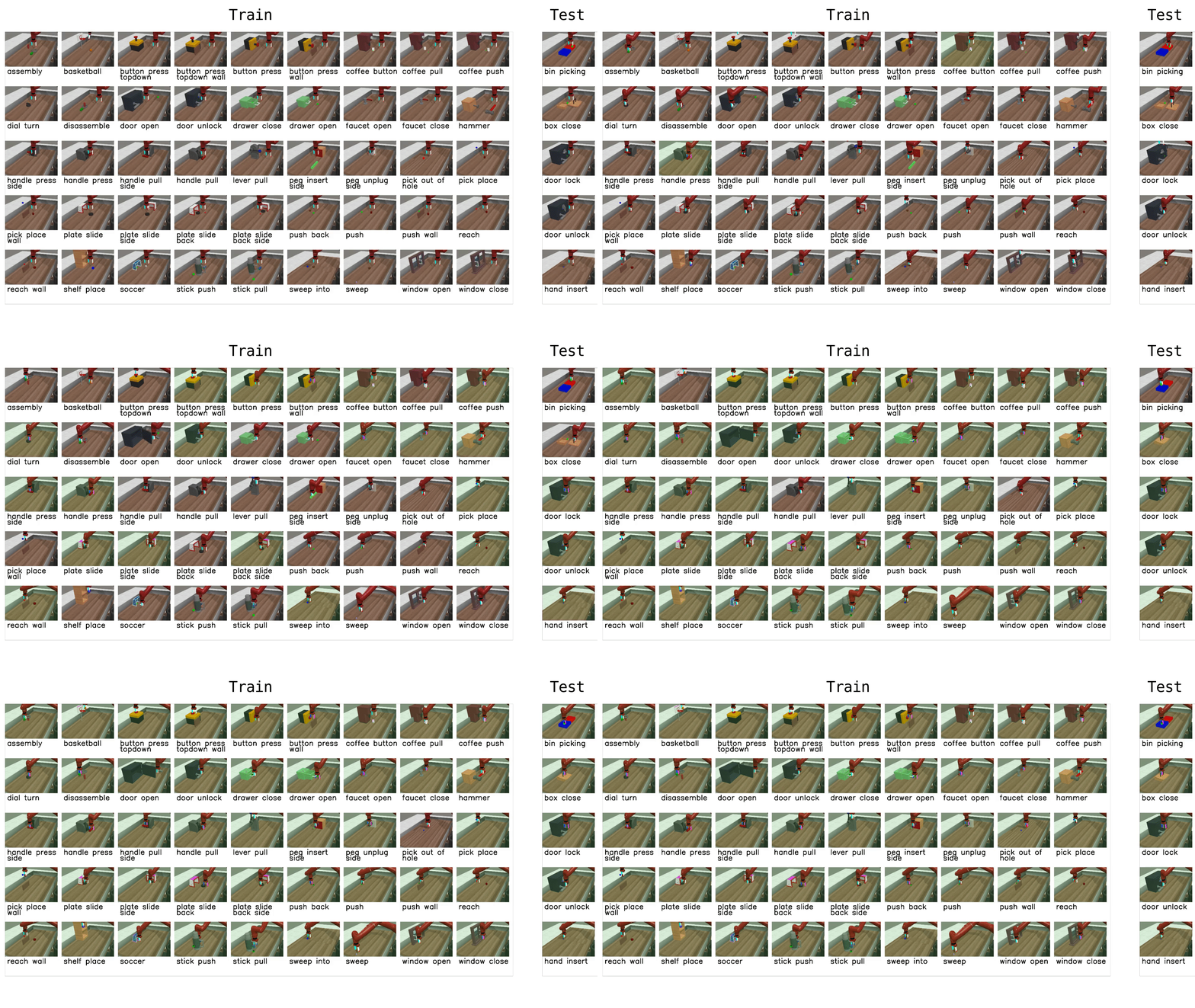
Meta-World is a well-designed, open-source simulation benchmark for multi-task and meta reinforcement learning in continuous-control robotic manipulation. It gives researchers a shared, realistic playground to test whether algorithms can _learn many different tasks_ and _generalize quickly to new ones_ — two central challenges for real-world robotics.
|
||||
|
||||
- 📄 [MetaWorld paper](https://arxiv.org/pdf/1910.10897)
|
||||
- 💻 [Original MetaWorld repo](https://github.com/Farama-Foundation/Metaworld)
|
||||
|
||||
|
||||
|
||||
## Why Meta-World matters
|
||||
|
||||
- **Diverse, realistic tasks.** Meta-World bundles a large suite of simulated manipulation tasks (50 in the MT50 suite) using everyday objects and a common tabletop Sawyer arm. This diversity exposes algorithms to a wide variety of dynamics, contacts and goal specifications while keeping a consistent control and observation structure.
|
||||
- **Focus on generalization and multi-task learning.** By evaluating across task distributions that share structure but differ in goals and objects, Meta-World reveals whether an agent truly learns transferable skills rather than overfitting to a narrow task.
|
||||
- **Standardized evaluation protocol.** It provides clear evaluation modes and difficulty splits, so different methods can be compared fairly across easy, medium, hard and very-hard regimes.
|
||||
- **Empirical insight.** Past evaluations on Meta-World show impressive progress on some fronts, but also highlight that current multi-task and meta-RL methods still struggle with large, diverse task sets. That gap points to important research directions.
|
||||
|
||||
## What it enables in LeRobot
|
||||
|
||||
In LeRobot, you can evaluate any policy or vision-language-action (VLA) model on Meta-World tasks and get a clear success-rate measure. The integration is designed to be straightforward:
|
||||
|
||||
- We provide a LeRobot-ready dataset for Meta-World (MT50) on the HF Hub: `https://huggingface.co/datasets/lerobot/metaworld_mt50`.
|
||||
- This dataset is formatted for the MT50 evaluation that uses all 50 tasks (the most challenging multi-task setting).
|
||||
- MT50 gives the policy a one-hot task vector and uses fixed object/goal positions for consistency.
|
||||
|
||||
- Task descriptions and the exact keys required for evaluation are available in the repo/dataset — use these to ensure your policy outputs the right success signals.
|
||||
|
||||
## Quick start, train a SmolVLA policy on Meta-World
|
||||
|
||||
Example command to train a SmolVLA policy on a subset of tasks:
|
||||
|
||||
```bash
|
||||
lerobot-train \
|
||||
--policy.type=smolvla \
|
||||
--policy.repo_id=${HF_USER}/metaworld-test \
|
||||
--policy.load_vlm_weights=true \
|
||||
--dataset.repo_id=lerobot/metaworld_mt50 \
|
||||
--env.type=metaworld \
|
||||
--env.task=assembly-v3,dial-turn-v3,handle-press-side-v3 \
|
||||
--output_dir=./outputs/ \
|
||||
--steps=100000 \
|
||||
--batch_size=4 \
|
||||
--eval.batch_size=1 \
|
||||
--eval.n_episodes=1 \
|
||||
--eval_freq=1000
|
||||
```
|
||||
|
||||
Notes:
|
||||
|
||||
- `--env.task` accepts explicit task lists (comma separated) or difficulty groups (e.g., `env.task="hard"`).
|
||||
- Adjust `batch_size`, `steps`, and `eval_freq` to match your compute budget.
|
||||
- **Gymnasium Assertion Error**: if you encounter an error like
|
||||
`AssertionError: ['human', 'rgb_array', 'depth_array']` when running MetaWorld environments, this comes from a mismatch between MetaWorld and your Gymnasium version.
|
||||
We recommend using:
|
||||
|
||||
```bash
|
||||
pip install "gymnasium==1.1.0"
|
||||
```
|
||||
|
||||
to ensure proper compatibility.
|
||||
|
||||
## Quick start — evaluate a trained policy
|
||||
|
||||
To evaluate a trained policy on the Meta-World medium difficulty split:
|
||||
|
||||
```bash
|
||||
lerobot-eval \
|
||||
--policy.path="your-policy-id" \
|
||||
--env.type=metaworld \
|
||||
--env.task=medium \
|
||||
--eval.batch_size=1 \
|
||||
--eval.n_episodes=2
|
||||
```
|
||||
|
||||
This will run episodes and return per-task success rates using the standard Meta-World evaluation keys.
|
||||
|
||||
## Practical tips
|
||||
|
||||
- If you care about generalization, run on the full MT50 suite — it’s intentionally challenging and reveals strengths/weaknesses better than a few narrow tasks.
|
||||
- Use the one-hot task conditioning for multi-task training (MT10 / MT50 conventions) so policies have explicit task context.
|
||||
- Inspect the dataset task descriptions and the `info["is_success"]` keys when writing post-processing or logging so your success metrics line up with the benchmark.
|
||||
@@ -1,125 +0,0 @@
|
||||
# Multi-GPU Training
|
||||
|
||||
This guide shows you how to train policies on multiple GPUs using [Hugging Face Accelerate](https://huggingface.co/docs/accelerate).
|
||||
|
||||
## Installation
|
||||
|
||||
First, ensure you have accelerate installed:
|
||||
|
||||
```bash
|
||||
pip install accelerate
|
||||
```
|
||||
|
||||
## Training with Multiple GPUs
|
||||
|
||||
You can launch training in two ways:
|
||||
|
||||
### Option 1: Without config (specify parameters directly)
|
||||
|
||||
You can specify all parameters directly in the command without running `accelerate config`:
|
||||
|
||||
```bash
|
||||
accelerate launch \
|
||||
--multi_gpu \
|
||||
--num_processes=2 \
|
||||
$(which lerobot-train) \
|
||||
--dataset.repo_id=${HF_USER}/my_dataset \
|
||||
--policy.type=act \
|
||||
--policy.repo_id=${HF_USER}/my_trained_policy \
|
||||
--output_dir=outputs/train/act_multi_gpu \
|
||||
--job_name=act_multi_gpu \
|
||||
--wandb.enable=true
|
||||
```
|
||||
|
||||
**Key accelerate parameters:**
|
||||
|
||||
- `--multi_gpu`: Enable multi-GPU training
|
||||
- `--num_processes=2`: Number of GPUs to use
|
||||
- `--mixed_precision=fp16`: Use fp16 mixed precision (or `bf16` if supported)
|
||||
|
||||
### Option 2: Using accelerate config
|
||||
|
||||
If you prefer to save your configuration, you can optionally configure accelerate for your hardware setup by running:
|
||||
|
||||
```bash
|
||||
accelerate config
|
||||
```
|
||||
|
||||
This interactive setup will ask you questions about your training environment (number of GPUs, mixed precision settings, etc.) and saves the configuration for future use. For a simple multi-GPU setup on a single machine, you can use these recommended settings:
|
||||
|
||||
- Compute environment: This machine
|
||||
- Number of machines: 1
|
||||
- Number of processes: (number of GPUs you want to use)
|
||||
- GPU ids to use: (leave empty to use all)
|
||||
- Mixed precision: fp16 or bf16 (recommended for faster training)
|
||||
|
||||
Then launch training with:
|
||||
|
||||
```bash
|
||||
accelerate launch $(which lerobot-train) \
|
||||
--dataset.repo_id=${HF_USER}/my_dataset \
|
||||
--policy.type=act \
|
||||
--policy.repo_id=${HF_USER}/my_trained_policy \
|
||||
--output_dir=outputs/train/act_multi_gpu \
|
||||
--job_name=act_multi_gpu \
|
||||
--wandb.enable=true
|
||||
```
|
||||
|
||||
## How It Works
|
||||
|
||||
When you launch training with accelerate:
|
||||
|
||||
1. **Automatic detection**: LeRobot automatically detects if it's running under accelerate
|
||||
2. **Data distribution**: Your batch is automatically split across GPUs
|
||||
3. **Gradient synchronization**: Gradients are synchronized across GPUs during backpropagation
|
||||
4. **Single process logging**: Only the main process logs to wandb and saves checkpoints
|
||||
|
||||
## Learning Rate and Training Steps Scaling
|
||||
|
||||
**Important:** LeRobot does **NOT** automatically scale learning rates or training steps based on the number of GPUs. This gives you full control over your training hyperparameters.
|
||||
|
||||
### Why No Automatic Scaling?
|
||||
|
||||
Many distributed training frameworks automatically scale the learning rate by the number of GPUs (e.g., `lr = base_lr × num_gpus`).
|
||||
However, LeRobot keeps the learning rate exactly as you specify it.
|
||||
|
||||
### When and How to Scale
|
||||
|
||||
If you want to scale your hyperparameters when using multiple GPUs, you should do it manually:
|
||||
|
||||
**Learning Rate Scaling:**
|
||||
|
||||
```bash
|
||||
# Example: 2 GPUs with linear LR scaling
|
||||
# Base LR: 1e-4, with 2 GPUs -> 2e-4
|
||||
accelerate launch --num_processes=2 $(which lerobot-train) \
|
||||
--optimizer.lr=2e-4 \
|
||||
--dataset.repo_id=lerobot/pusht \
|
||||
--policy=act
|
||||
```
|
||||
|
||||
**Training Steps Scaling:**
|
||||
|
||||
Since the effective batch size `bs` increases with multiple GPUs (batch_size × num_gpus), you may want to reduce the number of training steps proportionally:
|
||||
|
||||
```bash
|
||||
# Example: 2 GPUs with effective batch size 2x larger
|
||||
# Original: batch_size=8, steps=100000
|
||||
# With 2 GPUs: batch_size=8 (16 in total), steps=50000
|
||||
accelerate launch --num_processes=2 $(which lerobot-train) \
|
||||
--batch_size=8 \
|
||||
--steps=50000 \
|
||||
--dataset.repo_id=lerobot/pusht \
|
||||
--policy=act
|
||||
```
|
||||
|
||||
## Notes
|
||||
|
||||
- The `--policy.use_amp` flag in `lerobot-train` is only used when **not** running with accelerate. When using accelerate, mixed precision is controlled by accelerate's configuration.
|
||||
- Training logs, checkpoints, and hub uploads are only done by the main process to avoid conflicts. Non-main processes have console logging disabled to prevent duplicate output.
|
||||
- The effective batch size is `batch_size × num_gpus`. If you use 4 GPUs with `--batch_size=8`, your effective batch size is 32.
|
||||
- Learning rate scheduling is handled correctly across multiple processes—LeRobot sets `step_scheduler_with_optimizer=False` to prevent accelerate from adjusting scheduler steps based on the number of processes.
|
||||
- When saving or pushing models, LeRobot automatically unwraps the model from accelerate's distributed wrapper to ensure compatibility.
|
||||
- WandB integration automatically initializes only on the main process, preventing multiple runs from being created.
|
||||
|
||||
For more advanced configurations and troubleshooting, see the [Accelerate documentation](https://huggingface.co/docs/accelerate). If you want to learn more about how to train on a large number of GPUs, checkout this awesome guide: [Ultrascale Playbook](https://huggingface.co/spaces/nanotron/ultrascale-playbook).
|
||||
@@ -30,10 +30,9 @@ Usage:
|
||||
import numpy as np
|
||||
|
||||
from lerobot.datasets.dataset_tools import (
|
||||
add_features,
|
||||
add_feature,
|
||||
delete_episodes,
|
||||
merge_datasets,
|
||||
modify_features,
|
||||
remove_feature,
|
||||
split_dataset,
|
||||
)
|
||||
@@ -58,56 +57,50 @@ def main():
|
||||
print(f"Train split: {splits['train'].meta.total_episodes} episodes")
|
||||
print(f"Val split: {splits['val'].meta.total_episodes} episodes")
|
||||
|
||||
print("\n3. Adding features...")
|
||||
print("\n3. Adding a reward feature...")
|
||||
|
||||
reward_values = np.random.randn(dataset.meta.total_frames).astype(np.float32)
|
||||
dataset_with_reward = add_feature(
|
||||
dataset,
|
||||
feature_name="reward",
|
||||
feature_values=reward_values,
|
||||
feature_info={
|
||||
"dtype": "float32",
|
||||
"shape": (1,),
|
||||
"names": None,
|
||||
},
|
||||
repo_id="lerobot/pusht_with_reward",
|
||||
)
|
||||
|
||||
def compute_success(row_dict, episode_index, frame_index):
|
||||
episode_length = 10
|
||||
return float(frame_index >= episode_length - 10)
|
||||
|
||||
dataset_with_features = add_features(
|
||||
dataset,
|
||||
features={
|
||||
"reward": (
|
||||
reward_values,
|
||||
{"dtype": "float32", "shape": (1,), "names": None},
|
||||
),
|
||||
"success": (
|
||||
compute_success,
|
||||
{"dtype": "float32", "shape": (1,), "names": None},
|
||||
),
|
||||
dataset_with_success = add_feature(
|
||||
dataset_with_reward,
|
||||
feature_name="success",
|
||||
feature_values=compute_success,
|
||||
feature_info={
|
||||
"dtype": "float32",
|
||||
"shape": (1,),
|
||||
"names": None,
|
||||
},
|
||||
repo_id="lerobot/pusht_with_features",
|
||||
repo_id="lerobot/pusht_with_reward_and_success",
|
||||
)
|
||||
|
||||
print(f"New features: {list(dataset_with_features.meta.features.keys())}")
|
||||
print(f"New features: {list(dataset_with_success.meta.features.keys())}")
|
||||
|
||||
print("\n4. Removing the success feature...")
|
||||
dataset_cleaned = remove_feature(
|
||||
dataset_with_features, feature_names="success", repo_id="lerobot/pusht_cleaned"
|
||||
dataset_with_success, feature_names="success", repo_id="lerobot/pusht_cleaned"
|
||||
)
|
||||
print(f"Features after removal: {list(dataset_cleaned.meta.features.keys())}")
|
||||
|
||||
print("\n5. Using modify_features to add and remove features simultaneously...")
|
||||
dataset_modified = modify_features(
|
||||
dataset_with_features,
|
||||
add_features={
|
||||
"discount": (
|
||||
np.ones(dataset.meta.total_frames, dtype=np.float32) * 0.99,
|
||||
{"dtype": "float32", "shape": (1,), "names": None},
|
||||
),
|
||||
},
|
||||
remove_features="reward",
|
||||
repo_id="lerobot/pusht_modified",
|
||||
)
|
||||
print(f"Modified features: {list(dataset_modified.meta.features.keys())}")
|
||||
|
||||
print("\n6. Merging train and val splits back together...")
|
||||
print("\n5. Merging train and val splits back together...")
|
||||
merged = merge_datasets([splits["train"], splits["val"]], output_repo_id="lerobot/pusht_merged")
|
||||
print(f"Merged dataset: {merged.meta.total_episodes} episodes")
|
||||
|
||||
print("\n7. Complex workflow example...")
|
||||
print("\n6. Complex workflow example...")
|
||||
|
||||
if len(dataset.meta.camera_keys) > 1:
|
||||
camera_to_remove = dataset.meta.camera_keys[0]
|
||||
|
||||
@@ -133,6 +133,4 @@ while recorded_episodes < NUM_EPISODES and not events["stop_recording"]:
|
||||
log_say("Stop recording")
|
||||
robot.disconnect()
|
||||
listener.stop()
|
||||
|
||||
dataset.finalize()
|
||||
dataset.push_to_hub()
|
||||
|
||||
@@ -130,6 +130,4 @@ robot.disconnect()
|
||||
leader_arm.disconnect()
|
||||
keyboard.disconnect()
|
||||
listener.stop()
|
||||
|
||||
dataset.finalize()
|
||||
dataset.push_to_hub()
|
||||
|
||||
@@ -194,6 +194,4 @@ for episode_idx in range(NUM_EPISODES):
|
||||
log_say("Stop recording")
|
||||
robot.disconnect()
|
||||
listener.stop()
|
||||
|
||||
dataset.finalize()
|
||||
dataset.push_to_hub()
|
||||
|
||||
@@ -200,6 +200,4 @@ log_say("Stop recording")
|
||||
robot.disconnect()
|
||||
phone.disconnect()
|
||||
listener.stop()
|
||||
|
||||
dataset.finalize()
|
||||
dataset.push_to_hub()
|
||||
|
||||
@@ -362,8 +362,6 @@ def port_droid(
|
||||
lerobot_dataset.save_episode()
|
||||
logging.info("Save_episode")
|
||||
|
||||
lerobot_dataset.finalize()
|
||||
|
||||
if push_to_hub:
|
||||
lerobot_dataset.push_to_hub(
|
||||
# Add openx tag, since it belongs to the openx collection of datasets
|
||||
|
||||
@@ -195,6 +195,4 @@ for episode_idx in range(NUM_EPISODES):
|
||||
log_say("Stop recording")
|
||||
robot.disconnect()
|
||||
listener.stop()
|
||||
|
||||
dataset.finalize()
|
||||
dataset.push_to_hub()
|
||||
|
||||
@@ -199,6 +199,4 @@ log_say("Stop recording")
|
||||
leader.disconnect()
|
||||
follower.disconnect()
|
||||
listener.stop()
|
||||
|
||||
dataset.finalize()
|
||||
dataset.push_to_hub()
|
||||
|
||||
+5
-6
@@ -62,10 +62,8 @@ dependencies = [
|
||||
"datasets>=4.0.0,<4.2.0",
|
||||
"diffusers>=0.27.2,<0.36.0",
|
||||
"huggingface-hub[hf-transfer,cli]>=0.34.2,<0.36.0",
|
||||
"accelerate>=1.10.0,<2.0.0",
|
||||
|
||||
# Core dependencies
|
||||
"setuptools>=71.0.0,<81.0.0",
|
||||
"cmake>=3.29.0.1,<4.2.0",
|
||||
"einops>=0.8.0,<0.9.0",
|
||||
"opencv-python-headless>=4.9.0,<4.13.0",
|
||||
@@ -81,7 +79,7 @@ dependencies = [
|
||||
"torchvision>=0.21.0,<0.23.0", # TODO: Bumb dependency
|
||||
|
||||
"draccus==0.10.0", # TODO: Remove ==
|
||||
"gymnasium>=1.0.0",
|
||||
"gymnasium>=0.29.1,<1.0.0", # TODO: Bumb dependency
|
||||
"rerun-sdk>=0.21.0,<0.23.0", # TODO: Bumb dependency
|
||||
|
||||
# Support dependencies
|
||||
@@ -134,10 +132,11 @@ test = ["pytest>=8.1.0,<9.0.0", "pytest-timeout>=2.4.0,<3.0.0", "pytest-cov>=5.0
|
||||
video_benchmark = ["scikit-image>=0.23.2,<0.26.0", "pandas>=2.2.2,<2.4.0"]
|
||||
|
||||
# Simulation
|
||||
aloha = ["gym-aloha>=0.1.2,<0.2.0"]
|
||||
aloha = ["gym-aloha>=0.1.1,<0.2.0"]
|
||||
pusht = ["gym-pusht>=0.1.5,<0.2.0", "pymunk>=6.6.0,<7.0.0"] # TODO: Fix pymunk version in gym-pusht instead
|
||||
xarm = ["gym-xarm>=0.1.1,<0.2.0"]
|
||||
libero = ["lerobot[transformers-dep]", "libero @ git+https://github.com/huggingface/lerobot-libero.git@main#egg=libero"]
|
||||
metaworld = ["metaworld>=3.0.0"]
|
||||
|
||||
|
||||
# All
|
||||
all = [
|
||||
@@ -157,9 +156,9 @@ all = [
|
||||
"lerobot[video_benchmark]",
|
||||
"lerobot[aloha]",
|
||||
"lerobot[pusht]",
|
||||
"lerobot[xarm]",
|
||||
"lerobot[phone]",
|
||||
"lerobot[libero]",
|
||||
"lerobot[metaworld]",
|
||||
]
|
||||
|
||||
[project.scripts]
|
||||
|
||||
@@ -57,6 +57,7 @@ available_tasks_per_env = {
|
||||
"AlohaTransferCube-v0",
|
||||
],
|
||||
"pusht": ["PushT-v0"],
|
||||
"xarm": ["XarmLift-v0"],
|
||||
}
|
||||
available_envs = list(available_tasks_per_env.keys())
|
||||
|
||||
@@ -74,6 +75,16 @@ available_datasets_per_env = {
|
||||
# TODO(alexander-soare): Add "lerobot/pusht_keypoints". Right now we can't because this is too tightly
|
||||
# coupled with tests.
|
||||
"pusht": ["lerobot/pusht", "lerobot/pusht_image"],
|
||||
"xarm": [
|
||||
"lerobot/xarm_lift_medium",
|
||||
"lerobot/xarm_lift_medium_replay",
|
||||
"lerobot/xarm_push_medium",
|
||||
"lerobot/xarm_push_medium_replay",
|
||||
"lerobot/xarm_lift_medium_image",
|
||||
"lerobot/xarm_lift_medium_replay_image",
|
||||
"lerobot/xarm_push_medium_image",
|
||||
"lerobot/xarm_push_medium_replay_image",
|
||||
],
|
||||
}
|
||||
|
||||
available_real_world_datasets = [
|
||||
@@ -184,6 +195,7 @@ available_motors = [
|
||||
available_policies_per_env = {
|
||||
"aloha": ["act"],
|
||||
"pusht": ["diffusion", "vqbet"],
|
||||
"xarm": ["tdmpc"],
|
||||
"koch_real": ["act_koch_real"],
|
||||
"aloha_real": ["act_aloha_real"],
|
||||
}
|
||||
|
||||
@@ -28,10 +28,8 @@ import shutil
|
||||
from collections.abc import Callable
|
||||
from pathlib import Path
|
||||
|
||||
import datasets
|
||||
import numpy as np
|
||||
import pandas as pd
|
||||
import pyarrow.parquet as pq
|
||||
import torch
|
||||
from tqdm import tqdm
|
||||
|
||||
@@ -45,6 +43,7 @@ from lerobot.datasets.utils import (
|
||||
DEFAULT_EPISODES_PATH,
|
||||
get_parquet_file_size_in_mb,
|
||||
load_episodes,
|
||||
to_parquet_with_hf_images,
|
||||
update_chunk_file_indices,
|
||||
write_info,
|
||||
write_stats,
|
||||
@@ -269,79 +268,39 @@ def merge_datasets(
|
||||
return merged_dataset
|
||||
|
||||
|
||||
def modify_features(
|
||||
def add_feature(
|
||||
dataset: LeRobotDataset,
|
||||
add_features: dict[str, tuple[np.ndarray | torch.Tensor | Callable, dict]] | None = None,
|
||||
remove_features: str | list[str] | None = None,
|
||||
feature_name: str,
|
||||
feature_values: np.ndarray | torch.Tensor | Callable,
|
||||
feature_info: dict,
|
||||
output_dir: str | Path | None = None,
|
||||
repo_id: str | None = None,
|
||||
) -> LeRobotDataset:
|
||||
"""Modify a LeRobotDataset by adding and/or removing features in a single pass.
|
||||
|
||||
This is the most efficient way to modify features, as it only copies the dataset once
|
||||
regardless of how many features are being added or removed.
|
||||
"""Add a new feature to a LeRobotDataset.
|
||||
|
||||
Args:
|
||||
dataset: The source LeRobotDataset.
|
||||
add_features: Optional dict mapping feature names to (feature_values, feature_info) tuples.
|
||||
remove_features: Optional feature name(s) to remove. Can be a single string or list.
|
||||
feature_name: Name of the new feature.
|
||||
feature_values: Either:
|
||||
- Array/tensor of shape (num_frames, ...) with values for each frame
|
||||
- Callable that takes (frame_dict, episode_index, frame_index) and returns feature value
|
||||
feature_info: Dictionary with feature metadata (dtype, shape, names).
|
||||
output_dir: Directory to save the new dataset. If None, uses default location.
|
||||
repo_id: Repository ID for the new dataset. If None, appends "_modified" to original.
|
||||
|
||||
Returns:
|
||||
New dataset with features modified.
|
||||
|
||||
Example:
|
||||
new_dataset = modify_features(
|
||||
dataset,
|
||||
add_features={
|
||||
"reward": (reward_array, {"dtype": "float32", "shape": [1], "names": None}),
|
||||
},
|
||||
remove_features=["old_feature"],
|
||||
output_dir="./output",
|
||||
)
|
||||
"""
|
||||
if add_features is None and remove_features is None:
|
||||
raise ValueError("Must specify at least one of add_features or remove_features")
|
||||
|
||||
remove_features_list: list[str] = []
|
||||
if remove_features is not None:
|
||||
remove_features_list = [remove_features] if isinstance(remove_features, str) else remove_features
|
||||
|
||||
if add_features:
|
||||
required_keys = {"dtype", "shape"}
|
||||
for feature_name, (_, feature_info) in add_features.items():
|
||||
if feature_name in dataset.meta.features:
|
||||
raise ValueError(f"Feature '{feature_name}' already exists in dataset")
|
||||
|
||||
if not required_keys.issubset(feature_info.keys()):
|
||||
raise ValueError(f"feature_info for '{feature_name}' must contain keys: {required_keys}")
|
||||
|
||||
if remove_features_list:
|
||||
for name in remove_features_list:
|
||||
if name not in dataset.meta.features:
|
||||
raise ValueError(f"Feature '{name}' not found in dataset")
|
||||
|
||||
required_features = {"timestamp", "frame_index", "episode_index", "index", "task_index"}
|
||||
if any(name in required_features for name in remove_features_list):
|
||||
raise ValueError(f"Cannot remove required features: {required_features}")
|
||||
if feature_name in dataset.meta.features:
|
||||
raise ValueError(f"Feature '{feature_name}' already exists in dataset")
|
||||
|
||||
if repo_id is None:
|
||||
repo_id = f"{dataset.repo_id}_modified"
|
||||
output_dir = Path(output_dir) if output_dir is not None else HF_LEROBOT_HOME / repo_id
|
||||
|
||||
required_keys = {"dtype", "shape"}
|
||||
if not required_keys.issubset(feature_info.keys()):
|
||||
raise ValueError(f"feature_info must contain keys: {required_keys}")
|
||||
|
||||
new_features = dataset.meta.features.copy()
|
||||
|
||||
if remove_features_list:
|
||||
for name in remove_features_list:
|
||||
new_features.pop(name, None)
|
||||
|
||||
if add_features:
|
||||
for feature_name, (_, feature_info) in add_features.items():
|
||||
new_features[feature_name] = feature_info
|
||||
|
||||
video_keys_to_remove = [name for name in remove_features_list if name in dataset.meta.video_keys]
|
||||
remaining_video_keys = [k for k in dataset.meta.video_keys if k not in video_keys_to_remove]
|
||||
new_features[feature_name] = feature_info
|
||||
|
||||
new_meta = LeRobotDatasetMetadata.create(
|
||||
repo_id=repo_id,
|
||||
@@ -349,18 +308,17 @@ def modify_features(
|
||||
features=new_features,
|
||||
robot_type=dataset.meta.robot_type,
|
||||
root=output_dir,
|
||||
use_videos=len(remaining_video_keys) > 0,
|
||||
use_videos=len(dataset.meta.video_keys) > 0,
|
||||
)
|
||||
|
||||
_copy_data_with_feature_changes(
|
||||
dataset=dataset,
|
||||
new_meta=new_meta,
|
||||
add_features=add_features,
|
||||
remove_features=remove_features_list if remove_features_list else None,
|
||||
add_features={feature_name: (feature_values, feature_info)},
|
||||
)
|
||||
|
||||
if new_meta.video_keys:
|
||||
_copy_videos(dataset, new_meta, exclude_keys=video_keys_to_remove if video_keys_to_remove else None)
|
||||
if dataset.meta.video_keys:
|
||||
_copy_videos(dataset, new_meta)
|
||||
|
||||
new_dataset = LeRobotDataset(
|
||||
repo_id=repo_id,
|
||||
@@ -373,46 +331,6 @@ def modify_features(
|
||||
return new_dataset
|
||||
|
||||
|
||||
def add_features(
|
||||
dataset: LeRobotDataset,
|
||||
features: dict[str, tuple[np.ndarray | torch.Tensor | Callable, dict]],
|
||||
output_dir: str | Path | None = None,
|
||||
repo_id: str | None = None,
|
||||
) -> LeRobotDataset:
|
||||
"""Add multiple features to a LeRobotDataset in a single pass.
|
||||
|
||||
This is more efficient than calling add_feature() multiple times, as it only
|
||||
copies the dataset once regardless of how many features are being added.
|
||||
|
||||
Args:
|
||||
dataset: The source LeRobotDataset.
|
||||
features: Dictionary mapping feature names to (feature_values, feature_info) tuples.
|
||||
output_dir: Directory to save the new dataset. If None, uses default location.
|
||||
repo_id: Repository ID for the new dataset. If None, appends "_modified" to original.
|
||||
|
||||
Returns:
|
||||
New dataset with all features added.
|
||||
|
||||
Example:
|
||||
features = {
|
||||
"task_embedding": (task_emb_array, {"dtype": "float32", "shape": [384], "names": None}),
|
||||
"cam1_embedding": (cam1_emb_array, {"dtype": "float32", "shape": [768], "names": None}),
|
||||
"cam2_embedding": (cam2_emb_array, {"dtype": "float32", "shape": [768], "names": None}),
|
||||
}
|
||||
new_dataset = add_features(dataset, features, output_dir="./output", repo_id="my_dataset")
|
||||
"""
|
||||
if not features:
|
||||
raise ValueError("No features provided")
|
||||
|
||||
return modify_features(
|
||||
dataset=dataset,
|
||||
add_features=features,
|
||||
remove_features=None,
|
||||
output_dir=output_dir,
|
||||
repo_id=repo_id,
|
||||
)
|
||||
|
||||
|
||||
def remove_feature(
|
||||
dataset: LeRobotDataset,
|
||||
feature_names: str | list[str],
|
||||
@@ -427,17 +345,56 @@ def remove_feature(
|
||||
output_dir: Directory to save the new dataset. If None, uses default location.
|
||||
repo_id: Repository ID for the new dataset. If None, appends "_modified" to original.
|
||||
|
||||
Returns:
|
||||
New dataset with features removed.
|
||||
"""
|
||||
return modify_features(
|
||||
dataset=dataset,
|
||||
add_features=None,
|
||||
remove_features=feature_names,
|
||||
output_dir=output_dir,
|
||||
if isinstance(feature_names, str):
|
||||
feature_names = [feature_names]
|
||||
|
||||
for name in feature_names:
|
||||
if name not in dataset.meta.features:
|
||||
raise ValueError(f"Feature '{name}' not found in dataset")
|
||||
|
||||
required_features = {"timestamp", "frame_index", "episode_index", "index", "task_index"}
|
||||
if any(name in required_features for name in feature_names):
|
||||
raise ValueError(f"Cannot remove required features: {required_features}")
|
||||
|
||||
if repo_id is None:
|
||||
repo_id = f"{dataset.repo_id}_modified"
|
||||
output_dir = Path(output_dir) if output_dir is not None else HF_LEROBOT_HOME / repo_id
|
||||
|
||||
new_features = {k: v for k, v in dataset.meta.features.items() if k not in feature_names}
|
||||
|
||||
video_keys_to_remove = [name for name in feature_names if name in dataset.meta.video_keys]
|
||||
|
||||
remaining_video_keys = [k for k in dataset.meta.video_keys if k not in video_keys_to_remove]
|
||||
|
||||
new_meta = LeRobotDatasetMetadata.create(
|
||||
repo_id=repo_id,
|
||||
fps=dataset.meta.fps,
|
||||
features=new_features,
|
||||
robot_type=dataset.meta.robot_type,
|
||||
root=output_dir,
|
||||
use_videos=len(remaining_video_keys) > 0,
|
||||
)
|
||||
|
||||
_copy_data_with_feature_changes(
|
||||
dataset=dataset,
|
||||
new_meta=new_meta,
|
||||
remove_features=feature_names,
|
||||
)
|
||||
|
||||
if new_meta.video_keys:
|
||||
_copy_videos(dataset, new_meta, exclude_keys=video_keys_to_remove)
|
||||
|
||||
new_dataset = LeRobotDataset(
|
||||
repo_id=repo_id,
|
||||
root=output_dir,
|
||||
image_transforms=dataset.image_transforms,
|
||||
delta_timestamps=dataset.delta_timestamps,
|
||||
tolerance_s=dataset.tolerance_s,
|
||||
)
|
||||
|
||||
return new_dataset
|
||||
|
||||
|
||||
def _fractions_to_episode_indices(
|
||||
total_episodes: int,
|
||||
@@ -544,7 +501,10 @@ def _copy_and_reindex_data(
|
||||
dst_path = dst_meta.root / DEFAULT_DATA_PATH.format(chunk_index=chunk_idx, file_index=file_idx)
|
||||
dst_path.parent.mkdir(parents=True, exist_ok=True)
|
||||
|
||||
_write_parquet(df, dst_path, dst_meta)
|
||||
if len(dst_meta.image_keys) > 0:
|
||||
to_parquet_with_hf_images(df, dst_path)
|
||||
else:
|
||||
df.to_parquet(dst_path, index=False)
|
||||
|
||||
for ep_old_idx in episodes_to_keep:
|
||||
ep_new_idx = episode_mapping[ep_old_idx]
|
||||
@@ -902,25 +862,6 @@ def _copy_and_reindex_episodes_metadata(
|
||||
write_stats(filtered_stats, dst_meta.root)
|
||||
|
||||
|
||||
def _write_parquet(df: pd.DataFrame, path: Path, meta: LeRobotDatasetMetadata) -> None:
|
||||
"""Write DataFrame to parquet
|
||||
|
||||
This ensures images are properly embedded and the file can be loaded correctly by HF datasets.
|
||||
"""
|
||||
from lerobot.datasets.utils import embed_images, get_hf_features_from_features
|
||||
|
||||
hf_features = get_hf_features_from_features(meta.features)
|
||||
ep_dataset = datasets.Dataset.from_dict(df.to_dict(orient="list"), features=hf_features, split="train")
|
||||
|
||||
if len(meta.image_keys) > 0:
|
||||
ep_dataset = embed_images(ep_dataset)
|
||||
|
||||
table = ep_dataset.with_format("arrow")[:]
|
||||
writer = pq.ParquetWriter(path, schema=table.schema, compression="snappy", use_dictionary=True)
|
||||
writer.write_table(table)
|
||||
writer.close()
|
||||
|
||||
|
||||
def _save_data_chunk(
|
||||
df: pd.DataFrame,
|
||||
meta: LeRobotDatasetMetadata,
|
||||
@@ -936,7 +877,10 @@ def _save_data_chunk(
|
||||
path = meta.root / DEFAULT_DATA_PATH.format(chunk_index=chunk_idx, file_index=file_idx)
|
||||
path.parent.mkdir(parents=True, exist_ok=True)
|
||||
|
||||
_write_parquet(df, path, meta)
|
||||
if len(meta.image_keys) > 0:
|
||||
to_parquet_with_hf_images(df, path)
|
||||
else:
|
||||
df.to_parquet(path, index=False)
|
||||
|
||||
episode_metadata = {}
|
||||
for ep_idx in df["episode_index"].unique():
|
||||
@@ -962,34 +906,19 @@ def _copy_data_with_feature_changes(
|
||||
remove_features: list[str] | None = None,
|
||||
) -> None:
|
||||
"""Copy data while adding or removing features."""
|
||||
if dataset.meta.episodes is None:
|
||||
dataset.meta.episodes = load_episodes(dataset.meta.root)
|
||||
|
||||
# Map file paths to episode indices to extract chunk/file indices
|
||||
file_to_episodes: dict[Path, set[int]] = {}
|
||||
file_paths = set()
|
||||
for ep_idx in range(dataset.meta.total_episodes):
|
||||
file_path = dataset.meta.get_data_file_path(ep_idx)
|
||||
if file_path not in file_to_episodes:
|
||||
file_to_episodes[file_path] = set()
|
||||
file_to_episodes[file_path].add(ep_idx)
|
||||
file_paths.add(dataset.meta.get_data_file_path(ep_idx))
|
||||
|
||||
frame_idx = 0
|
||||
|
||||
for src_path in tqdm(sorted(file_to_episodes.keys()), desc="Processing data files"):
|
||||
for src_path in tqdm(sorted(file_paths), desc="Processing data files"):
|
||||
df = pd.read_parquet(dataset.root / src_path).reset_index(drop=True)
|
||||
|
||||
# Get chunk_idx and file_idx from the source file's first episode
|
||||
episodes_in_file = file_to_episodes[src_path]
|
||||
first_ep_idx = min(episodes_in_file)
|
||||
src_ep = dataset.meta.episodes[first_ep_idx]
|
||||
chunk_idx = src_ep["data/chunk_index"]
|
||||
file_idx = src_ep["data/file_index"]
|
||||
|
||||
if remove_features:
|
||||
df = df.drop(columns=remove_features, errors="ignore")
|
||||
|
||||
if add_features:
|
||||
end_idx = frame_idx + len(df)
|
||||
for feature_name, (values, _) in add_features.items():
|
||||
if callable(values):
|
||||
feature_values = []
|
||||
@@ -1002,18 +931,15 @@ def _copy_data_with_feature_changes(
|
||||
feature_values.append(value)
|
||||
df[feature_name] = feature_values
|
||||
else:
|
||||
end_idx = frame_idx + len(df)
|
||||
feature_slice = values[frame_idx:end_idx]
|
||||
if len(feature_slice.shape) > 1 and feature_slice.shape[1] == 1:
|
||||
df[feature_name] = feature_slice.flatten()
|
||||
else:
|
||||
df[feature_name] = feature_slice
|
||||
frame_idx = end_idx
|
||||
frame_idx = end_idx
|
||||
|
||||
# Write using the preserved chunk_idx and file_idx from source
|
||||
dst_path = new_meta.root / DEFAULT_DATA_PATH.format(chunk_index=chunk_idx, file_index=file_idx)
|
||||
dst_path.parent.mkdir(parents=True, exist_ok=True)
|
||||
|
||||
_write_parquet(df, dst_path, new_meta)
|
||||
_save_data_chunk(df, new_meta)
|
||||
|
||||
_copy_episodes_metadata_and_stats(dataset, new_meta)
|
||||
|
||||
|
||||
@@ -69,9 +69,9 @@ from lerobot.datasets.utils import (
|
||||
LEGACY_TASKS_PATH,
|
||||
cast_stats_to_numpy,
|
||||
flatten_dict,
|
||||
get_file_size_in_mb,
|
||||
get_parquet_file_size_in_mb,
|
||||
get_parquet_num_frames,
|
||||
get_video_size_in_mb,
|
||||
load_info,
|
||||
update_chunk_file_indices,
|
||||
write_episodes,
|
||||
@@ -310,7 +310,7 @@ def convert_videos_of_camera(root: Path, new_root: Path, video_key: str, video_f
|
||||
episodes_metadata = []
|
||||
|
||||
for ep_path in tqdm.tqdm(ep_paths, desc=f"convert videos of {video_key}"):
|
||||
ep_size_in_mb = get_file_size_in_mb(ep_path)
|
||||
ep_size_in_mb = get_video_size_in_mb(ep_path)
|
||||
ep_duration_in_s = get_video_duration_in_s(ep_path)
|
||||
|
||||
# Check if adding this episode would exceed the limit
|
||||
|
||||
@@ -12,4 +12,4 @@
|
||||
# See the License for the specific language governing permissions and
|
||||
# limitations under the License.
|
||||
|
||||
from .configs import AlohaEnv, EnvConfig, PushtEnv # noqa: F401
|
||||
from .configs import AlohaEnv, EnvConfig, PushtEnv, XarmEnv # noqa: F401
|
||||
|
||||
+39
-42
@@ -133,6 +133,45 @@ class PushtEnv(EnvConfig):
|
||||
}
|
||||
|
||||
|
||||
@EnvConfig.register_subclass("xarm")
|
||||
@dataclass
|
||||
class XarmEnv(EnvConfig):
|
||||
task: str | None = "XarmLift-v0"
|
||||
fps: int = 15
|
||||
episode_length: int = 200
|
||||
obs_type: str = "pixels_agent_pos"
|
||||
render_mode: str = "rgb_array"
|
||||
visualization_width: int = 384
|
||||
visualization_height: int = 384
|
||||
features: dict[str, PolicyFeature] = field(
|
||||
default_factory=lambda: {
|
||||
ACTION: PolicyFeature(type=FeatureType.ACTION, shape=(4,)),
|
||||
"pixels": PolicyFeature(type=FeatureType.VISUAL, shape=(84, 84, 3)),
|
||||
}
|
||||
)
|
||||
features_map: dict[str, str] = field(
|
||||
default_factory=lambda: {
|
||||
ACTION: ACTION,
|
||||
"agent_pos": OBS_STATE,
|
||||
"pixels": OBS_IMAGE,
|
||||
}
|
||||
)
|
||||
|
||||
def __post_init__(self):
|
||||
if self.obs_type == "pixels_agent_pos":
|
||||
self.features["agent_pos"] = PolicyFeature(type=FeatureType.STATE, shape=(4,))
|
||||
|
||||
@property
|
||||
def gym_kwargs(self) -> dict:
|
||||
return {
|
||||
"obs_type": self.obs_type,
|
||||
"render_mode": self.render_mode,
|
||||
"visualization_width": self.visualization_width,
|
||||
"visualization_height": self.visualization_height,
|
||||
"max_episode_steps": self.episode_length,
|
||||
}
|
||||
|
||||
|
||||
@dataclass
|
||||
class ImagePreprocessingConfig:
|
||||
crop_params_dict: dict[str, tuple[int, int, int, int]] | None = None
|
||||
@@ -267,45 +306,3 @@ class LiberoEnv(EnvConfig):
|
||||
"obs_type": self.obs_type,
|
||||
"render_mode": self.render_mode,
|
||||
}
|
||||
|
||||
|
||||
@EnvConfig.register_subclass("metaworld")
|
||||
@dataclass
|
||||
class MetaworldEnv(EnvConfig):
|
||||
task: str = "metaworld-push-v2" # add all tasks
|
||||
fps: int = 80
|
||||
episode_length: int = 400
|
||||
obs_type: str = "pixels_agent_pos"
|
||||
render_mode: str = "rgb_array"
|
||||
multitask_eval: bool = True
|
||||
features: dict[str, PolicyFeature] = field(
|
||||
default_factory=lambda: {
|
||||
"action": PolicyFeature(type=FeatureType.ACTION, shape=(4,)),
|
||||
}
|
||||
)
|
||||
features_map: dict[str, str] = field(
|
||||
default_factory=lambda: {
|
||||
"action": ACTION,
|
||||
"agent_pos": OBS_STATE,
|
||||
"top": f"{OBS_IMAGE}",
|
||||
"pixels/top": f"{OBS_IMAGE}",
|
||||
}
|
||||
)
|
||||
|
||||
def __post_init__(self):
|
||||
if self.obs_type == "pixels":
|
||||
self.features["top"] = PolicyFeature(type=FeatureType.VISUAL, shape=(480, 480, 3))
|
||||
|
||||
elif self.obs_type == "pixels_agent_pos":
|
||||
self.features["agent_pos"] = PolicyFeature(type=FeatureType.STATE, shape=(4,))
|
||||
self.features["pixels/top"] = PolicyFeature(type=FeatureType.VISUAL, shape=(480, 480, 3))
|
||||
|
||||
else:
|
||||
raise ValueError(f"Unsupported obs_type: {self.obs_type}")
|
||||
|
||||
@property
|
||||
def gym_kwargs(self) -> dict:
|
||||
return {
|
||||
"obs_type": self.obs_type,
|
||||
"render_mode": self.render_mode,
|
||||
}
|
||||
|
||||
@@ -17,7 +17,7 @@ import importlib
|
||||
|
||||
import gymnasium as gym
|
||||
|
||||
from lerobot.envs.configs import AlohaEnv, EnvConfig, LiberoEnv, PushtEnv
|
||||
from lerobot.envs.configs import AlohaEnv, EnvConfig, LiberoEnv, PushtEnv, XarmEnv
|
||||
|
||||
|
||||
def make_env_config(env_type: str, **kwargs) -> EnvConfig:
|
||||
@@ -25,6 +25,8 @@ def make_env_config(env_type: str, **kwargs) -> EnvConfig:
|
||||
return AlohaEnv(**kwargs)
|
||||
elif env_type == "pusht":
|
||||
return PushtEnv(**kwargs)
|
||||
elif env_type == "xarm":
|
||||
return XarmEnv(**kwargs)
|
||||
elif env_type == "libero":
|
||||
return LiberoEnv(**kwargs)
|
||||
else:
|
||||
@@ -72,18 +74,7 @@ def make_env(
|
||||
gym_kwargs=cfg.gym_kwargs,
|
||||
env_cls=env_cls,
|
||||
)
|
||||
elif "metaworld" in cfg.type:
|
||||
from lerobot.envs.metaworld import create_metaworld_envs
|
||||
|
||||
if cfg.task is None:
|
||||
raise ValueError("MetaWorld requires a task to be specified")
|
||||
|
||||
return create_metaworld_envs(
|
||||
task=cfg.task,
|
||||
n_envs=n_envs,
|
||||
gym_kwargs=cfg.gym_kwargs,
|
||||
env_cls=env_cls,
|
||||
)
|
||||
package_name = f"gym_{cfg.type}"
|
||||
try:
|
||||
importlib.import_module(package_name)
|
||||
@@ -96,7 +87,7 @@ def make_env(
|
||||
def _make_one():
|
||||
return gym.make(gym_handle, disable_env_checker=cfg.disable_env_checker, **(cfg.gym_kwargs or {}))
|
||||
|
||||
vec = env_cls([_make_one for _ in range(n_envs)], autoreset_mode=gym.vector.AutoresetMode.SAME_STEP)
|
||||
vec = env_cls([_make_one for _ in range(n_envs)])
|
||||
|
||||
# normalize to {suite: {task_id: vec_env}} for consistency
|
||||
suite_name = cfg.type # e.g., "pusht", "aloha"
|
||||
|
||||
+11
-15
@@ -260,23 +260,19 @@ class LiberoEnv(gym.Env):
|
||||
|
||||
is_success = self._env.check_success()
|
||||
terminated = done or is_success
|
||||
info.update(
|
||||
{
|
||||
"task": self.task,
|
||||
"task_id": self.task_id,
|
||||
"done": done,
|
||||
"is_success": is_success,
|
||||
}
|
||||
)
|
||||
info["is_success"] = is_success
|
||||
|
||||
observation = self._format_raw_obs(raw_obs)
|
||||
if terminated:
|
||||
info["final_info"] = {
|
||||
"task": self.task,
|
||||
"task_id": self.task_id,
|
||||
"done": bool(done),
|
||||
"is_success": bool(is_success),
|
||||
}
|
||||
if done:
|
||||
self.reset()
|
||||
info.update(
|
||||
{
|
||||
"task": self.task,
|
||||
"task_id": self.task_id,
|
||||
"done": done,
|
||||
"is_success": is_success,
|
||||
}
|
||||
)
|
||||
truncated = False
|
||||
return observation, reward, terminated, truncated, info
|
||||
|
||||
|
||||
@@ -1,313 +0,0 @@
|
||||
#!/usr/bin/env python
|
||||
|
||||
# Copyright 2025 The HuggingFace Inc. team. All rights reserved.
|
||||
#
|
||||
# Licensed under the Apache License, Version 2.0 (the "License");
|
||||
# you may not use this file except in compliance with the License.
|
||||
# You may obtain a copy of the License at
|
||||
#
|
||||
# http://www.apache.org/licenses/LICENSE-2.0
|
||||
#
|
||||
# Unless required by applicable law or agreed to in writing, software
|
||||
# distributed under the License is distributed on an "AS IS" BASIS,
|
||||
# WITHOUT WARRANTIES OR CONDITIONS OF ANY KIND, either express or implied.
|
||||
# See the License for the specific language governing permissions and
|
||||
# limitations under the License.
|
||||
import json
|
||||
from collections import defaultdict
|
||||
from collections.abc import Callable, Sequence
|
||||
from pathlib import Path
|
||||
from typing import Any
|
||||
|
||||
import gymnasium as gym
|
||||
import metaworld
|
||||
import metaworld.policies as policies
|
||||
import numpy as np
|
||||
from gymnasium import spaces
|
||||
|
||||
# ---- Load configuration data from the external JSON file ----
|
||||
CONFIG_PATH = Path(__file__).parent / "metaworld_config.json"
|
||||
try:
|
||||
with open(CONFIG_PATH) as f:
|
||||
data = json.load(f)
|
||||
except FileNotFoundError as err:
|
||||
raise FileNotFoundError(
|
||||
"Could not find 'metaworld_config.json'. "
|
||||
"Please ensure the configuration file is in the same directory as the script."
|
||||
) from err
|
||||
except json.JSONDecodeError as err:
|
||||
raise ValueError(
|
||||
"Failed to decode 'metaworld_config.json'. Please ensure it is a valid JSON file."
|
||||
) from err
|
||||
|
||||
# ---- Process the loaded data ----
|
||||
|
||||
# extract and type-check top-level dicts
|
||||
task_descriptions_obj = data.get("TASK_DESCRIPTIONS")
|
||||
if not isinstance(task_descriptions_obj, dict):
|
||||
raise TypeError("Expected TASK_DESCRIPTIONS to be a dict[str, str]")
|
||||
TASK_DESCRIPTIONS: dict[str, str] = task_descriptions_obj
|
||||
|
||||
task_name_to_id_obj = data.get("TASK_NAME_TO_ID")
|
||||
if not isinstance(task_name_to_id_obj, dict):
|
||||
raise TypeError("Expected TASK_NAME_TO_ID to be a dict[str, int]")
|
||||
TASK_NAME_TO_ID: dict[str, int] = task_name_to_id_obj
|
||||
|
||||
# difficulty -> tasks mapping
|
||||
difficulty_to_tasks = data.get("DIFFICULTY_TO_TASKS")
|
||||
if not isinstance(difficulty_to_tasks, dict):
|
||||
raise TypeError("Expected 'DIFFICULTY_TO_TASKS' to be a dict[str, list[str]]")
|
||||
DIFFICULTY_TO_TASKS: dict[str, list[str]] = difficulty_to_tasks
|
||||
|
||||
# convert policy strings -> actual policy classes
|
||||
task_policy_mapping = data.get("TASK_POLICY_MAPPING")
|
||||
if not isinstance(task_policy_mapping, dict):
|
||||
raise TypeError("Expected 'TASK_POLICY_MAPPING' to be a dict[str, str]")
|
||||
TASK_POLICY_MAPPING: dict[str, Any] = {
|
||||
task_name: getattr(policies, policy_class_name)
|
||||
for task_name, policy_class_name in task_policy_mapping.items()
|
||||
}
|
||||
ACTION_DIM = 4
|
||||
OBS_DIM = 4
|
||||
|
||||
|
||||
class MetaworldEnv(gym.Env):
|
||||
metadata = {"render_modes": ["rgb_array"], "render_fps": 80}
|
||||
|
||||
def __init__(
|
||||
self,
|
||||
task,
|
||||
camera_name="corner2",
|
||||
obs_type="pixels",
|
||||
render_mode="rgb_array",
|
||||
observation_width=480,
|
||||
observation_height=480,
|
||||
visualization_width=640,
|
||||
visualization_height=480,
|
||||
):
|
||||
super().__init__()
|
||||
self.task = task.replace("metaworld-", "")
|
||||
self.obs_type = obs_type
|
||||
self.render_mode = render_mode
|
||||
self.observation_width = observation_width
|
||||
self.observation_height = observation_height
|
||||
self.visualization_width = visualization_width
|
||||
self.visualization_height = visualization_height
|
||||
self.camera_name = camera_name
|
||||
|
||||
self._env = self._make_envs_task(self.task)
|
||||
self._max_episode_steps = self._env.max_path_length
|
||||
self.task_description = TASK_DESCRIPTIONS[self.task]
|
||||
|
||||
self.expert_policy = TASK_POLICY_MAPPING[self.task]()
|
||||
|
||||
if self.obs_type == "state":
|
||||
raise NotImplementedError()
|
||||
elif self.obs_type == "pixels":
|
||||
self.observation_space = spaces.Dict(
|
||||
{
|
||||
"pixels": spaces.Box(
|
||||
low=0,
|
||||
high=255,
|
||||
shape=(self.observation_height, self.observation_width, 3),
|
||||
dtype=np.uint8,
|
||||
)
|
||||
}
|
||||
)
|
||||
elif self.obs_type == "pixels_agent_pos":
|
||||
self.observation_space = spaces.Dict(
|
||||
{
|
||||
"pixels": spaces.Box(
|
||||
low=0,
|
||||
high=255,
|
||||
shape=(self.observation_height, self.observation_width, 3),
|
||||
dtype=np.uint8,
|
||||
),
|
||||
"agent_pos": spaces.Box(
|
||||
low=-1000.0,
|
||||
high=1000.0,
|
||||
shape=(OBS_DIM,),
|
||||
dtype=np.float64,
|
||||
),
|
||||
}
|
||||
)
|
||||
|
||||
self.action_space = spaces.Box(low=-1, high=1, shape=(ACTION_DIM,), dtype=np.float32)
|
||||
|
||||
def render(self) -> np.ndarray:
|
||||
"""
|
||||
Render the current environment frame.
|
||||
|
||||
Returns:
|
||||
np.ndarray: The rendered RGB image from the environment.
|
||||
"""
|
||||
image = self._env.render()
|
||||
if self.camera_name == "corner2":
|
||||
# Images from this camera are flipped — correct them
|
||||
image = np.flip(image, (0, 1))
|
||||
return image
|
||||
|
||||
def _make_envs_task(self, env_name: str):
|
||||
mt1 = metaworld.MT1(env_name, seed=42)
|
||||
env = mt1.train_classes[env_name](render_mode="rgb_array", camera_name=self.camera_name)
|
||||
env.set_task(mt1.train_tasks[0])
|
||||
if self.camera_name == "corner2":
|
||||
env.model.cam_pos[2] = [
|
||||
0.75,
|
||||
0.075,
|
||||
0.7,
|
||||
] # corner2 position, similar to https://arxiv.org/pdf/2206.14244
|
||||
env.reset()
|
||||
env._freeze_rand_vec = False # otherwise no randomization
|
||||
return env
|
||||
|
||||
def _format_raw_obs(self, raw_obs: np.ndarray) -> dict[str, Any]:
|
||||
image = None
|
||||
if self._env is not None:
|
||||
image = self._env.render()
|
||||
if self.camera_name == "corner2":
|
||||
# NOTE: The "corner2" camera in MetaWorld environments outputs images with both axes inverted.
|
||||
image = np.flip(image, (0, 1))
|
||||
agent_pos = raw_obs[:4]
|
||||
if self.obs_type == "state":
|
||||
raise NotImplementedError(
|
||||
"'state' obs_type not implemented for MetaWorld. Use pixel modes instead."
|
||||
)
|
||||
|
||||
elif self.obs_type in ("pixels", "pixels_agent_pos"):
|
||||
assert image is not None, (
|
||||
"Expected `image` to be rendered before constructing pixel-based observations. "
|
||||
"This likely means `env.render()` returned None or the environment was not provided."
|
||||
)
|
||||
|
||||
if self.obs_type == "pixels":
|
||||
obs = {"pixels": image.copy()}
|
||||
|
||||
else: # pixels_agent_pos
|
||||
obs = {
|
||||
"pixels": image.copy(),
|
||||
"agent_pos": agent_pos,
|
||||
}
|
||||
else:
|
||||
raise ValueError(f"Unknown obs_type: {self.obs_type}")
|
||||
return obs
|
||||
|
||||
def reset(
|
||||
self,
|
||||
seed: int | None = None,
|
||||
**kwargs,
|
||||
) -> tuple[dict[str, Any], dict[str, Any]]:
|
||||
"""
|
||||
Reset the environment to its initial state.
|
||||
|
||||
Args:
|
||||
seed (Optional[int]): Random seed for environment initialization.
|
||||
|
||||
Returns:
|
||||
observation (Dict[str, Any]): The initial formatted observation.
|
||||
info (Dict[str, Any]): Additional info about the reset state.
|
||||
"""
|
||||
super().reset(seed=seed)
|
||||
|
||||
raw_obs, info = self._env.reset(seed=seed)
|
||||
|
||||
observation = self._format_raw_obs(raw_obs)
|
||||
|
||||
info = {"is_success": False}
|
||||
return observation, info
|
||||
|
||||
def step(self, action: np.ndarray) -> tuple[dict[str, Any], float, bool, bool, dict[str, Any]]:
|
||||
"""
|
||||
Perform one environment step.
|
||||
|
||||
Args:
|
||||
action (np.ndarray): The action to execute, must be 1-D with shape (action_dim,).
|
||||
|
||||
Returns:
|
||||
observation (Dict[str, Any]): The formatted observation after the step.
|
||||
reward (float): The scalar reward for this step.
|
||||
terminated (bool): Whether the episode terminated successfully.
|
||||
truncated (bool): Whether the episode was truncated due to a time limit.
|
||||
info (Dict[str, Any]): Additional environment info.
|
||||
"""
|
||||
if action.ndim != 1:
|
||||
raise ValueError(
|
||||
f"Expected action to be 1-D (shape (action_dim,)), "
|
||||
f"but got shape {action.shape} with ndim={action.ndim}"
|
||||
)
|
||||
raw_obs, reward, done, truncated, info = self._env.step(action)
|
||||
|
||||
# Determine whether the task was successful
|
||||
is_success = bool(info.get("success", 0))
|
||||
terminated = done or is_success
|
||||
info.update(
|
||||
{
|
||||
"task": self.task,
|
||||
"done": done,
|
||||
"is_success": is_success,
|
||||
}
|
||||
)
|
||||
|
||||
# Format the raw observation into the expected structure
|
||||
observation = self._format_raw_obs(raw_obs)
|
||||
if terminated:
|
||||
info["final_info"] = {
|
||||
"task": self.task,
|
||||
"done": bool(done),
|
||||
"is_success": bool(is_success),
|
||||
}
|
||||
self.reset()
|
||||
|
||||
return observation, reward, terminated, truncated, info
|
||||
|
||||
def close(self):
|
||||
self._env.close()
|
||||
|
||||
|
||||
# ---- Main API ----------------------------------------------------------------
|
||||
|
||||
|
||||
def create_metaworld_envs(
|
||||
task: str,
|
||||
n_envs: int,
|
||||
gym_kwargs: dict[str, Any] | None = None,
|
||||
env_cls: Callable[[Sequence[Callable[[], Any]]], Any] | None = None,
|
||||
) -> dict[str, dict[int, Any]]:
|
||||
"""
|
||||
Create vectorized Meta-World environments with a consistent return shape.
|
||||
|
||||
Returns:
|
||||
dict[task_group][task_id] -> vec_env (env_cls([...]) with exactly n_envs factories)
|
||||
Notes:
|
||||
- n_envs is the number of rollouts *per task* (episode_index = 0..n_envs-1).
|
||||
- `task` can be a single difficulty group (e.g., "easy", "medium", "hard") or a comma-separated list.
|
||||
- If a task name is not in DIFFICULTY_TO_TASKS, we treat it as a single custom task.
|
||||
"""
|
||||
if env_cls is None or not callable(env_cls):
|
||||
raise ValueError("env_cls must be a callable that wraps a list of environment factory callables.")
|
||||
if not isinstance(n_envs, int) or n_envs <= 0:
|
||||
raise ValueError(f"n_envs must be a positive int; got {n_envs}.")
|
||||
|
||||
gym_kwargs = dict(gym_kwargs or {})
|
||||
task_groups = [t.strip() for t in task.split(",") if t.strip()]
|
||||
if not task_groups:
|
||||
raise ValueError("`task` must contain at least one Meta-World task or difficulty group.")
|
||||
|
||||
print(f"Creating Meta-World envs | task_groups={task_groups} | n_envs(per task)={n_envs}")
|
||||
|
||||
out: dict[str, dict[int, Any]] = defaultdict(dict)
|
||||
|
||||
for group in task_groups:
|
||||
# if not in difficulty presets, treat it as a single custom task
|
||||
tasks = DIFFICULTY_TO_TASKS.get(group, [group])
|
||||
|
||||
for tid, task_name in enumerate(tasks):
|
||||
print(f"Building vec env | group={group} | task_id={tid} | task={task_name}")
|
||||
|
||||
# build n_envs factories
|
||||
fns = [(lambda tn=task_name: MetaworldEnv(task=tn, **gym_kwargs)) for _ in range(n_envs)]
|
||||
|
||||
out[group][tid] = env_cls(fns)
|
||||
|
||||
# return a plain dict for consistency
|
||||
return {group: dict(task_map) for group, task_map in out.items()}
|
||||
@@ -1,121 +0,0 @@
|
||||
{
|
||||
"TASK_DESCRIPTIONS": {
|
||||
"assembly-v3": "Pick up a nut and place it onto a peg",
|
||||
"basketball-v3": "Dunk the basketball into the basket",
|
||||
"bin-picking-v3": "Grasp the puck from one bin and place it into another bin",
|
||||
"box-close-v3": "Grasp the cover and close the box with it",
|
||||
"button-press-topdown-v3": "Press a button from the top",
|
||||
"button-press-topdown-wall-v3": "Bypass a wall and press a button from the top",
|
||||
"button-press-v3": "Press a button",
|
||||
"button-press-wall-v3": "Bypass a wall and press a button",
|
||||
"coffee-button-v3": "Push a button on the coffee machine",
|
||||
"coffee-pull-v3": "Pull a mug from a coffee machine",
|
||||
"coffee-push-v3": "Push a mug under a coffee machine",
|
||||
"dial-turn-v3": "Rotate a dial 180 degrees",
|
||||
"disassemble-v3": "Pick a nut out of a peg",
|
||||
"door-close-v3": "Close a door with a revolving joint",
|
||||
"door-lock-v3": "Lock the door by rotating the lock clockwise",
|
||||
"door-open-v3": "Open a door with a revolving joint",
|
||||
"door-unlock-v3": "Unlock the door by rotating the lock counter-clockwise",
|
||||
"hand-insert-v3": "Insert the gripper into a hole",
|
||||
"drawer-close-v3": "Push and close a drawer",
|
||||
"drawer-open-v3": "Open a drawer",
|
||||
"faucet-open-v3": "Rotate the faucet counter-clockwise",
|
||||
"faucet-close-v3": "Rotate the faucet clockwise",
|
||||
"hammer-v3": "Hammer a screw on the wall",
|
||||
"handle-press-side-v3": "Press a handle down sideways",
|
||||
"handle-press-v3": "Press a handle down",
|
||||
"handle-pull-side-v3": "Pull a handle up sideways",
|
||||
"handle-pull-v3": "Pull a handle up",
|
||||
"lever-pull-v3": "Pull a lever down 90 degrees",
|
||||
"peg-insert-side-v3": "Insert a peg sideways",
|
||||
"pick-place-wall-v3": "Pick a puck, bypass a wall and place the puck",
|
||||
"pick-out-of-hole-v3": "Pick up a puck from a hole",
|
||||
"reach-v3": "Reach a goal position",
|
||||
"push-back-v3": "Push the puck to a goal",
|
||||
"push-v3": "Push the puck to a goal",
|
||||
"pick-place-v3": "Pick and place a puck to a goal",
|
||||
"plate-slide-v3": "Slide a plate into a cabinet",
|
||||
"plate-slide-side-v3": "Slide a plate into a cabinet sideways",
|
||||
"plate-slide-back-v3": "Get a plate from the cabinet",
|
||||
"plate-slide-back-side-v3": "Get a plate from the cabinet sideways",
|
||||
"peg-unplug-side-v3": "Unplug a peg sideways",
|
||||
"soccer-v3": "Kick a soccer into the goal",
|
||||
"stick-push-v3": "Grasp a stick and push a box using the stick",
|
||||
"stick-pull-v3": "Grasp a stick and pull a box with the stick",
|
||||
"push-wall-v3": "Bypass a wall and push a puck to a goal",
|
||||
"reach-wall-v3": "Bypass a wall and reach a goal",
|
||||
"shelf-place-v3": "Pick and place a puck onto a shelf",
|
||||
"sweep-into-v3": "Sweep a puck into a hole",
|
||||
"sweep-v3": "Sweep a puck off the table",
|
||||
"window-open-v3": "Push and open a window",
|
||||
"window-close-v3": "Push and close a window"
|
||||
},
|
||||
"TASK_NAME_TO_ID": {
|
||||
"assembly-v3": 0, "basketball-v3": 1, "bin-picking-v3": 2, "box-close-v3": 3,
|
||||
"button-press-topdown-v3": 4, "button-press-topdown-wall-v3": 5, "button-press-v3": 6,
|
||||
"button-press-wall-v3": 7, "coffee-button-v3": 8, "coffee-pull-v3": 9, "coffee-push-v3": 10,
|
||||
"dial-turn-v3": 11, "disassemble-v3": 12, "door-close-v3": 13, "door-lock-v3": 14,
|
||||
"door-open-v3": 15, "door-unlock-v3": 16, "drawer-close-v3": 17, "drawer-open-v3": 18,
|
||||
"faucet-close-v3": 19, "faucet-open-v3": 20, "hammer-v3": 21, "hand-insert-v3": 22,
|
||||
"handle-press-side-v3": 23, "handle-press-v3": 24, "handle-pull-side-v3": 25,
|
||||
"handle-pull-v3": 26, "lever-pull-v3": 27, "peg-insert-side-v3": 28, "peg-unplug-side-v3": 29,
|
||||
"pick-out-of-hole-v3": 30, "pick-place-v3": 31, "pick-place-wall-v3": 32,
|
||||
"plate-slide-back-side-v3": 33, "plate-slide-back-v3": 34, "plate-slide-side-v3": 35,
|
||||
"plate-slide-v3": 36, "push-back-v3": 37, "push-v3": 38, "push-wall-v3": 39, "reach-v3": 40,
|
||||
"reach-wall-v3": 41, "shelf-place-v3": 42, "soccer-v3": 43, "stick-pull-v3": 44,
|
||||
"stick-push-v3": 45, "sweep-into-v3": 46, "sweep-v3": 47, "window-open-v3": 48,
|
||||
"window-close-v3": 49
|
||||
},
|
||||
"DIFFICULTY_TO_TASKS": {
|
||||
"easy": [
|
||||
"button-press-v3", "button-press-topdown-v3", "button-press-topdown-wall-v3",
|
||||
"button-press-wall-v3", "coffee-button-v3", "dial-turn-v3", "door-close-v3",
|
||||
"door-lock-v3", "door-open-v3", "door-unlock-v3", "drawer-close-v3", "drawer-open-v3",
|
||||
"faucet-close-v3", "faucet-open-v3", "handle-press-v3", "handle-press-side-v3",
|
||||
"handle-pull-v3", "handle-pull-side-v3", "lever-pull-v3", "plate-slide-v3",
|
||||
"plate-slide-back-v3", "plate-slide-back-side-v3", "plate-slide-side-v3", "reach-v3",
|
||||
"reach-wall-v3", "window-close-v3", "window-open-v3", "peg-unplug-side-v3"
|
||||
],
|
||||
"medium": [
|
||||
"basketball-v3", "bin-picking-v3", "box-close-v3", "coffee-pull-v3", "coffee-push-v3",
|
||||
"hammer-v3", "peg-insert-side-v3", "push-wall-v3", "soccer-v3", "sweep-v3", "sweep-into-v3"
|
||||
],
|
||||
"hard": [
|
||||
"assembly-v3", "hand-insert-v3", "pick-out-of-hole-v3", "pick-place-v3", "push-v3", "push-back-v3"
|
||||
],
|
||||
"very_hard": [
|
||||
"shelf-place-v3", "disassemble-v3", "stick-pull-v3", "stick-push-v3", "pick-place-wall-v3"
|
||||
]
|
||||
},
|
||||
"TASK_POLICY_MAPPING": {
|
||||
"assembly-v3": "SawyerAssemblyV3Policy", "basketball-v3": "SawyerBasketballV3Policy",
|
||||
"bin-picking-v3": "SawyerBinPickingV3Policy", "box-close-v3": "SawyerBoxCloseV3Policy",
|
||||
"button-press-topdown-v3": "SawyerButtonPressTopdownV3Policy",
|
||||
"button-press-topdown-wall-v3": "SawyerButtonPressTopdownWallV3Policy",
|
||||
"button-press-v3": "SawyerButtonPressV3Policy", "button-press-wall-v3": "SawyerButtonPressWallV3Policy",
|
||||
"coffee-button-v3": "SawyerCoffeeButtonV3Policy", "coffee-pull-v3": "SawyerCoffeePullV3Policy",
|
||||
"coffee-push-v3": "SawyerCoffeePushV3Policy", "dial-turn-v3": "SawyerDialTurnV3Policy",
|
||||
"disassemble-v3": "SawyerDisassembleV3Policy", "door-close-v3": "SawyerDoorCloseV3Policy",
|
||||
"door-lock-v3": "SawyerDoorLockV3Policy", "door-open-v3": "SawyerDoorOpenV3Policy",
|
||||
"door-unlock-v3": "SawyerDoorUnlockV3Policy", "drawer-close-v3": "SawyerDrawerCloseV3Policy",
|
||||
"drawer-open-v3": "SawyerDrawerOpenV3Policy", "faucet-close-v3": "SawyerFaucetCloseV3Policy",
|
||||
"faucet-open-v3": "SawyerFaucetOpenV3Policy", "hammer-v3": "SawyerHammerV3Policy",
|
||||
"hand-insert-v3": "SawyerHandInsertV3Policy", "handle-press-side-v3": "SawyerHandlePressSideV3Policy",
|
||||
"handle-press-v3": "SawyerHandlePressV3Policy", "handle-pull-side-v3": "SawyerHandlePullSideV3Policy",
|
||||
"handle-pull-v3": "SawyerHandlePullV3Policy", "lever-pull-v3": "SawyerLeverPullV3Policy",
|
||||
"peg-insert-side-v3": "SawyerPegInsertionSideV3Policy", "peg-unplug-side-v3": "SawyerPegUnplugSideV3Policy",
|
||||
"pick-out-of-hole-v3": "SawyerPickOutOfHoleV3Policy", "pick-place-v3": "SawyerPickPlaceV3Policy",
|
||||
"pick-place-wall-v3": "SawyerPickPlaceWallV3Policy",
|
||||
"plate-slide-back-side-v3": "SawyerPlateSlideBackSideV3Policy",
|
||||
"plate-slide-back-v3": "SawyerPlateSlideBackV3Policy",
|
||||
"plate-slide-side-v3": "SawyerPlateSlideSideV3Policy", "plate-slide-v3": "SawyerPlateSlideV3Policy",
|
||||
"push-back-v3": "SawyerPushBackV3Policy", "push-v3": "SawyerPushV3Policy",
|
||||
"push-wall-v3": "SawyerPushWallV3Policy", "reach-v3": "SawyerReachV3Policy",
|
||||
"reach-wall-v3": "SawyerReachWallV3Policy", "shelf-place-v3": "SawyerShelfPlaceV3Policy",
|
||||
"soccer-v3": "SawyerSoccerV3Policy", "stick-pull-v3": "SawyerStickPullV3Policy",
|
||||
"stick-push-v3": "SawyerStickPushV3Policy", "sweep-into-v3": "SawyerSweepIntoV3Policy",
|
||||
"sweep-v3": "SawyerSweepV3Policy", "window-open-v3": "SawyerWindowOpenV3Policy",
|
||||
"window-close-v3": "SawyerWindowCloseV3Policy"
|
||||
}
|
||||
}
|
||||
@@ -14,7 +14,6 @@
|
||||
# See the License for the specific language governing permissions and
|
||||
# limitations under the License.
|
||||
import abc
|
||||
import logging
|
||||
import math
|
||||
from dataclasses import asdict, dataclass
|
||||
from pathlib import Path
|
||||
@@ -80,11 +79,7 @@ class VQBeTSchedulerConfig(LRSchedulerConfig):
|
||||
@LRSchedulerConfig.register_subclass("cosine_decay_with_warmup")
|
||||
@dataclass
|
||||
class CosineDecayWithWarmupSchedulerConfig(LRSchedulerConfig):
|
||||
"""Used by Physical Intelligence to train Pi0.
|
||||
|
||||
Automatically scales warmup and decay steps if num_training_steps < num_decay_steps.
|
||||
This ensures the learning rate schedule completes properly even with shorter training runs.
|
||||
"""
|
||||
"""Used by Physical Intelligence to train Pi0"""
|
||||
|
||||
num_warmup_steps: int
|
||||
num_decay_steps: int
|
||||
@@ -92,39 +87,23 @@ class CosineDecayWithWarmupSchedulerConfig(LRSchedulerConfig):
|
||||
decay_lr: float
|
||||
|
||||
def build(self, optimizer: Optimizer, num_training_steps: int) -> LambdaLR:
|
||||
# Auto-scale scheduler parameters if training steps are shorter than configured decay steps
|
||||
actual_warmup_steps = self.num_warmup_steps
|
||||
actual_decay_steps = self.num_decay_steps
|
||||
|
||||
if num_training_steps < self.num_decay_steps:
|
||||
# Calculate scaling factor to fit the schedule into the available training steps
|
||||
scale_factor = num_training_steps / self.num_decay_steps
|
||||
actual_warmup_steps = int(self.num_warmup_steps * scale_factor)
|
||||
actual_decay_steps = num_training_steps
|
||||
|
||||
logging.info(
|
||||
f"Auto-scaling LR scheduler: "
|
||||
f"num_training_steps ({num_training_steps}) < num_decay_steps ({self.num_decay_steps}). "
|
||||
f"Scaling warmup: {self.num_warmup_steps} → {actual_warmup_steps}, "
|
||||
f"decay: {self.num_decay_steps} → {actual_decay_steps} "
|
||||
f"(scale factor: {scale_factor:.3f})"
|
||||
)
|
||||
del num_training_steps
|
||||
|
||||
def lr_lambda(current_step):
|
||||
def linear_warmup_schedule(current_step):
|
||||
if current_step <= 0:
|
||||
return 1 / (actual_warmup_steps + 1)
|
||||
frac = 1 - current_step / actual_warmup_steps
|
||||
return (1 / (actual_warmup_steps + 1) - 1) * frac + 1
|
||||
return 1 / (self.num_warmup_steps + 1)
|
||||
frac = 1 - current_step / self.num_warmup_steps
|
||||
return (1 / (self.num_warmup_steps + 1) - 1) * frac + 1
|
||||
|
||||
def cosine_decay_schedule(current_step):
|
||||
step = min(current_step, actual_decay_steps)
|
||||
cosine_decay = 0.5 * (1 + math.cos(math.pi * step / actual_decay_steps))
|
||||
step = min(current_step, self.num_decay_steps)
|
||||
cosine_decay = 0.5 * (1 + math.cos(math.pi * step / self.num_decay_steps))
|
||||
alpha = self.decay_lr / self.peak_lr
|
||||
decayed = (1 - alpha) * cosine_decay + alpha
|
||||
return decayed
|
||||
|
||||
if current_step < actual_warmup_steps:
|
||||
if current_step < self.num_warmup_steps:
|
||||
return linear_warmup_schedule(current_step)
|
||||
|
||||
return cosine_decay_schedule(current_step)
|
||||
|
||||
@@ -45,7 +45,7 @@ class DiffusionConfig(PreTrainedConfig):
|
||||
Args:
|
||||
n_obs_steps: Number of environment steps worth of observations to pass to the policy (takes the
|
||||
current step and additional steps going back).
|
||||
horizon: Diffusion model action prediction size as detailed in `DiffusionPolicy.select_action`.
|
||||
chunk_size: Diffusion model action prediction size as detailed in `DiffusionPolicy.select_action`.
|
||||
n_action_steps: The number of action steps to run in the environment for one invocation of the policy.
|
||||
See `DiffusionPolicy.select_action` for more details.
|
||||
input_shapes: A dictionary defining the shapes of the input data for the policy. The key represents
|
||||
@@ -105,7 +105,7 @@ class DiffusionConfig(PreTrainedConfig):
|
||||
|
||||
# Inputs / output structure.
|
||||
n_obs_steps: int = 2
|
||||
horizon: int = 16
|
||||
chunk_size: int = 16
|
||||
n_action_steps: int = 8
|
||||
|
||||
normalization_mapping: dict[str, NormalizationMode] = field(
|
||||
@@ -118,7 +118,7 @@ class DiffusionConfig(PreTrainedConfig):
|
||||
|
||||
# The original implementation doesn't sample frames for the last 7 steps,
|
||||
# which avoids excessive padding and leads to improved training results.
|
||||
drop_n_last_frames: int = 7 # horizon - n_action_steps - n_obs_steps + 1
|
||||
drop_n_last_frames: int = 7 # chunk_size - n_action_steps - n_obs_steps + 1
|
||||
|
||||
# Architecture / modeling.
|
||||
# Vision backbone.
|
||||
@@ -180,13 +180,13 @@ class DiffusionConfig(PreTrainedConfig):
|
||||
f"Got {self.noise_scheduler_type}."
|
||||
)
|
||||
|
||||
# Check that the horizon size and U-Net downsampling is compatible.
|
||||
# Check that the chunk size and U-Net downsampling is compatible.
|
||||
# U-Net downsamples by 2 with each stage.
|
||||
downsampling_factor = 2 ** len(self.down_dims)
|
||||
if self.horizon % downsampling_factor != 0:
|
||||
if self.chunk_size % downsampling_factor != 0:
|
||||
raise ValueError(
|
||||
"The horizon should be an integer multiple of the downsampling factor (which is determined "
|
||||
f"by `len(down_dims)`). Got {self.horizon=} and {self.down_dims=}"
|
||||
"The chunk_size should be an integer multiple of the downsampling factor (which is determined "
|
||||
f"by `len(down_dims)`). Got {self.chunk_size=} and {self.down_dims=}"
|
||||
)
|
||||
|
||||
def get_optimizer_preset(self) -> AdamConfig:
|
||||
@@ -231,7 +231,7 @@ class DiffusionConfig(PreTrainedConfig):
|
||||
|
||||
@property
|
||||
def action_delta_indices(self) -> list:
|
||||
return list(range(1 - self.n_obs_steps, 1 - self.n_obs_steps + self.horizon))
|
||||
return list(range(1 - self.n_obs_steps, 1 - self.n_obs_steps + self.chunk_size))
|
||||
|
||||
@property
|
||||
def reward_delta_indices(self) -> None:
|
||||
|
||||
@@ -99,25 +99,25 @@ class DiffusionPolicy(PreTrainedPolicy):
|
||||
return actions
|
||||
|
||||
@torch.no_grad()
|
||||
def select_action(self, batch: dict[str, Tensor], noise: Tensor | None = None) -> Tensor:
|
||||
def select_action(self, batch: dict[str, Tensor], noise: Tensor | None = None, **kwargs) -> Tensor:
|
||||
"""Select a single action given environment observations.
|
||||
|
||||
This method handles caching a history of observations and an action trajectory generated by the
|
||||
underlying diffusion model. Here's how it works:
|
||||
- `n_obs_steps` steps worth of observations are cached (for the first steps, the observation is
|
||||
copied `n_obs_steps` times to fill the cache).
|
||||
- The diffusion model generates `horizon` steps worth of actions.
|
||||
- The diffusion model generates `chunk_size` steps worth of actions.
|
||||
- `n_action_steps` worth of actions are actually kept for execution, starting from the current step.
|
||||
Schematically this looks like:
|
||||
----------------------------------------------------------------------------------------------
|
||||
(legend: o = n_obs_steps, h = horizon, a = n_action_steps)
|
||||
(legend: o = n_obs_steps, c = chunk_size, a = n_action_steps)
|
||||
|timestep | n-o+1 | n-o+2 | ..... | n | ..... | n+a-1 | n+a | ..... | n-o+h |
|
||||
|observation is used | YES | YES | YES | YES | NO | NO | NO | NO | NO |
|
||||
|action is generated | YES | YES | YES | YES | YES | YES | YES | YES | YES |
|
||||
|action is used | NO | NO | NO | YES | YES | YES | NO | NO | NO |
|
||||
----------------------------------------------------------------------------------------------
|
||||
Note that this means we require: `n_action_steps <= horizon - n_obs_steps + 1`. Also, note that
|
||||
"horizon" may not the best name to describe what the variable actually means, because this period is
|
||||
Note that this means we require: `n_action_steps <= chunk_size - n_obs_steps + 1`. Also, note that
|
||||
this period is
|
||||
actually measured from the first observation which (if `n_obs_steps` > 1) happened in the past.
|
||||
"""
|
||||
# NOTE: for offline evaluation, we have action in the batch, so we need to pop it out
|
||||
@@ -213,7 +213,7 @@ class DiffusionModel(nn.Module):
|
||||
noise
|
||||
if noise is not None
|
||||
else torch.randn(
|
||||
size=(batch_size, self.config.horizon, self.config.action_feature.shape[0]),
|
||||
size=(batch_size, self.config.chunk_size, self.config.action_feature.shape[0]),
|
||||
dtype=dtype,
|
||||
device=device,
|
||||
generator=generator,
|
||||
@@ -309,16 +309,16 @@ class DiffusionModel(nn.Module):
|
||||
AND/OR
|
||||
"observation.environment_state": (B, n_obs_steps, environment_dim)
|
||||
|
||||
"action": (B, horizon, action_dim)
|
||||
"action_is_pad": (B, horizon)
|
||||
"action": (B, chunk_size, action_dim)
|
||||
"action_is_pad": (B, chunk_size)
|
||||
}
|
||||
"""
|
||||
# Input validation.
|
||||
assert set(batch).issuperset({OBS_STATE, ACTION, "action_is_pad"})
|
||||
assert OBS_IMAGES in batch or OBS_ENV_STATE in batch
|
||||
n_obs_steps = batch[OBS_STATE].shape[1]
|
||||
horizon = batch[ACTION].shape[1]
|
||||
assert horizon == self.config.horizon
|
||||
chunk_size = batch[ACTION].shape[1]
|
||||
assert chunk_size == self.config.chunk_size
|
||||
assert n_obs_steps == self.config.n_obs_steps
|
||||
|
||||
# Encode image features and concatenate them all together along with the state vector.
|
||||
|
||||
@@ -0,0 +1,244 @@
|
||||
# !/usr/bin/env python
|
||||
|
||||
# Copyright 2025 The HuggingFace Inc. team.
|
||||
# All rights reserved.
|
||||
#
|
||||
# Licensed under the Apache License, Version 2.0 (the "License");
|
||||
# you may not use this file except in compliance with the License.
|
||||
# You may obtain a copy of the License at
|
||||
#
|
||||
# http://www.apache.org/licenses/LICENSE-2.0
|
||||
#
|
||||
# Unless required by applicable law or agreed to in writing, software
|
||||
# distributed under the License is distributed on an "AS IS" BASIS,
|
||||
# WITHOUT WARRANTIES OR CONDITIONS OF ANY KIND, either express or implied.
|
||||
# See the License for the specific language governing permissions and
|
||||
# limitations under the License.
|
||||
|
||||
from dataclasses import dataclass, field
|
||||
|
||||
from lerobot.configs.policies import PreTrainedConfig
|
||||
from lerobot.configs.types import NormalizationMode
|
||||
from lerobot.optim.optimizers import MultiAdamConfig
|
||||
from lerobot.utils.constants import ACTION, OBS_IMAGE, OBS_STATE
|
||||
|
||||
|
||||
def is_image_feature(key: str) -> bool:
|
||||
"""Check if a feature key represents an image feature.
|
||||
|
||||
Args:
|
||||
key: The feature key to check
|
||||
|
||||
Returns:
|
||||
True if the key represents an image feature, False otherwise
|
||||
"""
|
||||
return key.startswith(OBS_IMAGE)
|
||||
|
||||
|
||||
@dataclass
|
||||
class ConcurrencyConfig:
|
||||
"""Configuration for the concurrency of the actor and learner.
|
||||
Possible values are:
|
||||
- "threads": Use threads for the actor and learner.
|
||||
- "processes": Use processes for the actor and learner.
|
||||
"""
|
||||
|
||||
actor: str = "threads"
|
||||
learner: str = "threads"
|
||||
|
||||
|
||||
@dataclass
|
||||
class ActorLearnerConfig:
|
||||
learner_host: str = "127.0.0.1"
|
||||
learner_port: int = 50051
|
||||
policy_parameters_push_frequency: int = 4
|
||||
queue_get_timeout: float = 2
|
||||
|
||||
|
||||
@dataclass
|
||||
class CriticNetworkConfig:
|
||||
hidden_dims: list[int] = field(default_factory=lambda: [256, 256])
|
||||
activate_final: bool = True
|
||||
final_activation: str | None = None
|
||||
|
||||
|
||||
@dataclass
|
||||
class ActorNetworkConfig:
|
||||
hidden_dims: list[int] = field(default_factory=lambda: [256, 256])
|
||||
activate_final: bool = True
|
||||
use_layer_norm: bool = True
|
||||
|
||||
|
||||
@dataclass
|
||||
class NoiseActorConfig:
|
||||
"""Configuration for the noise actor in DSRL.
|
||||
The noise actor outputs noise that gets fed to the diffusion policy.
|
||||
"""
|
||||
|
||||
use_tanh_squash: bool = False # Whether to bound the noise output
|
||||
std_min: float = 1e-5
|
||||
std_max: float = 2.0
|
||||
init_final: float = 0.05
|
||||
|
||||
|
||||
@PreTrainedConfig.register_subclass("dsrl")
|
||||
@dataclass
|
||||
class DSRLConfig(PreTrainedConfig):
|
||||
"""Diffusion Steering via Reinforcement Learning (DSRL) configuration."""
|
||||
|
||||
# Mapping of feature types to normalization modes
|
||||
normalization_mapping: dict[str, NormalizationMode] = field(
|
||||
default_factory=lambda: {
|
||||
"VISUAL": NormalizationMode.MEAN_STD,
|
||||
"STATE": NormalizationMode.MIN_MAX,
|
||||
"ENV": NormalizationMode.MIN_MAX,
|
||||
"ACTION": NormalizationMode.MIN_MAX,
|
||||
}
|
||||
)
|
||||
|
||||
# Statistics for normalizing different types of inputs
|
||||
dataset_stats: dict[str, dict[str, list[float]]] | None = field(
|
||||
default_factory=lambda: {
|
||||
OBS_IMAGE: {
|
||||
"mean": [0.485, 0.456, 0.406],
|
||||
"std": [0.229, 0.224, 0.225],
|
||||
},
|
||||
OBS_STATE: {
|
||||
"min": [0.0, 0.0],
|
||||
"max": [1.0, 1.0],
|
||||
},
|
||||
ACTION: {
|
||||
"min": [0.0, 0.0, 0.0],
|
||||
"max": [1.0, 1.0, 1.0],
|
||||
},
|
||||
}
|
||||
)
|
||||
|
||||
# Architecture specifics
|
||||
# Device to run the model on (e.g., "cuda", "cpu")
|
||||
device: str = "cpu"
|
||||
# Device to store the model on
|
||||
storage_device: str = "cpu"
|
||||
# Name of the vision encoder model (Set to "helper2424/resnet10" for hil serl resnet10)
|
||||
vision_encoder_name: str | None = None
|
||||
# Whether to freeze the vision encoder during training
|
||||
freeze_vision_encoder: bool = True
|
||||
# Hidden dimension size for the image encoder
|
||||
image_encoder_hidden_dim: int = 32
|
||||
# Whether to use a shared encoder for actor and critic
|
||||
shared_encoder: bool = True
|
||||
# Number of discrete actions, eg for gripper actions
|
||||
num_discrete_actions: int | None = None
|
||||
# Dimension of the image embedding pooling
|
||||
image_embedding_pooling_dim: int = 8
|
||||
|
||||
# Name of the action policy
|
||||
action_policy_name: str = "pi0"
|
||||
action_policy_weights: str | None = "lerobot/pi0_base"
|
||||
|
||||
# Training parameter
|
||||
# Number of steps for online training
|
||||
online_steps: int = 1000000
|
||||
# Number of steps for offline training
|
||||
offline_steps: int = 100000
|
||||
# Capacity of the online replay buffer
|
||||
online_buffer_capacity: int = 100000
|
||||
# Capacity of the offline replay buffer
|
||||
offline_buffer_capacity: int = 100000
|
||||
# Whether to use asynchronous prefetching for the buffers
|
||||
async_prefetch: bool = False
|
||||
# Number of steps before learning starts
|
||||
online_step_before_learning: int = 100
|
||||
# Frequency of policy updates
|
||||
policy_update_freq: int = 1
|
||||
|
||||
# SAC algorithm parameters
|
||||
discount: float = 0.99
|
||||
# Initial temperature value
|
||||
temperature_init: float = 1.0
|
||||
# Number of critics in the ensemble
|
||||
num_critics: int = 2
|
||||
# Number of subsampled critics for training
|
||||
num_subsample_critics: int | None = None
|
||||
# Learning rate for the critic network
|
||||
critic_lr: float = 3e-4
|
||||
# Learning rate for the actor network
|
||||
actor_lr: float = 3e-4
|
||||
# Learning rate for the temperature parameter
|
||||
temperature_lr: float = 3e-4
|
||||
# Weight for the critic target update
|
||||
critic_target_update_weight: float = 0.005
|
||||
# Update-to-data ratio for the UTD algorithm (If you want enable utd_ratio, you need to set it to >1)
|
||||
utd_ratio: int = 1
|
||||
# Hidden dimension size for the state encoder
|
||||
state_encoder_hidden_dim: int = 256
|
||||
# Dimension of the latent space
|
||||
latent_dim: int = 256
|
||||
# Target entropy for the SAC algorithm
|
||||
target_entropy: float | None = None
|
||||
# Whether to use backup entropy for the SAC algorithm
|
||||
use_backup_entropy: bool = True
|
||||
# Gradient clipping norm for the SAC algorithm
|
||||
grad_clip_norm: float = 40.0
|
||||
|
||||
# Network configuration
|
||||
# Configuration for the critic network architecture
|
||||
critic_network_kwargs: CriticNetworkConfig = field(default_factory=CriticNetworkConfig)
|
||||
# Configuration for the noise critic network architecture
|
||||
noise_critic_network_kwargs: CriticNetworkConfig = field(default_factory=CriticNetworkConfig)
|
||||
# Configuration for the noise actor network architecture
|
||||
noise_actor_network_kwargs: ActorNetworkConfig = field(default_factory=ActorNetworkConfig)
|
||||
# Configuration for the noise actor specific parameters
|
||||
noise_actor_kwargs: NoiseActorConfig = field(default_factory=NoiseActorConfig)
|
||||
# Configuration for actor-learner architecture
|
||||
actor_learner_config: ActorLearnerConfig = field(default_factory=ActorLearnerConfig)
|
||||
# Configuration for concurrency settings (you can use threads or processes for the actor and learner)
|
||||
concurrency: ConcurrencyConfig = field(default_factory=ConcurrencyConfig)
|
||||
|
||||
# Optimizations
|
||||
use_torch_compile: bool = True
|
||||
|
||||
def __post_init__(self):
|
||||
super().__post_init__()
|
||||
|
||||
def get_optimizer_preset(self) -> MultiAdamConfig:
|
||||
return MultiAdamConfig(
|
||||
weight_decay=0.0,
|
||||
optimizer_groups={
|
||||
"critic_action": {"lr": self.critic_lr},
|
||||
"critic_noise": {"lr": self.critic_lr},
|
||||
"noise_actor": {"lr": self.actor_lr},
|
||||
"temperature": {"lr": self.temperature_lr},
|
||||
},
|
||||
)
|
||||
|
||||
def get_scheduler_preset(self) -> None:
|
||||
return None
|
||||
|
||||
def validate_features(self) -> None:
|
||||
has_image = any(is_image_feature(key) for key in self.input_features)
|
||||
has_state = OBS_STATE in self.input_features
|
||||
|
||||
if not (has_state or has_image):
|
||||
raise ValueError(
|
||||
"You must provide either 'observation.state' or an image observation (key starting with 'observation.image') in the input features"
|
||||
)
|
||||
|
||||
if ACTION not in self.output_features:
|
||||
raise ValueError("You must provide 'action' in the output features")
|
||||
|
||||
@property
|
||||
def image_features(self) -> list[str]:
|
||||
return [key for key in self.input_features if is_image_feature(key)]
|
||||
|
||||
@property
|
||||
def observation_delta_indices(self) -> list:
|
||||
return None
|
||||
|
||||
@property
|
||||
def action_delta_indices(self) -> list:
|
||||
return None
|
||||
|
||||
@property
|
||||
def reward_delta_indices(self) -> None:
|
||||
return None
|
||||
File diff suppressed because it is too large
Load Diff
@@ -0,0 +1,89 @@
|
||||
# !/usr/bin/env python
|
||||
|
||||
# Copyright 2025 The HuggingFace Inc. team.
|
||||
# All rights reserved.
|
||||
#
|
||||
# Licensed under the Apache License, Version 2.0 (the "License");
|
||||
# you may not use this file except in compliance with the License.
|
||||
# You may obtain a copy of the License at
|
||||
#
|
||||
# http://www.apache.org/licenses/LICENSE-2.0
|
||||
#
|
||||
# Unless required by applicable law or agreed to in writing, software
|
||||
# distributed under the License is distributed on an "AS IS" BASIS,
|
||||
# WITHOUT WARRANTIES OR CONDITIONS OF ANY KIND, either express or implied.
|
||||
# See the License for the specific language governing permissions and
|
||||
# limitations under the License.
|
||||
"""
|
||||
Processor for DSRL policy.
|
||||
|
||||
DSRL uses a similar processing pipeline as SAC since it operates on
|
||||
state-action transitions. The main difference is that internally it
|
||||
also works with noise, but that's handled within the policy itself.
|
||||
"""
|
||||
|
||||
from typing import Any
|
||||
|
||||
import torch
|
||||
|
||||
from lerobot.policies.dsrl.configuration_dsrl import DSRLConfig
|
||||
from lerobot.processor import (
|
||||
AddBatchDimensionProcessorStep,
|
||||
DeviceProcessorStep,
|
||||
NormalizerProcessorStep,
|
||||
PolicyAction,
|
||||
PolicyProcessorPipeline,
|
||||
RenameObservationsProcessorStep,
|
||||
UnnormalizerProcessorStep,
|
||||
)
|
||||
from lerobot.processor.converters import (
|
||||
policy_action_to_transition,
|
||||
transition_to_policy_action,
|
||||
)
|
||||
from lerobot.utils.constants import POLICY_POSTPROCESSOR_DEFAULT_NAME, POLICY_PREPROCESSOR_DEFAULT_NAME
|
||||
|
||||
|
||||
def make_dsrl_pre_post_processors(
|
||||
config: DSRLConfig,
|
||||
dataset_stats: dict[str, dict[str, torch.Tensor]] | None = None,
|
||||
) -> tuple[
|
||||
PolicyProcessorPipeline[dict, dict],
|
||||
PolicyProcessorPipeline[PolicyAction, PolicyAction],
|
||||
]:
|
||||
"""Create preprocessor and postprocessor pipelines for DSRL policy.
|
||||
|
||||
Args:
|
||||
config: DSRL policy configuration
|
||||
dataset_stats: Optional dataset statistics for normalization
|
||||
|
||||
Returns:
|
||||
Tuple of (preprocessor, postprocessor) pipelines
|
||||
"""
|
||||
input_steps = [
|
||||
RenameObservationsProcessorStep(rename_map={}),
|
||||
AddBatchDimensionProcessorStep(),
|
||||
DeviceProcessorStep(device=config.device),
|
||||
NormalizerProcessorStep(
|
||||
features={**config.input_features, **config.output_features},
|
||||
norm_map=config.normalization_mapping,
|
||||
stats=dataset_stats,
|
||||
),
|
||||
]
|
||||
output_steps = [
|
||||
UnnormalizerProcessorStep(
|
||||
features=config.output_features, norm_map=config.normalization_mapping, stats=dataset_stats
|
||||
),
|
||||
DeviceProcessorStep(device="cpu"),
|
||||
]
|
||||
return (
|
||||
PolicyProcessorPipeline[dict[str, Any], dict[str, Any]](
|
||||
steps=input_steps,
|
||||
name=POLICY_PREPROCESSOR_DEFAULT_NAME,
|
||||
),
|
||||
PolicyProcessorPipeline[PolicyAction, PolicyAction](
|
||||
steps=output_steps,
|
||||
name=POLICY_POSTPROCESSOR_DEFAULT_NAME,
|
||||
to_transition=policy_action_to_transition,
|
||||
to_output=transition_to_policy_action,
|
||||
),
|
||||
)
|
||||
@@ -30,7 +30,9 @@ from lerobot.envs.configs import EnvConfig
|
||||
from lerobot.envs.utils import env_to_policy_features
|
||||
from lerobot.policies.act.configuration_act import ACTConfig
|
||||
from lerobot.policies.diffusion.configuration_diffusion import DiffusionConfig
|
||||
from lerobot.policies.dsrl.configuration_dsrl import DSRLConfig
|
||||
from lerobot.policies.pi0.configuration_pi0 import PI0Config
|
||||
from lerobot.policies.pi0fast.configuration_pi0fast import PI0FASTConfig
|
||||
from lerobot.policies.pi05.configuration_pi05 import PI05Config
|
||||
from lerobot.policies.pretrained import PreTrainedPolicy
|
||||
from lerobot.policies.sac.configuration_sac import SACConfig
|
||||
@@ -57,7 +59,7 @@ def get_policy_class(name: str) -> type[PreTrainedPolicy]:
|
||||
|
||||
Args:
|
||||
name: The name of the policy. Supported names are "tdmpc", "diffusion", "act",
|
||||
"vqbet", "pi0", "pi05", "sac", "reward_classifier", "smolvla".
|
||||
"vqbet", "pi0", "pi0fast", "sac", "reward_classifier", "smolvla", "dsrl".
|
||||
|
||||
Returns:
|
||||
The policy class corresponding to the given name.
|
||||
@@ -81,6 +83,10 @@ def get_policy_class(name: str) -> type[PreTrainedPolicy]:
|
||||
from lerobot.policies.vqbet.modeling_vqbet import VQBeTPolicy
|
||||
|
||||
return VQBeTPolicy
|
||||
elif name == "pi0fast":
|
||||
from lerobot.policies.pi0fast.modeling_pi0fast import PI0FASTPolicy
|
||||
|
||||
return PI0FASTPolicy
|
||||
elif name == "pi0":
|
||||
from lerobot.policies.pi0.modeling_pi0 import PI0Policy
|
||||
|
||||
@@ -101,6 +107,10 @@ def get_policy_class(name: str) -> type[PreTrainedPolicy]:
|
||||
from lerobot.policies.smolvla.modeling_smolvla import SmolVLAPolicy
|
||||
|
||||
return SmolVLAPolicy
|
||||
elif name == "dsrl":
|
||||
from lerobot.policies.dsrl.modeling_dsrl import DSRLPolicy
|
||||
|
||||
return DSRLPolicy
|
||||
else:
|
||||
raise NotImplementedError(f"Policy with name {name} is not implemented.")
|
||||
|
||||
@@ -114,8 +124,8 @@ def make_policy_config(policy_type: str, **kwargs) -> PreTrainedConfig:
|
||||
|
||||
Args:
|
||||
policy_type: The type of the policy. Supported types include "tdmpc",
|
||||
"diffusion", "act", "vqbet", "pi0", "pi05", "sac", "smolvla",
|
||||
"reward_classifier".
|
||||
"diffusion", "act", "vqbet", "pi0", "pi0fast", "sac", "smolvla",
|
||||
"reward_classifier", "dsrl".
|
||||
**kwargs: Keyword arguments to be passed to the configuration class constructor.
|
||||
|
||||
Returns:
|
||||
@@ -132,6 +142,8 @@ def make_policy_config(policy_type: str, **kwargs) -> PreTrainedConfig:
|
||||
return ACTConfig(**kwargs)
|
||||
elif policy_type == "vqbet":
|
||||
return VQBeTConfig(**kwargs)
|
||||
elif policy_type == "pi0fast":
|
||||
return PI0FASTConfig(**kwargs)
|
||||
elif policy_type == "pi0":
|
||||
return PI0Config(**kwargs)
|
||||
elif policy_type == "pi05":
|
||||
@@ -142,6 +154,8 @@ def make_policy_config(policy_type: str, **kwargs) -> PreTrainedConfig:
|
||||
return SmolVLAConfig(**kwargs)
|
||||
elif policy_type == "reward_classifier":
|
||||
return RewardClassifierConfig(**kwargs)
|
||||
elif policy_type == "dsrl":
|
||||
return DSRLConfig(**kwargs)
|
||||
else:
|
||||
raise ValueError(f"Policy type '{policy_type}' is not available.")
|
||||
|
||||
@@ -253,6 +267,14 @@ def make_pre_post_processors(
|
||||
dataset_stats=kwargs.get("dataset_stats"),
|
||||
)
|
||||
|
||||
elif isinstance(policy_cfg, PI0FASTConfig):
|
||||
from lerobot.policies.pi0fast.processor_pi0fast import make_pi0fast_pre_post_processors
|
||||
|
||||
processors = make_pi0fast_pre_post_processors(
|
||||
config=policy_cfg,
|
||||
dataset_stats=kwargs.get("dataset_stats"),
|
||||
)
|
||||
|
||||
elif isinstance(policy_cfg, PI0Config):
|
||||
from lerobot.policies.pi0.processor_pi0 import make_pi0_pre_post_processors
|
||||
|
||||
@@ -292,6 +314,13 @@ def make_pre_post_processors(
|
||||
config=policy_cfg,
|
||||
dataset_stats=kwargs.get("dataset_stats"),
|
||||
)
|
||||
elif isinstance(policy_cfg, DSRLConfig):
|
||||
from lerobot.policies.dsrl.processor_dsrl import make_dsrl_pre_post_processors
|
||||
|
||||
processors = make_dsrl_pre_post_processors(
|
||||
config=policy_cfg,
|
||||
dataset_stats=kwargs.get("dataset_stats"),
|
||||
)
|
||||
|
||||
else:
|
||||
raise NotImplementedError(f"Processor for policy type '{policy_cfg.type}' is not implemented.")
|
||||
|
||||
@@ -75,8 +75,6 @@ class PI0Config(PreTrainedConfig):
|
||||
optimizer_grad_clip_norm: float = 1.0
|
||||
|
||||
# Scheduler settings: see openpi `CosineDecaySchedule`
|
||||
# Note: These will auto-scale if --steps < scheduler_decay_steps
|
||||
# For example, --steps=3000 will scale warmup to 100 and decay to 3000
|
||||
scheduler_warmup_steps: int = 1_000
|
||||
scheduler_decay_steps: int = 30_000
|
||||
scheduler_decay_lr: float = 2.5e-6
|
||||
|
||||
@@ -897,7 +897,7 @@ class PI0Policy(PreTrainedPolicy):
|
||||
) -> T:
|
||||
"""Override the from_pretrained method to handle key remapping and display important disclaimer."""
|
||||
print(
|
||||
"The PI0 model is a direct port of the OpenPI implementation. \n"
|
||||
"The PI05 model is a direct port of the OpenPI implementation. \n"
|
||||
"This implementation follows the original OpenPI structure for compatibility. \n"
|
||||
"Original implementation: https://github.com/Physical-Intelligence/openpi"
|
||||
)
|
||||
@@ -1148,7 +1148,7 @@ class PI0Policy(PreTrainedPolicy):
|
||||
return self._action_queue.popleft()
|
||||
|
||||
@torch.no_grad()
|
||||
def predict_action_chunk(self, batch: dict[str, Tensor]) -> Tensor:
|
||||
def predict_action_chunk(self, batch: dict[str, Tensor], noise: Tensor | None = None) -> Tensor:
|
||||
"""Predict a chunk of actions given environment observations."""
|
||||
self.eval()
|
||||
|
||||
@@ -1158,7 +1158,7 @@ class PI0Policy(PreTrainedPolicy):
|
||||
state = self.prepare_state(batch)
|
||||
|
||||
# Sample actions using the model
|
||||
actions = self.model.sample_actions(images, img_masks, lang_tokens, lang_masks, state)
|
||||
actions = self.model.sample_actions(images, img_masks, lang_tokens, lang_masks, state, noise)
|
||||
|
||||
# Unpad actions to actual action dimension
|
||||
original_action_dim = self.config.output_features[ACTION].shape[0]
|
||||
|
||||
@@ -75,8 +75,6 @@ class PI05Config(PreTrainedConfig):
|
||||
optimizer_grad_clip_norm: float = 1.0
|
||||
|
||||
# Scheduler settings: see openpi `CosineDecaySchedule`
|
||||
# Note: These will auto-scale if --steps < scheduler_decay_steps
|
||||
# For example, --steps=3000 will scale warmup to 100 and decay to 3000
|
||||
scheduler_warmup_steps: int = 1_000
|
||||
scheduler_decay_steps: int = 30_000
|
||||
scheduler_decay_lr: float = 2.5e-6
|
||||
|
||||
@@ -1120,7 +1120,7 @@ class PI05Policy(PreTrainedPolicy):
|
||||
return self._action_queue.popleft()
|
||||
|
||||
@torch.no_grad()
|
||||
def predict_action_chunk(self, batch: dict[str, Tensor]) -> Tensor:
|
||||
def predict_action_chunk(self, batch: dict[str, Tensor], noise: Tensor | None = None) -> Tensor:
|
||||
"""Predict a chunk of actions given environment observations."""
|
||||
self.eval()
|
||||
|
||||
@@ -1129,7 +1129,7 @@ class PI05Policy(PreTrainedPolicy):
|
||||
tokens, masks = batch[f"{OBS_LANGUAGE_TOKENS}"], batch[f"{OBS_LANGUAGE_ATTENTION_MASK}"]
|
||||
|
||||
# Sample actions using the model (no separate state needed for PI05)
|
||||
actions = self.model.sample_actions(images, img_masks, tokens, masks)
|
||||
actions = self.model.sample_actions(images, img_masks, tokens, masks, noise)
|
||||
|
||||
# Unpad actions to actual action dimension
|
||||
original_action_dim = self.config.output_features[ACTION].shape[0]
|
||||
|
||||
@@ -0,0 +1,153 @@
|
||||
#!/usr/bin/env python
|
||||
|
||||
# Copyright 2025 Physical Intelligence and The HuggingFace Inc. team. All rights reserved.
|
||||
#
|
||||
# Licensed under the Apache License, Version 2.0 (the "License");
|
||||
# you may not use this file except in compliance with the License.
|
||||
# You may obtain a copy of the License at
|
||||
#
|
||||
# http://www.apache.org/licenses/LICENSE-2.0
|
||||
#
|
||||
# Unless required by applicable law or agreed to in writing, software
|
||||
# distributed under the License is distributed on an "AS IS" BASIS,
|
||||
# WITHOUT WARRANTIES OR CONDITIONS OF ANY KIND, either express or implied.
|
||||
# See the License for the specific language governing permissions and
|
||||
# limitations under the License.
|
||||
|
||||
from dataclasses import dataclass, field
|
||||
|
||||
from lerobot.configs.policies import PreTrainedConfig
|
||||
from lerobot.configs.types import FeatureType, NormalizationMode, PolicyFeature
|
||||
from lerobot.optim.optimizers import AdamWConfig
|
||||
from lerobot.optim.schedulers import (
|
||||
CosineDecayWithWarmupSchedulerConfig,
|
||||
)
|
||||
from lerobot.utils.constants import OBS_IMAGES
|
||||
|
||||
|
||||
@PreTrainedConfig.register_subclass("pi0fast")
|
||||
@dataclass
|
||||
class PI0FASTConfig(PreTrainedConfig):
|
||||
# Input / output structure.
|
||||
n_obs_steps: int = 1
|
||||
chunk_size: int = 10
|
||||
n_action_steps: int = 5
|
||||
|
||||
normalization_mapping: dict[str, NormalizationMode] = field(
|
||||
default_factory=lambda: {
|
||||
"VISUAL": NormalizationMode.IDENTITY,
|
||||
"STATE": NormalizationMode.MEAN_STD,
|
||||
"ACTION": NormalizationMode.MEAN_STD,
|
||||
}
|
||||
)
|
||||
|
||||
# Shorter state and action vectors will be padded
|
||||
max_state_dim: int = 32 # 32
|
||||
max_action_dim: int = 32 # 32
|
||||
|
||||
# Image preprocessing
|
||||
resize_imgs_with_padding: tuple[int, int] = (224, 224)
|
||||
interpolate_like_pi: bool = False
|
||||
|
||||
# Add empty images. Used by pi0_aloha_sim which adds the empty
|
||||
# left and right wrist cameras in addition to the top camera.
|
||||
empty_cameras: int = 0
|
||||
|
||||
# Converts the joint and gripper values from the standard Aloha space to
|
||||
# the space used by the pi internal runtime which was used to train the base model.
|
||||
adapt_to_pi_aloha: bool = False
|
||||
|
||||
# Converts joint dimensions to deltas with respect to the current state before passing to the model.
|
||||
# Gripper dimensions will remain in absolute values.
|
||||
use_delta_joint_actions_aloha: bool = False
|
||||
|
||||
# Tokenizer
|
||||
tokenizer_max_length: int = 48
|
||||
|
||||
# Projector
|
||||
proj_width: int = 1024
|
||||
|
||||
# Decoding
|
||||
max_decoding_steps: int = 256
|
||||
fast_skip_tokens: int = 128 # Skip last 128 tokens in PaliGemma vocab since they are special tokens
|
||||
max_input_seq_len: int = 256 # 512
|
||||
|
||||
# Utils
|
||||
use_cache: bool = True
|
||||
|
||||
# Frozen parameters
|
||||
freeze_vision_encoder: bool = True
|
||||
freeze_lm_head: bool = True
|
||||
|
||||
# Training presets
|
||||
optimizer_lr: float = 1e-4
|
||||
optimizer_betas: tuple[float, float] = (0.9, 0.95)
|
||||
optimizer_eps: float = 1e-8
|
||||
optimizer_weight_decay: float = 1e-5
|
||||
|
||||
scheduler_warmup_steps: int = 1_000
|
||||
scheduler_decay_steps: int = 30_000
|
||||
scheduler_decay_lr: float = 2.5e-6
|
||||
|
||||
checkpoint_path: str = None
|
||||
|
||||
padding_side: str = "right"
|
||||
|
||||
precision: str = "bfloat16"
|
||||
grad_clip_norm: float = 1
|
||||
|
||||
# Allows padding/truncation of generated action tokens during detokenization to ensure decoding.
|
||||
# In the original version, tensors of 0s were generated if shapes didn't match for stable decoding.
|
||||
relaxed_action_decoding: bool = True
|
||||
|
||||
def __post_init__(self):
|
||||
super().__post_init__()
|
||||
|
||||
"""Input validation (not exhaustive)."""
|
||||
if self.n_action_steps > self.chunk_size:
|
||||
raise ValueError(
|
||||
f"The chunk size is the upper bound for the number of action steps per model invocation. Got "
|
||||
f"{self.n_action_steps} for `n_action_steps` and {self.chunk_size} for `chunk_size`."
|
||||
)
|
||||
if self.n_obs_steps != 1:
|
||||
raise ValueError(
|
||||
f"Multiple observation steps not handled yet. Got `nobs_steps={self.n_obs_steps}`"
|
||||
)
|
||||
|
||||
def validate_features(self) -> None:
|
||||
for i in range(self.empty_cameras):
|
||||
key = f"{OBS_IMAGES}.empty_camera_{i}"
|
||||
empty_camera = PolicyFeature(
|
||||
type=FeatureType.VISUAL,
|
||||
shape=(3, 480, 640),
|
||||
)
|
||||
self.input_features[key] = empty_camera
|
||||
|
||||
def get_optimizer_preset(self) -> AdamWConfig:
|
||||
return AdamWConfig(
|
||||
lr=self.optimizer_lr,
|
||||
betas=self.optimizer_betas,
|
||||
eps=self.optimizer_eps,
|
||||
weight_decay=self.optimizer_weight_decay,
|
||||
grad_clip_norm=self.grad_clip_norm,
|
||||
)
|
||||
|
||||
def get_scheduler_preset(self):
|
||||
return CosineDecayWithWarmupSchedulerConfig(
|
||||
peak_lr=self.optimizer_lr,
|
||||
decay_lr=self.scheduler_decay_lr,
|
||||
num_warmup_steps=self.scheduler_warmup_steps,
|
||||
num_decay_steps=self.scheduler_decay_steps,
|
||||
)
|
||||
|
||||
@property
|
||||
def observation_delta_indices(self) -> None:
|
||||
return None
|
||||
|
||||
@property
|
||||
def action_delta_indices(self) -> list:
|
||||
return list(range(self.chunk_size))
|
||||
|
||||
@property
|
||||
def reward_delta_indices(self) -> None:
|
||||
return None
|
||||
@@ -0,0 +1,980 @@
|
||||
#!/usr/bin/env python
|
||||
|
||||
# Copyright 2025 Physical Intelligence and The HuggingFace Inc. team. All rights reserved.
|
||||
#
|
||||
# Licensed under the Apache License, Version 2.0 (the "License");
|
||||
# you may not use this file except in compliance with the License.
|
||||
# You may obtain a copy of the License at
|
||||
#
|
||||
# http://www.apache.org/licenses/LICENSE-2.0
|
||||
#
|
||||
# Unless required by applicable law or agreed to in writing, software
|
||||
# distributed under the License is distributed on an "AS IS" BASIS,
|
||||
# WITHOUT WARRANTIES OR CONDITIONS OF ANY KIND, either express or implied.
|
||||
# See the License for the specific language governing permissions and
|
||||
# limitations under the License.
|
||||
|
||||
"""
|
||||
π0+FAST: Efficient Action Tokenization for Vision-Language-Action Models
|
||||
|
||||
[Paper](https://huggingface.co/papers/2501.09747)
|
||||
[Jax code](https://github.com/Physical-Intelligence/openpi)
|
||||
|
||||
Designed by Physical Intelligence. Ported from Jax by Hugging Face.
|
||||
Disclaimer: It is not expected to perform as well as the original implementation.
|
||||
|
||||
Example of finetuning the pi0+FAST pretrained model (`pi0_fast_base` in `openpi`):
|
||||
```bash
|
||||
lerobot-train \
|
||||
--policy.path=lerobot/pi0fast_base \
|
||||
--dataset.repo_id=danaaubakirova/koch_test
|
||||
```
|
||||
|
||||
Example of training the pi0+FAST neural network with from scratch:
|
||||
```bash
|
||||
lerobot-train \
|
||||
--policy.type=pi0fast \
|
||||
--dataset.repo_id=danaaubakirova/koch_test
|
||||
```
|
||||
|
||||
Example of using the pi0 pretrained model outside LeRobot training framework:
|
||||
```python
|
||||
policy = PI0FASTPolicy.from_pretrained("lerobot/pi0fast_base")
|
||||
```
|
||||
|
||||
"""
|
||||
|
||||
from collections import deque
|
||||
from functools import partial
|
||||
|
||||
import numpy as np
|
||||
import torch
|
||||
import torch.nn.functional as F # noqa: N812
|
||||
from PIL import Image
|
||||
from scipy.fft import idct
|
||||
from torch import Tensor, nn
|
||||
from transformers import AutoProcessor, AutoTokenizer, PaliGemmaForConditionalGeneration
|
||||
from transformers.cache_utils import HybridCache, StaticCache
|
||||
from transformers.models.auto import CONFIG_MAPPING
|
||||
|
||||
from lerobot.policies.pi0fast.configuration_pi0fast import PI0FASTConfig
|
||||
from lerobot.policies.pretrained import PreTrainedPolicy
|
||||
from lerobot.utils.constants import ACTION, OBS_STATE
|
||||
|
||||
PRECISION = {
|
||||
"float16": torch.float16,
|
||||
"float32": torch.float32,
|
||||
"bfloat16": torch.bfloat16,
|
||||
}
|
||||
|
||||
|
||||
def normalize(x, min_val, max_val):
|
||||
return (x - min_val) / (max_val - min_val)
|
||||
|
||||
|
||||
def unnormalize(x, min_val, max_val):
|
||||
return x * (max_val - min_val) + min_val
|
||||
|
||||
|
||||
def safe_arcsin(value):
|
||||
# This ensures that the input stays within
|
||||
# [−1,1] to avoid invalid values for arcsin
|
||||
return torch.arcsin(torch.clamp(value, -1.0, 1.0))
|
||||
|
||||
|
||||
def aloha_gripper_to_angular(value):
|
||||
# Aloha transforms the gripper positions into a linear space. The following code
|
||||
# reverses this transformation to be consistent with pi0 which is pretrained in
|
||||
# angular space.
|
||||
#
|
||||
# These values are coming from the Aloha code:
|
||||
# PUPPET_GRIPPER_POSITION_OPEN, PUPPET_GRIPPER_POSITION_CLOSED
|
||||
value = unnormalize(value, min_val=0.01844, max_val=0.05800)
|
||||
|
||||
# This is the inverse of the angular to linear transformation inside the Interbotix code.
|
||||
def linear_to_radian(linear_position, arm_length, horn_radius):
|
||||
value = (horn_radius**2 + linear_position**2 - arm_length**2) / (2 * horn_radius * linear_position)
|
||||
return safe_arcsin(value)
|
||||
|
||||
# The constants are taken from the Interbotix code.
|
||||
value = linear_to_radian(value, arm_length=0.036, horn_radius=0.022)
|
||||
|
||||
# Normalize to [0, 1].
|
||||
# The values 0.4 and 1.5 were measured on an actual Trossen robot.
|
||||
return normalize(value, min_val=0.4, max_val=1.5)
|
||||
|
||||
|
||||
def aloha_gripper_from_angular(value):
|
||||
# Convert from the gripper position used by pi0 to the gripper position that is used by Aloha.
|
||||
# Note that the units are still angular but the range is different.
|
||||
|
||||
# The values 0.4 and 1.5 were measured on an actual Trossen robot.
|
||||
value = unnormalize(value, min_val=0.4, max_val=1.5)
|
||||
|
||||
# These values are coming from the Aloha code:
|
||||
# PUPPET_GRIPPER_JOINT_OPEN, PUPPET_GRIPPER_JOINT_CLOSE
|
||||
return normalize(value, min_val=-0.6213, max_val=1.4910)
|
||||
|
||||
|
||||
def aloha_gripper_from_angular_inv(value):
|
||||
# Directly inverts the gripper_from_angular function.
|
||||
value = unnormalize(value, min_val=-0.6213, max_val=1.4910)
|
||||
return normalize(value, min_val=0.4, max_val=1.5)
|
||||
|
||||
|
||||
class PI0FASTPolicy(PreTrainedPolicy):
|
||||
"""Wrapper class around PI0FAST tokenizer and model to train and run inference within LeRobot."""
|
||||
|
||||
config_class = PI0FASTConfig
|
||||
name = "pi0fast"
|
||||
|
||||
def __init__(
|
||||
self,
|
||||
config: PI0FASTConfig,
|
||||
dataset_stats: dict[str, dict[str, Tensor]] | None = None,
|
||||
):
|
||||
"""
|
||||
Args:
|
||||
config: Policy configuration class instance or None, in which case the default instantiation of
|
||||
the configuration class is used.
|
||||
dataset_stats: Dataset statistics to be used for normalization. If not passed here, it is expected
|
||||
that they will be passed with a call to `load_state_dict` before the policy is used.
|
||||
"""
|
||||
|
||||
super().__init__(config)
|
||||
config.validate_features()
|
||||
self.config = config
|
||||
|
||||
self.language_tokenizer = AutoProcessor.from_pretrained("google/paligemma-3b-pt-224")
|
||||
self.model = PI0FAST(config)
|
||||
|
||||
self.reset()
|
||||
|
||||
def reset(self):
|
||||
"""This should be called whenever the environment is reset."""
|
||||
self._action_queue = deque([], maxlen=self.config.n_action_steps)
|
||||
|
||||
@classmethod
|
||||
def from_pretrained(cls, *args, **kwargs):
|
||||
"""Override the from_pretrained method to display important disclaimer."""
|
||||
print(
|
||||
"⚠️ DISCLAIMER: The PI0FAST model is ported from JAX by the Hugging Face team. \n"
|
||||
" It is not expected to perform as well as the original implementation. \n"
|
||||
" Original implementation: https://github.com/Physical-Intelligence/openpi"
|
||||
)
|
||||
return super().from_pretrained(*args, **kwargs)
|
||||
|
||||
def get_optim_params(self) -> dict:
|
||||
return self.parameters()
|
||||
|
||||
def _pi_aloha_decode_state(self, state):
|
||||
# Flip the joints.
|
||||
for motor_idx in [1, 2, 8, 9]:
|
||||
state[:, motor_idx] *= -1
|
||||
# Reverse the gripper transformation that is being applied by the Aloha runtime.
|
||||
for motor_idx in [6, 13]:
|
||||
state[:, motor_idx] = aloha_gripper_to_angular(state[:, motor_idx])
|
||||
return state
|
||||
|
||||
def _pi_aloha_encode_actions(self, actions):
|
||||
# Flip the joints.
|
||||
for motor_idx in [1, 2, 8, 9]:
|
||||
actions[:, :, motor_idx] *= -1
|
||||
# Reverse the gripper transformation that is being applied by the Aloha runtime.
|
||||
for motor_idx in [6, 13]:
|
||||
actions[:, :, motor_idx] = aloha_gripper_from_angular(actions[:, :, motor_idx])
|
||||
return actions
|
||||
|
||||
def _pi_aloha_encode_actions_inv(self, actions):
|
||||
# Flip the joints again.
|
||||
for motor_idx in [1, 2, 8, 9]:
|
||||
actions[:, :, motor_idx] *= -1
|
||||
# Reverse the gripper transformation that is being applied by the Aloha runtime.
|
||||
for motor_idx in [6, 13]:
|
||||
actions[:, :, motor_idx] = aloha_gripper_from_angular_inv(actions[:, :, motor_idx])
|
||||
return actions
|
||||
|
||||
@torch.no_grad()
|
||||
def predict_action_chunk(self, batch: dict[str, Tensor]) -> Tensor:
|
||||
"""Predict a chunk of actions given environment observations."""
|
||||
raise NotImplementedError("Currently not implemented for PI0FAST")
|
||||
|
||||
@torch.no_grad()
|
||||
def select_action(self, batch: dict[str, Tensor]) -> Tensor:
|
||||
"""Select a single action given environment observations.
|
||||
|
||||
This method wraps `select_actions` in order to return one action at a time for execution in the
|
||||
environment. It works by managing the actions in a queue and only calling `select_actions` when the
|
||||
queue is empty.
|
||||
"""
|
||||
self.eval()
|
||||
|
||||
if self.config.adapt_to_pi_aloha:
|
||||
batch[OBS_STATE] = self._pi_aloha_decode_state(batch[OBS_STATE])
|
||||
|
||||
# Action queue logic for n_action_steps > 1. When the action_queue is depleted, populate it by
|
||||
# querying the policy.
|
||||
if len(self._action_queue) == 0:
|
||||
actions = self.model.generate_actions(batch)
|
||||
|
||||
actions = actions[:, : self.config.n_action_steps]
|
||||
|
||||
original_action_dim = self.config.action_feature.shape[
|
||||
0
|
||||
] # self.config.max_action_dim # self.config.action_feature.shape[0]
|
||||
actions = actions[:, :, :original_action_dim]
|
||||
|
||||
if self.config.adapt_to_pi_aloha:
|
||||
actions = self._pi_aloha_encode_actions(actions)
|
||||
|
||||
# `self.model.forward` returns a (batch_size, n_action_steps, action_dim) tensor, but the queue
|
||||
# effectively has shape (n_action_steps, batch_size, *), hence the transpose.
|
||||
self._action_queue.extend(actions.transpose(0, 1))
|
||||
return self._action_queue.popleft()
|
||||
|
||||
def forward(self, batch: dict[str, Tensor]) -> dict[str, Tensor]:
|
||||
if self.config.adapt_to_pi_aloha:
|
||||
batch[OBS_STATE] = self._pi_aloha_decode_state(batch[OBS_STATE])
|
||||
batch[ACTION] = self._pi_aloha_encode_actions_inv(batch[ACTION])
|
||||
loss_dict = self.model.forward(batch)
|
||||
return loss_dict["loss"], loss_dict
|
||||
|
||||
|
||||
def block_causal_update_causal_mask(
|
||||
attention_mask,
|
||||
token_type_ids=None,
|
||||
past_key_values=None,
|
||||
cache_position=None,
|
||||
input_tensor=None,
|
||||
attn_implementation: str = "eager",
|
||||
dtype: torch.dtype = "float32",
|
||||
):
|
||||
"""
|
||||
Update the causal mask during training and generation. It can be customized to different attention masks.
|
||||
"""
|
||||
if attn_implementation == "flash_attention_2":
|
||||
if attention_mask is not None and 0.0 in attention_mask:
|
||||
return attention_mask
|
||||
return None
|
||||
using_static_cache = isinstance(past_key_values, StaticCache)
|
||||
min_dtype = torch.finfo(dtype).min
|
||||
|
||||
if input_tensor is None:
|
||||
input_tensor = attention_mask
|
||||
|
||||
inputs_lead_dim, sequence_length = input_tensor.shape[:2]
|
||||
|
||||
if using_static_cache or isinstance(past_key_values, HybridCache):
|
||||
target_length = past_key_values.get_max_cache_shape()
|
||||
else:
|
||||
target_length = (
|
||||
attention_mask.shape[-1]
|
||||
if isinstance(attention_mask, torch.Tensor)
|
||||
else cache_position[0] + sequence_length + 1
|
||||
)
|
||||
|
||||
# Handle precomputed attention masks
|
||||
if attention_mask is not None and attention_mask.dim() == 4:
|
||||
return attention_mask
|
||||
|
||||
# Causal mask initialization
|
||||
causal_mask = torch.full(
|
||||
(sequence_length, target_length), fill_value=min_dtype, dtype=dtype, device=cache_position.device
|
||||
)
|
||||
|
||||
# Standard causal masking (triu ensures tokens can only attend to past)
|
||||
if sequence_length != 1:
|
||||
causal_mask = torch.triu(causal_mask, diagonal=1)
|
||||
|
||||
# Apply block causal mask
|
||||
if token_type_ids is not None:
|
||||
token_type_ids = token_type_ids.to(causal_mask.device).bool()
|
||||
cumsum = torch.cumsum(token_type_ids, dim=1)
|
||||
block_causal_mask = cumsum[:, None, :] <= cumsum[:, :, None]
|
||||
|
||||
# Combine causal_mask with block-wise attention mask
|
||||
causal_mask = torch.where(block_causal_mask, 0.0, causal_mask)
|
||||
causal_mask = causal_mask[:, None, :, :]
|
||||
else:
|
||||
# Apply past cache position constraint
|
||||
causal_mask *= torch.arange(target_length, device=cache_position.device) > cache_position.reshape(
|
||||
-1, 1
|
||||
)
|
||||
causal_mask = causal_mask[None, None, :, :].expand(inputs_lead_dim, 1, -1, -1)
|
||||
else:
|
||||
# Apply past cache position constraint
|
||||
causal_mask *= torch.arange(target_length, device=cache_position.device) > cache_position.reshape(
|
||||
-1, 1
|
||||
)
|
||||
causal_mask = causal_mask[None, None, :, :].expand(inputs_lead_dim, 1, -1, -1)
|
||||
|
||||
if attention_mask is not None:
|
||||
causal_mask = causal_mask.clone() # Copy to contiguous memory for in-place edits
|
||||
mask_length = attention_mask.shape[-1]
|
||||
|
||||
# Apply padding mask
|
||||
padding_mask = causal_mask[:, :, :, :mask_length] + attention_mask[:, None, None, :].to(
|
||||
causal_mask.device
|
||||
)
|
||||
padding_mask = padding_mask == 0
|
||||
causal_mask[:, :, :, :mask_length] = causal_mask[:, :, :, :mask_length].masked_fill(
|
||||
padding_mask, min_dtype
|
||||
)
|
||||
|
||||
return causal_mask
|
||||
|
||||
|
||||
def prepare_inputs_for_generation(
|
||||
# self,
|
||||
input_ids,
|
||||
past_key_values=None,
|
||||
inputs_embeds=None,
|
||||
cache_position=None,
|
||||
position_ids=None,
|
||||
pixel_values=None,
|
||||
attention_mask=None,
|
||||
token_type_ids=None,
|
||||
use_cache=True,
|
||||
num_logits_to_keep=None,
|
||||
labels=None,
|
||||
self=None,
|
||||
**kwargs,
|
||||
):
|
||||
# create block causal attention
|
||||
if cache_position[0] > 0 and input_ids.shape[1] > 0:
|
||||
input_tensor = input_ids[:, -1:]
|
||||
new_positions = (
|
||||
torch.ones(
|
||||
(position_ids.shape[0], input_ids.shape[1]),
|
||||
dtype=position_ids.dtype,
|
||||
device=position_ids.device,
|
||||
).cumsum(-1)
|
||||
+ position_ids[:, -1:]
|
||||
)
|
||||
position_ids = torch.cat([position_ids, new_positions], dim=-1)
|
||||
else:
|
||||
input_tensor = inputs_embeds
|
||||
attention_mask = block_causal_update_causal_mask(
|
||||
attention_mask=attention_mask,
|
||||
past_key_values=past_key_values,
|
||||
cache_position=cache_position,
|
||||
input_tensor=input_tensor,
|
||||
token_type_ids=token_type_ids,
|
||||
dtype=self.dtype,
|
||||
attn_implementation=self.config.text_config._attn_implementation,
|
||||
)
|
||||
# Overwritten -- custom `position_ids` and `pixel_values` handling
|
||||
model_inputs = self.language_model.prepare_inputs_for_generation(
|
||||
input_ids,
|
||||
past_key_values=past_key_values,
|
||||
inputs_embeds=inputs_embeds,
|
||||
attention_mask=attention_mask,
|
||||
position_ids=position_ids,
|
||||
cache_position=cache_position,
|
||||
use_cache=use_cache,
|
||||
num_logits_to_keep=num_logits_to_keep,
|
||||
token_type_ids=token_type_ids,
|
||||
**kwargs,
|
||||
)
|
||||
|
||||
# Position_ids in Paligemma are 1-indexed
|
||||
if model_inputs.get("position_ids") is not None:
|
||||
model_inputs["position_ids"] += 1
|
||||
# If we're in cached decoding stage, pixel values should be None because input ids do not contain special image token anymore
|
||||
# Otherwise we need pixel values to be passed to model. NOTE: use_cache=False needs pixel_values always
|
||||
if cache_position[0] == 0:
|
||||
model_inputs["pixel_values"] = pixel_values
|
||||
is_training = token_type_ids is not None and labels is not None
|
||||
if cache_position[0] == 0 and isinstance(past_key_values, HybridCache):
|
||||
input_tensor = inputs_embeds if inputs_embeds is not None else input_ids
|
||||
causal_mask = self._update_causal_mask(
|
||||
attention_mask, token_type_ids, past_key_values, cache_position, input_tensor, is_training
|
||||
)
|
||||
model_inputs["attention_mask"] = causal_mask
|
||||
|
||||
return model_inputs
|
||||
|
||||
|
||||
class PI0FAST(nn.Module):
|
||||
def __init__(self, config: PI0FASTConfig):
|
||||
super().__init__()
|
||||
self.config = config
|
||||
|
||||
# TODO: move tokenizers in Policy
|
||||
fast_tokenizer_path = "physical-intelligence/fast"
|
||||
pi0_paligemma_path = "google/paligemma-3b-pt-224"
|
||||
self.paligemma_tokenizer = AutoTokenizer.from_pretrained(pi0_paligemma_path)
|
||||
self.processor = AutoProcessor.from_pretrained(pi0_paligemma_path)
|
||||
self.fast_tokenizer = AutoProcessor.from_pretrained(fast_tokenizer_path, trust_remote_code=True)
|
||||
self.fast_skip_tokens = self.config.fast_skip_tokens
|
||||
self.max_input_seq_len = self.config.max_input_seq_len
|
||||
self.action_horizon = self.config.chunk_size
|
||||
self.action_dim = self.config.action_feature.shape[
|
||||
0
|
||||
] # self.config.max_action_dim # self.config.action_feature.shape[0]
|
||||
precision = config.precision
|
||||
torch_precision = PRECISION.get(precision, torch.float32)
|
||||
self.pad_token_id = (
|
||||
self.paligemma_tokenizer.pad_token_id
|
||||
if hasattr(self.paligemma_tokenizer, "pad_token_id")
|
||||
else self.paligemma_tokenizer.eos_token_id
|
||||
)
|
||||
|
||||
paligemma_config = CONFIG_MAPPING["paligemma"](
|
||||
transformers_version="4.48.1",
|
||||
_vocab_size=257152,
|
||||
bos_token_id=2,
|
||||
eos_token_id=1,
|
||||
hidden_size=2048,
|
||||
image_token_index=257152,
|
||||
model_type="paligemma",
|
||||
pad_token_id=0,
|
||||
projection_dim=2048,
|
||||
text_config={
|
||||
"hidden_activation": "gelu_pytorch_tanh",
|
||||
"hidden_size": 2048,
|
||||
"intermediate_size": 16384,
|
||||
"model_type": "gemma",
|
||||
"num_attention_heads": 8,
|
||||
"num_hidden_layers": 18,
|
||||
"num_image_tokens": 256,
|
||||
"num_key_value_heads": 1,
|
||||
"torch_dtype": precision,
|
||||
"vocab_size": 257152,
|
||||
"_attn_implementation": "eager",
|
||||
},
|
||||
vision_config={
|
||||
"hidden_size": 1152,
|
||||
"intermediate_size": 4304,
|
||||
"model_type": "siglip_vision_model",
|
||||
"num_attention_heads": 16,
|
||||
"num_hidden_layers": 27,
|
||||
"num_image_tokens": 256,
|
||||
"patch_size": 14,
|
||||
"projection_dim": 2048,
|
||||
"projector_hidden_act": "gelu_pytorch_tanh",
|
||||
"torch_dtype": precision,
|
||||
"vision_use_head": False,
|
||||
},
|
||||
)
|
||||
self.pi0_paligemma = PaliGemmaForConditionalGeneration(config=paligemma_config)
|
||||
|
||||
self.pi0_paligemma.prepare_inputs_for_generation = partial(
|
||||
prepare_inputs_for_generation, self=self.pi0_paligemma
|
||||
)
|
||||
# change important stuff in bf16
|
||||
params_to_change_dtype = [
|
||||
"language_model",
|
||||
"vision_tower",
|
||||
"multi_modal",
|
||||
]
|
||||
for name, param in self.pi0_paligemma.named_parameters():
|
||||
if any(selector in name for selector in params_to_change_dtype):
|
||||
param.data = param.data.to(dtype=torch_precision)
|
||||
self.set_requires_grad()
|
||||
self.image_keys = self.config.image_features.keys()
|
||||
# TODO: Remove this once we bump transformers to >4.52.0 because the attribute will be removed
|
||||
# AttributeError: 'PaliGemmaConfig' object has no attribute 'ignore_index'
|
||||
self.ignore_index = self.pi0_paligemma.config.ignore_index
|
||||
self.padding_side = self.config.padding_side
|
||||
|
||||
def set_requires_grad(self):
|
||||
if self.config.freeze_vision_encoder:
|
||||
self.pi0_paligemma.vision_tower.eval()
|
||||
for params in self.pi0_paligemma.vision_tower.parameters():
|
||||
params.requires_grad = False
|
||||
# To avoid unused params issue with distributed training
|
||||
if self.config.freeze_lm_head:
|
||||
for name, params in self.pi0_paligemma.named_parameters():
|
||||
if "embed_tokens" in name: # lm heads and embedding layer are tied
|
||||
params.requires_grad = False
|
||||
|
||||
def embed_tokens(self, tokens: torch.Tensor):
|
||||
return self.pi0_paligemma.language_model.model.embed_tokens(tokens)
|
||||
|
||||
def prepare_inputs_for_generation(self, *args, **kwargs):
|
||||
return self.pi0_paligemma.prepare_inputs_for_generation(*args, **kwargs)
|
||||
|
||||
def prepare_images(self, batch):
|
||||
"""Preprocess LeRobot batch into Pi0 inputs"""
|
||||
images = []
|
||||
img_masks = []
|
||||
present_img_keys = [key for key in self.image_keys if key in batch]
|
||||
if len(present_img_keys) == 0:
|
||||
raise ValueError(
|
||||
f"All image features are missing from the batch. At least one expected. (batch: {batch.keys()}) (image_features:{self.config.image_features})"
|
||||
)
|
||||
|
||||
# Preprocess image features present in the batch
|
||||
num_empty_cameras = 0
|
||||
for key in self.image_keys:
|
||||
if key in present_img_keys:
|
||||
img = batch[key]
|
||||
|
||||
if self.config.resize_imgs_with_padding is not None:
|
||||
img = resize_with_pad(
|
||||
img,
|
||||
*self.config.resize_imgs_with_padding,
|
||||
pad_value=0,
|
||||
interpolate_like_pi=self.config.interpolate_like_pi,
|
||||
)
|
||||
|
||||
# Normalize from range [0,1] to [-1,1] as expected by siglip
|
||||
img = img * 2.0 - 1.0
|
||||
|
||||
bsize = img.shape[0]
|
||||
device = img.device
|
||||
mask = torch.ones(bsize, dtype=torch.bool, device=device)
|
||||
else:
|
||||
if num_empty_cameras >= self.config.empty_cameras:
|
||||
continue
|
||||
img = torch.ones_like(img) * -1
|
||||
bsize = img.shape[0]
|
||||
device = img.device
|
||||
mask = torch.ones(bsize, dtype=torch.bool, device=device)
|
||||
num_empty_cameras += 1
|
||||
|
||||
images.append(img)
|
||||
img_masks.append(mask)
|
||||
return images, img_masks
|
||||
|
||||
def normalize_actions(self, actions: torch.Tensor) -> torch.Tensor:
|
||||
mins = actions.amin(dim=(1, 2), keepdim=True) # [0]
|
||||
maxs = actions.amax(dim=(1, 2), keepdim=True) # [0]
|
||||
return 2 * (actions - mins) / (maxs - mins + 1e-8) - 1
|
||||
|
||||
def _act_tokens_to_paligemma_tokens(self, tokens: torch.Tensor) -> torch.Tensor:
|
||||
out = self.paligemma_tokenizer.vocab_size - 1 - self.fast_skip_tokens - tokens
|
||||
return out
|
||||
|
||||
def fast_tokenizer_wrapper(self, actions_norm):
|
||||
"""
|
||||
A wrapper for self.fast_tokenizer that ensures batch processing,
|
||||
conversion to PyTorch tensors, and returns a dictionary without padding.
|
||||
"""
|
||||
batch_tokens = self.fast_tokenizer(actions_norm)
|
||||
fast_out = self.processor.tokenizer.pad({"input_ids": batch_tokens}, return_tensors="pt")
|
||||
|
||||
return fast_out
|
||||
|
||||
def create_token_type_ids(self, padded_mask: torch.Tensor, prefix_len: int) -> torch.Tensor:
|
||||
token_type_ids = torch.zeros_like(padded_mask, dtype=torch.bool)
|
||||
# Compute cumulative sum mask
|
||||
cumsum_mask = (padded_mask != 0).cumsum(dim=1)
|
||||
# Suffix block (everything after prefix_len)
|
||||
suffix_mask = cumsum_mask > prefix_len
|
||||
token_type_ids = suffix_mask
|
||||
return token_type_ids
|
||||
|
||||
def create_input_tokens(self, state, lang_text, actions=None):
|
||||
bsize = state.shape[0]
|
||||
device = state.device
|
||||
bins = torch.linspace(-1, 1, 256 + 1, device=device)[:-1]
|
||||
discretized = torch.bucketize(state, bins) - 1
|
||||
discretized = discretized[:, :32]
|
||||
|
||||
prefix_texts = []
|
||||
state_text = []
|
||||
for txt, disc in zip(lang_text, discretized, strict=False):
|
||||
cleaned = txt.lower().strip().replace("_", " ")
|
||||
state_str = " ".join(str(val.item()) for val in disc)
|
||||
prefix_texts.append(f"Task: {cleaned}, State: {state_str};\n")
|
||||
state_text.append(f"State: {state_str};\n")
|
||||
|
||||
prefix_out = self.paligemma_tokenizer(
|
||||
prefix_texts, add_special_tokens=True, return_tensors="pt", padding="longest", truncation=False
|
||||
)
|
||||
prefix_ids = prefix_out["input_ids"].to(device)
|
||||
prefix_mask = prefix_out["attention_mask"].to(device)
|
||||
prefix_lens = prefix_mask.sum(dim=1)[:, None].cpu()
|
||||
|
||||
if actions is not None:
|
||||
actions_norm = self.normalize_actions(actions)
|
||||
actions_pad = F.pad(
|
||||
actions_norm, (0, max(0, self.config.max_action_dim - actions_norm.shape[2])), value=0
|
||||
)[:, :, : self.config.max_action_dim]
|
||||
fast_out = self.fast_tokenizer_wrapper(
|
||||
actions_pad.cpu(),
|
||||
)
|
||||
act_ids = fast_out["input_ids"]
|
||||
act_mask = fast_out["attention_mask"].to(device)
|
||||
|
||||
act_ids = self._act_tokens_to_paligemma_tokens(act_ids).to(device)
|
||||
# Replace action with 0 to pad tokens
|
||||
act_ids = torch.where(
|
||||
act_ids == self.paligemma_tokenizer.vocab_size - 1 - self.fast_skip_tokens,
|
||||
self.pad_token_id,
|
||||
act_ids,
|
||||
)
|
||||
|
||||
eos_token = torch.tensor(
|
||||
[self.paligemma_tokenizer.eos_token_id], dtype=torch.long, device=device
|
||||
).expand(bsize, -1)
|
||||
eos_mask = torch.tensor([1], dtype=torch.long, device=device).expand(bsize, -1)
|
||||
bos = self.paligemma_tokenizer("Action: ", add_special_tokens=False, return_tensors="pt")
|
||||
bos_token = bos["input_ids"].expand(act_ids.shape[0], -1).to(device)
|
||||
bos_mask = bos["attention_mask"].expand(act_ids.shape[0], -1).to(device)
|
||||
act_ids = torch.cat([bos_token, act_ids, eos_token], dim=1)
|
||||
act_mask = torch.cat([bos_mask, act_mask, eos_mask], dim=1)
|
||||
act_mask = act_mask.to(device)
|
||||
else:
|
||||
act_ids = torch.empty(bsize, self.pad_token_id, dtype=torch.long, device=device)
|
||||
act_mask = torch.empty(bsize, 0, dtype=torch.long, device=device)
|
||||
final_ids = torch.cat([prefix_ids, act_ids], dim=1)
|
||||
|
||||
final_mask = torch.cat([prefix_mask, act_mask], dim=1)
|
||||
batch_inputs = {"input_ids": final_ids.tolist(), "attention_mask": final_mask.tolist()}
|
||||
|
||||
# Use tokenizer pad function
|
||||
padded_output = self.paligemma_tokenizer.pad(
|
||||
batch_inputs, padding="longest", max_length=180, return_tensors="pt"
|
||||
)
|
||||
padded_mask = padded_output["attention_mask"]
|
||||
|
||||
# define tensor of padding lengths
|
||||
att_mask = (padded_mask != 0).cumsum(dim=1) > prefix_lens
|
||||
|
||||
token_type_ids = self.create_token_type_ids(padded_mask=padded_mask, prefix_len=prefix_lens)
|
||||
|
||||
padded_output["padded_mask"] = padded_output.pop("attention_mask")
|
||||
padded_output["attention_mask"] = att_mask
|
||||
# loss is computed not on prefix, and not on padding
|
||||
padded_output["loss_mask"] = att_mask & padded_output["padded_mask"]
|
||||
padded_output["token_type_ids"] = token_type_ids
|
||||
return padded_output
|
||||
|
||||
def shift_padding_side(
|
||||
self,
|
||||
tokens: torch.Tensor,
|
||||
ar_mask: torch.Tensor,
|
||||
padding_mask: torch.Tensor,
|
||||
loss_mask: torch.Tensor,
|
||||
targets: torch.Tensor,
|
||||
token_type_ids: torch.Tensor,
|
||||
padding_side: str = "right",
|
||||
) -> tuple[torch.Tensor]:
|
||||
if padding_side not in ["right", "left"]:
|
||||
return tokens, ar_mask, padding_mask, loss_mask, targets, token_type_ids
|
||||
|
||||
new_tokens = torch.empty_like(tokens)
|
||||
new_ar_masks = torch.empty_like(ar_mask)
|
||||
new_padding_mask = torch.empty_like(padding_mask)
|
||||
new_loss_mask = torch.empty_like(loss_mask)
|
||||
new_targets = torch.empty_like(targets)
|
||||
new_token_type_ids = torch.empty_like(token_type_ids)
|
||||
batch_size = tokens.shape[0]
|
||||
for i in range(batch_size):
|
||||
padding_indices = torch.where(padding_mask[i] == 0)[0]
|
||||
non_padding_indices = torch.where(padding_mask[i] == 1)[0]
|
||||
if padding_side == "left":
|
||||
new_indices = torch.cat((padding_indices, non_padding_indices), dim=0)
|
||||
else:
|
||||
new_indices = torch.cat((non_padding_indices, padding_indices), dim=0)
|
||||
new_tokens[i] = tokens[i].index_select(0, new_indices)
|
||||
new_ar_masks[i] = ar_mask[i].index_select(0, new_indices)
|
||||
new_padding_mask[i] = padding_mask[i].index_select(0, new_indices)
|
||||
new_loss_mask[i] = loss_mask[i].index_select(0, new_indices)
|
||||
new_targets[i] = targets[i].index_select(0, new_indices)
|
||||
new_token_type_ids[i] = token_type_ids[i].index_select(0, new_indices)
|
||||
|
||||
return new_tokens, new_ar_masks, new_padding_mask, new_loss_mask, new_targets, new_token_type_ids
|
||||
|
||||
def forward(self, batch: dict[str, Tensor]):
|
||||
device = batch[OBS_STATE].device
|
||||
# TODO: keep like this or move to the policy .forward
|
||||
images, img_masks = self.prepare_images(batch)
|
||||
|
||||
padded_outs = self.create_input_tokens(
|
||||
state=batch[OBS_STATE],
|
||||
lang_text=batch["task"],
|
||||
actions=batch[ACTION],
|
||||
)
|
||||
|
||||
embs, pad_masks, _, targets, loss_mask, token_type_ids = self.embed_inputs(
|
||||
images,
|
||||
img_masks,
|
||||
padded_outs["input_ids"],
|
||||
padded_outs["padded_mask"],
|
||||
padded_outs["attention_mask"],
|
||||
padded_outs["loss_mask"],
|
||||
padded_outs["token_type_ids"],
|
||||
padding_side=self.padding_side,
|
||||
)
|
||||
position_ids = torch.cumsum(pad_masks, dim=1) - 1
|
||||
token_type_ids = token_type_ids.to(dtype=torch.int64)
|
||||
past_seen_tokens = 0
|
||||
cache_position = torch.arange(past_seen_tokens, past_seen_tokens + embs.shape[1], device=embs.device)
|
||||
pad_masks = block_causal_update_causal_mask(
|
||||
attention_mask=pad_masks,
|
||||
past_key_values=None,
|
||||
cache_position=cache_position,
|
||||
input_tensor=embs,
|
||||
token_type_ids=token_type_ids,
|
||||
dtype=self.pi0_paligemma.dtype,
|
||||
attn_implementation=self.pi0_paligemma.config.text_config._attn_implementation,
|
||||
)
|
||||
outputs = self.pi0_paligemma.forward(
|
||||
input_ids=None,
|
||||
token_type_ids=None,
|
||||
attention_mask=pad_masks,
|
||||
position_ids=position_ids,
|
||||
past_key_values=None,
|
||||
inputs_embeds=embs,
|
||||
use_cache=False,
|
||||
labels=None,
|
||||
)
|
||||
|
||||
logits = outputs.logits
|
||||
|
||||
loss_fct = nn.CrossEntropyLoss(reduction="none")
|
||||
|
||||
# Shift left for next-step prediction
|
||||
logits = logits[:, :-1, :]
|
||||
targets = targets[:, 1:].to(device) # Shift targets
|
||||
loss_mask = loss_mask[:, 1:].to(device) # Ensure correct shape
|
||||
|
||||
# Compute per-token loss
|
||||
token_loss = loss_fct(logits.reshape(-1, logits.shape[-1]), targets.reshape(-1))
|
||||
|
||||
# Apply loss mask
|
||||
token_loss = token_loss * loss_mask.reshape(-1)
|
||||
|
||||
# Compute final loss
|
||||
loss = token_loss.sum() / torch.clamp(loss_mask.sum(), min=1)
|
||||
|
||||
# Return loss dictionary
|
||||
loss_dict = {"ce_loss": loss.item(), "loss": loss}
|
||||
return loss_dict
|
||||
|
||||
def decode_actions_with_fast(
|
||||
self,
|
||||
tokens: list[list[int]],
|
||||
*,
|
||||
time_horizon: int | None = None,
|
||||
action_dim: int | None = None,
|
||||
relaxed_decoding: bool = True,
|
||||
) -> np.array:
|
||||
"""
|
||||
Adapt original decoding in FAST to always return actions instead of zeros.
|
||||
"""
|
||||
self.time_horizon = (
|
||||
time_horizon or self.fast_tokenizer.time_horizon or self.fast_tokenizer.called_time_horizon
|
||||
)
|
||||
self.action_dim = (
|
||||
action_dim or self.fast_tokenizer.action_dim or self.fast_tokenizer.called_action_dim
|
||||
)
|
||||
|
||||
# Cache the time horizon and action dimension for the next call
|
||||
self.called_time_horizon = self.time_horizon
|
||||
self.called_action_dim = self.action_dim
|
||||
|
||||
assert self.time_horizon is not None and self.action_dim is not None, (
|
||||
"Tokenizer not initialized, call encode() once or pass in time_horizon and action_dim."
|
||||
)
|
||||
|
||||
decoded_actions = []
|
||||
for token in tokens:
|
||||
try:
|
||||
decoded_tokens = self.fast_tokenizer.bpe_tokenizer.decode(token)
|
||||
decoded_dct_coeff = np.array(list(map(ord, decoded_tokens))) + self.fast_tokenizer.min_token
|
||||
if relaxed_decoding:
|
||||
# Expected sequence length
|
||||
expected_seq_len = self.time_horizon * self.action_dim
|
||||
diff = expected_seq_len - decoded_dct_coeff.shape[0]
|
||||
# Apply truncation if too long
|
||||
if diff < 0:
|
||||
decoded_dct_coeff = decoded_dct_coeff[:expected_seq_len] # Truncate on the right
|
||||
# Apply padding if too short
|
||||
elif diff > 0:
|
||||
decoded_dct_coeff = np.pad(
|
||||
decoded_dct_coeff, (0, diff), mode="constant", constant_values=0
|
||||
)
|
||||
|
||||
decoded_dct_coeff = decoded_dct_coeff.reshape(-1, self.action_dim)
|
||||
assert decoded_dct_coeff.shape == (
|
||||
self.time_horizon,
|
||||
self.action_dim,
|
||||
), (
|
||||
f"Decoded DCT coefficients have shape {decoded_dct_coeff.shape}, expected ({self.time_horizon}, {self.action_dim})"
|
||||
)
|
||||
except Exception as e:
|
||||
print(f"Error decoding tokens: {e}")
|
||||
print(f"Tokens: {token}")
|
||||
decoded_dct_coeff = np.zeros((self.time_horizon, self.action_dim))
|
||||
decoded_actions.append(idct(decoded_dct_coeff / self.fast_tokenizer.scale, axis=0, norm="ortho"))
|
||||
return np.stack(decoded_actions)
|
||||
|
||||
def extract_actions(self, tokens: torch.Tensor, action_horizon: int, action_dim: int) -> torch.Tensor:
|
||||
"""
|
||||
Extracts actions from predicted output tokens using the FAST model.
|
||||
|
||||
Args:
|
||||
tokens (torch.Tensor): The input tensor of tokenized outputs.
|
||||
action_horizon (int): The number of timesteps for actions.
|
||||
action_dim (int): The dimensionality of each action.
|
||||
|
||||
Returns:
|
||||
torch.Tensor: The extracted actions as a tensor of shape (action_horizon, action_dim).
|
||||
"""
|
||||
# Decode predicted output tokens
|
||||
decoded_tokens = self.paligemma_tokenizer.batch_decode(tokens, skip_special_tokens=True)
|
||||
cleaned_tokens = [
|
||||
tokens_sequence.replace("Action:", "").replace(":", "").strip().split("|")[0].strip()
|
||||
for tokens_sequence in decoded_tokens
|
||||
]
|
||||
raw_action_tokens = [
|
||||
self.processor.tokenizer.encode(sample_tokens, return_tensors="pt", padding=False)
|
||||
for sample_tokens in cleaned_tokens
|
||||
] # something like this should be robust #looks good
|
||||
action_tokens = [
|
||||
self._act_tokens_to_paligemma_tokens(raw_action_token) for raw_action_token in raw_action_tokens
|
||||
]
|
||||
# returns the tensor of decoded actions per sample in a list
|
||||
decoded_actions = [
|
||||
torch.tensor(
|
||||
self.decode_actions_with_fast(
|
||||
tok.tolist(),
|
||||
time_horizon=action_horizon,
|
||||
action_dim=action_dim,
|
||||
relaxed_decoding=self.config.relaxed_action_decoding,
|
||||
),
|
||||
device=tokens.device,
|
||||
).squeeze(0)
|
||||
for tok in action_tokens
|
||||
]
|
||||
|
||||
return torch.stack(
|
||||
decoded_actions,
|
||||
dim=0,
|
||||
)
|
||||
|
||||
def generate_actions(self, batch: dict[str, Tensor]):
|
||||
# TODO: keep like this or move to the policy .forward
|
||||
images, img_masks = self.prepare_images(batch)
|
||||
|
||||
padded_outs = self.create_input_tokens(state=batch[OBS_STATE], lang_text=batch["task"], actions=None)
|
||||
embs, pad_masks, att_masks2, targets, loss_mask, token_type_ids = self.embed_inputs(
|
||||
images,
|
||||
img_masks,
|
||||
padded_outs["input_ids"],
|
||||
padded_outs["padded_mask"],
|
||||
padded_outs["attention_mask"],
|
||||
padded_outs["loss_mask"],
|
||||
padded_outs["token_type_ids"],
|
||||
padding_side="left",
|
||||
)
|
||||
token_type_ids = token_type_ids.to(dtype=torch.int64)
|
||||
prefix_position_ids = torch.cumsum(pad_masks, dim=1) - 1
|
||||
output_tokens = self.pi0_paligemma.generate(
|
||||
input_ids=None,
|
||||
attention_mask=pad_masks,
|
||||
position_ids=prefix_position_ids,
|
||||
past_key_values=None,
|
||||
inputs_embeds=embs,
|
||||
use_cache=self.config.use_cache,
|
||||
max_new_tokens=self.config.max_decoding_steps,
|
||||
do_sample=False,
|
||||
num_beams=1,
|
||||
token_type_ids=token_type_ids,
|
||||
)
|
||||
actions = self.extract_actions(output_tokens, self.action_horizon, self.action_dim)
|
||||
return actions
|
||||
|
||||
def embed_image(self, image: torch.Tensor):
|
||||
# Handle different transformers versions
|
||||
if hasattr(self.pi0_paligemma, "get_image_features"):
|
||||
return self.pi0_paligemma.get_image_features(image)
|
||||
else:
|
||||
return self.pi0_paligemma.model.get_image_features(image)
|
||||
|
||||
def embed_inputs(
|
||||
self,
|
||||
images,
|
||||
img_masks,
|
||||
tokens,
|
||||
pad_mask,
|
||||
ar_mask,
|
||||
loss_mask,
|
||||
token_type_ids,
|
||||
padding_side: str = "right",
|
||||
):
|
||||
# TODO: avoid list in python and torch.cat ; prefer pre-allocation with torch.empty
|
||||
# images are a list of same size
|
||||
# vectorizing everything!
|
||||
device = images[0].device
|
||||
image_embedding_dim = images[0].shape[-1] # TODO should be from self.config
|
||||
all_images = torch.stack(images, dim=1).to(device)
|
||||
b, n, c, h, w = all_images.shape
|
||||
all_images = all_images.view(b * n, c, h, w)
|
||||
embedded = self.embed_image(all_images).to(device)
|
||||
b_n, p, image_embedding_dim = embedded.shape # Extract current dimensions
|
||||
m = b_n // b # Compute the number of images per sample dynamically
|
||||
|
||||
# Reshape dynamically
|
||||
embedded = embedded.view(b, m, p, image_embedding_dim)
|
||||
tokens_embs = self.embed_tokens(tokens.to(device))
|
||||
|
||||
img_masks = torch.stack(img_masks, dim=1).unsqueeze(-1).to(device)
|
||||
num_img_emb = embedded.shape[2]
|
||||
img_pad_masks = img_masks.repeat(1, 1, num_img_emb).view(b, -1)
|
||||
img_att_masks = torch.zeros((b, n, num_img_emb), dtype=torch.long, device=device).reshape(b, -1)
|
||||
|
||||
image_target_tokens = (
|
||||
torch.ones((b, n, num_img_emb), dtype=torch.long, device=device) * self.pad_token_id
|
||||
).reshape(b, -1)
|
||||
image_loss_mask = torch.zeros((b, n, num_img_emb), dtype=torch.long, device=device).reshape(b, -1)
|
||||
|
||||
embedded = embedded.reshape(b, n * num_img_emb, image_embedding_dim) # Shape: (B, N*P, D)
|
||||
|
||||
embs = torch.cat([embedded, tokens_embs], dim=1).to(device)
|
||||
pad_masks = torch.cat([img_pad_masks, pad_mask.to(device)], dim=1)
|
||||
att_masks = torch.cat([img_att_masks, ar_mask.to(device)], dim=1)
|
||||
loss_masks = torch.cat([image_loss_mask, loss_mask.to(device)], dim=1)
|
||||
targets = torch.cat([image_target_tokens, tokens.to(device)], dim=1)
|
||||
token_type_ids = torch.cat([img_att_masks, token_type_ids.to(device)], dim=1)
|
||||
|
||||
# Shift pad tokens to the left (.generate()) or right (.train())
|
||||
embs, att_masks, pad_masks, loss_masks, targets, token_type_ids = self.shift_padding_side(
|
||||
embs, att_masks, pad_masks, loss_masks, targets, token_type_ids, padding_side=padding_side
|
||||
)
|
||||
|
||||
targets = torch.where(targets == self.pad_token_id, self.ignore_index, targets)
|
||||
return embs, pad_masks, att_masks, targets, loss_masks, token_type_ids
|
||||
|
||||
|
||||
def resize_with_pad(img, width, height, pad_value=0, interpolate_like_pi=True):
|
||||
# assume no-op when width height fits already
|
||||
if img.ndim != 4:
|
||||
raise ValueError(f"(b,c,h,w) expected, but {img.shape}")
|
||||
|
||||
cur_height, cur_width = img.shape[2:]
|
||||
|
||||
ratio = max(cur_width / width, cur_height / height)
|
||||
resized_height = int(cur_height / ratio)
|
||||
resized_width = int(cur_width / ratio)
|
||||
|
||||
if interpolate_like_pi:
|
||||
img = (img * 255.0).to(dtype=torch.uint8)
|
||||
img = img.permute(0, 2, 3, 1)
|
||||
original_device = img.device
|
||||
img = img.to(device="cpu").numpy()
|
||||
imgs = []
|
||||
for sub_img in img:
|
||||
sub_img = Image.fromarray(sub_img)
|
||||
resized_img = sub_img.resize((resized_width, resized_height), resample=2)
|
||||
resized_img = torch.from_numpy(np.array(resized_img))
|
||||
imgs.append(resized_img)
|
||||
img = torch.stack(imgs, dim=0)
|
||||
img = img.permute(0, 3, 1, 2)
|
||||
resized_img = img.to(device=original_device, dtype=torch.float32) / 255.0
|
||||
else:
|
||||
resized_img = F.interpolate(
|
||||
img, size=(resized_height, resized_width), mode="bilinear", align_corners=False
|
||||
)
|
||||
|
||||
pad_height = max(0, int(height - resized_height))
|
||||
pad_width = max(0, int(width - resized_width))
|
||||
|
||||
# pad on left and top of image
|
||||
padded_img = F.pad(resized_img, (pad_width, 0, pad_height, 0), value=pad_value)
|
||||
return padded_img
|
||||
@@ -0,0 +1,92 @@
|
||||
#!/usr/bin/env python
|
||||
|
||||
# Copyright 2025 Physical Intelligence and The HuggingFace Inc. team. All rights reserved.
|
||||
#
|
||||
# Licensed under the Apache License, Version 2.0 (the "License");
|
||||
# you may not use this file except in compliance with the License.
|
||||
# You may obtain a copy of the License at
|
||||
#
|
||||
# http://www.apache.org/licenses/LICENSE-2.0
|
||||
#
|
||||
# Unless required by applicable law or agreed to in writing, software
|
||||
# distributed under the License is distributed on an "AS IS" BASIS,
|
||||
# WITHOUT WARRANTIES OR CONDITIONS OF ANY KIND, either express or implied.
|
||||
# See the License for the specific language governing permissions and
|
||||
# limitations under the License.
|
||||
|
||||
from typing import Any
|
||||
|
||||
import torch
|
||||
|
||||
from lerobot.policies.pi0fast.configuration_pi0fast import PI0FASTConfig
|
||||
from lerobot.processor import (
|
||||
AddBatchDimensionProcessorStep,
|
||||
DeviceProcessorStep,
|
||||
NormalizerProcessorStep,
|
||||
PolicyAction,
|
||||
PolicyProcessorPipeline,
|
||||
RenameObservationsProcessorStep,
|
||||
UnnormalizerProcessorStep,
|
||||
)
|
||||
from lerobot.processor.converters import policy_action_to_transition, transition_to_policy_action
|
||||
from lerobot.utils.constants import POLICY_POSTPROCESSOR_DEFAULT_NAME, POLICY_PREPROCESSOR_DEFAULT_NAME
|
||||
|
||||
|
||||
def make_pi0fast_pre_post_processors(
|
||||
config: PI0FASTConfig,
|
||||
dataset_stats: dict[str, dict[str, torch.Tensor]] | None = None,
|
||||
) -> tuple[
|
||||
PolicyProcessorPipeline[dict[str, Any], dict[str, Any]],
|
||||
PolicyProcessorPipeline[PolicyAction, PolicyAction],
|
||||
]:
|
||||
"""
|
||||
Constructs pre-processor and post-processor pipelines for the PI0Fast policy.
|
||||
|
||||
The pre-processing pipeline prepares input data for the model by:
|
||||
1. Renaming features to match pretrained configurations.
|
||||
2. Normalizing input and output features based on dataset statistics.
|
||||
3. Adding a batch dimension.
|
||||
4. Moving all data to the specified device.
|
||||
|
||||
The post-processing pipeline handles the model's output by:
|
||||
1. Moving data to the CPU.
|
||||
2. Unnormalizing the output features to their original scale.
|
||||
|
||||
Args:
|
||||
config: The configuration object for the PI0Fast policy.
|
||||
dataset_stats: A dictionary of statistics for normalization.
|
||||
preprocessor_kwargs: Additional arguments for the pre-processor pipeline.
|
||||
postprocessor_kwargs: Additional arguments for the post-processor pipeline.
|
||||
|
||||
Returns:
|
||||
A tuple containing the configured pre-processor and post-processor pipelines.
|
||||
"""
|
||||
|
||||
input_steps = [
|
||||
RenameObservationsProcessorStep(rename_map={}), # To mimic the same processor as pretrained one
|
||||
AddBatchDimensionProcessorStep(),
|
||||
DeviceProcessorStep(device=config.device),
|
||||
NormalizerProcessorStep(
|
||||
features={**config.input_features, **config.output_features},
|
||||
norm_map=config.normalization_mapping,
|
||||
stats=dataset_stats,
|
||||
),
|
||||
]
|
||||
output_steps = [
|
||||
UnnormalizerProcessorStep(
|
||||
features=config.output_features, norm_map=config.normalization_mapping, stats=dataset_stats
|
||||
),
|
||||
DeviceProcessorStep(device="cpu"),
|
||||
]
|
||||
return (
|
||||
PolicyProcessorPipeline[dict[str, Any], dict[str, Any]](
|
||||
steps=input_steps,
|
||||
name=POLICY_PREPROCESSOR_DEFAULT_NAME,
|
||||
),
|
||||
PolicyProcessorPipeline[PolicyAction, PolicyAction](
|
||||
steps=output_steps,
|
||||
name=POLICY_POSTPROCESSOR_DEFAULT_NAME,
|
||||
to_transition=policy_action_to_transition,
|
||||
to_output=transition_to_policy_action,
|
||||
),
|
||||
)
|
||||
@@ -16,16 +16,10 @@
|
||||
|
||||
import logging
|
||||
from collections import deque
|
||||
from typing import Any
|
||||
|
||||
import numpy as np
|
||||
import torch
|
||||
from torch import nn
|
||||
|
||||
from lerobot.datasets.utils import build_dataset_frame
|
||||
from lerobot.processor import PolicyAction, RobotAction, RobotObservation
|
||||
from lerobot.utils.constants import ACTION, OBS_STR
|
||||
|
||||
|
||||
def populate_queues(
|
||||
queues: dict[str, deque], batch: dict[str, torch.Tensor], exclude_keys: list[str] | None = None
|
||||
@@ -91,110 +85,3 @@ def log_model_loading_keys(missing_keys: list[str], unexpected_keys: list[str])
|
||||
logging.warning(f"Missing key(s) when loading model: {missing_keys}")
|
||||
if unexpected_keys:
|
||||
logging.warning(f"Unexpected key(s) when loading model: {unexpected_keys}")
|
||||
|
||||
|
||||
# TODO(Steven): Move this function to a proper preprocessor step
|
||||
def prepare_observation_for_inference(
|
||||
observation: dict[str, np.ndarray],
|
||||
device: torch.device,
|
||||
task: str | None = None,
|
||||
robot_type: str | None = None,
|
||||
) -> RobotObservation:
|
||||
"""Converts observation data to model-ready PyTorch tensors.
|
||||
|
||||
This function takes a dictionary of NumPy arrays, performs necessary
|
||||
preprocessing, and prepares it for model inference. The steps include:
|
||||
1. Converting NumPy arrays to PyTorch tensors.
|
||||
2. Normalizing and permuting image data (if any).
|
||||
3. Adding a batch dimension to each tensor.
|
||||
4. Moving all tensors to the specified compute device.
|
||||
5. Adding task and robot type information to the dictionary.
|
||||
|
||||
Args:
|
||||
observation: A dictionary mapping observation names (str) to NumPy
|
||||
array data. For images, the format is expected to be (H, W, C).
|
||||
device: The PyTorch device (e.g., 'cpu' or 'cuda') to which the
|
||||
tensors will be moved.
|
||||
task: An optional string identifier for the current task.
|
||||
robot_type: An optional string identifier for the robot being used.
|
||||
|
||||
Returns:
|
||||
A dictionary where values are PyTorch tensors preprocessed for
|
||||
inference, residing on the target device. Image tensors are reshaped
|
||||
to (C, H, W) and normalized to a [0, 1] range.
|
||||
"""
|
||||
for name in observation:
|
||||
observation[name] = torch.from_numpy(observation[name])
|
||||
if "image" in name:
|
||||
observation[name] = observation[name].type(torch.float32) / 255
|
||||
observation[name] = observation[name].permute(2, 0, 1).contiguous()
|
||||
observation[name] = observation[name].unsqueeze(0)
|
||||
observation[name] = observation[name].to(device)
|
||||
|
||||
observation["task"] = task if task else ""
|
||||
observation["robot_type"] = robot_type if robot_type else ""
|
||||
|
||||
return observation
|
||||
|
||||
|
||||
def build_inference_frame(
|
||||
observation: dict[str, Any],
|
||||
device: torch.device,
|
||||
ds_features: dict[str, dict],
|
||||
task: str | None = None,
|
||||
robot_type: str | None = None,
|
||||
) -> RobotObservation:
|
||||
"""Constructs a model-ready observation tensor dict from a raw observation.
|
||||
|
||||
This utility function orchestrates the process of converting a raw,
|
||||
unstructured observation from an environment into a structured,
|
||||
tensor-based format suitable for passing to a policy model.
|
||||
|
||||
Args:
|
||||
observation: The raw observation dictionary, which may contain
|
||||
superfluous keys.
|
||||
device: The target PyTorch device for the final tensors.
|
||||
ds_features: A configuration dictionary that specifies which features
|
||||
to extract from the raw observation.
|
||||
task: An optional string identifier for the current task.
|
||||
robot_type: An optional string identifier for the robot being used.
|
||||
|
||||
Returns:
|
||||
A dictionary of preprocessed tensors ready for model inference.
|
||||
"""
|
||||
# Extracts the correct keys from the incoming raw observation
|
||||
observation = build_dataset_frame(ds_features, observation, prefix=OBS_STR)
|
||||
|
||||
# Performs the necessary conversions to the observation
|
||||
observation = prepare_observation_for_inference(observation, device, task, robot_type)
|
||||
|
||||
return observation
|
||||
|
||||
|
||||
def make_robot_action(action_tensor: PolicyAction, ds_features: dict[str, dict]) -> RobotAction:
|
||||
"""Converts a policy's output tensor into a dictionary of named actions.
|
||||
|
||||
This function translates the numerical output from a policy model into a
|
||||
human-readable and robot-consumable format, where each dimension of the
|
||||
action tensor is mapped to a named motor or actuator command.
|
||||
|
||||
Args:
|
||||
action_tensor: A PyTorch tensor representing the policy's action,
|
||||
typically with a batch dimension (e.g., shape [1, action_dim]).
|
||||
ds_features: A configuration dictionary containing metadata, including
|
||||
the names corresponding to each index of the action tensor.
|
||||
|
||||
Returns:
|
||||
A dictionary mapping action names (e.g., "joint_1_motor") to their
|
||||
corresponding floating-point values, ready to be sent to a robot
|
||||
controller.
|
||||
"""
|
||||
# TODO(Steven): Check if these steps are already in all postprocessor policies
|
||||
action_tensor = action_tensor.squeeze(0)
|
||||
action_tensor = action_tensor.to("cpu")
|
||||
|
||||
action_names = ds_features[ACTION]["names"]
|
||||
act_processed_policy: RobotAction = {
|
||||
f"{name}": float(action_tensor[i]) for i, name in enumerate(action_names)
|
||||
}
|
||||
return act_processed_policy
|
||||
|
||||
@@ -86,7 +86,7 @@ class ReplayBuffer:
|
||||
image_augmentation_function: Callable | None = None,
|
||||
use_drq: bool = True,
|
||||
storage_device: str = "cpu",
|
||||
optimize_memory: bool = False,
|
||||
optimize_memory: bool = True
|
||||
):
|
||||
"""
|
||||
Replay buffer for storing transitions.
|
||||
@@ -136,6 +136,7 @@ class ReplayBuffer:
|
||||
complementary_info: dict[str, torch.Tensor] | None = None,
|
||||
):
|
||||
"""Initialize the storage tensors based on the first transition."""
|
||||
self.capacity = 1000
|
||||
# Determine shapes from the first transition
|
||||
state_shapes = {key: val.squeeze(0).shape for key, val in state.items()}
|
||||
action_shape = action.squeeze(0).shape
|
||||
@@ -444,7 +445,7 @@ class ReplayBuffer:
|
||||
if capacity is None:
|
||||
capacity = len(lerobot_dataset)
|
||||
|
||||
if capacity < len(lerobot_dataset):
|
||||
if capacity < 1000: #len(lerobot_dataset):
|
||||
raise ValueError(
|
||||
"The capacity of the ReplayBuffer must be greater than or equal to the length of the LeRobotDataset."
|
||||
)
|
||||
@@ -476,13 +477,14 @@ class ReplayBuffer:
|
||||
and first_transition["complementary_info"] is not None
|
||||
):
|
||||
first_complementary_info = {
|
||||
k: v.to(device) for k, v in first_transition["complementary_info"].items()
|
||||
k: v.to for k, v in first_transition["complementary_info"].items()
|
||||
}
|
||||
|
||||
replay_buffer._initialize_storage(
|
||||
state=first_state, action=first_action, complementary_info=first_complementary_info
|
||||
)
|
||||
|
||||
num_samples = 0
|
||||
# Fill the buffer with all transitions
|
||||
for data in list_transition:
|
||||
for k, v in data.items():
|
||||
@@ -503,6 +505,9 @@ class ReplayBuffer:
|
||||
truncated=False, # NOTE: Truncation are not supported yet in lerobot dataset
|
||||
complementary_info=data.get("complementary_info", None),
|
||||
)
|
||||
num_samples += 1
|
||||
if num_samples >= 1000:
|
||||
return replay_buffer
|
||||
|
||||
return replay_buffer
|
||||
|
||||
@@ -645,7 +650,7 @@ class ReplayBuffer:
|
||||
raise ValueError("State keys must be provided when converting LeRobotDataset to Transitions.")
|
||||
|
||||
transitions = []
|
||||
num_frames = len(dataset)
|
||||
num_frames = 1000 # len(dataset)
|
||||
|
||||
# Check if the dataset has "next.done" key
|
||||
sample = dataset[0]
|
||||
@@ -659,7 +664,7 @@ class ReplayBuffer:
|
||||
if not has_done_key:
|
||||
print("'next.done' key not found in dataset. Inferring from episode boundaries...")
|
||||
|
||||
for i in tqdm(range(num_frames)):
|
||||
for i in tqdm(range(1000)): # num_frames)):
|
||||
current_sample = dataset[i]
|
||||
|
||||
# ----- 1) Current state -----
|
||||
|
||||
@@ -99,7 +99,7 @@ class WandBLogger:
|
||||
cfg.wandb.run_id = run_id
|
||||
# Handle custom step key for rl asynchronous training.
|
||||
self._wandb_custom_step_key: set[str] | None = None
|
||||
logging.info(colored("Logs will be synced with wandb.", "blue", attrs=["bold"]))
|
||||
print(colored("Logs will be synced with wandb.", "blue", attrs=["bold"]))
|
||||
logging.info(f"Track this run --> {colored(wandb.run.get_url(), 'yellow', attrs=['bold'])}")
|
||||
self._wandb = wandb
|
||||
|
||||
|
||||
@@ -180,15 +180,9 @@ def rollout(
|
||||
render_callback(env)
|
||||
|
||||
# VectorEnv stores is_success in `info["final_info"][env_index]["is_success"]`. "final_info" isn't
|
||||
# available if none of the envs finished.
|
||||
# available of none of the envs finished.
|
||||
if "final_info" in info:
|
||||
final_info = info["final_info"]
|
||||
if not isinstance(final_info, dict):
|
||||
raise RuntimeError(
|
||||
"Unsupported `final_info` format: expected dict (Gymnasium >= 1.0). "
|
||||
"You're likely using an older version of gymnasium (< 1.0). Please upgrade."
|
||||
)
|
||||
successes = final_info["is_success"].tolist()
|
||||
successes = [info["is_success"] if info is not None else False for info in info["final_info"]]
|
||||
else:
|
||||
successes = [False] * env.num_envs
|
||||
|
||||
|
||||
@@ -79,7 +79,6 @@ from lerobot.datasets.utils import build_dataset_frame, combine_feature_dicts
|
||||
from lerobot.datasets.video_utils import VideoEncodingManager
|
||||
from lerobot.policies.factory import make_policy, make_pre_post_processors
|
||||
from lerobot.policies.pretrained import PreTrainedPolicy
|
||||
from lerobot.policies.utils import make_robot_action
|
||||
from lerobot.processor import (
|
||||
PolicyAction,
|
||||
PolicyProcessorPipeline,
|
||||
@@ -317,7 +316,10 @@ def record_loop(
|
||||
robot_type=robot.robot_type,
|
||||
)
|
||||
|
||||
act_processed_policy: RobotAction = make_robot_action(action_values, dataset.features)
|
||||
action_names = dataset.features[ACTION]["names"]
|
||||
act_processed_policy: RobotAction = {
|
||||
f"{name}": float(action_values[i]) for i, name in enumerate(action_names)
|
||||
}
|
||||
|
||||
elif policy is None and isinstance(teleop, Teleoperator):
|
||||
act = teleop.get_action()
|
||||
|
||||
@@ -20,8 +20,8 @@ from pprint import pformat
|
||||
from typing import Any
|
||||
|
||||
import torch
|
||||
from accelerate import Accelerator
|
||||
from termcolor import colored
|
||||
from torch.amp import GradScaler
|
||||
from torch.optim import Optimizer
|
||||
|
||||
from lerobot.configs import parser
|
||||
@@ -34,6 +34,7 @@ from lerobot.envs.utils import close_envs
|
||||
from lerobot.optim.factory import make_optimizer_and_scheduler
|
||||
from lerobot.policies.factory import make_policy, make_pre_post_processors
|
||||
from lerobot.policies.pretrained import PreTrainedPolicy
|
||||
from lerobot.policies.utils import get_device_from_parameters
|
||||
from lerobot.rl.wandb_utils import WandBLogger
|
||||
from lerobot.scripts.lerobot_eval import eval_policy_all
|
||||
from lerobot.utils.logging_utils import AverageMeter, MetricsTracker
|
||||
@@ -47,6 +48,7 @@ from lerobot.utils.train_utils import (
|
||||
)
|
||||
from lerobot.utils.utils import (
|
||||
format_big_number,
|
||||
get_safe_torch_device,
|
||||
has_method,
|
||||
init_logging,
|
||||
)
|
||||
@@ -58,15 +60,16 @@ def update_policy(
|
||||
batch: Any,
|
||||
optimizer: Optimizer,
|
||||
grad_clip_norm: float,
|
||||
accelerator: Accelerator,
|
||||
grad_scaler: GradScaler,
|
||||
lr_scheduler=None,
|
||||
use_amp: bool = False,
|
||||
lock=None,
|
||||
) -> tuple[MetricsTracker, dict]:
|
||||
"""
|
||||
Performs a single training step to update the policy's weights.
|
||||
|
||||
This function executes the forward and backward passes, clips gradients, and steps the optimizer and
|
||||
learning rate scheduler. Accelerator handles mixed-precision training automatically.
|
||||
learning rate scheduler. It also handles mixed-precision training via a GradScaler.
|
||||
|
||||
Args:
|
||||
train_metrics: A MetricsTracker instance to record training statistics.
|
||||
@@ -74,8 +77,9 @@ def update_policy(
|
||||
batch: A batch of training data.
|
||||
optimizer: The optimizer used to update the policy's parameters.
|
||||
grad_clip_norm: The maximum norm for gradient clipping.
|
||||
accelerator: The Accelerator instance for distributed training and mixed precision.
|
||||
grad_scaler: The GradScaler for automatic mixed-precision training.
|
||||
lr_scheduler: An optional learning rate scheduler.
|
||||
use_amp: A boolean indicating whether to use automatic mixed precision.
|
||||
lock: An optional lock for thread-safe optimizer updates.
|
||||
|
||||
Returns:
|
||||
@@ -84,27 +88,28 @@ def update_policy(
|
||||
- A dictionary of outputs from the policy's forward pass, for logging purposes.
|
||||
"""
|
||||
start_time = time.perf_counter()
|
||||
device = get_device_from_parameters(policy)
|
||||
policy.train()
|
||||
|
||||
# Let accelerator handle mixed precision
|
||||
with accelerator.autocast():
|
||||
with torch.autocast(device_type=device.type) if use_amp else nullcontext():
|
||||
loss, output_dict = policy.forward(batch)
|
||||
# TODO(rcadene): policy.unnormalize_outputs(out_dict)
|
||||
grad_scaler.scale(loss).backward()
|
||||
|
||||
# Use accelerator's backward method
|
||||
accelerator.backward(loss)
|
||||
# Unscale the gradient of the optimizer's assigned params in-place **prior to gradient clipping**.
|
||||
grad_scaler.unscale_(optimizer)
|
||||
|
||||
# Clip gradients if specified
|
||||
if grad_clip_norm > 0:
|
||||
grad_norm = accelerator.clip_grad_norm_(policy.parameters(), grad_clip_norm)
|
||||
else:
|
||||
grad_norm = torch.nn.utils.clip_grad_norm_(
|
||||
policy.parameters(), float("inf"), error_if_nonfinite=False
|
||||
)
|
||||
grad_norm = torch.nn.utils.clip_grad_norm_(
|
||||
policy.parameters(),
|
||||
grad_clip_norm,
|
||||
error_if_nonfinite=False,
|
||||
)
|
||||
|
||||
# Optimizer step
|
||||
# Optimizer's gradients are already unscaled, so scaler.step does not unscale them,
|
||||
# although it still skips optimizer.step() if the gradients contain infs or NaNs.
|
||||
with lock if lock is not None else nullcontext():
|
||||
optimizer.step()
|
||||
grad_scaler.step(optimizer)
|
||||
# Updates the scale for next iteration.
|
||||
grad_scaler.update()
|
||||
|
||||
optimizer.zero_grad()
|
||||
|
||||
@@ -112,9 +117,9 @@ def update_policy(
|
||||
if lr_scheduler is not None:
|
||||
lr_scheduler.step()
|
||||
|
||||
# Update internal buffers if policy has update method
|
||||
if has_method(accelerator.unwrap_model(policy, keep_fp32_wrapper=True), "update"):
|
||||
accelerator.unwrap_model(policy, keep_fp32_wrapper=True).update()
|
||||
if has_method(policy, "update"):
|
||||
# To possibly update an internal buffer (for instance an Exponential Moving Average like in TDMPC).
|
||||
policy.update()
|
||||
|
||||
train_metrics.loss = loss.item()
|
||||
train_metrics.grad_norm = grad_norm.item()
|
||||
@@ -124,7 +129,7 @@ def update_policy(
|
||||
|
||||
|
||||
@parser.wrap()
|
||||
def train(cfg: TrainPipelineConfig, accelerator: Accelerator | None = None):
|
||||
def train(cfg: TrainPipelineConfig):
|
||||
"""
|
||||
Main function to train a policy.
|
||||
|
||||
@@ -138,76 +143,41 @@ def train(cfg: TrainPipelineConfig, accelerator: Accelerator | None = None):
|
||||
|
||||
Args:
|
||||
cfg: A `TrainPipelineConfig` object containing all training configurations.
|
||||
accelerator: Optional Accelerator instance. If None, one will be created automatically.
|
||||
"""
|
||||
cfg.validate()
|
||||
logging.info(pformat(cfg.to_dict()))
|
||||
|
||||
# Create Accelerator if not provided
|
||||
# It will automatically detect if running in distributed mode or single-process mode
|
||||
# We set step_scheduler_with_optimizer=False to prevent accelerate from adjusting the lr_scheduler steps based on the num_processes
|
||||
# We set find_unused_parameters=True to handle models with conditional computation
|
||||
if accelerator is None:
|
||||
from accelerate.utils import DistributedDataParallelKwargs
|
||||
|
||||
ddp_kwargs = DistributedDataParallelKwargs(find_unused_parameters=True)
|
||||
accelerator = Accelerator(step_scheduler_with_optimizer=False, kwargs_handlers=[ddp_kwargs])
|
||||
|
||||
init_logging(accelerator=accelerator)
|
||||
|
||||
# Determine if this is the main process (for logging and checkpointing)
|
||||
# When using accelerate, only the main process should log to avoid duplicate outputs
|
||||
is_main_process = accelerator.is_main_process
|
||||
|
||||
# Only log on main process
|
||||
if is_main_process:
|
||||
logging.info(pformat(cfg.to_dict()))
|
||||
|
||||
# Initialize wandb only on main process
|
||||
if cfg.wandb.enable and cfg.wandb.project and is_main_process:
|
||||
if cfg.wandb.enable and cfg.wandb.project:
|
||||
wandb_logger = WandBLogger(cfg)
|
||||
else:
|
||||
wandb_logger = None
|
||||
if is_main_process:
|
||||
logging.info(colored("Logs will be saved locally.", "yellow", attrs=["bold"]))
|
||||
logging.info(colored("Logs will be saved locally.", "yellow", attrs=["bold"]))
|
||||
|
||||
if cfg.seed is not None:
|
||||
set_seed(cfg.seed, accelerator=accelerator)
|
||||
set_seed(cfg.seed)
|
||||
|
||||
# Use accelerator's device
|
||||
device = accelerator.device
|
||||
# Check device is available
|
||||
device = get_safe_torch_device(cfg.policy.device, log=True)
|
||||
torch.backends.cudnn.benchmark = True
|
||||
torch.backends.cuda.matmul.allow_tf32 = True
|
||||
|
||||
# Dataset loading synchronization: main process downloads first to avoid race conditions
|
||||
if is_main_process:
|
||||
logging.info("Creating dataset")
|
||||
dataset = make_dataset(cfg)
|
||||
|
||||
accelerator.wait_for_everyone()
|
||||
|
||||
# Now all other processes can safely load the dataset
|
||||
if not is_main_process:
|
||||
dataset = make_dataset(cfg)
|
||||
logging.info("Creating dataset")
|
||||
dataset = make_dataset(cfg)
|
||||
|
||||
# Create environment used for evaluating checkpoints during training on simulation data.
|
||||
# On real-world data, no need to create an environment as evaluations are done outside train.py,
|
||||
# using the eval.py instead, with gym_dora environment and dora-rs.
|
||||
eval_env = None
|
||||
if cfg.eval_freq > 0 and cfg.env is not None:
|
||||
if is_main_process:
|
||||
logging.info("Creating env")
|
||||
logging.info("Creating env")
|
||||
eval_env = make_env(cfg.env, n_envs=cfg.eval.batch_size, use_async_envs=cfg.eval.use_async_envs)
|
||||
|
||||
if is_main_process:
|
||||
logging.info("Creating policy")
|
||||
logging.info("Creating policy")
|
||||
policy = make_policy(
|
||||
cfg=cfg.policy,
|
||||
ds_meta=dataset.meta,
|
||||
)
|
||||
|
||||
# Wait for all processes to finish policy creation before continuing
|
||||
accelerator.wait_for_everyone()
|
||||
|
||||
# Create processors - only provide dataset_stats if not resuming from saved processors
|
||||
processor_kwargs = {}
|
||||
postprocessor_kwargs = {}
|
||||
@@ -239,9 +209,9 @@ def train(cfg: TrainPipelineConfig, accelerator: Accelerator | None = None):
|
||||
**postprocessor_kwargs,
|
||||
)
|
||||
|
||||
if is_main_process:
|
||||
logging.info("Creating optimizer and scheduler")
|
||||
logging.info("Creating optimizer and scheduler")
|
||||
optimizer, lr_scheduler = make_optimizer_and_scheduler(cfg, policy)
|
||||
grad_scaler = GradScaler(device.type, enabled=cfg.policy.use_amp)
|
||||
|
||||
step = 0 # number of policy updates (forward + backward + optim)
|
||||
|
||||
@@ -251,18 +221,14 @@ def train(cfg: TrainPipelineConfig, accelerator: Accelerator | None = None):
|
||||
num_learnable_params = sum(p.numel() for p in policy.parameters() if p.requires_grad)
|
||||
num_total_params = sum(p.numel() for p in policy.parameters())
|
||||
|
||||
if is_main_process:
|
||||
logging.info(colored("Output dir:", "yellow", attrs=["bold"]) + f" {cfg.output_dir}")
|
||||
if cfg.env is not None:
|
||||
logging.info(f"{cfg.env.task=}")
|
||||
logging.info(f"{cfg.steps=} ({format_big_number(cfg.steps)})")
|
||||
logging.info(f"{dataset.num_frames=} ({format_big_number(dataset.num_frames)})")
|
||||
logging.info(f"{dataset.num_episodes=}")
|
||||
num_processes = accelerator.num_processes
|
||||
effective_bs = cfg.batch_size * num_processes
|
||||
logging.info(f"Effective batch size: {cfg.batch_size} x {num_processes} = {effective_bs}")
|
||||
logging.info(f"{num_learnable_params=} ({format_big_number(num_learnable_params)})")
|
||||
logging.info(f"{num_total_params=} ({format_big_number(num_total_params)})")
|
||||
logging.info(colored("Output dir:", "yellow", attrs=["bold"]) + f" {cfg.output_dir}")
|
||||
if cfg.env is not None:
|
||||
logging.info(f"{cfg.env.task=}")
|
||||
logging.info(f"{cfg.steps=} ({format_big_number(cfg.steps)})")
|
||||
logging.info(f"{dataset.num_frames=} ({format_big_number(dataset.num_frames)})")
|
||||
logging.info(f"{dataset.num_episodes=}")
|
||||
logging.info(f"{num_learnable_params=} ({format_big_number(num_learnable_params)})")
|
||||
logging.info(f"{num_total_params=} ({format_big_number(num_total_params)})")
|
||||
|
||||
# create dataloader for offline training
|
||||
if hasattr(cfg.policy, "drop_n_last_frames"):
|
||||
@@ -285,13 +251,7 @@ def train(cfg: TrainPipelineConfig, accelerator: Accelerator | None = None):
|
||||
sampler=sampler,
|
||||
pin_memory=device.type == "cuda",
|
||||
drop_last=False,
|
||||
prefetch_factor=2 if cfg.num_workers > 0 else None,
|
||||
)
|
||||
|
||||
# Prepare everything with accelerator
|
||||
accelerator.wait_for_everyone()
|
||||
policy, optimizer, dataloader, lr_scheduler = accelerator.prepare(
|
||||
policy, optimizer, dataloader, lr_scheduler
|
||||
prefetch_factor=2,
|
||||
)
|
||||
dl_iter = cycle(dataloader)
|
||||
|
||||
@@ -305,20 +265,11 @@ def train(cfg: TrainPipelineConfig, accelerator: Accelerator | None = None):
|
||||
"dataloading_s": AverageMeter("data_s", ":.3f"),
|
||||
}
|
||||
|
||||
# Use effective batch size for proper epoch calculation in distributed training
|
||||
effective_batch_size = cfg.batch_size * accelerator.num_processes
|
||||
train_tracker = MetricsTracker(
|
||||
effective_batch_size,
|
||||
dataset.num_frames,
|
||||
dataset.num_episodes,
|
||||
train_metrics,
|
||||
initial_step=step,
|
||||
accelerator=accelerator,
|
||||
cfg.batch_size, dataset.num_frames, dataset.num_episodes, train_metrics, initial_step=step
|
||||
)
|
||||
|
||||
if is_main_process:
|
||||
logging.info("Start offline training on a fixed dataset")
|
||||
|
||||
logging.info("Start offline training on a fixed dataset")
|
||||
for _ in range(step, cfg.steps):
|
||||
start_time = time.perf_counter()
|
||||
batch = next(dl_iter)
|
||||
@@ -331,15 +282,16 @@ def train(cfg: TrainPipelineConfig, accelerator: Accelerator | None = None):
|
||||
batch,
|
||||
optimizer,
|
||||
cfg.optimizer.grad_clip_norm,
|
||||
accelerator=accelerator,
|
||||
grad_scaler=grad_scaler,
|
||||
lr_scheduler=lr_scheduler,
|
||||
use_amp=cfg.policy.use_amp,
|
||||
)
|
||||
|
||||
# Note: eval and checkpoint happens *after* the `step`th training update has completed, so we
|
||||
# increment `step` here.
|
||||
step += 1
|
||||
train_tracker.step()
|
||||
is_log_step = cfg.log_freq > 0 and step % cfg.log_freq == 0 and is_main_process
|
||||
is_log_step = cfg.log_freq > 0 and step % cfg.log_freq == 0
|
||||
is_saving_step = step % cfg.save_freq == 0 or step == cfg.steps
|
||||
is_eval_step = cfg.eval_freq > 0 and step % cfg.eval_freq == 0
|
||||
|
||||
@@ -353,90 +305,69 @@ def train(cfg: TrainPipelineConfig, accelerator: Accelerator | None = None):
|
||||
train_tracker.reset_averages()
|
||||
|
||||
if cfg.save_checkpoint and is_saving_step:
|
||||
if is_main_process:
|
||||
logging.info(f"Checkpoint policy after step {step}")
|
||||
checkpoint_dir = get_step_checkpoint_dir(cfg.output_dir, cfg.steps, step)
|
||||
save_checkpoint(
|
||||
checkpoint_dir=checkpoint_dir,
|
||||
step=step,
|
||||
cfg=cfg,
|
||||
policy=accelerator.unwrap_model(policy),
|
||||
optimizer=optimizer,
|
||||
scheduler=lr_scheduler,
|
||||
preprocessor=preprocessor,
|
||||
postprocessor=postprocessor,
|
||||
)
|
||||
update_last_checkpoint(checkpoint_dir)
|
||||
if wandb_logger:
|
||||
wandb_logger.log_policy(checkpoint_dir)
|
||||
|
||||
accelerator.wait_for_everyone()
|
||||
logging.info(f"Checkpoint policy after step {step}")
|
||||
checkpoint_dir = get_step_checkpoint_dir(cfg.output_dir, cfg.steps, step)
|
||||
save_checkpoint(
|
||||
checkpoint_dir, step, cfg, policy, optimizer, lr_scheduler, preprocessor, postprocessor
|
||||
)
|
||||
update_last_checkpoint(checkpoint_dir)
|
||||
if wandb_logger:
|
||||
wandb_logger.log_policy(checkpoint_dir)
|
||||
|
||||
if cfg.env and is_eval_step:
|
||||
if is_main_process:
|
||||
step_id = get_step_identifier(step, cfg.steps)
|
||||
logging.info(f"Eval policy at step {step}")
|
||||
with torch.no_grad(), accelerator.autocast():
|
||||
eval_info = eval_policy_all(
|
||||
envs=eval_env, # dict[suite][task_id] -> vec_env
|
||||
policy=accelerator.unwrap_model(policy),
|
||||
preprocessor=preprocessor,
|
||||
postprocessor=postprocessor,
|
||||
n_episodes=cfg.eval.n_episodes,
|
||||
videos_dir=cfg.output_dir / "eval" / f"videos_step_{step_id}",
|
||||
max_episodes_rendered=4,
|
||||
start_seed=cfg.seed,
|
||||
max_parallel_tasks=cfg.env.max_parallel_tasks,
|
||||
)
|
||||
# overall metrics (suite-agnostic)
|
||||
aggregated = eval_info["overall"]
|
||||
|
||||
# optional: per-suite logging
|
||||
for suite, suite_info in eval_info.items():
|
||||
logging.info("Suite %s aggregated: %s", suite, suite_info)
|
||||
|
||||
# meters/tracker
|
||||
eval_metrics = {
|
||||
"avg_sum_reward": AverageMeter("∑rwrd", ":.3f"),
|
||||
"pc_success": AverageMeter("success", ":.1f"),
|
||||
"eval_s": AverageMeter("eval_s", ":.3f"),
|
||||
}
|
||||
eval_tracker = MetricsTracker(
|
||||
cfg.batch_size,
|
||||
dataset.num_frames,
|
||||
dataset.num_episodes,
|
||||
eval_metrics,
|
||||
initial_step=step,
|
||||
accelerator=accelerator,
|
||||
step_id = get_step_identifier(step, cfg.steps)
|
||||
logging.info(f"Eval policy at step {step}")
|
||||
with (
|
||||
torch.no_grad(),
|
||||
torch.autocast(device_type=device.type) if cfg.policy.use_amp else nullcontext(),
|
||||
):
|
||||
eval_info = eval_policy_all(
|
||||
envs=eval_env, # dict[suite][task_id] -> vec_env
|
||||
policy=policy,
|
||||
preprocessor=preprocessor,
|
||||
postprocessor=postprocessor,
|
||||
n_episodes=cfg.eval.n_episodes,
|
||||
videos_dir=cfg.output_dir / "eval" / f"videos_step_{step_id}",
|
||||
max_episodes_rendered=4,
|
||||
start_seed=cfg.seed,
|
||||
max_parallel_tasks=cfg.env.max_parallel_tasks,
|
||||
)
|
||||
eval_tracker.eval_s = aggregated.pop("eval_s")
|
||||
eval_tracker.avg_sum_reward = aggregated.pop("avg_sum_reward")
|
||||
eval_tracker.pc_success = aggregated.pop("pc_success")
|
||||
if wandb_logger:
|
||||
wandb_log_dict = {**eval_tracker.to_dict(), **eval_info}
|
||||
wandb_logger.log_dict(wandb_log_dict, step, mode="eval")
|
||||
wandb_logger.log_video(eval_info["overall"]["video_paths"][0], step, mode="eval")
|
||||
# overall metrics (suite-agnostic)
|
||||
aggregated = eval_info["overall"]
|
||||
|
||||
accelerator.wait_for_everyone()
|
||||
# optional: per-suite logging
|
||||
for suite, suite_info in eval_info.items():
|
||||
logging.info("Suite %s aggregated: %s", suite, suite_info)
|
||||
|
||||
# meters/tracker
|
||||
eval_metrics = {
|
||||
"avg_sum_reward": AverageMeter("∑rwrd", ":.3f"),
|
||||
"pc_success": AverageMeter("success", ":.1f"),
|
||||
"eval_s": AverageMeter("eval_s", ":.3f"),
|
||||
}
|
||||
eval_tracker = MetricsTracker(
|
||||
cfg.batch_size, dataset.num_frames, dataset.num_episodes, eval_metrics, initial_step=step
|
||||
)
|
||||
eval_tracker.eval_s = aggregated.pop("eval_s")
|
||||
eval_tracker.avg_sum_reward = aggregated.pop("avg_sum_reward")
|
||||
eval_tracker.pc_success = aggregated.pop("pc_success")
|
||||
if wandb_logger:
|
||||
wandb_log_dict = {**eval_tracker.to_dict(), **eval_info}
|
||||
wandb_logger.log_dict(wandb_log_dict, step, mode="eval")
|
||||
wandb_logger.log_video(eval_info["overall"]["video_paths"][0], step, mode="eval")
|
||||
|
||||
if eval_env:
|
||||
close_envs(eval_env)
|
||||
logging.info("End of training")
|
||||
|
||||
if is_main_process:
|
||||
logging.info("End of training")
|
||||
|
||||
if cfg.policy.push_to_hub:
|
||||
unwrapped_policy = accelerator.unwrap_model(policy)
|
||||
unwrapped_policy.push_model_to_hub(cfg)
|
||||
preprocessor.push_to_hub(cfg.policy.repo_id)
|
||||
postprocessor.push_to_hub(cfg.policy.repo_id)
|
||||
|
||||
# Properly clean up the distributed process group
|
||||
accelerator.wait_for_everyone()
|
||||
accelerator.end_training()
|
||||
if cfg.policy.push_to_hub:
|
||||
policy.push_model_to_hub(cfg)
|
||||
preprocessor.push_to_hub(cfg.policy.repo_id)
|
||||
postprocessor.push_to_hub(cfg.policy.repo_id)
|
||||
|
||||
|
||||
def main():
|
||||
init_logging()
|
||||
train()
|
||||
|
||||
|
||||
|
||||
@@ -270,15 +270,8 @@ class HomunculusArm(Teleoperator):
|
||||
raw_values = None
|
||||
with self.serial_lock:
|
||||
if self.serial.in_waiting > 0:
|
||||
lines = []
|
||||
while self.serial.in_waiting > 0:
|
||||
line = self.serial.read_until().decode("utf-8").strip()
|
||||
if line:
|
||||
lines.append(line.split(" "))
|
||||
|
||||
if lines:
|
||||
raw_values = lines[-1]
|
||||
|
||||
self.serial.flush()
|
||||
raw_values = self.serial.readline().decode("utf-8").strip().split(" ")
|
||||
if raw_values is None or len(raw_values) != 21: # 16 raw + 5 angle values
|
||||
continue
|
||||
|
||||
|
||||
@@ -304,15 +304,8 @@ class HomunculusGlove(Teleoperator):
|
||||
positions = None
|
||||
with self.serial_lock:
|
||||
if self.serial.in_waiting > 0:
|
||||
lines = []
|
||||
while self.serial.in_waiting > 0:
|
||||
line = self.serial.read_until().decode("utf-8").strip()
|
||||
if line:
|
||||
lines.append(line.split(" "))
|
||||
|
||||
if lines:
|
||||
positions = lines[-1]
|
||||
|
||||
self.serial.flush()
|
||||
positions = self.serial.readline().decode("utf-8").strip().split(" ")
|
||||
if positions is None or len(positions) != len(self.joints):
|
||||
continue
|
||||
|
||||
|
||||
@@ -19,6 +19,8 @@
|
||||
[Diffusion Policy](https://huggingface.co/papers/2303.04137) treats visuomotor control as a generative diffusion process, producing smooth, multi-step action trajectories that excel at contact-rich manipulation.
|
||||
{% elif model_name == "vqbet" %}
|
||||
[VQ-BET](https://huggingface.co/papers/2403.03181) combines vector-quantised action tokens with Behaviour Transformers to discretise control and achieve data-efficient imitation across diverse skills.
|
||||
{% elif model_name == "pi0fast" %}
|
||||
[Pi0-Fast](https://huggingface.co/papers/2501.09747) is a variant of Pi0 that uses a new tokenization method called FAST, which enables training of an autoregressive vision-language-action policy for high-frequency robotic tasks with improved performance and reduced training time.
|
||||
{% elif model_name == "pi0" %}
|
||||
**π₀ (Pi0)**
|
||||
|
||||
|
||||
@@ -31,7 +31,6 @@ from deepdiff import DeepDiff
|
||||
from lerobot.datasets.lerobot_dataset import LeRobotDataset
|
||||
from lerobot.datasets.utils import DEFAULT_FEATURES
|
||||
from lerobot.policies.pretrained import PreTrainedPolicy
|
||||
from lerobot.policies.utils import prepare_observation_for_inference
|
||||
from lerobot.processor import PolicyAction, PolicyProcessorPipeline
|
||||
from lerobot.robots import Robot
|
||||
|
||||
@@ -103,7 +102,17 @@ def predict_action(
|
||||
torch.autocast(device_type=device.type) if device.type == "cuda" and use_amp else nullcontext(),
|
||||
):
|
||||
# Convert to pytorch format: channel first and float32 in [0,1] with batch dimension
|
||||
observation = prepare_observation_for_inference(observation, device, task, robot_type)
|
||||
for name in observation:
|
||||
observation[name] = torch.from_numpy(observation[name])
|
||||
if "image" in name:
|
||||
observation[name] = observation[name].type(torch.float32) / 255
|
||||
observation[name] = observation[name].permute(2, 0, 1).contiguous()
|
||||
observation[name] = observation[name].unsqueeze(0)
|
||||
observation[name] = observation[name].to(device)
|
||||
|
||||
observation["task"] = task if task else ""
|
||||
observation["robot_type"] = robot_type if robot_type else ""
|
||||
|
||||
observation = preprocessor(observation)
|
||||
|
||||
# Compute the next action with the policy
|
||||
@@ -112,6 +121,12 @@ def predict_action(
|
||||
|
||||
action = postprocessor(action)
|
||||
|
||||
# Remove batch dimension
|
||||
action = action.squeeze(0)
|
||||
|
||||
# Move to cpu, if not already the case
|
||||
action = action.to("cpu")
|
||||
|
||||
return action
|
||||
|
||||
|
||||
|
||||
@@ -13,7 +13,6 @@
|
||||
# WITHOUT WARRANTIES OR CONDITIONS OF ANY KIND, either express or implied.
|
||||
# See the License for the specific language governing permissions and
|
||||
# limitations under the License.
|
||||
from collections.abc import Callable
|
||||
from typing import Any
|
||||
|
||||
from lerobot.utils.utils import format_big_number
|
||||
@@ -85,7 +84,6 @@ class MetricsTracker:
|
||||
"samples",
|
||||
"episodes",
|
||||
"epochs",
|
||||
"accelerator",
|
||||
]
|
||||
|
||||
def __init__(
|
||||
@@ -95,7 +93,6 @@ class MetricsTracker:
|
||||
num_episodes: int,
|
||||
metrics: dict[str, AverageMeter],
|
||||
initial_step: int = 0,
|
||||
accelerator: Callable | None = None,
|
||||
):
|
||||
self.__dict__.update(dict.fromkeys(self.__keys__))
|
||||
self._batch_size = batch_size
|
||||
@@ -109,7 +106,6 @@ class MetricsTracker:
|
||||
self.samples = self.steps * self._batch_size
|
||||
self.episodes = self.samples / self._avg_samples_per_ep
|
||||
self.epochs = self.samples / self._num_frames
|
||||
self.accelerator = accelerator
|
||||
|
||||
def __getattr__(self, name: str) -> int | dict[str, AverageMeter] | AverageMeter | Any:
|
||||
if name in self.__dict__:
|
||||
@@ -132,7 +128,7 @@ class MetricsTracker:
|
||||
Updates metrics that depend on 'step' for one step.
|
||||
"""
|
||||
self.steps += 1
|
||||
self.samples += self._batch_size * (self.accelerator.num_processes if self.accelerator else 1)
|
||||
self.samples += self._batch_size
|
||||
self.episodes = self.samples / self._avg_samples_per_ep
|
||||
self.epochs = self.samples / self._num_frames
|
||||
|
||||
|
||||
@@ -14,7 +14,7 @@
|
||||
# See the License for the specific language governing permissions and
|
||||
# limitations under the License.
|
||||
import random
|
||||
from collections.abc import Callable, Generator
|
||||
from collections.abc import Generator
|
||||
from contextlib import contextmanager
|
||||
from pathlib import Path
|
||||
from typing import Any
|
||||
@@ -164,20 +164,14 @@ def set_rng_state(random_state_dict: dict[str, Any]):
|
||||
torch.cuda.random.set_rng_state(random_state_dict["torch_cuda_random_state"])
|
||||
|
||||
|
||||
def set_seed(seed, accelerator: Callable | None = None) -> None:
|
||||
def set_seed(seed) -> None:
|
||||
"""Set seed for reproducibility."""
|
||||
random.seed(seed)
|
||||
np.random.seed(seed)
|
||||
torch.manual_seed(seed)
|
||||
|
||||
if torch.cuda.is_available():
|
||||
torch.cuda.manual_seed_all(seed)
|
||||
|
||||
if accelerator:
|
||||
from accelerate.utils import set_seed
|
||||
|
||||
set_seed(seed)
|
||||
|
||||
|
||||
@contextmanager
|
||||
def seeded_context(seed: int) -> Generator[None, None, None]:
|
||||
|
||||
+18
-33
@@ -27,7 +27,6 @@ from statistics import mean
|
||||
|
||||
import numpy as np
|
||||
import torch
|
||||
from accelerate import Accelerator
|
||||
from datasets.utils.logging import disable_progress_bar, enable_progress_bar
|
||||
|
||||
|
||||
@@ -111,50 +110,36 @@ def init_logging(
|
||||
display_pid: bool = False,
|
||||
console_level: str = "INFO",
|
||||
file_level: str = "DEBUG",
|
||||
accelerator: Accelerator | None = None,
|
||||
):
|
||||
"""Initialize logging configuration for LeRobot.
|
||||
|
||||
In multi-GPU training, only the main process logs to console to avoid duplicate output.
|
||||
Non-main processes have console logging suppressed but can still log to file.
|
||||
|
||||
Args:
|
||||
log_file: Optional file path to write logs to
|
||||
display_pid: Include process ID in log messages (useful for debugging multi-process)
|
||||
console_level: Logging level for console output
|
||||
file_level: Logging level for file output
|
||||
accelerator: Optional Accelerator instance (for multi-GPU detection)
|
||||
"""
|
||||
|
||||
def custom_format(record: logging.LogRecord) -> str:
|
||||
dt = datetime.now().strftime("%Y-%m-%d %H:%M:%S")
|
||||
fnameline = f"{record.pathname}:{record.lineno}"
|
||||
pid_str = f"[PID: {os.getpid()}] " if display_pid else ""
|
||||
return f"{record.levelname} {pid_str}{dt} {fnameline[-15:]:>15} {record.getMessage()}"
|
||||
|
||||
# NOTE: Display PID is useful for multi-process logging.
|
||||
if display_pid:
|
||||
pid_str = f"[PID: {os.getpid()}]"
|
||||
message = f"{record.levelname} {pid_str} {dt} {fnameline[-15:]:>15} {record.getMessage()}"
|
||||
else:
|
||||
message = f"{record.levelname} {dt} {fnameline[-15:]:>15} {record.getMessage()}"
|
||||
return message
|
||||
|
||||
formatter = logging.Formatter()
|
||||
formatter.format = custom_format
|
||||
|
||||
logger = logging.getLogger()
|
||||
logger.setLevel(logging.NOTSET)
|
||||
logger.setLevel(logging.NOTSET) # Set the logger to the lowest level to capture all messages
|
||||
|
||||
# Clear any existing handlers
|
||||
logger.handlers.clear()
|
||||
# Remove unused default handlers
|
||||
for handler in logger.handlers[:]:
|
||||
logger.removeHandler(handler)
|
||||
|
||||
# Determine if this is a non-main process in distributed training
|
||||
is_main_process = accelerator.is_main_process if accelerator is not None else True
|
||||
|
||||
# Console logging (main process only)
|
||||
if is_main_process:
|
||||
console_handler = logging.StreamHandler()
|
||||
console_handler.setFormatter(formatter)
|
||||
console_handler.setLevel(console_level.upper())
|
||||
logger.addHandler(console_handler)
|
||||
else:
|
||||
# Suppress console output for non-main processes
|
||||
logger.addHandler(logging.NullHandler())
|
||||
logger.setLevel(logging.ERROR)
|
||||
# Write logs to console
|
||||
console_handler = logging.StreamHandler()
|
||||
console_handler.setFormatter(formatter)
|
||||
console_handler.setLevel(console_level.upper())
|
||||
logger.addHandler(console_handler)
|
||||
|
||||
# Additionally write logs to file
|
||||
if log_file is not None:
|
||||
file_handler = logging.FileHandler(log_file)
|
||||
file_handler.setFormatter(formatter)
|
||||
|
||||
@@ -22,10 +22,9 @@ import pytest
|
||||
import torch
|
||||
|
||||
from lerobot.datasets.dataset_tools import (
|
||||
add_features,
|
||||
add_feature,
|
||||
delete_episodes,
|
||||
merge_datasets,
|
||||
modify_features,
|
||||
remove_feature,
|
||||
split_dataset,
|
||||
)
|
||||
@@ -293,7 +292,7 @@ def test_merge_empty_list(tmp_path):
|
||||
merge_datasets([], output_repo_id="merged", output_dir=tmp_path)
|
||||
|
||||
|
||||
def test_add_features_with_values(sample_dataset, tmp_path):
|
||||
def test_add_feature_with_values(sample_dataset, tmp_path):
|
||||
"""Test adding a feature with pre-computed values."""
|
||||
num_frames = sample_dataset.meta.total_frames
|
||||
reward_values = np.random.randn(num_frames, 1).astype(np.float32)
|
||||
@@ -303,9 +302,6 @@ def test_add_features_with_values(sample_dataset, tmp_path):
|
||||
"shape": (1,),
|
||||
"names": None,
|
||||
}
|
||||
features = {
|
||||
"reward": (reward_values, feature_info),
|
||||
}
|
||||
|
||||
with (
|
||||
patch("lerobot.datasets.lerobot_dataset.get_safe_version") as mock_get_safe_version,
|
||||
@@ -314,9 +310,11 @@ def test_add_features_with_values(sample_dataset, tmp_path):
|
||||
mock_get_safe_version.return_value = "v3.0"
|
||||
mock_snapshot_download.return_value = str(tmp_path / "with_reward")
|
||||
|
||||
new_dataset = add_features(
|
||||
dataset=sample_dataset,
|
||||
features=features,
|
||||
new_dataset = add_feature(
|
||||
sample_dataset,
|
||||
feature_name="reward",
|
||||
feature_values=reward_values,
|
||||
feature_info=feature_info,
|
||||
output_dir=tmp_path / "with_reward",
|
||||
)
|
||||
|
||||
@@ -329,7 +327,7 @@ def test_add_features_with_values(sample_dataset, tmp_path):
|
||||
assert isinstance(sample_item["reward"], torch.Tensor)
|
||||
|
||||
|
||||
def test_add_features_with_callable(sample_dataset, tmp_path):
|
||||
def test_add_feature_with_callable(sample_dataset, tmp_path):
|
||||
"""Test adding a feature with a callable."""
|
||||
|
||||
def compute_reward(frame_dict, episode_idx, frame_idx):
|
||||
@@ -340,9 +338,7 @@ def test_add_features_with_callable(sample_dataset, tmp_path):
|
||||
"shape": (1,),
|
||||
"names": None,
|
||||
}
|
||||
features = {
|
||||
"reward": (compute_reward, feature_info),
|
||||
}
|
||||
|
||||
with (
|
||||
patch("lerobot.datasets.lerobot_dataset.get_safe_version") as mock_get_safe_version,
|
||||
patch("lerobot.datasets.lerobot_dataset.snapshot_download") as mock_snapshot_download,
|
||||
@@ -350,9 +346,11 @@ def test_add_features_with_callable(sample_dataset, tmp_path):
|
||||
mock_get_safe_version.return_value = "v3.0"
|
||||
mock_snapshot_download.return_value = str(tmp_path / "with_reward")
|
||||
|
||||
new_dataset = add_features(
|
||||
dataset=sample_dataset,
|
||||
features=features,
|
||||
new_dataset = add_feature(
|
||||
sample_dataset,
|
||||
feature_name="reward",
|
||||
feature_values=compute_reward,
|
||||
feature_info=feature_info,
|
||||
output_dir=tmp_path / "with_reward",
|
||||
)
|
||||
|
||||
@@ -370,117 +368,25 @@ def test_add_features_with_callable(sample_dataset, tmp_path):
|
||||
def test_add_existing_feature(sample_dataset, tmp_path):
|
||||
"""Test error when adding an existing feature."""
|
||||
feature_info = {"dtype": "float32", "shape": (1,)}
|
||||
features = {
|
||||
"action": (np.zeros(50), feature_info),
|
||||
}
|
||||
|
||||
with pytest.raises(ValueError, match="Feature 'action' already exists"):
|
||||
add_features(
|
||||
dataset=sample_dataset,
|
||||
features=features,
|
||||
add_feature(
|
||||
sample_dataset,
|
||||
feature_name="action",
|
||||
feature_values=np.zeros(50),
|
||||
feature_info=feature_info,
|
||||
output_dir=tmp_path / "modified",
|
||||
)
|
||||
|
||||
|
||||
def test_add_feature_invalid_info(sample_dataset, tmp_path):
|
||||
"""Test error with invalid feature info."""
|
||||
with pytest.raises(ValueError, match="feature_info for 'reward' must contain keys"):
|
||||
add_features(
|
||||
dataset=sample_dataset,
|
||||
features={
|
||||
"reward": (np.zeros(50), {"dtype": "float32"}),
|
||||
},
|
||||
output_dir=tmp_path / "modified",
|
||||
)
|
||||
|
||||
|
||||
def test_modify_features_add_and_remove(sample_dataset, tmp_path):
|
||||
"""Test modifying features by adding and removing simultaneously."""
|
||||
feature_info = {"dtype": "float32", "shape": (1,), "names": None}
|
||||
|
||||
with (
|
||||
patch("lerobot.datasets.lerobot_dataset.get_safe_version") as mock_get_safe_version,
|
||||
patch("lerobot.datasets.lerobot_dataset.snapshot_download") as mock_snapshot_download,
|
||||
):
|
||||
mock_get_safe_version.return_value = "v3.0"
|
||||
mock_snapshot_download.return_value = str(tmp_path / "modified")
|
||||
|
||||
# First add a feature we'll later remove
|
||||
dataset_with_reward = add_features(
|
||||
sample_dataset,
|
||||
features={"reward": (np.random.randn(50, 1).astype(np.float32), feature_info)},
|
||||
output_dir=tmp_path / "with_reward",
|
||||
)
|
||||
|
||||
# Now use modify_features to add "success" and remove "reward" in one pass
|
||||
modified_dataset = modify_features(
|
||||
dataset_with_reward,
|
||||
add_features={
|
||||
"success": (np.random.randn(50, 1).astype(np.float32), feature_info),
|
||||
},
|
||||
remove_features="reward",
|
||||
output_dir=tmp_path / "modified",
|
||||
)
|
||||
|
||||
assert "success" in modified_dataset.meta.features
|
||||
assert "reward" not in modified_dataset.meta.features
|
||||
assert len(modified_dataset) == 50
|
||||
|
||||
|
||||
def test_modify_features_only_add(sample_dataset, tmp_path):
|
||||
"""Test that modify_features works with only add_features."""
|
||||
feature_info = {"dtype": "float32", "shape": (1,), "names": None}
|
||||
|
||||
with (
|
||||
patch("lerobot.datasets.lerobot_dataset.get_safe_version") as mock_get_safe_version,
|
||||
patch("lerobot.datasets.lerobot_dataset.snapshot_download") as mock_snapshot_download,
|
||||
):
|
||||
mock_get_safe_version.return_value = "v3.0"
|
||||
mock_snapshot_download.return_value = str(tmp_path / "modified")
|
||||
|
||||
modified_dataset = modify_features(
|
||||
sample_dataset,
|
||||
add_features={
|
||||
"reward": (np.random.randn(50, 1).astype(np.float32), feature_info),
|
||||
},
|
||||
output_dir=tmp_path / "modified",
|
||||
)
|
||||
|
||||
assert "reward" in modified_dataset.meta.features
|
||||
assert len(modified_dataset) == 50
|
||||
|
||||
|
||||
def test_modify_features_only_remove(sample_dataset, tmp_path):
|
||||
"""Test that modify_features works with only remove_features."""
|
||||
feature_info = {"dtype": "float32", "shape": (1,), "names": None}
|
||||
|
||||
with (
|
||||
patch("lerobot.datasets.lerobot_dataset.get_safe_version") as mock_get_safe_version,
|
||||
patch("lerobot.datasets.lerobot_dataset.snapshot_download") as mock_snapshot_download,
|
||||
):
|
||||
mock_get_safe_version.return_value = "v3.0"
|
||||
mock_snapshot_download.side_effect = lambda repo_id, **kwargs: str(kwargs.get("local_dir", tmp_path))
|
||||
|
||||
dataset_with_reward = add_features(
|
||||
sample_dataset,
|
||||
features={"reward": (np.random.randn(50, 1).astype(np.float32), feature_info)},
|
||||
output_dir=tmp_path / "with_reward",
|
||||
)
|
||||
|
||||
modified_dataset = modify_features(
|
||||
dataset_with_reward,
|
||||
remove_features="reward",
|
||||
output_dir=tmp_path / "modified",
|
||||
)
|
||||
|
||||
assert "reward" not in modified_dataset.meta.features
|
||||
|
||||
|
||||
def test_modify_features_no_changes(sample_dataset, tmp_path):
|
||||
"""Test error when modify_features is called with no changes."""
|
||||
with pytest.raises(ValueError, match="Must specify at least one of add_features or remove_features"):
|
||||
modify_features(
|
||||
with pytest.raises(ValueError, match="feature_info must contain keys"):
|
||||
add_feature(
|
||||
sample_dataset,
|
||||
feature_name="reward",
|
||||
feature_values=np.zeros(50),
|
||||
feature_info={"dtype": "float32"},
|
||||
output_dir=tmp_path / "modified",
|
||||
)
|
||||
|
||||
@@ -488,9 +394,7 @@ def test_modify_features_no_changes(sample_dataset, tmp_path):
|
||||
def test_remove_single_feature(sample_dataset, tmp_path):
|
||||
"""Test removing a single feature."""
|
||||
feature_info = {"dtype": "float32", "shape": (1,), "names": None}
|
||||
features = {
|
||||
"reward": (np.random.randn(50, 1).astype(np.float32), feature_info),
|
||||
}
|
||||
|
||||
with (
|
||||
patch("lerobot.datasets.lerobot_dataset.get_safe_version") as mock_get_safe_version,
|
||||
patch("lerobot.datasets.lerobot_dataset.snapshot_download") as mock_snapshot_download,
|
||||
@@ -498,9 +402,11 @@ def test_remove_single_feature(sample_dataset, tmp_path):
|
||||
mock_get_safe_version.return_value = "v3.0"
|
||||
mock_snapshot_download.side_effect = lambda repo_id, **kwargs: str(kwargs.get("local_dir", tmp_path))
|
||||
|
||||
dataset_with_reward = add_features(
|
||||
dataset=sample_dataset,
|
||||
features=features,
|
||||
dataset_with_reward = add_feature(
|
||||
sample_dataset,
|
||||
feature_name="reward",
|
||||
feature_values=np.random.randn(50, 1).astype(np.float32),
|
||||
feature_info=feature_info,
|
||||
output_dir=tmp_path / "with_reward",
|
||||
)
|
||||
|
||||
@@ -526,19 +432,20 @@ def test_remove_multiple_features(sample_dataset, tmp_path):
|
||||
mock_snapshot_download.side_effect = lambda repo_id, **kwargs: str(kwargs.get("local_dir", tmp_path))
|
||||
|
||||
dataset = sample_dataset
|
||||
features = {}
|
||||
for feature_name in ["reward", "success"]:
|
||||
feature_info = {"dtype": "float32", "shape": (1,), "names": None}
|
||||
features[feature_name] = (
|
||||
np.random.randn(dataset.meta.total_frames, 1).astype(np.float32),
|
||||
feature_info,
|
||||
dataset = add_feature(
|
||||
dataset,
|
||||
feature_name=feature_name,
|
||||
feature_values=np.random.randn(dataset.meta.total_frames, 1).astype(np.float32),
|
||||
feature_info=feature_info,
|
||||
output_dir=tmp_path / f"with_{feature_name}",
|
||||
)
|
||||
|
||||
dataset_with_features = add_features(
|
||||
dataset, features=features, output_dir=tmp_path / "with_features"
|
||||
)
|
||||
dataset_clean = remove_feature(
|
||||
dataset_with_features, feature_names=["reward", "success"], output_dir=tmp_path / "clean"
|
||||
dataset,
|
||||
feature_names=["reward", "success"],
|
||||
output_dir=tmp_path / "clean",
|
||||
)
|
||||
|
||||
assert "reward" not in dataset_clean.meta.features
|
||||
@@ -602,14 +509,11 @@ def test_complex_workflow_integration(sample_dataset, tmp_path):
|
||||
mock_get_safe_version.return_value = "v3.0"
|
||||
mock_snapshot_download.side_effect = lambda repo_id, **kwargs: str(kwargs.get("local_dir", tmp_path))
|
||||
|
||||
dataset = add_features(
|
||||
dataset = add_feature(
|
||||
sample_dataset,
|
||||
features={
|
||||
"reward": (
|
||||
np.random.randn(50, 1).astype(np.float32),
|
||||
{"dtype": "float32", "shape": (1,), "names": None},
|
||||
)
|
||||
},
|
||||
feature_name="reward",
|
||||
feature_values=np.random.randn(50, 1).astype(np.float32),
|
||||
feature_info={"dtype": "float32", "shape": (1,), "names": None},
|
||||
output_dir=tmp_path / "step1",
|
||||
)
|
||||
|
||||
@@ -849,7 +753,7 @@ def test_merge_preserves_stats(sample_dataset, tmp_path, empty_lerobot_dataset_f
|
||||
assert "std" in merged.meta.stats[feature]
|
||||
|
||||
|
||||
def test_add_features_preserves_existing_stats(sample_dataset, tmp_path):
|
||||
def test_add_feature_preserves_existing_stats(sample_dataset, tmp_path):
|
||||
"""Test that adding a feature preserves existing stats."""
|
||||
num_frames = sample_dataset.meta.total_frames
|
||||
reward_values = np.random.randn(num_frames, 1).astype(np.float32)
|
||||
@@ -859,9 +763,6 @@ def test_add_features_preserves_existing_stats(sample_dataset, tmp_path):
|
||||
"shape": (1,),
|
||||
"names": None,
|
||||
}
|
||||
features = {
|
||||
"reward": (reward_values, feature_info),
|
||||
}
|
||||
|
||||
with (
|
||||
patch("lerobot.datasets.lerobot_dataset.get_safe_version") as mock_get_safe_version,
|
||||
@@ -870,9 +771,11 @@ def test_add_features_preserves_existing_stats(sample_dataset, tmp_path):
|
||||
mock_get_safe_version.return_value = "v3.0"
|
||||
mock_snapshot_download.return_value = str(tmp_path / "with_reward")
|
||||
|
||||
new_dataset = add_features(
|
||||
dataset=sample_dataset,
|
||||
features=features,
|
||||
new_dataset = add_feature(
|
||||
sample_dataset,
|
||||
feature_name="reward",
|
||||
feature_values=reward_values,
|
||||
feature_info=feature_info,
|
||||
output_dir=tmp_path / "with_reward",
|
||||
)
|
||||
|
||||
@@ -894,11 +797,11 @@ def test_remove_feature_updates_stats(sample_dataset, tmp_path):
|
||||
mock_get_safe_version.return_value = "v3.0"
|
||||
mock_snapshot_download.side_effect = lambda repo_id, **kwargs: str(kwargs.get("local_dir", tmp_path))
|
||||
|
||||
dataset_with_reward = add_features(
|
||||
dataset_with_reward = add_feature(
|
||||
sample_dataset,
|
||||
features={
|
||||
"reward": (np.random.randn(50, 1).astype(np.float32), feature_info),
|
||||
},
|
||||
feature_name="reward",
|
||||
feature_values=np.random.randn(50, 1).astype(np.float32),
|
||||
feature_info=feature_info,
|
||||
output_dir=tmp_path / "with_reward",
|
||||
)
|
||||
|
||||
@@ -990,60 +893,3 @@ def test_split_all_episodes_assigned(sample_dataset, tmp_path):
|
||||
|
||||
total_episodes = sum(ds.meta.total_episodes for ds in result.values())
|
||||
assert total_episodes == sample_dataset.meta.total_episodes
|
||||
|
||||
|
||||
def test_modify_features_preserves_file_structure(sample_dataset, tmp_path):
|
||||
"""Test that modifying features preserves chunk_idx and file_idx from source dataset."""
|
||||
feature_info = {"dtype": "float32", "shape": (1,), "names": None}
|
||||
|
||||
with (
|
||||
patch("lerobot.datasets.lerobot_dataset.get_safe_version") as mock_get_safe_version,
|
||||
patch("lerobot.datasets.lerobot_dataset.snapshot_download") as mock_snapshot_download,
|
||||
):
|
||||
mock_get_safe_version.return_value = "v3.0"
|
||||
|
||||
def mock_snapshot(repo_id, **kwargs):
|
||||
return str(kwargs.get("local_dir", tmp_path / repo_id.split("/")[-1]))
|
||||
|
||||
mock_snapshot_download.side_effect = mock_snapshot
|
||||
|
||||
# First split the dataset to create a non-zero starting chunk/file structure
|
||||
splits = split_dataset(
|
||||
sample_dataset,
|
||||
splits={"train": [0, 1, 2], "val": [3, 4]},
|
||||
output_dir=tmp_path / "splits",
|
||||
)
|
||||
|
||||
train_dataset = splits["train"]
|
||||
|
||||
# Get original chunk/file indices from first episode
|
||||
if train_dataset.meta.episodes is None:
|
||||
from lerobot.datasets.utils import load_episodes
|
||||
|
||||
train_dataset.meta.episodes = load_episodes(train_dataset.meta.root)
|
||||
original_chunk_indices = [ep["data/chunk_index"] for ep in train_dataset.meta.episodes]
|
||||
original_file_indices = [ep["data/file_index"] for ep in train_dataset.meta.episodes]
|
||||
|
||||
# Now add a feature to the split dataset
|
||||
modified_dataset = add_features(
|
||||
train_dataset,
|
||||
features={
|
||||
"reward": (
|
||||
np.random.randn(train_dataset.meta.total_frames, 1).astype(np.float32),
|
||||
feature_info,
|
||||
),
|
||||
},
|
||||
output_dir=tmp_path / "modified",
|
||||
)
|
||||
|
||||
# Check that chunk/file indices are preserved
|
||||
if modified_dataset.meta.episodes is None:
|
||||
from lerobot.datasets.utils import load_episodes
|
||||
|
||||
modified_dataset.meta.episodes = load_episodes(modified_dataset.meta.root)
|
||||
new_chunk_indices = [ep["data/chunk_index"] for ep in modified_dataset.meta.episodes]
|
||||
new_file_indices = [ep["data/file_index"] for ep in modified_dataset.meta.episodes]
|
||||
|
||||
assert new_chunk_indices == original_chunk_indices, "Chunk indices should be preserved"
|
||||
assert new_file_indices == original_file_indices, "File indices should be preserved"
|
||||
assert "reward" in modified_dataset.meta.features
|
||||
|
||||
@@ -95,6 +95,7 @@ def test_get_policy_and_config_classes(policy_name: str):
|
||||
@pytest.mark.parametrize(
|
||||
"ds_repo_id,env_name,env_kwargs,policy_name,policy_kwargs",
|
||||
[
|
||||
("lerobot/xarm_lift_medium", "xarm", {}, "tdmpc", {"use_mpc": True}),
|
||||
("lerobot/pusht", "pusht", {}, "diffusion", {}),
|
||||
("lerobot/pusht", "pusht", {}, "vqbet", {}),
|
||||
("lerobot/pusht", "pusht", {}, "act", {}),
|
||||
@@ -327,6 +328,8 @@ def test_multikey_construction(multikey: bool):
|
||||
# TODO(alexander-soare): `policy.use_mpc=false` was previously the default in the config yaml but it
|
||||
# was changed to true. For some reason, tests would pass locally, but not in CI. So here we override
|
||||
# to test with `policy.use_mpc=false`.
|
||||
("lerobot/xarm_lift_medium", "tdmpc", {"use_mpc": False}, "use_policy"),
|
||||
# ("lerobot/xarm_lift_medium", "tdmpc", {"use_mpc": True}, "use_mpc"),
|
||||
# TODO(rcadene): the diffusion model was normalizing the image in mean=0.5 std=0.5 which is a hack supposed to
|
||||
# to normalize the image at all. In our current codebase we dont normalize at all. But there is still a minor difference
|
||||
# that fails the test. However, by testing to normalize the image with 0.5 0.5 in the current codebase, the test pass.
|
||||
|
||||
@@ -1,211 +0,0 @@
|
||||
#!/usr/bin/env python
|
||||
|
||||
# Copyright 2025 The HuggingFace Inc. team. All rights reserved.
|
||||
#
|
||||
# Licensed under the Apache License, Version 2.0 (the "License");
|
||||
# you may not use this file except in compliance with the License.
|
||||
# You may obtain a copy of the License at
|
||||
#
|
||||
# http://www.apache.org/licenses/LICENSE-2.0
|
||||
#
|
||||
# Unless required by applicable law or agreed to in writing, software
|
||||
# distributed under the License is distributed on an "AS IS" BASIS,
|
||||
# WITHOUT WARRANTIES OR CONDITIONS OF ANY KIND, either express or implied.
|
||||
# See the License for the specific language governing permissions and
|
||||
# limitations under the License.
|
||||
|
||||
"""
|
||||
Multi-GPU Training Tests
|
||||
|
||||
This module tests multi-GPU training functionality with accelerate.
|
||||
These tests are designed to run on machines with 2+ GPUs and are executed
|
||||
in the nightly CI workflow.
|
||||
|
||||
The tests automatically generate accelerate configs and launch training
|
||||
with subprocess to properly test the distributed training environment.
|
||||
"""
|
||||
|
||||
import os
|
||||
import subprocess
|
||||
import tempfile
|
||||
from pathlib import Path
|
||||
|
||||
import pytest
|
||||
import torch
|
||||
|
||||
from lerobot.datasets.lerobot_dataset import LeRobotDataset
|
||||
|
||||
|
||||
def get_num_available_gpus():
|
||||
"""Returns the number of available GPUs."""
|
||||
if not torch.cuda.is_available():
|
||||
return 0
|
||||
return torch.cuda.device_count()
|
||||
|
||||
|
||||
def download_dataset(repo_id, episodes):
|
||||
"""
|
||||
Pre-download dataset to avoid race conditions in multi-GPU training.
|
||||
|
||||
Args:
|
||||
repo_id: HuggingFace dataset repository ID
|
||||
episodes: List of episode indices to download
|
||||
"""
|
||||
# Simply instantiating the dataset will download it
|
||||
_ = LeRobotDataset(repo_id, episodes=episodes)
|
||||
print(f"Dataset {repo_id} downloaded successfully")
|
||||
|
||||
|
||||
def run_accelerate_training(config_args, num_processes=4, temp_dir=None):
|
||||
"""
|
||||
Helper function to run training with accelerate launch.
|
||||
|
||||
Args:
|
||||
config_args: List of config arguments to pass to lerobot_train.py
|
||||
num_processes: Number of processes (GPUs) to use
|
||||
temp_dir: Temporary directory for outputs
|
||||
|
||||
Returns:
|
||||
subprocess.CompletedProcess result
|
||||
"""
|
||||
|
||||
config_path = Path(temp_dir) / "accelerate_config.yaml"
|
||||
|
||||
# Write YAML config
|
||||
with open(config_path, "w") as f:
|
||||
f.write("compute_environment: LOCAL_MACHINE\n")
|
||||
f.write("distributed_type: MULTI_GPU\n")
|
||||
f.write("mixed_precision: 'no'\n")
|
||||
f.write(f"num_processes: {num_processes}\n")
|
||||
f.write("use_cpu: false\n")
|
||||
f.write("gpu_ids: all\n")
|
||||
f.write("downcast_bf16: 'no'\n")
|
||||
f.write("machine_rank: 0\n")
|
||||
f.write("main_training_function: main\n")
|
||||
f.write("num_machines: 1\n")
|
||||
f.write("rdzv_backend: static\n")
|
||||
f.write("same_network: true\n")
|
||||
|
||||
cmd = [
|
||||
"accelerate",
|
||||
"launch",
|
||||
"--config_file",
|
||||
str(config_path),
|
||||
"-m",
|
||||
"lerobot.scripts.lerobot_train",
|
||||
] + config_args
|
||||
|
||||
result = subprocess.run(
|
||||
cmd,
|
||||
capture_output=True,
|
||||
text=True,
|
||||
env={**os.environ, "CUDA_VISIBLE_DEVICES": ",".join(map(str, range(num_processes)))},
|
||||
)
|
||||
|
||||
return result
|
||||
|
||||
|
||||
@pytest.mark.skipif(
|
||||
get_num_available_gpus() < 2,
|
||||
reason="Multi-GPU tests require at least 2 GPUs",
|
||||
)
|
||||
class TestMultiGPUTraining:
|
||||
"""Test suite for multi-GPU training functionality."""
|
||||
|
||||
def test_basic_multi_gpu_training(self):
|
||||
"""
|
||||
Test that basic multi-GPU training runs successfully.
|
||||
Verifies that the training completes without errors.
|
||||
"""
|
||||
# Pre-download dataset to avoid race conditions
|
||||
download_dataset("lerobot/pusht", episodes=[0])
|
||||
|
||||
with tempfile.TemporaryDirectory() as temp_dir:
|
||||
output_dir = Path(temp_dir) / "outputs"
|
||||
|
||||
config_args = [
|
||||
"--dataset.repo_id=lerobot/pusht",
|
||||
"--dataset.episodes=[0]",
|
||||
"--policy.type=act",
|
||||
"--policy.device=cuda",
|
||||
"--policy.push_to_hub=false",
|
||||
f"--output_dir={output_dir}",
|
||||
"--batch_size=4",
|
||||
"--steps=10",
|
||||
"--eval_freq=-1",
|
||||
"--log_freq=5",
|
||||
"--save_freq=10",
|
||||
"--seed=42",
|
||||
"--num_workers=0",
|
||||
]
|
||||
|
||||
result = run_accelerate_training(config_args, num_processes=4, temp_dir=temp_dir)
|
||||
|
||||
# Check that training completed successfully
|
||||
assert result.returncode == 0, (
|
||||
f"Multi-GPU training failed with return code {result.returncode}\n"
|
||||
f"STDOUT:\n{result.stdout}\n"
|
||||
f"STDERR:\n{result.stderr}"
|
||||
)
|
||||
|
||||
# Verify checkpoint was saved
|
||||
checkpoints_dir = output_dir / "checkpoints"
|
||||
assert checkpoints_dir.exists(), "Checkpoints directory was not created"
|
||||
|
||||
# Verify that training completed
|
||||
assert "End of training" in result.stdout or "End of training" in result.stderr
|
||||
|
||||
def test_checkpoint_saving_multi_gpu(self):
|
||||
"""
|
||||
Test that checkpoints are correctly saved during multi-GPU training.
|
||||
Only the main process (rank 0) should save checkpoints.
|
||||
"""
|
||||
# Pre-download dataset to avoid race conditions
|
||||
download_dataset("lerobot/pusht", episodes=[0])
|
||||
|
||||
with tempfile.TemporaryDirectory() as temp_dir:
|
||||
output_dir = Path(temp_dir) / "outputs"
|
||||
|
||||
config_args = [
|
||||
"--dataset.repo_id=lerobot/pusht",
|
||||
"--dataset.episodes=[0]",
|
||||
"--policy.type=act",
|
||||
"--policy.device=cuda",
|
||||
"--policy.push_to_hub=false",
|
||||
f"--output_dir={output_dir}",
|
||||
"--batch_size=4",
|
||||
"--steps=20",
|
||||
"--eval_freq=-1",
|
||||
"--log_freq=5",
|
||||
"--save_freq=10",
|
||||
"--seed=42",
|
||||
"--num_workers=0",
|
||||
]
|
||||
|
||||
result = run_accelerate_training(config_args, num_processes=2, temp_dir=temp_dir)
|
||||
|
||||
assert result.returncode == 0, (
|
||||
f"Training failed:\nSTDOUT:\n{result.stdout}\n\nSTDERR:\n{result.stderr}"
|
||||
)
|
||||
|
||||
# Verify checkpoint directory exists
|
||||
checkpoints_dir = output_dir / "checkpoints"
|
||||
assert checkpoints_dir.exists(), "Checkpoints directory not created"
|
||||
|
||||
# Count checkpoint directories (should have checkpoint at step 10 and 20)
|
||||
checkpoint_dirs = [d for d in checkpoints_dir.iterdir() if d.is_dir()]
|
||||
assert len(checkpoint_dirs) >= 1, f"Expected at least 1 checkpoint, found {len(checkpoint_dirs)}"
|
||||
|
||||
# Verify checkpoint contents
|
||||
for checkpoint_dir in checkpoint_dirs:
|
||||
# Check for model files
|
||||
model_files = list(checkpoint_dir.rglob("*.safetensors"))
|
||||
assert len(model_files) > 0, f"No model files in checkpoint {checkpoint_dir}"
|
||||
|
||||
# Check for training state
|
||||
training_state_dir = checkpoint_dir / "training_state"
|
||||
assert training_state_dir.exists(), f"No training state in checkpoint {checkpoint_dir}"
|
||||
|
||||
# Verify optimizer state exists
|
||||
optimizer_state = training_state_dir / "optimizer_state.safetensors"
|
||||
assert optimizer_state.exists(), f"No optimizer state in checkpoint {checkpoint_dir}"
|
||||
Reference in New Issue
Block a user