mirror of
https://github.com/huggingface/lerobot.git
synced 2026-07-07 01:51:47 +00:00
Compare commits
87 Commits
| Author | SHA1 | Date | |
|---|---|---|---|
 Pepijn Pepijn
|
7788db7838 | ||
|
Pepijn
|
de42da8225 | ||
|
Pepijn
|
f0b969ae48 | ||
|
Pepijn
|
a9d54cbddb | ||
|
Pepijn
|
5b4ac3068e | ||
|
Pepijn
|
afd833f49e | ||
|
Pepijn
|
e4a214d890 | ||
|
Pepijn
|
e8438aac59 | ||
|
pre-commit-ci[bot]
|
8fe977118b | ||
|
Jade Choghari
|
d09b2a28af | ||
|
pre-commit-ci[bot]
|
f2530570e0 | ||
|
Jade Choghari
|
8567ab60d8 | ||
|
pre-commit-ci[bot]
|
9784123463 | ||
|
Jade Choghari
|
4c2add41d7 | ||
|
pre-commit-ci[bot]
|
a19d7fb6bf | ||
|
Jade Choghari
|
565c992589 | ||
|
Jade Choghari
|
96cc634a66 | ||
|
Jade Choghari
|
aa40c8c813 | ||
|
Jade Choghari
|
5c628f1700 | ||
|
Jade Choghari
|
9beafe0c19 | ||
|
Jade Choghari
|
27c9db60a6 | ||
|
Jade Choghari
|
fda5fb5e94 | ||
|
Jade Choghari
|
5f5438d6fa | ||
|
pre-commit-ci[bot]
|
2b779cd6c6 | ||
|
Jade Choghari
|
3886af42a5 | ||
|
pre-commit-ci[bot]
|
38f7229078 | ||
|
Jade
|
504421949c | ||
|
pre-commit-ci[bot]
|
28b9efc04f | ||
|
Jade Choghari
|
abba423e28 | ||
|
Jade Choghari
|
47a81c4150 | ||
|
Jade Choghari
|
1ba896598e | ||
|
Jade Choghari
|
61e55830da | ||
|
Jade Choghari
|
b7522da85d | ||
|
pre-commit-ci[bot]
|
98dc053e6d | ||
|
Jade Choghari
|
bbff93d20d | ||
|
Jade Choghari
|
32c1649085 | ||
|
Jade Choghari
|
eb564f8ddb | ||
|
Jade Choghari
|
a2958a8e0c | ||
|
Jade Choghari
|
8f1679f309 | ||
|
pre-commit-ci[bot]
|
b1473f11c8 | ||
|
Jade Choghari
|
7b556079d8 | ||
|
pre-commit-ci[bot]
|
e91a773b93 | ||
|
Jade Choghari
|
a9bd67eae9 | ||
|
Jade Choghari
|
4a4ac759ec | ||
|
pre-commit-ci[bot]
|
7dd8e015f8 | ||
|
Jade Choghari
|
af2960c33e | ||
|
Jade Choghari
|
a36e4619ad | ||
|
pre-commit-ci[bot]
|
b397a757bb | ||
|
Jade Choghari (jchoghar)
|
92adf2218f | ||
|
Jade Choghari
|
f3614dd812 | ||
|
Jade Choghari
|
b23b7a5bd7 | ||
|
Jade Choghari
|
6ff5f318b2 | ||
|
pre-commit-ci[bot]
|
2eae751977 | ||
|
Jade Choghari
|
894878039d | ||
|
Jade Choghari
|
ab72471dda | ||
|
pre-commit-ci[bot]
|
23849e0cb8 | ||
|
Jade Choghari
|
cb18fc07ef | ||
|
Jade Choghari
|
440e22c184 | ||
|
Jade Choghari
|
28b69bf8ba | ||
|
Jade Choghari
|
b997fdde96 | ||
|
Jade Choghari
|
6f975cf576 | ||
|
Jade Choghari
|
2688731064 | ||
|
Jade Choghari (jchoghar)
|
fe20437b62 | ||
|
Jade Choghari (jchoghar)
|
ff861ba869 | ||
|
pre-commit-ci[bot]
|
4be3942cbc | ||
|
Jade Choghari
|
fd5afdfbf0 | ||
|
Jade Choghari (jchoghar)
|
8d2c66abd2 | ||
|
Jade Choghari
|
afad90ffaa | ||
|
pre-commit-ci[bot]
|
f5091448a8 | ||
|
Jade Choghari (jchoghar)
|
cc46497f4c | ||
|
pre-commit-ci[bot]
|
5d25f5bd40 | ||
|
Jade Choghari (jchoghar)
|
ce83752f16 | ||
|
pre-commit-ci[bot]
|
4ed6cf159d | ||
|
Jade Choghari (jchoghar)
|
7626d26e6a | ||
|
pre-commit-ci[bot]
|
14a59f576b | ||
|
Jade Choghari (jchoghar)
|
eb3649292b | ||
|
Jade Choghari (jchoghar)
|
ac0993c2e3 | ||
|
pre-commit-ci[bot]
|
c20bf75ba0 | ||
|
Jade Choghari
|
a25480d363 | ||
|
Jade Choghari
|
4c19a71d7c | ||
|
Jade Choghari
|
d2684d41cd | ||
|
Jade Choghari
|
4e76c1f88c | ||
|
pre-commit-ci[bot]
|
3bf0c19be7 | ||
|
Jade Choghari
|
ad4f510262 | ||
|
pre-commit-ci[bot]
|
9124b36b0a | ||
|
Jade Choghari
|
4bc356b7f3 | ||
|
Jade Choghari
|
21a961ecbb |
@@ -19,6 +19,8 @@
|
||||
title: Train RL in Simulation
|
||||
- local: async
|
||||
title: Use Async Inference
|
||||
- local: libero
|
||||
title: Using LIBERO
|
||||
title: "Tutorials"
|
||||
- sections:
|
||||
- local: smolvla
|
||||
|
||||
@@ -0,0 +1,230 @@
|
||||
# LIBERO
|
||||
|
||||
**LIBERO** is a benchmark designed to study **lifelong robot learning**. The idea is that robots won’t just be pretrained once in a factory, they’ll need to keep learning and adapting with their human users over time. This ongoing adaptation is called **lifelong learning in decision making (LLDM)**, and it’s a key step toward building robots that become truly personalized helpers. The benchmark was first introduced in the [LIBERO paper](https://arxiv.org/abs/2306.03310) and the [original repository](https://github.com/Lifelong-Robot-Learning/LIBERO).
|
||||
|
||||
To make progress on this challenge, LIBERO provides a set of standardized tasks that focus on **knowledge transfer**: how well a robot can apply what it has already learned to new situations. By evaluating on LIBERO, different algorithms can be compared fairly and researchers can build on each other’s work.
|
||||
|
||||
LIBERO includes **five task suites**:
|
||||
|
||||
- **LIBERO-Spatial (`libero_spatial`)** – tasks that require reasoning about spatial relations.
|
||||
- **LIBERO-Object (`libero_object`)** – tasks centered on manipulating different objects.
|
||||
- **LIBERO-Goal (`libero_goal`)** – goal-conditioned tasks where the robot must adapt to changing targets.
|
||||
- **LIBERO-90 (`libero_90`)** – 90 short-horizon tasks from the LIBERO-100 collection.
|
||||
- **LIBERO-Long (`libero_10`)** – 10 long-horizon tasks from the LIBERO-100 collection.
|
||||
|
||||
Together, these suites cover **130 tasks**, ranging from simple object manipulations to complex multi-step scenarios. LIBERO is meant to grow over time, and to serve as a shared benchmark where the community can test and improve lifelong learning algorithms.
|
||||
|
||||
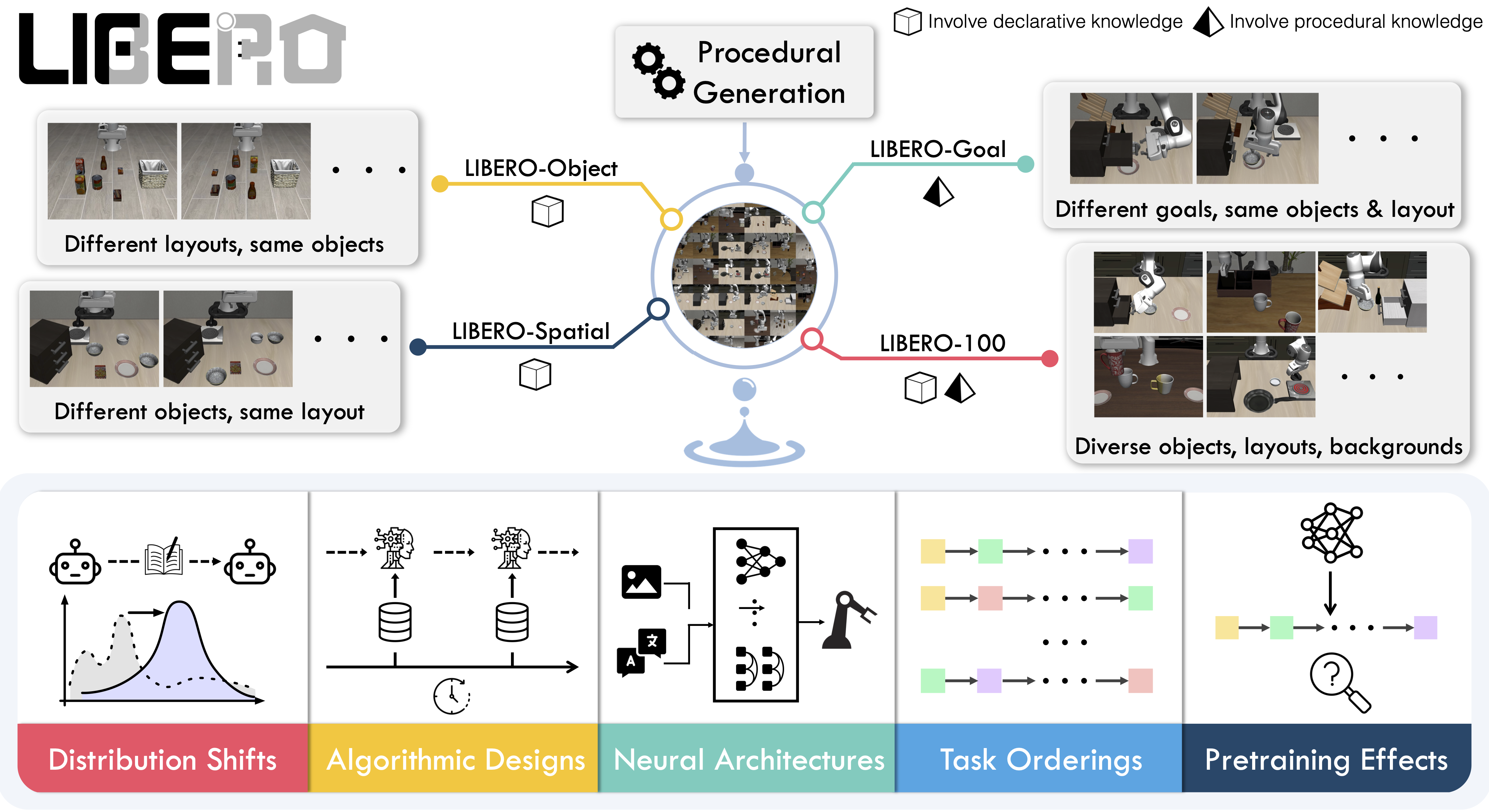
|
||||
_Figure 1: An overview of the LIBERO benchmark._
|
||||
|
||||
## Evaluating with LIBERO
|
||||
|
||||
At **LeRobot**, we ported [LIBERO](https://github.com/Lifelong-Robot-Learning/LIBERO) into our framework and used it primarily to **benchmark [SmolVLA](https://huggingface.co/docs/lerobot/en/smolvla)**, our lightweight Vision-Language-Action model, comparing it against state-of-the-art VLA models such as Pi0, OpenVLA, Octo, and Diffusion Policy.
|
||||
|
||||
LIBERO is now part of our **multi-eval supported simulation**, allowing you to benchmark your policies either on a **single suite of tasks** or across **multiple suites at once** with just a single flag.
|
||||
|
||||
To install LIBERO, first follow the [LeRobot Installation Guide](https://huggingface.co/docs/lerobot/installation).
|
||||
Once LeRobot is installed, there are two options:
|
||||
|
||||
1. **Install via pip** (recommended):
|
||||
|
||||
```bash
|
||||
pip install "lerobot[libero,smolvla]"
|
||||
```
|
||||
|
||||
2. **Install from source**:
|
||||
```bash
|
||||
git clone https://github.com/huggingface/lerobot.git
|
||||
cd lerobot
|
||||
pip install -e ".[libero,smolvla]"
|
||||
```
|
||||
|
||||
### Single-suite evaluation
|
||||
|
||||
Evaluate a policy on one LIBERO suite:
|
||||
|
||||
```bash
|
||||
python src/lerobot/scripts/eval.py \
|
||||
--policy.path="your-policy-id" \
|
||||
--env.type=libero \
|
||||
--env.task=libero_object \
|
||||
--env.multitask_eval=False \
|
||||
--eval.batch_size=2 \
|
||||
--eval.n_episodes=3
|
||||
```
|
||||
|
||||
- `--env.task` picks the suite (`libero_object`, `libero_spatial`, etc.).
|
||||
- `--eval.batch_size` controls how many environments run in parallel.
|
||||
- `--eval.n_episodes` sets how many episodes to run in total.
|
||||
|
||||
---
|
||||
|
||||
### Multi-suite evaluation
|
||||
|
||||
Benchmark a policy across multiple suites at once:
|
||||
|
||||
```bash
|
||||
python src/lerobot/scripts/eval.py \
|
||||
--policy.path="your-policy-id" \
|
||||
--env.type=libero \
|
||||
--env.task=libero_object \
|
||||
--env.multitask_eval=True \
|
||||
--eval.batch_size=1 \
|
||||
--eval.n_episodes=2
|
||||
```
|
||||
|
||||
- Pass a comma-separated list to `--env.task` for multi-suite evaluation.
|
||||
- Set `-env.multitask_eval=True` to enable evaluation across all tasks in those suites.
|
||||
|
||||
### Policy inputs and outputs
|
||||
|
||||
When using LIBERO through LeRobot, policies interact with the environment via **observations** and **actions**:
|
||||
|
||||
- **Observations**
|
||||
- `observation.state` – proprioceptive features (agent state).
|
||||
- `observation.images.image` – main camera view (`agentview_image`).
|
||||
- `observation.images.image2` – wrist camera view (`robot0_eye_in_hand_image`).
|
||||
|
||||
⚠️ **Note:** LeRobot enforces the `.images.*` prefix for any visual features. Make sure your dataset metadata keys match this convention when evaluating.
|
||||
|
||||
## Input Features and Metadata Alignment
|
||||
|
||||
To train or evaluate a policy, you use `make_policy`, which builds a feature-naming dictionary for the observations the policy expects.
|
||||
This mapping can come from:
|
||||
- Dataset metadata
|
||||
- The evaluation environment
|
||||
- The policy path (if a pretrained repo ID is provided)
|
||||
|
||||
### Common Issues
|
||||
|
||||
A common problem is when the keys in the dataset, environment, and policy config do not match. For example:
|
||||
- `wrist_image` vs `observation.images.image2`
|
||||
- `observation.image2` (as in SmolVLA) vs the `.images.*` prefix convention
|
||||
|
||||
Such mismatches will cause `KeyError`s. This may be due to assumptions in `make_policy` or missing error handling.
|
||||
|
||||
***
|
||||
|
||||
### How to Check Expected Features
|
||||
- Open your policy config (`config.json`), e.g. [example here](https://huggingface.co/jadechoghari/smolvla-libero/blob/main/config.json).
|
||||
- Or add a breakpoint in `train.py` and inspect:
|
||||
|
||||
````python
|
||||
print(policy.config.input_features)
|
||||
To ensure you can just check what your policy expects as `input_features`:
|
||||
|
||||
- Open your policy config (`config.json`), e.g. [example here](https://huggingface.co/jadechoghari/smolvla-libero/blob/main/config.json).
|
||||
- Or add a breakpoint in `train.py` and inspect:
|
||||
```python
|
||||
print(policy.config.input_features)
|
||||
Fixing KeyErrors (Preprocessing Example)
|
||||
````
|
||||
|
||||
## Fixing KeyErrors (Preprocessing Example)
|
||||
|
||||
If your dataset columns do not follow the expected naming, you can rename them in-place before training:
|
||||
|
||||
````python
|
||||
import pyarrow.parquet as pq
|
||||
import shutil
|
||||
|
||||
def rename_columns(parquet_path, rename_map):
|
||||
table = pq.read_table(parquet_path)
|
||||
schema = table.schema
|
||||
new_names = [rename_map.get(name, name) for name in schema.names]
|
||||
renamed_table = table.rename_columns(new_names)
|
||||
backup_path = parquet_path + ".bak"
|
||||
shutil.copy(parquet_path, backup_path)
|
||||
pq.write_table(renamed_table, parquet_path)
|
||||
print(f"patched {parquet_path}, backup at {backup_path}")
|
||||
|
||||
# example mapping: align dataset keys to LeRobot convention
|
||||
rename_map = {
|
||||
"image": "observation.images.image",
|
||||
"wrist_image": "observation.images.image2",
|
||||
}
|
||||
|
||||
rename_columns("episode_000001.parquet", rename_map)
|
||||
|
||||
|
||||
|
||||
- **Actions**
|
||||
- Continuous control values in a `Box(-1, 1, shape=(7,))` space.
|
||||
|
||||
We also provide a notebook for quick testing:
|
||||
Training with LIBERO
|
||||
|
||||
## Training with LIBERO
|
||||
|
||||
When training on LIBERO tasks, make sure your dataset parquet and metadata keys follow the LeRobot convention.
|
||||
|
||||
The environment expects:
|
||||
|
||||
- `observation.state` → 8-dim agent state
|
||||
- `observation.images.image` → main camera (`agentview_image`)
|
||||
- `observation.images.image2` → wrist camera (`robot0_eye_in_hand_image`)
|
||||
|
||||
⚠️ Cleaning the dataset upfront is **cleaner and more efficient** than remapping keys inside the code. We plan to provide a script to easily preprocess such data.
|
||||
To avoid potential mismatches and `KeyError`s, we provide a **preprocessed LIBERO dataset** that is fully compatible with the current LeRobot codebase and requires no additional manipulations.
|
||||
|
||||
- 🔗 [Preprocessed LIBERO dataset (Hugging Face LeRobot org)](https://huggingface.co/datasets/HuggingFaceVLA/libero)
|
||||
- 🔗 [Original LIBERO dataset (physical-intelligence)](https://huggingface.co/datasets/physical-intelligence/libero)
|
||||
|
||||
The preprocessed dataset follows LeRobot naming conventions (e.g., `.images.*` prefix for visual features) and aligns with policy configs out-of-the-box.
|
||||
The original dataset is acknowledged here as the primary source.
|
||||
---
|
||||
|
||||
### Example training command
|
||||
|
||||
```bash
|
||||
python src/lerobot/scripts/train.py \
|
||||
--policy.type=smolvla \
|
||||
--policy.repo_id=${HF_USER}/libero-test \
|
||||
--dataset.repo_id=jadechoghari/smol-libero3 \
|
||||
--env.type=libero \
|
||||
--env.task=libero_10 \
|
||||
--output_dir=./outputs/ \
|
||||
--steps=100000 \
|
||||
--batch_size=4 \
|
||||
--env.multitask_eval=True \
|
||||
--eval.batch_size=1 \
|
||||
--eval.n_episodes=1 \
|
||||
--eval_freq=1000 \
|
||||
````
|
||||
|
||||
---
|
||||
|
||||
### Note on rendering
|
||||
|
||||
LeRobot uses MuJoCo for simulation. You need to set the rendering backend before training or evaluation:
|
||||
|
||||
- `export MUJOCO_GL=egl` → for headless servers (e.g. HPC, cloud)
|
||||
|
||||
---
|
||||
|
||||
## Colab Note on Parallel Evaluation
|
||||
|
||||
When running evaluation on Colab, you may encounter warnings such as:
|
||||
|
||||
```
|
||||
UserWarning: resource_tracker: There appear to be 1 leaked semaphore objects to clean up at shutdown
|
||||
```
|
||||
|
||||
This happens because Colab’s rendering contexts are **not thread-safe**, and `ThreadPoolExecutor(max_workers=num_workers)` can trigger segfaults or leaked semaphore warnings.
|
||||
|
||||
**Colab Note:**
|
||||
Parallel evaluation is not supported in Colab. To avoid these issues, run sequentially or disable multitask evaluation:
|
||||
|
||||
Run sequentially:
|
||||
|
||||
```bash
|
||||
--env.max_parallel_tasks=1
|
||||
```
|
||||
|
||||
Or disable multitask evaluation:
|
||||
|
||||
```bash
|
||||
--env.multitask_eval=False
|
||||
```
|
||||
|
||||
If you want to take advantage of **parallel evaluation**, we recommend **not using Colab**. Instead, run locally or on a proper compute environment where multi-threaded rendering is easily supported.
|
||||
@@ -0,0 +1,58 @@
|
||||
#!/bin/bash
|
||||
|
||||
# storage / caches
|
||||
RAID=/raid/jade
|
||||
export TRANSFORMERS_CACHE=$RAID/.cache/huggingface/transformers
|
||||
export HF_HOME=$RAID/.cache/huggingface
|
||||
export HF_DATASETS_CACHE=$RAID/.cache/huggingface/datasets
|
||||
export HF_LEROBOT_HOME=$RAID/.cache/huggingface/lerobot
|
||||
export WANDB_CACHE_DIR=$RAID/.cache/wandb
|
||||
export TMPDIR=$RAID/.cache/tmp
|
||||
mkdir -p $TMPDIR
|
||||
export WANDB_MODE=offline
|
||||
export HF_DATASETS_OFFLINE=1
|
||||
export HF_HUB_OFFLINE=1
|
||||
export TOKENIZERS_PARALLELISM=false
|
||||
export MUJOCO_GL=egl
|
||||
export CUDA_VISIBLE_DEVICES=2
|
||||
|
||||
# CONFIGURATION
|
||||
POLICY_PATH="/raid/jade/logs/lerobot/lerobot_2_HuggingFaceVLA_libero_smolvla_lr1e-4bs32steps100000/checkpoints/100000/pretrained_model"
|
||||
POLICY_PATH="/raid/jade/models/smolvlamust"
|
||||
TASK=libero_spatial,libero_object
|
||||
ENV_TYPE="libero"
|
||||
BATCH_SIZE=1
|
||||
N_EPISODES=1
|
||||
# storage / caches
|
||||
RAID=/raid/jade
|
||||
N_ACTION_STEPS=1
|
||||
export TRANSFORMERS_CACHE=$RAID/.cache/huggingface/transformers
|
||||
export HF_HOME=$RAID/.cache/huggingface
|
||||
export HF_DATASETS_CACHE=$RAID/.cache/huggingface/datasets
|
||||
export HF_LEROBOT_HOME=$RAID/.cache/huggingface/lerobot
|
||||
export WANDB_CACHE_DIR=$RAID/.cache/wandb
|
||||
export TMPDIR=$RAID/.cache/tmp
|
||||
mkdir -p $TMPDIR
|
||||
export WANDB_MODE=offline
|
||||
# export HF_DATASETS_OFFLINE=1
|
||||
# export HF_HUB_OFFLINE=1
|
||||
export TOKENIZERS_PARALLELISM=false
|
||||
export MUJOCO_GL=egl
|
||||
export MUJOCO_GL=egl
|
||||
unset HF_HUB_OFFLINE
|
||||
# RUN EVALUATION
|
||||
python src/lerobot/scripts/eval.py \
|
||||
--policy.path="$POLICY_PATH" \
|
||||
--env.type="$ENV_TYPE" \
|
||||
--eval.batch_size="$BATCH_SIZE" \
|
||||
--eval.n_episodes="$N_EPISODES" \
|
||||
--env.multitask_eval=True \
|
||||
--env.task=$TASK \
|
||||
# python examples/evaluate_libero.py \
|
||||
# --policy_path "$POLICY_PATH" \
|
||||
# --task_suite_name "$TASK" \
|
||||
# --num_steps_wait 10 \
|
||||
# --num_trials_per_task 10 \
|
||||
# --video_out_path "data/libero/videos" \
|
||||
# --device "cuda" \
|
||||
# --seed 7
|
||||
+22
-2
@@ -135,7 +135,26 @@ video_benchmark = ["scikit-image>=0.23.2", "pandas>=2.2.2"]
|
||||
aloha = ["gym-aloha>=0.1.1"]
|
||||
pusht = ["gym-pusht>=0.1.5", "pymunk>=6.6.0,<7.0.0"] # TODO: Fix pymunk version in gym-pusht instead
|
||||
xarm = ["gym-xarm>=0.1.1"]
|
||||
|
||||
libero = [
|
||||
"hydra-core>=1.2,<1.4",
|
||||
"numpy",
|
||||
"wandb",
|
||||
"easydict",
|
||||
"transformers",
|
||||
"opencv-python",
|
||||
"robomimic==0.2.0",
|
||||
"einops",
|
||||
"thop",
|
||||
"robosuite==1.4.0",
|
||||
"mujoco>=2.3.7,<3.0.0",
|
||||
"bddl==1.0.1",
|
||||
"matplotlib",
|
||||
"cloudpickle",
|
||||
"future",
|
||||
"gym",
|
||||
"egl_probe @ git+https://github.com/jadechoghari/egl_probe.git#egg=egl_probe",
|
||||
"libero @ git+https://github.com/jadechoghari/LIBERO.git@main#egg=libero",
|
||||
]
|
||||
# All
|
||||
all = [
|
||||
"lerobot[dynamixel]",
|
||||
@@ -154,7 +173,8 @@ all = [
|
||||
"lerobot[video_benchmark]",
|
||||
"lerobot[aloha]",
|
||||
"lerobot[pusht]",
|
||||
"lerobot[xarm]"
|
||||
"lerobot[xarm]",
|
||||
"lerobot[libero]"
|
||||
]
|
||||
|
||||
[project.scripts]
|
||||
|
||||
@@ -30,6 +30,8 @@ class EnvConfig(draccus.ChoiceRegistry, abc.ABC):
|
||||
fps: int = 30
|
||||
features: dict[str, PolicyFeature] = field(default_factory=dict)
|
||||
features_map: dict[str, str] = field(default_factory=dict)
|
||||
multitask_eval: bool = False
|
||||
max_parallel_tasks: int = 5
|
||||
|
||||
@property
|
||||
def type(self) -> str:
|
||||
@@ -271,3 +273,53 @@ class HILEnvConfig(EnvConfig):
|
||||
"use_gamepad": self.use_gamepad,
|
||||
"gripper_penalty": self.gripper_penalty,
|
||||
}
|
||||
|
||||
|
||||
@EnvConfig.register_subclass("libero")
|
||||
@dataclass
|
||||
class LiberoEnv(EnvConfig):
|
||||
task: str = "libero_10" # can also choose libero_spatial, libero_object, etc.
|
||||
fps: int = 30
|
||||
episode_length: int = 520
|
||||
obs_type: str = "pixels_agent_pos"
|
||||
render_mode: str = "rgb_array"
|
||||
camera_name: str = "agentview_image,robot0_eye_in_hand_image"
|
||||
init_states: bool = True
|
||||
multitask_eval: bool = True
|
||||
features: dict[str, PolicyFeature] = field(
|
||||
default_factory=lambda: {
|
||||
"action": PolicyFeature(type=FeatureType.ACTION, shape=(7,)),
|
||||
}
|
||||
)
|
||||
features_map: dict[str, str] = field(
|
||||
default_factory=lambda: {
|
||||
"action": ACTION,
|
||||
"agent_pos": OBS_STATE,
|
||||
"pixels/agentview_image": f"{OBS_IMAGES}.image",
|
||||
"pixels/robot0_eye_in_hand_image": f"{OBS_IMAGES}.image2",
|
||||
}
|
||||
)
|
||||
|
||||
def __post_init__(self):
|
||||
if self.obs_type == "pixels":
|
||||
self.features["pixels/agentview_image"] = PolicyFeature(
|
||||
type=FeatureType.VISUAL, shape=(360, 360, 3)
|
||||
)
|
||||
self.features["pixels/robot0_eye_in_hand_image"] = PolicyFeature(
|
||||
type=FeatureType.VISUAL, shape=(360, 360, 3)
|
||||
)
|
||||
elif self.obs_type == "pixels_agent_pos":
|
||||
self.features["agent_pos"] = PolicyFeature(type=FeatureType.STATE, shape=(8,))
|
||||
self.features["pixels/agentview_image"] = PolicyFeature(
|
||||
type=FeatureType.VISUAL, shape=(360, 360, 3)
|
||||
)
|
||||
self.features["pixels/robot0_eye_in_hand_image"] = PolicyFeature(
|
||||
type=FeatureType.VISUAL, shape=(360, 360, 3)
|
||||
)
|
||||
|
||||
@property
|
||||
def gym_kwargs(self) -> dict:
|
||||
return {
|
||||
"obs_type": self.obs_type,
|
||||
"render_mode": self.render_mode,
|
||||
}
|
||||
|
||||
+35
-12
@@ -17,7 +17,7 @@ import importlib
|
||||
|
||||
import gymnasium as gym
|
||||
|
||||
from lerobot.envs.configs import AlohaEnv, EnvConfig, HILEnvConfig, PushtEnv, XarmEnv
|
||||
from lerobot.envs.configs import AlohaEnv, EnvConfig, HILEnvConfig, LiberoEnv, PushtEnv, XarmEnv
|
||||
|
||||
|
||||
def make_env_config(env_type: str, **kwargs) -> EnvConfig:
|
||||
@@ -29,11 +29,15 @@ def make_env_config(env_type: str, **kwargs) -> EnvConfig:
|
||||
return XarmEnv(**kwargs)
|
||||
elif env_type == "hil":
|
||||
return HILEnvConfig(**kwargs)
|
||||
elif env_type == "libero":
|
||||
return LiberoEnv(**kwargs)
|
||||
else:
|
||||
raise ValueError(f"Policy type '{env_type}' is not available.")
|
||||
|
||||
|
||||
def make_env(cfg: EnvConfig, n_envs: int = 1, use_async_envs: bool = False) -> gym.vector.VectorEnv | None:
|
||||
def make_env(
|
||||
cfg: EnvConfig, n_envs: int = 1, use_async_envs: bool = False
|
||||
) -> gym.vector.VectorEnv | dict[str, dict[int, gym.vector.VectorEnv]]:
|
||||
"""Makes a gym vector environment according to the config.
|
||||
|
||||
Args:
|
||||
@@ -48,24 +52,43 @@ def make_env(cfg: EnvConfig, n_envs: int = 1, use_async_envs: bool = False) -> g
|
||||
|
||||
Returns:
|
||||
gym.vector.VectorEnv: The parallelized gym.env instance.
|
||||
dict[str, dict[int, gym.vector.VectorEnv]]: A mapping from task suite
|
||||
names to indexed vectorized environments (when multitask eval is used).
|
||||
|
||||
"""
|
||||
if n_envs < 1:
|
||||
raise ValueError("`n_envs must be at least 1")
|
||||
raise ValueError("`n_envs` must be at least 1")
|
||||
|
||||
env_cls = gym.vector.AsyncVectorEnv if use_async_envs else gym.vector.SyncVectorEnv
|
||||
|
||||
if "libero" in cfg.type:
|
||||
from lerobot.envs.libero import create_libero_envs
|
||||
|
||||
return create_libero_envs(
|
||||
task=cfg.task,
|
||||
n_envs=n_envs,
|
||||
camera_name=cfg.camera_name,
|
||||
init_states=cfg.init_states,
|
||||
gym_kwargs=cfg.gym_kwargs,
|
||||
env_cls=env_cls,
|
||||
multitask_eval=cfg.multitask_eval,
|
||||
)
|
||||
|
||||
package_name = f"gym_{cfg.type}"
|
||||
|
||||
try:
|
||||
importlib.import_module(package_name)
|
||||
except ModuleNotFoundError as e:
|
||||
print(f"{package_name} is not installed. Please install it with `pip install 'lerobot[{cfg.type}]'`")
|
||||
raise e
|
||||
raise ModuleNotFoundError(
|
||||
f'{package_name} is not installed. Install with: pip install "lerobot[{cfg.type}]"'
|
||||
) from e
|
||||
|
||||
gym_handle = f"{package_name}/{cfg.task}"
|
||||
|
||||
# batched version of the env that returns an observation of shape (b, c)
|
||||
env_cls = gym.vector.AsyncVectorEnv if use_async_envs else gym.vector.SyncVectorEnv
|
||||
env = env_cls(
|
||||
[lambda: gym.make(gym_handle, disable_env_checker=True, **cfg.gym_kwargs) for _ in range(n_envs)]
|
||||
)
|
||||
def _make_one():
|
||||
return gym.make(gym_handle, disable_env_checker=True, **(cfg.gym_kwargs or {}))
|
||||
|
||||
return env
|
||||
vec = env_cls([_make_one for _ in range(n_envs)])
|
||||
|
||||
# normalize to {suite: {task_id: vec_env}} for consistency
|
||||
suite_name = cfg.type # e.g., "pusht", "aloha"
|
||||
return {suite_name: {0: vec}}
|
||||
|
||||
@@ -0,0 +1,497 @@
|
||||
from __future__ import annotations
|
||||
|
||||
import logging
|
||||
import math
|
||||
import os
|
||||
from collections import defaultdict
|
||||
from collections.abc import Callable, Iterable, Mapping, Sequence
|
||||
from itertools import chain
|
||||
from typing import Any
|
||||
|
||||
import gymnasium as gym
|
||||
import numpy as np
|
||||
import torch
|
||||
from gymnasium import spaces
|
||||
from libero.libero import benchmark, get_libero_path
|
||||
from libero.libero.envs import OffScreenRenderEnv
|
||||
|
||||
logger = logging.getLogger(__name__)
|
||||
|
||||
# ---- Helpers -----------------------------------------------------------------
|
||||
|
||||
|
||||
def _parse_camera_names(camera_name: str | Sequence[str]) -> list[str]:
|
||||
"""Normalize camera_name into a non-empty list of strings."""
|
||||
if isinstance(camera_name, str):
|
||||
cams = [c.strip() for c in camera_name.split(",") if c.strip()]
|
||||
elif isinstance(camera_name, (list, tuple)):
|
||||
cams = [str(c).strip() for c in camera_name if str(c).strip()]
|
||||
else:
|
||||
raise TypeError(f"camera_name must be str or sequence[str], got {type(camera_name).__name__}")
|
||||
if not cams:
|
||||
raise ValueError("camera_name resolved to an empty list.")
|
||||
return cams
|
||||
|
||||
|
||||
def _get_suite(name: str):
|
||||
"""Instantiate a LIBERO suite by name with clear validation."""
|
||||
bench = benchmark.get_benchmark_dict()
|
||||
if name not in bench:
|
||||
raise ValueError(f"Unknown LIBERO suite '{name}'. Available: {', '.join(sorted(bench.keys()))}")
|
||||
suite = bench[name]()
|
||||
if not getattr(suite, "tasks", None):
|
||||
raise ValueError(f"Suite '{name}' has no tasks.")
|
||||
return suite
|
||||
|
||||
|
||||
def _select_task_ids(total_tasks: int, task_ids: Iterable[int] | None) -> list[int]:
|
||||
"""Validate/normalize task ids. If None → all tasks."""
|
||||
if task_ids is None:
|
||||
return list(range(total_tasks))
|
||||
ids = sorted({int(t) for t in task_ids})
|
||||
for t in ids:
|
||||
if t < 0 or t >= total_tasks:
|
||||
raise ValueError(f"task_id {t} out of range [0, {total_tasks - 1}].")
|
||||
return ids
|
||||
|
||||
|
||||
def _make_env_fns(
|
||||
*,
|
||||
suite,
|
||||
suite_name: str,
|
||||
task_id: int,
|
||||
n_envs: int,
|
||||
camera_names: list[str],
|
||||
init_states: bool,
|
||||
gym_kwargs: Mapping[str, Any],
|
||||
LiberoEnv: type, # injected to avoid forward ref issues if needed
|
||||
) -> list[Callable[[], LiberoEnv]]:
|
||||
"""Build n_envs factory callables for a single (suite, task_id)."""
|
||||
joined_cams = ",".join(camera_names) # keep backward-compat: downstream expects a string
|
||||
fns: list[Callable[[], LiberoEnv]] = []
|
||||
for i in range(n_envs):
|
||||
|
||||
def _mk(
|
||||
i=i,
|
||||
suite=suite,
|
||||
task_id=task_id,
|
||||
suite_name=suite_name,
|
||||
joined_cams=joined_cams,
|
||||
init_states=init_states,
|
||||
gym_kwargs=dict(gym_kwargs),
|
||||
):
|
||||
return LiberoEnv(
|
||||
task_suite=suite,
|
||||
task_id=task_id,
|
||||
task_suite_name=suite_name,
|
||||
camera_name=joined_cams,
|
||||
init_states=init_states,
|
||||
episode_index=i,
|
||||
**gym_kwargs,
|
||||
)
|
||||
|
||||
fns.append(_mk)
|
||||
return fns
|
||||
|
||||
|
||||
# ---- Main API ----------------------------------------------------------------
|
||||
|
||||
|
||||
def create_libero_envs(
|
||||
task: str,
|
||||
n_envs: int,
|
||||
gym_kwargs: dict[str, Any] | None = None,
|
||||
camera_name: str | Sequence[str] = "agentview_image,robot0_eye_in_hand_image",
|
||||
init_states: bool = True,
|
||||
env_cls: Callable[[Sequence[Callable[[], Any]]], Any] | None = None,
|
||||
multitask_eval: bool = True, # kept for signature compatibility; return type is consistent regardless
|
||||
) -> dict[str, dict[int, Any]]:
|
||||
"""
|
||||
Create vectorized LIBERO environments with a consistent return shape.
|
||||
|
||||
Returns:
|
||||
dict[suite_name][task_id] -> vec_env (env_cls([...]) with exactly n_envs factories)
|
||||
Notes:
|
||||
- n_envs is the number of rollouts *per task* (episode_index = 0..n_envs-1).
|
||||
- `task` can be a single suite or a comma-separated list of suites.
|
||||
- You may pass `task_ids` (list[int]) inside `gym_kwargs` to restrict tasks per suite.
|
||||
"""
|
||||
if env_cls is None or not callable(env_cls):
|
||||
raise ValueError("env_cls must be a callable that wraps a list of environment factory callables.")
|
||||
if not isinstance(n_envs, int) or n_envs <= 0:
|
||||
raise ValueError(f"n_envs must be a positive int; got {n_envs}.")
|
||||
|
||||
gym_kwargs = dict(gym_kwargs or {})
|
||||
task_ids_filter = gym_kwargs.pop("task_ids", None) # optional: limit to specific tasks
|
||||
|
||||
# Avoid circular import/type issues: assume LiberoEnv is defined in this module
|
||||
try:
|
||||
LiberoEnv # type: ignore[name-defined]
|
||||
except NameError:
|
||||
# If LiberoEnv is in the same file, this won't run. If it's elsewhere, import here.
|
||||
exit()
|
||||
# from .libero_env import LiberoEnv # adjust if your class lives in another module
|
||||
|
||||
camera_names = _parse_camera_names(camera_name)
|
||||
suite_names = [s.strip() for s in str(task).split(",") if s.strip()]
|
||||
if not suite_names:
|
||||
raise ValueError("`task` must contain at least one LIBERO suite name.")
|
||||
|
||||
logger.info(
|
||||
"Creating LIBERO envs | suites=%s | n_envs(per task)=%d | init_states=%s | multitask_eval=%s",
|
||||
suite_names,
|
||||
n_envs,
|
||||
init_states,
|
||||
bool(multitask_eval),
|
||||
)
|
||||
if task_ids_filter is not None:
|
||||
logger.info("Restricting to task_ids=%s", task_ids_filter)
|
||||
|
||||
out: dict[str, dict[int, Any]] = defaultdict(dict)
|
||||
|
||||
for suite_name in suite_names:
|
||||
suite = _get_suite(suite_name)
|
||||
total = len(suite.tasks)
|
||||
selected = _select_task_ids(total, task_ids_filter)
|
||||
|
||||
if not selected:
|
||||
raise ValueError(f"No tasks selected for suite '{suite_name}' (available: {total}).")
|
||||
|
||||
for tid in selected:
|
||||
fns = _make_env_fns(
|
||||
suite=suite,
|
||||
suite_name=suite_name,
|
||||
task_id=tid,
|
||||
n_envs=n_envs,
|
||||
camera_names=camera_names,
|
||||
init_states=init_states,
|
||||
gym_kwargs=gym_kwargs,
|
||||
LiberoEnv=LiberoEnv,
|
||||
)
|
||||
out[suite_name][tid] = env_cls(fns)
|
||||
logger.debug("Built vec env | suite=%s | task_id=%d | n_envs=%d", suite_name, tid, n_envs)
|
||||
|
||||
# return plain dicts for predictability
|
||||
return {suite: dict(task_map) for suite, task_map in out.items()}
|
||||
|
||||
|
||||
def quat2axisangle(quat):
|
||||
"""
|
||||
Copied from robosuite: https://github.com/ARISE-Initiative/robosuite/blob/eafb81f54ffc104f905ee48a16bb15f059176ad3/robosuite/utils/transform_utils.py#L490C1-L512C55
|
||||
|
||||
Converts quaternion to axis-angle format.
|
||||
Returns a unit vector direction scaled by its angle in radians.
|
||||
|
||||
Args:
|
||||
quat (np.array): (x,y,z,w) vec4 float angles
|
||||
|
||||
Returns:
|
||||
np.array: (ax,ay,az) axis-angle exponential coordinates
|
||||
"""
|
||||
# clip quaternion
|
||||
if quat[3] > 1.0:
|
||||
quat[3] = 1.0
|
||||
elif quat[3] < -1.0:
|
||||
quat[3] = -1.0
|
||||
|
||||
den = np.sqrt(1.0 - quat[3] * quat[3])
|
||||
if math.isclose(den, 0.0):
|
||||
# This is (close to) a zero degree rotation, immediately return
|
||||
return np.zeros(3)
|
||||
|
||||
return (quat[:3] * 2.0 * math.acos(quat[3])) / den
|
||||
|
||||
|
||||
def get_task_init_states(task_suite, i):
|
||||
init_states_path = os.path.join(
|
||||
get_libero_path("init_states"),
|
||||
task_suite.tasks[i].problem_folder,
|
||||
task_suite.tasks[i].init_states_file,
|
||||
)
|
||||
init_states = torch.load(init_states_path, weights_only=False) # nosec B614
|
||||
return init_states
|
||||
|
||||
|
||||
def get_libero_dummy_action():
|
||||
"""Get dummy/no-op action, used to roll out the simulation while the robot does nothing."""
|
||||
return [0, 0, 0, 0, 0, 0, -1]
|
||||
|
||||
|
||||
OBS_STATE_DIM = 8
|
||||
ACTION_DIM = 7
|
||||
|
||||
|
||||
class LiberoEnv(gym.Env):
|
||||
metadata = {"render_modes": ["rgb_array"], "render_fps": 80}
|
||||
|
||||
def __init__(
|
||||
self,
|
||||
task_suite,
|
||||
task_id,
|
||||
task_suite_name,
|
||||
camera_name="agentview_image,robot0_eye_in_hand_image",
|
||||
obs_type="pixels",
|
||||
render_mode="rgb_array",
|
||||
observation_width=256,
|
||||
observation_height=256,
|
||||
visualization_width=640,
|
||||
visualization_height=480,
|
||||
init_states=True,
|
||||
episode_index=0,
|
||||
):
|
||||
super().__init__()
|
||||
self.task_id = task_id
|
||||
self.obs_type = obs_type
|
||||
self.render_mode = render_mode
|
||||
self.observation_width = observation_width
|
||||
self.observation_height = observation_height
|
||||
self.visualization_width = visualization_width
|
||||
self.visualization_height = visualization_height
|
||||
self.init_states = init_states
|
||||
self.camera_name = camera_name.split(
|
||||
","
|
||||
) # agentview_image (main) or robot0_eye_in_hand_image (wrist)
|
||||
|
||||
# Map raw camera names to "image1" and "image2".
|
||||
# The preprocessing step `preprocess_observation` will then prefix these with `.images.*`,
|
||||
# following the LeRobot convention (e.g., `observation.images.image`, `observation.images.image2`).
|
||||
# This ensures the policy consistently receives observations in the
|
||||
# expected format regardless of the original camera naming.
|
||||
self.camera_name_mapping = {
|
||||
"agentview_image": "image",
|
||||
"robot0_eye_in_hand_image": "image2",
|
||||
}
|
||||
|
||||
self.num_steps_wait = (
|
||||
10 # Do nothing for the first few timesteps to wait for the simulator drops objects
|
||||
)
|
||||
self.episode_index = episode_index
|
||||
|
||||
self._env = self._make_envs_task(task_suite, self.task_id)
|
||||
TASK_SUITE_MAX_STEPS: dict[str, int] = {
|
||||
"libero_spatial": 220, # longest training demo has 193 steps
|
||||
"libero_object": 280, # longest training demo has 254 steps
|
||||
"libero_goal": 300, # longest training demo has 270 steps
|
||||
"libero_10": 520, # longest training demo has 505 steps
|
||||
"libero_90": 400, # longest training demo has 373 steps
|
||||
}
|
||||
default_steps = 500
|
||||
self._max_episode_steps = TASK_SUITE_MAX_STEPS.get(task_suite_name, default_steps)
|
||||
|
||||
images = {}
|
||||
for cam in self.camera_name:
|
||||
images[self.camera_name_mapping[cam]] = spaces.Box(
|
||||
low=0,
|
||||
high=255,
|
||||
shape=(self.observation_height, self.observation_width, 3),
|
||||
dtype=np.uint8,
|
||||
)
|
||||
|
||||
if self.obs_type == "state":
|
||||
raise NotImplementedError(
|
||||
"The 'state' observation type is not supported in LiberoEnv. "
|
||||
"Please switch to an image-based obs_type (e.g. 'pixels', 'pixels_agent_pos')."
|
||||
)
|
||||
|
||||
elif self.obs_type == "pixels":
|
||||
self.observation_space = spaces.Dict(
|
||||
{
|
||||
"pixels": spaces.Dict(images),
|
||||
}
|
||||
)
|
||||
elif self.obs_type == "pixels_agent_pos":
|
||||
self.observation_space = spaces.Dict(
|
||||
{
|
||||
"pixels": spaces.Dict(images),
|
||||
"agent_pos": spaces.Box(
|
||||
low=-1000.0,
|
||||
high=1000.0,
|
||||
shape=(OBS_STATE_DIM,),
|
||||
dtype=np.float64,
|
||||
),
|
||||
}
|
||||
)
|
||||
|
||||
self.action_space = spaces.Box(low=-1, high=1, shape=(ACTION_DIM,), dtype=np.float32)
|
||||
|
||||
def render(self):
|
||||
raw_obs = self._env.env._get_observations()
|
||||
image = self._format_raw_obs(raw_obs)["pixels"]["image"]
|
||||
return image
|
||||
|
||||
def _make_envs_task(self, task_suite, task_id: int = 0):
|
||||
task = task_suite.get_task(task_id)
|
||||
self.task = task.name
|
||||
self.task_description = task.language
|
||||
task_bddl_file = os.path.join(get_libero_path("bddl_files"), task.problem_folder, task.bddl_file)
|
||||
|
||||
env_args = {
|
||||
"bddl_file_name": task_bddl_file,
|
||||
"camera_heights": self.observation_height,
|
||||
"camera_widths": self.observation_width,
|
||||
}
|
||||
env = OffScreenRenderEnv(**env_args)
|
||||
env.reset()
|
||||
if self.init_states:
|
||||
init_states = get_task_init_states(
|
||||
task_suite, task_id
|
||||
) # for benchmarking purpose, we fix the a set of initial states FIXME(mshukor): should be in the reset()?
|
||||
init_state_id = self.episode_index # episode index
|
||||
env.set_init_state(init_states[init_state_id])
|
||||
|
||||
return env
|
||||
|
||||
def _format_raw_obs(self, raw_obs):
|
||||
images = {}
|
||||
for camera_name in self.camera_name:
|
||||
image = raw_obs[camera_name]
|
||||
image = image[::-1, ::-1] # rotate 180 degrees
|
||||
images[self.camera_name_mapping[camera_name]] = image
|
||||
state = np.concatenate(
|
||||
(
|
||||
raw_obs["robot0_eef_pos"],
|
||||
quat2axisangle(raw_obs["robot0_eef_quat"]),
|
||||
raw_obs["robot0_gripper_qpos"],
|
||||
)
|
||||
)
|
||||
agent_pos = state
|
||||
if self.obs_type == "state":
|
||||
raise NotImplementedError(
|
||||
"The 'state' observation type is not supported in LiberoEnv. "
|
||||
"Please switch to an image-based obs_type (e.g. 'pixels', 'pixels_agent_pos')."
|
||||
)
|
||||
elif self.obs_type == "pixels":
|
||||
obs = {"pixels": images.copy()}
|
||||
elif self.obs_type == "pixels_agent_pos":
|
||||
obs = {
|
||||
"pixels": images.copy(),
|
||||
"agent_pos": agent_pos,
|
||||
}
|
||||
return obs
|
||||
|
||||
def reset(self, seed=None, **kwargs):
|
||||
super().reset(seed=seed)
|
||||
|
||||
self._env.seed(seed)
|
||||
raw_obs = self._env.reset()
|
||||
# Do nothing for the first few timesteps to wait for the simulator drops objects
|
||||
for _ in range(self.num_steps_wait):
|
||||
raw_obs, _, _, _ = self._env.step(get_libero_dummy_action())
|
||||
observation = self._format_raw_obs(raw_obs)
|
||||
info = {"is_success": False}
|
||||
return observation, info
|
||||
|
||||
def step(self, action):
|
||||
if action.ndim != 1:
|
||||
raise ValueError(
|
||||
f"Expected action to be 1-D (shape (action_dim,)), "
|
||||
f"but got shape {action.shape} with ndim={action.ndim}"
|
||||
)
|
||||
raw_obs, reward, done, info = self._env.step(action)
|
||||
|
||||
is_success = self._env.check_success()
|
||||
terminated = done or is_success
|
||||
info["is_success"] = done # is_success
|
||||
|
||||
observation = self._format_raw_obs(raw_obs)
|
||||
if done:
|
||||
self.reset()
|
||||
print(self.task, self.task_id, done, is_success)
|
||||
truncated = False
|
||||
return observation, reward, terminated, truncated, info
|
||||
|
||||
def close(self):
|
||||
self._env.close()
|
||||
|
||||
|
||||
def create_libero_envs1(
|
||||
task: str,
|
||||
n_envs: int,
|
||||
gym_kwargs: dict[str, Any] = None,
|
||||
camera_name: str = "agentview_image,robot0_eye_in_hand_image",
|
||||
init_states: bool = True,
|
||||
env_cls: Callable = None,
|
||||
multitask_eval: bool = True,
|
||||
) -> dict[str, dict[str, Any]]:
|
||||
"""
|
||||
Here n_envs is per task and equal to the number of rollouts.
|
||||
Returns:
|
||||
dict[str, dict[str, list[LiberoEnv]]]: keys are task_suite and values are list of LiberoEnv envs.
|
||||
"""
|
||||
print("num envs", n_envs)
|
||||
print("multitask_eval", multitask_eval)
|
||||
print("gym_kwargs", gym_kwargs)
|
||||
if gym_kwargs is None:
|
||||
gym_kwargs = {}
|
||||
|
||||
if not multitask_eval:
|
||||
benchmark_dict = benchmark.get_benchmark_dict()
|
||||
task_suite = benchmark_dict[task]() # can also choose libero_spatial, libero_object, libero_10 etc.
|
||||
tasks_id = list(range(len(task_suite.tasks)))
|
||||
episode_indices = [0 for i in range(len(tasks_id))]
|
||||
if len(tasks_id) == 1:
|
||||
tasks_id = [tasks_id[0] for _ in range(n_envs)]
|
||||
episode_indices = list(range(n_envs))
|
||||
elif len(tasks_id) < n_envs and n_envs % len(tasks_id) == 0:
|
||||
n_repeat = n_envs // len(tasks_id)
|
||||
print("n_repeat", n_repeat)
|
||||
episode_indices = []
|
||||
for _ in range(len(tasks_id)):
|
||||
episode_indices.extend(list(range(n_repeat)))
|
||||
tasks_id = list(chain.from_iterable([[item] * n_repeat for item in tasks_id]))
|
||||
elif n_envs < len(tasks_id):
|
||||
tasks_id = tasks_id[:n_envs]
|
||||
episode_indices = list(range(n_envs))[:n_envs]
|
||||
print(f"WARNING: n_envs < len(tasks_id), evaluating only on {tasks_id}")
|
||||
print(f"Creating Libero envs with task ids {tasks_id} from suite {task}")
|
||||
assert n_envs == len(tasks_id), (
|
||||
f"len(n_envs) and tasks_id should be the same, got {n_envs} and {len(tasks_id)}"
|
||||
)
|
||||
return env_cls(
|
||||
[
|
||||
lambda i=i: LiberoEnv(
|
||||
task_suite=task_suite,
|
||||
task_id=tasks_id[i],
|
||||
task_suite_name=task,
|
||||
camera_name=camera_name,
|
||||
init_states=init_states,
|
||||
episode_index=episode_indices[i],
|
||||
**gym_kwargs,
|
||||
)
|
||||
for i in range(n_envs)
|
||||
]
|
||||
)
|
||||
else:
|
||||
envs = defaultdict(dict)
|
||||
benchmark_dict = benchmark.get_benchmark_dict()
|
||||
task = task.split(",")
|
||||
for _task in task:
|
||||
task_suite = benchmark_dict[
|
||||
_task
|
||||
]() # can also choose libero_spatial, libero_object, libero_10 etc.
|
||||
tasks_ids = list(range(len(task_suite.tasks)))
|
||||
for tasks_id in tasks_ids:
|
||||
episode_indices = list(range(n_envs))
|
||||
print(
|
||||
f"Creating Libero envs with task ids {tasks_id} from suite {_task}, episode_indices: {episode_indices}"
|
||||
)
|
||||
envs_list = [
|
||||
(
|
||||
lambda i=i,
|
||||
task_suite=task_suite,
|
||||
tasks_id=tasks_id,
|
||||
_task=_task,
|
||||
episode_indices=episode_indices: LiberoEnv(
|
||||
task_suite=task_suite,
|
||||
task_id=tasks_id,
|
||||
task_suite_name=_task,
|
||||
camera_name=camera_name,
|
||||
init_states=init_states,
|
||||
episode_index=episode_indices[i],
|
||||
**gym_kwargs,
|
||||
)
|
||||
)
|
||||
for i in range(n_envs)
|
||||
]
|
||||
envs[_task][tasks_id] = env_cls(envs_list)
|
||||
return envs
|
||||
@@ -134,3 +134,49 @@ def add_envs_task(env: gym.vector.VectorEnv, observation: dict[str, Any]) -> dic
|
||||
num_envs = observation[list(observation.keys())[0]].shape[0]
|
||||
observation["task"] = ["" for _ in range(num_envs)]
|
||||
return observation
|
||||
|
||||
|
||||
def _close_single_env(env: Any) -> None:
|
||||
"""Try to close a single env object if it exposes .close()."""
|
||||
try:
|
||||
close_fn = getattr(env, "close", None)
|
||||
if callable(close_fn):
|
||||
close_fn()
|
||||
except Exception as exc:
|
||||
# Best-effort close: log but don't raise
|
||||
LOG.debug("Exception while closing env %s: %s", env, exc)
|
||||
|
||||
|
||||
def close_envs(env_or_collection: Any) -> None:
|
||||
"""
|
||||
Close a single env or any nested structure of envs.
|
||||
|
||||
Accepts:
|
||||
- a single env with .close()
|
||||
- a Mapping of things (e.g. dict)
|
||||
- a Sequence of things (list/tuple) but NOT str/bytes
|
||||
- nested combinations of the above
|
||||
|
||||
This is intentionally permissive and best-effort: it will swallow exceptions
|
||||
encountered while closing individual envs and continue.
|
||||
"""
|
||||
# Guard: single object with close()
|
||||
if hasattr(env_or_collection, "close") and not isinstance(env_or_collection, (Mapping, Sequence)):
|
||||
_close_single_env(env_or_collection)
|
||||
return
|
||||
|
||||
# Mapping (e.g., {suite: {task_id: vec_env}})
|
||||
if isinstance(env_or_collection, Mapping):
|
||||
for v in env_or_collection.values():
|
||||
close_envs(v)
|
||||
return
|
||||
|
||||
# Sequence (list/tuple) but skip str/bytes
|
||||
if isinstance(env_or_collection, Sequence) and not isinstance(env_or_collection, (str, bytes)):
|
||||
for v in env_or_collection:
|
||||
close_envs(v)
|
||||
return
|
||||
|
||||
# Fallback: try to close if possible
|
||||
if hasattr(env_or_collection, "close"):
|
||||
_close_single_env(env_or_collection)
|
||||
|
||||
@@ -186,7 +186,5 @@ def make_policy(
|
||||
|
||||
policy.to(cfg.device)
|
||||
assert isinstance(policy, nn.Module)
|
||||
|
||||
# policy = torch.compile(policy, mode="reduce-overhead")
|
||||
|
||||
return policy
|
||||
|
||||
@@ -915,6 +915,7 @@ class PI05OpenPIPolicy(PreTrainedPolicy):
|
||||
fixed_state_dict = model._fix_pytorch_state_dict_keys(original_state_dict, model.config)
|
||||
|
||||
# Then add "model." prefix for all keys that don't already have it
|
||||
# Exclude normalization layers as they are direct attributes of the policy, not part of self.model
|
||||
remapped_state_dict = {}
|
||||
remap_count = 0
|
||||
|
||||
|
||||
@@ -934,6 +934,7 @@ class PI0OpenPIPolicy(PreTrainedPolicy):
|
||||
fixed_state_dict = model._fix_pytorch_state_dict_keys(original_state_dict, model.config)
|
||||
|
||||
# Then add "model." prefix for all keys that don't already have it
|
||||
# Exclude normalization layers as they are direct attributes of the policy, not part of self.model
|
||||
remapped_state_dict = {}
|
||||
remap_count = 0
|
||||
|
||||
|
||||
+201
-18
@@ -46,16 +46,19 @@ Note that in both examples, the repo/folder should contain at least `config.json
|
||||
You can learn about the CLI options for this script in the `EvalPipelineConfig` in lerobot/configs/eval.py
|
||||
"""
|
||||
|
||||
import concurrent.futures as cf
|
||||
import json
|
||||
import logging
|
||||
import threading
|
||||
import time
|
||||
from collections.abc import Callable
|
||||
from collections import defaultdict
|
||||
from collections.abc import Callable, Iterator
|
||||
from contextlib import nullcontext
|
||||
from copy import deepcopy
|
||||
from dataclasses import asdict
|
||||
from pathlib import Path
|
||||
from pprint import pformat
|
||||
from typing import TypedDict
|
||||
|
||||
import einops
|
||||
import gymnasium as gym
|
||||
@@ -68,7 +71,11 @@ from tqdm import trange
|
||||
from lerobot.configs import parser
|
||||
from lerobot.configs.eval import EvalPipelineConfig
|
||||
from lerobot.envs.factory import make_env
|
||||
from lerobot.envs.utils import add_envs_task, check_env_attributes_and_types, preprocess_observation
|
||||
from lerobot.envs.utils import (
|
||||
add_envs_task,
|
||||
check_env_attributes_and_types,
|
||||
preprocess_observation,
|
||||
)
|
||||
from lerobot.policies.factory import make_policy
|
||||
from lerobot.policies.pretrained import PreTrainedPolicy
|
||||
from lerobot.policies.utils import get_device_from_parameters
|
||||
@@ -145,7 +152,7 @@ def rollout(
|
||||
leave=False,
|
||||
)
|
||||
check_env_attributes_and_types(env)
|
||||
while not np.all(done):
|
||||
while not np.all(done) and step < max_steps:
|
||||
# Numpy array to tensor and changing dictionary keys to LeRobot policy format.
|
||||
observation = preprocess_observation(observation)
|
||||
if return_observations:
|
||||
@@ -158,10 +165,8 @@ def rollout(
|
||||
# Infer "task" from attributes of environments.
|
||||
# TODO: works with SyncVectorEnv but not AsyncVectorEnv
|
||||
observation = add_envs_task(env, observation)
|
||||
|
||||
with torch.inference_mode():
|
||||
action = policy.select_action(observation)
|
||||
|
||||
# Convert to CPU / numpy.
|
||||
action = action.to("cpu").numpy()
|
||||
assert action.ndim == 2, "Action dimensions should be (batch, action_dim)"
|
||||
@@ -179,7 +184,12 @@ def rollout(
|
||||
successes = [False] * env.num_envs
|
||||
|
||||
# Keep track of which environments are done so far.
|
||||
# Mark the episode as done if we reach the maximum step limit.
|
||||
# This ensures that the rollout always terminates cleanly at `max_steps`,
|
||||
# and allows logging/saving (e.g., videos) to be triggered consistently.
|
||||
done = terminated | truncated | done
|
||||
if step + 1 == max_steps:
|
||||
done = np.ones_like(done, dtype=bool)
|
||||
|
||||
all_actions.append(torch.from_numpy(action))
|
||||
all_rewards.append(torch.from_numpy(reward))
|
||||
@@ -402,7 +412,6 @@ def eval_policy(
|
||||
"eval_ep_s": (time.time() - start) / n_episodes,
|
||||
},
|
||||
}
|
||||
|
||||
if return_episode_data:
|
||||
info["episodes"] = episode_data
|
||||
|
||||
@@ -463,7 +472,9 @@ def eval_main(cfg: EvalPipelineConfig):
|
||||
|
||||
# Check device is available
|
||||
device = get_safe_torch_device(cfg.policy.device, log=True)
|
||||
# login to hf
|
||||
|
||||
# login()
|
||||
torch.backends.cudnn.benchmark = True
|
||||
torch.backends.cuda.matmul.allow_tf32 = True
|
||||
set_seed(cfg.seed)
|
||||
@@ -471,40 +482,212 @@ def eval_main(cfg: EvalPipelineConfig):
|
||||
logging.info(colored("Output dir:", "yellow", attrs=["bold"]) + f" {cfg.output_dir}")
|
||||
|
||||
logging.info("Making environment.")
|
||||
env = make_env(cfg.env, n_envs=cfg.eval.batch_size, use_async_envs=cfg.eval.use_async_envs)
|
||||
envs = make_env(cfg.env, n_envs=cfg.eval.batch_size, use_async_envs=cfg.eval.use_async_envs)
|
||||
|
||||
logging.info("Making policy.")
|
||||
|
||||
policy = make_policy(
|
||||
cfg=cfg.policy,
|
||||
env_cfg=cfg.env,
|
||||
)
|
||||
policy.eval()
|
||||
|
||||
policy.eval()
|
||||
with torch.no_grad(), torch.autocast(device_type=device.type) if cfg.policy.use_amp else nullcontext():
|
||||
info = eval_policy(
|
||||
env,
|
||||
info = eval_policy_all(
|
||||
envs,
|
||||
policy,
|
||||
cfg.eval.n_episodes,
|
||||
max_episodes_rendered=10,
|
||||
videos_dir=Path(cfg.output_dir) / "videos",
|
||||
start_seed=cfg.seed,
|
||||
max_parallel_tasks=cfg.env.max_parallel_tasks,
|
||||
verbose=False,
|
||||
)
|
||||
print(info["aggregated"])
|
||||
print("Overall Aggregated Metrics:")
|
||||
print(info["overall"]["aggregated"])
|
||||
|
||||
# Print per-suite stats
|
||||
for task_group, task_group_info in info.items():
|
||||
if task_group == "overall":
|
||||
continue # Skip the overall stats since we already printed it
|
||||
print(f"\nAggregated Metrics for {task_group}:")
|
||||
print(task_group_info["aggregated"])
|
||||
# Close all vec envs
|
||||
for _suite, task_map in envs.items():
|
||||
for _vec in task_map.values():
|
||||
_vec.close()
|
||||
# Save info
|
||||
with open(Path(cfg.output_dir) / "eval_info.json", "w") as f:
|
||||
json.dump(info, f, indent=2)
|
||||
|
||||
env.close()
|
||||
|
||||
logging.info("End of eval")
|
||||
|
||||
|
||||
def main():
|
||||
init_logging()
|
||||
eval_main()
|
||||
# ---- typed payload returned by one task eval ----
|
||||
class TaskMetrics(TypedDict):
|
||||
sum_rewards: list[float]
|
||||
max_rewards: list[float]
|
||||
successes: list[bool]
|
||||
video_paths: list[str]
|
||||
|
||||
|
||||
ACC_KEYS = ("sum_rewards", "max_rewards", "successes", "video_paths")
|
||||
|
||||
|
||||
def eval_policy_all(
|
||||
envs: dict[str, dict[int, gym.vector.VectorEnv]],
|
||||
policy: PreTrainedPolicy,
|
||||
n_episodes: int,
|
||||
max_episodes_rendered: int = 0,
|
||||
videos_dir: Path | None = None,
|
||||
return_episode_data: bool = False,
|
||||
start_seed: int | None = None,
|
||||
max_parallel_tasks: int = 5,
|
||||
verbose: bool = True,
|
||||
) -> dict:
|
||||
"""
|
||||
Evaluate a policy over a dict-of-dicts of vectorized envs:
|
||||
envs[suite_name][task_id] -> gym.vector.VectorEnv
|
||||
Returns a dict with per-suite aggregates and an 'overall' block.
|
||||
"""
|
||||
global_start = time.time()
|
||||
|
||||
# inner: evaluate a single (suite, task)
|
||||
def eval_one(
|
||||
task_group: str,
|
||||
task_id: int,
|
||||
env: gym.vector.VectorEnv,
|
||||
*,
|
||||
policy: PreTrainedPolicy,
|
||||
n_episodes: int,
|
||||
max_episodes_rendered: int,
|
||||
videos_dir: Path | None,
|
||||
return_episode_data: bool,
|
||||
start_seed: int | None,
|
||||
) -> TaskMetrics:
|
||||
"""Evaluates one task_id of one suite using the provided vec env."""
|
||||
if verbose:
|
||||
print(f"Evaluating: task_group={task_group}, task_id={task_id} ...")
|
||||
|
||||
task_videos_dir = None
|
||||
if videos_dir is not None:
|
||||
task_videos_dir = videos_dir / f"{task_group}_{task_id}"
|
||||
task_videos_dir.mkdir(parents=True, exist_ok=True)
|
||||
|
||||
task_result = eval_policy(
|
||||
env=env,
|
||||
policy=policy,
|
||||
n_episodes=n_episodes,
|
||||
max_episodes_rendered=max_episodes_rendered,
|
||||
videos_dir=task_videos_dir,
|
||||
return_episode_data=return_episode_data,
|
||||
start_seed=start_seed,
|
||||
)
|
||||
|
||||
per_episode = task_result["per_episode"]
|
||||
return TaskMetrics(
|
||||
sum_rewards=[ep["sum_reward"] for ep in per_episode],
|
||||
max_rewards=[ep["max_reward"] for ep in per_episode],
|
||||
successes=[ep["success"] for ep in per_episode],
|
||||
video_paths=task_result.get("video_paths", []),
|
||||
)
|
||||
|
||||
# result producer: sequential or threaded, same consumer
|
||||
def iter_task_results() -> Iterator[tuple[str, int, TaskMetrics]]:
|
||||
if max_parallel_tasks == 1:
|
||||
for task_group, tasks in envs.items():
|
||||
for task_id, vec in tasks.items():
|
||||
yield (
|
||||
task_group,
|
||||
task_id,
|
||||
eval_one(
|
||||
task_group,
|
||||
task_id,
|
||||
vec,
|
||||
policy=policy,
|
||||
n_episodes=n_episodes,
|
||||
max_episodes_rendered=max_episodes_rendered,
|
||||
videos_dir=videos_dir,
|
||||
return_episode_data=return_episode_data,
|
||||
start_seed=start_seed,
|
||||
),
|
||||
)
|
||||
else:
|
||||
with cf.ThreadPoolExecutor(max_workers=max_parallel_tasks) as executor:
|
||||
fut2key: dict[cf.Future, tuple[str, int]] = {}
|
||||
for task_group, tasks in envs.items():
|
||||
for task_id, vec in tasks.items():
|
||||
fut = executor.submit(
|
||||
eval_one,
|
||||
task_group,
|
||||
task_id,
|
||||
vec,
|
||||
policy=policy,
|
||||
n_episodes=n_episodes,
|
||||
max_episodes_rendered=max_episodes_rendered,
|
||||
videos_dir=videos_dir,
|
||||
return_episode_data=return_episode_data,
|
||||
start_seed=start_seed,
|
||||
)
|
||||
fut2key[fut] = (task_group, task_id)
|
||||
for fut in cf.as_completed(fut2key):
|
||||
task_group, task_id = fut2key[fut]
|
||||
yield task_group, task_id, fut.result()
|
||||
|
||||
# single accumulator path on the main thread
|
||||
group_acc: dict[str, dict[str, list]] = defaultdict(lambda: {k: [] for k in ACC_KEYS})
|
||||
overall: dict[str, list] = {k: [] for k in ACC_KEYS}
|
||||
|
||||
for task_group, task_id, metrics in iter_task_results():
|
||||
acc = group_acc[task_group]
|
||||
for k in ACC_KEYS:
|
||||
acc[k].extend(metrics[k])
|
||||
overall[k].extend(metrics[k])
|
||||
|
||||
# build outputs
|
||||
results: dict[str, dict] = {}
|
||||
for task_group, data in group_acc.items():
|
||||
suite_rewards = data["sum_rewards"]
|
||||
suite_max = data["max_rewards"]
|
||||
suite_succ = data["successes"]
|
||||
suite_vids = data["video_paths"]
|
||||
|
||||
suite_eval_s = time.time() - global_start
|
||||
suite_eval_ep_s = suite_eval_s / max(1, len(suite_rewards))
|
||||
|
||||
results[task_group] = {
|
||||
"aggregated": {
|
||||
"avg_sum_reward": float(np.nanmean(suite_rewards)) if suite_rewards else float("nan"),
|
||||
"avg_max_reward": float(np.nanmean(suite_max)) if suite_max else float("nan"),
|
||||
"pc_success": float(np.nanmean(suite_succ) * 100) if suite_succ else float("nan"),
|
||||
"eval_s": suite_eval_s,
|
||||
"eval_ep_s": suite_eval_ep_s,
|
||||
},
|
||||
"video_paths": suite_vids,
|
||||
"episodes": None,
|
||||
}
|
||||
|
||||
global_eval_s = time.time() - global_start
|
||||
global_eval_ep_s = global_eval_s / max(1, len(overall["sum_rewards"]))
|
||||
results["overall"] = {
|
||||
"aggregated": {
|
||||
"avg_sum_reward": float(np.nanmean(overall["sum_rewards"]))
|
||||
if overall["sum_rewards"]
|
||||
else float("nan"),
|
||||
"avg_max_reward": float(np.nanmean(overall["max_rewards"]))
|
||||
if overall["max_rewards"]
|
||||
else float("nan"),
|
||||
"pc_success": float(np.nanmean(overall["successes"]) * 100)
|
||||
if overall["successes"]
|
||||
else float("nan"),
|
||||
"eval_s": global_eval_s,
|
||||
"eval_ep_s": global_eval_ep_s,
|
||||
},
|
||||
"video_paths": overall["video_paths"],
|
||||
"episodes": None,
|
||||
}
|
||||
return results
|
||||
|
||||
|
||||
if __name__ == "__main__":
|
||||
main()
|
||||
init_logging()
|
||||
eval_main()
|
||||
|
||||
@@ -30,11 +30,12 @@ from lerobot.datasets.factory import make_dataset
|
||||
from lerobot.datasets.sampler import EpisodeAwareSampler
|
||||
from lerobot.datasets.utils import cycle
|
||||
from lerobot.envs.factory import make_env
|
||||
from lerobot.envs.utils import close_envs
|
||||
from lerobot.optim.factory import make_optimizer_and_scheduler
|
||||
from lerobot.policies.factory import make_policy
|
||||
from lerobot.policies.pretrained import PreTrainedPolicy
|
||||
from lerobot.policies.utils import get_device_from_parameters
|
||||
from lerobot.scripts.eval import eval_policy
|
||||
from lerobot.scripts.eval import eval_policy_all
|
||||
from lerobot.utils.logging_utils import AverageMeter, MetricsTracker
|
||||
from lerobot.utils.random_utils import set_seed
|
||||
from lerobot.utils.train_utils import (
|
||||
@@ -126,7 +127,6 @@ def train(cfg: TrainPipelineConfig):
|
||||
|
||||
logging.info("Creating dataset")
|
||||
dataset = make_dataset(cfg)
|
||||
|
||||
# Create environment used for evaluating checkpoints during training on simulation data.
|
||||
# On real-world data, no need to create an environment as evaluations are done outside train.py,
|
||||
# using the eval.py instead, with gym_dora environment and dora-rs.
|
||||
@@ -140,7 +140,6 @@ def train(cfg: TrainPipelineConfig):
|
||||
cfg=cfg.policy,
|
||||
ds_meta=dataset.meta,
|
||||
)
|
||||
|
||||
logging.info("Creating optimizer and scheduler")
|
||||
optimizer, lr_scheduler = make_optimizer_and_scheduler(cfg, policy)
|
||||
grad_scaler = GradScaler(device.type, enabled=cfg.policy.use_amp)
|
||||
@@ -186,7 +185,6 @@ def train(cfg: TrainPipelineConfig):
|
||||
dl_iter = cycle(dataloader)
|
||||
|
||||
policy.train()
|
||||
|
||||
train_metrics = {
|
||||
"loss": AverageMeter("loss", ":.3f"),
|
||||
"grad_norm": AverageMeter("grdn", ":.3f"),
|
||||
@@ -204,7 +202,6 @@ def train(cfg: TrainPipelineConfig):
|
||||
start_time = time.perf_counter()
|
||||
batch = next(dl_iter)
|
||||
train_tracker.dataloading_s = time.perf_counter() - start_time
|
||||
|
||||
for key in batch:
|
||||
if isinstance(batch[key], torch.Tensor):
|
||||
batch[key] = batch[key].to(device, non_blocking=device.type == "cuda")
|
||||
@@ -252,15 +249,27 @@ def train(cfg: TrainPipelineConfig):
|
||||
torch.no_grad(),
|
||||
torch.autocast(device_type=device.type) if cfg.policy.use_amp else nullcontext(),
|
||||
):
|
||||
eval_info = eval_policy(
|
||||
eval_env,
|
||||
eval_info = eval_policy_all(
|
||||
eval_env, # dict[suite][task_id] -> vec_env
|
||||
policy,
|
||||
cfg.eval.n_episodes,
|
||||
videos_dir=cfg.output_dir / "eval" / f"videos_step_{step_id}",
|
||||
videos_dir=videos_dir,
|
||||
max_episodes_rendered=4,
|
||||
start_seed=cfg.seed,
|
||||
max_parallel_tasks=cfg.env.max_parallel_tasks,
|
||||
verbose=False,
|
||||
)
|
||||
|
||||
# overall metrics (suite-agnostic)
|
||||
aggregated = eval_info["overall"]["aggregated"]
|
||||
|
||||
# optional: per-suite logging
|
||||
for suite, suite_info in eval_info.items():
|
||||
if suite == "overall":
|
||||
continue
|
||||
logging.info("Suite %s aggregated: %s", suite, suite_info["aggregated"])
|
||||
|
||||
# meters/tracker
|
||||
eval_metrics = {
|
||||
"avg_sum_reward": AverageMeter("∑rwrd", ":.3f"),
|
||||
"pc_success": AverageMeter("success", ":.1f"),
|
||||
@@ -269,17 +278,16 @@ def train(cfg: TrainPipelineConfig):
|
||||
eval_tracker = MetricsTracker(
|
||||
cfg.batch_size, dataset.num_frames, dataset.num_episodes, eval_metrics, initial_step=step
|
||||
)
|
||||
eval_tracker.eval_s = eval_info["aggregated"].pop("eval_s")
|
||||
eval_tracker.avg_sum_reward = eval_info["aggregated"].pop("avg_sum_reward")
|
||||
eval_tracker.pc_success = eval_info["aggregated"].pop("pc_success")
|
||||
logging.info(eval_tracker)
|
||||
eval_tracker.eval_s = aggregated.get("eval_s", 0.0)
|
||||
eval_tracker.avg_sum_reward = aggregated.get("avg_sum_reward", float("nan"))
|
||||
eval_tracker.pc_success = aggregated.get("pc_success", float("nan"))
|
||||
if wandb_logger:
|
||||
wandb_log_dict = {**eval_tracker.to_dict(), **eval_info}
|
||||
wandb_logger.log_dict(wandb_log_dict, step, mode="eval")
|
||||
wandb_logger.log_video(eval_info["video_paths"][0], step, mode="eval")
|
||||
|
||||
if eval_env:
|
||||
eval_env.close()
|
||||
close_envs(eval_env)
|
||||
logging.info("End of training")
|
||||
|
||||
if cfg.policy.push_to_hub:
|
||||
|
||||
Reference in New Issue
Block a user